
REVIEW · INDIA
Old Delhi Haveli with live Classical dance, music & cuisine
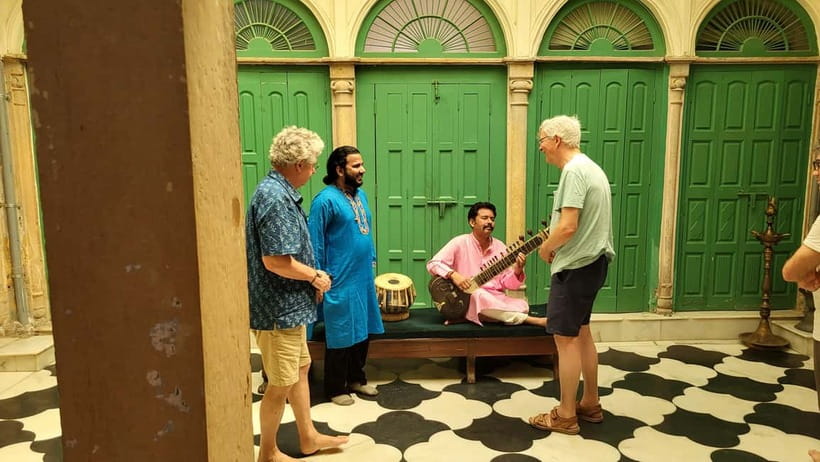
The best part of this Old Delhi outing is the setting. You do not watch Indian classical music and Kathak in a modern theater. You climb into restored Mughal-era havelis, old merchant homes filled with art, objects, architecture, and the feel of another Delhi.
I like the mix of live sitar, tabla, and Kathak. I also like that the route uses a tuk-tuk and the metro, then continues on foot through Khari Baoli and Chawri Bazar. You get culture, food, old buildings, and a small slice of daily city life in three hours.
The main drawback is the short schedule. Old Delhi can be slow to cross, and the meeting points in Chanakyapuri or Rajiv Chowk mean you arrange your own way there unless you book a pickup option. Drinks are not included, and some walking on uneven streets is part of the deal.
Key points at a glance
- Two restored havelis: See old private homes converted into cultural spaces and museums of Indian art, architecture, and literature.
- Live sitar and tabla: Watch two musicians perform the central sounds of North Indian classical music at close range.
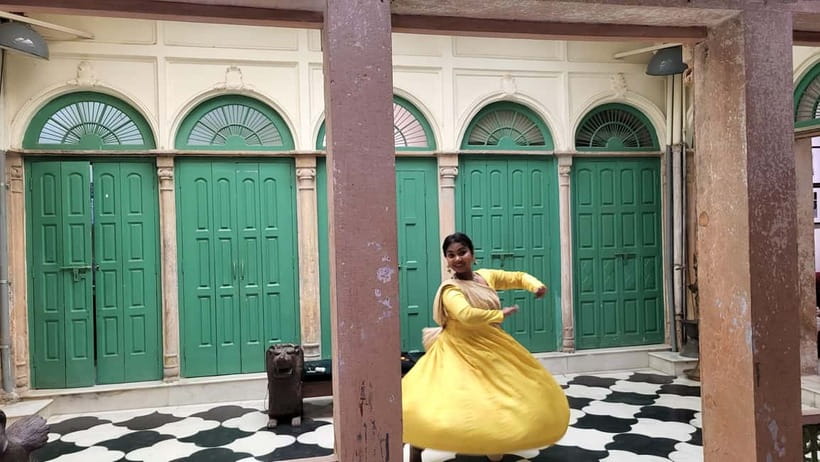
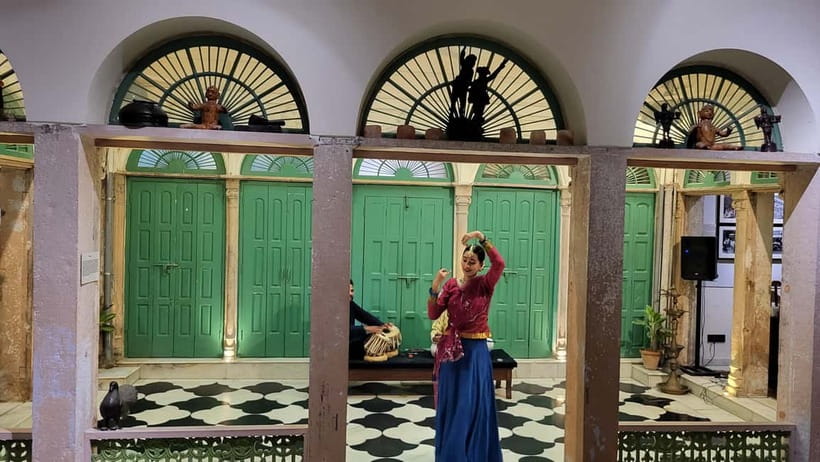
- Kathak in an intimate room: A dancer uses hand gestures, fast footwork, facial expression, and folk storytelling rather than a large stage show.
- A real Old Delhi route: Travel by tuk-tuk and metro, then walk through Khari Baoli and Chawri Bazar with a local storyteller.
- Local lunch included: Eat Old Delhi delicacies in the antique setting of a haveli.
- Small group format: The group is limited to seven, and it may sometimes be smaller. Jai has provided especially personal guiding when only one person booked.
Why the haveli setting matters
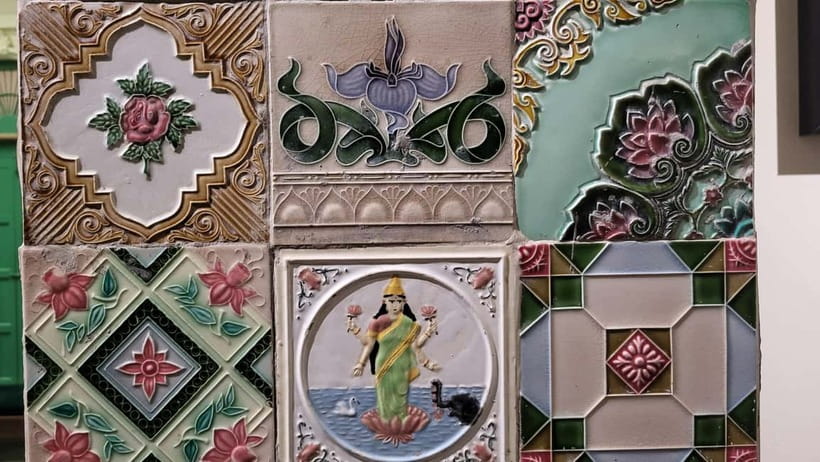
Old Delhi has plenty of grand sights, but this outing offers something different from a quick photo stop at a monument. A haveli was a large traditional home, often linked to wealthy families and merchants. The restored houses here give you a chance to look at rooms, objects, and details that are easy to miss when you are moving through the city on your own.
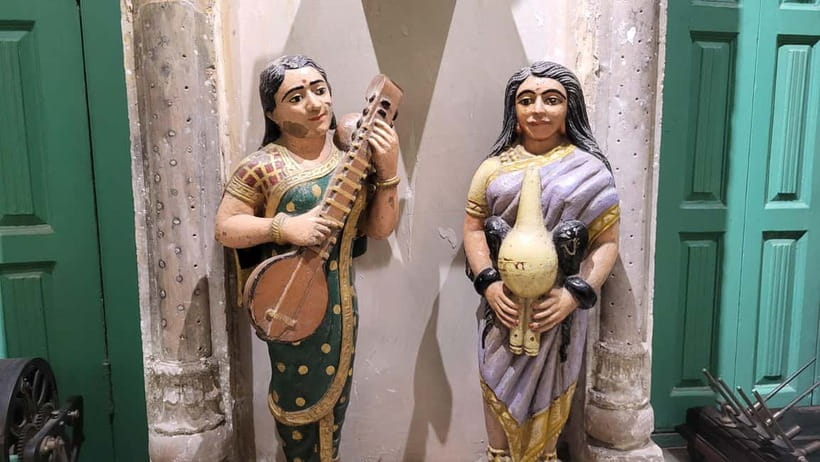
The first haveli has a museum feel. You can see old artifacts and get a sense of how domestic life, art, literature, and architecture once came together under one roof. The building itself is part of the program, not just a convenient room for the performance.
I especially like the way the music fits the surroundings. A sitar and tabla recital in a restored old house feels more connected to Delhi than a polished concert hall would. The room lets you watch the musicians closely, and the small group keeps the performance personal.
The tour also includes another old haveli. It has been restored as a different kind of cultural project, and the people behind the work are trying to bring abandoned Old Delhi homes back into use. You are not simply looking at a facade. You get to see how these buildings can serve as museums, performance spaces, and places to eat.
Other galleries people book in the world on the same trip:
- Vatican Museums, Sistine Chapel & St. Peter’s Basilica Tour
★ 4.3 · 73,970 reviews - Paris: Louvre Museum Timed-Entrance Ticket
★ 4.6 · 71,977 reviews - Amsterdam: Van Gogh Museum Ticket
★ 4.7 · 52,054 reviews
Getting into Old Delhi by tuk-tuk and metro
The day begins with a meeting at one of two locations: Chanakyapuri or Rajiv Chowk. Hotel pickup and drop-off are not included unless you reserve an applicable option, so check the meeting point before booking. That small bit of planning matters in Delhi, where a cross-city ride can take far longer than the map suggests.
From there, the route uses a combination of tuk-tuk and metro to reach the old town. This is not luxury transport, but that is part of its value. You see how people actually move around Delhi, and you avoid spending the entire outing in a private vehicle.
The public transport portion also sets up the contrast between modern Delhi and the older city. You move from major roads and metro stations into narrow lanes, market streets, and historic neighborhoods. The route then continues on foot, with about 15 minutes listed for walking at one stage.
The walking is manageable for most people who are comfortable in an old city, but you should wear practical shoes. The route includes bylanes and crowded commercial areas, and the pace may feel quick if you stop often for photos. Ask Jai questions as you go. His role is not just to get you from one point to another, but to explain the people, buildings, and customs around you.
Khari Baoli and the first taste of Old Delhi
Khari Baoli is listed as a 30-minute guided stop. This brings you into one of the old city’s famous market areas and gives the tour a useful street-level start before the performances begin.
You will not spend the whole day here, so treat it as an introduction rather than a full market tour. The point is to get your bearings, notice the street activity, and hear context from the guide. If you have never visited Old Delhi, this short walk helps you understand how dense and layered the neighborhood is.
This portion may appeal most if you like seeing a city in motion. It is less suited to someone who wants a quiet, slow museum visit from the first minute. Old Delhi is noisy and active, and the tour does not try to hide that.
The walk also helps explain why the havelis matter. Behind busy lanes and commercial fronts are old homes that can be easy to miss. Once you enter one, the change is striking. The outside streets are active and crowded, while the interior offers room for art, history, food, and performance.
Chawri Bazar and the Kathak performance
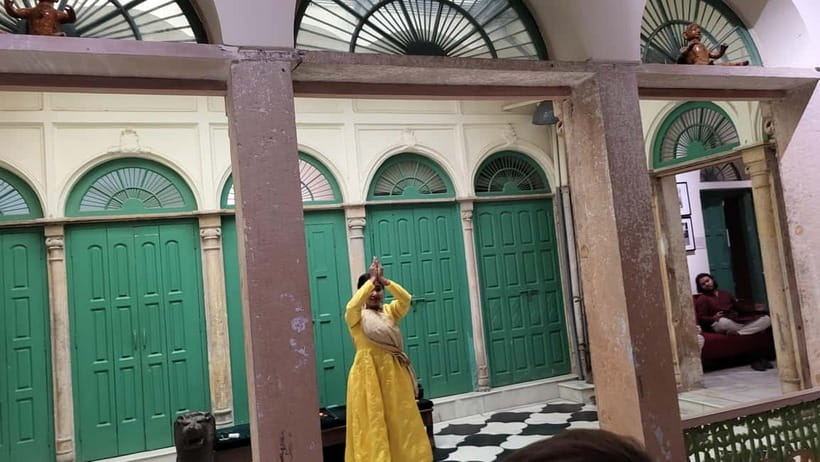
The itinerary places a one-hour traditional dance show in Chawri Bazar. The main performance is Kathak, a North Indian classical dance form built around storytelling, hand movements, precise footwork, turns, and facial expression.
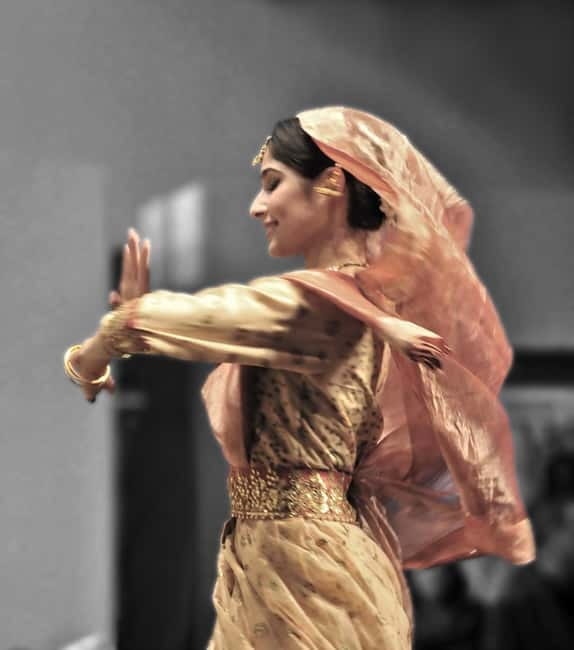
Kathak is not simply a dance recital where you watch a series of steps. The performer communicates stories and moods through gesture and expression. Fast footwork gives the dance a percussive quality, while the hands and face carry the meaning.
A major strength of this experience is the small, intimate venue. The dance takes place in the setting of a restored haveli rather than a huge auditorium. You can pay attention to details such as the dancer’s feet, hands, and changes in expression. The old rooms also make the performance feel tied to the city’s cultural life.
The exact running order may vary between the walking, music, dance, and meal portions, but expect roughly an hour devoted to the dance presentation. Plan to sit quietly during the show and save detailed questions for the breaks. The format is cultural and attentive, not a loud dinner performance.
Same city, a completely different collection:
- Vatican Museums, Sistine Chapel & St Peter’s Basilica Guided Tour
★ 4.5 · 39,149 reviews - Florence: Skip-The-Line Uffizi Gallery Timed Entry Ticket
★ 4.5 · 27,832 reviews - Paris: Orsay Museum Entry Ticket
★ 4.7 · 25,647 reviews - Madrid: Prado Museum Entry Ticket
★ 4.6 · 20,699 reviews
Sitar and tabla in an old house
The music portion lasts about 30 minutes in the stated schedule. You see two musicians perform together, one on sitar and one on tabla.
The sitar is a plucked string instrument associated with Indian classical music. The tabla consists of a pair of hand drums, and the player creates both rhythm and tonal color with the fingers and palms. Seeing the two instruments together helps you understand the conversation between melody and rhythm.
If you are new to this music, you may not know what to listen for. That is where the guide’s explanation helps. Listen for the sitar’s extended melodic phrases, then notice how the tabla answers, supports, and sharpens the rhythm. You do not need musical training to appreciate the control involved.
The performance is short enough to remain approachable. A longer classical concert could be demanding if you have no background in the form. Here, you get a clear introduction without giving up most of your day.
The order described for the stops places the concert after the dance in Old Delhi, while the broader tour description presents the music before Kathak. I would treat that as a flexible program rather than a promise about the exact sequence. The important point is that both live performances are included.
Lunch among antiques and old-world details
Lunch is served with local Old Delhi delicacies inside the haveli. This is one of the better uses of the setting. Instead of eating in a separate restaurant and then visiting a historic building, you connect the food with the rooms, objects, and traditions you have just been discussing.
The meal is included in the price. Drinks are listed as not included, so bring money for anything beyond the provided food. One account of the experience notes that drinks were offered during the visit, but the formal activity details exclude them. It is sensible to confirm what is available on the day rather than assume every beverage is covered.
The food component is not presented as a cooking class or a full food crawl. You should book it for a cultural meal in an old house, not for a long list of restaurant tastings. If you want a broad survey of Old Delhi street food, you will need a separate outing.
Still, lunch adds real value. Food gives you another way to understand the city, and eating in the haveli keeps the program from feeling like a string of disconnected sights. It also gives you time to ask about ingredients, customs, clothing, architecture, and everyday life.
The second haveli and the restoration story
The second haveli adds depth to the visit. The first house functions as a cultural center and museum, while the other property shows another stage in the effort to restore old homes in the center of Delhi.
The restoration work is not presented as a glossy hotel development alone. The person behind the project is described as personally committed to saving abandoned havelis, despite the practical problems involved. The second property has been restored as a bed-and-breakfast, showing how an old home can gain a new purpose.
That matters because Old Delhi’s old houses face a basic problem: preservation costs money, and empty buildings are difficult to maintain. A cultural center, museum, performance venue, or small lodging property can help keep a building in use.
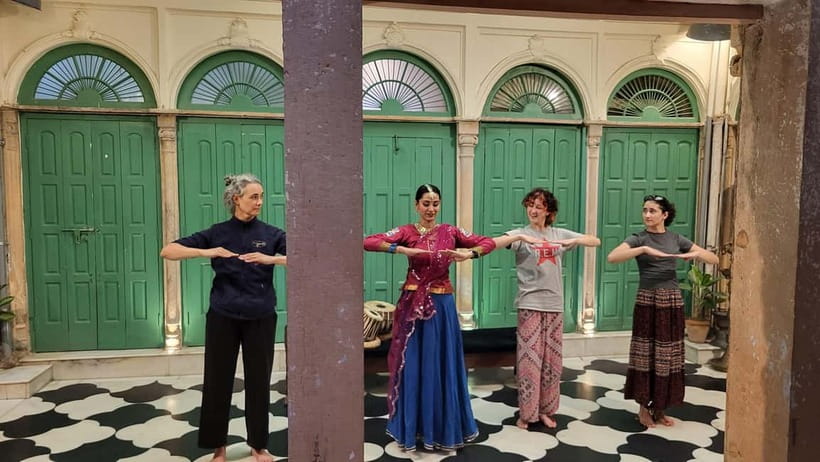
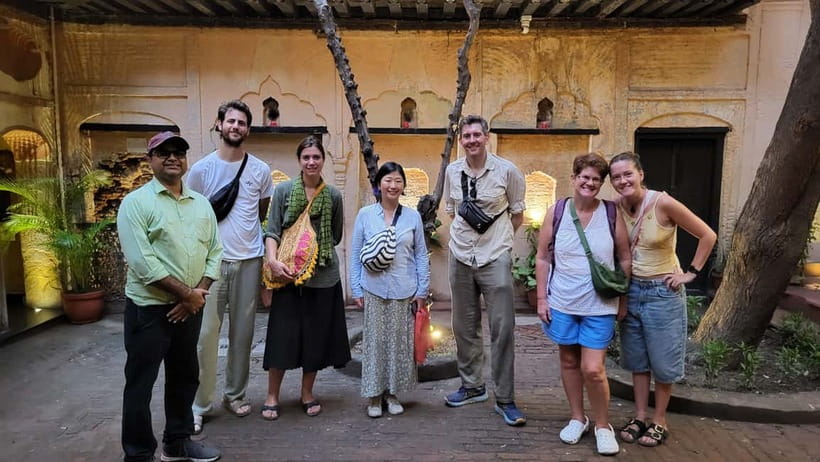
You can ask questions about the architecture and the restoration. This is one of the places where a small group helps. With no more than seven people, there is more room for conversation than you would get on a large coach tour.
Guide Jai and the small-group format
Jai is the named contact connected with this experience, and communication before the outing is part of its appeal. One especially useful detail is that he may add more Old Delhi guiding if time and circumstances allow. A solo participant received an extra guided walk after the concert, but you should regard that as a welcome possibility, not a guaranteed part of the schedule.
The formal group limit is seven people. That is small enough for questions and practical help, while still giving you a little company. The tour is conducted in English.
I would choose this format if you want cultural explanation without a full-day private tour. You get a local storyteller, help with the route, and access to spaces that are not obvious from the street. You also retain some flexibility to ask about what interests you most.
The tradeoff is that the experience depends on the guide and venue rather than a fixed museum route. That can be a strength, but it also means the pace and order may feel less rigid than a major attraction tour. If you prefer every minute to follow a printed timetable, this may feel informal.
Is $98 a fair price?
At $98 per person, this is not the cheapest way to spend three hours in Delhi. You can walk through Old Delhi or visit a public monument for much less. The price makes more sense when you add up what is included: a guide, tuk-tuk and metro travel during the outing, two haveli visits, live music, Kathak, lunch, and cultural explanation.
You are paying for access as much as for transport. The restored homes are not ordinary street stops, and the performances give the visit a planned cultural focus. A private guide for a small group would also cost more if arranged separately, especially when lunch and performances are added.
The value is strongest for a first visit to Delhi, or for someone who wants more than the standard Red Fort and Jama Masjid circuit. Jama Masjid entry is not included and going inside is not compulsory, so do not assume this is a full mosque visit.
The value is weaker if your main goal is shopping, nightlife, or an extended food tour. This is not a shopping outing. It is also not a full-day history tour. You pay for a concentrated look at music, dance, food, old homes, and local guiding.
Who should book this Old Delhi outing?
I would recommend it to you if you enjoy:
- Live performance in a small setting, especially if you want to see Indian classical music and Kathak up close.
- Historic homes and restoration projects, rather than only famous monuments.
- Local food with cultural context, served in an old building.
- Short city walks and public transport, including a tuk-tuk and metro ride.
- Small groups and questions, with an English-speaking guide who can adapt the conversation.
Families with older children may also like the mix of movement, music, food, and visual detail. The three-hour length is easier to fit into a busy Delhi schedule than a full-day tour.
I would think twice if you dislike crowded streets, walking through old neighborhoods, or informal transport. The activity does not spend all three hours inside an air-conditioned vehicle. You should also avoid booking it immediately before an important flight or appointment, since Old Delhi traffic and meeting-point transfers require some planning.
Practical details before you reserve
The total duration is three hours from pickup or meeting arrangements through the end of the activity. Starting times depend on availability, so check the schedule for your date.
The two listed pickup and drop-off points are Chanakyapuri and Rajiv Chowk. Hotel pickup and drop-off are not included unless you choose the applicable option. At the end, the representative can give you directions for getting back by Uber, metro, or tuk-tuk.
The activity offers free cancellation up to 24 hours before the start time. You can also reserve now and pay later, which helps if your Delhi plans are still shifting.
Wear shoes suited to walking and keep the schedule fairly open. Carry some money for drinks and your onward transport. If you want to enter Jama Masjid, ask about that separately because the entry is not included and is not required for the tour.
Should you book it?
Book this if you want a compact, culture-focused Old Delhi experience rather than a standard monument circuit. The restored havelis are the real draw, and the sitar, tabla, Kathak, and lunch give the visit a clear sense of place.
The strongest reason to choose it is the combination of access and scale. You get inside old homes, watch live performances, eat local food, and speak with a guide in a group capped at seven. That is a lot to fit into three hours.
Skip it if you want a long food crawl, extensive shopping time, or a private hotel-to-hotel tour included by default. For everyone else, $98 is a reasonable price for a carefully packed introduction to Old Delhi’s private homes, performance traditions, and everyday cultural life.
FAQ
How long does the Old Delhi haveli experience last?
The total tour duration is three hours from pickup or meeting arrangements until the end.
Where does the tour start and finish?
The listed pickup and drop-off locations are Chanakyapuri and Rajiv Chowk. Hotel pickup and drop-off are not included unless you book the applicable option.
What transport is used during the activity?
The experience uses a combination of tuk-tuk and metro, followed by walking through Old Delhi.
Is lunch included?
Yes. Lunch featuring local Old Delhi delicacies is included. Drinks are not included in the activity details.
What performances are included?
You see live classical music with sitar and tabla, as well as a traditional Kathak dance performance.
Is entry to Jama Masjid included?
No. Entry to Jama Masjid is not included, and going inside is not compulsory.
Just added around the world
- Colosseum,Vatican Museum & Sistine Chapel in One Day Guided Tour★ 3.5 · 9 reviews
- Vatican Museums and Sistine Chapel last entry Guided Tour★ 5.0 · 3 reviews
- Private Tour Of Rome Highlights And Vatican Museums Skip-The-Line all included★ 5.0 · 4 reviews
- Borghese Gallery Admission Ticket with Audioguide★ 4.0 · 64 reviews
- Caravaggio Art Walking Tour of Rome with Pantheon Visit★ 4.5 · 35 reviews
- Borghese Gallery Skip the Line Guided Tour★ 4.5 · 23 reviews
- Borghese Gallery Ticket with Audioguide★ 3.5 · 51 reviews
- Borghese Gallery VIP Tour – Skip the Line Tickets★ 5.0 · 2 reviews
Art Museum Tours in India, compared.

Private Chennai Day Tour – Art History and Contemporary Chennai
Read our review →
Mysore Palace + Jaganmohana Art Gallery + Devaraja Market = Mysore Heritage Walk
Read our review →
Mahabalipuram Art History and Culture Private Tour from Chennai
Read our review →
Mysore: Palace, Art Gallery & Devaraja Market Walking Tour
Read our review →
Browse the lists this tour appears in