
REVIEW · ROME
Borghese Gallery Skip the Line Guided Tour
The most remarkable thing about this tour is the setting itself. The Borghese Gallery is not a plain white-box museum, but a former villa filled with sculpture, painting, decorated ceilings, polished floors, and grand rooms. In two hours, you move from Bernini’s marble figures to Caravaggio’s dark drama, with an English-speaking guide explaining what you are seeing.
I like the 15-person limit, which gives you a real chance to ask questions instead of simply following a flag through a crowd. I also like the headset, a small but useful touch in a busy museum where a soft-spoken guide can otherwise become background noise. The main drawback is the fixed two-hour format: it gives you a strong introduction, but not enough time to study every room at length.
Key points at a glance
- Bernini takes center stage: See works including The Truth, Scipione Borghese’s Bust, and several self-portraits.
- Canova’s famous Venus: The Paolina Room holds Paolina Borghese as Venus, one of the museum’s most recognizable sculptures.
- Caravaggio and Raphael: Expect major paintings such as David with the Head of Goliath, Boy with a Basket of Fruit, Lady with a Unicorn, and Portrait of Pope Julius II.
- Small group, maximum 15: You get a more personal tour and better odds of asking the guide about details that catch your eye.
- English commentary with a headset: You can follow the explanation without straining to hear.
- Book ahead: The tour is booked an average of 46 days in advance, a useful warning for a popular Rome stop.
Why the Borghese Gallery deserves your time
Rome has churches, ruins, fountains, and museums competing for your attention. The Borghese Gallery earns its place because it packs an extraordinary collection into a relatively manageable setting.
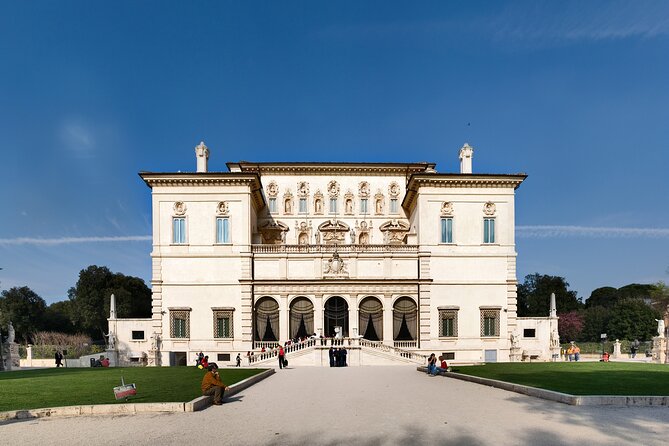
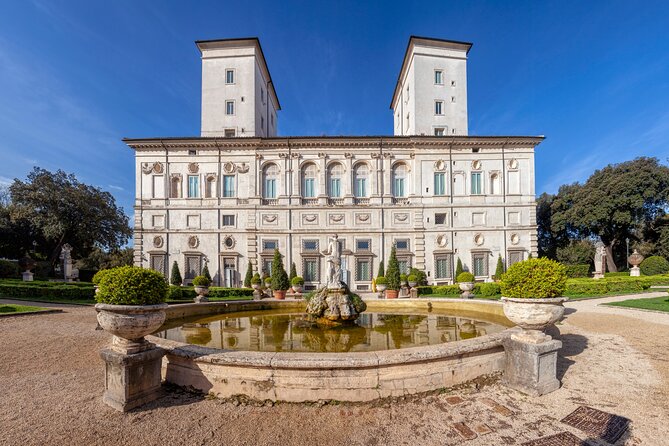
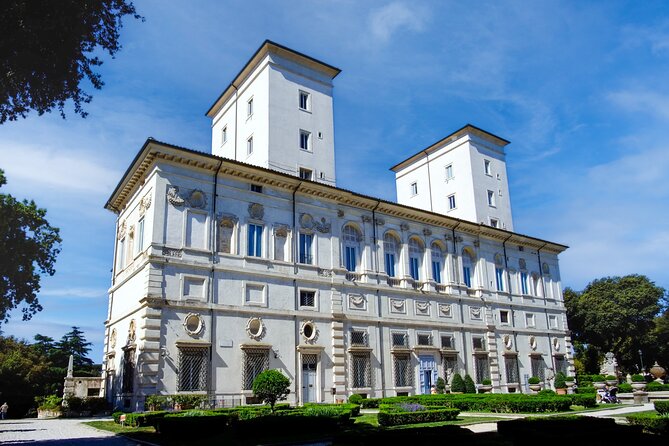
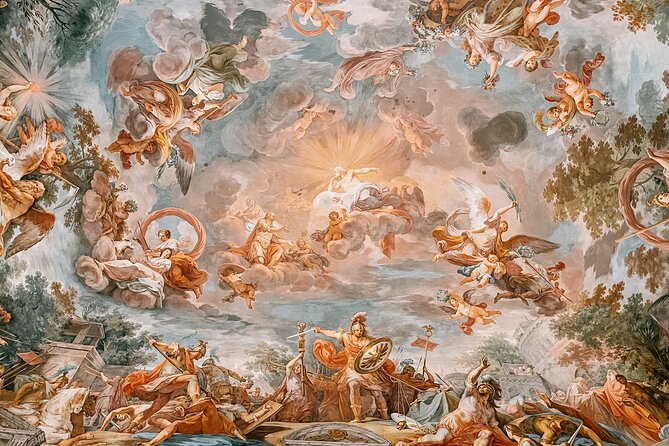
The villa was built in the early 17th century by Scipione Borghese, nephew of Pope Paul V. He was a powerful collector with a strong interest in art, and the building was designed to show off both the collection and the man who assembled it. The result is a museum where the rooms are part of the experience. Look up, down, and around you. The ceilings, walls, floors, and architectural details deserve attention alongside the famous works.
I find the scale especially appealing. Two hours is not enough for every detail, but it is long enough to see a focused selection without the exhaustion that can come with a huge museum. You are not trying to cover an entire national collection. You are moving through a handful of ornate rooms where many works carry real historical and artistic weight.
That concentration also makes a guide useful. Without context, Bernini’s marble can look merely beautiful, and Caravaggio’s paintings can look merely dramatic. A good guide helps you notice the choices behind the effect: a turn of the head, a twist of fabric, the direction of a gaze, or the way light changes the emotional temperature of a scene.
More Art Museum Tours in Rome
- Vatican Museums, Sistine Chapel & St. Peter’s Basilica Tour
★ 4.3 · 73,970 reviews - Vatican Museums, Sistine Chapel & St Peter’s Basilica Guided Tour
★ 4.5 · 39,149 reviews - Rome: Vatican Museums, Sistine Chapel and Basilica Tour
★ 4.3 · 16,039 reviews
Bernini’s marble figures in close quarters
The sculpture rooms are a major reason to book this experience. Gianlorenzo Bernini is represented by several important works, including The Truth and Scipione Borghese’s Bust. You can also see several of Bernini’s self-portraits.
Bernini’s work rewards a slow look. Marble may seem hard and fixed, yet his figures often suggest movement, tension, or a fleeting expression. A guide can point out details that are easy to miss when you are simply walking past, especially in a room filled with other striking objects.
Scipione Borghese’s Bust has an added connection to the building’s founder. Seeing the collector represented in sculpture gives the room a personal edge. This was not an abstract art collection assembled for a distant institution. It was tied to a specific patron, his taste, and his desire to surround himself with powerful works.
The tour is also a good fit if you are curious about how sculpture works from different angles. A painting presents one main view. A sculpture asks you to move your eyes around it, and the gallery’s arrangement gives you opportunities to see how marble changes with the light and your position.
The guide will not turn you into an art historian in two hours, but the best guides make the visual details easier to read. The guides praised by name include Dimitri, Virginia, Smaragda, and Valentina. Gabriel is also described as especially engaging, with a strong interest in the art and its history. Guide assignments can change, so you should not book on the assumption that one particular person is guaranteed.
Paolina Borghese as Venus
The Paolina Room contains Antonio Canova’s famous sculpture of Paolina Borghese in the guise of Venus. It is one of the museum’s signature works, and the room gives it the attention it deserves.
Paolina was the wife of Camillo Borghese, who later became Prince Borghese. Canova presents her as Venus, the Roman goddess of love. That combination of portrait and mythology is part of the sculpture’s appeal. You are looking at a recognizable person, but also at an idealized figure created for a grand social world.
Spend time looking at the contrast between the subject’s relaxed pose and the hard material from which she was carved. Canova’s sculpture is prized for its polished surface and graceful form. A guide can help explain why the work had such an impact and how it fits within the tradition of Neoclassical sculpture.
The room is also a useful reminder that the Borghese Gallery is more than a collection of isolated masterpieces. The works were selected and displayed in rooms designed to impress. Here, the architecture and the sculpture work together. You do not simply check off Canova from a list. You see the piece in the grand environment for which this sort of art was intended.
Raphael and Caravaggio: two very different moods
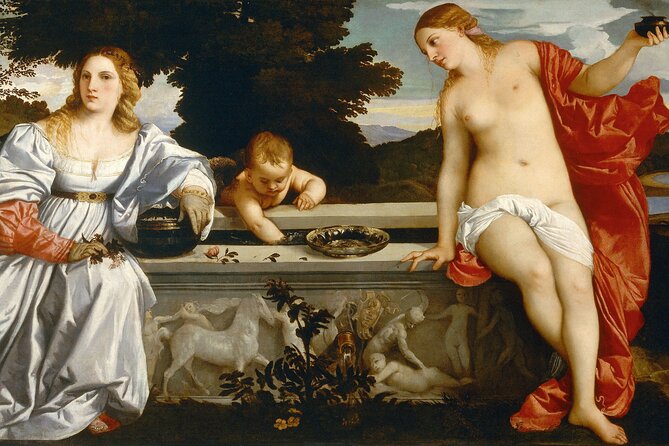
The gallery’s Old Master paintings provide a sharp contrast to the sculptures. Raphael’s Lady with a Unicorn and Portrait of Pope Julius II show a quieter, more controlled side of Renaissance painting.
Lady with a Unicorn is particularly interesting because of its composed pose and restrained expression. The title gives you a starting point, but the painting invites closer attention to the sitter, her clothing, and the symbolic object in her arms. Raphael’s Portrait of Pope Julius II offers another kind of study, with the pope presented as a powerful and serious figure.
Then the mood changes with Caravaggio. The gallery includes David with the Head of Goliath, Boy with a Basket of Fruit, St Jerome, and Self-Portrait as Bacchus. These paintings are useful for seeing how one artist could bring ordinary human presence, strong light, and psychological tension into religious and mythological subjects.
David with the Head of Goliath is especially striking because of its drama and darkness. Boy with a Basket of Fruit brings the subject closer to everyday life, while still making the fruit and the sitter feel unusually immediate. A guide can connect these works without reducing them to a list of dates and names.
This is where the headset matters. In a room with hard surfaces and other visitors, it can be difficult to hear a spoken explanation. The supplied headset lets you keep your eyes on the paintings while following the guide’s comments.
More Borghese Gallery slots:
- Rome: Borghese Gallery Skip-the-Line Ticket & Audioguide
★ 4.3 · 4,318 reviews - Rome: Borghese Gallery Ticket + Audioguide or Guided Tour
★ 4.6 · 3,219 reviews - Rome: Borghese Gallery Guided Tour with Skip-the-Line Entry
★ 4.8 · 2,649 reviews - Rome: Borghese Gallery Skip-the-Line Tickets with Audioguide
★ 4.6 · 2,562 reviews
What the two-hour route feels like
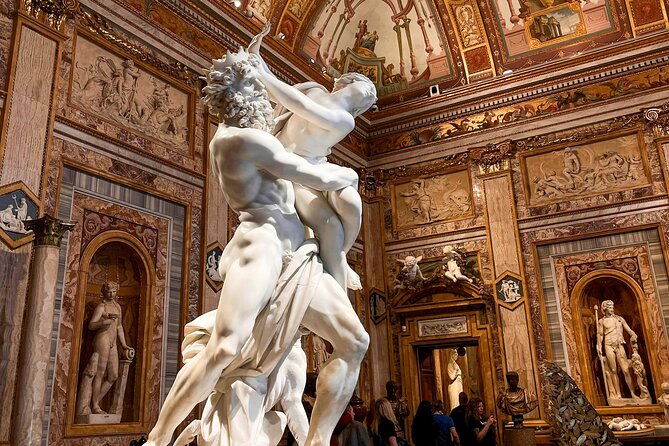
The advertised visit lasts about two hours and takes place at the Galleria Borghese. Admission is included, along with skip-the-line entry, an English-speaking guide, and the headset.
The route is compact but full. You will see sculpture, portraiture, religious painting, mythological subjects, and the decorative character of the former palace. The guide’s job is to select the most important works and explain why they matter, rather than attempt an exhaustive account of every object in the building.
That approach suits most first-time visitors. You get a framework for the collection and enough detail to make the major works memorable. If you are a serious art student or someone who wants to inspect every painting at length, you may find the pace brisk. The group must keep moving, and two hours goes quickly once you stop in front of Bernini, Canova, Raphael, and Caravaggio.
The small-group limit helps. With no more than 15 participants, the guide can keep the commentary directed at the group and leave room for questions. It is still a group tour, so you will not control the pace, but it should feel more personal than a large procession.
The guides make the difference
This tour’s strongest praise centers on the guides’ command of art and art history, along with their ability to keep the explanation lively.
Dimitri is singled out for making the gallery especially enjoyable. Virginia is described as wonderful with a family group, while Smaragda is praised for being engaging and well informed. Valentina is noted for holding the group’s attention and explaining the history clearly. Gabriel is described as a font of information with a clear passion for the works.
One guide is also described as having degrees, including a PhD, in archaeology and art history. That detail matters because the building itself deserves attention. A good explanation does not stop at the artist’s name. It can help you notice the former palace, the decorative rooms, and the relationship between the art and its setting.
Of course, guides vary, and these names may not match your departure. Still, the repeated pattern is useful: this is not merely a ticket with a short introduction. The tour is designed around spoken interpretation, and the guide is a central part of its value.
Is $90.36 a fair price?
At $90.36 per person, this is not a budget museum visit. The price includes admission, skip-the-line entry, a small-group tour, an English-speaking guide, and a headset.
The value depends on how you like to visit museums. If you are comfortable reading labels and building your own route, a guided tour may feel expensive. You are paying for interpretation and structure as much as for entry.
I think the cost is easier to justify if you have limited time in Rome or if Bernini, Canova, Raphael, and Caravaggio are high on your list. The guide helps you use two hours well and gives you an informed way into works that can otherwise blur together after a long day of sightseeing.
The 15-person maximum also matters when comparing prices. You are not paying for the intimacy of a private tour, but you are getting a smaller format than a large group excursion. The headset adds practical value, too, particularly in rooms where it may be hard to hear.
The tour has a 4.7 rating from 23 reviews, with 91 percent recommending it. That is a solid result, though the sample is not huge. I would treat the price as reasonable for a focused guided visit, not as a bargain.
Allow time for the Borghese Gardens
The meeting point is Piazzale del Museo Borghese, and the activity ends back at the same location. The gallery is near public transportation, so you can plan it as one stop within a larger day in the area.
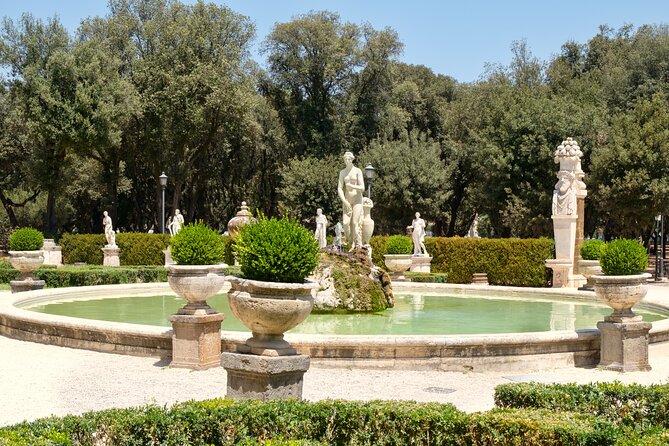
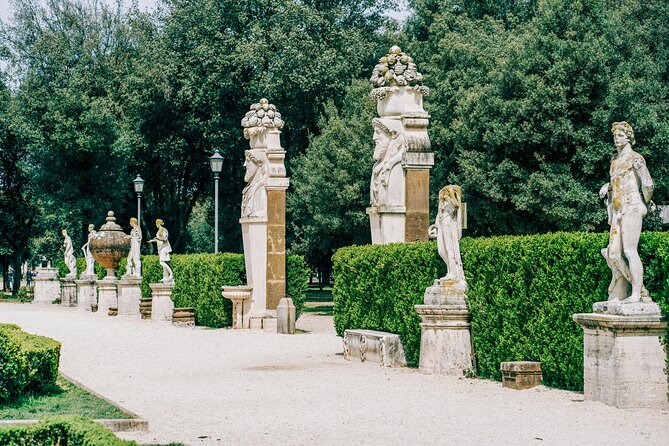
If you arrive early, consider walking through the Borghese Gardens before the museum visit. One visitor described the gardens as being like Rome’s Central Park, which gives you a good sense of their scale and usefulness as a break from the city’s hard stone streets.
Do not treat the garden walk as part of the guided museum itinerary, because the listed activity is focused on the gallery. Think of it as a smart way to use your time before the meeting point. It can also help you arrive calmer and better oriented, rather than rushing straight from another sight.
The meeting point is given as Piazzale del Museo Borghese, 00197 Roma RM, Italy. You receive confirmation when booking, and a mobile ticket is provided. Since the tour is often booked 46 days ahead, I would not leave this attraction until the last minute if your Rome dates are fixed.
Who should book this tour?
I would choose this experience if you want a clear introduction to the Borghese Gallery and prefer to understand the art rather than simply photograph it.
It suits:
- First-time visitors to the gallery
- Couples or families who want a shared explanation
- Art lovers focused on Bernini, Canova, Raphael, and Caravaggio
- Anyone who finds large museums tiring or hard to navigate
- Visitors with about two hours for a concentrated art stop
- People who prefer English commentary and the chance to ask questions
It may be less suitable if you want complete freedom to linger. The group format and fixed duration mean that you cannot spend half an hour with one painting while skipping several others. You should also remember that tips are not included.
The tour is suitable for most people, and the activity information says most participants can take part. No special mobility details are provided, so if you have specific access needs, confirm them before booking rather than assuming the route will suit you.
Booking and cancellation details
Free cancellation is available if you cancel at least 24 hours before the experience starts. Cancel later than that, or make changes inside the 24-hour window, and the amount paid is not refunded.
The tour requires a minimum number of participants. If the provider cancels because that minimum is not reached, you will be offered another date or experience, or a full refund.
Because demand appears steady and bookings are commonly made well ahead, I would reserve early. The mobile ticket makes the booking simple, but you still need to arrive at the stated meeting point in time for the group.
Should you book the Borghese Gallery tour?
Yes, if you want the Borghese Gallery’s greatest works explained in a focused two-hour visit. The combination of a maximum 15-person group, headset, English guide, and included admission gives the experience a sound structure, particularly for a first visit.
Book it for the art, not merely for the promise of skipping a queue. Bernini’s sculptures, Canova’s Paolina Borghese, Raphael’s portraits, and Caravaggio’s paintings are the real reason to go. If you like setting your own pace and already know the collection well, visit independently instead. For most people who want context without committing a full day to a museum, this is a practical and worthwhile choice.
FAQ
Where does the Borghese Gallery tour start?
The tour starts at Piazzale del Museo Borghese, 00197 Roma RM, Italy.
Where does the activity end?
The activity ends back at the meeting point.
How long does the guided tour last?
The tour lasts approximately two hours.
Is admission to the Borghese Gallery included?
Yes. Skip-the-line entrance and the admission ticket are included.
Is the tour offered in English?
Yes. The tour includes an English-speaking guide.
How large is the tour group?
The group has a maximum of 15 participants.
Can I cancel for a full refund?
Yes, if you cancel at least 24 hours before the experience starts. Cancellations made less than 24 hours in advance are not refunded.
More Skip-the-Line Tickets in Rome
- Vatican Museums & Sistine Chapel Skip-the-Line Entry Ticket
★ 4.4 · 13,838 reviews - Rome: Vatican Museums & Sistine Chapel Skip-the-Line Ticket
★ 4.3 · 8,103 reviews - Skip the Line: Vatican Museum, Sistine Chapel + Optional Basilica
★ 4.5 · 6,181 reviews - Skip the line: Vatican Museums, Sistine Chapel & St Peters Tour
★ 4.5 · 1,888 reviews
Just added around Rome
- Colosseum,Vatican Museum & Sistine Chapel in One Day Guided Tour★ 3.5 · 9 reviews
- Vatican Museums and Sistine Chapel last entry Guided Tour★ 5.0 · 3 reviews
- Private Tour Of Rome Highlights And Vatican Museums Skip-The-Line all included★ 5.0 · 4 reviews
- Borghese Gallery Admission Ticket with Audioguide★ 4.0 · 64 reviews
- Caravaggio Art Walking Tour of Rome with Pantheon Visit★ 4.5 · 35 reviews
- Borghese Gallery Ticket with Audioguide★ 3.5 · 51 reviews
- Borghese Gallery VIP Tour – Skip the Line Tickets★ 5.0 · 2 reviews
- Borghese Gallery Private Tour Explore the Masterpieces by Bernini Caravaggio and Raphael★ 5.0 · 8 reviews
Art Museum Tours in Rome, compared.
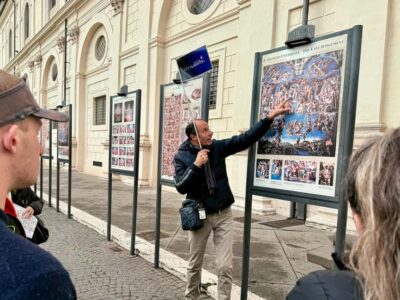
Vatican Museums, Sistine Chapel & St. Peter’s Basilica Tour
Read our review →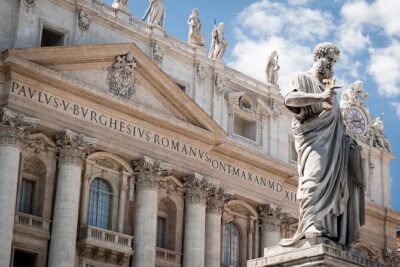
Vatican Museums, Sistine Chapel & St Peter’s Basilica Guided Tour
Read our review →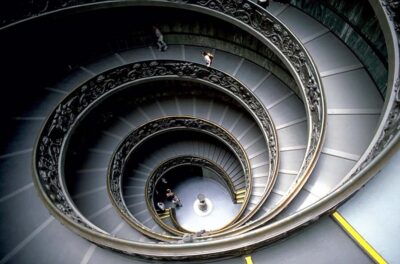
Vatican Museums, Sistine Chapel and Basilica Tour
Read our review →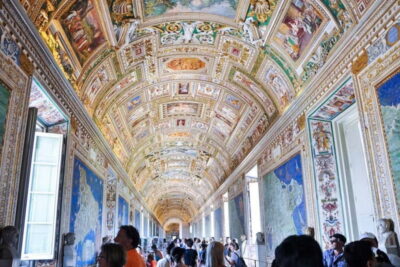
Vatican Museums & Sistine Chapel Skip-the-Line Entry Ticket
Read our review →
Vatican Museums, Sistine Chapel & Basilica Tour
Read our review →
Vatican Museums & Sistine Chapel Guided Tour
Read our review →
Vatican Museums & Sistine Chapel Skip-the-Ticket-Line Tour
Read our review →
Vatican Museums, Sistine Chapel and St. Peter’s Basilica Tour
Read our review →Browse the lists this tour appears in