
REVIEW · ROME
Caravaggio Art Walking Tour of Rome with Pantheon Visit
Caravaggio’s Rome is best understood inside the churches where his paintings still live. This walking tour takes you from Piazza del Popolo to the Pantheon, pairing dramatic art with stories of brawls, courtesans, faith, and the painter’s uneasy life.
I like the small group of no more than 15 and the way the route links Caravaggio with Raphael and Rome’s streets. I also like the included aperitivo, which turns a three-hour art lesson into a pleasant late-afternoon outing. The drawback is simple: you will walk a fair distance, and bad weather can make the outdoor talks less comfortable.
Key points to know before booking
- Three Caravaggio churches: See the Crucifixion of St. Peter, Conversion on the Way to Damascus, Madonna del Loreto, and the Saint Matthew paintings at San Luigi dei Francesi.
- A late-afternoon start: The tour begins at 4:00 p.m., a useful time for avoiding Rome’s hottest midday hours.
- The paintings remain in their original churches: You are not looking at isolated museum pieces. Their setting, chapel, altar, and surrounding decoration are part of the experience.
- Raphael joins the story: Santa Maria del Popolo and Santa Maria della Pace add important Renaissance works to the Caravaggio focus.
- Aperitivo included: The walk finishes with wine and food at a local restaurant or wine bar, often Casa Coppelle near Piazza delle Coppelle.
- Good value for art lovers: At $65.17 per person, the price covers a guide, headsets, church admissions, Pantheon entry, and aperitivo.
Why Caravaggio works so well on a Rome walking tour
Caravaggio’s paintings are not quiet decorations. His saints look like real people. His religious scenes feel close enough to touch, with dirty feet, rough faces, sudden light, and moments caught at their most tense.
That makes this subject especially strong in Rome. The paintings are still in churches, often where they were commissioned. You can stand in front of a chapel and see how the artist used architecture, candlelight, and the viewer’s position to make a biblical scene feel immediate.
Your guide also gives the paintings a human story. Caravaggio spent much of his career in Rome in the late 1500s, but his talent came with a violent temper and a difficult personal life. The tour explains how his nonconformist habits, legal troubles, and persecution shaped the legend around his work.
The best guides make this accessible even if you do not usually study art. Jeanette, Giuseppe, Maria, Valentina, Barbara, Ginette, and others have led this experience at different times. The strongest feedback centers on guides who connect art with social history, psychology, and daily Roman life rather than simply reciting dates.
More Art Museum Tours in Rome
- Vatican Museums, Sistine Chapel & St. Peter’s Basilica Tour
★ 4.3 · 73,970 reviews - Vatican Museums, Sistine Chapel & St Peter’s Basilica Guided Tour
★ 4.5 · 39,149 reviews - Rome: Vatican Museums, Sistine Chapel and Basilica Tour
★ 4.3 · 16,039 reviews
Santa Maria del Popolo and two powerful first paintings
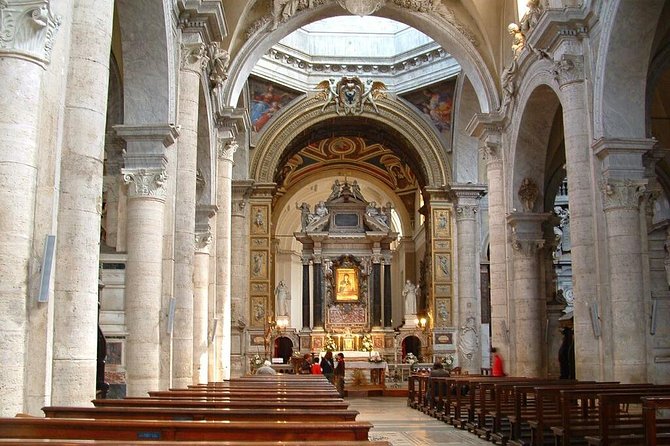
Meet at Piazzale Flaminio, near Piazza del Popolo, at 4:00 p.m. The opening stop is the Basilica of Santa Maria del Popolo, an important church with two major Caravaggio paintings in the Cerasi Chapel.
The first is the Crucifixion of St. Peter. Peter is shown being raised onto the cross, but this is not a polished, distant scene. Caravaggio focuses on effort and weight. The workers strain against the cross, and the saint’s body feels vulnerable and human.
Next comes the Conversion on the Way to Damascus. Rather than filling the chapel with a grand crowd, Caravaggio focuses attention on Saul, who is about to become Paul. The fallen figure, the horse, and the sharp direction of the light create a sudden religious shock.
Your guide explains how to look at both works together. Notice the unusual viewpoint and the way the figures occupy the chapel. These paintings were made for a particular place, so seeing them in that place adds something that a reproduction cannot provide.
Santa Maria del Popolo also brings Raphael into the picture. The church has a magnificent dome associated with Raphael, and the guide uses the building to show the difference between Renaissance order and Caravaggio’s more forceful naturalism.
You should allow about 45 minutes here. Church conditions can vary, and the group may need to keep voices low or wait briefly if services or other church activity are taking place. Headsets are included, which helps you hear the guide without requiring everyone to gather tightly around a painting.
Campo Marzio, Via Ripetta, and Caravaggio’s rougher Rome
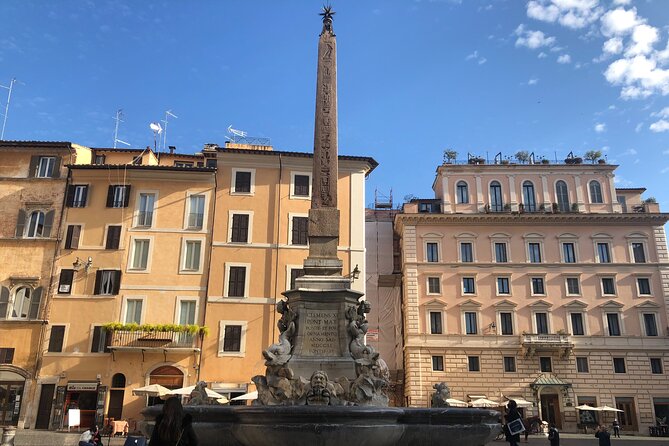
From Piazza del Popolo, the route heads into the Campo Marzio district. This is where the walk shifts from formal art to the street life that shaped Caravaggio’s Rome.
The route includes Via Ripetta, a street associated with the prostitutes who lived and worked in the area. Caravaggio drew inspiration from people around him, and the guide explains how ordinary Roman faces and bodies appeared in his religious scenes.
This part of the tour gives useful social context. Caravaggio’s models did not always look like idealized saints. They looked like people he could find around him. That choice helped make his religious art feel startlingly real, but it also challenged the expectations of patrons and church officials.
The discussion may touch on courtesans, artists, patrons, and the rough behavior of the period. This is not a sanitized portrait of Rome. You will hear about the artist’s indomitable character, his legal troubles, and the chain of events that led to persecution and an early death.
The walk continues through narrow streets, including Via Condotti and Via Margutta. These streets make the tour feel less like a museum visit and more like a guided reading of the city. You are not only moving between attractions. You are following the places and social world connected with Caravaggio’s working life.
There is also a stop near the Spanish Steps for photographs. The route is attractive, but it does require steady walking. One report describes the walking as more demanding than expected, so comfortable shoes are a sensible choice. The tour is near public transportation, but hotel pickup and drop-off are not included.
Santa Maria della Pace and Raphael’s graceful contrast
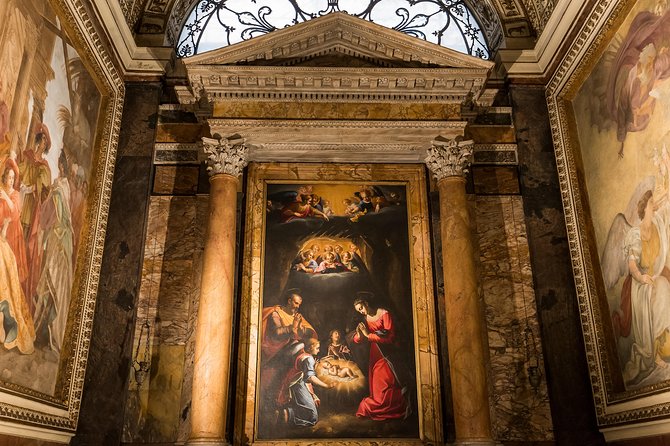
The next church is Santa Maria della Pace, where the focus shifts toward Raphael. The church is known for his fresco of the Sibyls, with graceful figures and decorative movement that contrast sharply with Caravaggio’s earthy realism.
This stop matters because Caravaggio did not work in isolation. Rome’s churches were full of older masterpieces, competing styles, and powerful visual traditions. Raphael represented an ideal of balance and perfection. Caravaggio pushed toward emotional force, ordinary faces, and dramatic light.
A good guide uses this contrast to help you see more. Instead of treating the churches as a string of unrelated stops, the tour places Renaissance and Baroque art in conversation. You begin to notice choices about gesture, expression, composition, and the treatment of the human body.
The visit lasts about 30 minutes and includes admission. As with any working church, access can depend on religious services or local conditions. The schedule allows enough time for explanation without turning the stop into a long academic lecture.
More art walks around Rome:
- Rome’s Baroque Art Walking Tour: Who Killed Caravaggio?
★ 5.0 · 27 reviews - Uffizi & Accademia Timed Entry: Small Group Duomo Walking Tour
★ 4.5 · 3,630 reviews - Paris in a Day: Louvre or Orsay, Eiffel Tower, City Walk & Cruise
★ 5.0 · 1,956 reviews - Florence: Uffizi & Accademia Small Group Walking Tour
★ 4.7 · 1,380 reviews
Sant’Agostino and the Madonna del Loreto
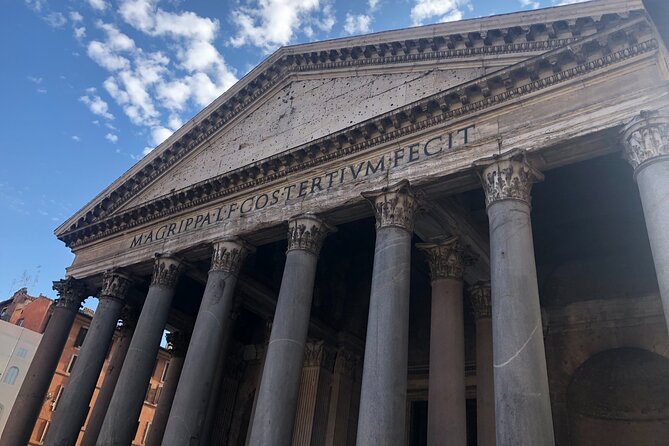
At Sant’Agostino, the tour returns to Caravaggio. The key work is the Madonna del Loreto, housed in the Cavaletti Chapel.
The painting caused a stir because Mary and the Christ child appear before two humble pilgrims. The pilgrims have rough feet and worn clothing. Mary is not presented as a remote figure high above ordinary life. She appears at the doorway, close to the people who have come to see her.
That physical closeness is one of Caravaggio’s strengths. He places sacred figures in the same human world as the viewer. The guide can point out how the chapel setting, the pilgrims’ posture, and the figures’ direct presence shape your response.
Sant’Agostino also includes work by Raphael, so the church continues the tour’s comparison of the two artists. You may see why the pairing is useful: Raphael offers controlled elegance, while Caravaggio brings a rougher, more confrontational energy.
This portion is scheduled for about 30 minutes. It is one of the more rewarding stops for people who want to see art in smaller churches rather than spend the whole afternoon in a major museum.
San Luigi dei Francesi and the Saint Matthew paintings
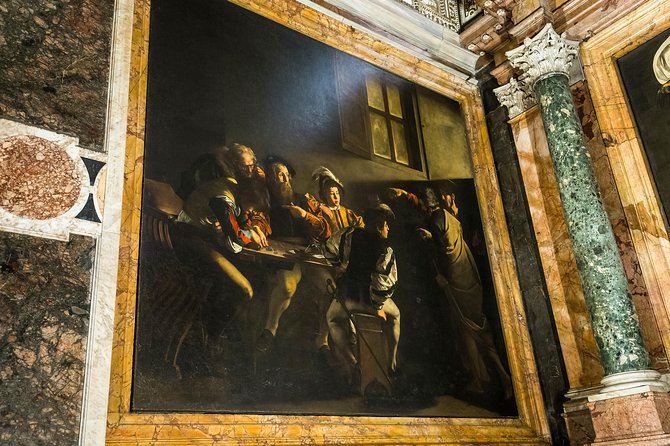
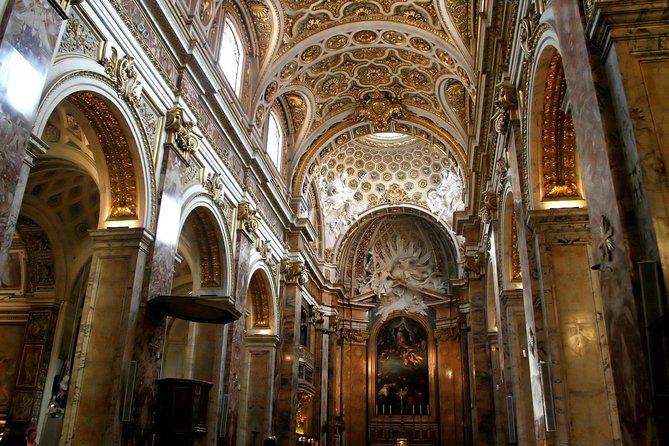
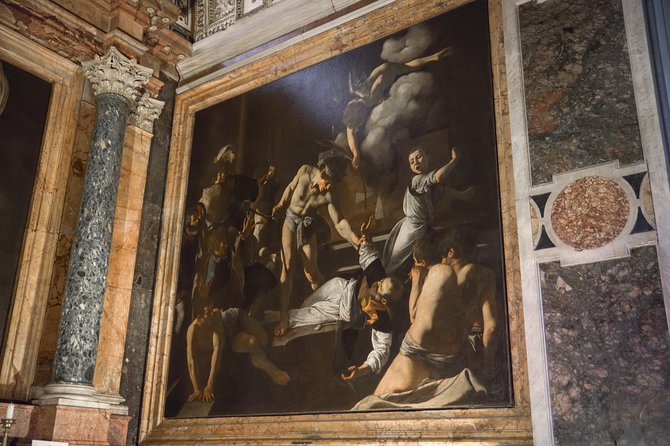
The route also takes in San Luigi dei Francesi, home to Caravaggio’s famous Saint Matthew cycle. These paintings are among the most intense works on the walk.
The trilogy includes the Calling of Saint Matthew, the Inspiration of Saint Matthew, and the Martyrdom of Saint Matthew. Together they show Caravaggio handling a story across several scenes, from a sudden call to religious service through inspiration and sacrifice.
The Calling of Saint Matthew is especially important for the way light directs attention. A beam seems to enter the room and point toward Matthew. The setting looks less like a biblical past and more like a contemporary Roman interior filled with ordinary people.
This is where the guide’s storytelling matters most. A bare list of titles will not tell you why these works changed painting. You want someone to explain the expressions, the clothing, the light, and the argument over how a saint should look.
The Saint Matthew paintings can be busy with other people looking at them, even outside organized groups. The included headsets help, but you should still expect a shared visit rather than a private viewing.
Entering the Pantheon after the art walk
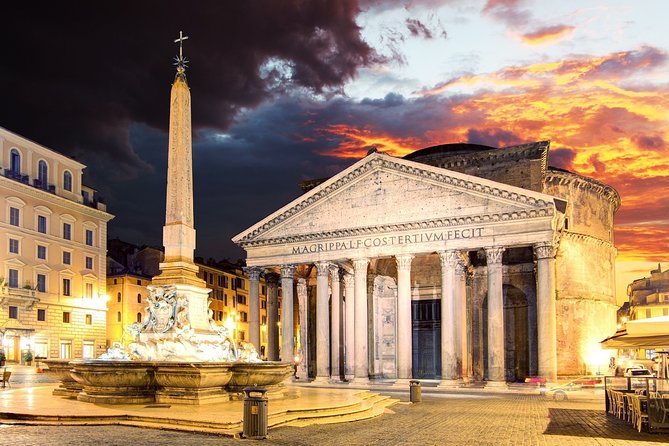
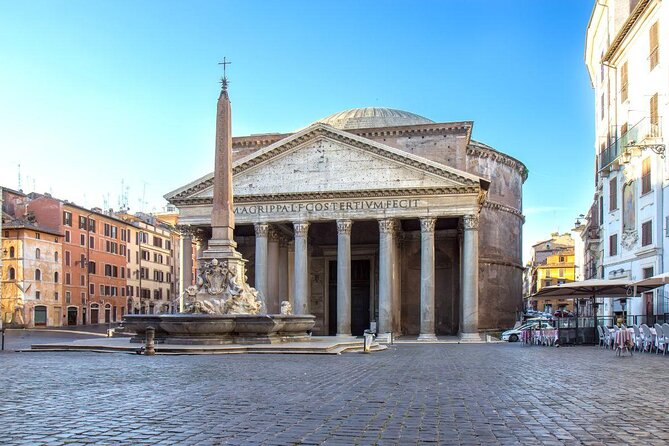
The final major stop is the Pantheon, reached on foot through central Rome. The tour includes the internal visit, not just an exterior explanation in Piazza della Rotonda.
The building began as a pagan temple and was later converted to Christianity. Its huge dome and central opening make the interior one of Rome’s most memorable spaces. After several churches filled with paintings, the Pantheon changes the scale completely. Here, architecture takes over.
The guide explains the building’s place in Roman history and points out the tombs of Italy’s first two kings after unification in 1861. Raphael is also buried here, creating a neat connection with the earlier churches and the tour’s larger story about artistic ideals.
The Pantheon visit lasts about 30 minutes. It is a good final stop because it gives you time to look upward, slow down, and shift from close study of paintings to the power of Roman engineering and architecture.
The tour ends in Piazza delle Coppelle, not back at the starting point. That is useful for dinner plans. You are already in central Rome, and the included aperitivo gives the afternoon a social finish.
Wine, food, and the value of the aperitivo
The aperitivo is more than a small extra. After three hours of walking and concentrated looking, a drink and something to eat help the group relax.
The final venue has varied by guide and date, but Casa Coppelle is specifically associated with the experience. The food has sometimes been substantial enough to feel like a light dinner, with Prosecco, wine, and several small bites rather than a token snack.
That helps the $65.17 price make sense. You are paying for a focused art walk, church and Pantheon admissions, headsets, a local guide, and the food and wine stop. It is not the cheapest way to see Caravaggio in Rome, but buying entry and arranging a separate guide and aperitivo would take time and planning.
The meal is also a chance to ask questions. If you are unsure why Caravaggio’s paintings look so different from Raphael’s, this is a relaxed moment to continue the conversation. One especially useful feature is that the experience does not end at the church door.
Timing, group size, and practical limits
The tour lasts about three hours and begins at 4:00 p.m. That makes it a useful choice for your first afternoon in Rome, or for a day when you want an art-focused activity without giving up an entire morning.
The maximum group size is 15. Some dates may be much smaller. A very small group can feel almost private, while a full group will require more attention to where you stand and how quickly you move between churches.
Wear comfortable shoes. The route includes Piazza del Popolo, the Campo Marzio district, Via Ripetta, Via Condotti, Via Margutta, the Spanish Steps, several churches, and the Pantheon. You will not be walking continuously for three hours, but there is enough distance and time on your feet to matter.
The tour includes headsets, which are useful in churches and on busy streets. Luggage storage is not available, so arrive with only what you can carry comfortably. Most people can take part, but the walking and occasional standing should be part of your decision.
The provider requires a minimum number of participants. If that minimum is not met, the tour may be canceled and you will be offered another date or a full refund. You can cancel for a full refund up to 24 hours before the start time. A cancellation inside that window is not refundable.
Who should book this Caravaggio walk
You should book it if you like art best when it is tied to a place, a person, and a story. It is especially useful if you want to see several Caravaggio paintings without planning a church-by-church route yourself.
You do not need a strong art background. The best guides make the work approachable by explaining what to look at and why the images caused such a reaction. Guides such as Jeanette and Giuseppe have been praised for connecting painting with Roman society, politics, psychology, and the artist’s difficult character.
This is less suitable if you dislike walking, need a guaranteed weather-proof program, or want long, quiet time alone in front of each painting. It also may not suit someone looking only for major monuments, since much of the pleasure comes from smaller churches and the spaces between them.
Should you book it?
Book this tour if you want Caravaggio in context, not just a checklist of famous paintings. The original church settings, the Raphael comparisons, the Pantheon, and the included aperitivo give you a full late afternoon with a clear theme.
Skip it if your schedule is tight, your group cannot manage several hours on foot, or you prefer to explore at your own pace. For most art-curious visitors, though, $65.17 is a fair price for the amount packed into the afternoon, especially when the guide brings the paintings to life and the wine stop turns the finish into a pleasant Roman evening.
FAQ
How long does the Caravaggio walking tour last?
The tour lasts approximately three hours.
What time does the tour begin?
The meeting time is 4:00 p.m.
Where does the tour start?
The tour starts at Piazzale Flaminio in Rome, near Piazza del Popolo and Santa Maria del Popolo.
Where does the tour end?
The tour ends in Piazza delle Coppelle, near the Pantheon area.
Is entry to the Pantheon included?
Yes. The tour includes an internal visit to the Pantheon and admission to the listed churches where required.
Is food or wine included?
Yes. An aperitivo is included, with wine and small food offerings at a local venue.
Just added around Rome
- Colosseum,Vatican Museum & Sistine Chapel in One Day Guided Tour★ 3.5 · 9 reviews
- Vatican Museums and Sistine Chapel last entry Guided Tour★ 5.0 · 3 reviews
- Private Tour Of Rome Highlights And Vatican Museums Skip-The-Line all included★ 5.0 · 4 reviews
- Borghese Gallery Admission Ticket with Audioguide★ 4.0 · 64 reviews
- Borghese Gallery Skip the Line Guided Tour★ 4.5 · 23 reviews
- Borghese Gallery Ticket with Audioguide★ 3.5 · 51 reviews
- Borghese Gallery VIP Tour – Skip the Line Tickets★ 5.0 · 2 reviews
- Rome: Borghese Gallery tickets with private drop on and drop off★ 3.5 · 3 reviews
Art Museum Tours in Rome, compared.
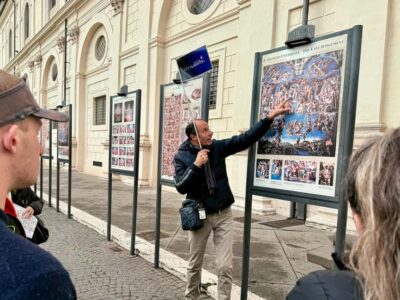
Vatican Museums, Sistine Chapel & St. Peter’s Basilica Tour
Read our review →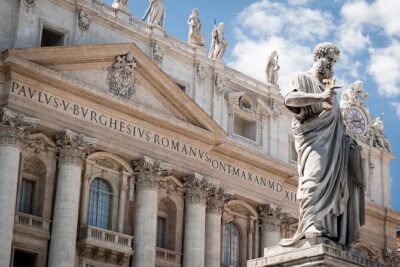
Vatican Museums, Sistine Chapel & St Peter’s Basilica Guided Tour
Read our review →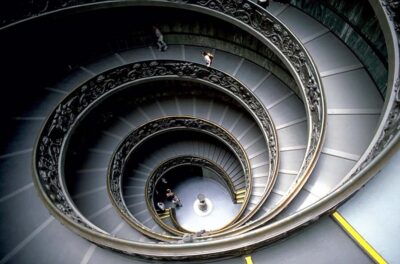
Vatican Museums, Sistine Chapel and Basilica Tour
Read our review →
Vatican Museums & Sistine Chapel Skip-the-Line Entry Ticket
Read our review →
Vatican Museums, Sistine Chapel & Basilica Tour
Read our review →
Vatican Museums & Sistine Chapel Guided Tour
Read our review →
Vatican Museums & Sistine Chapel Skip-the-Ticket-Line Tour
Read our review →
Vatican Museums, Sistine Chapel and St. Peter’s Basilica Tour
Read our review →Browse the lists this tour appears in