
REVIEW · FLORENCE
Uffizi & Accademia Timed Entry: Small Group Duomo Walking Tour
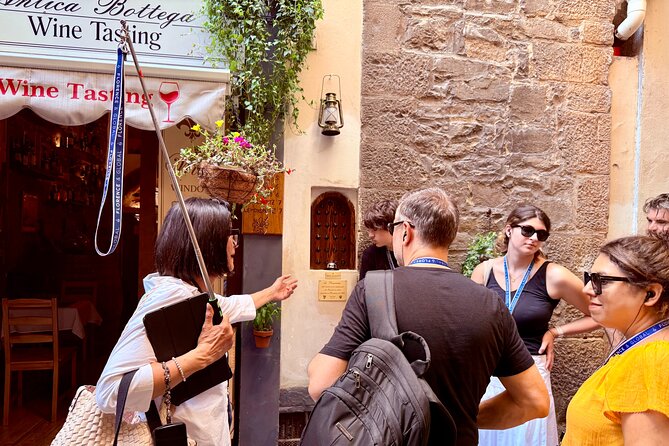
Michelangelo’s David is the star, but this four-hour tour gives you a useful sweep of Florence beyond one famous statue. I like the small groups of 10 to 15, and I like the way the walk connects the Accademia and Uffizi with the Duomo, Orsanmichele, the Porcellino, and Piazza della Signoria. Guides such as Sylvia, Cosetta, Deborah, and Valentina have been praised for clear storytelling, humor, and patience.
The main drawback is pace. You cover two major museums and a city walk in one afternoon, so the Uffizi portion is an express visit rather than a slow art study. You will also walk on cobblestones and museum floors, so wear comfortable shoes, carry an umbrella in wet weather, and check the exact tour option carefully before booking.
Key points to know before booking
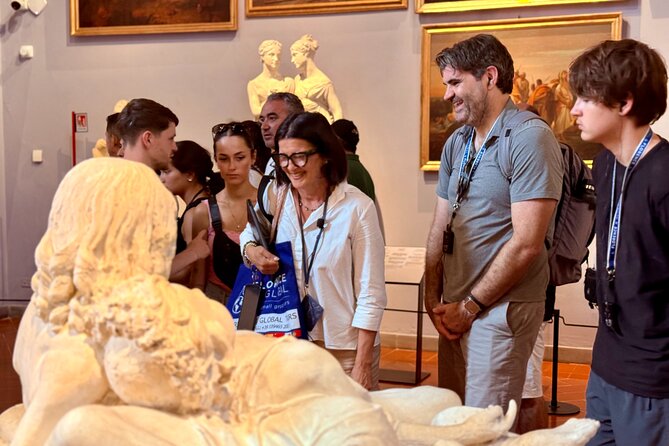
- See David and the Uffizi in one four-hour program: This is built for first-time visitors who want Florence’s major art stops without arranging separate tickets and tours.
- Expect a real walking tour between museums: The route adds the Duomo, Orsanmichele, Piazza della Repubblica, the Porcellino, and Piazza della Signoria.
- Small groups make questions easier: The maximum is 15 people, with radios and headsets so you can hear the guide in busy streets and galleries.
- The Uffizi visit focuses on major works: You get about 1 hour and 40 minutes inside, but the format is designed to cover highlights rather than every room.
- The price can be good value: At $50.79 per person, the fee combines guiding, timed access, and two museums, though you should confirm exactly what is included with your selected option.
- Plan for a strict cancellation deadline: You can receive a full refund if you cancel at least 24 hours ahead, but changes inside that window are not accepted.
Why this Florence tour works well for first-time visitors
Florence can feel like an art history exam delivered at walking speed. The Accademia, Duomo, Uffizi, Medici story, and Renaissance politics all compete for your attention. This tour gives you a framework, which is often more useful than simply entering two famous museums and wandering from room to room.
You begin near the Accademia, then move through the center on foot before ending at the Uffizi. That order makes sense. You meet Michelangelo’s David while your attention is fresh, see the city’s main architectural and political sights in between, and finish with the broad sweep of Florentine painting.
I especially like that the tour does not treat the museums as isolated boxes. The guide connects the art to the streets, churches, palaces, and public squares outside. You learn why Florence’s rulers commissioned certain images, how the Medici shaped the city, and how art and civic power worked together.
The experience is offered in English, with several start times. That flexibility matters in Florence, where museum tickets and crowded streets can make a day hard to organize. The group meets at an air-conditioned office before departure, where staff check you in and gather everyone before walking to the Accademia.
One small practical point deserves attention: the supplied information gives Via Guelfa 2 as the meeting point, while the itinerary also refers to Via Guelfa 12r. Use the address shown on your confirmation and arrive at least 15 minutes early. Do not leave this until the last minute.
More Art Museum Tours in Florence
- Florence: Skip-The-Line Uffizi Gallery Timed Entry Ticket
★ 4.5 · 27,832 reviews - Florence: Uffizi Priority Ticket & Masterpieces Audio App
★ 4.2 · 6,402 reviews - Florence Accademia Gallery Tour with Entrance Ticket Included
★ 4.5 · 6,148 reviews
Michelangelo’s David at the Accademia
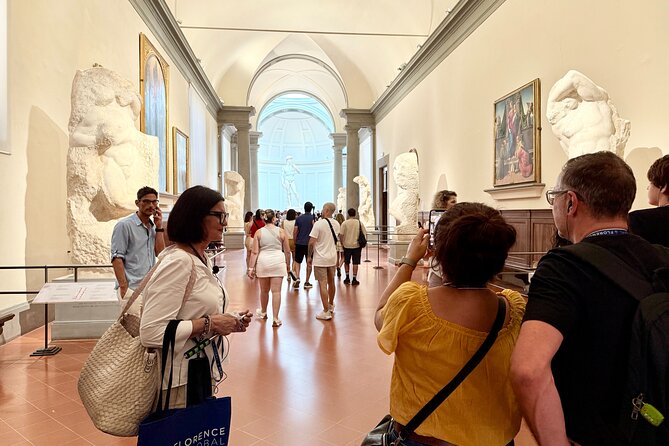
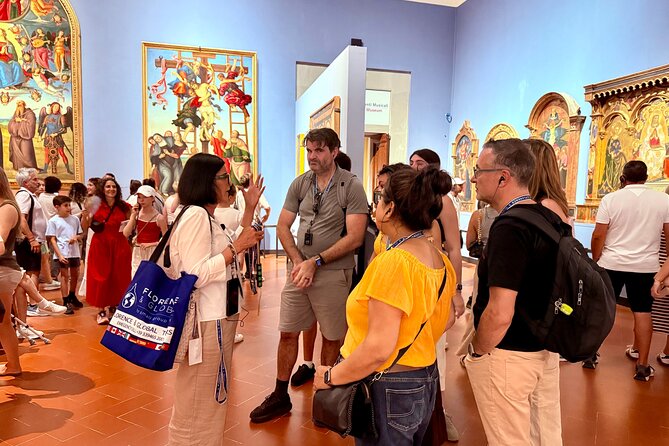
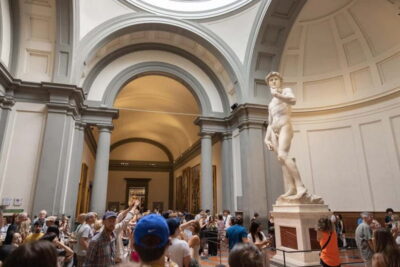
The first museum visit lasts about 1 hour and 15 minutes. The main event is Michelangelo’s original David, but the Accademia is not only a one-statue stop. You will also see paintings, musical instruments, and other works that help place David within Florence’s artistic world.
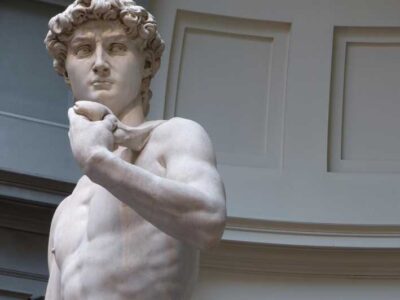
A guide is particularly useful here because David rewards more than a quick photograph. You can look at the figure’s stance, expression, hands, and proportions while hearing about the work’s meaning in Florence. One guide, Deborah, was singled out for explaining David from several angles, while Valentina reportedly spent extra time recommending books and allowing a small group to look carefully at the sculpture.
That kind of attention depends on the group and the guide, so do not expect a private lesson. Still, a maximum of 15 people gives the guide a better chance to answer questions than a large coach group. Radios and headsets also help keep the commentary audible inside crowded rooms.
The Accademia has a few practical rules. One specific reminder from the tour information is that water bottles are not allowed inside, so finish your water or be ready to discard it before entry. Comfortable shoes matter here as much as on the streets. Heeled boots may look fine in a suitcase, but long museum floors and Florence’s paving are not kind to them.
From the Duomo to Piazza della Signoria
After the Accademia, the group walks through central Florence. The city portion is not a filler between museum tickets. It gives you the physical setting for the art you have just seen and the political story you will encounter at the Uffizi.
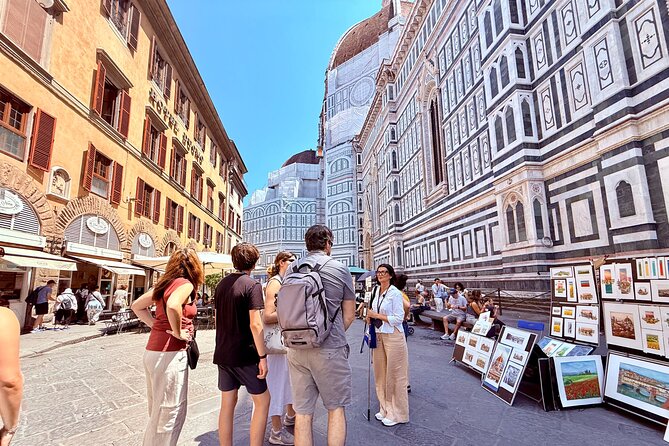
At Piazza del Duomo, you pause to admire the cathedral’s colored marble facade, Giotto’s bell tower, and the baptistery. The baptistery’s bronze doors are linked with the famous name Gate of Paradise, while the cathedral’s dome remains the great architectural achievement of the square. The tour does not include entry into the cathedral or a climb, so you are looking from outside rather than making this a dome-access experience.
That distinction is important. If your main goal is to climb Brunelleschi’s dome, this is not the right product by itself. If you want a clear introduction to the square and its buildings, the 15-minute stop gives you a useful orientation without adding another long line or reservation.
The route continues to Orsanmichele, a building with an unusual double identity. It began as a covered grain market and later became a church, with Renaissance statues placed around its exterior. Your guide can help you read the building as both a place of commerce and a display of civic and religious power.
At Piazza della Repubblica, you reach the area associated with Florence’s ancient Roman forum and the city’s geographic center. The Column of Abundance marks that older civic role. Today the square feels open and modern compared with some of Florence’s tighter medieval streets, but the stop helps explain how the city changed over time.
A lucky stop at the Porcellino
The Fontana del Porcellino, at the Mercato Nuovo, takes only about five minutes. The bronze wild boar is one of those small Florence traditions that breaks up the formal art history.
You rub the boar’s snout and drop a coin through the grate. If the coin falls through, local belief says you will have good fortune and return to Florence. It is quick, playful, and easy to enjoy even if you have spent the morning thinking about Renaissance sculpture.
Do not expect a long explanation or a major sightseeing stop here. Its value is the change of mood. After the cathedral and museum, you get a simple local ritual and a chance to reset before the more serious civic theater of Piazza della Signoria.
More ways to see the David:
- Florence: Accademia Gallery Guided Tour
★ 4.6 · 4,156 reviews - Florence: Accademia Gallery Skip-the-Line Guided Tour
★ 4.8 · 3,044 reviews - Florence: Art Tour, Accademia Gallery and David
★ 4.5 · 2,407 reviews - Florence: Accademia Gallery Guided Tour with Entry Ticket
★ 4.6 · 2,253 reviews
Piazza della Signoria and Florence’s public art
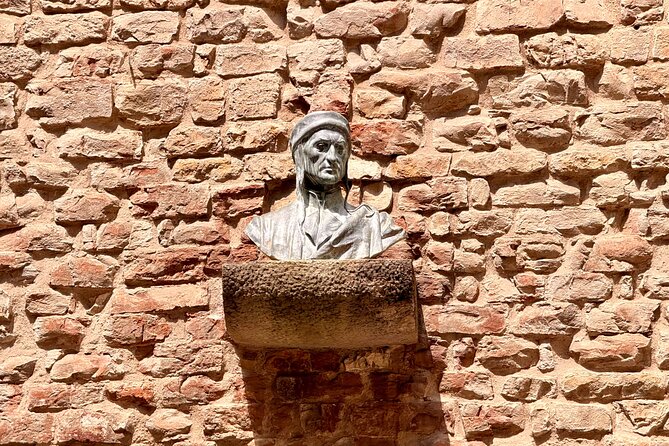
Piazza della Signoria is an outdoor gallery and one of the best places on the route to see how Florence used sculpture as political language. A copy of David faces the Palazzo Vecchio, while the Loggia dei Lanzi holds works such as Cellini’s Perseus with the Head of Medusa.
The original David is inside the Accademia. The copy here is useful for understanding its public role. The figure became a symbol of Florence’s independence and determination, so seeing the statue in the square where civic authority was displayed adds context that a museum room cannot provide.
The stop itself is listed at about five minutes, although the guide explains the surrounding buildings and sculptures as the group approaches. That short time means you should not expect an in-depth study of every statue. You will, however, leave with a better sense of why Florence’s public spaces are filled with political messages in stone and bronze.
This part of the tour also shows why comfortable footwear and weather planning matter. The route is outdoors, and winter rain can make the walk less pleasant. Bring an umbrella and warm layers in colder months. The tour may be canceled in poor weather, in which case you are offered another date or a full refund.
The Uffizi’s Renaissance highlights
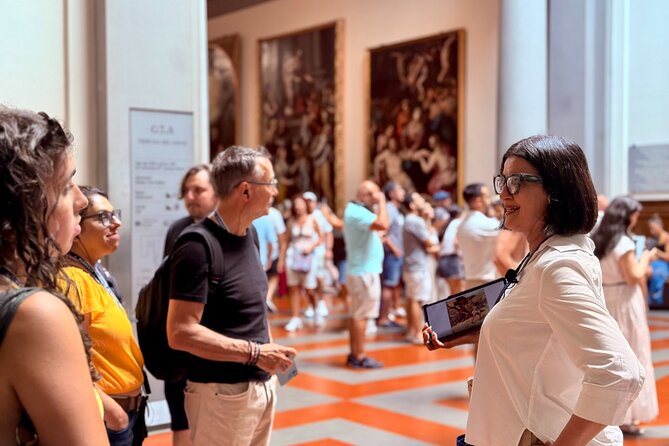
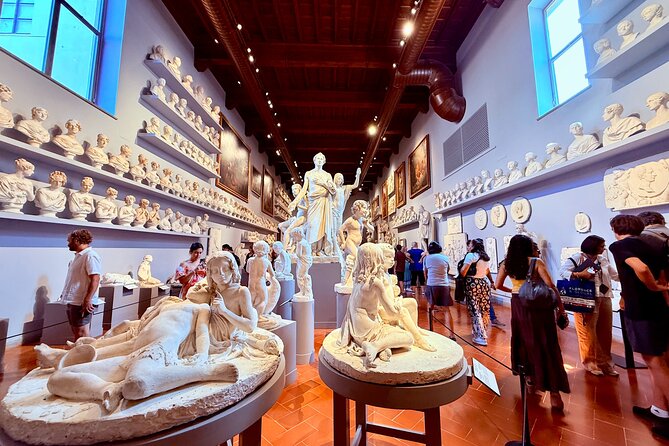
The final museum visit lasts about 1 hour and 40 minutes. The Uffizi occupies the U-shaped administrative complex designed by Giorgio Vasari for Cosimo I de’ Medici, beginning in 1560. The word uffizi means offices, a reminder that the building began as a government center rather than a museum.
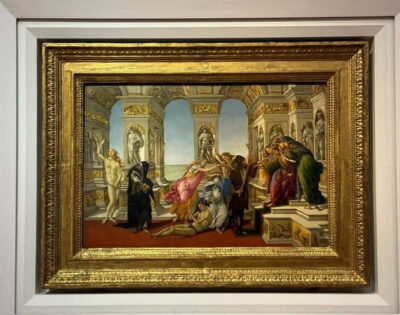
The Medici family’s collection eventually turned those offices into one of the world’s great art museums. Inside, the tour focuses on major works by artists including Botticelli, Leonardo, and Michelangelo. You should think of this as a guided highlights route. The Uffizi is too large for a full treatment in one visit, and the goal here is to cover important rooms without leaving you exhausted or lost.
A guide helps most when the gallery is crowded and the paintings are familiar from books. You may know Botticelli’s Birth of Venus by sight, but the surrounding political, religious, and artistic setting can change how you look at it. Guides such as Cosetta, Sylvia, Deborah, Alessandra, and Doucho have been praised for making those links clear, adding humor, and offering perspectives beyond basic dates and names.
The Uffizi portion also includes views that are easy to miss when visiting alone. From the second-floor corridor, you can look toward the Vasari Corridor, the private passage built for Duke Cosimo I de’ Medici and his family. It linked Palazzo Vecchio with the Palazzo Pitti, allowing the ruling family to move between government offices and home without mixing with the public.
The same corridor area offers a view of Ponte Vecchio. The medieval bridge, rebuilt in stone in 1345, is lined with shops. Butchers once occupied the bridge until Grand Duke Ferdinando I replaced them with goldsmiths and jewelers in 1593. That practical bit of history helps explain why the bridge looks the way it does today.
What the $50.79 price really covers
At $50.79 per person, the tour is not the cheapest way to walk around Florence. Its value rests in the combination of timed museum access, a guide, a city route, and a small group.
The supplied information lists the Uffizi entrance at €29 per person. The Accademia admission is also included in the program description, along with the guided visits, headsets, and city walk. Because the product has different options, including shorter Accademia-only and Accademia-plus-city versions, check your exact selection and inclusions before paying.
For a first visit, I think the price can make sense. You are paying to avoid planning two major museum entries, to hear explanations in English, and to connect the museums with the city’s major sights. The value is strongest if you have limited time or do not feel comfortable interpreting Renaissance art on your own.
It is less compelling if you already know the Uffizi and Accademia well, prefer to set your own pace, or want to spend half a day on one painting. The four-hour format keeps you moving, and the Uffizi visit is deliberately selective.
Group size, guides, and the pace of the day
The maximum group size is 15, with many tours running smaller. One group was reported at seven people, which allowed the guide to spend more time with individuals and answer specific questions. You should not assume every departure will be that small, but the 10 to 15 person limit is still a useful middle ground.
The strongest feature of the guiding is the range of teaching styles. Sylvia has been praised for combining humor with solid art knowledge. Cosetta has been described as patient and kind, including giving people breaks. Deborah is noted for detailed explanations of David, the Medici family, and Renaissance paintings. Valentina has helped with book suggestions and even called a cab for a participant.
Those personal touches cannot be guaranteed, since the assigned guide changes. Still, the consistent pattern is clear: this experience is built around live explanation, not just entry tickets. Headsets are supplied so the guide can speak while the group moves through busy streets and galleries.
The tour does require stamina. You spend four hours walking, standing, listening, and looking upward at buildings. Most people can participate, but the experience is not a good match for someone seeking a seated museum visit or a very slow pace.
Who should book this experience?
I would choose this tour for a first visit to Florence, especially if you have one busy day and want the major art stops placed in context. It also suits families and mixed groups, since the guide can explain the works while keeping the route moving.
It is a good fit for anyone who wants help with the famous masterpieces but still wants to see ordinary pieces of the city between museums. The Porcellino, Orsanmichele, Piazza della Repubblica, and Ponte Vecchio views give the day some texture beyond the headline attractions.
I would hesitate if you need a fully private experience, dislike fixed schedules, or want to study every Uffizi room. I would also read the selected duration carefully. A shorter option may be offered, and the four-hour experience is the one that includes both museums and the full city walk.
Free cancellation is available up to 24 hours before the start time. Inside that window, no refund is provided, and changes are not accepted. You must also provide every participant’s full name when booking and bring a passport or ID matching the booking name for Uffizi entry.
Should you book the Uffizi and Accademia tour?
Book it if you want David, the Uffizi, and Florence’s central sights in one organized half-day. The small group, timed access, headsets, and lively guides make a complicated sightseeing plan easier to manage.
Skip it if you want a slow, independent museum day or plan to climb the Duomo. This tour gives you exterior views of the cathedral and a focused look at the two galleries, not every possible Florence attraction.
For most first-time visitors, the combination is sensible. Wear good shoes, arrive early at the correct Via Guelfa meeting point, confirm the option you have selected, and keep your expectations realistic: this is a well-paced introduction to Florence’s art and civic story, not a complete education in the Uffizi.
FAQ
How long does the full tour last?
The full guided option lasts approximately four hours. Shorter options may include only the Accademia or the Accademia with the city walking portion.
Which museums are included?
The full tour includes the Galleria dell’Accademia and the Uffizi Galleries. The Accademia visit lasts about 1 hour and 15 minutes, while the Uffizi portion lasts about 1 hour and 40 minutes.
Is Michelangelo’s original David included?
Yes. The Accademia visit includes Michelangelo’s original David, along with paintings and musical instruments.
Does the tour enter the Duomo?
The tour visits Piazza del Duomo and explains the cathedral, baptistery, bell tower, and dome from outside. Entry to the cathedral or a dome climb is not listed as included.
What is the group size?
The group has a maximum of 15 people. The tour is designed as a small-group experience for more personal attention.
Are headsets provided?
Yes. Radios and headsets are provided so you can hear the guide during the museum visits and city walk.
Where does the tour start?
The meeting point is listed as Via Guelfa 2 in Florence. The itinerary also refers to an office at Via Guelfa 12r, so check your booking confirmation for the exact address and arrive 15 minutes early.
What is the cancellation policy?
You can cancel at least 24 hours before the start time for a full refund. Cancellations or changes made less than 24 hours before the experience are not refunded or accepted.
More Art Walks in Florence
- Florence: Uffizi & Accademia Small Group Walking Tour
★ 4.7 · 1,380 reviews - Florence in a Day: Michelangelo’s David, Uffizi and Guided City Walking Tour
★ 4.5 · 1,048 reviews - Florence Walking Tour with Accademia, Uffizi & Lunch
★ 4.0 · 1,033 reviews - Florence: Walking Tour with David, Duomo & Uffizi Gallery
★ 4.7 · 414 reviews
More Uffizi Tours in Florence
- Uffizi Gallery: Renaissance Masterpieces Guided Tour
★ 4.6 · 6,070 reviews - Uffizi Gallery Small Group Tour with Guide
★ 4.5 · 4,923 reviews - Florence: Uffizi Gallery Timed Entry Ticket & Audio Guide
★ 4.2 · 2,794 reviews - Florence: Uffizi Gallery and Accademia Gallery Guided Tour
★ 4.8 · 2,028 reviews
Just added around Florence
- Skip the line: Uffizi small group and walking tour of Florence★ 4.5 · 17 reviews
- Florence Private Walking Tour Including Uffizi and Accademia★ 3.5 · 4 reviews
- Uffizi Gallery Italian guided Tour semi private★ 4.5 · 9 reviews
- Private Tour: Accademia Gallery and City Tour★ 5.0 · 10 reviews
- Private Tour: The Academy Gallery★ 5.0 · 6 reviews
- Uffizi Express Entrance -private tour★ 5.0 · 9 reviews
- Uffizi and Palazzo Vecchio Combo Private Tour★ 5.0 · 3 reviews
- VIP Priority Access: Uffizi Gallery- Guided Experience★ 4.5 · 94 reviews
Art Museum Tours in Florence, compared.
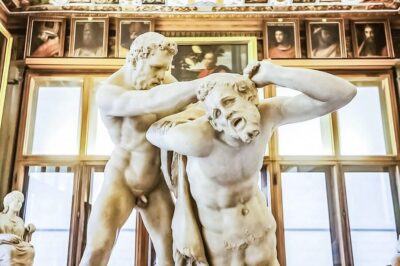
Skip-The-Line Uffizi Gallery Timed Entry Ticket
Read our review →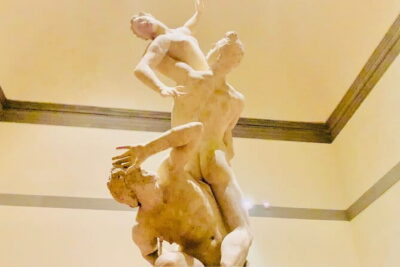
Florence Accademia Gallery Tour with Entrance Ticket Included
Read our review →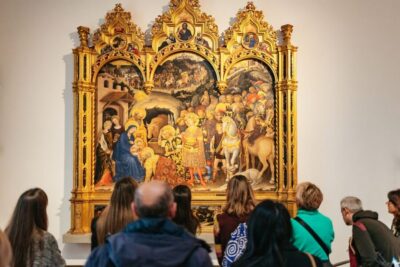
Uffizi Gallery: Renaissance Masterpieces Guided Tour
Read our review →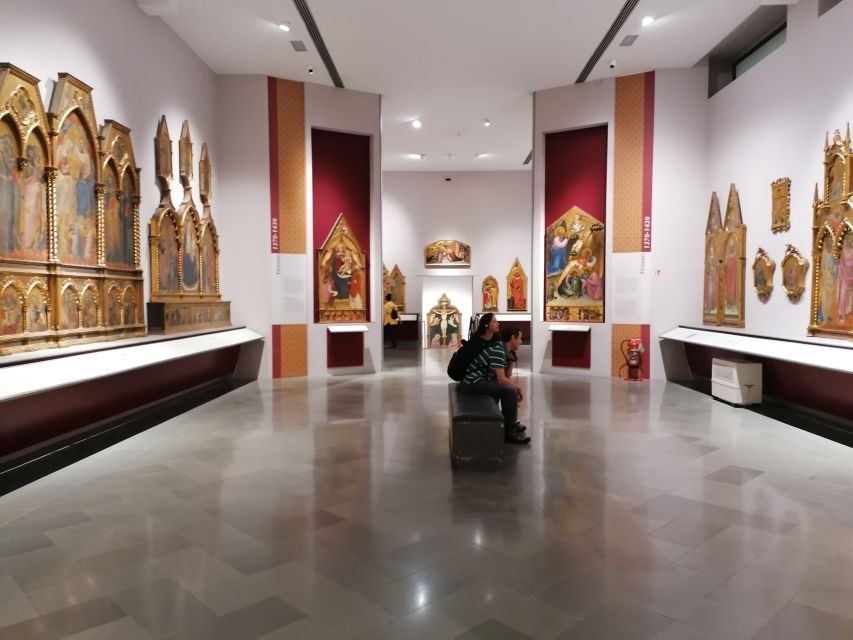
Uffizi Gallery Timed Entry Ticket & Audio Guide
Read our review →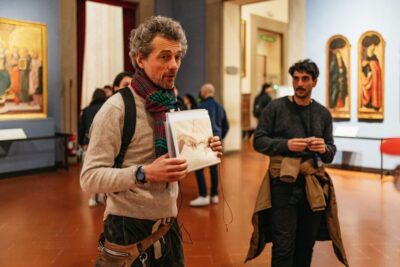
Accademia Gallery Guided Tour with Entry Ticket
Read our review →Browse the lists this tour appears in