
REVIEW · FLORENCE
Florence: Accademia Gallery Guided Tour
Michelangelo’s David is the reason to come, and this tour gets you in front of the statue without spending half your Florence day in line. Inside, a guide such as Claudio, Elisa, Elvis, or Oxsana can explain what you are seeing, from David’s tense expression to Michelangelo’s unfinished Prisoners.
I like the separate entrance and the compact format. I also like the way the tour connects the art to Florence, the Medici family, and the Renaissance instead of treating David as a lone marble celebrity. The main drawback is that one hour goes quickly, and a few people have found the headset sound fuzzy or the guide’s English difficult to catch.
Key points at a glance
- David gets the spotlight: See Michelangelo’s famous statue from several angles and learn how its details shape its meaning.
- A useful time-saver: The tour uses a separate entrance, which can spare you a long wait outside the Accademia.
- More than one masterpiece: The route also includes Michelangelo’s unfinished Prisoners and paintings by Lippi and Ghirlandaio.
- History gives the art meaning: Your guide links the gallery to Florence, the Medici family, and the birth of the Renaissance.
- Short and focused: The guided visit is designed for about an hour, with time to remain in the gallery afterward according to the activity details.
- English with headsets: The guide speaks English and uses headsets, though sound quality may vary.
Why David deserves more than a quick photograph
The Accademia Gallery is not Florence’s largest museum. That is part of its appeal. You can see its most important works without giving up an entire morning, and the route leads fairly quickly to the statue that draws people from around the world.
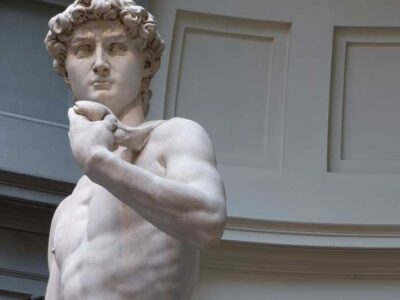
David is not hidden in a side room. He is presented in a high gallery where you can walk around him and look up at the figure from different positions. That matters. From the front, you notice the calm, alert face. From the side, the body’s proportions and the turn of the head become easier to study. A guide helps you slow down and look instead of taking one photograph and moving on.
The tour also gives you a better reason to study Michelangelo’s unfinished Prisoners. Their rough surfaces and partly released forms make a strong contrast with David’s finished body. Your guide can use that contrast to explain Michelangelo’s sculpting process and the way people interpret the figures as emerging from the marble.
I would not book this experience only to get a faster photo. The best reason is the explanation around the statue. David is familiar from books, posters, and television, but standing in front of the original is a different experience. The guide’s job is to point out details you might otherwise miss and give the work a place in Florence’s political and artistic story.
More Art Museum Tours in Florence
- Florence: Skip-The-Line Uffizi Gallery Timed Entry Ticket
★ 4.5 · 27,832 reviews - Florence: Uffizi Priority Ticket & Masterpieces Audio App
★ 4.2 · 6,402 reviews - Florence Accademia Gallery Tour with Entrance Ticket Included
★ 4.5 · 6,148 reviews
Meeting your guide in Piazza delle Belle Arti
The meeting point is in Piazza delle Belle Arti, the main square beside the Galleria dell’Accademia. Look for a sign with the name Florence with Elvis Guided Experience.
This is a simple meeting point, but give yourself time to find the group. The tour depends on getting everyone together before entering through the separate entrance. Arriving rushed can make the first few minutes stressful, especially if you are handling children or a stroller.
The activity is wheelchair accessible. You should bring a passport or identity card, including for children. A copy is accepted. Large bags and luggage are not allowed, so leave suitcases elsewhere before arriving at the museum.
The group uses headsets so you can hear the guide while standing among other museum visitors. This is a useful feature in a busy gallery. Still, sound is not perfect every time. One otherwise happy customer found the radio fuzzy, and another wanted the guide to speak a little more slowly. If you have hearing difficulties, stand close to the guide and say so at the start.
Entering the Accademia without the long wait
The separate entrance is one of the clearest reasons to consider this tour. The Accademia can draw a long queue, and one person described seeing a wait of more than three hours on the day of the visit. That is a serious cost in Florence, where every lost hour could have gone to another museum, a meal, or a walk through the city.
Skip-the-line access does not mean skipping security. You still go through the museum’s entry checks, but the group avoids the standard waiting line. One particularly useful detail is that the tour can work well for families. A visitor with two children under five and a double stroller found the process manageable.
The practical value depends on the day and the time. If the public line is short, the $53 price may feel high. If the line stretches around the block, the saved time can make the fee easier to justify. I would look at this as a time-saving service with a guided museum visit attached, not simply as an admission ticket.
The first galleries: Florence told through art
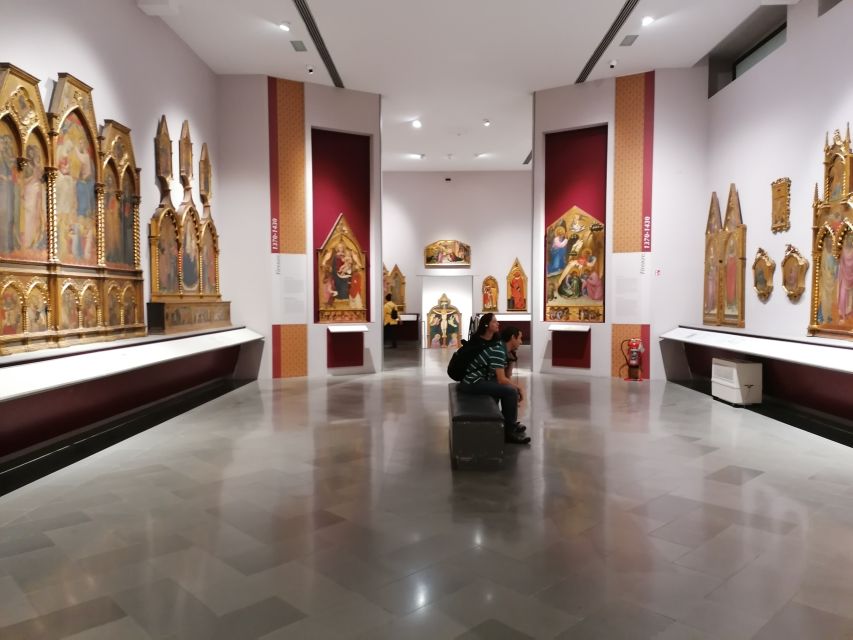
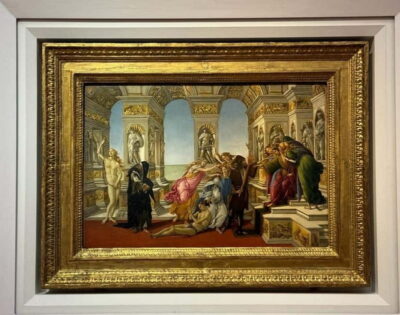
Once inside, the guide begins with the Accademia’s collection rather than rushing straight to David. You may see paintings connected with artists such as Filippino Lippi and Domenico Ghirlandaio, along with other works from Florence’s artistic past.
These paintings help explain the setting in which Michelangelo worked. Florence was a city where art, religion, politics, and family power were closely connected. The Renaissance did not appear out of nowhere. It grew through commissions, workshops, wealthy patrons, and a constant interest in the art of earlier Greece and Rome.
The guide also brings in the Medici family. This is more useful than a list of famous names. The Medici supported artists, shaped cultural life, and helped make Florence a center for new ideas. The tour explains why their influence mattered to Michelangelo and how a powerful patron could affect an artist’s career.
You will not get a full survey of every room in the museum. That is intentional. The experience is built around a short route and the main works. If you want to study every painting at length, you will need extra time after the guided portion.
More ways to see the David:
- Uffizi & Accademia Timed Entry: Small Group Duomo Walking Tour
★ 4.5 · 3,630 reviews - Florence: Accademia Gallery Skip-the-Line Guided Tour
★ 4.8 · 3,044 reviews - Florence: Art Tour, Accademia Gallery and David
★ 4.5 · 2,407 reviews - Florence: Accademia Gallery Guided Tour with Entry Ticket
★ 4.6 · 2,253 reviews
Michelangelo’s David from every angle
The central part of the tour is the David gallery. Here, the guide gives you time to look at the statue while explaining its design, expression, and place in Florence.
The pose is one of the first things to notice. David is shown before the fight with Goliath, not after the victory. His face and body convey concentration and readiness. The guide can help you see how Michelangelo made the figure feel alert even though the marble itself is motionless.
Looking from the side also matters. The statue was made to be seen as a complete figure, not just a front-facing image. A guided visit encourages you to move around it and compare the views. That is one of the most useful parts of the tour for first-time visitors, since the famous front view can make you forget the sculpture has depth, balance, and carefully arranged movement.
The scale can surprise you. Photographs flatten the experience, while the original fills the room. Your guide may also explain how the figure’s details are meant to be read from below and at a distance. This helps make sense of choices that can look unusual in a close photograph.
The tour does not promise private access or an empty gallery. You are still sharing the room with other people. The benefit is that the guide gives you a clear place to stand and a sequence of details to follow, so the crowd does not completely control your visit.
The unfinished Prisoners and Michelangelo’s working method
The Prisoners are among the most valuable works to see after David. Their unfinished condition can seem confusing at first. Why would a museum place rough, partly formed figures beside one of the most polished sculptures in the world?
That question gives the guide a natural way to discuss Michelangelo’s approach to marble. The unfinished surfaces invite you to compare the stages of the work with David’s smooth finish. Several people particularly valued the explanation of these sculptures, saying it added detail and helped them understand Michelangelo’s work beyond the one famous statue.
This section also keeps the tour from becoming a single-object visit. You learn that Michelangelo’s reputation rests on more than one perfect figure. You get a sense of the labor, decisions, and incomplete projects behind the finished image.
The amount of time here depends on the guide and the pace of the group. The overall experience is short, so do not expect a long technical lecture. The strongest guides, including those praised for their clear storytelling and patience, use the Prisoners to make a few ideas stick.
What the guides add to the visit
The guide is the main reason to choose this experience over entering independently. Names that have received strong praise include Elisa Raimondo, Claudio, Elvis, Oxsana, Anna, Ana, Victoria, and Emanuella. Different departure times may have different guides, so you should not assume you will receive a particular person.
The best guide style here is clear, lively, and controlled. You need enough detail to understand David, but not so much that you are trapped listening while missing the chance to look. Several guides have been praised for answering questions, keeping the visit moving, and giving just the right amount of information.
I especially like the connection between art and place. A guide can explain why David mattered to Florence and why Michelangelo’s relationship with powerful patrons shaped his work. That context gives the statue a civic meaning, rather than leaving it as a beautiful body in a museum.
There is a trade-off. A group tour cannot adjust perfectly to everyone. If you already know Michelangelo well, parts of the explanation may feel familiar. If you are new to Renaissance art, the hour may feel too short. The tour suits you best if you want a clear introduction and a guide to help organize what you see.
Is $53 a fair price?
At $53 per person, this is not the cheapest way to enter the Accademia. You are paying for guaranteed museum entry, a live English-speaking guide, headsets, and access through a separate entrance.
The price makes the most sense during busy periods, when the regular queue could take hours. It also works well if you have only one day in Florence and need to protect your schedule. Paying $53 to save several hours can be reasonable, especially if you use the extra time for another major sight.
The value is less obvious when the museum is quiet or when you prefer to read at your own pace. An independent visit gives you more freedom to linger, return to a painting, or avoid commentary altogether. You will also need to make room in your budget for the fact that the tour lasts about an hour.
The supplied timing information describes the activity as one hour, while the route details also refer to a guided portion of about 75 minutes. Plan on a short visit rather than an extended museum session. One useful benefit is that you may be allowed to remain in the gallery afterward and look around on your own, as one visitor did after a tour with Claudio.
Who should book this Accademia visit?
I would recommend it to first-time visitors who want to see David but do not want to spend hours studying an art guide before arriving. It is also a good match for families, people with a tight Florence schedule, and anyone who finds museum queues especially frustrating.
It suits you if you like history explained in plain language and want to understand why the statue matters. The links to the Medici family, Florence, and the Renaissance give the visit more shape than a simple entrance ticket.
You may prefer an independent visit if you want silence, long pauses, or a detailed look at every gallery. You should also think twice if the $53 fee is difficult to fit into your budget and the line is short on your chosen day.
For most first-time visitors, the strongest argument is time. You enter through a separate entrance, hear a focused explanation, see David and the Prisoners, and can sometimes continue looking after the tour. That is a practical package for a short Florence stay.
Final decision: book it for context and saved time
Book this tour if David is high on your Florence list and you want more than a quick photograph. The separate entrance can be worth the cost on a crowded day, while the guide gives useful context about Michelangelo, the Medici family, and the other art in the Accademia.
Skip it if you prefer to explore alone or want a long museum visit. The tour is brief, the group pace may not match your own, and headsets can occasionally be hard to hear.
My choice would be to book it during a busy period or for a tightly planned first visit. The Accademia is compact, David is the clear star, and a good guide can turn a familiar image into a work you actually look at.
FAQ
How long does the Accademia Gallery tour last?
The activity is advertised as lasting one hour. The route details also refer to a guided portion of about 75 minutes, so plan for a short, focused museum visit.
How much does the tour cost?
The listed price is $53 per person.
What language is the tour conducted in?
The live tour guide speaks English.
Where is the meeting point?
Meet in Piazza delle Belle Arti, in the main square of the Galleria dell’Accademia. Look for a sign reading Florence with Elvis Guided Experience.
Does the tour include museum admission?
Yes. Guaranteed museum entry is included.
Can I skip the regular line?
Yes. The tour uses a separate entrance so you can avoid the standard museum queue, although you still need to pass through security.
Are headsets provided?
Yes. Headsets are included so you can hear the guide more clearly inside the gallery.
Is the tour wheelchair accessible?
Yes. The activity is listed as wheelchair accessible.
Can I bring luggage or a large bag?
No. Luggage and large bags are not allowed. You should also bring a passport or identity card, including for children. A copy is accepted.
Just added around Florence
- Skip the line: Uffizi small group and walking tour of Florence★ 4.5 · 17 reviews
- Florence Private Walking Tour Including Uffizi and Accademia★ 3.5 · 4 reviews
- Uffizi Gallery Italian guided Tour semi private★ 4.5 · 9 reviews
- Private Tour: Accademia Gallery and City Tour★ 5.0 · 10 reviews
- Private Tour: The Academy Gallery★ 5.0 · 6 reviews
- Uffizi Express Entrance -private tour★ 5.0 · 9 reviews
- Uffizi and Palazzo Vecchio Combo Private Tour★ 5.0 · 3 reviews
- VIP Priority Access: Uffizi Gallery- Guided Experience★ 4.5 · 94 reviews
Art Museum Tours in Florence, compared.
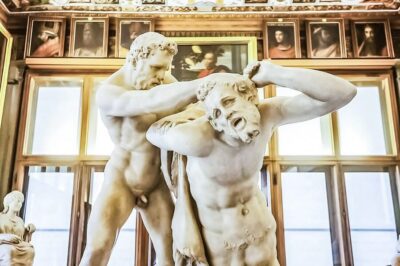
Skip-The-Line Uffizi Gallery Timed Entry Ticket
Read our review →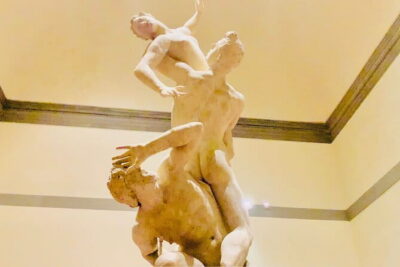
Florence Accademia Gallery Tour with Entrance Ticket Included
Read our review →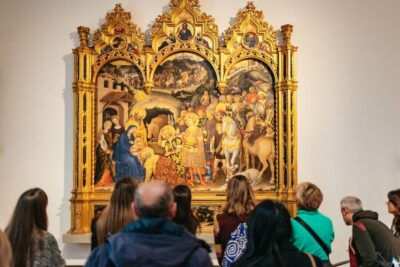
Uffizi Gallery: Renaissance Masterpieces Guided Tour
Read our review →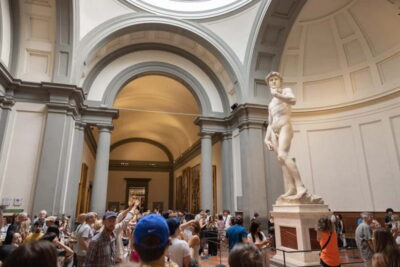
Uffizi Gallery Timed Entry Ticket & Audio Guide
Read our review →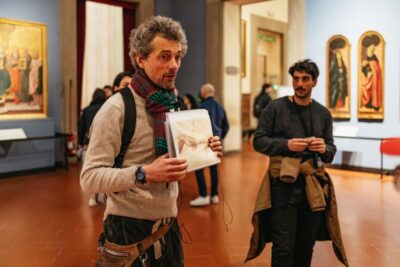
Accademia Gallery Guided Tour with Entry Ticket
Read our review →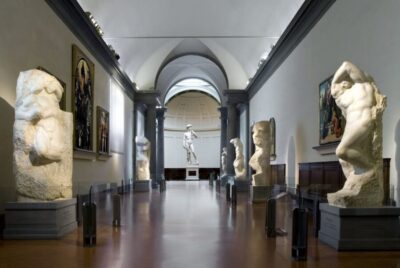
Uffizi Gallery and Accademia Gallery Guided Tour
Read our review →Browse the lists this tour appears in