
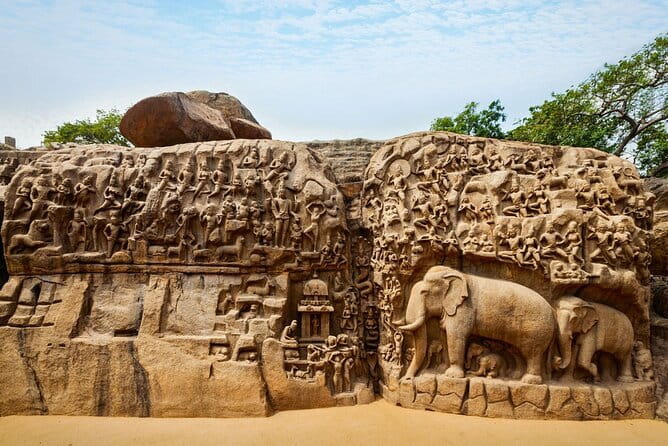
REVIEW · INDIA
Mahabalipuram Art History and Culture Private Tour from Chennai
Mahabalipuram is a place where granite tells the story. On this private six-hour trip from Chennai, you move from traditional South Indian homes at DakshinaChitra to Pallava-era temples carved from single blocks of stone, ending beside the Shore Temple. The ancient port’s art is the main event, and the route gives you useful cultural context before you reach the monuments.
I like the private SUV transport, since your group can follow the guide’s pace rather than wait for strangers. I also like the guide’s grounding in history, architecture, and fine arts, which suits a site where the details are carved into rock and easy to miss.
The main drawback is the tight schedule. Five stops in about six hours leaves limited time at each one, and lunch is not included. You must also pay for the guide’s lunch, along with any applicable camera fees.
Key points to know
- Granite temples from the Pallava period: See the Pancha Rathas, Mahishasuramardini Cave, and Shore Temple in one focused outing.
- DakshinaChitra comes first: Relocated South Indian homes and traditional arts help explain regional life before the temple visits.
- Tiger Cave adds a quieter stop: Its carved tiger heads make it different from the larger Mahabalipuram monuments.
- Private touring keeps the day flexible: Only your group participates, with transport in an SUV.
- A strong choice for art and history fans: The tour is built around architecture, sculpture, and cultural context rather than beach time.
- Plan for extras: Lunch, the guide’s lunch, camera fees where applicable, and tips are outside the listed price.
Why Mahabalipuram deserves a full morning
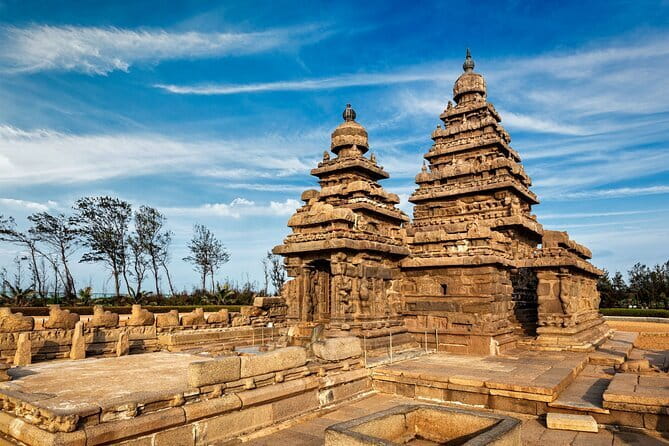
Mahabalipuram, also known as Mamallapuram, is famous for its rock-cut temples and stone sculpture. The monuments date mainly from the Pallava period, with major works from the sixth through eighth centuries. Ancient Greek and Roman connections are part of the town’s story too, since Mahabalipuram served as an important port.
What makes the place special is the range of techniques used by its builders. Some monuments were cut directly into rock faces. Others were shaped as free-standing structures or carved from single granite blocks. You are not just looking at old buildings. You are looking at experiments in stone, made at a time when every surface had to be worked by hand.
The group of monuments is recognized by UNESCO as a site of outstanding value to humanity. That status matters less as a label than as a reminder that these temples and sculptures belong to a much larger South Indian artistic tradition. A good guide can help you see how the carvings, temple forms, and stories fit together.
This tour is designed around that explanation. It is not simply a drive to a famous shoreline, a few photographs, and a quick return to Chennai.
A few more gallery visits around the world worth comparing
- Venice: St. Mark Basilica Ticket, Audioguide+History Gallery
★ 3.9 · 4,780 reviews - Paris: Louvre Museum Entry with History of Mona Lisa
★ 3.9 · 2,823 reviews - Venice’s Best: Basilica, Doge’s Palace, Gondola & History Gallery
★ 4.5 · 2,478 reviews
DakshinaChitra: South Indian life before the temples
Your first stop is DakshinaChitra Heritage Museum, with about an hour set aside for the visit. The museum presents traditional South Indian homes, crafts, and ways of life from different regions. Several historic houses were relocated brick by brick, allowing you to see how domestic architecture varied across South India.
This is a smart opening stop. Mahabalipuram can feel visually overwhelming, especially if you arrive without any sense of how buildings, materials, and regional customs developed. DakshinaChitra gives you a starting point. You can look at the shape of a house, the arrangement of its rooms, and the use of local materials before turning your attention to monumental temples.
The phrase living museum is useful here because the purpose is not only to preserve old structures. The site also presents traditional arts and aspects of everyday life. That makes it a better fit for visitors interested in culture as well as architecture.
You should keep your expectations realistic. An hour offers an introduction, not an exhaustive study of every house and craft display. Since the entire day lasts about six hours, the visit is meant to set the scene rather than take over the tour.
Tiger Cave and the first carved surprise
The next stop is Tiger Cave, a rock-cut Hindu temple complex just before Mahabalipuram. You have about an hour here, which gives the stop more weight than a brief roadside photo break.
The name comes from the tiger heads carved around the mouth of a cave. Those figures give the site a playful, striking character, but the wider complex is also important for showing how religious architecture was cut into natural rock. It is a useful bridge between DakshinaChitra’s domestic buildings and the grander monuments that follow.
I like this stop because it broadens your idea of what Mahabalipuram’s monuments look like. The later temples are often the images people recognize, yet Tiger Cave shows another side of Pallava design. It feels more contained and focused, with the animal carvings creating an immediate visual hook.
The stop is also practical for families. Children can spot the tiger heads quickly, while adults can listen for the architectural explanation. Since the tour is private, your guide can spend more or less time on the carvings according to your group’s interest, within the day’s schedule.
Pancha Rathas: temples carved from single stones
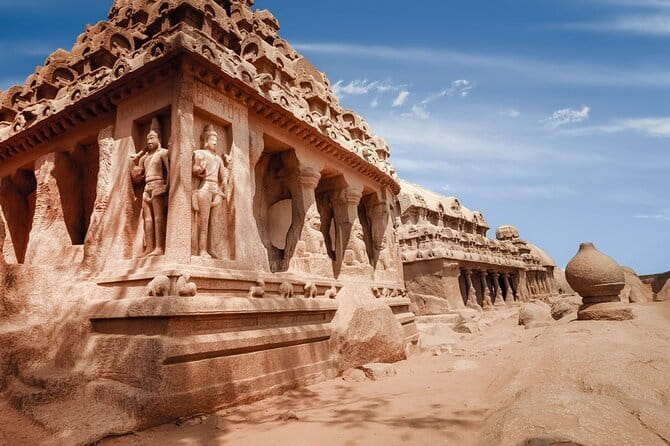
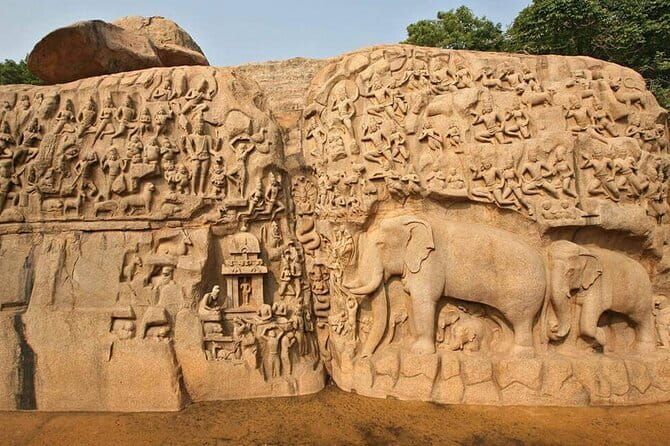
Pancha Rathas is one of the tour’s major highlights. The name means Five Chariots, and the monuments are monolithic works, meaning each was carved from a single block of rock. They were built under the Pallava king Narasimhavarman II, around the late seventh or early eighth century.
This is the point where the scale of the craftsmen’s work becomes clear. These are not ordinary temples assembled from many pieces. The forms were cut out of granite, with the sculptors shaping the stone as they worked downward and around the block. The result is a group of buildings with different designs and proportions.
Give yourself time to compare them. Their variety is part of the point. You can look at roof forms, column shapes, animal sculptures, and the way each monument presents a different architectural idea. A guide with a background in architecture can make this stop far more rewarding than a quick walk around the site.
The one-hour allocation is enough for a focused visit, but it may feel short if you want to study every carving. Wear comfortable footwear and expect to walk around exposed stone monuments. The tour information does not promise special accessibility arrangements, although most travelers can participate.
More private gallery tours in the world:
- Louvre Museum Paris Essential Guided Tour Semi-Private 6ppl Max
★ 5.0 · 3,807 reviews - Van Gogh Museum Tour Reserved Entry Semi Private
★ 5.0 · 1,437 reviews - Private Vatican Museums and St. Peter’s Basilica Early Bird Tour
★ 5.0 · 980 reviews - Louvre Museum Timed Entry Ticket – Optional Private Guide
★ 4.0 · 940 reviews
Mahishasuramardini Cave and Pallava sculpture
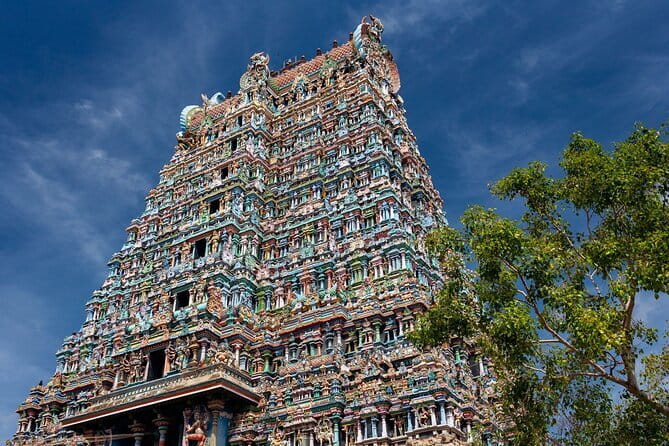
Mahishasuramardini Cave receives about two hours, making it the longest stop of the day. That extra time makes sense. This temple belongs to the UNESCO-recognized group of monuments and contains some of the finest sculptural work on the route.
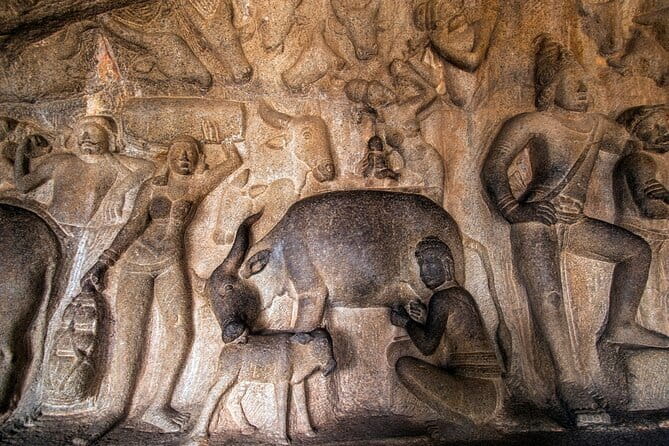
The name refers to Mahishasuramardini, the goddess who defeats the demon Mahisha. The cave’s reliefs give you a chance to study narrative sculpture rather than simply admire a building from the outside. Figures, movement, and religious meaning are brought together on the rock surface.
This is where a strong cultural guide earns the fee. Granite can look plain at first glance, especially in bright daylight. Your guide can direct your attention to the carved figures, the layout of the cave, and the way the Pallava artists used the available stone. You will get more from the stop if you listen closely instead of rushing from one image to another.
Two hours also help balance the morning’s faster rhythm. You have enough time to pause, ask questions, and revisit details. If your main interest is Indian art, this may be the most valuable part of the tour.
Shore Temple: granite beside the sea
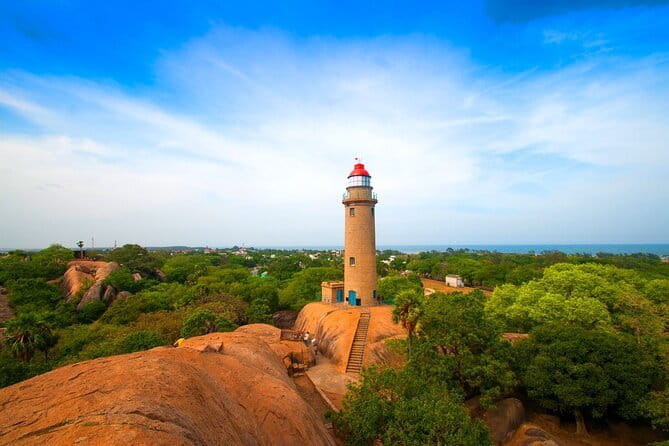
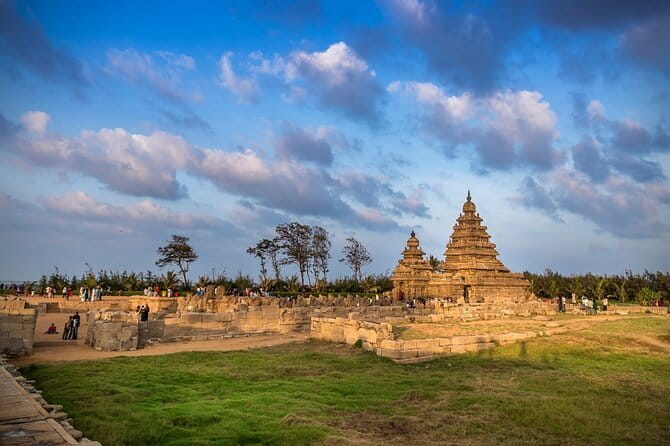
The final listed stop is Shore Temple, with about an hour. Built from blocks of granite in the eighth century, it is one of the oldest structural stone temples in southern India. That distinction matters. Unlike the rock-cut caves and monolithic Pancha Rathas, Shore Temple was assembled from individually cut stone blocks.
The temple’s location beside the water adds to its power, but the building itself deserves your attention. Its form shows a later stage in South Indian temple construction, when architects were creating freestanding structures rather than carving only into existing rock. Seeing Shore Temple after the earlier stops lets you compare three methods: cave cutting, monolithic carving, and structural building.
The seaside setting can also make this the most photographic part of the outing. Still, I would not treat it as just a final picture stop. Ask your guide to explain how it differs from the monuments you have already seen. The contrast is the real lesson.
The one-hour visit is useful but brisk. If you are especially interested in temple architecture, you may wish you had longer. That is the tradeoff of fitting several major sites into a half-day tour.
What the private format changes
This is a private activity, so only your group participates. That matters in Mahabalipuram, where the best questions often arise while you are looking at a small carving or comparing two temple forms. You do not have to follow a large group from one monument to the next.
Transport is provided in an SUV, with pickup offered from Chennai. The stated start time is 9:00 a.m., and the full experience lasts approximately six hours. That makes it manageable as a day outing without turning it into an all-day road marathon.
The private format does not remove the need to watch the clock. The route includes DakshinaChitra, Tiger Cave, Pancha Rathas, Mahishasuramardini Cave, and Shore Temple. Even with efficient transfers, the schedule is full. If you want an unhurried photographic study of every monument, a longer or more specialized visit may suit you better.
For most people, though, the balance works. You get a broad introduction to the main sites and a guide who can shape the explanation around your interests.
What the $90.78 price means
At about $90.78 per person, the cost is easier to justify for a small private group than for a solo visitor. The price includes private transport, the SUV, an expert guide, admission fees and taxes. You are paying for both the vehicle and the interpretation, not just entry to the monuments.
The value is strongest if you care about context. You could visit Mahabalipuram independently, but the difference between seeing carved stone and understanding what you are seeing can be considerable. The guide’s training in history, architecture, and fine arts is central to the experience.
There are additional expenses. Lunch is not included, and you must pay for the guide’s lunch. Camera fees may apply where required. Tips are not expected, though they are welcome if you feel the guide added real value.
Group discounts are available, which can improve the per-person cost when several people share the private vehicle. The tour is also family-friendly, particularly because the tiger carvings and unusual stone forms can hold a child’s attention. The cultural explanations, however, are the main reason to book it.
Who will get the most from this day
I would recommend this tour to you if you want a clear introduction to South Indian architecture without arranging transport and admission yourself. It is especially well suited to people interested in sculpture, temple design, Indian culture, and ancient port towns.
Families can also make good use of it. The private setup avoids the strain of keeping children with a large group, and Tiger Cave offers an easy visual highlight. The day still includes serious art and history, so it works best when everyone can handle several monument visits.
You should think twice if your priority is a relaxed beach outing. Although Shore Temple is beside the sea, this is an art and culture tour. You will spend the day moving between museums, caves, monolithic temples, and structural stone buildings.
You may also want a different plan if you dislike early starts or tight schedules. The 9:00 a.m. departure and six-hour program leave little room for major delays. Free cancellation is available up to 24 hours before the start time, but changes or cancellations inside that window are not accepted. The tour also requires good weather, with a different date or full refund offered if poor weather causes cancellation.
Should you book the Mahabalipuram tour?
Book it if you want the key monuments explained in one private half-day, especially if you appreciate architecture more than a simple sightseeing checklist. The combination of DakshinaChitra, Tiger Cave, Pancha Rathas, Mahishasuramardini Cave, and Shore Temple gives you a useful progression from daily life to temple design and monumental sculpture.
The strongest reason to choose it is the guide. A friendly, highly informed guide can turn a set of granite buildings into a readable story about Pallava art. The clearest caution is time: five stops in six hours means you will see a lot, but you will not linger everywhere.
For a first visit from Chennai, the price is fair when shared by a group and when you value private transport and expert interpretation. Bring money for lunch and possible camera fees, keep your expectations focused on culture, and you will be set for a rewarding look at one of southern India’s great art centers.
FAQ
How long does the Mahabalipuram tour last?
The tour lasts approximately six hours.
What time does the tour start?
The stated start time is 9:00 a.m.
Is hotel pickup available?
Pickup is offered, and private transportation is included.
Which places are visited?
The tour visits DakshinaChitra Heritage Museum, Tiger Cave, Pancha Rathas, Mahishasuramardini Cave, and Shore Temple.
Is lunch included?
No. Lunch is not included, and you must also pay for the guide’s lunch.
Is this a private tour?
Yes. Only your group participates in the activity.
What happens if I cancel?
You can cancel up to 24 hours before the start time for a full refund. Cancellations or changes made less than 24 hours before the start time are not accepted, and poor-weather cancellations offer a different date or a full refund.
Just added around the world
- Colosseum,Vatican Museum & Sistine Chapel in One Day Guided Tour★ 3.5 · 9 reviews
- Vatican Museums and Sistine Chapel last entry Guided Tour★ 5.0 · 3 reviews
- Private Tour Of Rome Highlights And Vatican Museums Skip-The-Line all included★ 5.0 · 4 reviews
- Borghese Gallery Admission Ticket with Audioguide★ 4.0 · 64 reviews
- Caravaggio Art Walking Tour of Rome with Pantheon Visit★ 4.5 · 35 reviews
- Borghese Gallery Skip the Line Guided Tour★ 4.5 · 23 reviews
- Borghese Gallery Ticket with Audioguide★ 3.5 · 51 reviews
- Borghese Gallery VIP Tour – Skip the Line Tickets★ 5.0 · 2 reviews
Art Museum Tours in India, compared.

Private Chennai Day Tour – Art History and Contemporary Chennai
Read our review →
Mysore Palace + Jaganmohana Art Gallery + Devaraja Market = Mysore Heritage Walk
Read our review →
Mysore: Palace, Art Gallery & Devaraja Market Walking Tour
Read our review →
Old Delhi Haveli with live Classical dance, music & cuisine
Read our review →
Browse the lists this tour appears in