
REVIEW · ROME
Semi Private Art Tour: Michelangelo, Bernini & Borromini
Rome gives you great art almost by accident. On this two-and-a-half-hour walking tour, you follow Michelangelo, Bernini, and Borromini from a quiet church to grand piazzas, fountains, and the Spanish Steps. It is a smart way to connect sculpture and architecture instead of seeing each monument as an isolated photo stop.
I like the maximum group size of six, which should make it easier to ask questions and hear the guide in busy public spaces. I also like the route’s mix of indoor and outdoor sights, especially Michelangelo’s Moses, the views from Campidoglio, Bernini’s Fountain of the Four Rivers, and a small granita or gelato tasting.
The main caution is pace. Five listed stops are allotted about 25 minutes each, and the route covers several parts of central Rome. You will get useful context and a strong overview, but this is not a slow study tour for examining every detail.
Key points at a glance
- Michelangelo’s Moses: See one of Rome’s most famous sculptures inside San Pietro in Vincoli, with admission included.
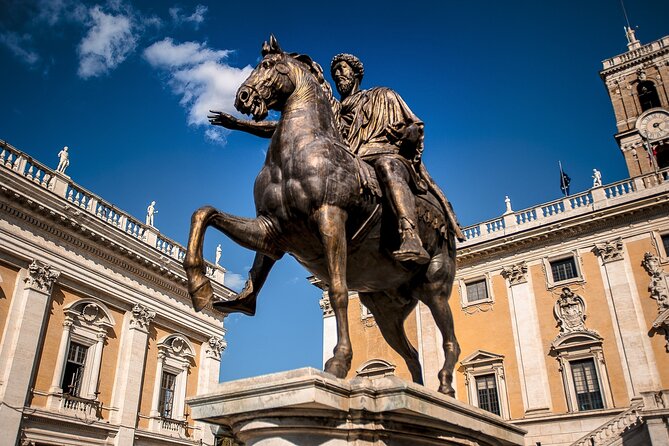
- Campidoglio views: Visit Michelangelo’s hilltop square and hear how he reshaped one of Rome’s important civic spaces.
- Bernini and Borromini together: Compare their work around Piazza Navona, including the Fountain of the Four Rivers and Sant’Agnese in Agone.
- Small-group format: The tour is limited to six people, a useful size for an art-focused walk.
- A sweet pause: Granita or gelato is included, giving the route a short refreshment break.
- Flexible cancellation: You receive a full refund if you cancel at least 24 hours before the start time.
Why this short Rome art tour works
Rome has enough famous art to fill several weeks. That can make planning hard, especially if you want to understand how different artists shaped the city rather than simply collect church interiors and fountain photos.
This tour gives you a clear theme. Michelangelo appears first through sculpture and civic design. Bernini enters through public spectacle, especially the Fountain of the Four Rivers. Borromini is introduced through church architecture and the visual setting around Piazza Navona.
I find that structure helpful because the artists were not working in separate boxes. Rome’s Renaissance and Baroque art often involves sculpture, buildings, papal commissions, rivalries, and public theater all at once. A guide can point out those links in a way that a guidebook paragraph beside a fountain usually cannot.
The small group matters here. With no more than six participants, you are less likely to lose the guide’s explanation in a crowd. The published experience names Marco as one guide who takes time to explain the destinations, so if he leads your departure, you can expect a measured style rather than a rushed roll call of dates and names.
The tour costs $287.41 per person. That is a serious price for 2 hours and 30 minutes, so value depends on what you want. You are paying for a local professional guide, a tightly planned art route, a semi-private group, included admission at the church, and the convenience of seeing several major works without arranging the sequence yourself.
If you mainly want photographs of Rome’s headline monuments, the price may feel high. If you want an art-focused explanation and prefer a group of six to a large walking crowd, the cost is easier to justify. It is best suited to someone who values interpretation and efficient sightseeing.
More Art Museum Tours in Rome
- Vatican Museums, Sistine Chapel & St. Peter’s Basilica Tour
★ 4.3 · 73,970 reviews - Vatican Museums, Sistine Chapel & St Peter’s Basilica Guided Tour
★ 4.5 · 39,149 reviews - Rome: Vatican Museums, Sistine Chapel and Basilica Tour
★ 4.3 · 16,039 reviews
San Pietro in Vincoli and Michelangelo’s Moses
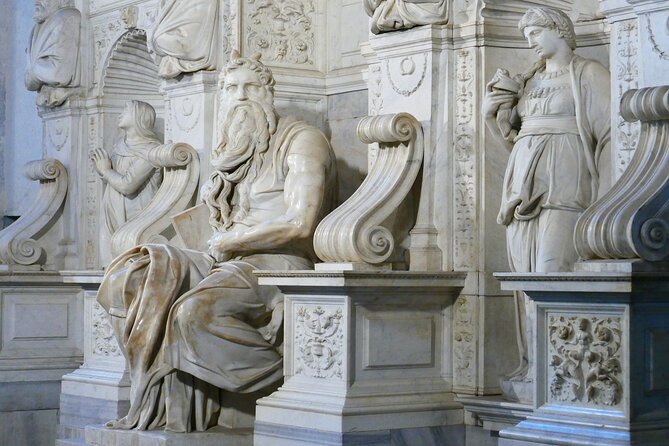
The tour begins at San Pietro in Vincoli, a Roman Catholic basilica with a fifth-century connection to the chains of Saint Peter. The church is included because it holds Michelangelo’s Moses, part of the tomb commissioned for Pope Julius II.
You have about 25 minutes here, including admission. That is enough time to see the sculpture and hear why it matters, though you should not expect a long, quiet art lecture inside the church.
Moses is the main reason for the stop. The sculpture has the physical force you expect from Michelangelo, but the setting matters too. It is not displayed in a modern gallery with a wide viewing platform. You encounter it as part of a church and monumental tomb, which helps you understand how Renaissance art was tied to papal power, worship, and commemoration.
I like starting here because it gets you close to a single major work before the route opens into Rome’s public spaces. The church also gives you a change of mood from the city streets. Its character is different from the grand basilicas most first-time visitors put at the top of their list, and that makes the stop feel focused rather than generic.
The practical drawback is time. If Michelangelo is your main reason for booking, 25 minutes may pass quickly. You will want to listen closely, see the work from the available viewpoints, and avoid assuming the guide can cover every aspect of the tomb or basilica.
Campidoglio, Michelangelo’s civic Rome
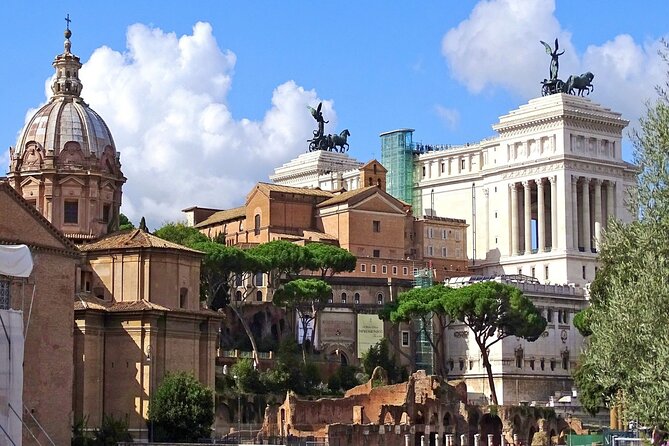
From San Pietro in Vincoli, the tour continues to Campidoglio, also called Monte Capitolino, one of Rome’s seven hills. Michelangelo designed the square in the 16th century at the request of Pope Paul III, with the goal of making an impressive approach for Emperor Charles V.
This is a useful reminder that Michelangelo was not only a sculptor. At Campidoglio, the interest lies in how he shaped a public setting. The square gives the tour a wider frame, moving from one famous figure to the relationship between buildings, paving, movement, and power.
You should also expect views from this hilltop setting. They are part of the appeal, especially after the enclosed church at San Pietro in Vincoli. The stop lets you pause, look outward, and connect Michelangelo’s design to Rome itself rather than to one object.
The listed time is about 25 minutes, with no separate admission charge. That keeps the stop simple, but it also means the guide must balance views, design details, and historical context. If you enjoy architecture, pay attention to how the square directs your eye and organizes the space. If you prefer sculpture alone, this may be the least immediately dramatic stop.
Piazza Navona and Bernini’s theatrical fountain
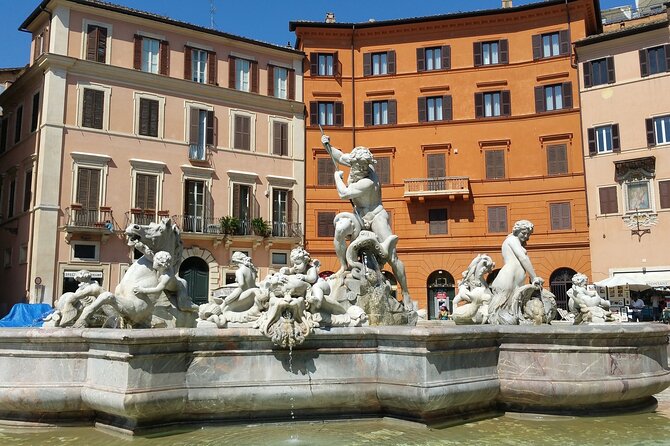
Piazza Navona is the tour’s major public-art scene. Its centerpiece is Bernini’s Fountain of the Four Rivers, created under Pope Innocent X. The four figures represent the Nile, Ganges, Danube, and Rio de la Plata.
You get roughly 25 minutes in the piazza. That is enough to look at the fountain from different angles and hear the basic story behind its design. Bernini’s work rewards a slow look, since the fountain combines figures, rocks, water, and an obelisk in one piece of public theater.
I like this stop because it makes Bernini easy to understand. His art is not meant to sit quietly in a corner. It reaches into the square, catches movement and sunlight, and turns a civic space into a performance. The fountain also shows how art served papal ambition. It was not merely decoration added after the fact.
Piazza Navona is an open public square, so the atmosphere can change with the time of day. The tour cannot control crowds, noise, or the amount of room around the fountain. A small group helps, but you should still be ready to stay close to the guide.
This is also a good place to compare Bernini with Michelangelo. Michelangelo’s Moses pulls you toward a concentrated figure inside a church. Bernini’s fountain spreads the experience across a square. The contrast is one of the tour’s best teaching tools.
More semi-private gallery tours in Rome:
- Vatican Museums, Sistine Chapel & Saint Peter’s Semi-Private Tour
★ 4.5 · 169 reviews - Vatican Museums & Sistine Chapel Semi Private Afternoon Tour
★ 4.2 · 6 reviews - Semi-private Tour of the Vatican Museums
★ 5.0 · 3 reviews - Louvre Museum Paris Essential Guided Tour Semi-Private 6ppl Max
★ 5.0 · 3,807 reviews
Sant’Agnese in Agone and a necessary attribution check
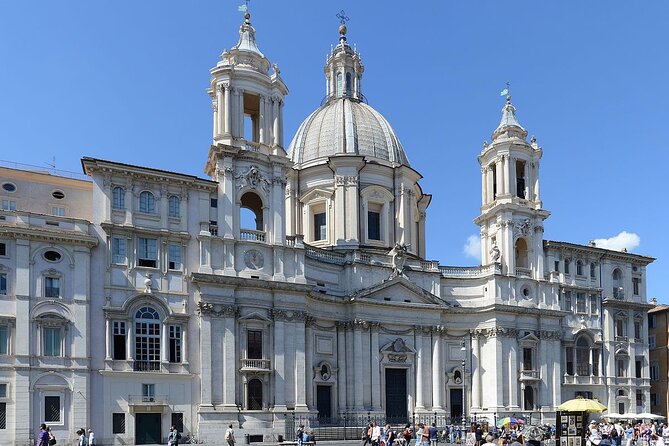
The Church of Sant’Agnese in Agone sits beside Piazza Navona and adds an architectural counterpart to Bernini’s fountain. The tour presents the church as part of the discussion of Bernini and Borromini, two Baroque artists often taught together because of their competing approaches and connection to Rome.
There is an important complication in the supplied information: the description gives conflicting attributions for the church’s facade and interior. One part credits Borromini with the facade, while another correction says the facade was designed by Gian Lorenzo Bernini and that the interior involved both Bernini and Borromini.
Because of that conflict, I would listen carefully to the guide’s explanation on site rather than rely on a simple one-name label. The point of the stop is the architectural dialogue around the church and fountain, but accurate attribution matters when the tour is built around three named masters.
About 25 minutes is allotted here. The church gives you a chance to shift from an outdoor fountain to a building interior, though the exact access or view may change if part of the venue closes unexpectedly. The operator says that closures can happen and that an extended tour may be offered to keep the advertised total length.
For art lovers, this is potentially the most rewarding comparison on the route. For anyone less interested in architectural authorship, it may feel like a second stop in the same piazza. The guide’s clarity will make a real difference.
The Barcaccia fountain and the Spanish Steps
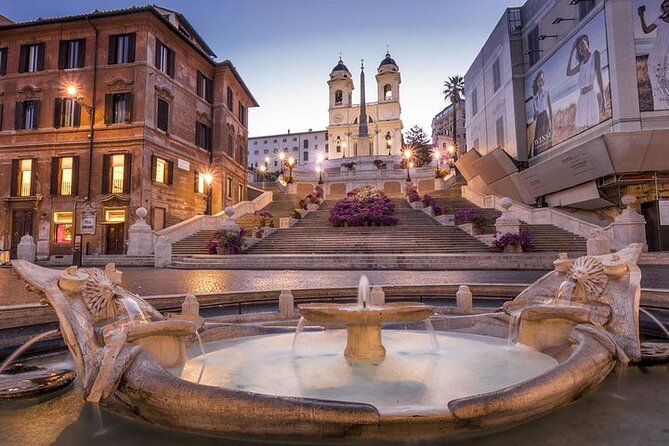
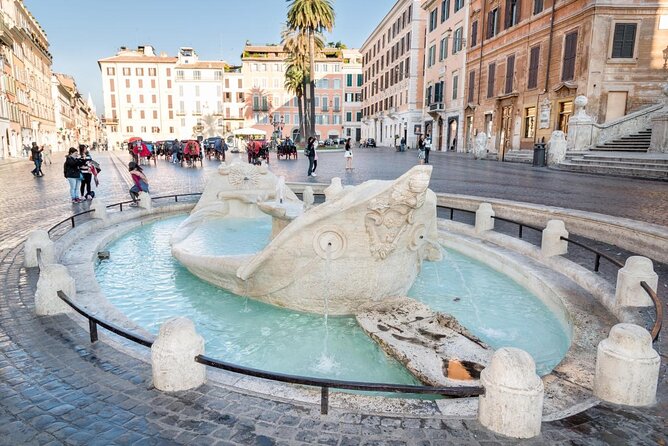
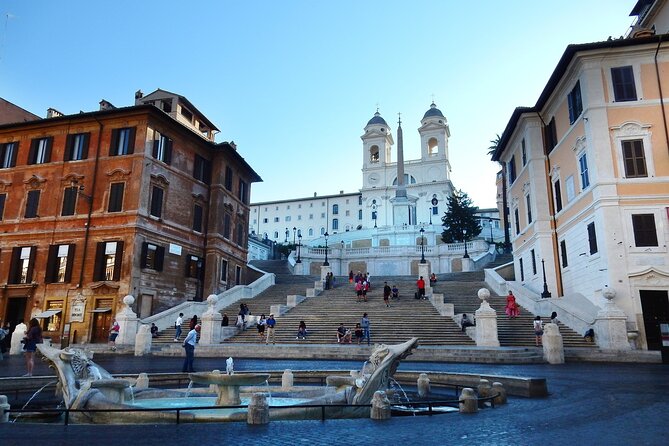
The final section takes you to Piazza di Spagna, where the focus is the Fontana della Barcaccia and the Spanish Steps. The itinerary gives this stop about 25 minutes and lists admission as included.
The Barcaccia is a smaller, more intimate fountain than Bernini’s Fountain of the Four Rivers. Its setting beside the Spanish Steps gives the tour a graceful finish, with another chance to consider how fountains shape Rome’s public spaces.
This final stop also gives you a clean endpoint in one of Rome’s best-known central areas. The tour begins at Italy In Love Tours on Via del Cardello and ends at Piazza di Spagna, so you finish near public transportation and a major sightseeing zone rather than being returned to the starting point.
The route’s ending is practical, but keep the walking element in mind. The experience requires a moderate level of physical fitness, and you will move between several central locations. Wear comfortable shoes and treat the 2-hour-30-minute schedule as active sightseeing, not a seated lecture.
What the granita or gelato adds
A granita or gelato tasting is included. It is a small detail, but it gives the group a natural pause after several art stops.
Do not book this as a food tour. The tasting is a refreshment, not a meal or a survey of Roman cuisine. Still, it helps break up a route that moves through churches, hills, fountains, and public squares.
I also like the way it fits the mood of the tour. Rome’s art is often encountered outdoors, in warm weather, with plenty of walking between major sights. A cold treat can make the experience feel less like a chain of lectures and more like a day in the city.
Timing, group size, and practical fit
The tour lasts approximately 2 hours and 30 minutes and is limited to six participants. That combination is the main practical selling point. You get a focused route without committing half a day to a large group.
The group size should make it easier to hear explanations and ask about a particular sculpture or building. It also allows the guide to keep the party together in busy squares. The experience is described as semi-private rather than fully private, so you will still share the guide with other participants.
The starting point is Via del Cardello, 31, in Rome. The endpoint is Piazza di Spagna. The route is near public transportation, but the tour itself is a walking experience across central Rome.
You receive confirmation at booking. Some venues or parts of venues may close at short notice. When that happens, the operator says it may provide an extended tour that keeps the advertised total duration. That is useful, but it cannot guarantee that the substitute experience will feel identical to seeing the planned interior.
The tour is booked, on average, seven days ahead. That does not guarantee availability on your dates, but it suggests you should not leave it until the last morning if this specific small-group format matters to you.
Cancellation is free up to 24 hours before the start time. A cancellation inside that window is not refunded, and changes made within 24 hours are not accepted. This is worth noting before you commit to a tight Rome schedule.
Who should book this experience?
I would choose this tour if you want a short, art-centered introduction to Rome and prefer a guide to explain what you are seeing. It suits first-time visitors who want major works without spending a full day in museums, as well as returning visitors who want a focused look at Baroque architecture and public sculpture.
It is especially useful for:
- People who want Michelangelo, Bernini, and Borromini in one connected route
- Visitors who prefer a maximum group of six
- Art and architecture students or enthusiasts
- Anyone who likes churches, fountains, piazzas, and city design
- Visitors with only a few hours for a guided cultural activity
I would think twice if you want extensive time inside each church, a private guide just for your party, or a relaxed pace with long photography stops. The route covers a lot, and the $287.41 price asks you to value the guide and small group.
Should you book this Rome art tour?
Book it if you want a compact lesson in how Michelangelo, Bernini, and Borromini shaped Rome, with the added ease of a small group and a planned route. The strongest parts are Michelangelo’s Moses, Campidoglio’s design and views, Bernini’s Fountain of the Four Rivers, and the chance to compare the artists around Sant’Agnese in Agone.
Before booking, accept two limits: the price is high for a 2-hour-30-minute walk, and the schedule leaves little time for lingering. If those tradeoffs work for you, this is a focused and convenient way to see serious art in the city where it was made. Pay close attention to the guide’s explanation of Sant’Agnese, since the supplied descriptions give different attributions for the church’s facade and interior.
FAQ
How long is the tour?
The tour lasts approximately 2 hours and 30 minutes.
How many people can join the tour?
The group has a maximum of six participants.
What sights are included?
The route includes San Pietro in Vincoli, Piazza del Campidoglio, Piazza Navona, Sant’Agnese in Agone, the Fontana della Barcaccia, and the Spanish Steps area.
Is admission included?
Admission to San Pietro in Vincoli and the Fontana della Barcaccia stop is listed as included. Campidoglio, Piazza Navona, and Sant’Agnese in Agone are listed without an admission charge.
Is food or a drink included?
A granita or gelato tasting is included. Private expenses are not included.
What happens if a venue closes unexpectedly?
Some venues or parts of venues may close at short notice. The operator says it may offer an extended tour to keep the advertised total length.
Can I cancel for a full refund?
Yes. You can cancel for a full refund at least 24 hours before the experience begins. Cancellations or changes made within 24 hours are not refunded or accepted.
More Accademia Tours in Rome
- From Rome: Florence and Accademia Guided Tour
★ 4.3 · 7 reviews - Florence Accademia Gallery Tour with Entrance Ticket Included
★ 4.5 · 6,148 reviews - Florence: Accademia Gallery Guided Tour
★ 4.6 · 4,156 reviews - Uffizi & Accademia Timed Entry: Small Group Duomo Walking Tour
★ 4.5 · 3,630 reviews
Just added around Rome
- Colosseum,Vatican Museum & Sistine Chapel in One Day Guided Tour★ 3.5 · 9 reviews
- Vatican Museums and Sistine Chapel last entry Guided Tour★ 5.0 · 3 reviews
- Private Tour Of Rome Highlights And Vatican Museums Skip-The-Line all included★ 5.0 · 4 reviews
- Caravaggio Art Walking Tour of Rome with Pantheon Visit★ 4.5 · 35 reviews
- Borghese Gallery Admission Ticket with Audioguide★ 4.0 · 64 reviews
- Borghese Gallery Skip the Line Guided Tour★ 4.5 · 23 reviews
- Borghese Gallery Ticket with Audioguide★ 3.5 · 51 reviews
- Borghese Gallery VIP Tour – Skip the Line Tickets★ 5.0 · 2 reviews
Art Museum Tours in Rome, compared.
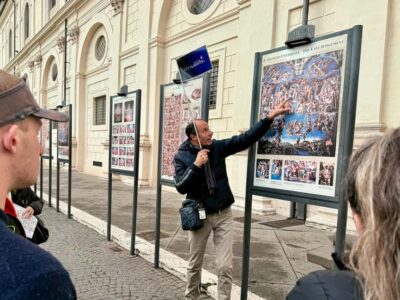
Vatican Museums, Sistine Chapel & St. Peter’s Basilica Tour
Read our review →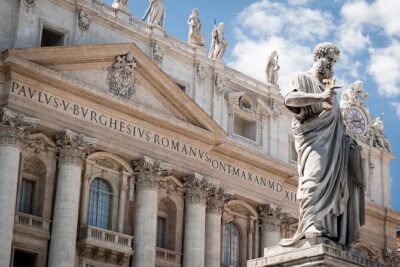
Vatican Museums, Sistine Chapel & St Peter’s Basilica Guided Tour
Read our review →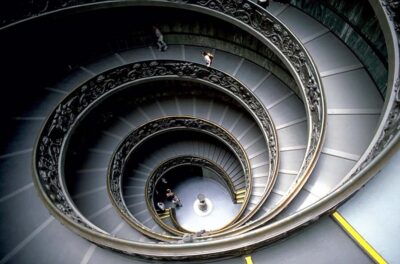
Vatican Museums, Sistine Chapel and Basilica Tour
Read our review →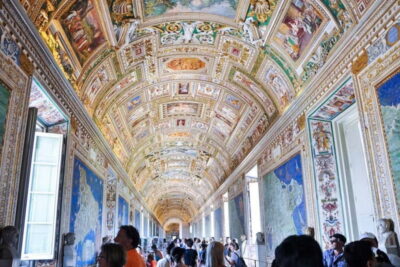
Vatican Museums & Sistine Chapel Skip-the-Line Entry Ticket
Read our review →
Vatican Museums, Sistine Chapel & Basilica Tour
Read our review →
Vatican Museums & Sistine Chapel Guided Tour
Read our review →
Vatican Museums & Sistine Chapel Skip-the-Ticket-Line Tour
Read our review →
Vatican Museums, Sistine Chapel and St. Peter’s Basilica Tour
Read our review →Browse the lists this tour appears in