
REVIEW · JAPAN
Kyomai Dance by Maiko Geiko and Visits of Gion Art Museum Kyoto
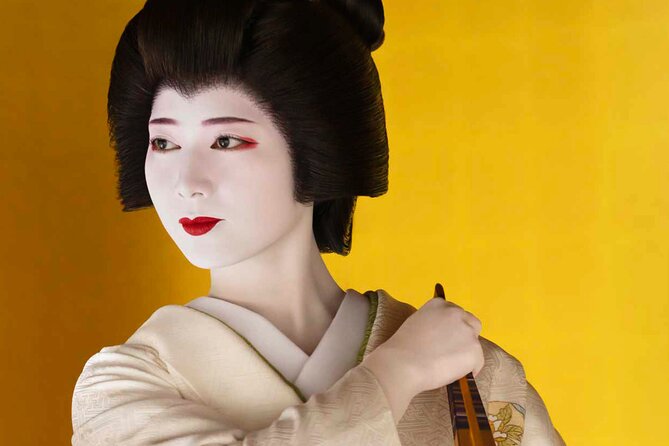
A maiko or geiko performs two traditional Kyomai dances in an intimate setting at Kyoto’s Gion Kagai Art Museum. You get a short, graceful performance rather than a full theater production, followed by exhibits that explain the culture behind the costumes, makeup, music, and movement.
I like the chance to see the dancers at close range, and I like that the museum admission is included. The small group size, generally capped at 25 for the activity, makes this feel more personal than a large stage show. The main drawback is simple: the dance lasts only about 15 minutes, so you should book it for a focused introduction, not an evening of entertainment.
Key points
- Two Kyomai dances: A maiko or geiko performs for about 15 minutes in the Inoue style.
- Gion setting: The experience takes place at Gion Kagai Art Museum, in Kyoto’s historic Kagai district.
- Costumes up close: See Yuzen kimonos, Nishijin brocade obi, seasonal kanzashi, makeup, and formal black kimono.
- Small-scale viewing: The activity has a maximum of 25 people, with the performance arranged so you can see the dancer clearly.
- Short and easy to fit in: The full visit takes about 20 minutes, making it useful before dinner or during a walk through Gion.
- Important etiquette: You must remove your shoes before entering, and photography is not allowed during the dance.
A short Kyomai performance in the heart of Gion
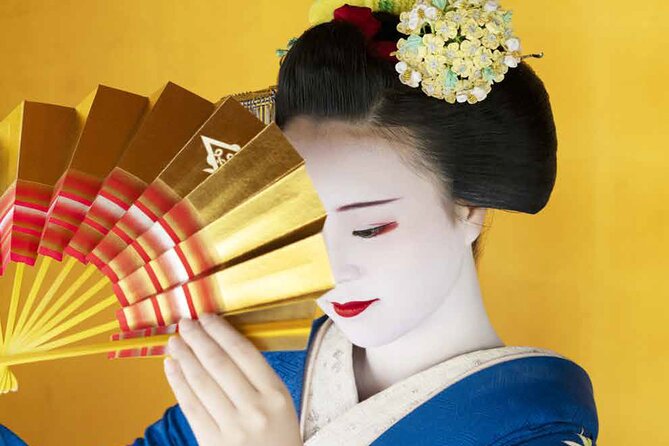
The appeal here is access. Geiko and maiko culture is usually seen from a distance, or only in carefully arranged dining settings. At this museum, you sit close to a live dancer and watch the controlled gestures, measured steps, and formal posture of Kyomai.
Kyomai means Kyoto dance. This performance follows the Inoue style, the tradition associated with Gion Kobu. You will see two songs performed by either a maiko or a geiko. The performer is not named in the supplied details, and the dancer may vary by show, so book this for the art and setting rather than for a particular person.
The performance itself lasts about 15 minutes. With time in the museum, the entire activity takes roughly 20 minutes, though you may want to allow extra time if you plan to study the permanent exhibits instead of making a quick visit.
That short length is both the strength and weakness of the experience. I like it as a first look at Kyoto’s geiko and maiko traditions. You can fit it into a busy day without giving up half an afternoon. But if you expect a long stage production with several performers, musicians, or a story told through dance, this will feel too brief.
A few more gallery visits around the world worth comparing
- Vatican Museums, Sistine Chapel & St. Peter’s Basilica Tour
★ 4.3 · 73,970 reviews - Paris: Louvre Museum Timed-Entrance Ticket
★ 4.6 · 71,977 reviews - Amsterdam: Van Gogh Museum Ticket
★ 4.7 · 52,054 reviews
What makes the Gion setting special
The museum sits in Gion, Kyoto’s Kagai district, an area shaped by centuries of entertainment, hospitality, dance, music, and formal arts. The Gion Kobu quarter has maintained traditions through changing times, and the museum presents that culture in a setting connected to the world it explains.
The listed starting point is Gion Kobu Kaburenjo Theater, while the meeting address is Gion Kagai Art Museum, Yasaka Club, 570-2 Gionmachi Minamigawa, Higashiyama Ward. Check the exact location details on your mobile ticket before setting out, since the experience is tied to this specific Gion venue.
This is not a bus tour and there is no long transfer between stops. You arrive at the meeting point, enter the museum, watch the performance, and finish back there. That simplicity matters in Kyoto, where a compact cultural stop can be easier to manage than a formal half-day tour.
The building has traditional features, including a beautiful garden and areas where you remove your shoes before entering. Wear footwear that is easy to take off and put back on. This small detail can affect your comfort, especially if you are combining the visit with a full day of walking.
Watching the maiko or geiko dance
The Kyomai performance is the heart of the visit. A maiko or geiko performs two songs, using restrained movements rather than broad theatrical gestures. The effect depends on your attention. Look at the hands, the angle of the head, the slow turn of the body, and the way the kimono moves with each step.
You are seeing an art form built on control. The dance may look simple at first, but that simplicity is deliberate. The posture, timing, fan work, and small shifts in expression carry the performance.
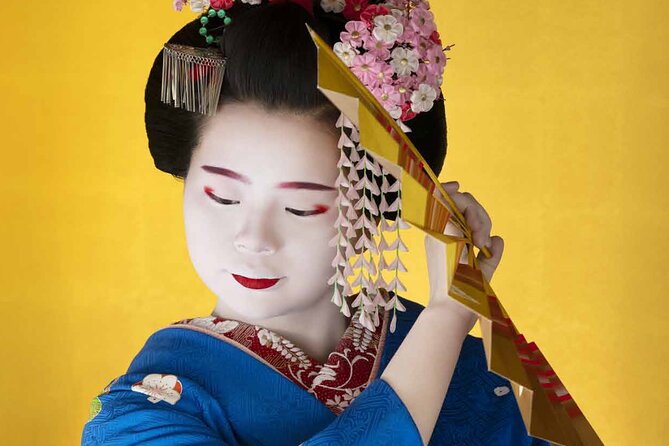
The intimate arrangement is helpful. The activity allows up to 25 people, and the performance area is set so people can see the dancer from nearby. That makes it easier to notice details of the kimono and hair ornaments that would disappear in a larger hall.
Photography is not allowed during the dance. This rule may disappoint you if you want a record of the performance, but it also keeps phones from distracting the audience and performer. If having a photo with the maiko matters to you, a separate photo session costs 2,000 yen per group of up to five people.
That photo option is not included in the $20 price. Treat it as an optional add-on, not part of the basic experience. The standard admission includes the museum and dance, along with all fees and taxes listed for the activity.
The museum explains what the dance cannot
The performance is beautiful, but the permanent exhibition gives it context. Without the museum, you might notice the dancer’s clothing and makeup without understanding how much meaning and work sit behind each detail.
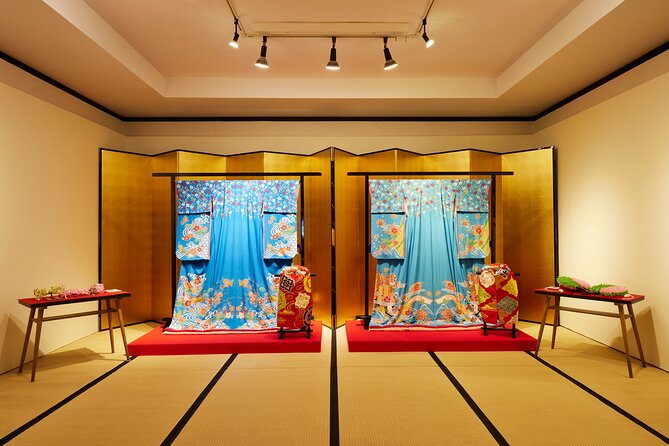
The collection includes hand-painted Yuzen kimono and Nishijin brocade obi sashes. Yuzen is known for detailed decoration, while Nishijin textiles are closely associated with Kyoto weaving. You can study the fabric, colors, patterns, and structure at your own pace instead of trying to take everything in during the dance.
You will also see personal items and makeup used by maiko, plus kanzashi hair ornaments associated with different seasons. These hair ornaments are small, but they help show how the visual presentation changes through the year.
Another notable item is the black crested formal kimono. Clothing of this kind is rarely seen in the Gion quarter during ordinary sightseeing, so the museum provides a useful chance to look closely at formal dress that you would not normally encounter on the street.
I recommend arriving early enough to visit the exhibits before the performance. That order works well because you can then recognize the materials, hair ornaments, and makeup when the dancer enters the room. One practical note from the available information is that some people feel the museum deserves more time than the dance itself, so do not rush straight out once the performance ends.
Same city, a completely different collection:
- Vatican Museums, Sistine Chapel & St Peter’s Basilica Guided Tour
★ 4.5 · 39,149 reviews - Florence: Skip-The-Line Uffizi Gallery Timed Entry Ticket
★ 4.5 · 27,832 reviews - Paris: Orsay Museum Entry Ticket
★ 4.7 · 25,647 reviews - Madrid: Prado Museum Entry Ticket
★ 4.6 · 20,699 reviews
How much time should you allow?
The advertised activity lasts about 20 minutes, and the dance takes approximately 15 minutes. That makes it easy to schedule around lunch, dinner, shopping, or another Gion visit.
Still, the museum is not just a waiting room. If you want to read the displays and look at the garden, allow more time than the performance length suggests. The precise amount depends on how closely you study the exhibits, but the experience works best when you do not treat the museum as an afterthought.
This is especially useful on a first evening in Kyoto. The compact format gives you an introduction to Gion culture without requiring a reservation at a traditional restaurant or a longer cultural show. It also gives you a calm indoor stop after walking through the district.
Families should think about the format. The dance can hold a child’s attention because it is visual and brief. The museum afterward may feel slower, especially for younger children, although the garden provides a pleasant change of pace. Quiet behavior is important during the performance.
Is the $20 price good value?
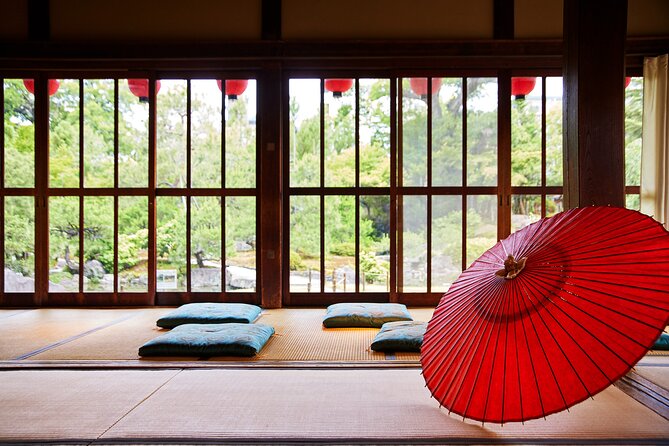
At $20, the experience offers two distinct parts: admission to the Gion Kagai Art Museum and a live dance performance. The value is strongest if you would otherwise pay for a cultural attraction in Gion and want a short, organized introduction to geiko and maiko traditions.
The price is less compelling if your only goal is a long dance show. Fifteen minutes is not enough for that. Think of the ticket as a museum visit with a rare live demonstration, not as a full evening performance.
The included admission also saves you from handling separate tickets for the museum and dance. A mobile ticket makes the activity easy to carry on your phone, and confirmation is provided at booking. There are often several performance times during the day, giving you some flexibility when planning your route through Gion.
A useful comparison is time versus depth. For $20, you get a polished, highly focused cultural stop. You do not get a guide leading you through every part of Gion, a long historical lecture, or a broad tour of Kyoto’s entertainment districts. If you want those things, you will need a different activity.
Who will enjoy this most?
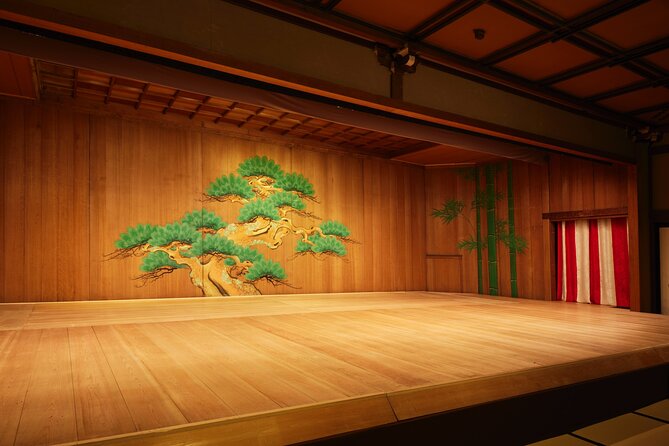
I would recommend this experience to you if you have a clear interest in Japanese performing arts, traditional dress, or the culture of Kyoto’s Kagai districts. It is also a good choice if you want to see a maiko or geiko without committing to an expensive dinner or a long formal program.
It suits first-time visitors because the museum gives basic cultural context, while the live dance makes the subject feel immediate. You do not need prior knowledge to appreciate the slow movements, formal clothing, and setting.
It also works well for a short visit to Kyoto. The activity begins and ends at the same location, takes about 20 minutes, and sits near public transportation. You can place it between other Gion plans rather than build an entire day around it.
You may want to skip it if you need a substantial performance, dislike removing shoes, or expect photography throughout the event. The no-photo rule applies during the dance, and the show is deliberately short. It is best approached with modest expectations and close attention.
The activity is open to most people, and service animals are allowed. The group limit is listed as 25, which keeps the scale manageable. No private guide name is provided, so the main value comes from the museum, setting, and performer rather than a named personal guide.
Practical details before you book
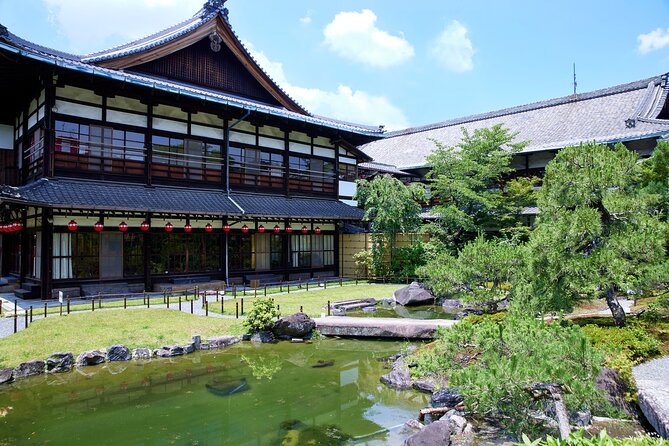
The meeting point is Gion Kagai Art Museum, Yasaka Club, at 570-2 Gionmachi Minamigawa, Higashiyama Ward, Kyoto 605-0074. The activity ends at the same point.
Admission and the dance are included, as are all listed fees and taxes. The optional photo session costs 2,000 yen per group, with a maximum of five people.
You can cancel for a full refund if you do so at least 24 hours before the local start time. Cancellations or changes made within 24 hours are not refunded or accepted.
Most people can take part, and the venue is near public transportation. Since you will remove your shoes, simple footwear makes the visit easier. Keep your phone ready for the mobile ticket, but plan to put it away during the performance.
Should you book the Gion Kagai Art Museum dance?
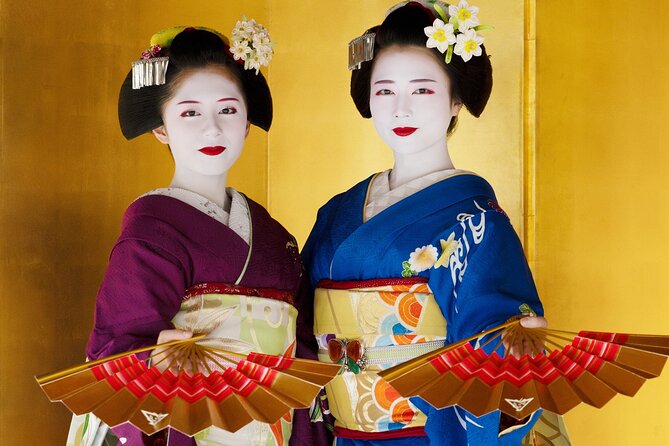
Book it if you want a short, authentic-feeling introduction to Kyoto’s geiko and maiko traditions, especially if you value seeing the costumes and dance at close range. The museum, garden, and permanent collection make the $20 price easier to justify than a dance performance alone.
Do not book it expecting a full theater show. The performance is simple, formal, and only about 15 minutes. Its strength is the close look at Kyomai and the cultural details surrounding it.
For most first-time visitors with an interest in Gion, I think it is a worthwhile stop. Arrive early, explore the exhibits before the dance, remove your shoes without fuss, and treat the performance as a carefully presented glimpse rather than the whole story.
FAQ
How long does the experience last?
The activity lasts approximately 20 minutes. The Kyomai dance itself takes about 15 minutes and includes two songs.
Who performs the Kyomai dance?
A geiko or maiko performs the dance. The performance follows the Inoue style.
What is included in the ticket?
Admission to the Gion Kagai Art Museum and the dance performance are included. All listed fees and taxes are also included.
Is photography allowed during the dance?
No. Photography is not allowed during the dance. A separate photo session costs 2,000 yen per group of up to five people.
Where does the activity take place?
The meeting address is Gion Kagai Art Museum, Yasaka Club, 570-2 Gionmachi Minamigawa, Higashiyama Ward, Kyoto 605-0074, Japan. The listed starting stop is Gion Kobu Kaburenjo Theater.
Do I need to remove my shoes?
Yes. You must remove your shoes before entering the building.
Can I cancel for a refund?
Yes, you can receive a full refund if you cancel at least 24 hours before the experience’s local start time. Cancellations or changes within 24 hours are not refunded or accepted.
Just added around the world
- Colosseum,Vatican Museum & Sistine Chapel in One Day Guided Tour★ 3.5 · 9 reviews
- Vatican Museums and Sistine Chapel last entry Guided Tour★ 5.0 · 3 reviews
- Private Tour Of Rome Highlights And Vatican Museums Skip-The-Line all included★ 5.0 · 4 reviews
- Borghese Gallery Admission Ticket with Audioguide★ 4.0 · 64 reviews
- Caravaggio Art Walking Tour of Rome with Pantheon Visit★ 4.5 · 35 reviews
- Borghese Gallery Skip the Line Guided Tour★ 4.5 · 23 reviews
- Borghese Gallery Ticket with Audioguide★ 3.5 · 51 reviews
- Borghese Gallery VIP Tour – Skip the Line Tickets★ 5.0 · 2 reviews
Art Museum Tours in Japan, compared.
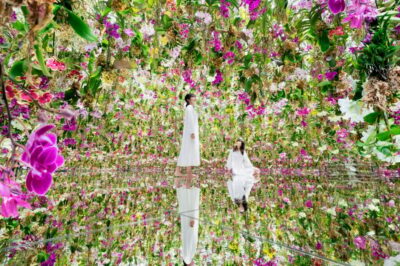
teamLab Planets TOKYO Digital Art Museum Entry Ticket
Read our review →
Tokyo Fuji Art Museum Admission Ticket + Special Exhibition (when being held)
Read our review →
Tokyo Architecture and Contemporary Art Walking Tour with a local guide
Read our review →
Kyoto 1 Day Suntory Yamazaki Distillery Tour and Asahi Art Museum
Read our review →
Kyoto Half Day Yamazaki Whisky Museum and Asahi Art Museum
Read our review →
1 Day Historic Obuse and Hokusai Mad Man of Art Tour in Japan
Read our review →
Browse the lists this tour appears in