
REVIEW · PRAGUE
IAM Illusion Art Museum Entry Ticket
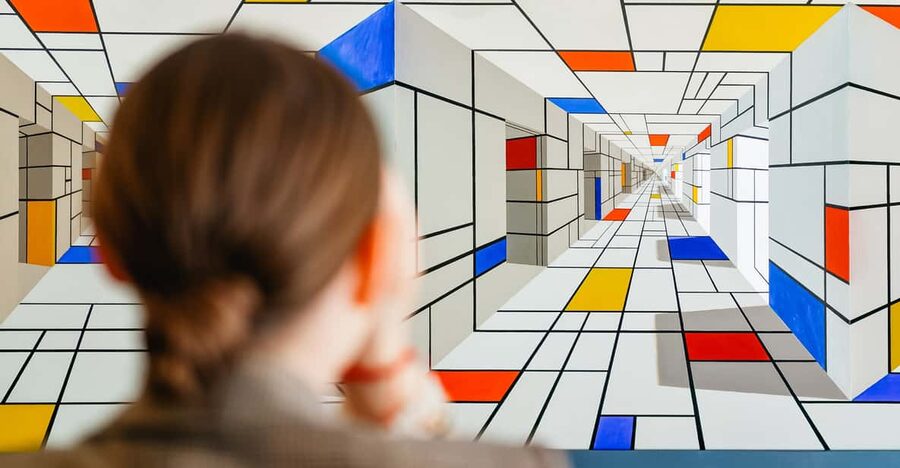
Prague’s IAM Illusion Art Museum turns looking at art into a hands-on game. You’ll walk through reverse-perspective paintings, 3D anamorphoses, optical reliefs, and camera tricks that make a flat image appear to change shape. I especially like the Czech stories woven into the exhibits and the fact that you can use your phone to become part of several illusions.
I also like the helpful staff, who assist with QR codes and often take photos for solo visitors or couples. The main consideration is size: this is a compact museum, not a half-day institution. At busy times, photo stations can feel crowded, and some visitors finish in 30 to 45 minutes.
Key points
- Camera-based illusions: Use your smartphone to turn selected 2D artworks into 3D scenes and augmented-reality effects.
- Czech connections: Meet artistic versions of Charles IV, Franz Kafka, Václav Havel, Bedřich Smetana, Nikola Tesla, and St. Agnes of Bohemia.
- Hands-on exhibits: Pose with installations, try light painting, and experiment with images that shift between forms.
- Wide range of techniques: See work by Patrick Hughes, Patrik Proško, Ladislav Vlna, Ivana Štenclová, Zdeněk Daňek, Jan Jírovec, and David Strauzz.
- Short central-city stop: Plan on roughly 45 to 90 minutes, making it useful on a rainy day or between larger Prague sights.
- Practical limitation: The museum is not suitable for wheelchair users, and pets are not allowed except assistance dogs.
What kind of museum is IAM Illusion Art Museum?
IAM is less about quietly studying paintings and more about testing how your eyes and camera interpret them. The collection covers historical and modern forms of illusory art, so you move between traditional visual tricks, sculpture, photography, painted surfaces, and digital effects.
That mix gives the museum a clear purpose. It is not simply a room full of photo backdrops. You also get a basic lesson in how artists manipulate perspective, depth, scale, reflection, and movement. The educational side is light and accessible, which suits families and anyone who prefers to learn through doing.
You should expect a social visit. Many displays work best when someone photographs you from a particular angle. If you arrive alone, staff can help with pictures. If you arrive with a friend, you can take turns posing and operating the phone effects.
More Art Museum Tours in Prague
- IAM Illusion Art Museum Prague Fast Pass Ticket
★ 5.0 · 957 reviews - Prague: Ticket to Audiovisual Light Art at Lumia Gallery
★ 4.4 · 607 reviews - Prague: Steel Art Museum Entry Ticket
★ 4.8 · 572 reviews
Starting with perspective and anamorphosis
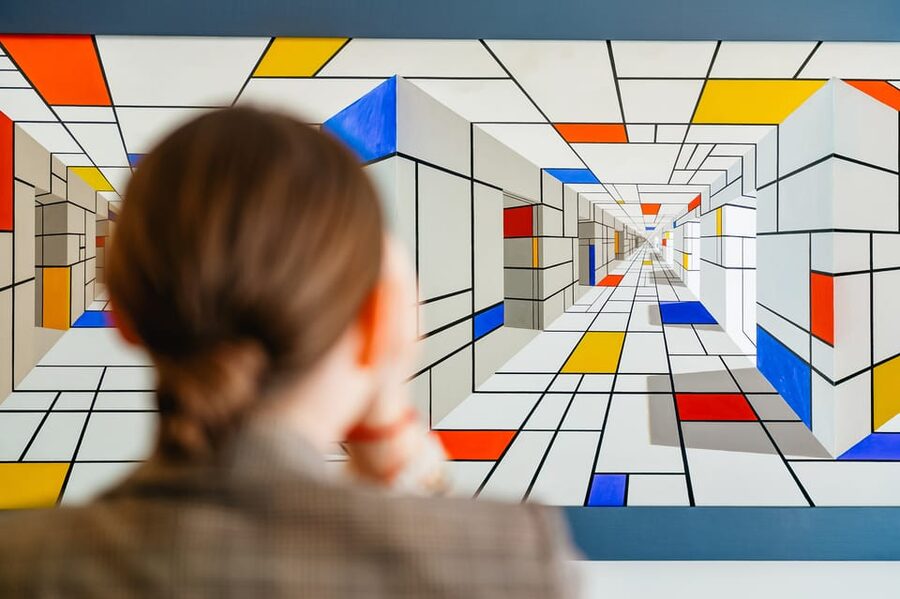
The first part of the experience introduces the core idea: an image can look wrong from one angle and correct from another. This is the principle behind anamorphosis, where a distorted picture resolves when viewed from a set position or through a camera.
Patrik Proško’s 3D anamorphic creations are a key example. These works use shaped forms and careful placement to create images that seem to occupy more space than they really do. You may need to stand in the marked area or frame the work through your phone to get the intended result.
British artist Patrick Hughes brings a different trick. His reverse-perspective paintings appear to change as you move past them. The surface is constructed so that parts projecting toward you work against normal visual expectations. From different positions, the scene seems to shift, which makes this section more rewarding when you take your time rather than glance and move on.
This is where the museum has the most artistic value. The photo is fun, but the physical construction behind the illusion is what makes the work worth examining.
Paintings made from metal, relief, and distortion
The collection then moves beyond simple perspective tricks. Ladislav Vlna’s metallurgical paintings use metal as part of the image-making process. Their surfaces give the work a different feel from ordinary paint on canvas, and the material itself becomes part of the illusion.
Ivana Štenclová’s optical reliefs add texture and depth. Instead of relying only on painted lines, these pieces use raised forms to affect how light and shadow reach your eyes. The result changes as you move, so standing in one spot may not show the whole effect.
Zdeněk Daňek and Jan Jírovec are represented by distorted 3D paintings. These works ask you to compare what your eyes see with what the artwork is actually doing. A shape may appear to bend, project outward, or occupy a depth that the flat surface cannot truly have.
David Strauzz’s lenticular images use layered pictures that change as you shift position. Lenticular art is familiar from novelty prints, but here it forms part of a larger lesson about movement and perception. Walk slowly in front of these pieces and you’ll see why viewing angle matters.
The museum does not give every technique the space of a large gallery exhibition. Still, the variety is useful. You get a quick survey of how artists have used materials, perspective, light, and photography to confuse the eye.
Czech history presented through visual tricks
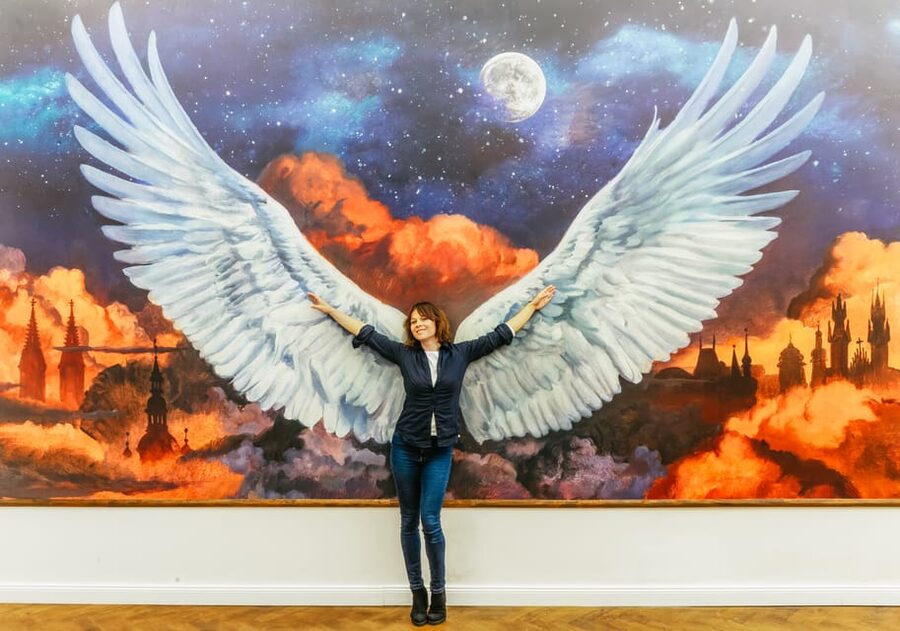
One of the better reasons to choose this museum over a generic optical attraction is its Czech subject matter. The artworks connect illusion with people and events from Prague and Bohemian history.
You may encounter depictions linked to the Swedish siege of Prague and the fall of the Bohemian monarchy. These are not presented as a long academic lecture. Instead, historical themes appear through striking images that give you a reason to stop and read.
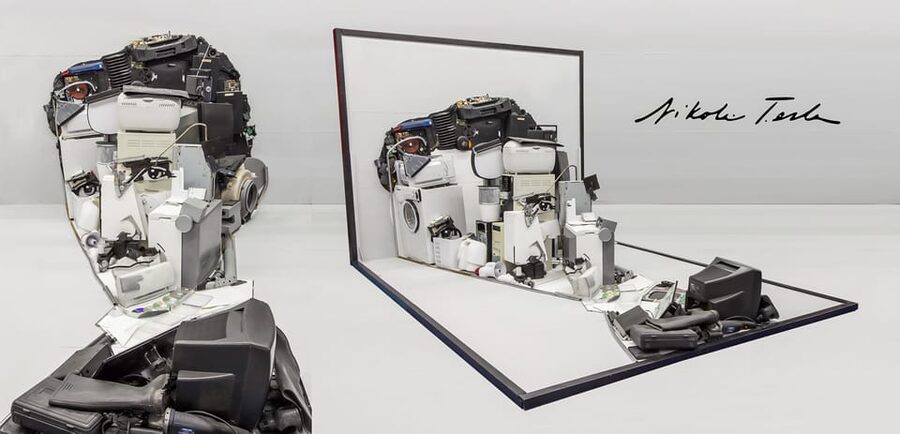
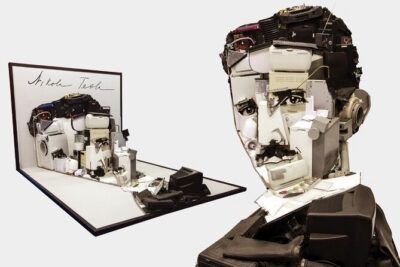
The museum also presents illusory portraits and scenes connected with St. Agnes of Bohemia, Bedřich Smetana, and Nikola Tesla. Charles IV, Franz Kafka, and Václav Havel are among the other figures represented through the exhibits.
This section works best if you already plan to visit Prague’s major historical sights. After seeing Charles Bridge, Old Town Square, or the castle district, you’ll recognize some of the cultural references more easily. If you know little about Czech history, the displays still provide useful names and prompts for later exploration.
I would not treat the museum as a substitute for a history museum. It gives you short, visual introductions rather than full biographies or detailed timelines. Its strength is making Czech culture part of an entertaining experience.
A few more gallery visits around the world worth comparing
- Paris: Louvre Museum Timed-Entrance Ticket
★ 4.6 · 71,977 reviews - Amsterdam: Van Gogh Museum Ticket
★ 4.7 · 52,054 reviews - Florence: Skip-The-Line Uffizi Gallery Timed Entry Ticket
★ 4.5 · 27,832 reviews - Paris: Orsay Museum Entry Ticket
★ 4.7 · 25,647 reviews
Using the QR codes and augmented reality
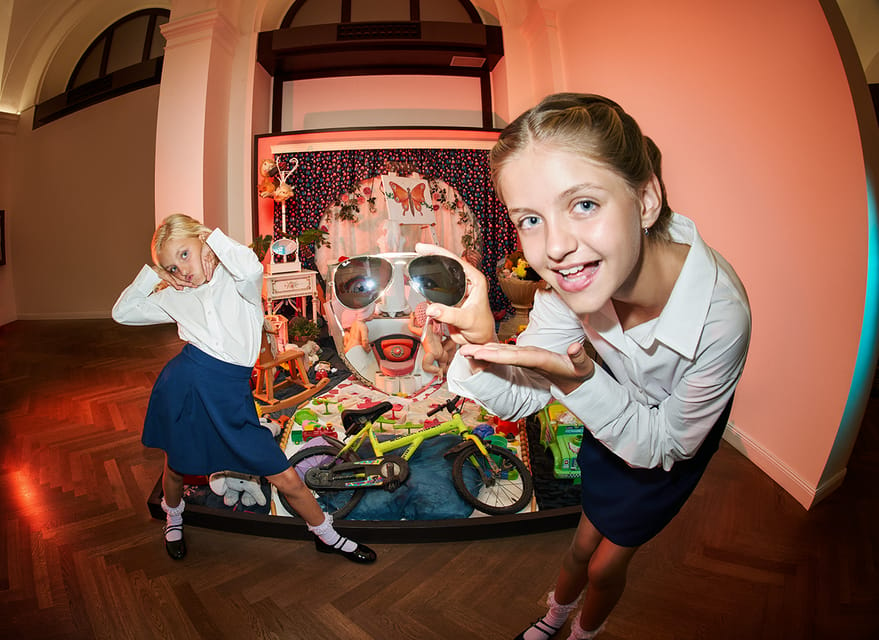
Bring a charged smartphone. Several exhibits are designed to change when viewed through the museum’s QR codes or app. A flat picture can become a 3D space, and an image can shift into an augmented-reality scene on your screen.
The phone effects are not an extra detail. They are central to how some displays work. Without a phone, you can still see the physical artworks, but you may miss part of the experience.
Staff can explain how to scan the codes and position the camera. This matters because the best result may depend on standing in a certain place, holding the phone at the right height, or waiting for the image to load. The staff also help with photography, which is particularly useful when an illusion requires a specific pose.
Phone compatibility can vary. One visitor found that the app did not work with their device, though they could still enjoy the physical displays and walk around again. I would not book this as your only activity if your phone cannot use the app, but the museum still has enough conventional art and installations to make a visit worthwhile.
The photo stations and staff assistance
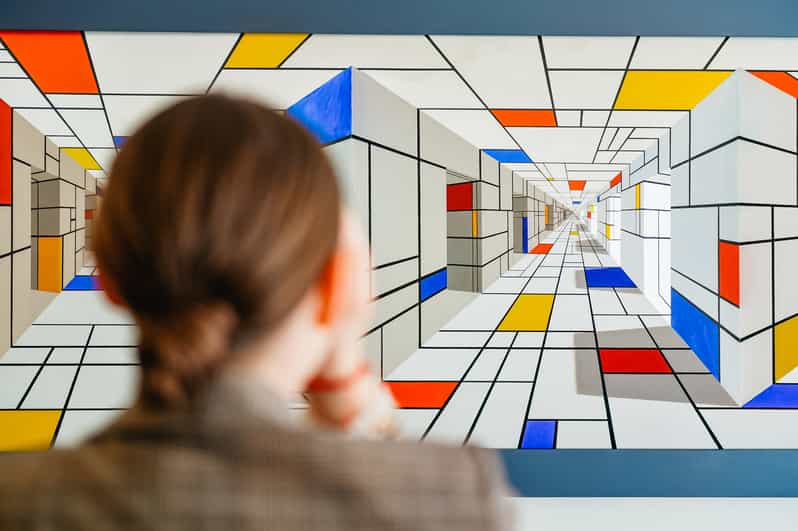
Plan to take pictures. The museum is built for visual experiments, and the photographs are often the clearest way to remember what an installation does.
You might appear to walk into a painting, become part of a distorted scene, or interact with an object that changes scale. Some displays work particularly well for couples, families, and friends because one person can pose while another frames the shot.
Solo visitors are not left out. Staff regularly help with cameras and can suggest where to stand. They may also take the picture for you. This small service makes a real difference, especially at displays where the photographer must stand in a precise position.
There is one catch: photo areas can become congested. At busy times, people wait for the same angle, and it can be awkward when several groups are trying to pose at once. You may need to circle back to a favorite exhibit later. The museum allows enough time for a second pass, and revisiting displays is sensible if your first attempt was rushed.
If you want cleaner photos, visit at a quieter time. The ticket is valid for one day, but the information provided does not promise timed entry, so you should not assume a reserved photo slot.
Light painting and the mini cinema
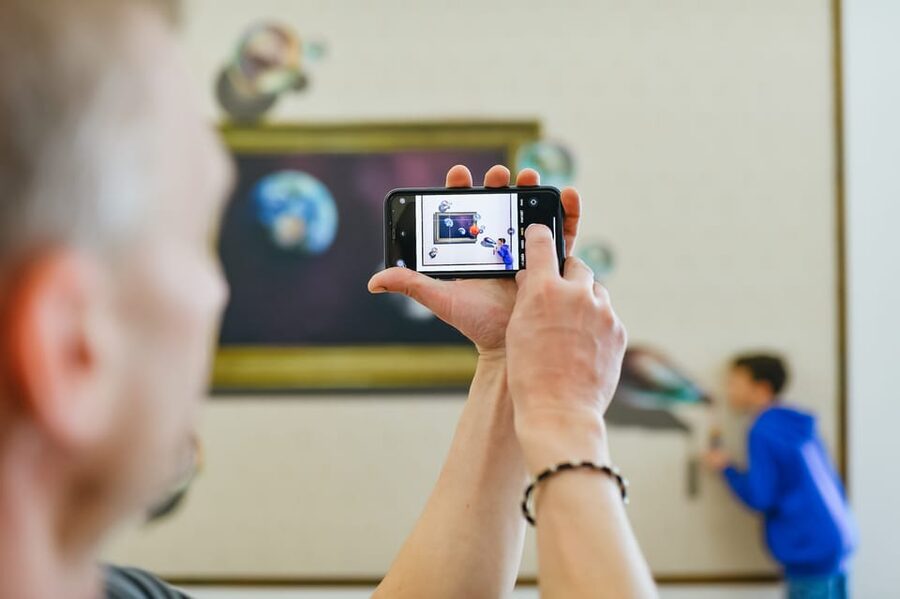
The museum also includes a chance to experiment with light painting. This type of photography records a moving light source as a glowing trail, turning a simple gesture into a drawn image.
It is a playful feature rather than a formal art lesson. You’ll get more from it if you are willing to try several times. The first result may be messy, but that is part of the appeal. Families and children usually have an easy time understanding the basic idea.
A mini cinema provides background on the techniques and ideas behind the exhibition. Use it as a short pause between interactive stations. It gives the visit a little more structure and helps explain why certain images behave differently when seen by eye or through a camera.
How long the visit takes
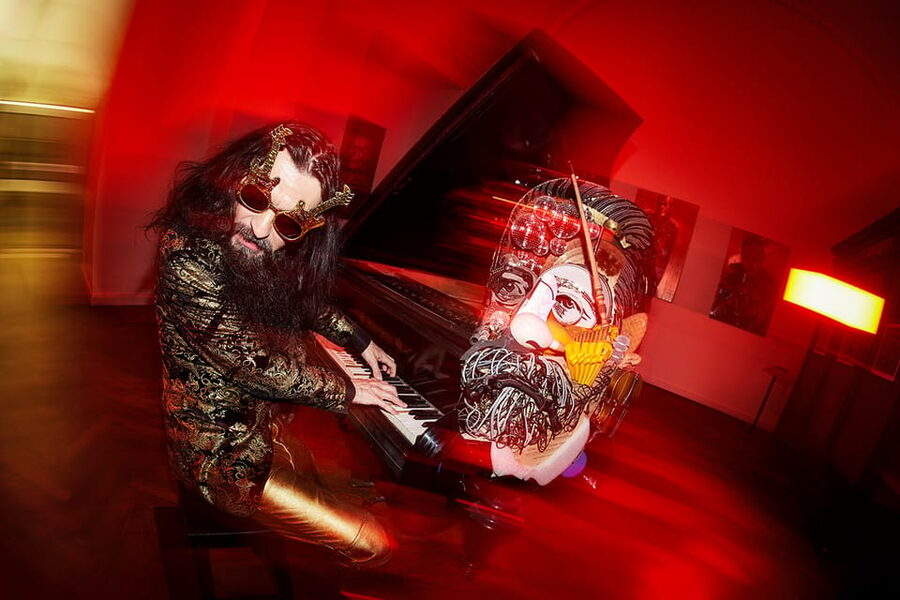
The advertised validity is one day, but the actual time inside is much shorter. A realistic visit lasts about 45 to 90 minutes, depending on crowd levels, how many photographs you take, and how closely you read the historical material.
Some people finish in 30 to 45 minutes. Others spend longer by repeating camera effects, waiting for photos, and returning to exhibits that were busy on the first pass.
This short length is both a strength and a weakness. It makes IAM easy to fit between Prague’s Old Town sights, a café stop, or a rainy afternoon. It also means the $16 price can feel high if you expect a large museum with several hours of galleries.
I think the price makes better sense when you value the interactive elements and the photographs. If you only want to look at finished artworks, the compact size may leave you wanting more. If you enjoy taking part, the ticket buys a distinct activity rather than another conventional gallery visit.
Food and drinks are not included, so plan to eat elsewhere. The central location makes it practical to combine the museum with other stops in Prague’s historic center.
Best times and practical comfort
Crowding is the main practical issue. When several groups are taking photos at once, displays can feel cramped and you may get in someone else’s way. A quieter visit gives you more time at each station and makes it easier to frame pictures.
Summer comfort may also matter. One visitor specifically found the lack of air conditioning uncomfortable. On a hot day, expect the visit to feel less refreshing than an air-conditioned museum.
The experience is offered with Czech and English host support, and the audio guide includes English, Czech, Croatian, French, Chinese, German, Italian, Polish, Portuguese, Russian, Spanish, Ukrainian, and Vietnamese. That wide audio selection is helpful if you prefer listening rather than reading short exhibit panels.
The museum is not suitable for wheelchair users. Assistance dogs are allowed, but other pets are not. These limitations are important to check before booking.
Who will enjoy IAM most?
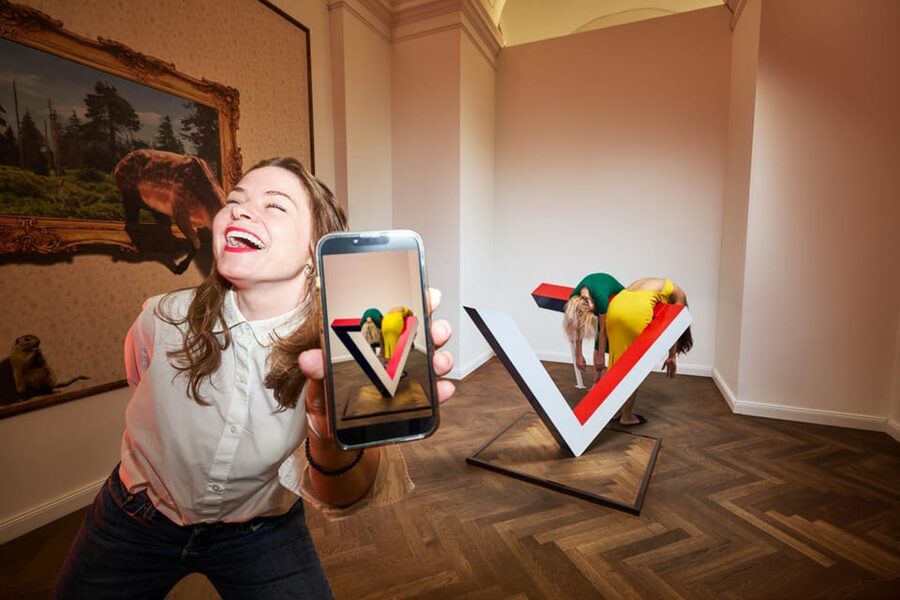
I would recommend IAM to families with school-age children, couples, friends, solo visitors who like taking photos, and anyone looking for a break from Prague’s churches, palaces, and historic streets.
Children can understand the physical tricks without needing a long explanation. Adults get more from the design, materials, and Czech references. The museum is also a good rainy-day option because the activity is compact and does not require a full day indoors.
It may be less satisfying if you want a large, quiet fine-art collection, detailed historical interpretation, or a long guided tour. There is no traditional guide leading you through every room. Staff are available to explain the effects and help with photos, while the audio guide supplies added information in many languages.
Is the $16 ticket worth it?
At $16, IAM is not the cheapest short stop in Prague. Its value depends on how actively you use it.
For a quick walk through a small gallery, the cost can feel steep. The visit may last only 30 to 45 minutes, and several exhibits require people to take turns. On the other hand, you are paying for interactive displays, phone-based effects, augmented reality, staff help, and the chance to create photographs you cannot get at an ordinary museum.
I see it as a good-value add-on for a central Prague day, especially in poor weather or when you want something light after several serious historical sights. The free cancellation option up to 24 hours before the visit and reserve-now, pay-later booking can also help if your plans are still changing.
Should you book IAM Illusion Art Museum Prague?
Book it if you want hands-on art, clever photographs, and a short cultural stop with Czech themes. Bring a charged phone, give yourself at least an hour if you want to try the effects properly, and expect staff to help with QR codes and photos.
Skip it if you need wheelchair access, dislike photo-focused attractions, or expect a large museum that fills half a day. For most people, the best way to judge the ticket is simple: if you enjoy participating in art rather than only viewing it, IAM earns its place in a Prague itinerary.
FAQ
Where is IAM Illusion Art Museum located?
It is located in Prague’s historic center in the Central Bohemian Region of the Czech Republic.
How much does admission cost?
The listed price is $16 per person.
How long should I allow for the museum?
Allow roughly 45 to 90 minutes. Some visitors complete the museum in 30 to 45 minutes, while others stay longer to repeat interactive effects and take photographs.
Is the ticket valid for one day?
Yes. The ticket is valid for one day, with available starting times shown when you check availability.
Do I need a smartphone?
You should bring a charged smartphone because QR codes, camera effects, and augmented-reality features are part of the experience.
Is an audio guide included?
Yes. Audio guide options include English, Czech, Croatian, French, Chinese, German, Italian, Polish, Portuguese, Russian, Spanish, Ukrainian, and Vietnamese.
Are staff available to help with photographs?
Yes. Staff can explain how to use the QR codes and assist with taking photographs.
Is the museum suitable for wheelchair users?
No. The activity is not suitable for wheelchair users.
Can I bring a pet?
Pets are not allowed. Assistance dogs are permitted.
Can I cancel my booking?
Yes. You can cancel up to 24 hours in advance for a full refund. Reserve-now, pay-later booking is also available.
Just added around the world
- Colosseum,Vatican Museum & Sistine Chapel in One Day Guided Tour★ 3.5 · 9 reviews
- Vatican Museums and Sistine Chapel last entry Guided Tour★ 5.0 · 3 reviews
- Private Tour Of Rome Highlights And Vatican Museums Skip-The-Line all included★ 5.0 · 4 reviews
- Borghese Gallery Admission Ticket with Audioguide★ 4.0 · 64 reviews
- Caravaggio Art Walking Tour of Rome with Pantheon Visit★ 4.5 · 35 reviews
- Borghese Gallery Skip the Line Guided Tour★ 4.5 · 23 reviews
- Borghese Gallery Ticket with Audioguide★ 3.5 · 51 reviews
- Borghese Gallery VIP Tour – Skip the Line Tickets★ 5.0 · 2 reviews
Art Museum Tours in Prague, compared.
IAM Illusion Art Museum Prague Fast Pass Ticket
Read our review →
Ticket to Audiovisual Light Art at Lumia Gallery
Read our review →
Choco Art Museum Ticket with Chocolate Making Class
Read our review →
Browse the lists this tour appears in