
REVIEW · VAN GOGH MUSEUM
Mons : The Van Gogh House
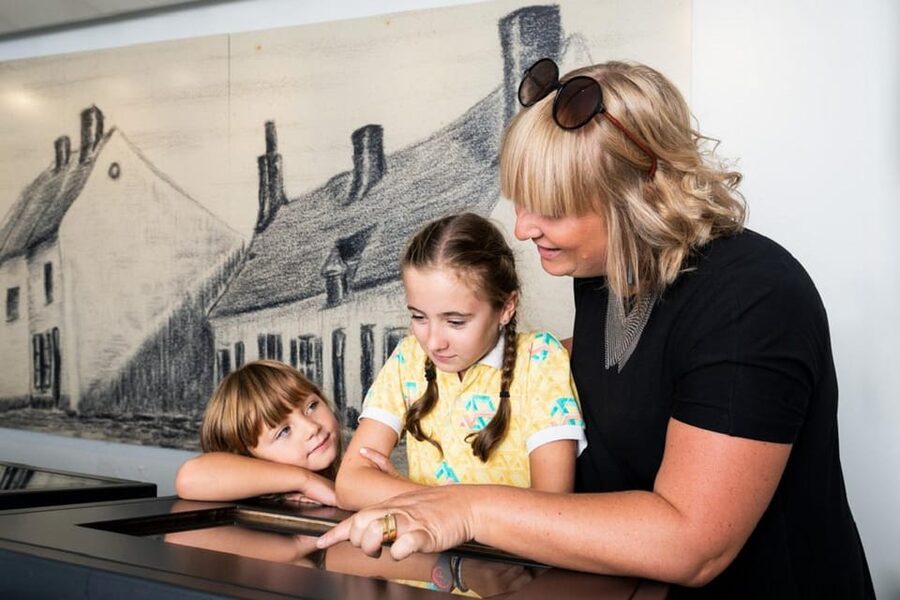
The Van Gogh House in Cuesmes marks the point where Vincent van Gogh’s life changed direction. Here, in the Borinage near Mons, he served as a preacher among mining families before turning toward art. The small house and garden give you a close look at the working-class setting that shaped his early eye.
I like the authentic setting and the clear connection to Van Gogh’s first artistic influences. I also like the simple route through the garden, pavilion, and house, followed by an audio presentation that places him in the Borinage of 1879 and 1880.
The main caution is scale. This is a compact memorial site, not a large museum filled with paintings. There is no guided tour, and the final film or audio presentation may feel too long if you already know Van Gogh’s story.
Key points to know before visiting
- Van Gogh lived here from 1879 to 1880: This was his Borinage period, before his career as a painter had properly begun.
- The setting is part of the story: The garden, modest house, and surrounding Cuesmes area help explain his interest in rural and working-class life.
- The visit is self-guided: You receive entry to the house, but no personal guide is included.
- The route has three main stages: Begin in the garden, continue through a renovated pavilion, and then enter the small house.
- The final presentation adds context: An audio installation, described by one visitor as a film, connects Van Gogh’s life to the Borinage.
- The price is modest: At $5 per person, it is an easy add-on for a day in Mons, provided you want context more than a large art collection.
Why Cuesmes matters in Van Gogh’s story
Many people first meet Van Gogh through the bold paintings of Arles, Saint-Rémy, or Auvers-sur-Oise. Cuesmes shows you an earlier Van Gogh, one still trying to understand his place in the world.
From 1879 to 1880, he was working as a preacher in the Borinage. This was a coal-mining area with strong rural and working-class character. His concern for ordinary people was not a late invention. It was already present here, before the famous colors, thick brushwork, and sunflowers.
That makes the Van Gogh House useful for anyone who wants to follow the artist’s development in order. You are not looking at a grand collection of masterpieces. Instead, you are looking at a place connected to the habits, people, and surroundings that fed his later work.
I find that kind of visit more rewarding when you arrive with the right expectations. The house will not explain every major painting in Van Gogh’s career. It gives you a physical starting point, a place where his religious life, social concerns, and first artistic impulses meet.
More Van Gogh Museum tickets:
- Amsterdam: Van Gogh Museum Ticket
★ 4.7 · 52,054 reviews - Amsterdam: Van Gogh Museum Ticket and City Canal Cruise
★ 4.6 · 3,899 reviews - Amsterdam: Van Gogh Museum Ticket & Canal Cruise
★ 4.5 · 3,304 reviews
Starting in the garden
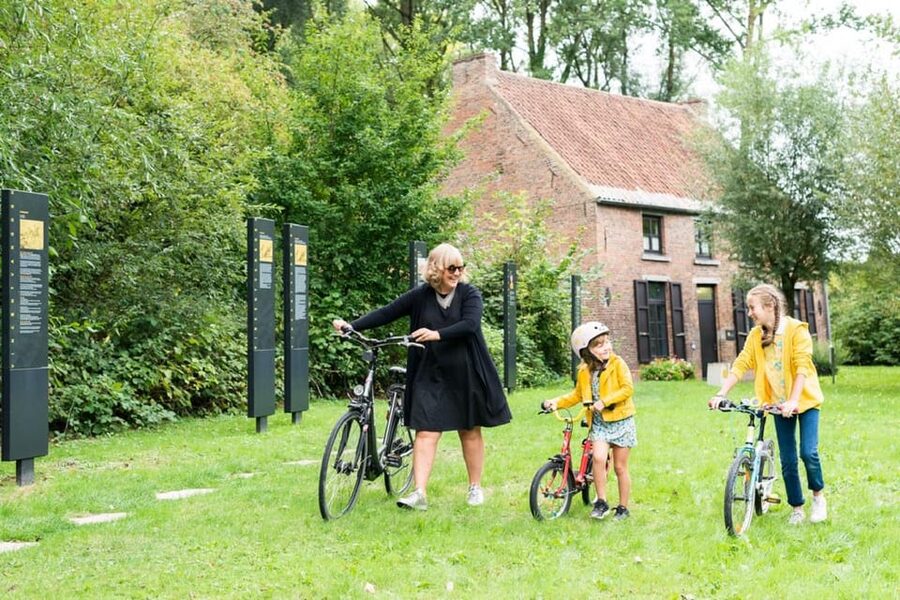
The visit begins at the entrance in the garden. This is a good choice because it lets you approach the site gradually rather than stepping straight into a display room.
The garden helps establish the mood of the Borinage. It connects the small house with the outdoor world around it, including the rural and working-class references that remained important to Van Gogh. You get a sense of the modest scale of the place before moving indoors.
Do not expect a grand estate or a polished museum courtyard. The appeal is precisely that the setting is ordinary and intimate. You are seeing the type of environment that can tell you more about an artist’s daily surroundings than a large gallery wall sometimes can.
Take a moment here before moving on. If you rush through the garden, you lose part of the visit’s purpose. The site works best when you treat it as a place of memory and context, not simply as a quick photo stop.
The renovated pavilion adds the background
From the garden, the route continues into a renovated pavilion. This section acts as an introduction to Van Gogh’s time in the Borinage and prepares you for the house itself.
The pavilion gives the site room to explain what the small home cannot. A modest building has limits. It can show you where Van Gogh stayed, but it cannot by itself explain why the Borinage mattered or how his role as a preacher shaped his later work.
The new scenography is designed to bring the place to life without turning it into a large-scale exhibition. You should expect a modern presentation rather than a room packed with original paintings. The focus is on atmosphere, biography, and the setting that influenced him.
This is also where the visit may feel most useful to first-time Van Gogh enthusiasts. If you know only the famous paintings, the pavilion helps fill in the earlier chapter. If you already know his life well, you may find the material familiar, but the location still gives it a physical anchor.
Inside the small Van Gogh House
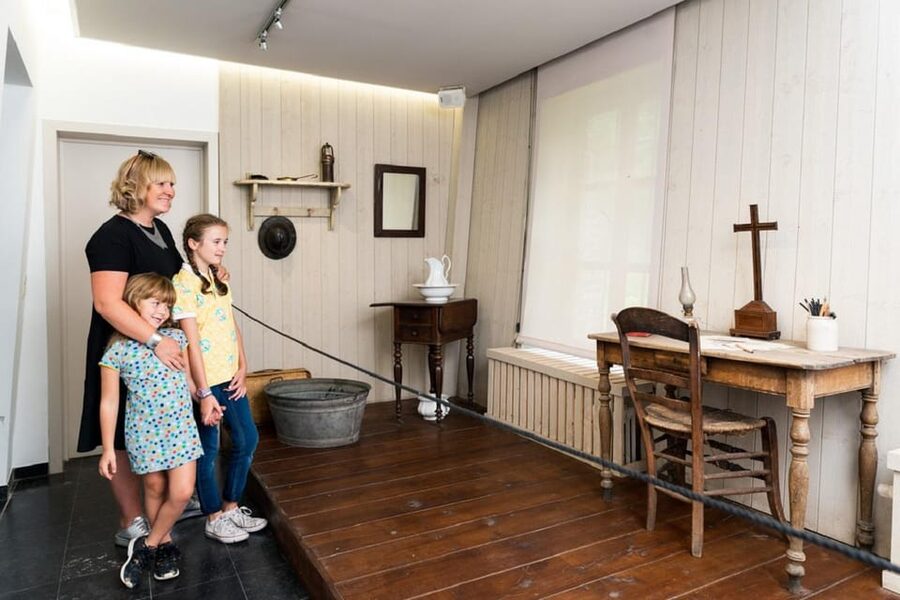
The house is the heart of the visit, and also the point where expectations matter most. It is small and has been modernized, so you are not entering a perfectly preserved nineteenth-century interior untouched by time.
Still, the house provides the strongest sense of proximity. Van Gogh lived and worked here during an important period of personal change. The building helps turn an abstract date in a biography into a real address in Cuesmes.
The space is not large enough to offer a long sequence of rooms or a detailed collection of objects. One critical assessment called the house very restricted and felt there was little information. That criticism is fair if you are hoping for a full museum visit.
I would look at the house as a focused memorial rather than a stand-alone art museum. Its value comes from being the place itself. The visit asks you to think about the young preacher who was beginning to observe people and surroundings in a new way, not the established artist whose name would later become famous around the world.
The small scale can also be an advantage. You are not distracted by dozens of unrelated galleries. The house keeps the story centered on Van Gogh’s Borinage years.
Same city, a completely different collection:
- Vatican Museums, Sistine Chapel & St. Peter’s Basilica Tour
★ 4.3 · 73,970 reviews - Paris: Louvre Museum Timed-Entrance Ticket
★ 4.6 · 71,977 reviews - Vatican Museums, Sistine Chapel & St Peter’s Basilica Guided Tour
★ 4.5 · 39,149 reviews - Florence: Skip-The-Line Uffizi Gallery Timed Entry Ticket
★ 4.5 · 27,832 reviews
The closing audio presentation
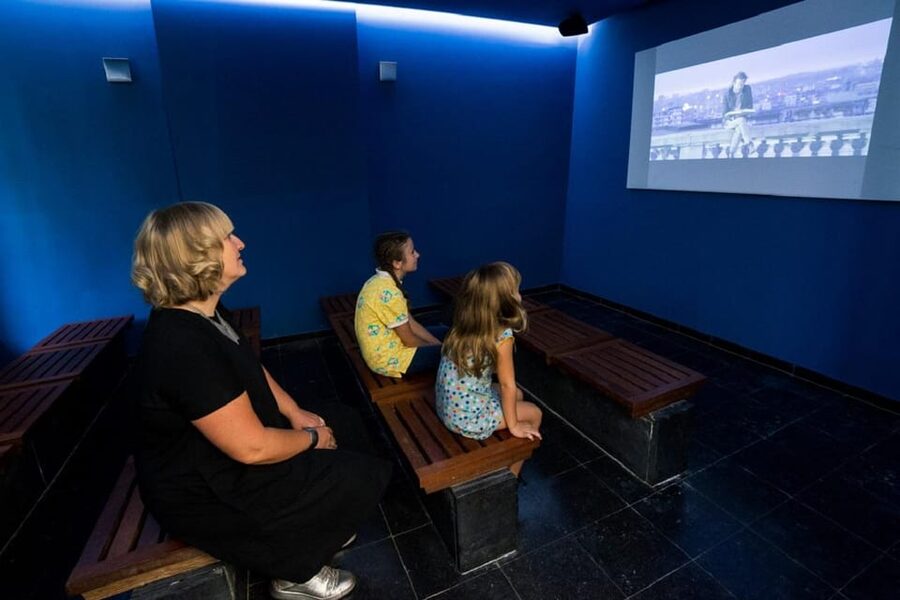
An audio installation concludes the visit by placing Van Gogh and his work in the historical setting of the Borinage. In practical terms, this final section gives the visit its wider frame.
The house shows you the location. The closing presentation explains why the location mattered. It connects Van Gogh’s work with the rural and working-class world around him and shows how those subjects continued to appear throughout his life.
The format will not suit everyone. One visitor found the film interesting but too long. If you already know Van Gogh’s biography in detail, you may prefer a shorter presentation. If you are new to his Borinage period, the extra context may be worthwhile.
I recommend treating this as the part to watch or listen to selectively, if the format allows. Pay attention to the material about his preaching, the people of the Borinage, and the way his surroundings affected his artistic direction. Those points are more important than trying to absorb every fact.
Because the visit is not guided, this presentation carries much of the interpretive work. It is especially helpful for visitors who want more than a look inside a small historic house.
What the $5 price really buys you
At $5 per person, the Van Gogh House is inexpensive by museum standards. The ticket covers entry to the site, including the garden, pavilion, house, and closing presentation.
The value depends on what you want from a Van Gogh visit. If you want to see original paintings, compare different periods of his work, or spend several hours in galleries, this will not meet that need. There is no indication of a substantial art collection here.
If you want to stand in a place tied directly to his early life, the price is easier to justify. You are paying for access to a specific place and its story, not for a large number of objects.
I would consider it good value as part of a wider Mons visit. It works particularly well for people already exploring the city and nearby Borinage sites. On its own, it may feel too brief or too narrowly focused for someone making a long journey solely to see a major Van Gogh attraction.
The moderate rating attached to the experience reflects that split in expectations. Some people will appreciate the setting and clear explanation. Others will find the house too small and the information too limited. Know which type of visit you are buying.
Getting there from Mons and planning your time
The Van Gogh House is in Cuesmes, within the Mons region of Wallonia. You must reach the site by your own transport or public transport.
If you are using a bus, check the timetable before setting out. The practical warning is simple: do not assume that a convenient service will be running when you need it. Public transport schedules can affect how easily you fit Cuesmes into a day in Mons.
You also need to arrive during the time slot you select. The ticket is sent by email and must be shown at the museum reception. Keep it available on your phone, or use whatever format the venue accepts from the email.
Allow extra time for arrival and ticket access. A visitor once spent around 45 minutes trying to locate a booking at the reception computer before being admitted with the ticket. That problem may not repeat, but having the email ready can save you needless delay.
The ticket is valid for one day, but the visit itself is tied to the chosen starting time. Check the available times before booking, especially if you are coordinating buses or other stops in the Mons area.
No guide, but language support is available
A guided tour is not included. You move through the site independently, using the displays and audio presentation to build the story.
The host or greeter can work in Dutch, English, or French. The activity information also lists those three languages for the experience. That makes the site practical for a wide range of visitors, though it does not mean you will have a personal guide speaking throughout the visit.
This distinction matters. If you want to ask detailed questions about Van Gogh’s early drawings, religious work, or specific paintings, a self-guided visit may feel limited. If you prefer to set your own pace, the absence of a guide gives you more freedom.
A particularly positive note from the supplied feedback concerns a staff member who was described as clear, patient with students, and willing to help. No name is provided, so I cannot promise that person will be present. Still, the site appears prepared to welcome school groups and explain the visit carefully when assistance is needed.
Who will get the most from the visit
I would recommend the Van Gogh House to:
- People tracing Van Gogh’s life before his fame
- Visitors interested in his years as a preacher
- Art students studying his early influences
- Anyone exploring Mons and the Borinage
- Families or school groups looking for a short cultural stop
- Fans who value historic places as much as museum collections
You may want to skip it if your main goal is to see a large number of paintings or a full survey of Van Gogh’s career. The house is compact, and the amount of information is limited compared with a major museum.
It is also less suitable if you dislike audiovisual presentations or prefer a guide who can answer questions as you go. The final presentation may feel long, especially if you already know the biography.
For serious Van Gogh enthusiasts, the modest size is not automatically a weakness. The point is to visit a real place tied to his development. Just pair it with other museums or sites if you want a fuller day of art.
Access and practical comfort
The Van Gogh House is wheelchair accessible, which makes the site available to visitors with mobility needs. The information provided does not describe every interior feature, so you may still want to confirm specific access questions before arrival.
Food and drinks are not included. Plan to eat separately in Mons or along your route. This is a short cultural visit rather than a meal-based excursion.
Free cancellation is available up to 24 hours before the scheduled time for a full refund. You can also reserve now and pay later, which helps if your day in Mons depends on transport connections.
Should you book the Van Gogh House?
Book it if you want a small, authentic place connected to Van Gogh’s early life, and you are happy with a self-guided visit rather than a major museum. The $5 price makes it a sensible addition to a Mons day, especially for anyone curious about the preacher who became an artist.
Skip it if you expect a large collection, many rooms, or extensive expert commentary. The house is restricted in size, the information may feel light, and the closing presentation can run longer than some people prefer.
My practical advice is to visit with a clear purpose: come to understand Van Gogh’s Borinage years and feel the setting that shaped his early outlook. For that focused goal, the Van Gogh House earns its place. For a complete Van Gogh pilgrimage, treat it as one modest stop rather than the main event.
FAQ
Where is the Van Gogh House?
The Van Gogh House is in Cuesmes, a municipality in the Mons region of Wallonia, Belgium.
How much does entry cost?
The listed price is $5 per person. The ticket includes entry to the Van Gogh House.
Is a guided tour included?
No. A guided tour is not included. The visit is self-guided, with an audio installation at the end.
Which languages are available?
Dutch, English, and French are listed as available languages for the experience. The host or greeter can also speak those languages.
How do I reach the site?
You must travel to the site by your own transport or public transport. If you take a bus, check the timetable in advance.
Can I cancel my booking?
Yes. You can cancel up to 24 hours in advance for a full refund. You can also reserve now and pay later.
Just added around the world
- Colosseum,Vatican Museum & Sistine Chapel in One Day Guided Tour★ 3.5 · 9 reviews
- Vatican Museums and Sistine Chapel last entry Guided Tour★ 5.0 · 3 reviews
- Private Tour Of Rome Highlights And Vatican Museums Skip-The-Line all included★ 5.0 · 4 reviews
- Borghese Gallery Admission Ticket with Audioguide★ 4.0 · 64 reviews
- Caravaggio Art Walking Tour of Rome with Pantheon Visit★ 4.5 · 35 reviews
- Borghese Gallery Skip the Line Guided Tour★ 4.5 · 23 reviews
- Borghese Gallery Ticket with Audioguide★ 3.5 · 51 reviews
- Borghese Gallery VIP Tour – Skip the Line Tickets★ 5.0 · 2 reviews
Van Gogh Museum Tours, compared.

Van Gogh Museum Amsterdam Exclusive Tour w/ Reserved Entry
Read our review →
Van Gogh Museum Tour Reserved Entry Semi Private
Read our review →
Combo Ticket: Van Gogh Museum Ticket and 1-Hour Canal Cruise
Read our review →
Van Gogh & Rembrandt Captivating Experience Entry
Read our review →Browse the lists this tour appears in