
REVIEW · AMSTERDAM
Amsterdam: Van Gogh & Rembrandt Captivating Experience Entry
Van Gogh and Rembrandt appear together here in a way you will not find in a normal gallery. Their paintings spread across the walls and ceiling of Amsterdam’s Noorderkerk, while Van Gogh’s own words explain how strongly he admired Rembrandt. It is part art show, part biography, and part quiet church visit.
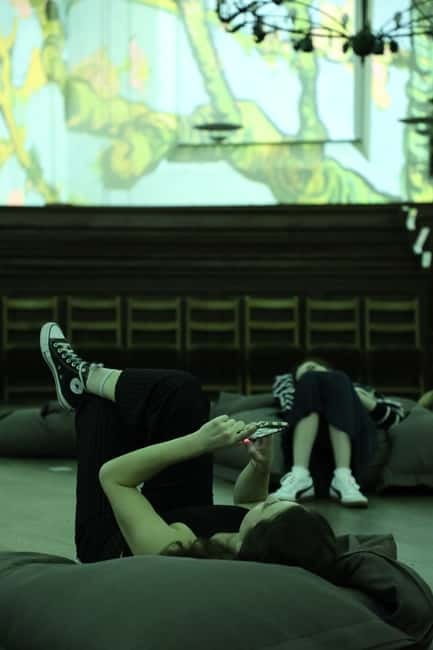
I like the 360-degree projections, which let you sit or lie beneath moving sunflowers, blossoms, portraits, and biblical figures. I also like the setting: the church still feels like a church, with its benches, organ, and tall interior giving the show a sense of place. The main thing to consider is seating. Bean bags are limited, so arrive early if you want to lie down rather than sit on a wooden chair.
Key points to know before you go
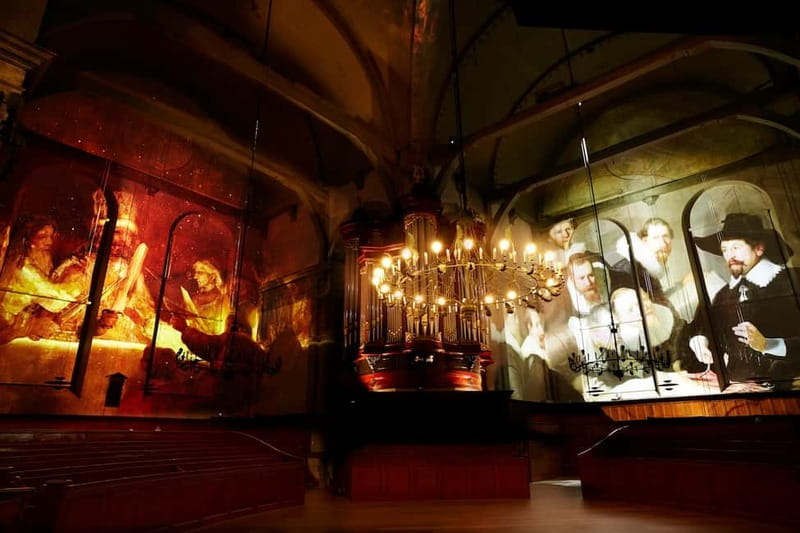
- Van Gogh’s admiration for Rembrandt: The presentation uses words from Van Gogh’s letters to his brother to explain the connection between the two artists.
- A historic church setting: The Noorderkerk supplies the atmosphere, with projections covering its walls and ceiling.
- A 45-minute presentation: The show is short enough to fit into a busy Amsterdam day without taking over your schedule.
- Bean bags matter: The central cushions offer the most comfortable view, but they can fill quickly.
- Not the Van Gogh Museum: You are seeing projected images and a narrated presentation, not original paintings.
- Best for visual art and relaxed pacing: You can walk around, sit, or lie back and watch the show unfold around you.
Van Gogh and Rembrandt in the Noorderkerk
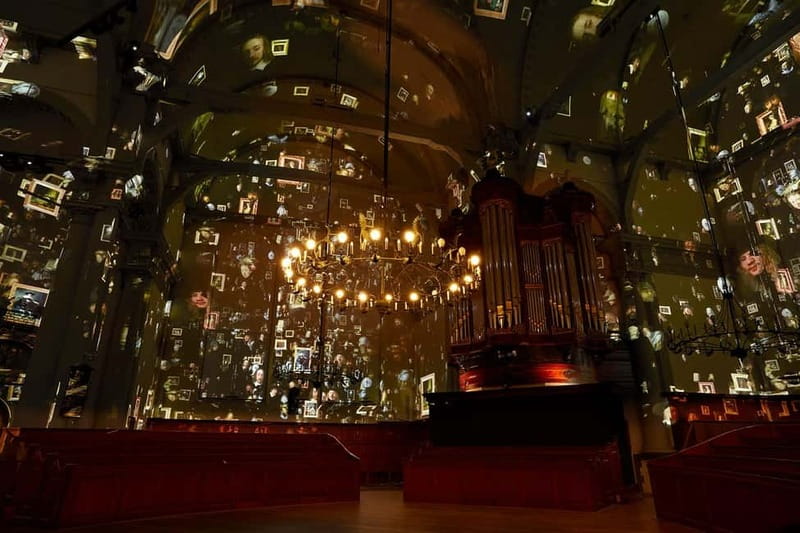
The clever idea here is not simply to place two famous Dutch artists in the same show. It is to explain why Van Gogh looked back to Rembrandt.
Van Gogh is usually linked with bright color, rough brushwork, sunflowers, and the night sky. Rembrandt is more often associated with shadow, portraits, biblical subjects, and the dramatic use of light. At first glance, they seem far apart. The presentation makes the case that Van Gogh saw Rembrandt as a major artistic model.
You hear Van Gogh’s thoughts through words taken from his letters to his brother. That spoken material gives the show a personal center. Instead of watching a silent sequence of famous images, you get some sense of what Van Gogh was thinking about art, faith, and the painters who influenced him.
This is useful if you know the two names but not much about their connection. You do not need a detailed background in Dutch art to follow the basic story. The presentation is designed to explain the link as the images move around you.
The setting adds a second layer. The Noorderkerk is not a blank exhibition hall. It is a national monument and a functioning church, with traditional benches, an organ, and a large interior that changes character when the projections begin. You are looking at modern light effects inside an old religious space, an unusual pairing that gives the experience more personality than a standard digital display.
More Art Museum Tours in Amsterdam
- Amsterdam: Rijksmuseum Entry Ticket
★ 4.7 · 29,512 reviews - Amsterdam: Van Gogh Museum Ticket and City Canal Cruise
★ 4.6 · 3,899 reviews - Amsterdam: Van Gogh Museum Ticket & Canal Cruise
★ 4.5 · 3,304 reviews
What happens during the 45-minute show
Your visit begins inside the church, where you can choose a place to sit or walk around before the presentation gets going. The central area has bean bags, while wooden chairs and church seating provide other options.
When the show starts, images spread across the walls and ceiling. The church becomes the screen. You may see sunflowers, blossoms, angelic figures, portraits, and other images linked to Van Gogh and Rembrandt. The pictures move with the music and narration rather than sitting still like paintings in a frame.
The freedom to look around is important. This is not a presentation where you face one screen from a fixed row. Depending on where you sit, different walls may come into view at different angles. One practical point: a seat in the center can give you a better overall view, while a position near the side may leave part of the church behind you.
The bean bags are popular for good reason. Lying down lets you look toward the ceiling without craning your neck, and the experience becomes calmer and more reflective. You can also watch from a chair, but the viewing position feels less special. If the bean bags are full, you may need to accept a more conventional seat.
The program combines music, narration, and changing images. The audio explains the connection between the artists, while the projections give you the feeling of moving through their work. Some people will pay close attention to the story. Others will mainly enjoy the music and visual effects. Both approaches work, though the presentation will appeal most if you like art with a clear narrative.
Why the church setting makes a difference
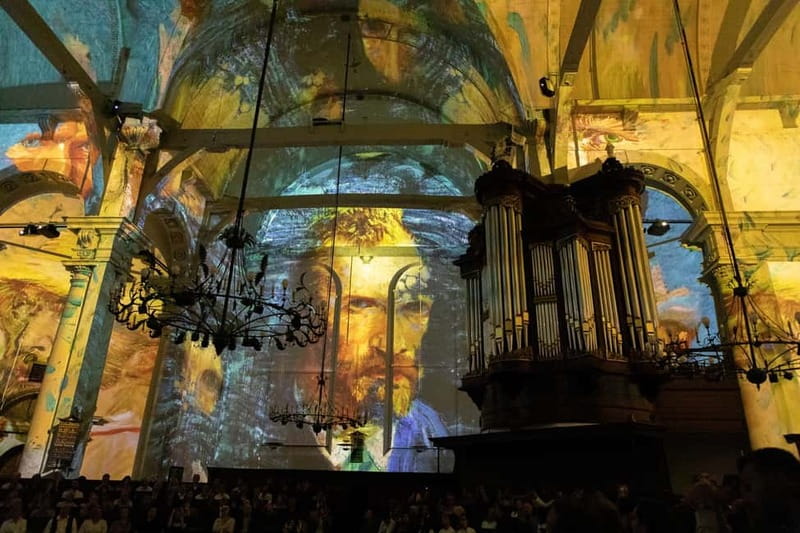
The Noorderkerk is more than a convenient room with high walls. Its original purpose remains visible, and that affects the mood of the show.
You still see church benches and the organ. The building’s religious character also suits the subject matter. Rembrandt painted many biblical scenes, and Van Gogh’s letters often show his interest in faith and spiritual ideas. Projecting angelic figures and religious imagery across the interior feels more natural here than it would in a hotel conference room.
The church also makes the contrast between old and new easy to notice. The building is quiet and solid. The show is moving, colorful, and electronic. When the images travel across the walls, you are not just looking at art. You are seeing a historic Amsterdam interior temporarily recast as a huge visual display.
That does not mean the experience replaces a church visit or an art museum. It gives you a different way to think about both. You get a sense of how the artists’ subjects and ideas might connect, but you do not get the texture, scale, or original surfaces of the actual paintings.
The story behind Van Gogh’s admiration for Rembrandt
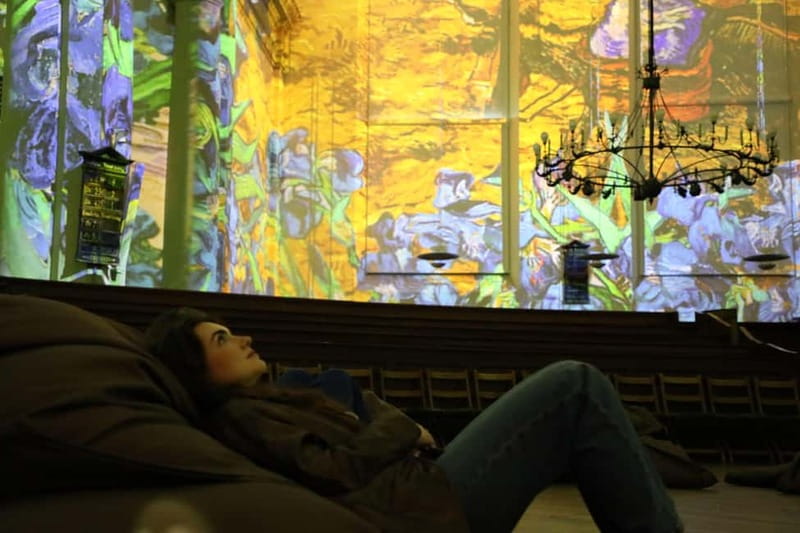
The strongest part of the presentation is its central question: what did Van Gogh see in Rembrandt?
Rembrandt’s work often depends on light emerging from darkness. Van Gogh used a very different palette, but he too wanted paintings to carry feeling and spiritual force. The show uses this link to place Van Gogh in a longer Dutch artistic tradition.
Van Gogh’s letters help keep the story grounded. You hear directly from his writing rather than getting only a list of dates and famous titles. That makes the presentation more personal, especially for anyone curious about Van Gogh as a person and not only as the painter of Sunflowers and The Starry Night.
The story is fairly easy to follow, though the balance between narration and music may vary depending on where you sit. Some seating positions offer clearer sound than others. The central cushion area is a good choice if you want the narration to remain easy to understand.
Do not expect a detailed art-history lecture. The show offers an accessible introduction to the relationship between the two painters. It works best as a thoughtful visual experience rather than a full account of either artist’s life.
More Van Gogh Museum tickets:
- Van Gogh Museum Amsterdam Exclusive Tour w/ Reserved Entry
★ 5.0 · 1,760 reviews - Van Gogh Museum Tour Reserved Entry Semi Private
★ 5.0 · 1,437 reviews - Amsterdam: Van Gogh Museum Entry Ticket and Guided Tour
★ 4.9 · 681 reviews - Combo Ticket: Van Gogh Museum Ticket and 1-Hour Canal Cruise
★ 4.0 · 676 reviews
How the projections compare with original art
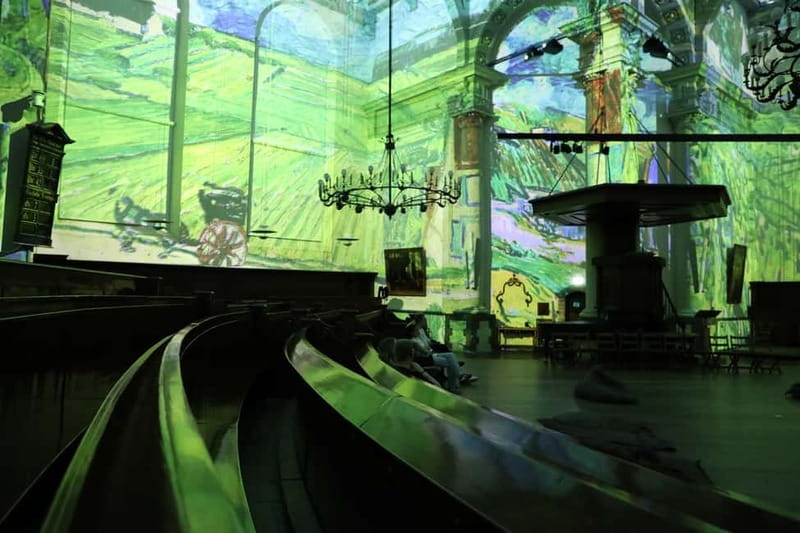
The show’s greatest strength is also its limit. Large moving images can make you feel surrounded by art, but they cannot show the actual brushwork of a Van Gogh painting or the surface detail of a Rembrandt.
A projection can enlarge a blossom until it covers a wall. It can move you from a dark Rembrandt scene into a field of Van Gogh color in seconds. That scale makes familiar images feel fresh, especially when you lie on a bean bag and look up at the ceiling.
At the same time, you lose the quiet concentration that comes with standing in front of an original painting. The images keep moving, and music is always part of the experience. If you want to study composition, pigment, or small details, go to a museum afterward or make this a companion visit rather than your only art stop.
This is particularly important because the title may sound like a museum entry. It is not the Van Gogh Museum. You will not see original works, museum labels, or a traditional collection. You are buying a timed audiovisual presentation inside a historic building.
For $20, I consider the value reasonable if you want something atmospheric and different. The 45-minute length keeps the price from feeling like a major commitment, and the church setting adds something you would not get from a simple projection room. It is less compelling if your main goal is to see authentic paintings.
Finding the best seat and view
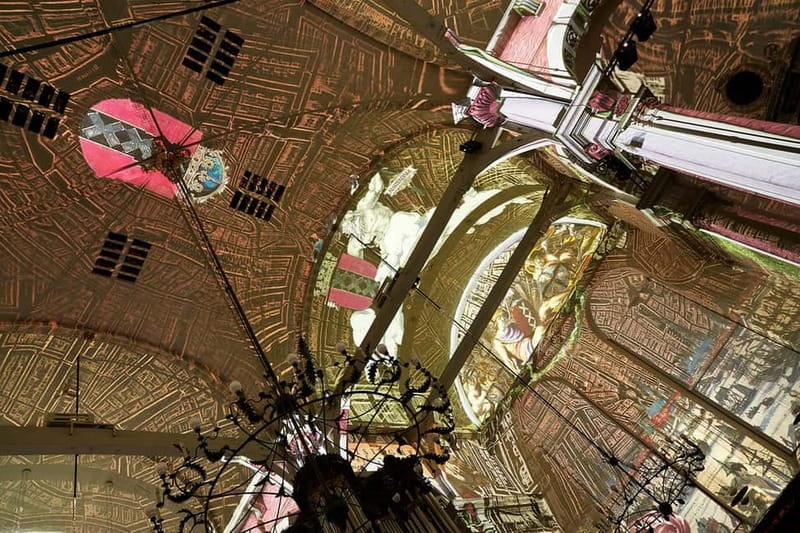
Arrive at least 10 minutes before your scheduled starting time. The entry times are strict, and early arrival gives you a better chance of choosing the kind of seat you want.
If lying down is important to you, head for the bean bags first. They are limited, and the center area can fill before everyone has entered. Wooden chairs are available, but they do not offer the same relaxed view of the ceiling.
A central position is generally the safest choice for seeing the projections on several walls. One visitor found that sitting in a place with a poor angle meant missing some of the artwork behind them. You cannot see every wall equally well from every seat, so choose with the full-room format in mind.
Sound matters too. The narration and background music work together, but the music can feel loud from some positions. If understanding every word is important to you, the central cushion area is a sensible option.
The show lasts only 45 minutes, so you do not need to plan around a long visit. That makes it easy to combine with other Amsterdam sights, though you should leave enough time to reach the Noorderkerk and check in early.
Who will enjoy this experience most
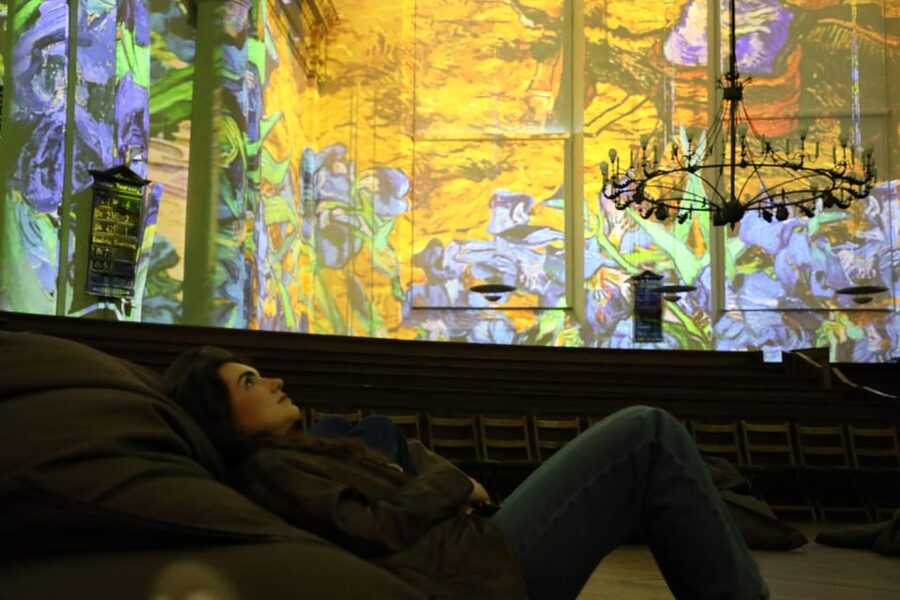
I would recommend it to you if you enjoy art but prefer a relaxed, visual presentation to a formal museum visit. It is also a good choice if you are curious about Van Gogh and Rembrandt but do not know much about their connection.
Families with older children, couples, solo visitors, and art-loving adults can all find something here. The short length helps, especially if you are fitting several activities into one day. You can simply watch the images, or listen more closely to the story and think about the ideas behind the work.
The show may be less satisfying if you want a traditional collection of original paintings. It may also feel slow if you are not interested in art, biography, music, or atmosphere. One partner may love the story while another mainly appreciates the light effects. That difference is worth keeping in mind before booking.
People with epilepsy should not attend, as the presentation uses changing light and moving projections. Pets are not allowed, although assistance dogs are permitted. Alcohol and drugs are also prohibited, and the experience is not suitable if you are intoxicated.
The venue is wheelchair accessible. Presentations are available in Dutch and English, with a host or greeter in those languages. Check the selected time carefully, since the experience is closed on Sundays.
Is the $20 ticket good value?
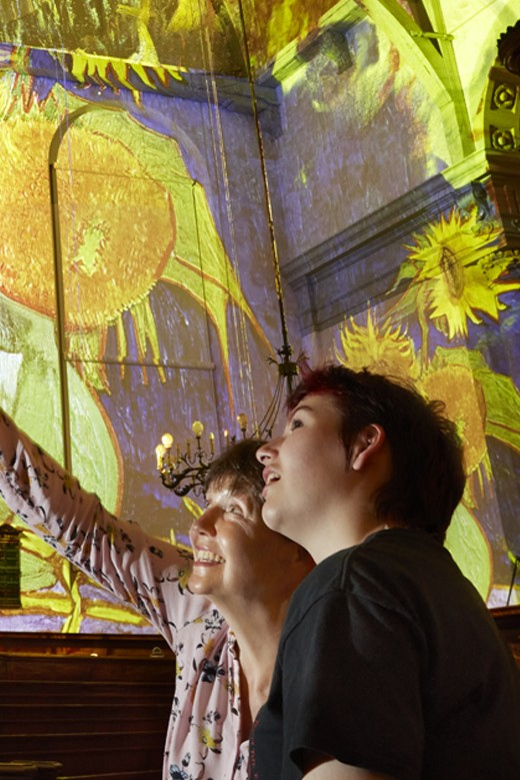
At $20 per person, this is not a full-day attraction, nor is it priced like a major museum visit. Its value comes from the combination of three things: the historic church, the large-scale projections, and the narrated link between the artists.
I think the ticket is worthwhile when you want a compact evening or daytime activity that feels different from Amsterdam’s usual canal tours and museums. The presentation gives you a change of pace. You sit, listen, and let the images move over the room.
The value is weaker if you expect famous original paintings or a long program packed with detailed information. You are paying for presentation and setting, not access to a collection.
You can also reduce your risk by booking with the flexible cancellation terms: cancellation is allowed up to 24 hours in advance for a full refund, and a reserve-now, pay-later option is available. Those policies are useful when your Amsterdam schedule is still shifting.
Should you book Van Gogh and Rembrandt in the Noorderkerk?
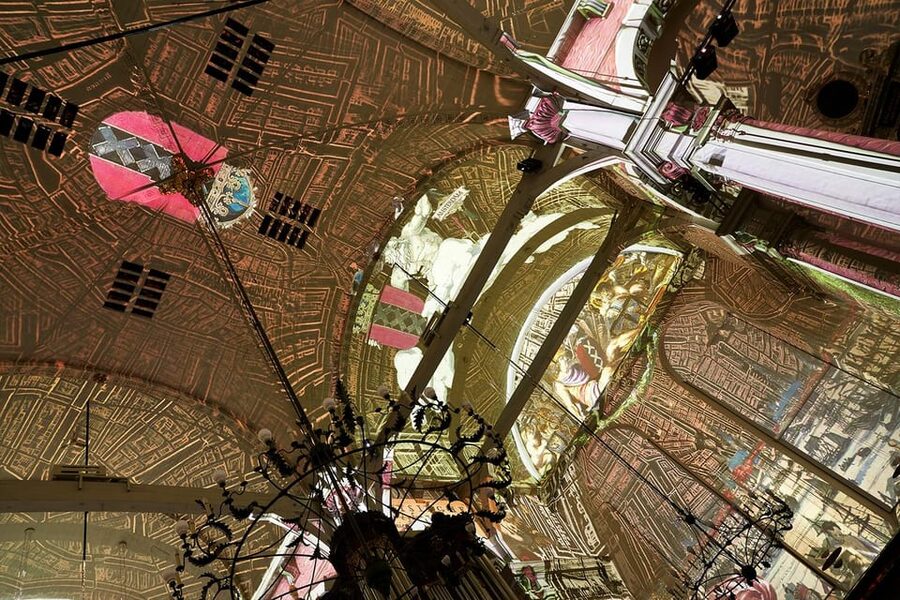
Book it if you want a short, atmospheric art experience and like the idea of lying beneath projections inside an old Amsterdam church. Arrive early, aim for a central bean bag, and choose the English or Dutch presentation carefully.
Skip it if you are expecting the Van Gogh Museum, original paintings, or a detailed scholarly lecture. For most people who enjoy visual art, music, and a little history, the $20 price is fair. The Noorderkerk setting and the focus on Van Gogh’s admiration for Rembrandt give the show enough substance to be more than a pretty light display.
FAQ
Is this the Van Gogh Museum?
No. This is a sound and light presentation using projected images inside the Noorderkerk. It does not display original Van Gogh paintings.
How long does the experience last?
The presentation lasts 45 minutes.
How much does entry cost?
The listed price is $20 per person.
Is the experience available in English?
Yes. The experience is available in Dutch and English, and the host or greeter speaks Dutch and English.
Can I sit or lie down during the show?
Yes. Bean bags are available in the central area, and wooden chairs are also provided. Bean bags are limited, so arrive early if you want one.
Is the experience wheelchair accessible?
Yes, the experience is wheelchair accessible.
When should I arrive, and is it open every day?
Check in 10 minutes before your scheduled time because starting times are strict. The experience is closed on Sundays.
Just added around Amsterdam
- Small Group Tour to NP Hoge Veluwe (van Gogh) from Amsterdam★ 5.0 · 19 reviews
- Van Gogh and Rembrandt Immersive Experience Entry Amsterdam★ 4.0 · 2 reviews
- Van Gogh Museum Guided Visit Including Tickets★ 4.5 · 9 reviews
- Van Gogh Museum Tour excluding Entrance Tickets★ 5.0 · 16 reviews
- Van Gogh Museum with Audio Guide★ 3.5 · 80 reviews
- Van Gogh Museum, Small Group Tour (incl timed entry tickets)★ 5.0 · 5 reviews
- Van Gogh Museum Entry Ticket and Guided Tour★ 4.5 · 48 reviews
- Amsterdam: Explore the Van Gogh Museum & His Masterpieces★ 3.5 · 64 reviews
Art Museum Tours in Amsterdam, compared.

Van Gogh Museum Amsterdam Exclusive Tour w/ Reserved Entry
Read our review →
Rijksmuseum Amsterdam Small-Group Tour with Private Upgrade
Read our review →
Van Gogh Museum Tour Reserved Entry Semi Private
Read our review →
Rijksmuseum Entry Ticket and Canal Cruise Combo
Read our review →Browse the lists this tour appears in