
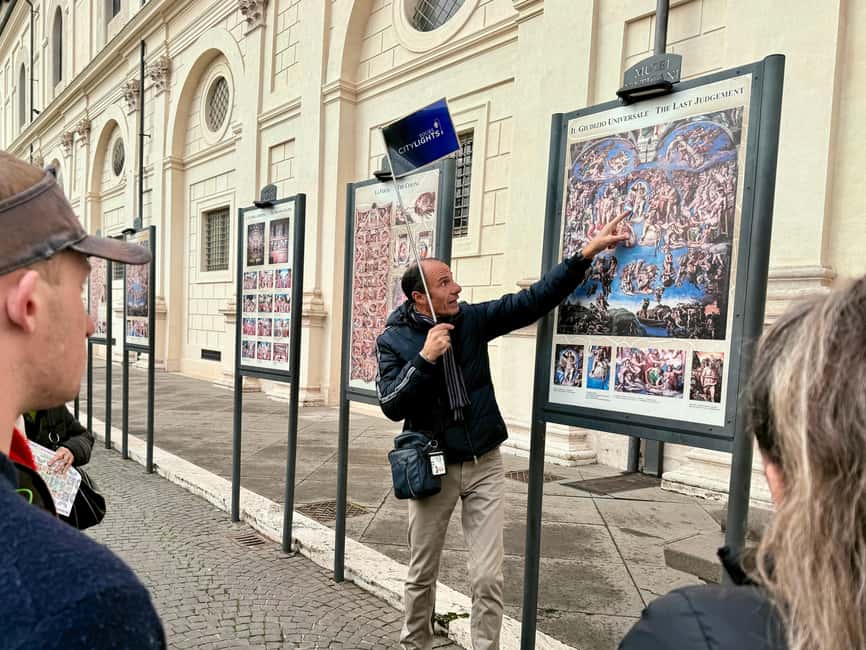
REVIEW · ROME
Vatican Museums, Sistine Chapel & St. Peter’s Basilica Tour
The most useful feature here is not simply seeing the Vatican, but having a guide give the crowded route some shape. You move from ancient sculpture through the Gallery of Maps and Raphael Rooms to Michelangelo’s Sistine Chapel, with timed entry helping you avoid the worst of the ticket line. I especially like the headsets, which let you hear the guide without pressing shoulder to shoulder, and the optional St. Peter’s Basilica visit, which lets you choose between a shorter museum tour and a fuller Vatican experience.
The main tradeoff is the pace. Two and a half to three hours is enough for major sights, not every gallery. Crowds are still part of the deal, even with express security, and the Basilica visit can be affected by security or religious services. Arrive early, dress properly, and expect a focused highlights tour rather than a quiet afternoon with each painting.
Key points at a glance
- Timed Vatican entry: Start with a reserved entrance and an express security check, though every visitor must still pass screening.
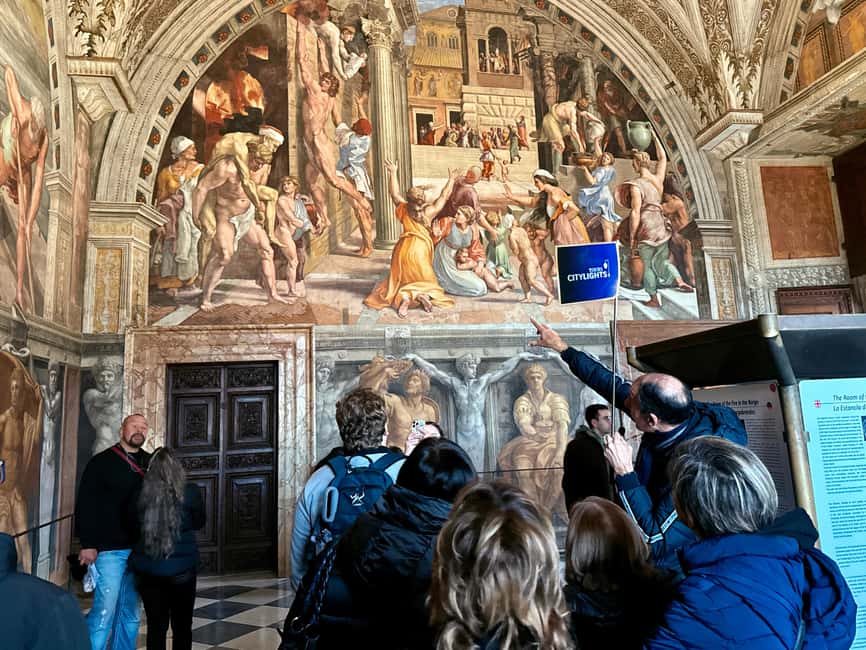
- Raphael’s School of Athens: Stop in the Raphael Rooms for one of the Vatican’s clearest pictures of Renaissance ambition, learning, and power.
- A guided route through major galleries: See the Gallery of Candelabra, Gallery of Woven Works, Gallery of Maps, Raphael Rooms, and Sistine Chapel in a logical order.
- Headsets included: You can follow commentary even when the halls are crowded.
- St. Peter’s Basilica option: Add Bernini’s Baldachin, Michelangelo’s Pietà, and the enormous nave at your own pace.
- Practical limits: The Sistine Chapel requires silence and restricts photography. Shoulders and knees must be covered, and large bags are not allowed.
Why the Vatican needs a plan
The Vatican Museums are not a single room with a famous ceiling at the end. They are a long succession of galleries, courtyards, sculpture halls, painted rooms, and religious collections. Without a plan, it is easy to spend too much time on the first impressive statue and reach the major works tired and distracted.
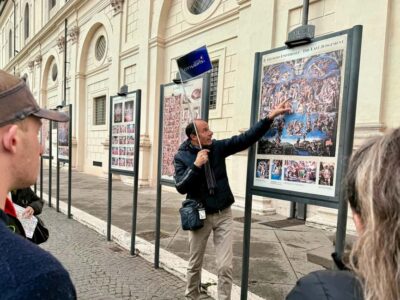
This tour gives you a route through the parts most first-time visitors want to see. Your guide begins at the meeting point at Bar Da Paolo on Viale Vaticano 104, checks in the group, and leads you toward the Pinecone Courtyard. From there, the visit moves through the museum highlights before reaching the Raphael Rooms and Sistine Chapel.
The guides work in English, Japanese, Korean, or Chinese, according to the option booked. Alberto receives especially warm praise for answering questions and making the information lively. Richard is also singled out for handling the crowds while bringing visitors close to the main sights. Individual guides can vary, but the format gives you a real person to explain what you are looking at rather than leaving you with room labels alone.
At $80 per person, the value depends on how much you want structure. The price includes timed museum admission, the Sistine Chapel, a licensed guide, headsets, booking fees, and taxes. It does not include transportation or hotel pickup. For a first Vatican visit, the combination of time saved and explanation makes the price reasonable, especially if you would otherwise need to organize admission and a separate guide.
More Art Museum Tours in Rome
- Vatican Museums, Sistine Chapel & St. Peter’s Basilica Tour
★ 4.3 · 73,970 reviews - Vatican Museums, Sistine Chapel & St Peter’s Basilica Guided Tour
★ 4.5 · 39,149 reviews - Rome: Vatican Museums, Sistine Chapel and Basilica Tour
★ 4.3 · 16,039 reviews
Starting in the Pinecone Courtyard
The Pinecone Courtyard is a fitting place to begin because it gives you a little breathing room before the indoor galleries. Your guide can establish the Vatican’s scale and explain how the museum route fits together before the group enters the denser halls.
This is also where the headsets begin to matter. The Vatican can be loud, and a guide speaking to a small group may be difficult to hear without audio equipment. With a headset, you can look at a statue or ceiling while still following the commentary, rather than gathering around the guide for every sentence.
You should arrive 15 minutes before your scheduled start. The entrance is time-sensitive, so arriving late can create a real problem. The meeting point is outside the museum, and the host provides assistance before you enter.
Ancient sculpture in the Museo Pio Clementino
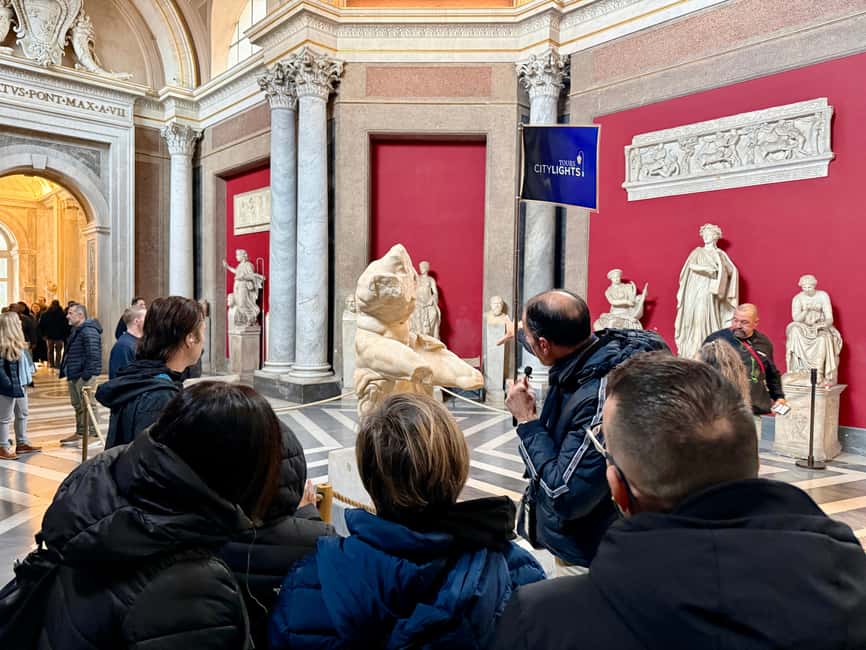
The Museo Pio Clementino introduces the older collections in the Vatican Museums. The route includes sculpture and classical art, giving your guide a chance to explain how Renaissance artists and patrons looked back to Greece and Rome.
This part is valuable because it gives context for the later rooms. The Vatican’s Renaissance artists were not working in isolation. Their ideas about the human body, balance, movement, and ideal beauty were tied to the ancient works being collected and studied around them.
Do not expect a slow examination of every sculpture. The tour is designed around major stops, and the guide has to keep the group moving. If ancient sculpture is your main interest, you may want a separate visit with more time. If your goal is to understand the Vatican’s broad artistic story, this section makes a useful opening.
Candelabra, woven works, and maps
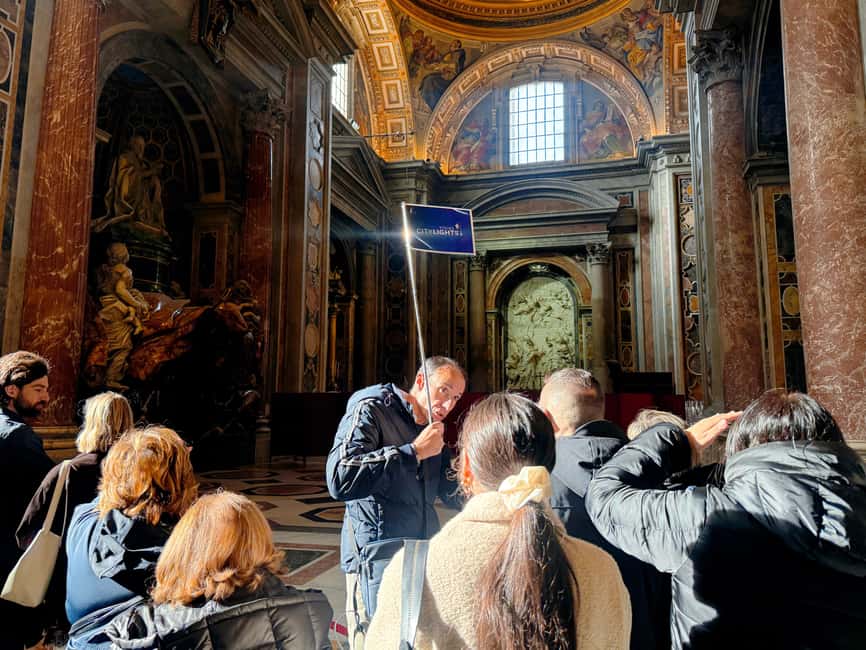
The Gallery of Candelabra is one of the long decorative corridors along the route. Its name comes from the large marble candelabra placed through the gallery. You will see sculpture, painted decoration, and architectural details competing for attention, which is precisely why a guide helps you know where to look.
Next comes the Gallery of Woven Works, where large wall hangings and religious scenes add color and movement to the route. The works were designed to be read from a distance, so details can disappear when the corridor is crowded. Your guide can point out the visual tricks and stories that are easy to miss while passing through.
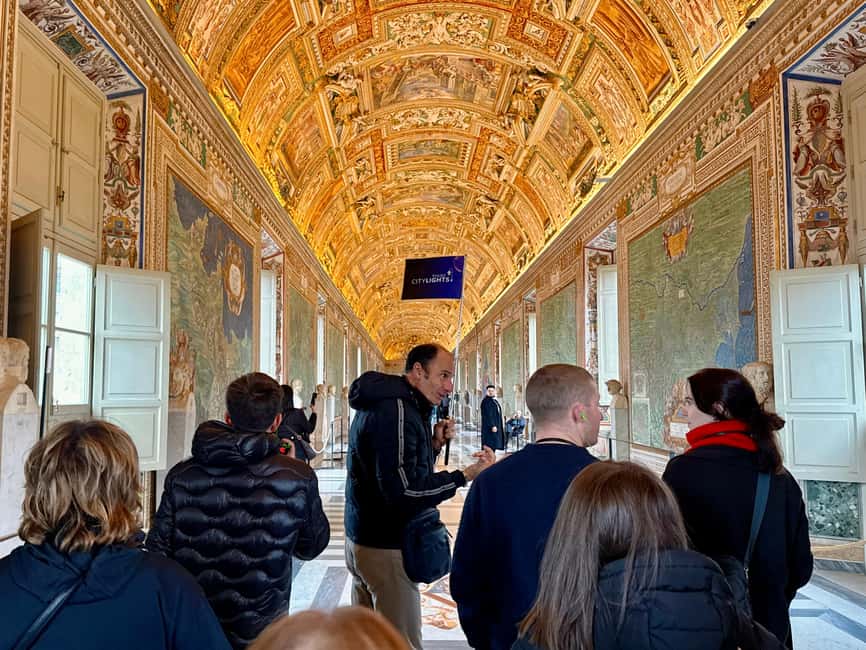
The Gallery of Maps is one of the most memorable stops. Its walls show detailed maps of Italy, while the ceiling draws your eye upward with elaborate decoration. You can look at it as an art gallery, but it is also a statement about geography, territory, and authority.
I like this part of the tour because it turns a passageway into a lesson about power. The Vatican was not only displaying beautiful objects. It was presenting an ordered picture of the Italian peninsula and the wider Catholic world. The guide’s job is to connect those ideas without letting the group get lost in decorative detail.
The drawback is physical rather than artistic: these corridors can feel crowded, and the group may pause in a busy stream of people. The headsets help, but you should still expect other groups moving around you.
More basilicas and church art in Rome:
- Rome: Vatican Museums, Sistine Chapel & Basilica Tour
★ 4.7 · 13,217 reviews - Vatican Museums, Sistine Chapel and St. Peter’s Basilica Tour
★ 4.0 · 8,768 reviews - Rome: Sistine Chapel, Vatican Museums and Basilica Entry
★ 4.4 · 8,168 reviews - Skip the Line: Vatican Museum, Sistine Chapel + Optional Basilica
★ 4.5 · 6,181 reviews
Raphael Rooms and The School of Athens
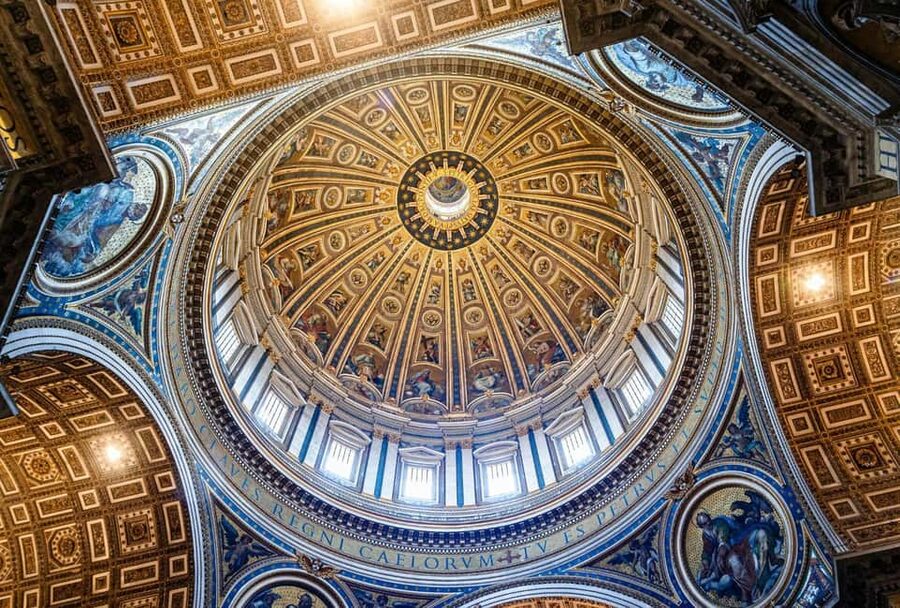
The Raphael Rooms are among the strongest reasons to book a guided tour. Raphael and his assistants painted these rooms for the papal apartments, and the scenes combine religious subjects with ideas about learning, philosophy, law, and authority.
The best-known work is The School of Athens. Look for the central figures of Plato and Aristotle, the carefully arranged philosophers, and the way Raphael turns a crowded gathering into a balanced architectural scene. A guide can help you identify important figures and explain how the painting presents knowledge as something ordered, public, and connected to power.
This is a place where a short explanation changes what you see. Without context, The School of Athens can look like a grand crowd of ancient thinkers. With guidance, you can start to notice the relationships, gestures, and choices that make the composition work.
You will also see other rooms decorated by Raphael and his workshop. Since the rooms were created for a powerful patron, the paintings are not simply private religious pictures. They communicate the role of the papacy, the value of learning, and the authority of the people who commissioned them.
The tour pauses at important works, but you should not expect unlimited time in front of each fresco. The rooms are popular, and the route must keep moving. If you have a favorite Raphael work, tell your guide early and ask whether there is a moment to take it in more carefully.
Entering the Sistine Chapel
The Sistine Chapel is the emotional center of the visit. Before you enter, the guide explains what to look for and prepares you for the rules. Once inside, the atmosphere changes. Conversation is restricted, and photography is not allowed, including flash photography.
Michelangelo’s ceiling is difficult to absorb in one glance. Give yourself time to look from the creation scenes toward the prophets, sibyls, and surrounding figures. The ceiling is famous for its scale, but the human gestures are what give it force. Hands, faces, and bodies carry much of the meaning.
The Last Judgement covers the altar wall and presents a darker, more turbulent vision. From January 12 through March 31, the fresco is scheduled to be covered by scaffolding for extraordinary maintenance. The chapel remains open, but you should not expect to see that wall during this period.
A guide cannot speak freely inside the chapel, so the explanation before entry matters. You receive the art history while commentary is permitted, then have a quieter period to look. This arrangement is one of the tour’s best features because it prevents the chapel from becoming only a quick photo stop.
Remember the dress code. Shoulders and knees must be covered, and sleeveless shirts, short skirts, and shorts are not permitted. The same respectful clothing applies to St. Peter’s Basilica.
Choosing St. Peter’s Basilica
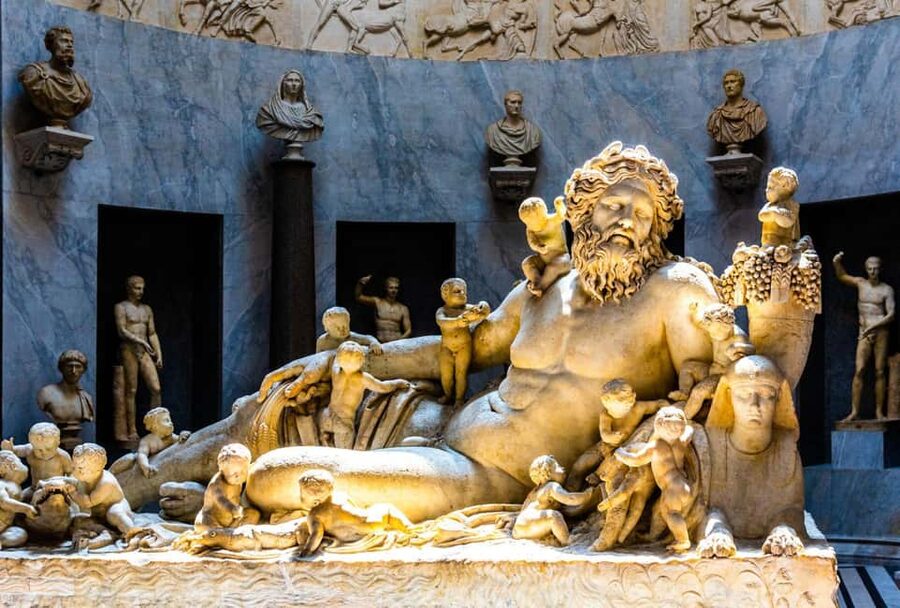
The Basilica option gives the visit a strong finish. St. Peter’s is not part of every tour choice, so check that you select the version that includes access. On rare occasions, security restrictions or liturgical closures can prevent entry, so this portion is not completely under the operator’s control.
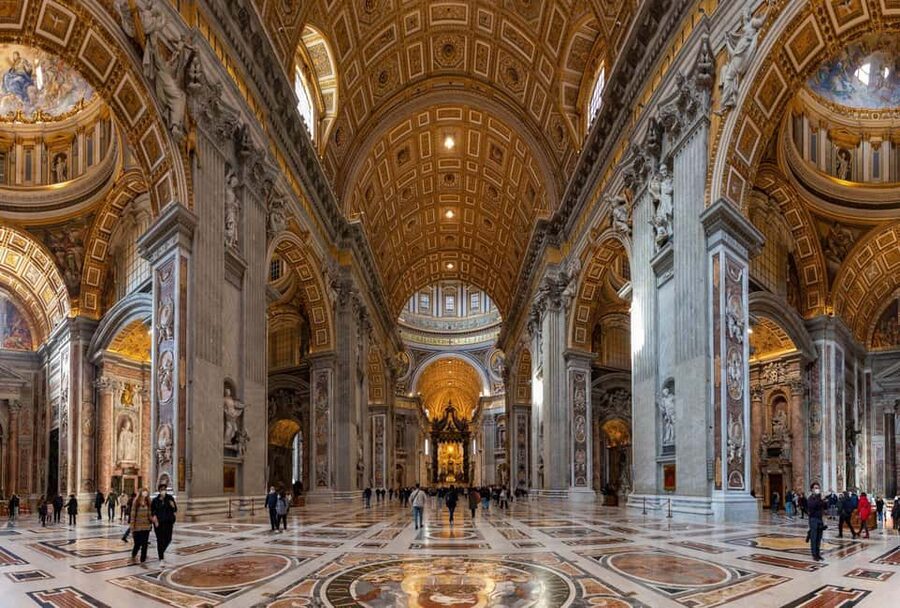
Inside, you can visit at your own pace rather than follow a long sequence of guided explanations. Bernini’s Baldachin rises over the main altar, marking the center of the church with its twisting columns and dramatic scale. Michelangelo’s Pietà offers a very different experience, with a quieter and more contained focus.
Then look outward and upward. The nave’s size is hard to understand from photographs. Even if you do not spend much time on church architecture, the proportions make St. Peter’s a useful counterpart to the more detailed galleries of the museum.
The transition from the Sistine Chapel to the Basilica is a major convenience when available. You do not have to treat the museum and church as two unrelated stops in your day. Still, you should bring identification for Basilica access and allow extra time for security.
Crowds, timing, and group size
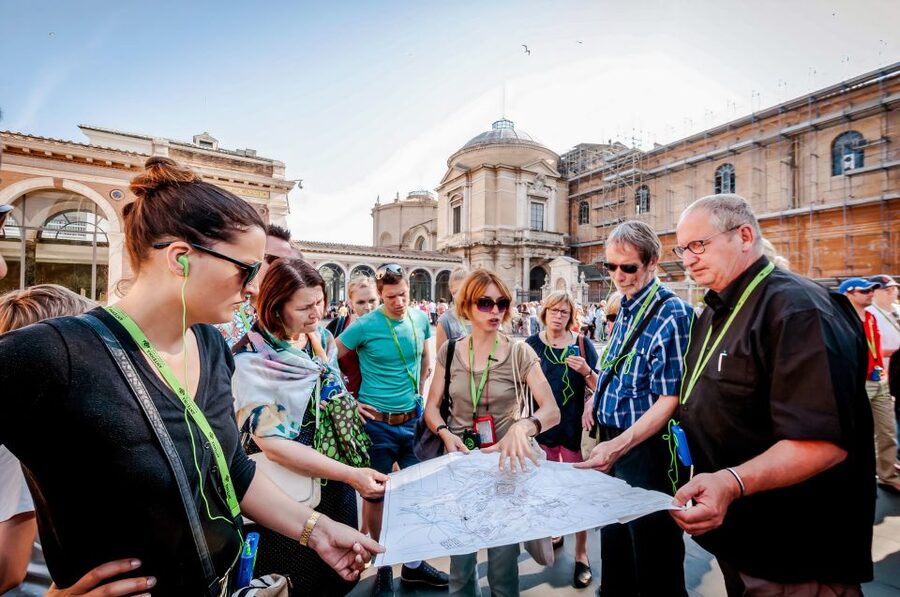
The timed entry is the practical backbone of the experience. The regular entrance line can be very long, even in cooler months and early in the day. Timed admission does not mean walking past every check, but it gives you a more controlled start and access through express security.
Security still takes time. Large backpacks, luggage, and oversized bags are not allowed, and umbrellas are also listed among prohibited items. Leave extra time before the meeting point rather than aiming to arrive at the last minute.
A small-group option is available, but group size depends on the booking selected. Even a small group cannot escape the crowds inside the Vatican. The guide’s ability to keep people together and use headsets is more important than having an empty corridor.
The advertised duration is two and a half to three hours. That is a sensible length for the main route, though the Basilica option and security conditions can affect the exact pace. You will cover a lot of ground, so comfortable shoes are a wise choice.
Who will get the most from this tour
I would choose this experience if you are visiting the Vatican for the first time, have limited time in Rome, or want the major works explained in plain language. It is also useful if you dislike standing in an uncertain ticket line or trying to understand the museum route from a map.
It suits people who want a guided introduction rather than a specialist art seminar. You will learn about key works, symbols, techniques, and the connections between faith, power, and Renaissance patronage. You will not have time to inspect every room at leisure.
Families may find the structure helpful, since the route keeps the visit moving and the headsets reduce the need to gather around a speaker. However, baby strollers are not allowed, and the tour is not suitable for wheelchair users according to the supplied access information. If you have a disability or health need, contact the provider before booking.
Booking details worth knowing
Cancellation is free up to 24 hours before the start time, and you can reserve now and pay later. That flexibility helps if your Rome schedule is still shifting, though you should still treat the selected entry time seriously.
Bring a passport or ID card, particularly if you plan to enter St. Peter’s Basilica. Cover your shoulders and knees, avoid large bags, and do not plan on taking photographs inside the Sistine Chapel.
The overall rating is 4.7 from 754 ratings, with repeated praise for the guides’ explanations, crowd handling, and ability to make a packed museum feel manageable. Alberto is frequently noted for his answers and friendly approach, while Richard is praised for guiding the group through busy areas. Those individual guides may not be assigned to your departure, but they show the kind of personal guidance this format aims to provide.
Should you book it?
Book this tour if you want the Vatican’s essential sights in one organized visit, with a licensed guide, timed entry, clear audio, and the choice to add St. Peter’s Basilica. At $80, it offers solid value for a first visit because it combines admission and interpretation while reducing the uncertainty of the entrance process.
Skip it if you want to spend half a day studying minor galleries, move at your own pace, or avoid crowds entirely. No Vatican tour can remove the crowds, and this one is still a brisk highlights visit. For most first-time visitors with only a few hours, I would choose the Basilica option and arrive early, dressed properly, with a light bag.
FAQ
How long does the Vatican tour last?
The tour lasts approximately two and a half to three hours.
What does the $80 price include?
It includes timed entry to the Vatican Museums, entry to the Sistine Chapel, a guided museum tour, a licensed guide, headsets, meeting-point assistance, booking fees, and taxes.
Is St. Peter’s Basilica included?
St. Peter’s Basilica is available as an option. Choose the booking that includes Basilica access if you want to see it.
Where is the meeting point?
Meet the host at Bar Da Paolo, Viale Vaticano 104. The host checks you in and introduces you to the group.
How early should I arrive?
Arrive 15 minutes before your scheduled start time. Entrance is time-sensitive.
Which languages are available?
The tour is available in English, Japanese, Korean, and Chinese, according to the language booked.
Are headsets provided?
Yes. Headsets are provided so you can hear the guide clearly during the tour.
Can I take photographs in the Sistine Chapel?
Photography is restricted inside the Sistine Chapel, and flash photography is not allowed. You must also respect quiet zones.
What clothing is required?
Shoulders and knees must be covered. Shorts, short skirts, and sleeveless shirts are not allowed in the Sistine Chapel and St. Peter’s Basilica.
Is the tour wheelchair accessible?
The tour is not suitable for wheelchair users, and not all areas are wheelchair accessible. If you have a disability or health need, contact the provider before booking.
More Vatican Museums Tours in Rome
- Vatican Museums & Sistine Chapel Skip-the-Line Entry Ticket
★ 4.4 · 13,838 reviews - Rome: Vatican Museums & Sistine Chapel Guided Tour
★ 4.3 · 12,117 reviews - Vatican Museums & Sistine Chapel Skip-the-Ticket-Line Tour
★ 4.3 · 10,486 reviews - Vatican Museums, Sistine Chapel & St. Peter’s Square Tour
★ 4.6 · 8,429 reviews
Just added around Rome
- Colosseum,Vatican Museum & Sistine Chapel in One Day Guided Tour★ 3.5 · 9 reviews
- Vatican Museums and Sistine Chapel last entry Guided Tour★ 5.0 · 3 reviews
- Private Tour Of Rome Highlights And Vatican Museums Skip-The-Line all included★ 5.0 · 4 reviews
- Borghese Gallery Admission Ticket with Audioguide★ 4.0 · 64 reviews
- Caravaggio Art Walking Tour of Rome with Pantheon Visit★ 4.5 · 35 reviews
- Borghese Gallery Skip the Line Guided Tour★ 4.5 · 23 reviews
- Borghese Gallery Ticket with Audioguide★ 3.5 · 51 reviews
- Borghese Gallery VIP Tour – Skip the Line Tickets★ 5.0 · 2 reviews
Art Museum Tours in Rome, compared.
Vatican Museums, Sistine Chapel & St. Peter’s Basilica Tour
Read our review →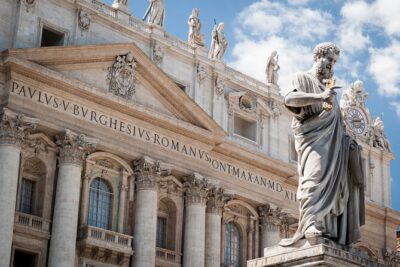
Vatican Museums, Sistine Chapel & St Peter’s Basilica Guided Tour
Read our review →
Vatican Museums, Sistine Chapel and Basilica Tour
Read our review →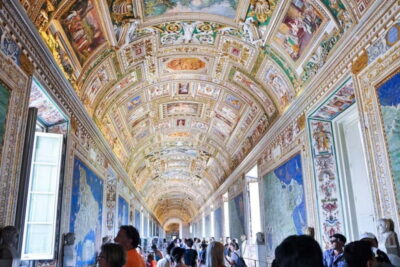
Vatican Museums & Sistine Chapel Skip-the-Line Entry Ticket
Read our review →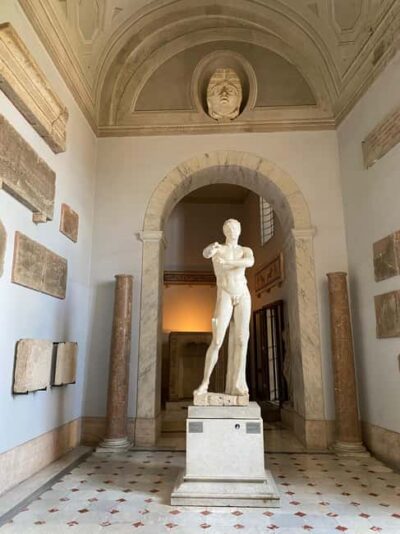
Vatican Museums, Sistine Chapel & Basilica Tour
Read our review →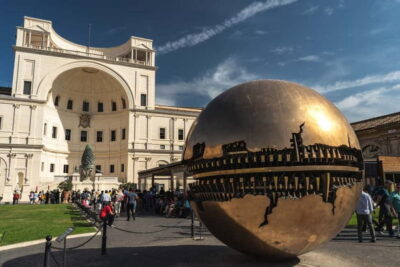
Vatican Museums & Sistine Chapel Guided Tour
Read our review →
Vatican Museums & Sistine Chapel Skip-the-Ticket-Line Tour
Read our review →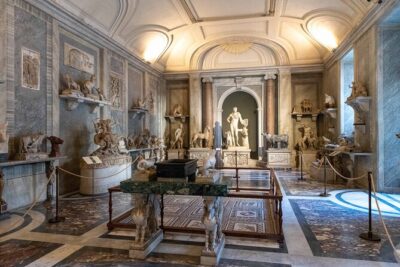
Vatican Museums, Sistine Chapel and St. Peter’s Basilica Tour
Read our review →Browse the lists this tour appears in