
REVIEW · ROME
Borghese Gallery: Canova’s Masterpieces Small Group Guided Tour
The Borghese Gallery gives you an unusual art-museum experience: a small collection packed into an elegant villa, where masterpieces sit close enough to study without crossing a vast hall. Bernini’s Apollo and Daphne is the star for many visitors, with marble leaves, hair, and skin carved to look almost alive. Caravaggio, Titian, Leonardo da Vinci, and Canova add plenty of range.
I like the 15-person limit, which keeps the tour more personal than a large museum walk. I also like the full two-hour schedule, since the gallery allows only a limited visit and a good guide helps you use every minute. The main concern is reliability: two customers were left waiting after a booking-communication failure, so confirm your meeting details before setting out.
Key points to know before booking
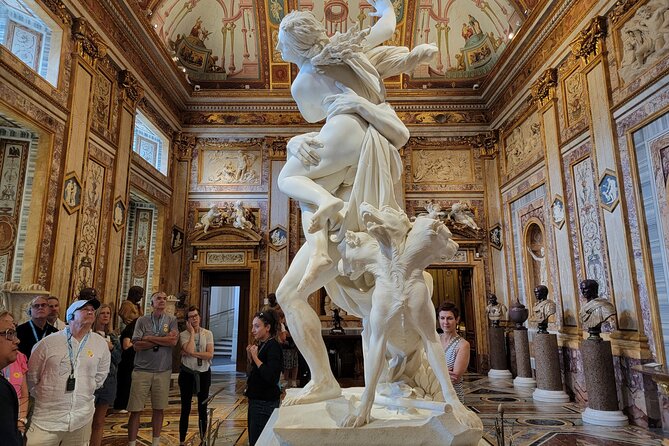
- Bernini takes center stage: Apollo and Daphne shows the sculptor’s skill with movement, emotion, and delicate marble detail.
- Caravaggio adds drama: David with the Head of Goliath carries a personal twist, with the artist portraying himself as Goliath.
- Small groups matter: The tour is limited to 15 people, with headsets supplied when six or more people attend.
- Two hours goes quickly: The guide fills the timed museum visit with art, history, and stories rather than leaving you to guess what matters.
- The gardens extend the visit: Villa Borghese is free to enter, and the Pincio Terrace gives you views over Piazza del Popolo and Rome.
- Bring a small bag: Only a small purse or fanny pack measuring no more than 21 by 15 centimeters is allowed inside.
Why the Borghese Gallery works so well with a guide
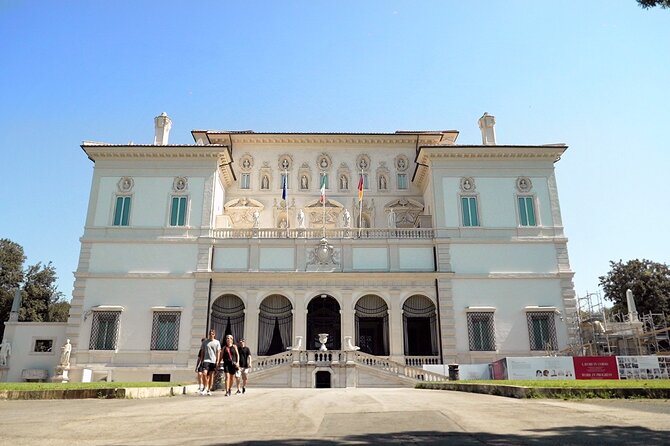
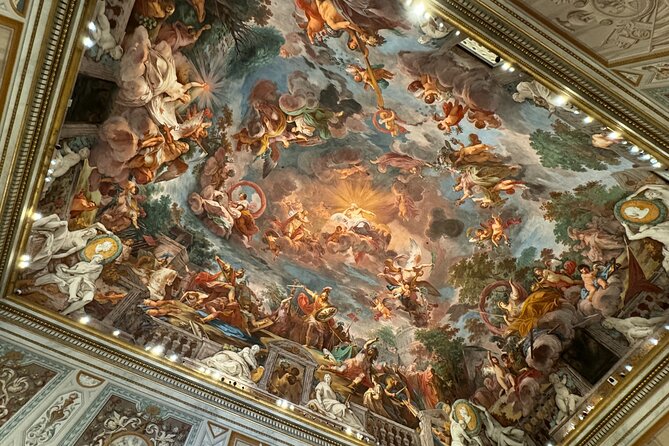
The Borghese Gallery is not enormous, but it can feel crowded with ideas. The rooms bring together major sculpture, painting, mythology, religion, portraiture, and the ambitions of the Borghese family. You can walk in and admire the beauty, but you may miss the connections between the works.
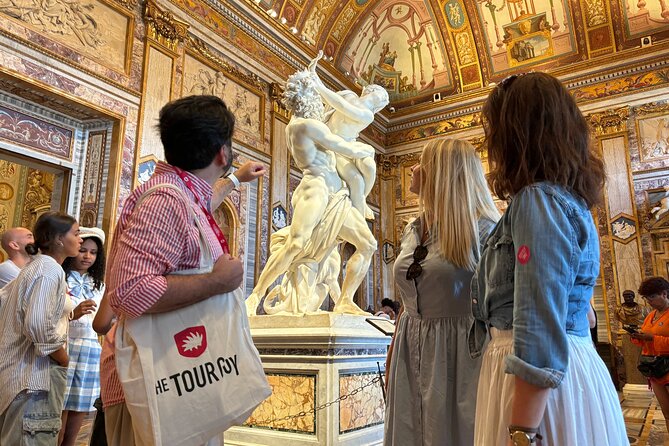
That is where a strong guide earns the fee. The tour is designed around the gallery’s important pieces, so you do not spend half your visit searching for the famous works or reading every label. Guides such as Dimitri and Rosy have received especially warm praise for explaining the art clearly, answering questions, and keeping the pace lively.
I would choose this format if you want more than a quick look at marble and oil paint. The best moments come when the guide explains how a work was made, what the artist was trying to show, and why the piece mattered to the people who commissioned it.
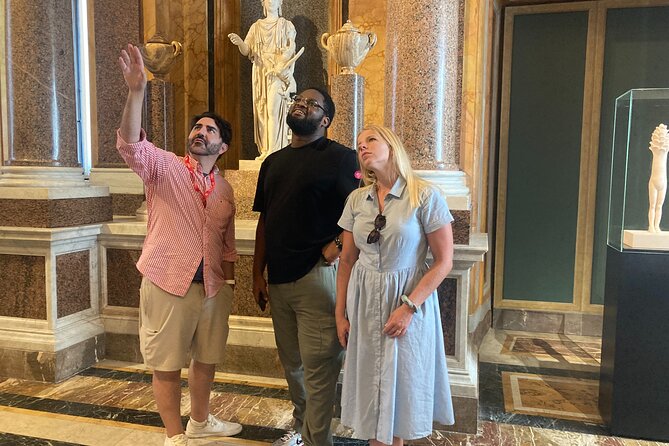
The small group also helps. Fifteen people is not private touring, but it is small enough for you to hear the guide and ask a question without stopping the whole room. From six participants onward, headsets are provided, which should help when other groups are nearby.
More Art Museum Tours in Rome
- Vatican Museums, Sistine Chapel & St. Peter’s Basilica Tour
★ 4.3 · 73,970 reviews - Vatican Museums, Sistine Chapel & St Peter’s Basilica Guided Tour
★ 4.5 · 39,149 reviews - Rome: Vatican Museums, Sistine Chapel and Basilica Tour
★ 4.3 · 16,039 reviews
Entering the gallery with skip-the-line admission
You meet at Viale del Museo Borghese, 5, near the museum entrance. Prebooked admission lets the group bypass the regular ticket queue, a useful advantage in Rome, where popular museums often require planning well ahead.
Skip-the-line does not mean you can enter at any moment. The Borghese Gallery uses timed admission and enforces its schedule. Arrive early enough to find the meeting point, check in, and deal with bags before the group enters.
One practical warning matters here. The map location for the meeting point can appear farther from the actual gallery than expected. Give yourself extra time, especially if you are walking through Villa Borghese or arriving by public transport. The museum is near public transportation, but the final approach can still take longer than a quick glance at a map suggests.
The gallery has strict rules for protecting its art. A small purse or fanny pack no larger than 21 by 15 centimeters is allowed. Larger bags and personal items must go to the wardrobe. Pack lightly, and do not arrive with a full day bag unless you are prepared to leave it behind.
Bernini’s Apollo and Daphne
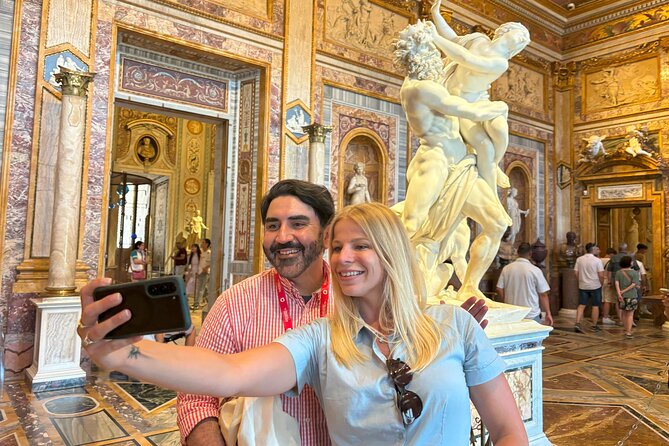
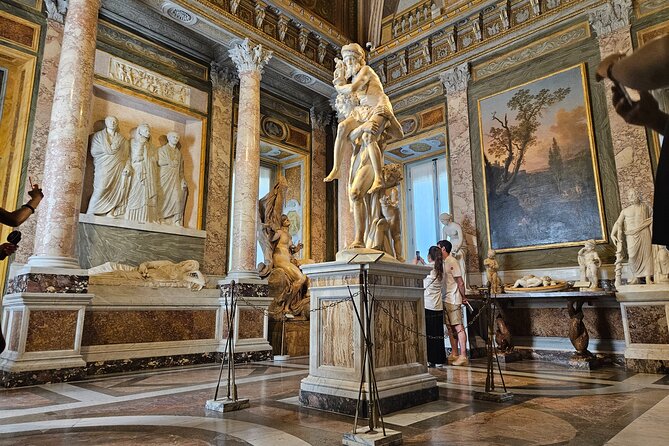
The tour’s most memorable sculpture is likely Apollo and Daphne, one of Gian Lorenzo Bernini’s great demonstrations of motion in stone. The scene captures the moment Daphne changes into a laurel tree while fleeing Apollo. Her fingers become leaves, her hair moves with the action, and roots spread from her feet.
Look closely at the contrast between Apollo’s confidence and Daphne’s fear. Bernini made the figures seem to twist through space, even though the block of marble remains fixed. A guide can point out details that are easy to miss at first glance, especially the thin leaves and the change in texture between skin, hair, bark, and foliage.
This is also a good place to understand why context matters at the Borghese. The collection was assembled by Cardinal Scipione Borghese, a powerful patron with a sharp eye for art. The villa was built to display impressive works, and Bernini’s sculpture fits that purpose perfectly. It asks you to move around it, not simply face it from the front.
The gallery visit gives you time to look, but not endless time. A guide helps you focus on the visual tricks and the story without turning the stop into a long lecture.
Caravaggio’s dark, direct drama
Caravaggio brings a completely different energy. In David with the Head of Goliath, the biblical hero holds the severed head of the defeated giant. The startling detail is that Caravaggio used his own face for Goliath, giving the painting a disturbing personal edge.
The image is not polished in the usual heroic way. The darkness feels heavy, the light cuts across the figures, and David’s expression is more thoughtful than triumphant. A guide can help you see how Caravaggio pushed against the smoother ideals associated with earlier Renaissance painting.
That contrast makes the gallery especially satisfying. You move from Bernini’s theatrical marble to Caravaggio’s concentrated light and human emotion. The works do not all tell the same kind of story, and the guide’s job is to show you how the artists solved different problems.
If you already enjoy Caravaggio, you will appreciate the chance to discuss his use of shadow and realism. If you are new to his work, this painting is a strong introduction because its message is easy to feel even before you know the full background.
More masterpiece highlights tours in Rome:
- Borghese Gallery, Canova’s Masterpieces Skip-the-Line Guided Tour
★ 4.5 · 1,162 reviews - Borghese Gallery Small-Group Tour with Canova’s Masterpieces
★ 4.5 · 166 reviews - Borghese Gallery Private Tour Explore the Masterpieces by Bernini Caravaggio and Raphael
★ 5.0 · 8 reviews - Louvre Museum Masterpieces Guided Tour with Access
★ 4.5 · 12,023 reviews
Titian, Leonardo, and the wider collection
Titian’s Sacred and Profane Love adds mystery to the route. The painting has long invited debate about the identity of its figures and the meaning of its symbols. That uncertainty is part of its appeal, and a good explanation should give you possible readings without pretending that every question has a final answer.
The color is a welcome change after the darker intensity of Caravaggio. Titian’s handling of fabric, skin, and atmosphere rewards a slower look. The guide can draw your attention to visual details that might otherwise blend into the room.
Leonardo da Vinci is also part of the artistic story presented on the tour. The gallery’s collection allows you to connect the work of different periods and styles rather than treating Bernini as an isolated genius. You may find the painting selection less immediately theatrical than the sculptures, but it gives the visit needed balance.
Canova is central to the tour’s theme as well. His work offers a later vision of ideal beauty and polished marble, and it pairs naturally with Bernini’s more animated style. Comparing the two helps you see that marble sculpture is not one single tradition. One artist may emphasize motion and drama, while another seeks smoothness, calm, and controlled grace.
A full two hours, with a brisk pace
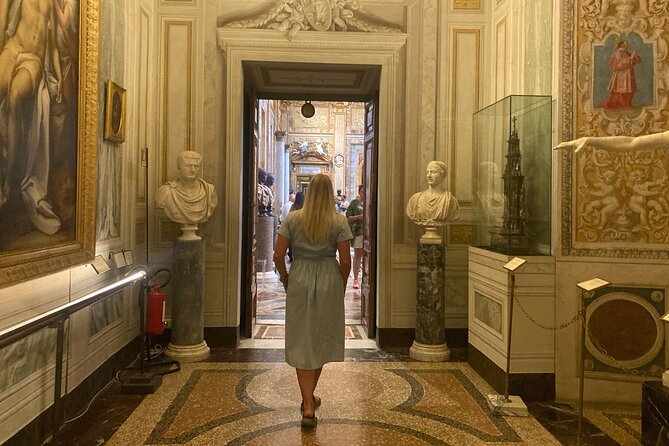
The guided visit lasts about one hour and 55 minutes, essentially the full two-hour museum window. That is good value for a gallery with a timed entry, since you are not paying for a tour that rushes through the main rooms in 45 minutes.
Still, two hours is not enough to study every artwork in detail. You will follow a selected route through the highlights. If you want to spend twenty minutes with one painting or return to a favorite sculpture, a guided group may feel limiting.
I see that as a fair trade for a first visit. The collection can be overwhelming without a plan, and the guide keeps the experience moving. You get a clear introduction to the major works, then you can continue inside the museum after the formal tour ends, according to the information provided for this experience.
The pace is also helped by good storytelling. The strongest guide reports describe tours that were thorough, organized, entertaining, and full of useful historical detail. One guide even helped a customer find a local café afterward. That kind of practical kindness is not guaranteed, but it suggests the experience can feel personal rather than mechanical.
Villa Borghese Gardens and the Pincio Terrace
After the museum, take time for Villa Borghese Gardens. The garden portion is not guided, and the listed schedule allows only a brief five-minute stop, so treat it as a recommendation rather than a second full tour.
The gardens were once private grounds of the Borghese family. Today, they give you room to slow down after the concentrated museum visit. If your schedule permits, extend the walk beyond the formal tour and make your way toward the Pincio Terrace.
From the terrace, you can look over Piazza del Popolo and Rome’s historic skyline. It is a fine place to reset before heading back into the city. The view also gives the museum a wider setting. The Borghese Gallery is not just a box of famous art; it is part of an elegant park and villa complex.
Because the guide does not accompany you through the gardens, use the museum tour as your main paid experience. The gardens are a free extra, not a reason by themselves to book this package.
Is $74.95 a fair price?
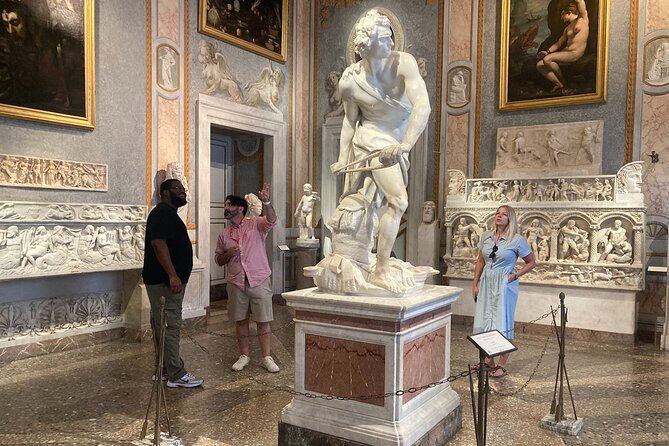
At $74.95 per person, this is not the cheapest way to enter an art museum. You are paying for more than admission, though. The price includes skip-the-line entry, an English-speaking art historian, a small group capped at 15, and nearly two hours of guided interpretation.
I think the value is strongest if you are not already comfortable reading art on your own. The Borghese’s famous works are worth seeing without help, but a guide can turn a beautiful visit into a coherent one. You also avoid the risk of spending your short timed entry hunting for the major pieces.
The value is weaker if you want a quiet, independent visit or already know the collection well. A group tour means following the guide’s route and pace. You will have less freedom to linger wherever you wish.
The experience is often booked about 14 days ahead, which is a useful signal for planning. If the gallery is a high priority, do not leave it until the last day of your Rome trip. The cancellation policy allows a full refund when you cancel at least 24 hours before the start time. Changes or cancellations inside that window are not refundable.
Who should book this tour?
I would recommend it to a first-time Borghese visitor who wants structure, context, and a manageable pace. It suits couples, solo visitors, and small groups who prefer an art specialist to a broad city tour.
It is also a good choice for anyone who finds museums tiring or confusing. You will see the essential works without trying to absorb every room, and the guide gives you a story to follow.
Families with older children may appreciate the direct visual drama of Bernini and Caravaggio, though the two-hour art focus will not suit every child. The small group and headsets should make it easier to follow than a large walking tour.
I would think twice if you want to spend the entire visit quietly with one artist, or if your schedule cannot tolerate a precise timed start. Also, keep your expectations realistic about the gardens. They are a pleasant add-on, not a guided garden excursion.
Should you book the Borghese Gallery tour?
Book it if you want to see Bernini, Caravaggio, Titian, Leonardo, and Canova in a short, well-organized visit. The combination of skip-the-line entry, a 15-person limit, and nearly two hours with an art historian makes the $74.95 easier to justify, especially for a first visit.
The best reason to choose it is the guide. Dimitri and Rosy are named examples of guides who bring energy, clear explanations, and strong art knowledge to the rooms. The main reason to hesitate is the reported booking failure that left two customers without a tour. Confirm the reservation and meeting instructions before you travel across Rome.
If the booking is secure, this is a practical way to meet one of Rome’s most concentrated art collections, then step outside for a view from the Pincio Terrace.
FAQ
How long does the Borghese Gallery tour last?
The guided museum visit lasts about two hours, listed as one hour and 55 minutes. The garden recommendation adds about five minutes in the planned schedule.
What artworks will I see?
The tour includes Bernini’s Apollo and Daphne, Caravaggio’s David with the Head of Goliath, Titian’s Sacred and Profane Love, and works connected with artists including Leonardo da Vinci and Canova.
Is the tour conducted in English?
Yes. The experience is offered in English.
How large is the group?
The tour has a maximum of 15 participants. Headsets are provided when the group has six or more people.
Does the price include museum admission?
Yes. The price includes the Borghese Gallery entrance fee and skip-the-line entry.
Can I visit Villa Borghese Gardens?
Yes. Access to the gardens is included without a guide. The Pincio Terrace is recommended for views over Piazza del Popolo and Rome.
What bags can I take inside the museum?
Only small fanny packs and purses measuring no more than 21 by 15 centimeters are allowed. Larger bags and personal items must be left in the wardrobe.
Can I cancel for a full refund?
Yes, if you cancel at least 24 hours before the experience start time. Cancellations or changes made less than 24 hours in advance are not refunded.
More Borghese Gallery Tours in Rome
- Rome: Borghese Gallery Skip-the-Line Ticket & Audioguide
★ 4.3 · 4,318 reviews - Rome: Borghese Gallery Ticket + Audioguide or Guided Tour
★ 4.6 · 3,219 reviews - Rome: Borghese Gallery Guided Tour with Skip-the-Line Entry
★ 4.8 · 2,649 reviews - Rome: Borghese Gallery Skip-the-Line Tickets with Audioguide
★ 4.6 · 2,562 reviews
Just added around Rome
- Colosseum,Vatican Museum & Sistine Chapel in One Day Guided Tour★ 3.5 · 9 reviews
- Vatican Museums and Sistine Chapel last entry Guided Tour★ 5.0 · 3 reviews
- Private Tour Of Rome Highlights And Vatican Museums Skip-The-Line all included★ 5.0 · 4 reviews
- Borghese Gallery Admission Ticket with Audioguide★ 4.0 · 64 reviews
- Caravaggio Art Walking Tour of Rome with Pantheon Visit★ 4.5 · 35 reviews
- Borghese Gallery Skip the Line Guided Tour★ 4.5 · 23 reviews
- Borghese Gallery Ticket with Audioguide★ 3.5 · 51 reviews
- Borghese Gallery VIP Tour – Skip the Line Tickets★ 5.0 · 2 reviews
Art Museum Tours in Rome, compared.
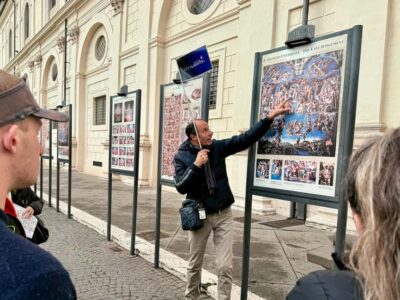
Vatican Museums, Sistine Chapel & St. Peter’s Basilica Tour
Read our review →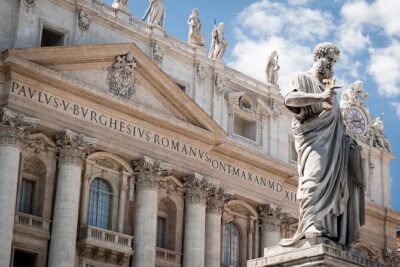
Vatican Museums, Sistine Chapel & St Peter’s Basilica Guided Tour
Read our review →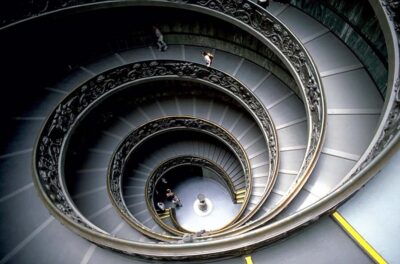
Vatican Museums, Sistine Chapel and Basilica Tour
Read our review →
Vatican Museums & Sistine Chapel Skip-the-Line Entry Ticket
Read our review →
Vatican Museums, Sistine Chapel & Basilica Tour
Read our review →
Vatican Museums & Sistine Chapel Guided Tour
Read our review →
Vatican Museums & Sistine Chapel Skip-the-Ticket-Line Tour
Read our review →
Vatican Museums, Sistine Chapel and St. Peter’s Basilica Tour
Read our review →Browse the lists this tour appears in