
REVIEW · LONDON
British Museum & National Gallery of London Semi-Private 8ppl Max
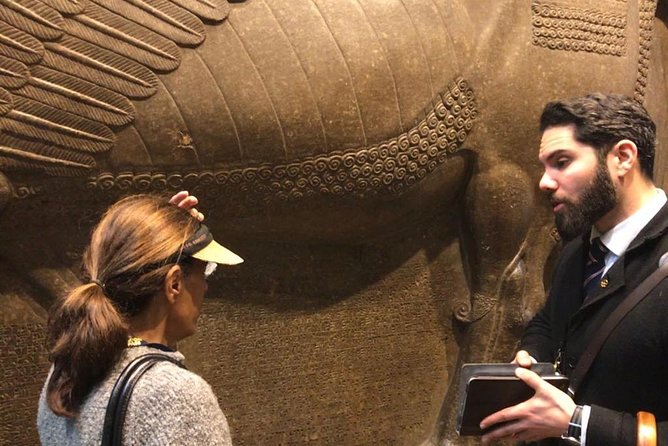
London’s two great museums can swallow a full day each, so this tour’s real trick is smart selection. In five and a half hours, you move from Egyptian mummies and Assyrian reliefs at the British Museum to Van Gogh, Vermeer, and Rembrandt at the National Gallery.
I like the eight-person limit, which gives you room to ask questions without being lost in a crowd. I also like the guides’ teaching style. Stephanie, Matilda, Becky, Jamie, Anthony, and others are praised for turning objects and paintings into stories, not just pointing at famous names.
The main drawback is simple: this is a fast introduction, not a leisurely museum day. You get the major works and plenty of context, but you will not see everything. The lunch break is also on your own, and the tour requires a fair amount of walking.
Key points at a glance
- Two landmark museums in one day: Begin with 6,000 years of world history at the British Museum, then switch to European painting at the National Gallery.
- Small group of no more than eight: You get a more personal guide experience than on a large coach-style tour.
- Famous highlights plus less obvious treasures: Expect the Rosetta Stone, Mummy of Katebet, Lewis Chessmen, The Arnolfini Portrait, and Van Gogh’s Sunflowers.
- Strong storytelling is central: Guides such as Stephanie, Matilda, Becky, Jamie, and Anthony are praised for making art and history easier to understand.
- A useful first visit: The tour helps you find your bearings in two huge museums before returning on your own.
- Five and a half hours, with lunch between stops: The British Museum runs in the morning, followed by a break and an afternoon visit to the National Gallery.
Why this two-museum plan works in London
The British Museum and National Gallery offer very different experiences. One follows human cultures across thousands of years. The other traces major developments in European painting from the 13th through the 19th centuries.
That contrast gives the day a pleasing rhythm. You start with objects made for worship, burial, warfare, trade, and daily life. After lunch, you look at paintings built around religion, portraiture, myth, light, and changing ideas about the world.
I think this pairing works best if you are visiting London for a short stay or want a clear introduction before exploring more deeply. A guide can connect what you see to its period and purpose, which is especially useful when a museum label gives you only a name and a date.
The price is $201.01 per person, so this is not a budget sightseeing option. You are paying for roughly five and a half hours with a professional guide and a group capped at eight, rather than simply paying to enter a museum. The value is strongest if you would otherwise spend much of the day wandering, missing major pieces, or struggling to understand what makes them important.
A private upgrade is available if you want greater control over the pace and subjects. The semi-private format, though, should suit most people who want personal attention without paying for a guide entirely on their own.
More Art Museum Tours in London
- Official tickets: Moco Modern & Contemporary Art Museum
★ 4.5 · 1,157 reviews - London: National Gallery Guided Tour with Art Expert Guide
★ 4.7 · 440 reviews - London: Tickets for Moco Modern & Contemporary Art Museum
★ 4.7 · 391 reviews
Starting at the British Museum at 10:00 a.m.
The tour begins near the British Museum at British Museum Stop W, London WC1B 3BP. The start time is 10:00 a.m., and you should arrive with the meeting instructions and your mobile phone available. The operator requires a mobile number with country code, which helps if the guide needs to reach you.
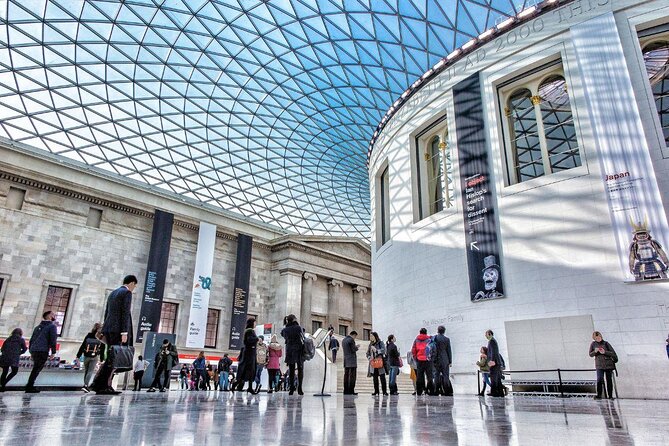
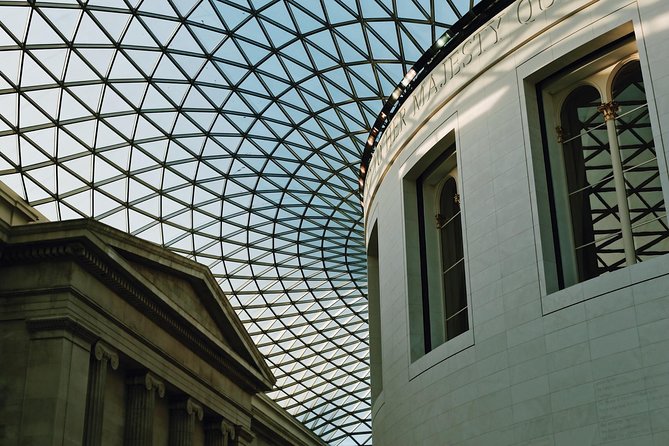
The British Museum is an enormous building with objects from around the world and about 6,000 years of human history to cover. That scale is both its magic and its problem. On your own, you can spend a long time finding the right rooms and still leave without seeing the best-known pieces.
Your guide solves that by taking you to a chosen set of objects. The aim is not to march past every display. Instead, you get a focused route through major cultures and periods, with time to understand why particular objects matter.
The first portion lasts about two and a half hours. That is enough time for a strong overview, but not enough for every gallery. If you already have a list of specialist interests, a private version may give you more freedom. If you are a first-time visitor, the fixed route is likely to be an advantage.
The Rosetta Stone and the objects that shaped the morning
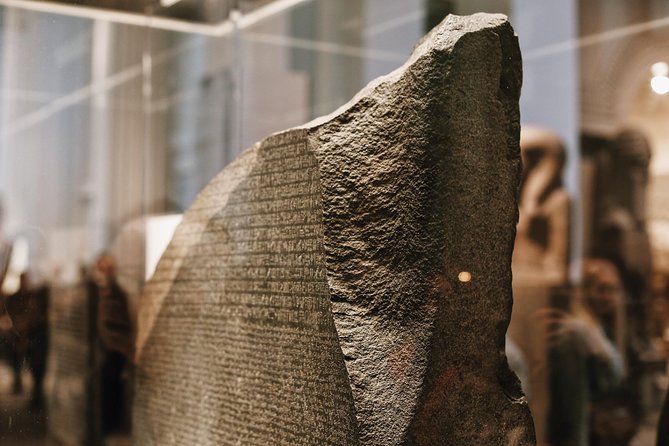
The Rosetta Stone is the obvious headline. It is the actual ancient stone inscribed with Egyptian texts, not the language-learning program, and it helped scholars understand Egyptian hieroglyphs through the comparison of three scripts.
Seeing it in person can be surprisingly different from seeing a photograph. The object is important not only because it is famous, but because it represents a breakthrough in reading an entire writing system. A good guide can turn that basic fact into a story about language, power, and the work of reconstructing the past.
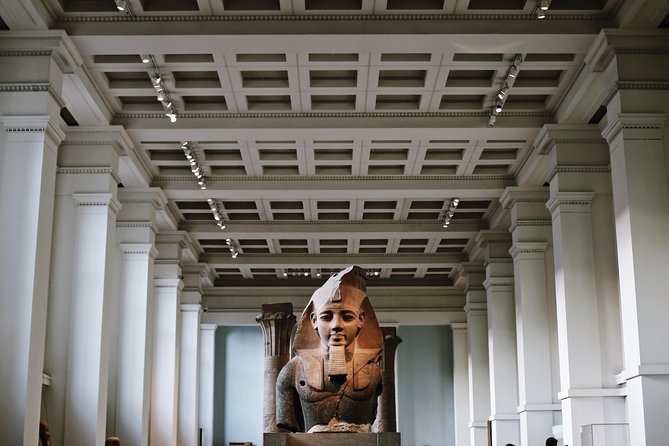
The Mummy of Katebet brings the subject closer to an individual. Rather than thinking only in terms of dynasties and dates, you get a chance to consider how ancient Egyptians prepared for death and represented a person beyond the grave.
The Lewis Chessmen offer another change of mood. These small carved figures are memorable because they are both archaeological objects and instantly understandable human pieces. You can look at them as evidence of medieval life, but also as characterful figures that still invite curiosity.
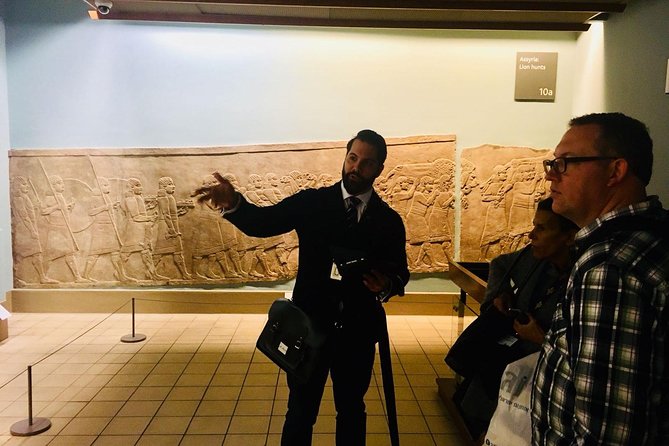
The route also includes Assyrian lion-hunting reliefs from the 7th century BC. These scenes show royal power through a carefully staged hunt. Samurai armor adds a very different view of status, warfare, craftsmanship, and social order.
I like this mix because it keeps the morning from becoming a parade of stone and glass cases. You move from writing to burial, from games to royal propaganda, and from armor to sculpture. The guide’s job is to make those changes meaningful rather than random.
The pace can depend on the group. One participant who asks many questions may slow the route, while a quiet group may cover the planned highlights more easily. That is the tradeoff of a small shared tour. You get a chance to ask questions, but you also share the clock.
The lunch break and move across central London
After the British Museum, you leave the museum for a lunch break at your own expense. The supplied details do not specify a restaurant or a fixed lunch duration, so plan for a pause rather than a hosted meal.
This break matters. Two and a half hours of museum walking and listening can be tiring, and food gives you a reset before the painting galleries. It also means you should budget beyond the tour price for lunch and your transport to the next meeting point if the guide does not lead the group directly.
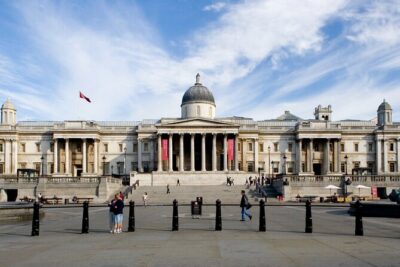
The second meeting point is at the National Gallery in Trafalgar Square, London WC2N 5DN. The tour ends there. Hotel pickup and drop-off are not included, so you will need to arrange your own transport, with taxi or Uber suggested by the operator.
Because the route begins and ends at different locations, this tour works well as part of a central London sightseeing day. Do not plan to return to your hotel between museums unless you have allowed plenty of time.
More semi-private gallery tours in London:
- National Gallery of London Museum Tour Semi-Private 8ppl Max
★ 5.0 · 178 reviews - Tate Modern Museum London Guided Tour Semi-Private 8ppl Max
★ 5.0 · 41 reviews - Tate Modern Tour | Semi-Private Experience
★ 5.0 · 5 reviews - Louvre Museum Paris Essential Guided Tour Semi-Private 6ppl Max
★ 5.0 · 3,807 reviews
The National Gallery, from Van Eyck to Van Gogh
The National Gallery holds more than 2,300 paintings covering European art from the 13th through the 19th centuries. The afternoon visit lasts about two and a half hours, giving you a guided introduction rather than a full survey.
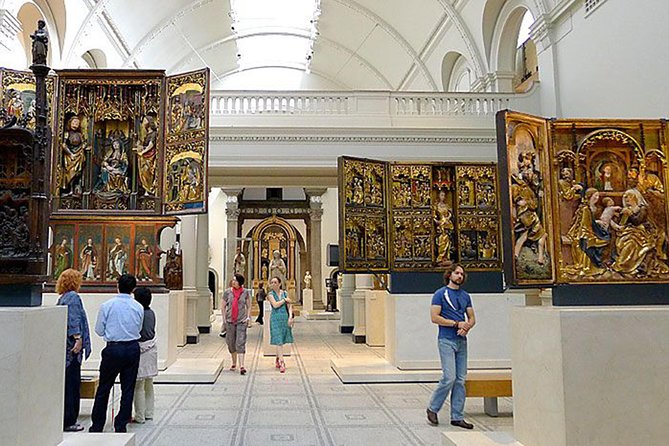
The guide begins with the collection and its broad story, then takes you to selected works. You may see paintings by Leonardo da Vinci, Botticelli, Monet, Rembrandt, Vermeer, Seurat, and others. The point is not simply to recognize famous names. You learn how artists handled subjects, materials, technique, and the expectations of their own period.
Jan van Eyck’s The Arnolfini Portrait, painted in 1434, is one of the key works. It shows a merchant from Bruges and his wife in an interior filled with details that invite close looking. A guide can help you notice how objects, clothing, gesture, and space contribute to the painting’s meaning.
Van Gogh’s Sunflowers offers a very different experience. The work belongs to a group of flower paintings made by the Dutch artist in 1888. Its strong color and energetic brushwork make it familiar, but the guide can help you look past the postcard image and consider how paint, repetition, and light carry the subject.
The route may also include works by Rembrandt and Vermeer, artists who approached human presence and light in very different ways. Seurat gives you a chance to consider a more methodical approach to color and brushwork. Botticelli and Leonardo widen the story further, bringing in Renaissance ideas about the human figure, religion, and artistic skill.
The best part of this section is the discussion. Guides such as Becky and Jamie are praised for asking visitors to look closely and form their own observations before explaining the historical setting. That approach gives you a practical tool you can use in any art museum: first look, then ask what you notice, then consider why the artist made those choices.
Guides who turn a crowded museum into a lesson
The guide can make or break a museum tour, and the feedback here points to a strong roster. Stephanie is praised for clear explanations and a direct route to the major displays. Matilda is repeatedly noted for historical context, patience, and her ability to keep children involved.
Becky receives especially strong praise for teaching art in a way that goes beyond dates and names. Her approach connects individual paintings to wider changes in art, helping you understand how one period influenced another.
Jamie is described as combining archaeological and art knowledge with a lively delivery. Anthony Matthews is also singled out for connecting world history, art history, and current events. Other guides named in the feedback include Sheldon, Luis, Elisha, Eli, Craig, Andy, Jake, and Kathy.
You cannot assume a specific guide will be available unless the operator confirms it. Still, the range of positive guide feedback suggests that the experience depends on a shared training standard rather than one individual alone.
A guide may also need to adapt. One National Gallery visit took place during renovations, when rooms and displays were shifting. The guide adjusted the route and continued to explain the available works. That flexibility is useful because museum layouts and open galleries can change.
What the eight-person limit really gives you
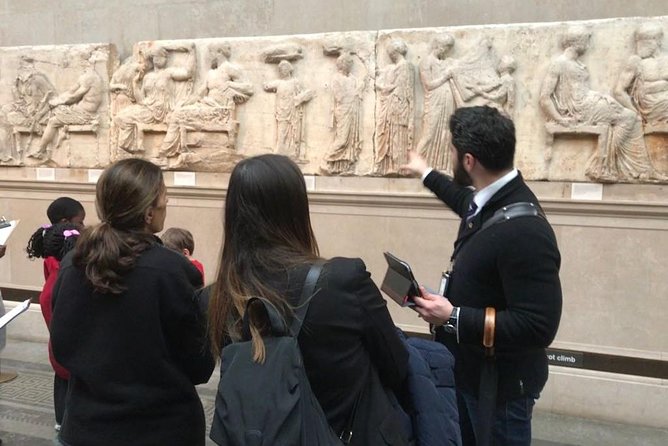
Eight people is small enough for a guide to hear questions and adjust explanations. You are not likely to feel like one face in a large crowd, and the guide can point out details without relying only on a microphone.
That does not mean the tour becomes fully private. You still follow a planned route, share the guide’s attention, and may have to wait for other members of the group. The minimum is two participants, and the maximum is eight.
If you want to set the pace, focus on one period, or spend longer at a particular painting, the private upgrade is the better choice. If you want an efficient introduction and enjoy hearing other people’s questions, the semi-private format offers a good middle ground.
The tour is also more suitable for people with moderate physical fitness. You will walk through large museum spaces and stand for extended periods. It is not available for people with walking disabilities or those using a wheelchair, so check this carefully before booking.
Practical details that can affect your day
The tour is offered in English and includes a mobile ticket. The itinerary lists admission tickets as free, so no separate museum admission charge is specified for either stop. Temporary exhibitions are not included.
Bring only a small bag. Large bags and suitcases are not allowed inside, and security checks may still create a wait even when a tour is described as having priority access. Some rooms have quiet or restricted speaking rules, so the guide may explain the material before you enter.
Museum closures can happen without warning. If an opening is delayed by more than an hour, an alternative is offered, but refunds or discounts are not provided for those changes. A past British Museum strike led to the museum portion being replaced with a National Gallery visit and a refund for that part, but you should not count on the same arrangement in every situation.
Free cancellation is available up to 24 hours before the start time. Changes or cancellations inside that window are not accepted for a refund. The tour also needs at least two participants to operate. If that minimum is not met, you are offered another date or experience, or a full refund.
Who should book this London museum tour?
I would recommend it most strongly to a first-time London visitor who wants structure. You see the famous objects, learn enough context to appreciate them, and finish with a clearer idea of which galleries deserve a return visit.
It also suits couples, families with older children, and small groups who want a personal guide without arranging a fully private day. The guides’ question-based approach at the National Gallery can help people who feel unsure about art.
You may want a different plan if you are a specialist in Egyptian archaeology, medieval sculpture, Dutch painting, or another narrow field. Two and a half hours per museum cannot satisfy every specialist interest. You may also prefer separate full-day visits if you dislike a tight schedule or want time for temporary exhibitions.
At $201.01 per person, I see the tour as a convenience purchase. You are paying to find the important rooms quickly, understand what you are seeing, and ask questions in a small group. For a short London visit, that can be worth it. For a longer stay, you might save the money and visit independently, then return to the works that catch your attention.
Should you book it?
Book this tour if you want the major British Museum and National Gallery highlights in one day, with a guide who can provide context and keep the route moving. The eight-person limit and strong guide feedback make it more appealing than a large group tour.
Skip it if you want hours of free browsing, temporary exhibitions, wheelchair access, or a specialist route. For most first-time visitors with limited time, though, this is a practical way to make sense of two huge museums without spending the day lost among the galleries.
FAQ
How long is the British Museum and National Gallery tour?
The experience lasts approximately five and a half hours, including a lunch break. Each museum portion is planned for about two and a half hours.
What time and where does the tour begin?
It begins at 10:00 a.m. near the British Museum at British Museum Stop W, London WC1B 3BP, UK.
Where does the tour end?
The tour ends at the National Gallery in Trafalgar Square, London WC2N 5DN, UK.
How many people can join the semi-private tour?
The group has a maximum of eight participants. At least two participants are required for the tour to operate.
Is lunch included?
No. The lunch break is included in the schedule, but lunch is at your own expense.
Are hotel pickup and drop-off included?
No. Hotel pickup and drop-off are not included. The operator recommends using Uber or a taxi.
Can I cancel for a full refund?
Yes. You can cancel at least 24 hours before the experience start time for a full refund. Cancellations or changes made less than 24 hours before the start time are not accepted for a refund.
More National Gallery Tours in London
- London: National Gallery + Guided Tour + Priority Entry
★ 3.7 · 162 reviews - Official National Gallery Highlights Guided Tour
★ 4.5 · 149 reviews - The National Gallery of London – Exclusive Guided Museum Tour
★ 5.0 · 100 reviews - London: National Gallery Guided Tour with Priority Entrance
★ 4.9 · 74 reviews
Just added around London
- A Guided Tour at the National Gallery in London★ 3.5 · 2 reviews
- The Shard Viewing Gallery & Westminster Walking Tour★ 4.0 · 12 reviews
- Women in Art Walking Tour★ 5.0 · 13 reviews
- Best of Westminster Abbey with Upper Gallery & Buckingham Palace★ 4.5 · 15 reviews
- Private Guided Tour of the National Gallery in London★ 4.0 · 8 reviews
- Tate Modern Museum London Guided Tour Semi-Private 8ppl Max★ 5.0 · 41 reviews
- The Tate Modern London – Exclusive Guided Museum Tour★ 5.0 · 41 reviews
- Tate Modern Private Tour in London with Blue Badge Guide★ 5.0 · 3 reviews
Art Museum Tours in London, compared.
Official tickets: Moco Modern & Contemporary Art Museum
Read our review →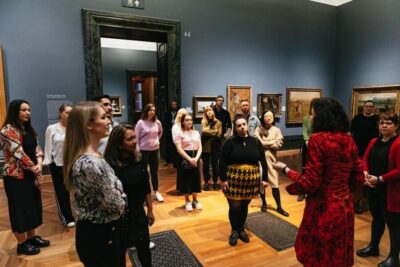
National Gallery Guided Tour with Art Expert Guide
Read our review →
Tickets for Moco Modern & Contemporary Art Museum
Read our review →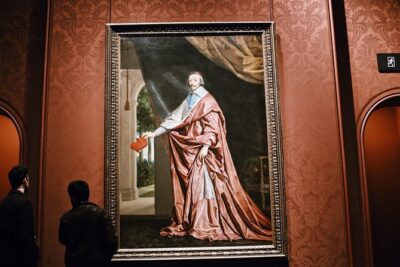
National Gallery of London Museum Tour Semi-Private 8ppl Max
Read our review →
Day Trip to Paris with Eiffel Tower, Notre Dame and Louvre Museum
Read our review →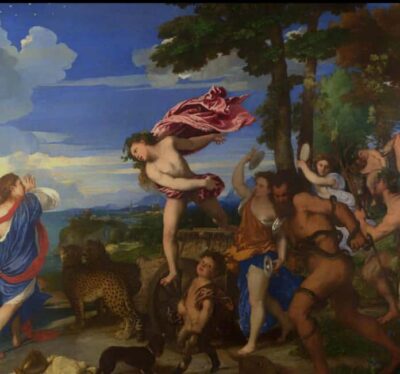
National Gallery + Guided Tour + Priority Entry
Read our review →
Official National Gallery Highlights Guided Tour
Read our review →Browse the lists this tour appears in