
REVIEW · LONDON
London: National Gallery Guided Tour with Priority Entrance
The best part of this National Gallery tour is the way it turns a grand collection into a clear story. In two hours, you move from Renaissance religious art to Turner’s Industrial Revolution, then on to Monet, Seurat, and Van Gogh. You are not left to wander from famous painting to famous painting without context.
I like the small group of no more than 10 people, which should make it easier to hear the guide and ask questions. I also like the carefully chosen route: Leonardo da Vinci, Michelangelo, Turner, Monet, Seurat, and Van Gogh give you a strong overview of how European painting changed over several centuries.
The main drawback is time. Two hours is enough for a focused introduction, not a full visit to the National Gallery. The tour also involves standing and walking through the building, so it is not suitable for people with mobility impairments.
Key points to know before booking
- A chronological route: The tour moves from Renaissance painting through the 18th and 19th centuries to Impressionism and Van Gogh.
- A group capped at 10: You get a more personal setting than a large museum walk.
- Priority security entry: Your ticket includes express security access, though you still need to arrive early.
- A strong guide lineup: Guides named in guest feedback include Tara, Tony, Giovanni, Antonio, and others.
- Two hours at $21: This is good value if you want structure, interpretation, and help finding major works quickly.
- Meet inside the Sainsbury Wing: After security, look to the right by the glass wall for a yellow flag.
Why this tour works better than wandering alone
The National Gallery can feel manageable at first, then strangely confusing once you are inside. There are famous works, less familiar works, side rooms, and centuries of art competing for your attention. A guide gives you a route and a reason to look closely.
This tour appears designed around major turning points in European painting. You begin with the Renaissance, when artists worked to show human bodies, space, and religious scenes with greater realism. You then move toward painters who used light, color, speed, and visible brushwork in new ways.
That structure matters. Instead of treating each painting as an isolated object, the guide can show you how one period responded to the ideas of another. You may begin by looking for a biblical story and end by thinking about industrial power, fleeting light, or the emotional force of a brushstroke.
The group size is another real advantage. With 10 people or fewer, the guide can stop without blocking a large section of the room, and you have a better chance to ask why a detail matters. One guide, Tara, is particularly praised for encouraging different ways of looking at a painting and inviting younger members of the group to share their views.
The tour is conducted in English, so you should be comfortable listening to art explanations in that language. Its tone is meant to work for both art lovers and newcomers, with stories and visual clues rather than a purely academic lecture.
More Art Museum Tours in London
- Official tickets: Moco Modern & Contemporary Art Museum
★ 4.5 · 1,157 reviews - London: National Gallery Guided Tour with Art Expert Guide
★ 4.7 · 440 reviews - London: Tickets for Moco Modern & Contemporary Art Museum
★ 4.7 · 391 reviews
Entering through the Sainsbury Wing
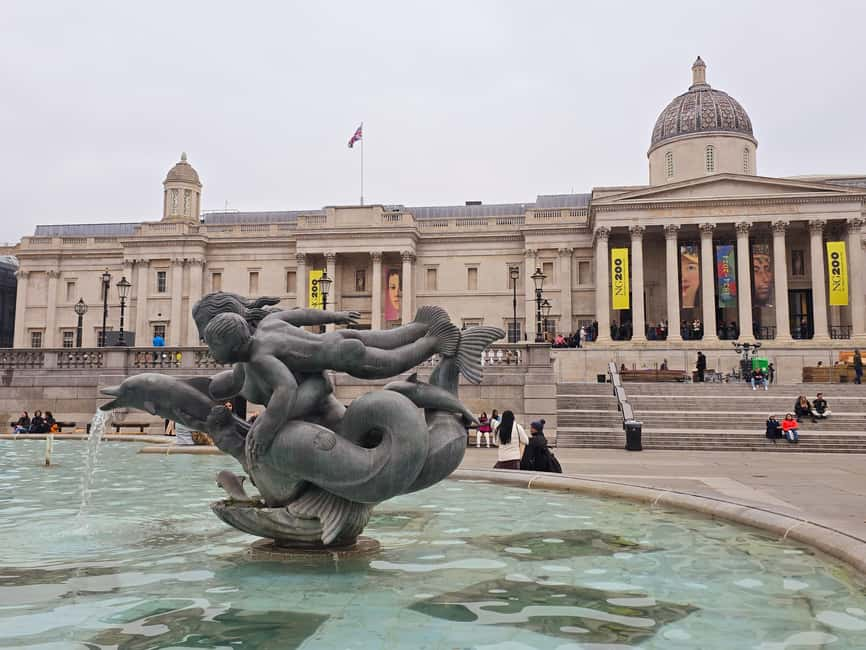
Your meeting point is inside the National Gallery, not outside on the pavement. Enter through the Sainsbury Wing, pass through security, then look on the right-hand side by the glass wall. Your guide will be there with a yellow flag, usually 5 to 10 minutes before the start.
Arrive about 15 minutes early. The priority benefit is an express security check, not a permission to arrive at the last second. The tour starts on time, and late arrivals cannot join, so allow a little extra time for finding the entrance and clearing security.
Your entrance tickets are sent the day before the tour. Keep them ready on your phone or in an accessible place. Transportation to the gallery is not included, and neither are food, drinks, or personal expenses.
Once you meet the guide, the tour begins and returns to the National Gallery at the end. That makes it easy to continue exploring on your own afterward, assuming you still have the energy and the gallery remains part of your day’s plan.
Leonardo and Michelangelo: the Renaissance opening
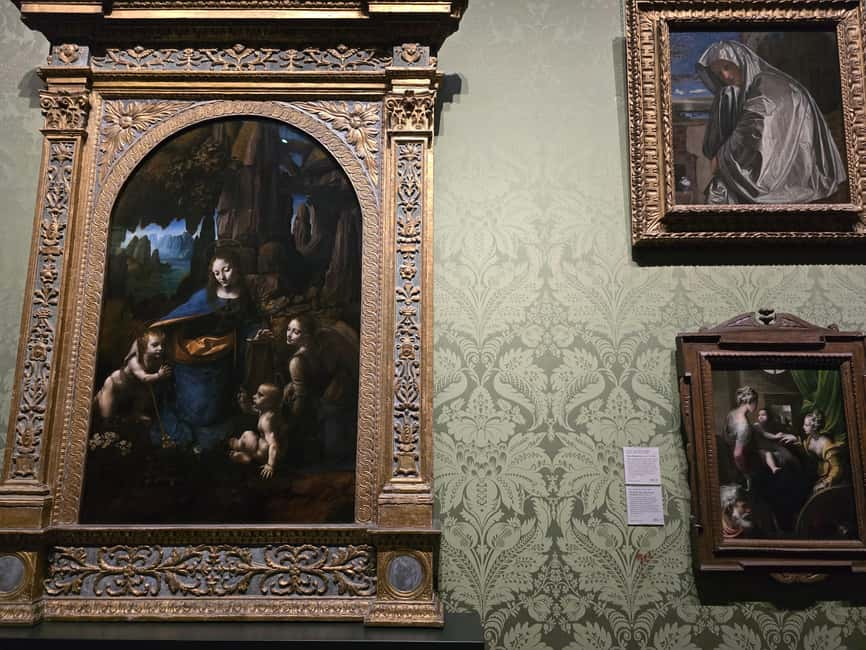
The first major section focuses on Renaissance painting and the changing treatment of people and religious subjects. Leonardo da Vinci’s The Virgin of the Rocks gives the guide room to discuss composition, atmosphere, human relationships, and the careful handling of light.
The painting is more than a scene to identify. Your guide can point out how the figures are arranged, how the setting supports the mood, and how Leonardo creates a sense of depth. This is the kind of information that is easy to miss when you simply read the label and move on.
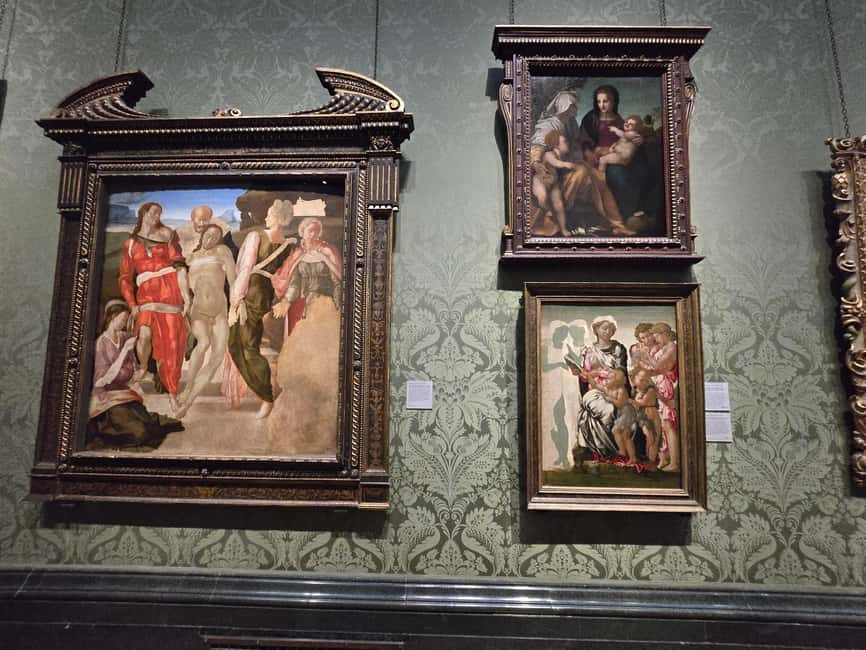
The route also includes Michelangelo’s The Entombment, described here as his only surviving easel painting. That detail alone makes it a worthwhile stop. The guide can help you look at how Michelangelo handled the human figure, religious emotion, and the unfinished or unusual qualities that make the work worth close attention.
This part of the tour is likely to suit you if you enjoy learning how artists built images before photography and modern visual tools. It is also useful if Renaissance art normally feels formal or distant. The guide’s job is to make the figures, gestures, and symbols easier to read.
The limitation is that you will not study every Renaissance work in the gallery. The selection is made for a two-hour route, so the focus stays on major examples rather than a full account of the period.
Turner’s Rain, Steam and Speed
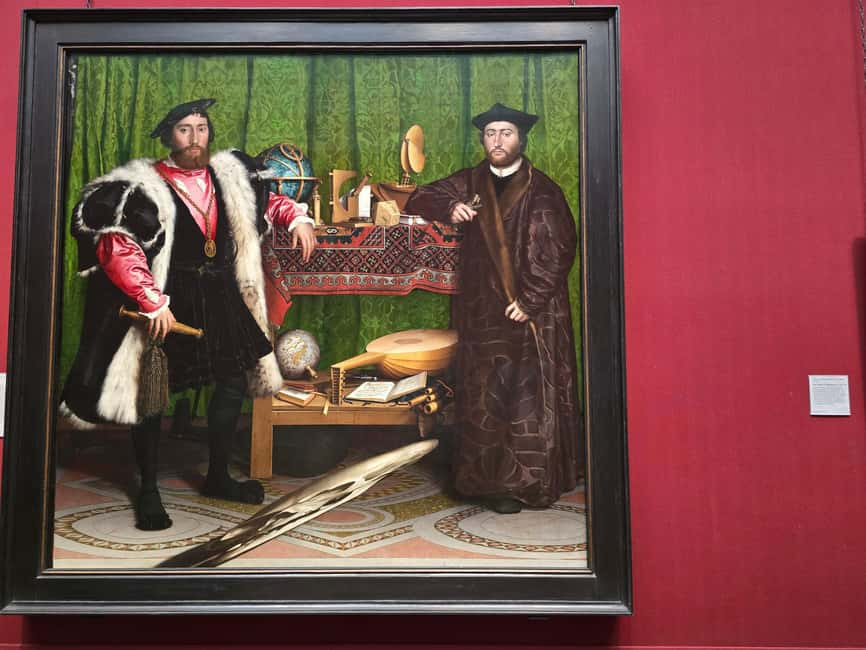
J.M.W. Turner’s Rain, Steam and Speed shifts the mood and subject. The painting captures the force of the Industrial Revolution through a train moving across a rain-filled scene. It is a good bridge between older traditions of precise representation and newer ideas about atmosphere, movement, and sensation.
Here, the guide can explain how paint itself helps create the experience. You are encouraged to consider not only what is depicted, but how the blurred light and energetic handling make the scene feel fast and unstable.
Turner is especially useful in this tour because he sits between the Renaissance works and the later Impressionist paintings. The route shows that the changes in modern painting did not appear all at once. Artists gradually tested how much detail they needed, how color could suggest weather, and how a painting could communicate a passing moment.
You may find this one of the most accessible stops, even if you know little about art. A train, rain, and speed are easy starting points. From there, the guide can lead you toward questions about technology, power, and the artist’s response to a changing world.
More National Gallery tours:
- National Gallery of London Museum Tour Semi-Private 8ppl Max
★ 5.0 · 178 reviews - British Museum & National Gallery of London Semi-Private 8ppl Max
★ 5.0 · 168 reviews - London: National Gallery + Guided Tour + Priority Entry
★ 3.7 · 162 reviews - Official National Gallery Highlights Guided Tour
★ 4.5 · 149 reviews
Monet and Seurat: color takes the lead
Claude Monet’s The Water-Lily Pond brings the tour into the Impressionist period. The focus shifts toward changing light, color, and the feeling of a scene rather than a hard-edged account of every object.
This is a chance to step back and then look close. From a distance, the painting may read as a calm scene. Up close, the color and brushwork become more important. The guide can show you how the image depends on marks and tones working together.
Georges Seurat’s Bathers at Asnières offers a different approach. The work is associated with bold color choices and a new kind of brushwork that challenged established rules. Placing Seurat near Monet helps you compare two ways of breaking from older academic methods.
The contrast is useful. Monet gives you a sense of shifting light and atmosphere, while Seurat encourages you to notice how color can be organized. Your guide may ask you to describe what you see before explaining the technique, which makes the discussion more active than a standard lecture.
This portion should appeal to you if you like seeing a familiar subject treated in an unfamiliar way. It may be less satisfying if you want a slow, detailed look at every Impressionist room, since the tour must keep moving to cover its full route.
Van Gogh and the emotional power of paint
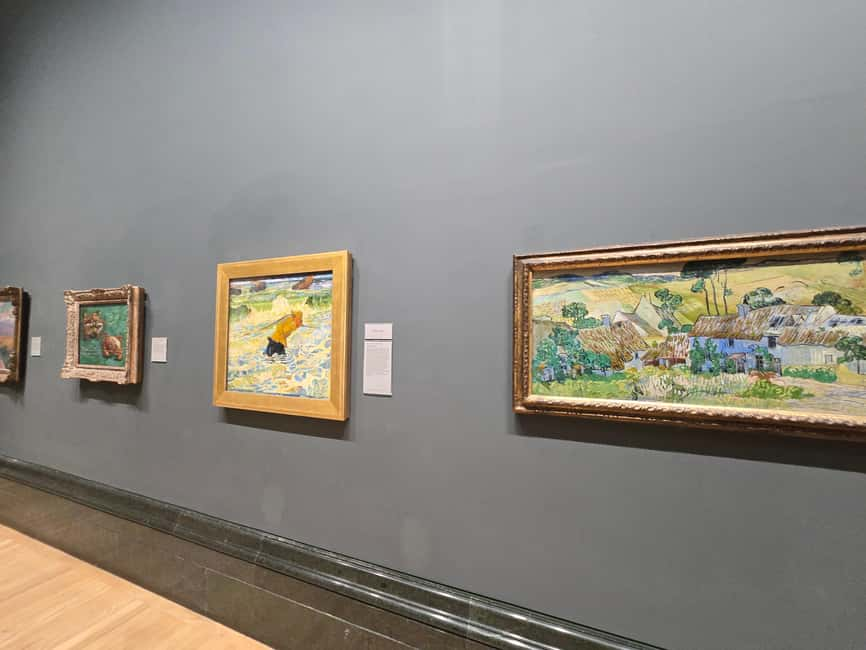
The final section turns to Vincent van Gogh. His paintings are a strong ending because the brushwork is so easy to recognize and discuss. Swirling marks, intense colors, and ordinary scenes take on a force that goes beyond simple description.
The guide can help you separate fact from cliché. Van Gogh is often reduced to a few famous images and a dramatic biography, but the more useful question is how the paint works. How do the strokes direct your eye? How does color change the mood of a simple subject? How does the surface of the painting make the scene feel active?
This is also where the tour’s focus on technique and symbolism pays off. You are asked to look at what the artist did, not just admire the fame of the name. The guide’s explanation can give you a way to keep looking after the tour ends.
Several guides receive praise for making these discussions lively. Tara is associated with enthusiasm, humor, and unusual details. Tony is praised for placing works in chronological order and adding historical context. Giovanni is noted for fitting a great deal into the two-hour period while still explaining the paintings clearly. The exact guide depends on the date of your visit, but the named guides suggest a team comfortable with both facts and conversation.
What $21 gets you
At $21 per person, this is a reasonable price for a two-hour guided museum visit, especially with priority security entry included. You are paying for more than access to the building. The value comes from having an expert select the major works, explain their meaning, and keep the visit moving.
The price is strongest if you are visiting London for a short time or if the National Gallery feels intimidating. You can see important paintings without spending an hour trying to find them, and you gain a basic framework for understanding the collection.
It is less useful if you already know exactly which rooms and paintings you want to see. An independent visit gives you more freedom to linger, skip the Renaissance, or spend an entire afternoon with one artist. You also pay nothing for entry to the gallery itself through this tour, but the guided service and priority security are what make the booking worthwhile.
The group limit of 10 improves the value. A larger group might cost less per person, but it can be harder to hear and difficult to ask questions. Here, the smaller format supports the interactive style promised by the tour.
Who should book it
I would choose this tour for a first visit to the National Gallery, a short London stay, or a day when you want art to feel organized rather than overwhelming. It is also a good fit for families with older children who can manage two hours of walking and listening. Tara’s approach, including encouraging a 10-year-old to share an opinion about a painting, suggests that young participants do not have to sit silently through a formal talk.
It suits you if you want:
- A clear introduction to major Western paintings
- Historical context without a full academic lecture
- Help spotting symbolism and technique
- A small English-speaking group
- A quick route through major works
- The option to continue looking around afterward
You should think twice if you need a fully accessible experience. The activity is not suitable for people with mobility impairments, and comfortable shoes are recommended. You also need to follow the gallery’s rule against flash photography.
Practical timing and booking advice
The tour lasts two hours, with starting times based on availability. Since it starts promptly, place it in your schedule with a little breathing room before and after. Do not pair it with another timed activity that begins immediately after the expected finish.
You can cancel up to 24 hours before the start for a full refund, and the reserve-now, pay-later option allows you to hold a place without paying at once. Those policies are useful if your London plans are still shifting, but the meeting instructions remain important: arrive early, enter through the Sainsbury Wing, and look for the yellow flag after security.
Bring comfortable shoes. Food and drinks are not included, and the tour does not provide transportation to or from the gallery.
Final verdict: a smart first look at the National Gallery
Book this tour if you want the National Gallery’s major works arranged into a story you can follow. At $21, the combination of a small group, priority security entry, and two hours of guided explanation offers solid value.
Skip it if your main goal is solitary, unhurried viewing or if you already know the collection well. For most first-time visitors, though, the route from Leonardo and Michelangelo to Turner, Monet, Seurat, and Van Gogh gives you a useful foundation without taking up the whole day.
FAQ
How long is the National Gallery guided tour?
The guided tour lasts two hours.
What language is the tour conducted in?
The live tour guide speaks English.
Where is the meeting point?
Enter through the Sainsbury Wing. After security, the meeting point is on the right-hand side by the glass wall. The guide will have a yellow flag.
How early should I arrive?
Arrive 15 minutes before the activity so you have time to go through security. The tour starts on time, and late arrivals cannot join.
Are entrance tickets included?
Yes. The activity includes priority entrance tickets, express security access, and entry to the National Gallery. Tickets are sent the day before the tour.
How large is the group?
The tour is limited to 10 participants.
Can I cancel the booking?
Yes. You can cancel up to 24 hours in advance for a full refund.
Just added around London
- A Guided Tour at the National Gallery in London★ 3.5 · 2 reviews
- The Shard Viewing Gallery & Westminster Walking Tour★ 4.0 · 12 reviews
- Women in Art Walking Tour★ 5.0 · 13 reviews
- Best of Westminster Abbey with Upper Gallery & Buckingham Palace★ 4.5 · 15 reviews
- The Tate Modern London – Exclusive Guided Museum Tour★ 5.0 · 41 reviews
- Private Guided Tour of the National Gallery in London★ 4.0 · 8 reviews
- Tate Modern Museum London Guided Tour Semi-Private 8ppl Max★ 5.0 · 41 reviews
- Tate Modern Private Tour in London with Blue Badge Guide★ 5.0 · 3 reviews
Art Museum Tours in London, compared.
Official tickets: Moco Modern & Contemporary Art Museum
Read our review →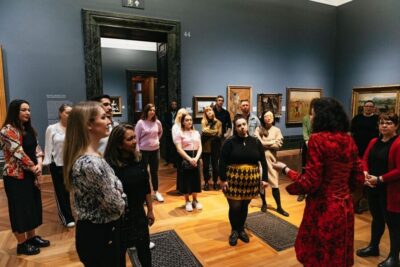
National Gallery Guided Tour with Art Expert Guide
Read our review →
Tickets for Moco Modern & Contemporary Art Museum
Read our review →
National Gallery of London Museum Tour Semi-Private 8ppl Max
Read our review →
Day Trip to Paris with Eiffel Tower, Notre Dame and Louvre Museum
Read our review →
British Museum & National Gallery of London Semi-Private 8ppl Max
Read our review →
National Gallery + Guided Tour + Priority Entry
Read our review →
Browse the lists this tour appears in