
REVIEW · LONDON
Tate Modern Museum London Guided Tour Semi-Private 8ppl Max
Tate Modern makes more sense when someone helps you connect the dots. In two hours, this small-group tour moves from Mondrian’s clean geometry to Picasso, Dalí, Rothko, Warhol, and Duchamp, showing you why modern art took such strange and exciting turns. The group never exceeds eight people, so you can ask questions without shouting across a crowd.
I like the chance to see a wide range of art rather than one narrow style. I also like the human side of the tour: guides such as Becky and Sasha are praised for making the visit interactive and thought-provoking, not just reciting dates. The main consideration is pace. Two hours goes quickly, and temporary exhibitions are not included.
Key points at a glance
- Eight people maximum: A small group gives you room to ask questions and follow a conversation.
- A useful first lesson in modern art: The route introduces Impressionism, abstraction, Pop Art, Surrealism, and more.
- Personal stories matter: You learn how artists’ lives and events such as the Spanish Civil War shaped their work.
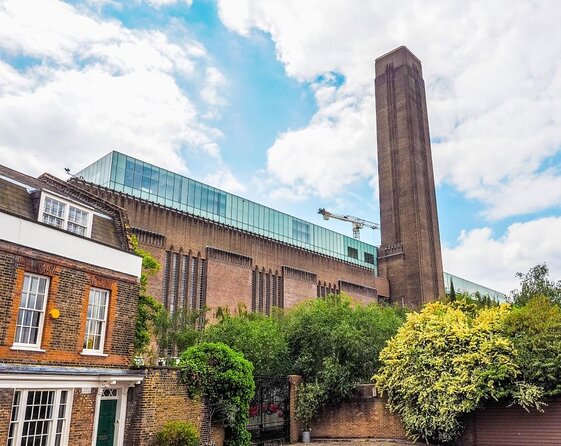
- The building gets attention too: Tate Modern occupies a converted power station, adding an architectural story to the art.
- Strong choice for beginners: Guides explain difficult ideas without assuming you already know art history.
- Plan for a walking visit: The tour is not suitable for wheelchair users or people with walking disabilities, and large bags are not allowed.
Why a small Tate Modern group changes the visit
Tate Modern can feel like a lot to take in. The museum is large, the art covers several movements, and some works seem easy to understand while others appear to ask more questions than they answer. A private guide with seven other people or fewer gives the visit a clear shape.
The guide can stop for questions, adjust the explanation, and notice when the group needs more context. That matters at Tate Modern. You may look at a canvas by Mark Rothko and wonder why broad fields of color deserve such attention. You may face Duchamp’s Fountain and wonder if the object is art at all. A good guide does not simply hand you the approved answer. The better approach is to give you enough background to form your own view.
That interactive style is the main reason I see value in this tour. Becky is described as encouraging discussion without interpreting every work for you, while Sasha is praised for choosing a wide mix of art and making the group think. Those are useful qualities in a modern-art guide. You want context, but you also want space to look.
The maximum group size of eight is important here. It is not a private tour, and that distinction affects the price and feel. Still, it is much more personal than being one voice in a large museum group. If you have a question about a confusing work, you have a fair chance to ask it.
More Art Museum Tours in London
- Official tickets: Moco Modern & Contemporary Art Museum
★ 4.5 · 1,157 reviews - London: National Gallery Guided Tour with Art Expert Guide
★ 4.7 · 440 reviews - London: Tickets for Moco Modern & Contemporary Art Museum
★ 4.7 · 391 reviews
Starting at Tate Modern’s former power station
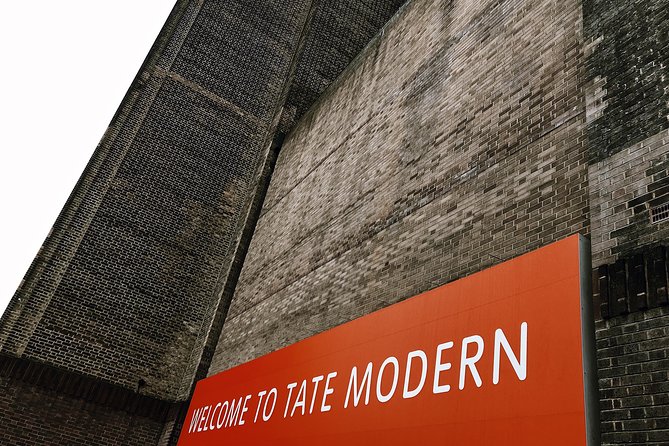
The meeting point is Tate Modern on Bankside, London SE1 9TG. The museum is near public transportation, but hotel pickup and drop-off are not included. I would allow enough time to reach the entrance without rushing, especially since the tour begins at a fixed time and requires a minimum of two people to operate.
Before the art begins, the building itself gives the guide a useful opening. Tate Modern occupies a converted power plant, so you are not entering a purpose-built gallery with a quiet, polished museum shell. The industrial past helps explain the scale and character of the place.
This architectural context is more than a side note. Modern art often asks you to think about ordinary materials, machinery, public life, and the changing city. A former power station is a fitting home for work that challenged old ideas about what art could be.
Security rules can affect your arrival. Large bags and suitcases are not allowed inside. You can bring a handbag or a small, thin backpack, but it is best to pack lightly. Museums may also have occasional closures or delayed opening times. If the opening is delayed by more than one hour, an alternative is offered, but a refund or discount is not provided for these changes.
Mondrian and the appeal of order
One early focus is Piet Mondrian, whose geometric patterns and blocks of color are among the easiest modern works to recognize. Yet recognition is not the same as understanding. A guide can help you look at the choices behind the apparent simplicity: the balance of lines, the tension between empty space and color, and the attempt to reduce painting to essential forms.
This is a good starting point because Mondrian gives you something clear to see. You do not need specialist training to notice the grid. The guide can then move from what is visible to why the work mattered, helping you understand how artists moved away from traditional scenes and toward abstraction.
I like this kind of explanation because it avoids treating modern art as a guessing game. You are not expected to identify one hidden meaning. Instead, you can consider how structure, color, and rhythm affect your response.
Picasso, Dalí, and art shaped by conflict
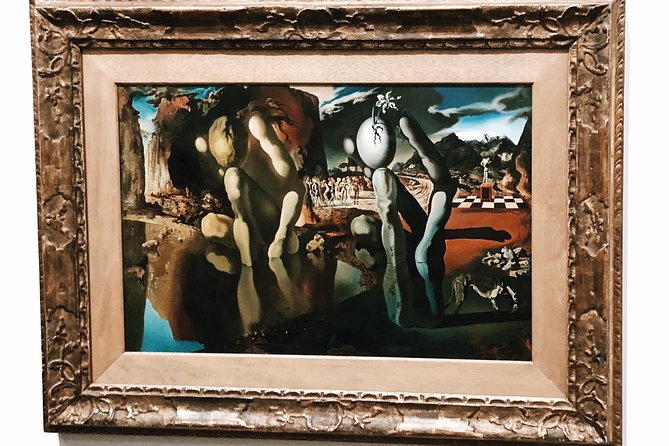
The tour also introduces Pablo Picasso and Salvador Dalí, two Spanish-born artists whose work was shaped by the Spanish Civil War. This part adds political and personal weight to the museum visit.
Picasso is often presented through bold forms and fractured viewpoints, but the human story behind his work can change how you look at it. Dalí brings a different route into Surrealism, where dreams, fear, and strange combinations challenge ordinary logic. Connecting these artists to the turmoil of their time keeps the discussion from becoming a simple parade of famous names.
You should expect the guide to explain how biography and public events informed the art, not just list the year each piece was made. That is especially useful if you know the names but have never felt a connection to the work. The strongest teaching here is likely to come from asking why an artist chose a distorted figure, an unsettling image, or an unexpected symbol.
More modern and contemporary art in London:
- London: Tate Modern Official Guided Tour
★ 4.6 · 154 reviews - The Tate Modern London – Exclusive Guided Museum Tour
★ 5.0 · 41 reviews - Tate Modern Official Discovery Tour
★ 4.0 · 39 reviews - See Tate Modern with an Art Historian in London
★ 5.0 · 27 reviews
Monet and the move toward impression
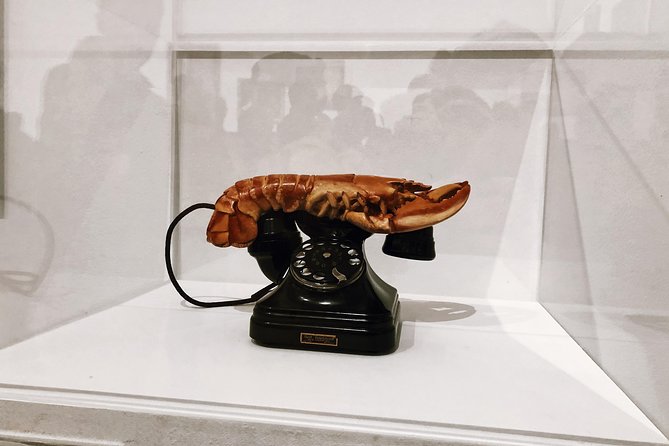
Claude Monet represents Impressionism on the tour. His work offers a useful contrast to the harder edges of Mondrian and the more disruptive ideas associated with Picasso and Dalí.
Impressionist painting can look familiar, even gentle, but the movement changed how artists approached light, color, and the act of seeing. A guide can point out how a scene may be less about recording every detail and more about capturing an instant or a shifting sensation.
For someone new to modern art, this section helps show that modernism did not appear all at once. It developed through many changes in color, brushwork, subject matter, and artistic purpose. Monet gives you a bridge between recognizable scenes and the more abstract work you will meet later.
Rothko and the challenge of looking slowly
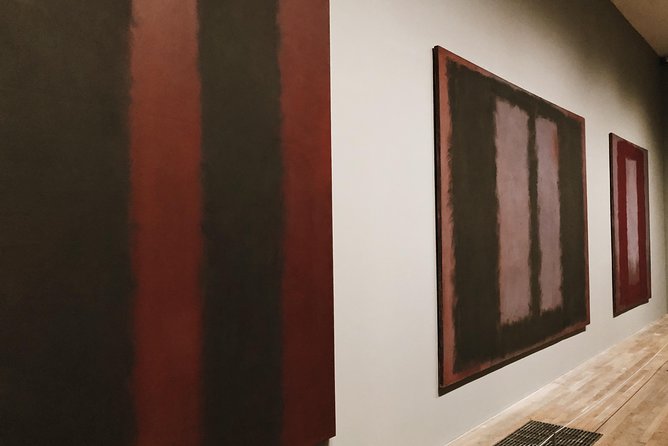
Mark Rothko is one of the artists most likely to test your patience. Large areas of color can seem simple at first glance. A guide can help you consider scale, mood, color relationships, and the physical effect of standing in front of the painting.
This is where the small group becomes especially useful. You can say that a work feels moving, empty, peaceful, or difficult, and the discussion can develop from there. You do not need to pretend that every painting affects you in the same way.
The tour’s best goal is not to force appreciation. It is to give you a better vocabulary for what you see. If Rothko leaves you cold, that is a valid reaction. You may still come away understanding why the paintings matter to other people and what choices create their emotional force.
Warhol, celebrity, and the art of repetition
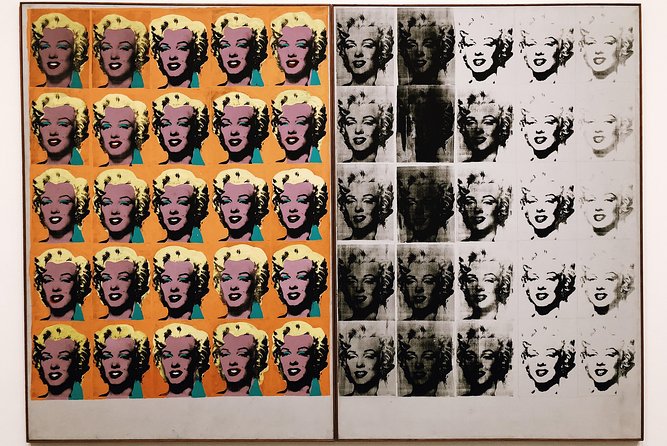
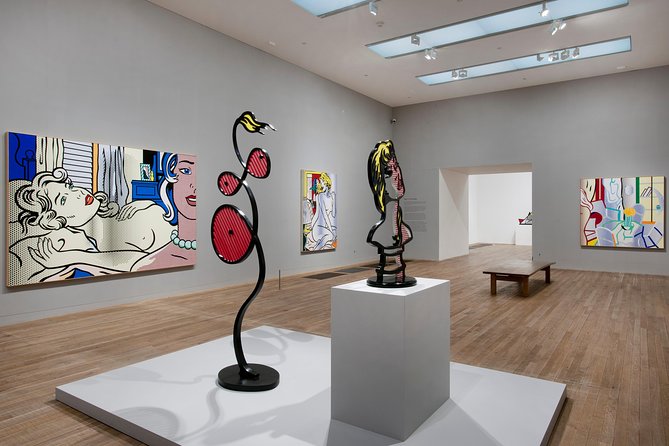
The 1960s arrive through Andy Warhol and his Pop Art images of Marilyn Monroe and other celebrities. Warhol’s work is approachable because the faces are familiar, yet the questions behind the images remain open.
Why repeat a famous face? What happens when an advertising style enters a museum? Does repetition make a person seem more powerful, more distant, or more like a product? These are the kinds of questions that can turn a recognizable image into a serious art discussion.
I like this section for families and first-time museum visitors because the subject is easy to enter. You do not need to know a long list of art movements to have an opinion about celebrity culture. The guide can then connect that reaction to wider ideas about mass media, fame, and consumer society.
Duchamp’s Fountain and the question of art
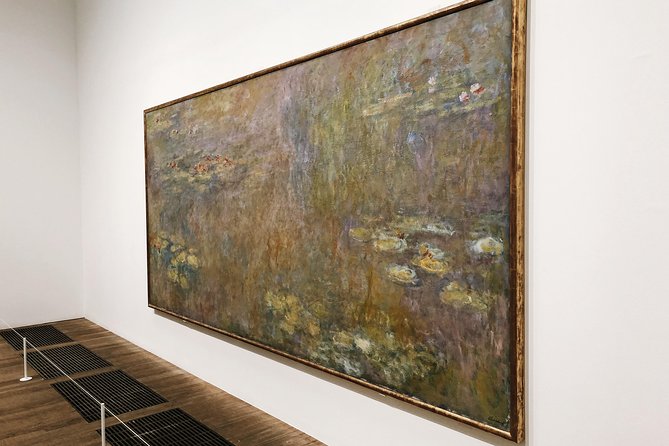
Marcel Duchamp’s Fountain is a natural point for discussion because it asks a direct question: what makes something art? The work can be amusing, irritating, or baffling. That is part of its purpose.
You are not simply asked to admire craftsmanship. Instead, you consider the role of selection, presentation, authorship, and the museum itself. If an everyday object enters an art institution, does its meaning change? Can an idea matter as much as the object?
This is one of the tour’s most valuable moments for a beginner. Modern art often becomes less intimidating when you realize that confusion is not a failure. The uncertainty is part of the subject. A guide who welcomes questions can help you move past the need to find one correct answer.
What two hours can and cannot cover
The planned length is about two hours. That is enough time for a focused introduction to major artists and ideas, but it is not enough to see every gallery or study each work at length.
The guide chooses a selection from the museum’s collections, likely moving between different periods and styles. That broad route suits someone who wants orientation before exploring alone. It may feel too brief if you already know Tate Modern well and want a specialist look at one movement.
Collections and individual rooms can change during the year. Some spaces may have quiet or restricted speaking rules, so the guide may need to explain certain works before entering. Occasional lines can also form because of security, even when a tour is promoted as having quick access.
Temporary exhibitions are not included. If a special show is your main reason for visiting, you will need to arrange that separately. The tour is focused on the museum’s general collection and the building.
Is $107.45 good value?
At $107.45 per person, this is not the cheapest way to enter Tate Modern. The standard museum admission is listed as free, so you are paying mainly for the guide, the small group, and the structure of the visit rather than an entrance ticket.
That can be worthwhile if modern art leaves you unsure where to begin. A strong guide can save you from wandering through large rooms without context and can give you a framework for returning to works later. The price also buys a better chance to ask questions than you would have in a large group.
The value is less clear if you are comfortable reading museum labels, exploring on your own, or spending several hours with one artist. In that case, you may prefer to visit the free collection independently and put the money toward a temporary exhibition or another London activity.
Group discounts may be available, but the supplied details do not specify the discount amount or eligibility. Check the current price before booking, especially if you are arranging places for several people.
Practical details before you book
The tour is offered in English and confirmation is provided at booking. You must provide a mobile phone number with the country code, which allows the operator to contact you about the meeting point or changes.
Wear suitable clothing for a museum visit. The activity requires a moderate level of physical fitness and is not available to people with walking disabilities or those using a wheelchair. That limitation is important and should be considered before payment.
The tour begins and ends at Tate Modern. There is no hotel transportation, so you will need to reach Bankside by public transportation, taxi, or rideshare. The tour price does not include gratuities, which are optional.
Free cancellation is available up to 24 hours before the start time. If you cancel less than 24 hours ahead, you will not receive a refund, and changes within that period are not accepted. The minimum group size is two people. If that requirement is not met, an alternative or full refund is offered.
The operator also gives a satisfaction guarantee, but you must contact them within 24 hours after the tour and allow them a chance to address the issue before seeking a resolution. Keep that deadline in mind if something goes wrong.
Who should book this Tate Modern tour?
I would choose this tour if you are new to modern art, want a focused introduction, or prefer asking questions instead of reading labels on your own. It also fits families and mixed-age groups, since the guide can connect famous faces, political events, personal stories, and basic art ideas.
It is a good match for anyone who wants to understand why artists such as Warhol, Rothko, Mondrian, and Duchamp matter. The teaching style appears especially helpful for people who feel they do not know enough about art. You do not need a background in art history to take part.
I would think twice if you use a wheelchair, have a walking disability, carry large luggage, or mainly want a temporary exhibition. I would also skip it if you want a slow, specialist study of one artist. Two hours gives you range, not exhaustive coverage.
Should you book it?
Book it if you want Tate Modern to feel less confusing and more connected. The small group, interactive approach, and mix of major artists give you a useful starting point, while guides such as Becky and Sasha appear to bring warmth and discussion to difficult subjects.
At $107.45, the cost is high for a museum with free standard admission. The price makes sense only if you value expert direction, a maximum of eight people, and the chance to ask questions. For a first visit, especially if you are unsure how to approach modern art, that extra structure can be money well spent.
FAQ
How long is the Tate Modern guided tour?
The tour lasts approximately two hours.
What is the maximum group size?
The group is limited to eight people.
Is the tour private?
No. It is a semi-private tour with a maximum of eight participants.
What language is the tour offered in?
The tour is offered in English.
Where does the tour start?
It starts at Tate Modern, Bankside, London SE1 9TG, United Kingdom.
Where does the tour finish?
The activity ends back at the meeting point.
Is hotel pickup or drop-off included?
No. Hotel pickup and drop-off are not included. Taxi or rideshare services are recommended for reaching the museum.
Are temporary exhibitions included?
No. Temporary exhibitions are not included in the tour.
Can I bring a large bag or suitcase?
No. Large bags and suitcases are not allowed inside. Only handbags or small, thin backpacks can pass through security.
Is the tour suitable for wheelchair users?
No. The activity is not available for people using a wheelchair or those with walking disabilities.
What happens if the tour does not reach the minimum group size?
The tour requires at least two participants. If that minimum is not met, you will be offered an alternative or a full refund.
Can I cancel for a full refund?
Yes. You can cancel for a full refund if you cancel at least 24 hours before the experience start time. Cancellations made later are not refunded.
More Semi-Private Gallery Tours in London
- National Gallery of London Museum Tour Semi-Private 8ppl Max
★ 5.0 · 178 reviews - British Museum & National Gallery of London Semi-Private 8ppl Max
★ 5.0 · 168 reviews - Tate Modern Tour | Semi-Private Experience
★ 5.0 · 5 reviews - Louvre Museum Paris Essential Guided Tour Semi-Private 6ppl Max
★ 5.0 · 3,807 reviews
Just added around London
- A Guided Tour at the National Gallery in London★ 3.5 · 2 reviews
- The Shard Viewing Gallery & Westminster Walking Tour★ 4.0 · 12 reviews
- Women in Art Walking Tour★ 5.0 · 13 reviews
- Best of Westminster Abbey with Upper Gallery & Buckingham Palace★ 4.5 · 15 reviews
- Private Guided Tour of the National Gallery in London★ 4.0 · 8 reviews
- The Tate Modern London – Exclusive Guided Museum Tour★ 5.0 · 41 reviews
- Tate Modern Private Tour in London with Blue Badge Guide★ 5.0 · 3 reviews
- Tate Modern Theatre Picasso Exhibition★ 3.5 · 7 reviews
Art Museum Tours in London, compared.
Official tickets: Moco Modern & Contemporary Art Museum
Read our review →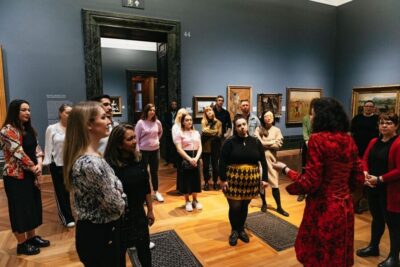
National Gallery Guided Tour with Art Expert Guide
Read our review →
Tickets for Moco Modern & Contemporary Art Museum
Read our review →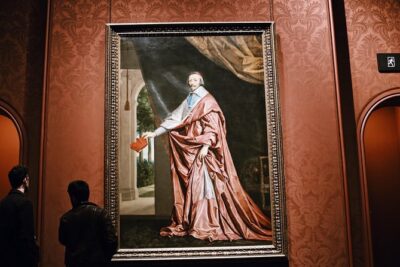
National Gallery of London Museum Tour Semi-Private 8ppl Max
Read our review →
Day Trip to Paris with Eiffel Tower, Notre Dame and Louvre Museum
Read our review →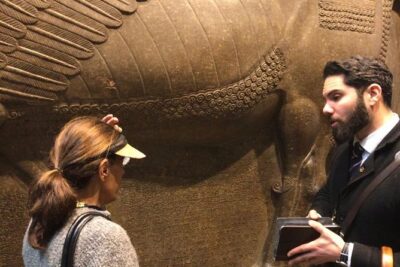
British Museum & National Gallery of London Semi-Private 8ppl Max
Read our review →
National Gallery + Guided Tour + Priority Entry
Read our review →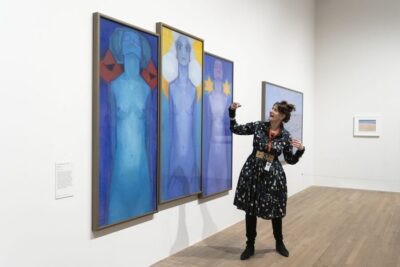
Browse the lists this tour appears in