
REVIEW · LONDON
The Tate Modern London – Exclusive Guided Museum Tour
Tate Modern is easier to enjoy with a guide who knows how to choose a sensible path through its huge collection. In two hours, you may move from Mondrian’s orderly blocks of color to Picasso, Dalí, Rothko, Warhol, and Duchamp’s famously challenging Fountain.
I especially like the personal format and the way strong guides such as Becky, Matilda, Ellie, and Caroline adjust their explanations to the group. I also like that the tour treats modern art as a conversation, not a test. The main catch is price: at $107.74 per person, it makes the most sense if you want focused help rather than a quick, self-guided museum visit.
Key points to know before booking
- Two hours with a real art focus: You cover major movements and artists without trying to see every room.
- Small-group or private choices: The private option gives your group an exclusive guide, while the save-money semi-private choice has different terms.
- Questions are part of the method: Guides such as Becky and Matilda encourage you to form your own ideas about difficult works.
- Good for mixed interests: Families, first-time museum visitors, and serious art students can all get something useful from the format.
- Temporary shows cost extra: Your ticket covers the guided museum tour, not temporary exhibitions.
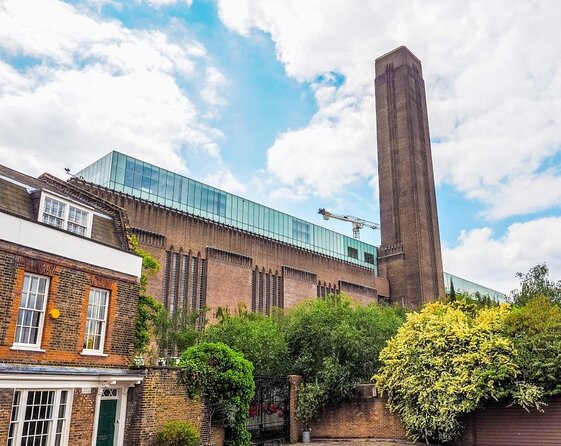
- Simple meeting point: You meet and finish at Tate Modern, Bankside, London SE1 9TG.
Why Tate Modern benefits from a guided visit
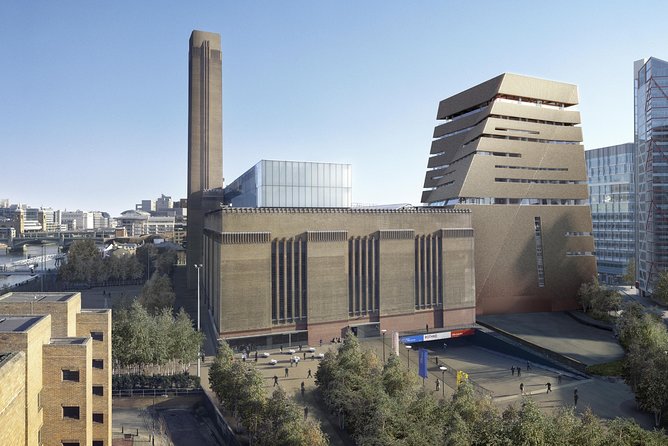
Tate Modern is not a small museum you can casually wander through in half an hour. Its collection covers major changes in art from the late 19th and 20th centuries, with painting, sculpture, photography, installations, and mixed media all competing for your attention.
That scale can be exciting, but it can also leave you asking where to begin. A good guide gives the visit shape. Instead of reading every wall panel, you spend time with selected works and hear why they matter, how they connect to a period, and what you might notice before moving on.
This tour also helps with the basic problem of modern art: some pieces seem clear at once, while others seem to ask more questions than they answer. The guide does not simply hand you a correct interpretation. The strongest approach, reflected in the work of Becky and Matilda, is to ask what you see first, then add historical and artistic context.
That makes the tour useful even if you already know the basics. One participant with an art history background found the focused route worthwhile because the museum has so much to see in limited time. You get a second set of eyes, not just a list of dates and names.
More Art Museum Tours in London
- Official tickets: Moco Modern & Contemporary Art Museum
★ 4.5 · 1,157 reviews - London: National Gallery Guided Tour with Art Expert Guide
★ 4.7 · 440 reviews - London: Tickets for Moco Modern & Contemporary Art Museum
★ 4.7 · 391 reviews
Starting with Mondrian, Picasso, and Dalí
The tour begins at Tate Modern and moves through galleries devoted to major modern and contemporary artists. Mondrian is one likely early stop, with his famous geometric arrangements and blocks of color.
Mondrian’s work can look simple until you consider the decisions behind it. The balance of lines, the relationship between colors, and the attempt to reduce painting to structure all give your guide plenty to discuss. This is a useful entry point because it shows how modern artists challenged the idea that a painting had to depict a recognizable scene.
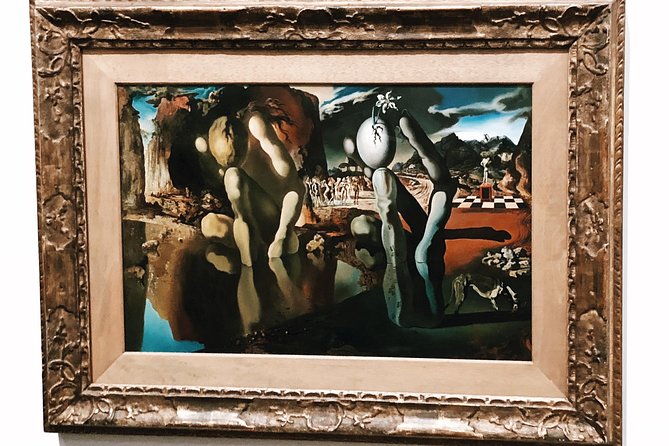
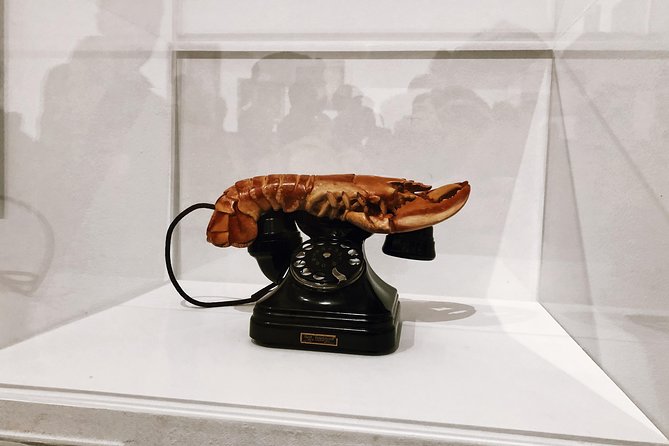
From there, the tour brings in Spanish-born artists Pablo Picasso and Salvador Dalí. Their work connects art to a turbulent period, including the Spanish Civil War. That historical setting matters. It helps you see that modern art was not created in a vacuum, and that distortion, symbolism, and fractured forms could carry emotional and political weight.
You may not see every famous work associated with these artists, and the exact collection changes during the year. Still, this section gives you a clear sense of how artists moved away from traditional representation and toward personal, symbolic, or unsettling ways of showing the world.
Impressionism through Monet, then Rothko
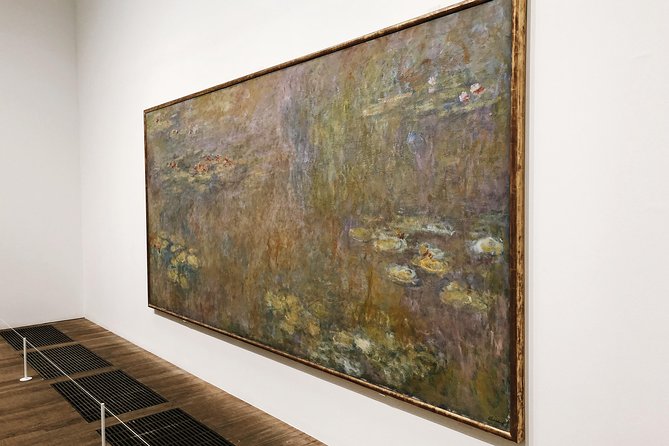
Claude Monet provides a way to talk about Impressionism and the changing role of light, color, and perception. A guide can help you look beyond the familiar label and ask what Monet was trying to capture, and how the painting might feel different when seen up close compared with across the room.
The tour then moves toward abstract expressionism and Mark Rothko. This transition is one of the most useful parts of the visit because the visual language changes so sharply. You go from recognizable subjects and fleeting effects to broad fields of color that can seem quiet, powerful, or even difficult to approach.
Rothko is also a good test of a guide’s skill. A short lecture about dates and movements will not explain why people respond so strongly to his paintings. The more helpful method is to give you time to look, then discuss scale, color, mood, and the artist’s possible intentions without insisting on one answer.
The tour’s strongest guides appear to understand this balance. Ellie, described as an art historian, is praised for connecting the works to their setting while keeping the discussion personal. That is important at Tate Modern, where a room can feel imposing but a good explanation can make it approachable.
Warhol and the appeal of familiar faces
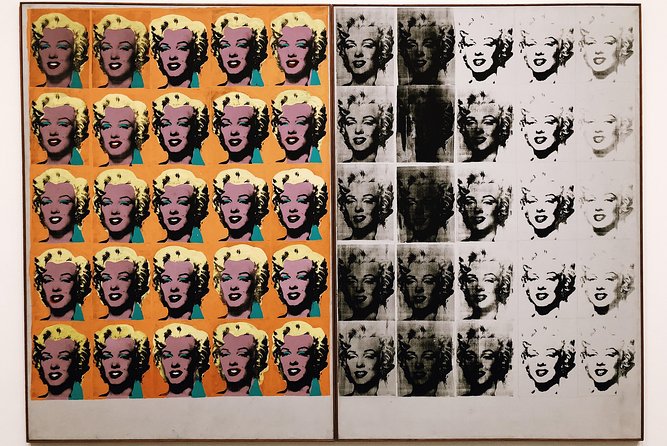
Andy Warhol’s pop art provides a welcome change of pace. His images of Marilyn Monroe and other celebrities are familiar, even if the questions behind them are not.
Warhol lets the guide talk about mass production, fame, advertising, consumer culture, and the way repetition can change an image. You may recognize the face before you understand the point. That gap is exactly what makes these works useful for a group discussion.
This stop can work especially well with teenagers and adults who think modern art is not for them. Caroline’s tour with a 12-year-old and 14-year-old managed to give the family art history while keeping the children involved. That does not mean every child will enjoy every gallery, but the question-led format gives younger visitors something to do besides listen quietly.
You can also expect the guide to connect art history with London and Britain more broadly. Jake, for example, is praised for adding British and London context to his art explanations. That wider view can make the museum feel less isolated from the city outside.
More modern and contemporary art in London:
- London: Tate Modern Official Guided Tour
★ 4.6 · 154 reviews - Tate Modern Museum London Guided Tour Semi-Private 8ppl Max
★ 5.0 · 41 reviews - Tate Modern Official Discovery Tour
★ 4.0 · 39 reviews - See Tate Modern with an Art Historian in London
★ 5.0 · 27 reviews
Duchamp and the question of what counts as art
Marcel Duchamp’s Fountain is the point where many visitors begin asking if the museum is having a joke at their expense. The work is famous because it challenged the idea that art must be handmade, beautiful, or traditionally skilled.
A good guide does not try to force you to like it. Instead, you get a chance to consider why the work caused such a stir and how the artist shifted attention from making an object to choosing, presenting, and questioning one.
This is where the tour’s open-minded tone matters most. You can dislike Duchamp and still understand his influence. You can also decide that the work raises an important question without finding it attractive. The goal is not to turn every visitor into a modern art convert. It is to help you make a more informed judgment.
Some rooms may require quiet or limit conversation. Your guide should explain those rules before you enter. That is a small but useful point, since the tour depends on discussion and not every gallery permits it.
What the guides do especially well
The biggest strength of this experience is the individual guide. The listed guides include Becky, Matilda, Ellie, Caroline, Sacha, Sasha, Jeremy, Jake, and Eleisha. Your booking does not promise one particular person, so you should think of these names as examples of the standard the company is aiming for, not a guaranteed assignment.
Becky receives especially strong praise for making modern art accessible without talking down to anyone. Her approach involves questions, careful selection of works, and room for your own interpretation. One family with different levels of interest in art found that her style helped both an art history student and a less enthusiastic companion enjoy the visit.
Matilda is praised for explaining art history, offering several ways to interpret a work, and keeping the group engaged. Ellie brings an art historian’s background, while Caroline adjusts her route after gauging the group’s interests and prior knowledge.
These details matter because a museum guide can easily turn into a walking audio guide. Here, the best experience appears to be more interactive. You look first, talk through what you see, and then receive context that sharpens your view.
The perfect guide cannot be guaranteed, and modern art remains personal. Still, the five-star rating from 41 reviews and a 100 percent recommendation rate indicate a very strong record. The repeated praise centers on enthusiasm, clear explanation, and the ability to make difficult works feel less intimidating.
Is $107.74 good value?
At $107.74 per person, this is not the cheapest way to enter Tate Modern. The value depends on how you use the two hours.
If you would otherwise wander without knowing what to focus on, the price can be sensible. You receive a guide for the duration of the tour, and the private option means the attention is directed to your group. You also save time by avoiding a random route through a large museum.
The value is weaker if you already have a firm plan, enjoy reading labels at your own pace, or want to spend most of the day inside the galleries. Two hours is a useful introduction, but it is not enough for a full visit to every collection.
Group discounts may be available, and there is a semi-private option marked as a way to save. Read the exact option details before paying. The private guide arrangement does not apply to the semi-private choice, and the stated wheelchair-friendly feature also does not apply to that option.
Temporary exhibitions are not included. If you want to see one, budget separately and allow extra time. The main tour focuses on the permanent collection and the major artists named above.
Two hours, one meeting point, and practical limits
You meet at Tate Modern, Bankside, London SE1 9TG, and the activity ends back at the same meeting point. Hotel pickup and drop-off are not included, so plan to reach the museum yourself by public transport, taxi, or Uber.
The tour is offered in English and uses a mobile ticket. Confirmation arrives when you book, and you must provide a mobile phone number with the country code. That requirement is easy to overlook, especially if you are booking for a group, so enter a number that will work in London.
The museum is near public transportation, but you should still arrive with enough time to find the meeting point and pass security. Large bags and suitcases are not allowed. Only handbags or small, thin backpacks can pass through security.
You should have a moderate level of physical fitness. The tour takes place in a large museum, so expect walking and standing. Wear suitable clothing, since some attractions may require appropriate dress.
Museum rooms and collections can change. Tate Modern may occasionally close without advance warning, and if opening is delayed by more than one hour, an alternative may be offered. Refunds or discounts are not provided in those cases. Security lines may also form even when a tour is described as having priority access.
Who will enjoy this Tate Modern tour?
I would recommend it most strongly to first-time visitors who want help getting started with modern art. You do not need a degree in art history, and you do not need to arrive with a list of artists you already admire.
It also suits couples or families with mixed interests. The discussion-based format can give a skeptical companion a reason to look longer at a work instead of walking past it. The family experience with children aged 12 and 14 suggests that the tour can work for older children when the guide involves them directly.
Art students and serious museum visitors may also find value in the focused route. You will not see everything, but you can ask more specific questions and compare your own reading with the guide’s interpretation.
I would be more cautious about booking if you want a completely private museum experience but are considering the cheaper semi-private option. Check the conditions carefully. I would also skip this tour if your main goal is a temporary exhibition, since that is not included.
Should you book it?
Book this tour if you want Tate Modern to feel manageable, lively, and connected to the artists behind the works. The best guides, including Becky, Matilda, Ellie, and Caroline, appear to make the visit personal by asking questions and adapting to the group.
The price is fair for a private guide and two focused hours, but it is not a bargain admission ticket. Book it when understanding the art matters more to you than seeing the greatest possible number of rooms.
For a first Tate Modern visit, especially with family or someone unsure about modern art, I would choose the private format if the budget allows. Bring curiosity, leave large bags behind, and expect to leave with a few works still on your mind.
FAQ
How long is the Tate Modern guided tour?
The tour lasts approximately two hours.
Where does the tour start?
It starts at Tate Modern, Bankside, London SE1 9TG, UK.
Where does the tour end?
The activity ends back at the Tate Modern meeting point.
Is the tour offered in English?
Yes. The tour is offered in English.
Is this a private tour?
The private option is for your group only. The tour information also offers a semi-private option at a lower price, but the exclusive guide arrangement does not apply to that choice.
Who provides the tour?
The experience provider is Babylon Tours London.
Are temporary exhibitions included?
No. Temporary exhibitions are not included in the tour price.
Is hotel pickup included?
No. Hotel pickup and drop-off are not included. You are advised to use public transportation, Uber, or a taxi to reach the museum.
Can I bring a large suitcase?
No. Large bags and suitcases are not allowed inside. Only handbags or small, thin backpacks are permitted through security.
Is the tour wheelchair friendly?
The private option is wheelchair friendly. This does not apply to the save-money semi-private option.
Can I cancel for a full refund?
Yes, if you cancel at least 24 hours before the experience start time. Cancellations or changes made less than 24 hours before the start are not refunded or accepted.
Just added around London
- A Guided Tour at the National Gallery in London★ 3.5 · 2 reviews
- The Shard Viewing Gallery & Westminster Walking Tour★ 4.0 · 12 reviews
- Women in Art Walking Tour★ 5.0 · 13 reviews
- Best of Westminster Abbey with Upper Gallery & Buckingham Palace★ 4.5 · 15 reviews
- Private Guided Tour of the National Gallery in London★ 4.0 · 8 reviews
- Tate Modern Museum London Guided Tour Semi-Private 8ppl Max★ 5.0 · 41 reviews
- Tate Modern Private Tour in London with Blue Badge Guide★ 5.0 · 3 reviews
- Tate Modern Theatre Picasso Exhibition★ 3.5 · 7 reviews
Art Museum Tours in London, compared.
Official tickets: Moco Modern & Contemporary Art Museum
Read our review →
National Gallery Guided Tour with Art Expert Guide
Read our review →
Tickets for Moco Modern & Contemporary Art Museum
Read our review →
National Gallery of London Museum Tour Semi-Private 8ppl Max
Read our review →
Day Trip to Paris with Eiffel Tower, Notre Dame and Louvre Museum
Read our review →
British Museum & National Gallery of London Semi-Private 8ppl Max
Read our review →
National Gallery + Guided Tour + Priority Entry
Read our review →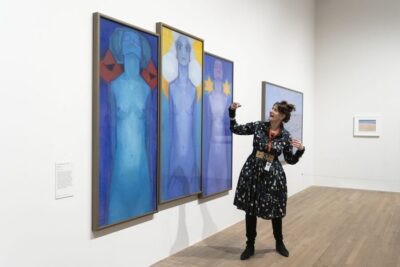
Browse the lists this tour appears in