
REVIEW · CHINA
8-Day Private Yunnan Tour to Kunming, Dali, Lijiang and Shangri-La
Yunnan gives you four very different chapters of southwest China in eight days: Kunming’s city parks and karst rocks, Dali’s Bai culture, Lijiang’s Naxi traditions, and Shangri-La’s Tibetan plateau. The route is especially appealing because it mixes famous sights with places where daily life still takes center stage, including a wet market, a tie-dye workshop, and local family visits.
I like the private format, which gives you your own guide, air-conditioned vehicle, and room to adjust the pace. I also like the smart use of the high-speed train from Kunming to Dali, which saves a long road journey. The main caution is the schedule: you cover a lot of ground, and Shangri-La reaches more than 3,700 meters, so altitude and long transfer days deserve serious thought.
Key points at a glance
- Four major Yunnan destinations: Kunming, Dali, Lijiang, and Shangri-La are linked in one northbound route.
- A useful mix of sights: Expect geological formations, ancient towns, Buddhist monuments, ethnic villages, museums, and mountain scenery.
- Private transport and guides: Your group travels with a private vehicle and receives local guiding in each area.
- A high-altitude finish: Songzanlin Temple and Potatso National Park bring spectacular scenery, but you should be prepared for thin air.
- Good cultural variety: The route introduces Bai, Naxi, and Tibetan traditions through homes, villages, museums, and religious sites.
- Strong inclusion list: Seven breakfasts, hotels, entrance fees, bottled water, transport, and guiding are included in the $1,529 price.
Why this route works for a first Yunnan visit
I like the way this tour moves in a clear direction rather than sending you back and forth. You start in Kunming, travel to Dali, continue to Lijiang, and finish in Shangri-La, flying home from there. That saves time and gives the trip a natural rise from city parks to high plateau scenery.
You also get a broad introduction to Yunnan rather than a narrow theme. The itinerary covers Taoist religious architecture at Kunming’s Golden Temple, the Bai communities around Dali, Naxi culture around Lijiang, and Tibetan Buddhist traditions in Shangri-La. If you want one trip that explains why Yunnan feels different from much of China, this route makes a good case.
The pace is active. Several days combine sightseeing with a transfer, and Day 4 includes a long road journey toward Lijiang. You should be comfortable walking on stone streets, standing at major monuments, and spending several hours in a vehicle.
More Dali museums and houses:
- Girona & Dali Museum Small Group Tour with Pick-up from Barcelona
★ 5.0 · 2,965 reviews - From Barcelona: Girona, Figueres, Dalí Museum, and Cadaqués
★ 4.7 · 1,928 reviews - From Barcelona: Girona&Dalí Museum Day Trip with Small Group
★ 4.7 · 1,874 reviews
Kunming begins with temples, gulls, and a real market
Your guide meets you at Kunming Changshui International Airport and takes you to a downtown hotel. The arrival transfer is short, but the first day still includes two gentle stops after check-in.
Golden Temple sits on Mingfeng Hill and is known for its bronze structures. The metal catches the light, while the hill gives you a pleasant setting away from the city’s traffic. You spend about 90 minutes here, enough time to see the temple and enjoy the grounds without turning the first afternoon into a marathon.
Green Lake Park offers a different view of Kunming. This central park is a good place to watch local routines, with people out walking and seagulls adding a lively note to the water. I like this stop because it is less about collecting another monument and more about getting a feel for the city.
On Day 2, Zhuanxin Farmers’ Market takes you closer to ordinary life. You will see the fruit, vegetables, and meat that local households buy each day. The market visit lasts about an hour and is one of the most useful parts of the Kunming section for anyone who prefers daily culture to a string of formal attractions.
The Stone Forest adds a dramatic geological stop
From the market, you travel to the Stone Forest, about two hours of sightseeing time. This karst formation is made up of tall rocks in shapes that suggest animals, plants, and other figures. It is easy to understand why this is one of Kunming’s best-known excursions: the scenery is strange, bold, and unlike the city parks you have just seen.
The Stone Forest is also a practical reason to choose a private tour. Your guide can help you follow the main route and keep an eye on the clock before your train. Two hours gives you a taste, not an exhaustive exploration, so you should not expect a slow day among every rock formation.
Afterward, your guide transfers you to the railway station and helps you board the high-speed train to Dali. The journey takes about two hours. A Dali-based guide meets you at the other end and takes you to your hotel in the ancient city.
This handoff is worth noting. You have a local guide and vehicle in each destination rather than one person handling every mile of the trip. That can make the route easier to manage, though you should expect to meet different guides as the itinerary changes.
Dali combines Bai culture, pagodas, and Erhai Lake
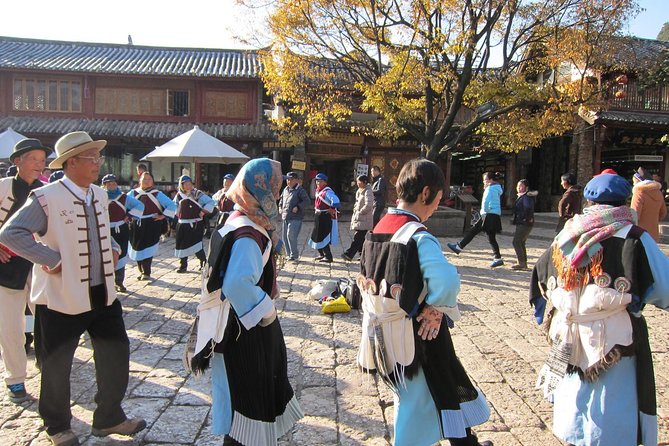
Dali Ancient City dates from the Ming Dynasty period, with the current city walls and layout linked to 1382. The two-hour visit gives you time to walk through markets, see local clothing, and watch the rhythm of the streets. The setting can feel tourist-oriented, but the city remains useful as an introduction to Dali’s Bai culture.
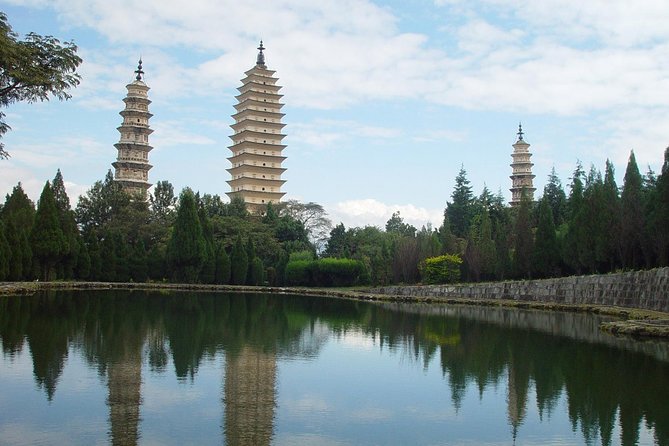
The Chongsheng Three Pagodas are the day’s major historic sight. They sit in the grounds of Chongsheng Temple with Erhai Lake behind them. The pagodas are associated with roughly 1,800 years of Buddhist development in Dali, and their design helps explain the area’s place in Chinese religious architecture.
I would give the pagodas your full attention rather than rushing through for a photograph. The combination of towers, temple grounds, and water makes this a more thoughtful stop than a simple landmark visit.
Later, you walk along the ecological corridor beside Erhai Lake. If you want to cycle, your guide can help arrange a bicycle at your own cost and suggest a route. This is a nice touch, but cycling is optional, and the tour does not include the rental fee.
More private gallery tours in the world:
- Louvre Museum Paris Essential Guided Tour Semi-Private 6ppl Max
★ 5.0 · 3,807 reviews - Van Gogh Museum Tour Reserved Entry Semi Private
★ 5.0 · 1,437 reviews - Private Vatican Museums and St. Peter’s Basilica Early Bird Tour
★ 5.0 · 980 reviews - Louvre Museum Timed Entry Ticket – Optional Private Guide
★ 4.0 · 940 reviews
Xizhou and Zhoucheng bring the road to Lijiang to life
Day 4 is one of the longest and most varied days. A roughly three-hour drive toward Lijiang includes a stop in Xizhou, where Bai traditional houses are especially well preserved.
The houses use carved wood and stone, with painted decoration on lime-coated walls. This stop helps you see Bai architecture in context rather than only hearing about it in a museum. The visit is listed at about five hours, including the journey and related sightseeing, so plan for a substantial part of the day here.
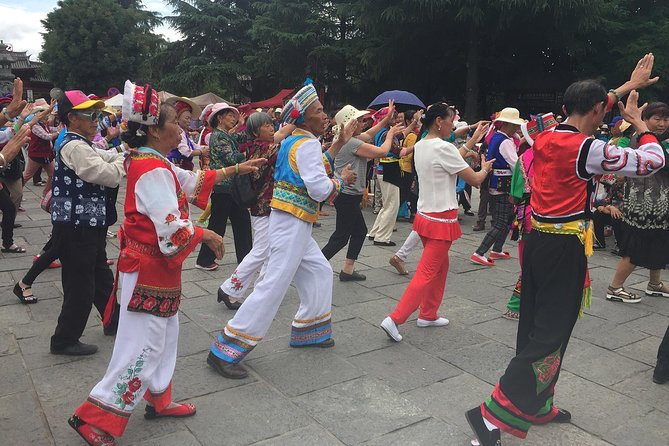
At nearby Zhoucheng Village, you see handmade tie-dye work in a local home. This is the kind of stop I value because it connects culture with a practical craft. You can see where the work takes place and understand that traditional design is not just a display behind glass.
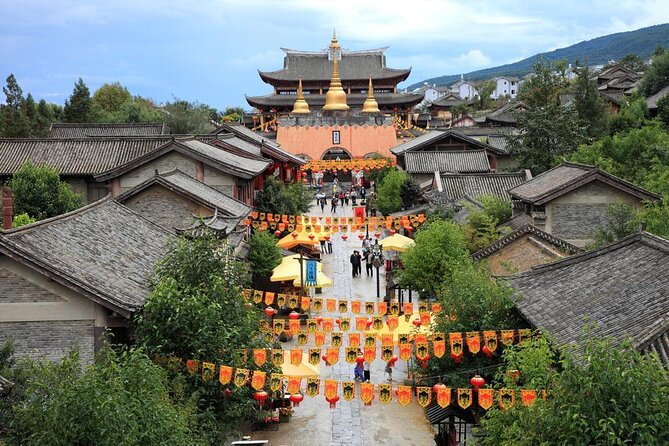
Once you reach Lijiang, you check into a hotel in the old town. Square Street is paved with local bluestone and lined with souvenir shops, bars, and restaurants. The area is most atmospheric after dark, when red lanterns light the streets. You may like the evening energy, but the old town is also the place where the tour feels most commercial, so keep your expectations realistic.
Lijiang explains Naxi culture through villages and museums
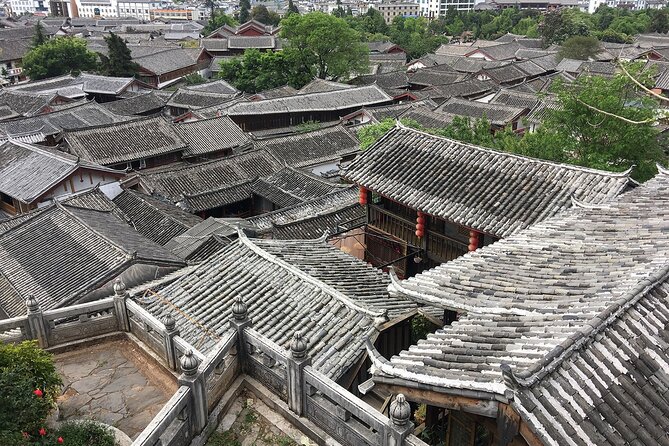
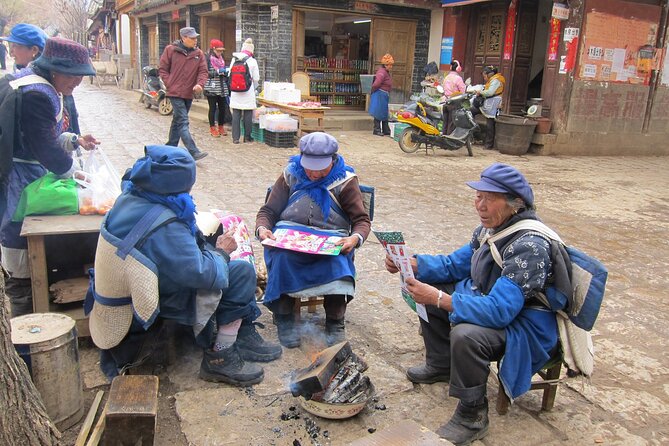
Day 5 focuses on the Naxi people, who have called the Lijiang area home for centuries. In Baisha Village, you visit a Naxi family and learn about local customs and household life. The stop lasts about two hours and gives you more cultural context than a quick walk through a shop district.
Baisha Murals combine Han, Tibetan, and Naxi influences. They offer a visual record of the different cultural forces that shaped western Yunnan. This is a worthwhile stop if you enjoy art with a strong local connection, though the itinerary does not provide a separate admission charge for this visit.
In Yuhu Village, you visit the former residence of Dr. Joseph Rock near Jade Dragon Snow Mountain. Rock was an explorer and writer associated with the region, and his home adds an outside perspective to the Naxi story. The stop is short, about an hour, so it works best as part of the wider day rather than as the main event.
Black Dragon Pool Park gives you water, gardens, and historic buildings. It is a calmer change after the village visits and a good place for photographs. The nearby Dongba Cultural Museum then explains the Naxi people’s Dongba traditions, including their distinctive folk culture.
I like the sequence of this day. You first meet a living community, then see art, a historical residence, a park, and a museum. It is more useful than visiting only one ethnic culture attraction because each stop answers a different question.
The road to Shangri-La includes a dramatic change of scenery
Day 6 is mostly a transfer day, but the route includes two notable stops: the First Bend of the Yangtze River and Stone Drum Town. You leave Lijiang with your guide and driver, then continue toward Shangri-La.
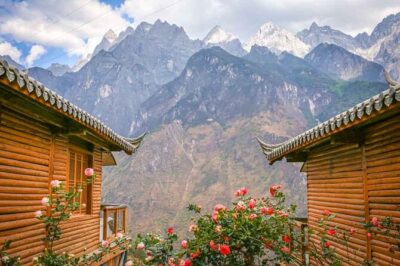
The guide arrangement changes around Tiger Leaping Gorge. Your Lijiang guide says goodbye, the driver takes you onward, and a Shangri-La guide meets you to continue the visit. The schedule refers to visiting the gorge, but it does not promise a specific hiking route, so ask your guide what walking time is planned if this is a top priority for you.
This day requires patience. The reward is the gradual shift from Lijiang’s lower setting to the higher Tibetan region around Shangri-La. You arrive at your hotel later in the day, with the next morning reserved for the area’s major religious sight.
Songzanlin Temple and Potatso bring the highest altitude
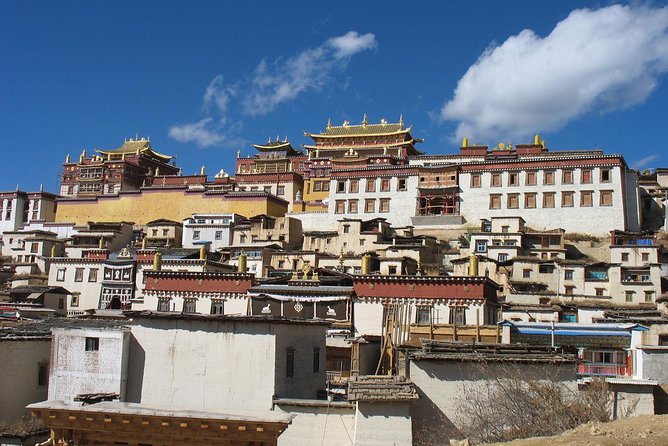
Songzanlin Temple is the largest Tibetan Buddhist temple in Yunnan and is often compared in appearance and layout to the Potala Palace in Lhasa. You spend about two hours here, looking at the temple’s architecture and learning how Tibetan religious traditions took root in the region.
The temple is not just a photo stop. Its scale and design help you understand why Shangri-La feels culturally different from Dali and Lijiang. Take your time on stairs and open areas, especially if you are beginning to feel the altitude.
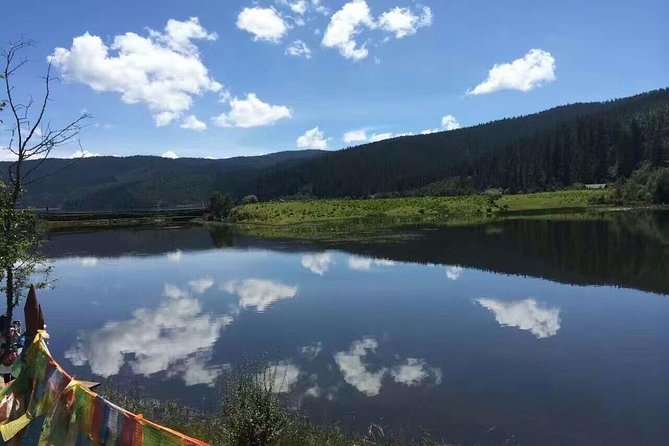
Potatso National Park brings the trip’s most dramatic natural scenery. Shudu Lake sits at more than 3,700 meters, or about 12,140 feet, and is one of Shangri-La’s major plateau lakes. The visit lasts around three hours and includes time among high-altitude scenery before a visit to a local Tibetan family.
This is the point where physical preparation matters most. The tour asks for a moderate fitness level, and comfortable walking shoes are sensible throughout the trip. At this altitude, even ordinary walking can feel harder than expected. Drink the included bottled water, keep your pace steady, and tell your guide if you feel unwell.
What the $1,529 price really covers
At $1,529 per person, the tour is not a budget independent trip, but the price includes many costs that can quickly add up. You receive twin-sharing accommodation, seven breakfasts, private air-conditioned transport, professional guides, entrance fees, and two bottles of water per person each day.
The private vehicle matters most on the road sections between Dali, Lijiang, and Shangri-La. You are not tied to a large group’s pace, and the guide can help with train transfers, hotel arrivals, bicycle rental arrangements, and changing local transport teams.
The price does not include international flights, a China visa, or peak-season surcharges during public holidays and July or August. You should also budget for the optional bicycle rental at Erhai Lake and any personal meals beyond the included breakfasts.
For a couple or family that values simple logistics and private guiding, the package can be good value. For a solo visitor, the minimum booking requirement of two people makes it less suitable. Group discounts are available, but the exact reduction is not stated, so ask before booking.
Who should book this Yunnan route
I would recommend this tour to first-time visitors who want a broad introduction without arranging every train, hotel, transfer, and entrance ticket themselves. It also suits families and small groups that want their own vehicle and guide rather than a large coach.
You should book it if you enjoy cultural variety, scenic drives, historic towns, and a full schedule. The route gives you a strong sense of Yunnan’s ethnic and religious diversity in a short time.
You may want a slower itinerary if you prefer long stays in one town, independent café time, or extended hiking. The trip also needs care if you are sensitive to altitude, since Shangri-La and Potatso National Park are high. Finally, the booking is non-refundable and cannot be changed after cancellation, so confirm your dates and international flights first.
FAQ
How long is the tour?
The tour lasts approximately eight days, beginning with arrival at Kunming Changshui International Airport and ending with departure from Shangri-La Airport.
Which destinations are included?
The route includes Kunming, Dali, Lijiang, and Shangri-La, also known as Zhongdian.
Is this a private tour?
Yes. Only your group participates, with a private vehicle and professional private guides.
How many people are required to book?
A minimum of two people per booking is required.
Is transport included?
Yes. Private air-conditioned vehicle transport is included, along with assistance for the high-speed train from Kunming to Dali. The train journey takes about two hours.
Are hotels and meals included?
Twin-sharing accommodation and seven breakfasts are included. International flights and other meals are not listed as included.
Are entrance fees included?
Yes. Entrance fees for the tourist sites listed in the itinerary are included.
How high is Potatso National Park?
Shudu Lake in Potatso National Park is at an altitude of more than 3,700 meters, or about 12,140 feet.
Can I cancel the tour for a refund?
No. The experience is non-refundable and cannot be changed for any reason after cancellation or an amendment request.
Just added around the world
- Colosseum,Vatican Museum & Sistine Chapel in One Day Guided Tour★ 3.5 · 9 reviews
- Vatican Museums and Sistine Chapel last entry Guided Tour★ 5.0 · 3 reviews
- Private Tour Of Rome Highlights And Vatican Museums Skip-The-Line all included★ 5.0 · 4 reviews
- Borghese Gallery Admission Ticket with Audioguide★ 4.0 · 64 reviews
- Caravaggio Art Walking Tour of Rome with Pantheon Visit★ 4.5 · 35 reviews
- Borghese Gallery Skip the Line Guided Tour★ 4.5 · 23 reviews
- Borghese Gallery Ticket with Audioguide★ 3.5 · 51 reviews
- Borghese Gallery VIP Tour – Skip the Line Tickets★ 5.0 · 2 reviews
Art Museum Tours in China, compared.
Beijing’s Forbidden City with Special Viewing of Treasure Gallery and the Great Wall Ruins at Badaling
Read our review →
Eat Your Way Through Yunnan’s Tea & Horse Road, from Dali to Lijiang, 8-day Trip
Read our review →
Private Beijing Art Tour including Red Gate Gallery, 798 Art Zone and Guanfu Museum
Read our review →
Kunming Private Day Tour to Dali City Highlights by Bullet Train
Read our review →Browse the lists this tour appears in