
REVIEW · ROME
VIP Tour of Rome (3/5/8hrs) Colosseum & Vatican Museums
Rome is easiest to understand when someone else handles the traffic, parking, entrances, and route. This private VIP tour gives you a licensed guide for the stories and a separate chauffeur for the narrow, crowded streets, so you can cover far more ground than you could on foot alone. Guides such as Nicola, Patricia, Laura, and Michele have been singled out for strong explanations and calm time management.
I like two things right away: the flexible itinerary and the Mercedes transport. You can focus on ancient Rome, the Vatican, famous fountains, or a broad first look at the city. The van also gives you air conditioning, shelter from rain, and a much clearer ride than an open golf cart.
The main caution is price. At $580.72 per person, this is a major expense before admission fees, and the most ambitious stops fit only into the 8-hour option. You are paying for privacy, convenience, and time saved, not a bargain sightseeing ride.
Key points to know before booking
- The 8-hour plan is the only option that can include the Vatican Museums and Sistine Chapel.
- The Colosseum is available only on the 5-hour or 8-hour tours.
- A separate guide and chauffeur make a real difference in Rome traffic and at busy sights.
- Entrance fees are extra, including €60 for the Vatican Museums and Sistine Chapel and €40 for the Colosseum.
- The tour can begin at your hotel, apartment, B&B, or Rome train station, with port pickup also available.
- The pace is active, with walking, stairs, crowds, and strict clothing rules at religious sites.
A private car changes how you see Rome
The great strength here is simple: you do not spend your day figuring out buses, taxi stands, parking, or the quickest way from one historic center to another. Your chauffeur drops you near the sights, then returns when you are ready to move on.
That matters in Rome. Several of the famous sights are close together on a map but separated by traffic, restricted streets, and heavy foot traffic. A private vehicle lets your guide build a sensible route around your interests and the available time.
The guide and driver have separate jobs. The guide can stay focused on you, answer questions, explain a statue or ruin, and help with entrances. The chauffeur can deal with the road. Guides named in the feedback include Nicola, Laura, Patricia, Michele, Nadia, Francesca, and Sylvia, with Nicola and Patricia receiving especially strong praise for their explanations of the Vatican and ancient sites.
You can request a luxury Mercedes sedan or van. A golf cart may also be used, depending on the arrangement. The van has clear practical advantages in hot weather or rain. One account specifically favored the van because road noise made a golf cart guide hard to hear, while plastic side coverings became difficult to see through during rain.
More Art Museum Tours in Rome
- Vatican Museums, Sistine Chapel & St. Peter’s Basilica Tour
★ 4.3 · 73,970 reviews - Vatican Museums, Sistine Chapel & St Peter’s Basilica Guided Tour
★ 4.5 · 39,149 reviews - Rome: Vatican Museums, Sistine Chapel and Basilica Tour
★ 4.3 · 16,039 reviews
Choosing three, five, or eight hours
The tour is sold in different lengths, with the supplied details describing an approximate range of 3 to 10 hours. The clearest distinctions are these:
- The 3-hour option is best for a broad introduction to central Rome. It can cover outdoor sights such as the Trevi Fountain, Spanish Steps, Piazza Navona, Campo de’ Fiori, Piazza Venezia, and other city viewpoints, depending on your route.
- The 5-hour option can include the Colosseum, Roman Forum, and Palatine Hill, along with selected central Rome stops.
- The 8-hour option is the full program. It can add the Vatican Museums, Sistine Chapel, St. Peter’s Square, and the major ancient and Baroque sights.
Do not expect to give every stop equal time. The listed visits add up quickly, and traffic can affect the day. A short stop at the Circus Maximus or Piazza Venezia is mainly for orientation and photographs. The Colosseum and Vatican need real attention, especially if you want explanations rather than a quick look.
I would choose the 3-hour plan only if you want a city overview or have a tight schedule. The 5-hour tour suits someone focused on ancient Rome. The 8-hour tour makes the most sense for a first visit when you want the major landmarks handled in one day.
The Colosseum, Roman Forum, and Palatine Hill
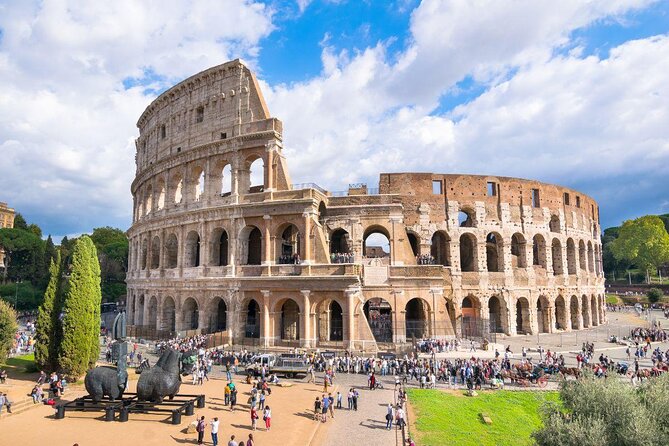
The Colosseum is the centerpiece of the ancient Rome portion. Built under Vespasian between AD 70 and 72, it hosted gladiatorial contests and hunting spectacles. Its scale is still startling, even after centuries of damage and repair.
The scheduled visit allows about an hour. That is enough for a guided look, but not a slow, exhaustive study of every level. Your guide can help you see the building as an engineered public venue rather than only a famous photo stop.
The nearby Roman Forum was the political center of ancient Rome. Temples, basilicas, arches, and government buildings once filled this valley. Today, it is a broad archaeological area where the pieces can feel scattered without a guide to connect them.
The Palatine Hill adds another layer. It is one of Rome’s oldest areas and later became the location of imperial palaces, beginning with Augustus. From the higher ground, you can look across the Forum and make sense of the city’s layout.
The tradeoff is walking. The Forum and Palatine are open-air archaeological sites, and the day includes uneven ground, steps, and exposure to sun or rain. Wear comfortable shoes and keep water with you. A private guide helps with interpretation, but no vehicle can replace the time spent walking inside the sites.
Admission to the Colosseum is not included. The stated fee is €40 per person. Your full name must match your booking information, and you must carry a valid passport or identification document for entry to the Colosseum and Roman Forum.
The Vatican Museums and Sistine Chapel
The Vatican portion is reserved for the 8-hour tour. It is not simply another quick city stop. The museums contain sculpture, paintings, mosaics, sarcophagi, and collections gathered by generations of popes.
Your guide can adjust the emphasis to your interests before you begin. That is useful because the museums can feel overwhelming. You might prefer ancient sculpture, Renaissance paintings, or the route toward the Sistine Chapel. A private guide gives you someone to ask when the number of galleries becomes too much.
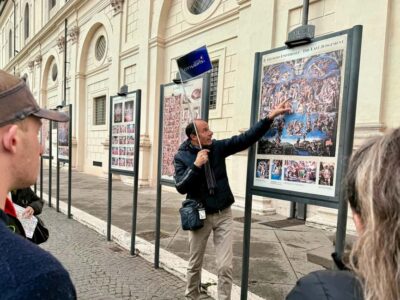
The Sistine Chapel is the emotional center of this visit. Michelangelo’s ceiling scenes from Genesis and his Last Judgment demand time, even in a crowded room. Photography and video are not allowed, and visitors must remain silent inside. Your guide will explain the chapel before or after entry and give you time to look quietly.
The route then leads toward St. Peter’s Basilica, where Michelangelo’s Pietà is a major highlight. The basilica’s scale and decoration can be overwhelming after the long museum route.
The advertised Vatican and Sistine Chapel admission fee is €60 per person. St. Peter’s Basilica is listed separately at €10, but the practical notes say the guide will not enter the basilica with you and that the operator strongly suggests not trying to add it. Confirm the current arrangement before you pay for anything.
Groups of more than four need earphones inside the Vatican Museums and Sistine Chapel. Rental costs €5 per person and are not included. This is a small charge, but it matters because the galleries are noisy and the guide may be some distance away.
The Vatican Museums are closed on Sunday. Dress modestly for the Vatican and other places of worship: knees and shoulders must be covered for both men and women. Shorts or sleeveless tops can result in refused entry.
More ways into the Vatican Museums:
- Vatican Museums & Sistine Chapel Skip-the-Line Entry Ticket
★ 4.4 · 13,838 reviews - Rome: Vatican Museums, Sistine Chapel & Basilica Tour
★ 4.7 · 13,217 reviews - Rome: Vatican Museums & Sistine Chapel Guided Tour
★ 4.3 · 12,117 reviews - Vatican Museums & Sistine Chapel Skip-the-Ticket-Line Tour
★ 4.3 · 10,486 reviews
St. Peter’s Square and the great church beyond
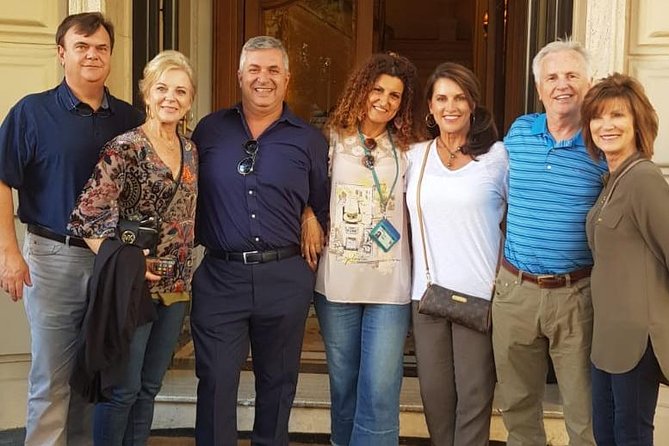
St. Peter’s Square is free to visit and is included as an outdoor stop. Bernini’s curving colonnade gives the square its famous embracing shape, while the Egyptian obelisk in the center reaches back to ancient Rome.
The square is a good place for your guide to explain the role of the Vatican before you move on. It also gives you a chance to step back after the crowded museum corridors.
Do not assume that seeing the square guarantees a guided visit inside the basilica. The arrangements for St. Peter’s Basilica are complicated, and the supplied information says the tour company may not purchase those tickets or accompany you inside. Treat the church interior as a separate question when planning the day.
The Pantheon and Rome’s Baroque center
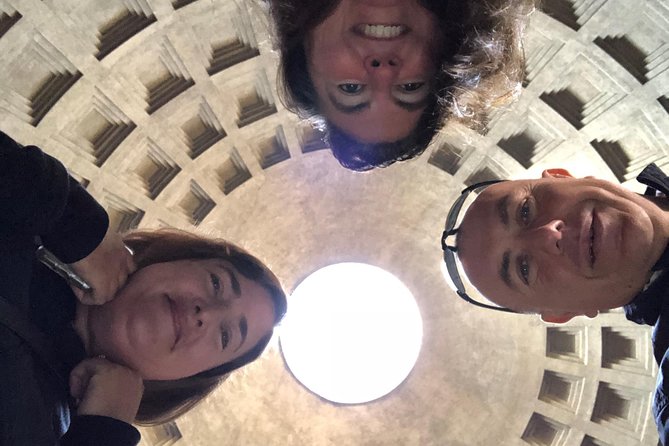
The Pantheon is one of the most rewarding short stops in Rome. The first building was commissioned by Marcus Agrippa around 25 BC, then rebuilt under Hadrian in the form you see today. Its enormous open dome remains the defining feature.
The building became the church of Santa Maria ad Martyres in the seventh century. That later use helps explain why the ancient structure survived. The visit is usually brief, listed at about 15 minutes, but the interior deserves a quiet pause.
The Pantheon admission fee is listed as €10 per person and is not included. Check the exact entrance procedure with your guide, since policies can change.
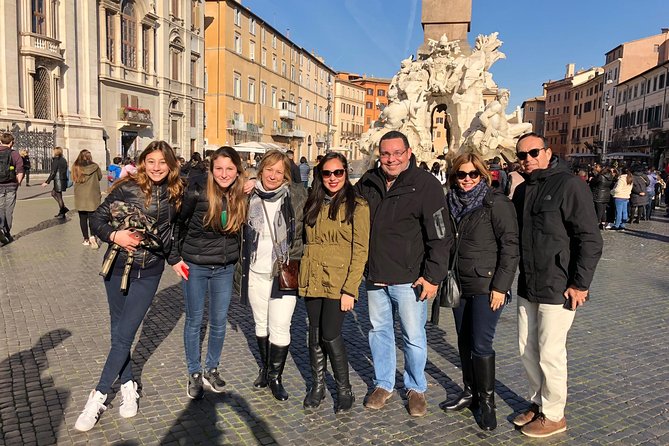
Nearby, Piazza Navona is built over the former Stadium of Domitian. Bernini’s Fountain of the Four Rivers occupies the center, surrounded by the long, elegant Baroque space. Ten minutes is enough for an explanation and photos, but not for lingering over every detail.
Campo de’ Fiori gives you a different view of central Rome. Its name means field of flowers, a reminder that this area was once an open meadow. It is a useful stop between the more formal monuments and the city’s everyday streets.
Trevi Fountain, Spanish Steps, and the central streets
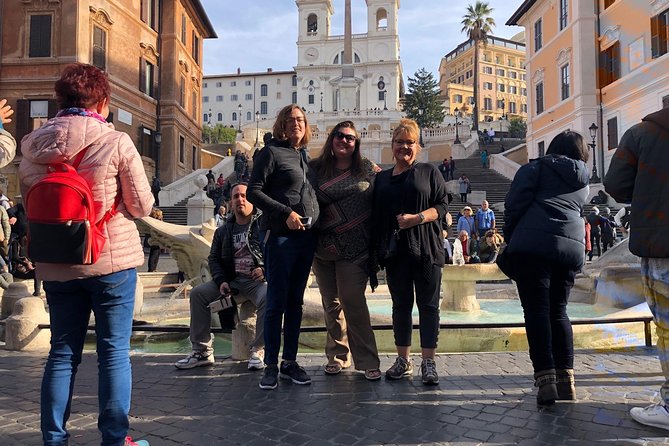
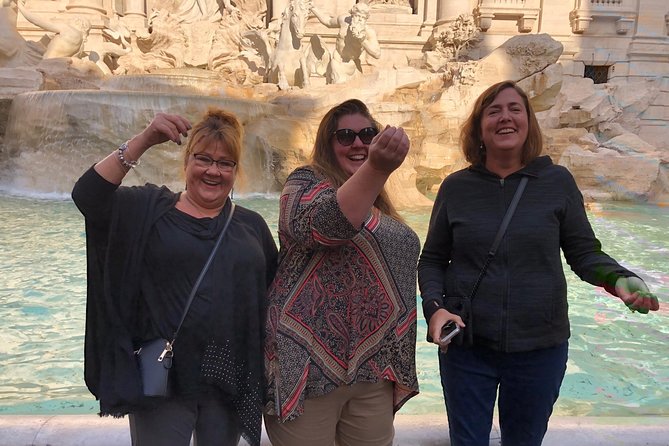
The Trevi Fountain is a quick but essential stop. It sits at the end point of the Acqua Virgo aqueduct, one of Rome’s ancient water systems. The familiar coin toss is part of the ritual, though the real pleasure is watching the fountain appear suddenly among the surrounding streets.
The Spanish Steps climb from Piazza di Spagna toward Trinità dei Monti. The staircase has 135 steps and was built between 1723 and 1725 with French funding. The stop is free, but you should expect standing crowds and a steady flow of people on the surrounding streets.
Piazza Venezia is a major traffic hub, so it is more useful as an orientation point than a peaceful square. Your guide can point out the Palazzo Venezia, Via del Corso, and the routes leading toward the Imperial Forums.
The 1.5-kilometer Via del Corso cuts straight through the historic center. It is unusually broad for old Rome, though still fairly narrow by modern standards. A drive along or near it helps link the monuments together, while walking a short section lets you see the shops and side streets.
Circus Maximus and Capitoline Hill
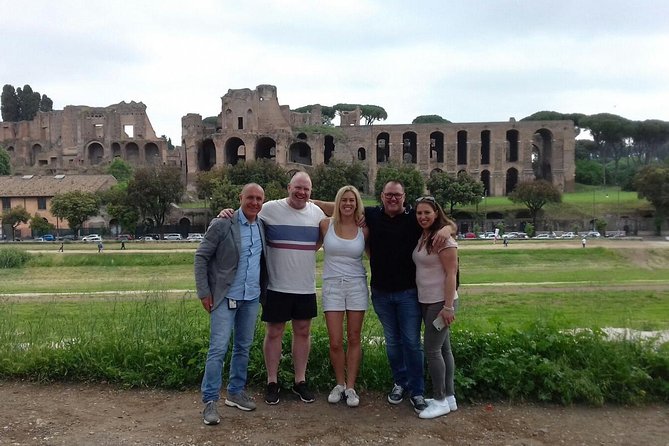
Circus Maximus occupies the valley between the Aventine and Palatine Hills. It was ancient Rome’s great chariot-racing venue and the first major stadium of the city. Today, the space is open and much less visually complete than the Colosseum, so the guide’s explanation is important.
Capitoline Hill is smaller than Rome’s other famous hills but was central to the city’s political and religious life. From Piazza del Campidoglio, designed around Michelangelo’s plan, you can look toward the Forum ruins.
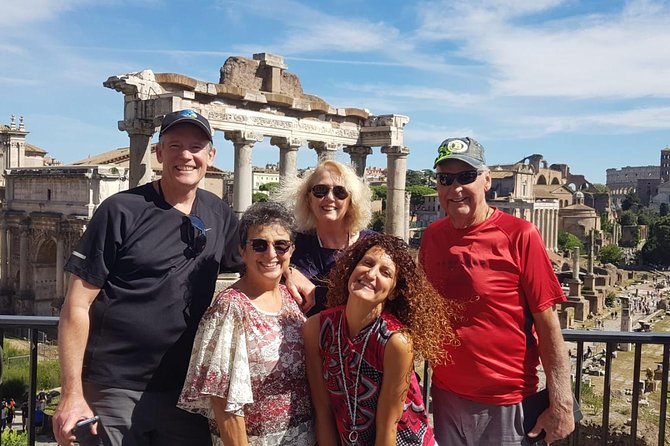
The viewpoint is one of the best short photo stops on the route. It also makes the ancient city easier to read. You see the remains of temples, basilicas, and triumphal arches spread across the valley rather than as isolated fragments.
What the price really buys
The listed price is $580.72 per person. That is expensive, especially because admission fees and lunch are extra. A couple or family can spend considerably more once the Vatican, Colosseum, Pantheon, and any Basilica entry are added.
Still, the value is not really in the number of attractions alone. You are paying for a private guide, a separate chauffeur, hotel or apartment pickup, and the ability to change the order of the day. For a family, older relatives, a first visit, or a cruise stop, that can save substantial time and stress.
The arrangement is also useful when heat or rain would make an open vehicle unpleasant. The vehicle can drop you close to major sights, then collect you after each walking segment. It does not eliminate walking, but it breaks the day into manageable pieces.
Skip-the-line service is possible only if tickets are available and arranged in advance. The office can purchase Colosseum and Vatican tickets on request, with payment made in cash directly to the guide. Availability can sell out, so do not treat it as guaranteed.
Lunch, timing, and the pace of the day
Lunch is not included. Your guide may recommend a restaurant, and the flexible format allows time for a meal, but you should clarify how long you want to stop. An eight-hour day that includes both the Vatican and ancient Rome is full.
The tour is active even with a car. You will walk through museums, archaeological sites, squares, and churches. The Vatican in particular can be tiring because of its long corridors and crowded rooms.
I would start with a clear priority list. Tell the guide if the Colosseum matters more than shopping streets, or if the Vatican deserves extra time. A private tour is most useful when you make choices instead of asking to see absolutely everything.
Who should book this Rome tour?
I would consider it for a first visit, a one-day cruise stop, or a family that wants a controlled route through a difficult city. It also suits anyone who values a private guide and does not want to manage transport between scattered sights.
It is less suitable for a slow museum enthusiast who wants to spend half a day in one collection. It is also poor value if you enjoy public transport, self-guided walks, and choosing only a few monuments.
The strongest version is the 8-hour plan with tickets organized early. The 5-hour tour is a good compromise for ancient Rome and central sights. The 3-hour option gives you a useful overview but cannot deliver the full Colosseum and Vatican experience.
Should you book it?
Book this tour if your priority is seeing Rome’s major landmarks in one organized day with a private guide, a real chauffeur, and flexible routing. The separate driver is a major advantage, particularly in traffic and during hot or rainy weather.
Think twice if the price feels uncomfortable after adding admission fees. Rome rewards slow wandering, and no vehicle can replace time inside the Forum, Vatican Museums, or Pantheon. But if you have limited time and want the major sights handled with fewer transport headaches, this is one of the more practical high-end ways to do it.
FAQ
Is the Vatican included in every tour length?
No. The Vatican Museums and Sistine Chapel can be included only in the 8-hour tour.
Is the Colosseum included in the three-hour tour?
No. The Colosseum can be included only in the 5-hour or 8-hour tour.
Are admission tickets included in the tour price?
No. The listed additional fees are €60 per person for the Vatican Museums and Sistine Chapel, €40 for the Colosseum, €10 for St. Peter’s Basilica, and €10 for the Pantheon.
Where can pickup take place?
Pickup and drop-off are included from hotels, private apartments, B&Bs, and train stations inside Rome. Pickup from the Port of Civitavecchia is also offered. Airport pickup from FCO or CIA for a one-way transfer costs an extra €120 cash per van.
Can the tour include skip-the-line tickets?
The office can purchase Colosseum and Vatican Museums tickets on request if tickets are still available. Payment is made in cash directly to the guide, and availability is not guaranteed.
What should I wear?
You must cover your knees and shoulders at places of worship and selected museums. Shorts and sleeveless tops may lead to refused entry.
Can I cancel for a full refund?
Yes, if you cancel at least 24 hours before the experience begins. Cancellations or changes made less than 24 hours before the start time are not accepted for a refund.
Just added around Rome
- Colosseum,Vatican Museum & Sistine Chapel in One Day Guided Tour★ 3.5 · 9 reviews
- Vatican Museums and Sistine Chapel last entry Guided Tour★ 5.0 · 3 reviews
- Private Tour Of Rome Highlights And Vatican Museums Skip-The-Line all included★ 5.0 · 4 reviews
- Borghese Gallery Admission Ticket with Audioguide★ 4.0 · 64 reviews
- Caravaggio Art Walking Tour of Rome with Pantheon Visit★ 4.5 · 35 reviews
- Borghese Gallery Skip the Line Guided Tour★ 4.5 · 23 reviews
- Borghese Gallery Ticket with Audioguide★ 3.5 · 51 reviews
- Borghese Gallery VIP Tour – Skip the Line Tickets★ 5.0 · 2 reviews
Art Museum Tours in Rome, compared.
Vatican Museums, Sistine Chapel & St. Peter’s Basilica Tour
Read our review →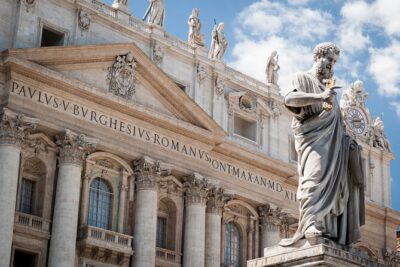
Vatican Museums, Sistine Chapel & St Peter’s Basilica Guided Tour
Read our review →
Vatican Museums, Sistine Chapel and Basilica Tour
Read our review →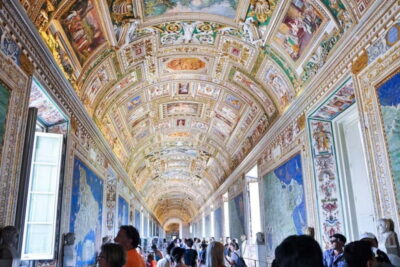
Vatican Museums & Sistine Chapel Skip-the-Line Entry Ticket
Read our review →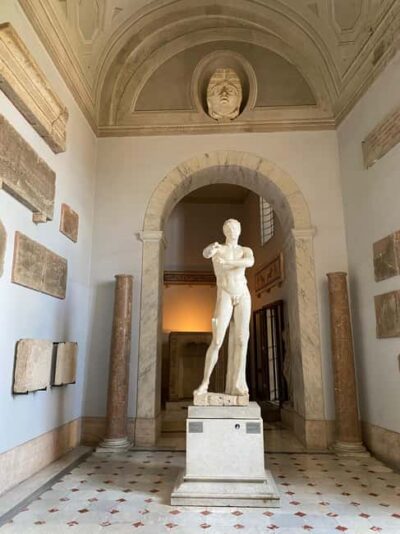
Vatican Museums, Sistine Chapel & Basilica Tour
Read our review →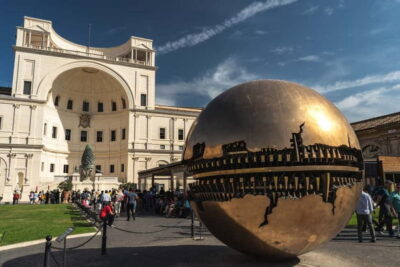
Vatican Museums & Sistine Chapel Guided Tour
Read our review →
Vatican Museums & Sistine Chapel Skip-the-Ticket-Line Tour
Read our review →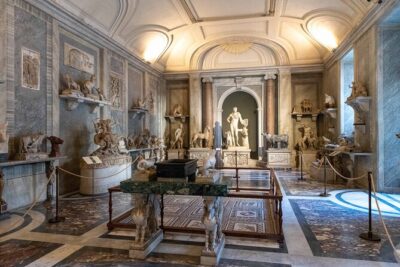
Vatican Museums, Sistine Chapel and St. Peter’s Basilica Tour
Read our review →Browse the lists this tour appears in