
REVIEW · FLORENCE
Uffizi Gallery Small Group Tour: Discover Uplifting Masterpieces
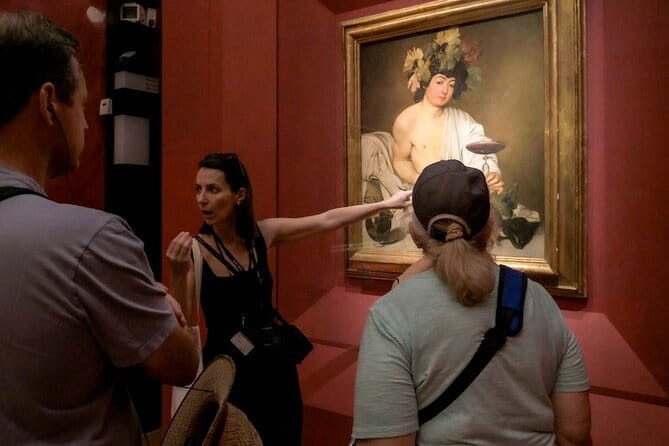
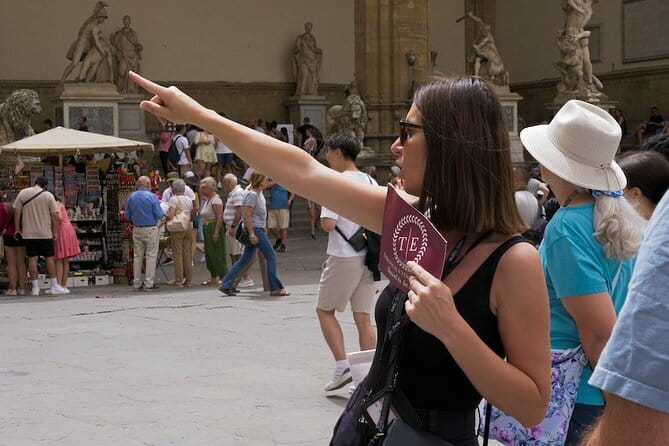
The best part of this Uffizi tour is its focus. You are not simply handed a map and sent into one of Florence’s great museums. An expert guide leads you through major works by Botticelli, Leonardo, Michelangelo, Caravaggio, Raphael, Titian, and Artemisia Gentileschi, giving the art a clear story.
I like the small group of no more than nine people, which makes it easier to hear and ask questions. I also like the prepaid admission and direct access, since long ticket lines can eat into a short visit. The main consideration is the price, $92.52 per person, and the walking: you should expect steps and staircases.
Key points to know
- Botticelli’s Birth of Venus and Spring anchor the visit with two of Florence’s most famous paintings.
- Leonardo’s Annunciation and the Baptism of Christ, linked to Verrocchio, show how artistic ideas developed in Renaissance Florence.
- Caravaggio’s Medusa and Artemisia Gentileschi’s Judith and Holofernes bring darker, more dramatic energy to the route.
- A maximum of nine people gives the guide room to explain details without shouting across a large crowd.
- Headsets are supplied for groups of six or more, helping you follow the commentary in busy galleries.
- The Uffizi is both start and finish, making the tour easy to pair with the rest of your day in central Florence.
Why this small Uffizi tour can be worth the price
At $92.52, this is not a budget museum visit. You are paying more than the cost of entering the Uffizi on your own. The value comes from combining admission, direct access, and a focused explanation of major works in a group capped at nine people.
That last point matters. The Uffizi is packed with paintings, rooms, corridors, and names. Without a plan, you can spend your energy finding the famous pieces and miss why they matter. A guide gives you a route and helps you decide where to spend your attention.
The visit is offered in English and lasts about two and a half hours overall. The gallery portion is listed as two hours, so the extra time likely allows for meeting, entry, and movement through the museum. I would plan your schedule with the full approximate duration in mind rather than treating this as a quick one-hour highlights walk.
You also get all fees and taxes included. Transportation, food, drinks, and gratuities are not included, but none of those omissions are surprising for a museum visit based entirely in the Uffizi.
More Art Museum Tours in Florence
- Florence: Skip-The-Line Uffizi Gallery Timed Entry Ticket
★ 4.5 · 27,832 reviews - Florence: Uffizi Priority Ticket & Masterpieces Audio App
★ 4.2 · 6,402 reviews - Florence Accademia Gallery Tour with Entrance Ticket Included
★ 4.5 · 6,148 reviews
Meeting at Piazzale degli Uffizi
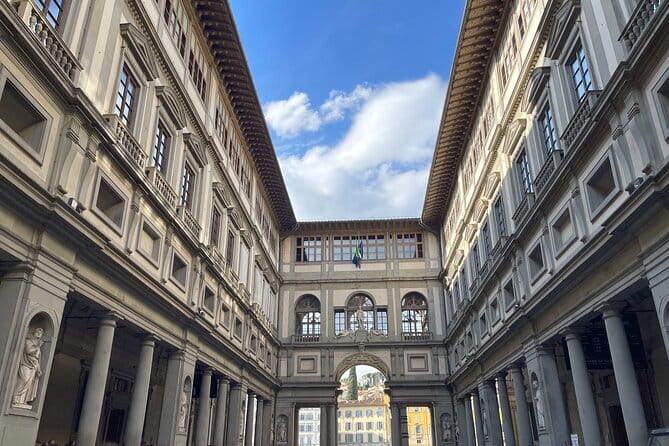
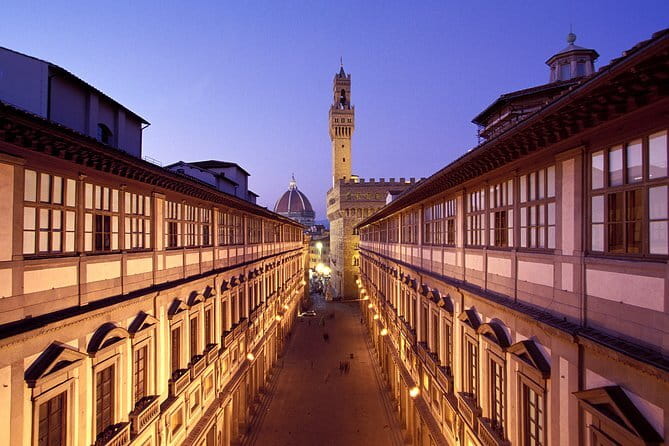
You meet at the Uffizi Galleries, Piazzale degli Uffizi 6, in central Florence. The tour ends at the same place, which is useful if you want to continue exploring the museum area, walk toward Piazza della Signoria, or make your way to another sight afterward.
There is no transportation component. You need to reach the Uffizi on your own, and the same is true after the tour. Since the meeting point and end point are identical, you do not need to arrange a transfer or collect luggage somewhere else.
Bring comfortable walking shoes and a bottle of water. The route includes steps and staircases, and even a well-planned museum visit can feel tiring when you are standing for long stretches. If someone in your party has mobility concerns, mention this during booking so the operator can try to accommodate you.
Confirmation arrives at the time of booking, and a mobile ticket is provided. Keep your phone ready for the meeting instructions and admission details.
Entering the Uffizi with direct access
The Uffizi is one of those museums where advance planning pays off. Prepaid admission means you do not need to join the standard ticket line, a practical advantage when Florence is busy or your day is tightly scheduled.
Direct access does not mean the museum will feel empty. The Uffizi remains a major attraction, and other visitors will be inside. What you gain is time and a more orderly beginning to the visit. Instead of worrying about tickets, you can focus on the guide and the collection.
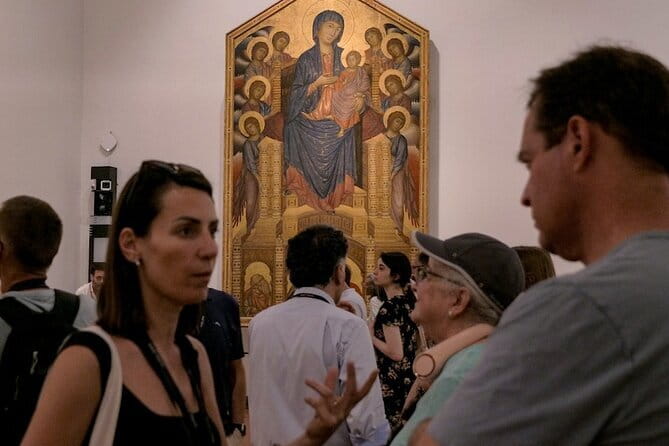
Groups of six or more receive headsets. That small piece of equipment can make a real difference in a crowded gallery. You can stand far enough back to see a painting while still hearing the explanation, rather than clustering around the guide.
The group limit is nine people. That is small enough for the guide to keep the group together and respond to questions, but it is still a group tour rather than a private visit. If you want the guide entirely to yourself, this is not that format. If you want structure and personal attention without paying for a private tour, the size is a sensible middle ground.
Botticelli’s Venus and Spring
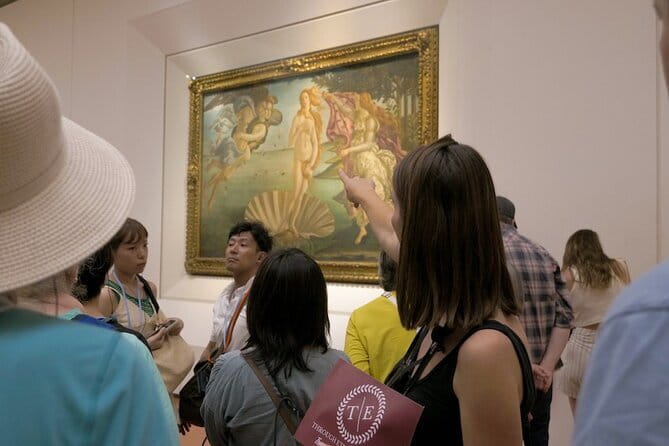
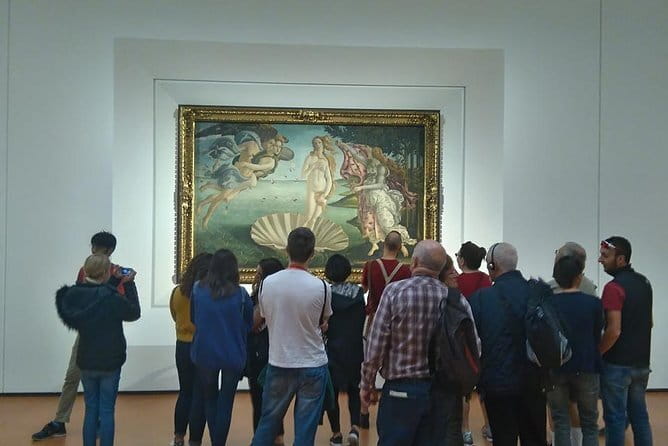
Botticelli’s Birth of Venus is the obvious star of the first part of the visit. You will see the goddess arriving on shore, standing on a shell, with the scene arranged more like an ideal vision than a normal moment in nature.
The guide’s role is especially useful here. Most people recognize the painting, but recognition is not the same as understanding. A good explanation can help you look at the figures, gestures, clothing, and setting as connected choices rather than decorative details.
You also see Botticelli’s Spring, a larger and more crowded composition filled with mythological figures. The two paintings work well together because they show different kinds of movement and symbolism. One feels like a single grand arrival; the other asks you to sort through a busy field of characters and relationships.
Do not expect to rush through these works just to collect a famous photograph. The strongest part of the tour is likely the time spent looking closely and listening to why particular details matter. One especially positive detail about the guide Breanda is her willingness to take time with the paintings and draw on her art history studies. That suggests a visit with room for explanation instead of a rapid list of names.
More masterpiece highlights tours in Florence:
- Uffizi Gallery: Renaissance Masterpieces Guided Tour
★ 4.6 · 6,070 reviews - Uffizi Gallery Tour- Renaissance Masterpieces & Expert Guide
★ 4.5 · 156 reviews - Florence Accademia Gallery: All Michelangelo’s Masterpieces Guided Tour
★ 5.0 · 40 reviews - Uffizi Gallery Guided Tour: Masterpieces of the Renaissance
★ 4.5 · 8 reviews
Leonardo, Verrocchio, and the making of an artist
Leonardo’s Annunciation gives the tour another major landmark. It is an early work, and its place in the collection helps show how Renaissance painting was changing. The scene is familiar from Christian art, but Leonardo’s handling of space, figures, and natural details gives the work its own character.
The itinerary also includes the Baptism of Christ, associated with Leonardo and Verrocchio. Seeing these works in the same visit lets you compare the work of a young Leonardo with the artistic world around him. This is one reason a guide helps: the paintings are not isolated objects. They can be read as part of a period of experimentation and training.
You do not need a background in art history to benefit. The guide can point out what to notice, then give you time to look for it yourself. That is more useful than memorizing dates you will forget by dinner.
Michelangelo, Raphael, and the power of portraiture
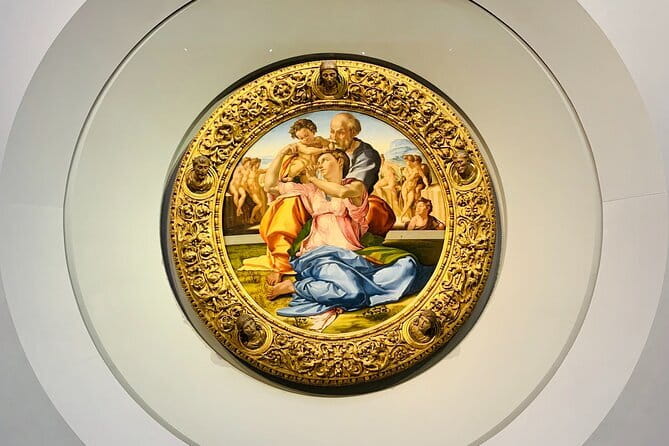
Michelangelo’s Doni Tondo gives you a chance to see the artist working in a circular format rather than only thinking of him as the painter of the Sistine Chapel. The shape affects how the figures are arranged and how your eye moves around the composition.
Raphael’s portrait of Pope Leo X shifts the mood. Instead of a mythological or religious scene, you get a portrait built around status, personality, and visual authority. The rich clothing and carefully placed objects are not random decoration. They help present the sitter as a powerful figure.
These two works are useful contrasts. One asks you to follow a tightly arranged group of figures; the other encourages you to study faces, fabrics, and signs of rank. A guide can keep the route from becoming a parade of famous names by explaining what makes each painting worth your time.
Caravaggio’s Medusa and the Uffizi’s darker side
Caravaggio’s Medusa changes the temperature of the visit. The severed head, open mouth, and startled expression create an image designed to confront you. It is not gentle, and that is part of its force.
This work also helps break up the assumption that the Uffizi is only about calm Renaissance beauty. The collection includes drama, violence, fear, theatrical light, and strong emotional reactions. Caravaggio’s painting gives the guide a chance to discuss how an image can feel immediate even when it comes from another century.
You may find that this is one of the more memorable stops because the subject is so direct. It also works well after the earlier paintings, since you can compare Caravaggio’s emotional shock with the balance and ideal forms associated with Botticelli and Raphael.
Titian and Artemisia Gentileschi
Titian’s Venus of Urbino is another major highlight. The reclining figure became an important model for later European painting, and its pose, gaze, and setting give the guide plenty to discuss.
You can look at how the figure addresses the viewer and how the room around her shapes the meaning of the scene. The painting is not simply a study of beauty. Its details, arrangement, and domestic setting all contribute to the way you read it.
Artemisia Gentileschi’s Judith and Holofernes brings a forceful biblical story into view. The painting is dramatic and physically intense, with Judith and her companion shown carrying out the attack on Holofernes.
This is a valuable inclusion because it broadens the visit beyond the most familiar male masters. Gentileschi’s work has a strong presence, and the subject gives you a chance to consider how an artist handles violence, power, and narrative action. The guide’s interpretation matters here, since the painting rewards close attention to expression, gesture, and the use of light.
The Tribuna and the shape of the collection
The Tribuna of the Uffizi is a key stop because it helps you see how the museum’s collecting tradition developed. Rather than looking at one painting in isolation, you get a sense of the room as a display of prized objects and artistic achievement.
The room is part of the Uffizi experience, but it can also be a point where a visitor feels overwhelmed by famous names and ornate surroundings. This is another place where a small group helps. You can ask the guide what deserves your attention instead of trying to absorb every object at once.
The overall route moves between myth, religion, portraiture, violence, and courtly display. That range is what makes the Uffizi powerful, but it can also make the museum feel crowded in your head. A carefully led visit gives the collection a readable shape.
How the guide changes the experience
The strongest praise for this tour centers on Breanda’s passion and insight. She has studied art history and has experience giving tours, and the visit allows time to explore the paintings rather than merely point at them.
That matters because the Uffizi is not a museum where every label gives you enough context. You may understand what a painting depicts but still wonder why it was made, who commissioned it, or what makes the artist’s approach unusual. A guide can connect those questions to what you are seeing.
The small group also gives you a better chance to ask about a detail that catches your eye. You should not expect a private seminar, but the format is more personal than a large group moving room to room.
The tour is in English. If you are comfortable listening to art discussion in English, you can follow the full commentary and ask questions along the way. If you prefer to move at your own pace with no set route, an independent visit may suit you better.
Who should book this Uffizi experience
I would recommend this tour to a first-time Uffizi visitor who wants to see the essential works without building a route alone. It is also a good fit if you enjoy art but want help turning a large collection into a manageable two-hour visit.
It suits couples, families, and small groups who value a guide’s explanation and do not want to wait in the regular ticket line. The maximum of nine people keeps the format personal without making it private.
You may want to skip it if you already know the Uffizi well, prefer audio guides, or want several hours to wander without a schedule. The price also makes more sense if you care about interpretation and saved time, not just admission.
Book at least a few days ahead if possible. The experience is booked about eight days in advance on average, so waiting until the last moment may reduce your options.
Practical details before you go
The tour includes admission, all fees and taxes, direct access, an English-speaking guide, and headsets for groups of six or more. It does not include transport, food, drinks, or gratuities.
Free cancellation is available up to 24 hours before the start time for a full refund. Cancellations or changes made less than 24 hours before the start are not refunded or accepted, and the cut-off follows Florence local time.
Wear shoes you can walk and stand in comfortably. Bring water, keep your mobile ticket accessible, and allow the full approximate two-and-a-half-hour period even though the gallery visit itself is listed as two hours.
Should you book the Uffizi small-group tour?
Book it if you want the Uffizi’s famous works presented in a clear order, with enough explanation to make each stop meaningful. The combination of direct access, a nine-person limit, and a guide such as Breanda gives you a focused introduction to one of Florence’s most demanding museums.
Skip it if you are watching every euro, already know the collection, or want complete freedom to stay with one painting for as long as you like. For a first visit, though, the price can be fair value because it buys time, structure, and a personal guide through Botticelli, Leonardo, Michelangelo, Caravaggio, Titian, Raphael, and Gentileschi.
FAQ
How long does the Uffizi small-group tour last?
The experience lasts approximately two hours and 30 minutes. The gallery visit itself is listed as two hours, so allow extra time for meeting and moving through the museum.
What language is the tour offered in?
The tour is offered in English with an English-speaking guide.
What is the maximum group size?
The maximum is nine travelers. This keeps the group smaller than a standard large guided visit.
Does the tour include Uffizi admission?
Yes. Prepaid Uffizi admission, all fees and taxes, and direct access are included.
Will I receive a mobile ticket?
Yes. A mobile ticket is provided, and confirmation is received at the time of booking.
Are headsets included?
Headsets are included for groups of six or more.
Where does the tour start and end?
The tour starts and ends at the Uffizi Galleries, Piazzale degli Uffizi 6, Florence.
Is transportation included?
No. Transportation to and from the meeting and end point is not included.
Are food and drinks included?
No. Food and beverages are not included.
Can I cancel for a full refund?
Yes, if you cancel at least 24 hours before the experience start time. Cancellations made less than 24 hours before the start are not refunded.
More Uffizi Tours in Florence
- Uffizi Gallery Small Group Tour with Guide
★ 4.5 · 4,923 reviews - Uffizi & Accademia Timed Entry: Small Group Duomo Walking Tour
★ 4.5 · 3,630 reviews - Florence: Uffizi Gallery Timed Entry Ticket & Audio Guide
★ 4.2 · 2,794 reviews - Florence: Uffizi Gallery and Accademia Gallery Guided Tour
★ 4.8 · 2,028 reviews
Just added around Florence
- Skip the line: Uffizi small group and walking tour of Florence★ 4.5 · 17 reviews
- Florence Private Walking Tour Including Uffizi and Accademia★ 3.5 · 4 reviews
- Uffizi Gallery Italian guided Tour semi private★ 4.5 · 9 reviews
- Private Tour: Accademia Gallery and City Tour★ 5.0 · 10 reviews
- Private Tour: The Academy Gallery★ 5.0 · 6 reviews
- Uffizi Express Entrance -private tour★ 5.0 · 9 reviews
- Uffizi and Palazzo Vecchio Combo Private Tour★ 5.0 · 3 reviews
- VIP Priority Access: Uffizi Gallery- Guided Experience★ 4.5 · 94 reviews
Art Museum Tours in Florence, compared.
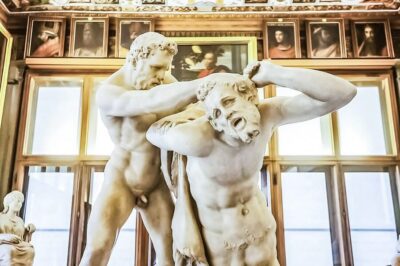
Skip-The-Line Uffizi Gallery Timed Entry Ticket
Read our review →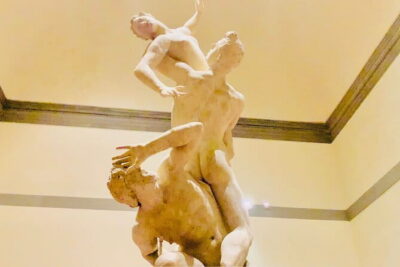
Florence Accademia Gallery Tour with Entrance Ticket Included
Read our review →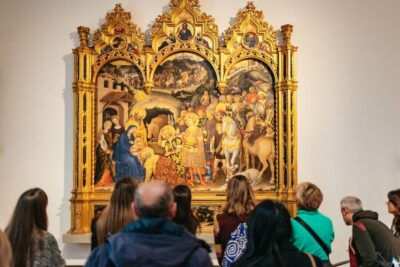
Uffizi Gallery: Renaissance Masterpieces Guided Tour
Read our review →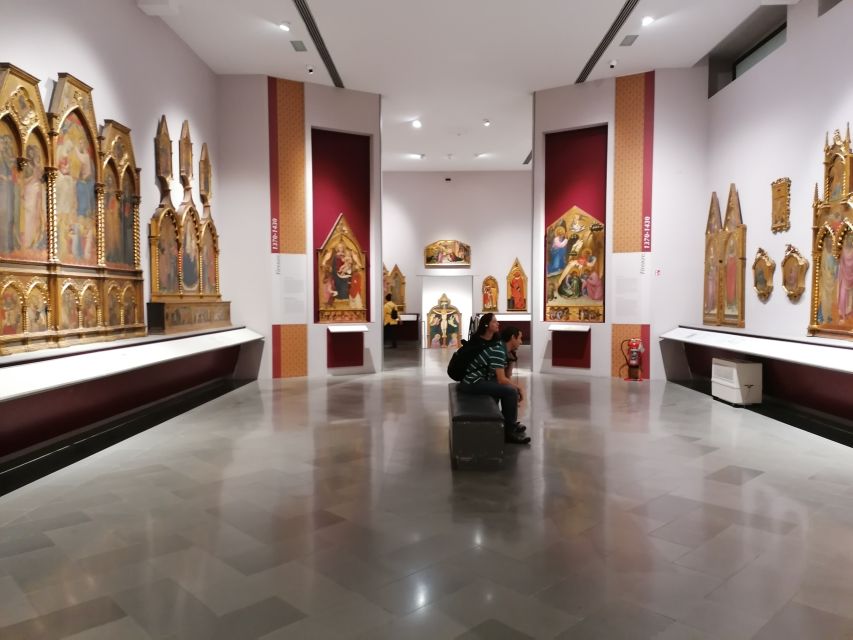
Uffizi Gallery Timed Entry Ticket & Audio Guide
Read our review →
Accademia Gallery Guided Tour with Entry Ticket
Read our review →Browse the lists this tour appears in