
REVIEW · FLORENCE
Timed Entry Ticket to the Uffizi Gallery
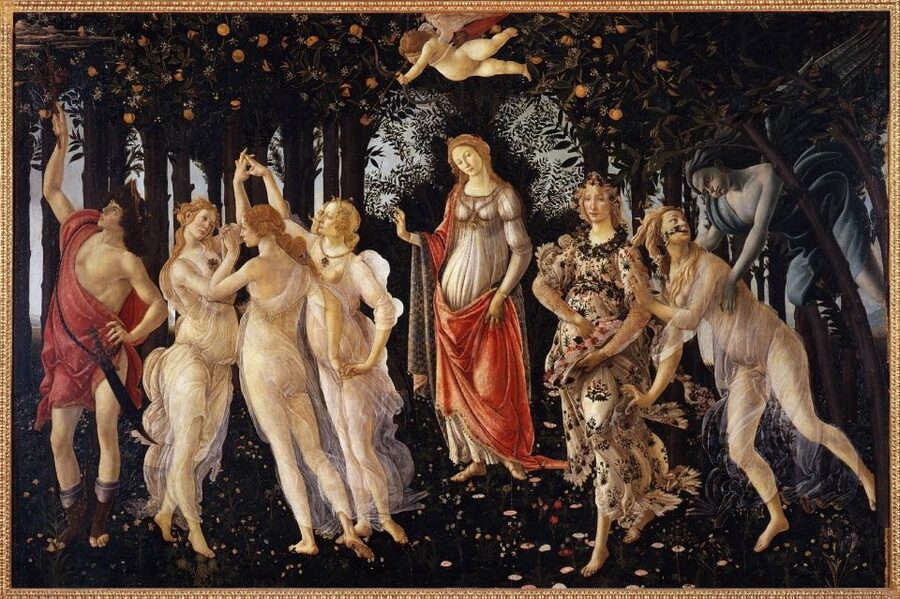
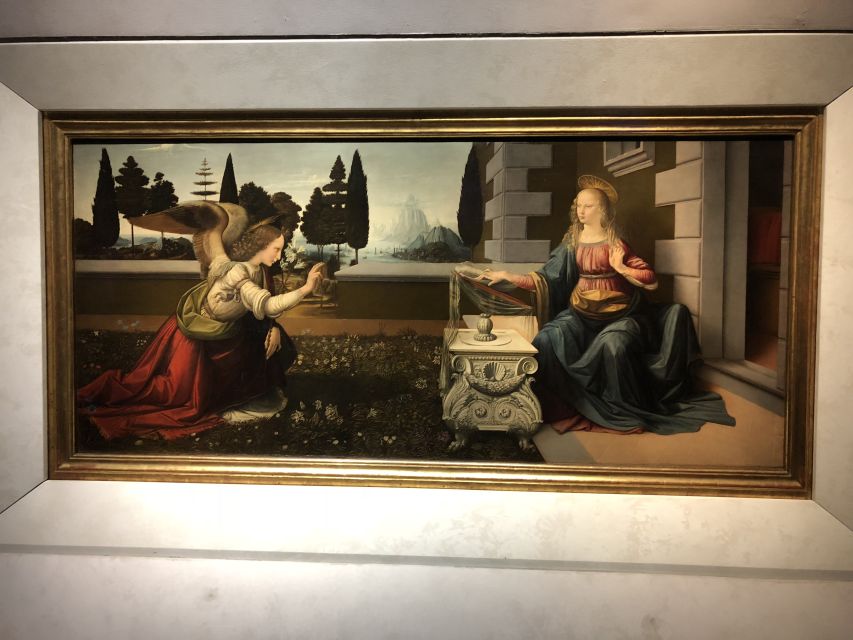
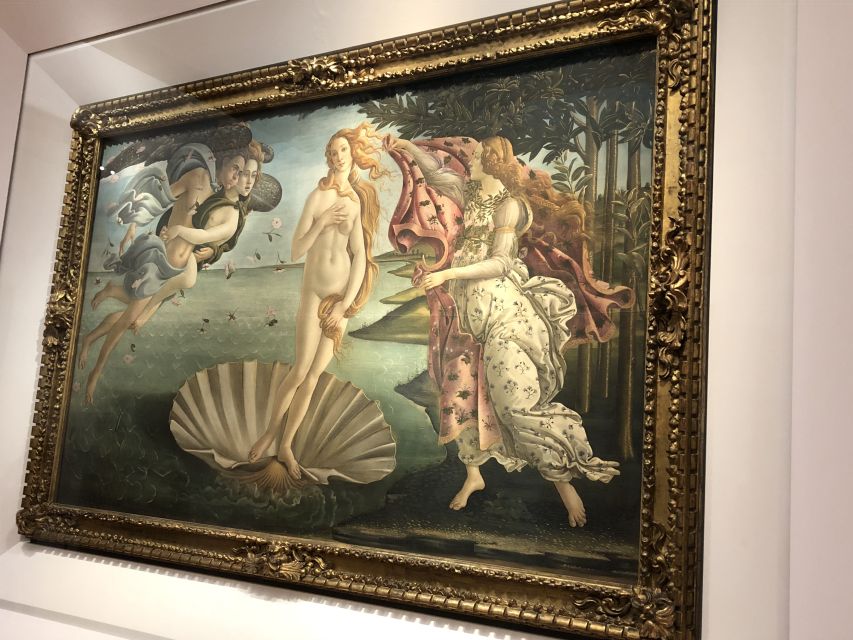
Florence’s Uffizi Gallery holds the kind of paintings you already know by sight: Botticelli’s The Birth of Venus, Primavera, Michelangelo’s Tondo Doni, and Leonardo’s Annunciation. A timed ticket lets you spend your energy looking at art instead of waiting outside, which matters when Florence is hot and the museum entrance is packed.
I like the simple booking arrangement and the museum’s chronological route, which takes you from Byzantine painting in Tuscany into the full force of the Renaissance. I also like the terrace bar, where you can rest with a drink and look over Piazza della Signoria and Palazzo Vecchio. The catch is that you must find the City Florence Tours office at Via De’ Castellani 18/red to exchange your voucher, and several people found that meeting point hard to spot.
Key points to know before you book
- See Botticelli’s two great hits: The Birth of Venus and Primavera are major reasons to visit, and both are part of the Uffizi’s essential route.
- Timed entry saves valuable Florence time: The ticket can get you past the long general admission line, though you still pass through security.
- This is admission only: No tour guide or audioguide is included, so bring your own plan for understanding the art.
- Allow several hours: The collection is large, and rushing through it means missing much of what makes the museum worthwhile.
- Find the ticket office first: Look for CITY FLORENCE TOURS at number 18/red, next to number 14 of Via De’ Castellani, opposite the Uffizi’s general exit.
- The terrace is part of the pleasure: Save time for a coffee or snack with a view toward Palazzo Vecchio.
Why the Uffizi deserves a place in your Florence plans
The Uffizi is Florence’s main art museum, and it rewards more than a quick look at two famous paintings. Its collection lets you watch European painting change over time, with the clearest focus on art made in Tuscany before and during the Renaissance.
You begin with earlier religious art, including Byzantine work from Tuscany. The figures can look formal and flat compared with later paintings, but that contrast helps you see what changed. As you move through the museum, faces become more human, space becomes more convincing, and artists pay closer attention to light, anatomy, and the world around them.
That order matters. If you go straight to the famous Botticelli rooms without any context, you will still enjoy the paintings. But if you take time with the earlier galleries, Botticelli and Leonardo feel like part of a long artistic story rather than isolated stars.
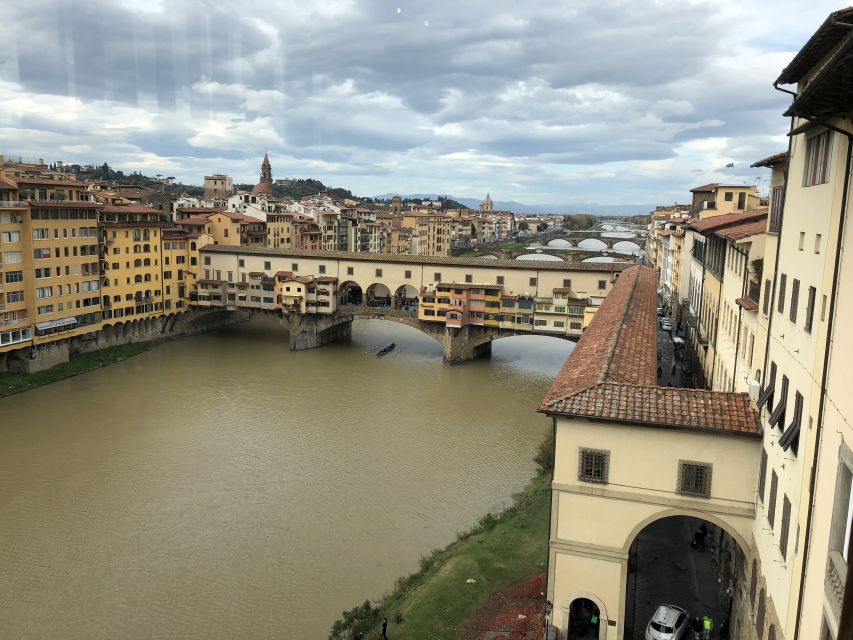
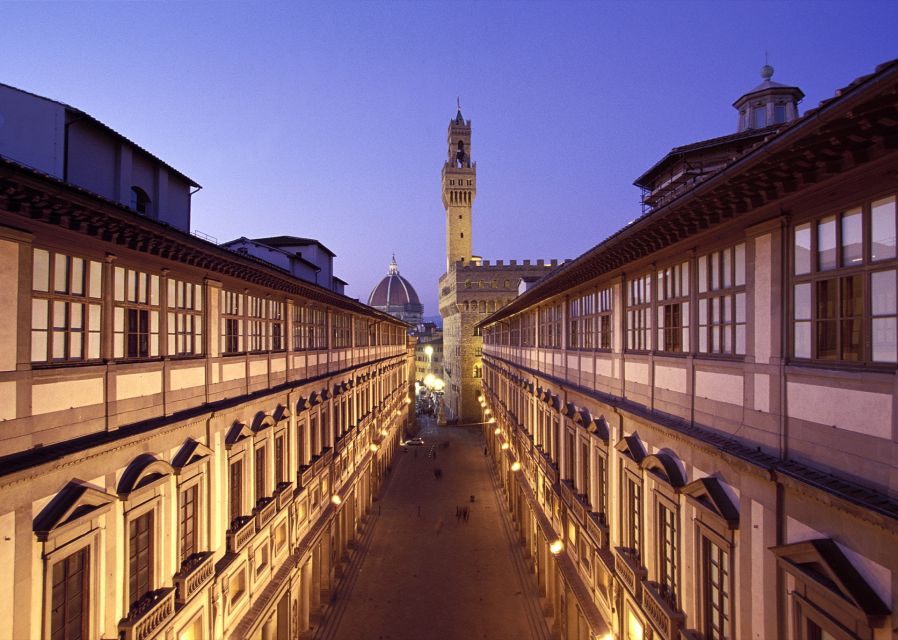
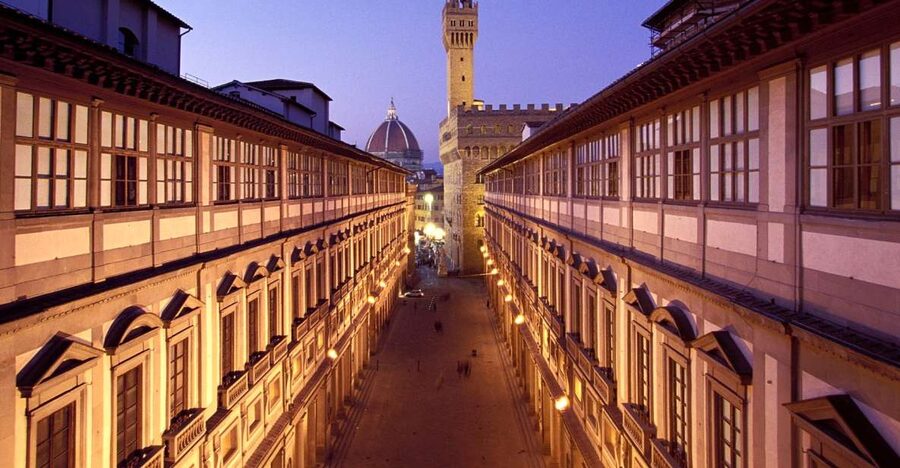
The museum is also housed in a historic building beside the Arno and Piazza della Signoria. You are not only looking at paintings. You are moving through a place closely tied to Florence’s political and cultural life, then stepping onto a terrace with one of the city’s best views.
More Art Museum Tours in Florence
- Florence: Skip-The-Line Uffizi Gallery Timed Entry Ticket
★ 4.5 · 27,832 reviews - Florence: Uffizi Priority Ticket & Masterpieces Audio App
★ 4.2 · 6,402 reviews - Florence Accademia Gallery Tour with Entrance Ticket Included
★ 4.5 · 6,148 reviews
The timed ticket and the ticket office
The ticket costs about $53 per person. That total includes the €29 Uffizi admission charge, an agency commission, reception service, and delivery of the booked ticket. In plain terms, you are paying extra for access arranged around a selected time and for help getting the ticket into your hands.
I consider that reasonable when the museum is busy or your Florence schedule is tight. The Uffizi draws more than a million people each year, and the outside line can be long, especially in summer. Several bookings made the difference between waiting in the sun and entering within minutes.
There is one important extra step. You do not simply walk to the museum door with your voucher. First, go to the CITY FLORENCE TOURS office next to number 14 of Via De’ Castellani, specifically number 18/red, opposite the general Uffizi exit.
Give yourself extra time to find it. The office is close to the gallery, but the directions can feel unclear when you are standing among busy streets and museum entrances. One person lost about ten minutes looking for it, while others had to circle the building. A clear photo of the office would help, so I recommend saving the exact address and arriving early.
Once you exchange the voucher, you join the security queue and enter through the museum procedure. The timed ticket does not mean you skip every queue. Security can still slow things down, but the arrangement has repeatedly saved a large amount of waiting time.
A room-by-room way to approach the collection
The Uffizi can overwhelm you. It is full of important paintings, and the building does not always make the route or individual works easy to follow. I suggest dividing your visit into three parts: the early galleries, the major Renaissance rooms, and the later masterpieces.
Start with the early Tuscan and Byzantine sections. These rooms give you a useful visual starting point. Religious figures appear in a more traditional style, with less concern for natural movement or deep space. You do not need to study every panel, but noticing the difference prepares you for what follows.
Then make your way toward the Renaissance rooms. This is where many people spend most of their time. Giotto and other early masters help show how Tuscan painting began moving toward greater emotional expression and more believable settings.
Botticelli is the great crowd puller. The Birth of Venus presents the goddess arriving on shore, while Primavera offers a more crowded and mysterious scene filled with mythological figures. These paintings are often reproduced, but the originals have details that disappear in a book or on a phone screen. Look at the delicate lines, the pale colors, and the way the figures seem to float rather than firmly occupy the ground.
The rooms can be crowded, especially around these two works. You may need patience to reach the front, and you will probably have a better view if you step back instead of trying to stand directly against the rope.
Michelangelo’s Tondo Doni is another major stop. It is the only panel painting by Michelangelo, which gives it special importance even before you study the unusual colors and twisting bodies. It does not look like a typical quiet devotional image. The figures feel powerful and tightly arranged, and Michelangelo’s sculptural approach is clear.
Leonardo da Vinci’s Annunciation offers a different kind of pleasure. Look for the careful setting, the landscape behind the figures, and the calm exchange between Mary and the angel. The work shows Leonardo’s interest in observation and atmosphere, even though the subject remains religious.
Raphael is also represented, adding another major name to the Renaissance sequence. You can compare his balance and grace with Michelangelo’s force and Leonardo’s careful observation. The value of the Uffizi is not only seeing famous names. It is seeing how different artists solved similar artistic problems.
Caravaggio’s Medusa and the museum’s darker turn
Caravaggio’s Medusa Shield makes a strong final stop for many visitors. The severed head appears caught at the moment of shock, with the mouth open and the face full of terror. The painting is dramatic in a way that feels far removed from the serene religious images in the earlier rooms.
Its circular shield shape adds to the effect. You are looking at a painted object that was meant to confront the viewer, not simply hang quietly on a wall. Caravaggio’s hard light and deep shadows make the subject feel immediate.
This change in mood is one reason the Uffizi works well as a chronological visit. You can sense art becoming more theatrical and emotionally direct as you move forward. I would not rush past the later rooms just because Botticelli was your main goal.
More Uffizi tours and tickets:
- Uffizi Gallery: Renaissance Masterpieces Guided Tour
★ 4.6 · 6,070 reviews - Uffizi Gallery Small Group Tour with Guide
★ 4.5 · 4,923 reviews - Uffizi & Accademia Timed Entry: Small Group Duomo Walking Tour
★ 4.5 · 3,630 reviews - Florence: Uffizi Gallery Timed Entry Ticket & Audio Guide
★ 4.2 · 2,794 reviews
How long you should allow
The ticket is valid for one day, but the visit itself is not a short stop. You might spend a few hours and still fail to see everything closely. That is normal.
For a quick first visit, plan at least two hours for the main route. If you care about art or want to read labels, allow longer. The collection is large enough that you can easily lose track of time, particularly in the Botticelli and Renaissance rooms.
Wear comfortable shoes. You will be on your feet for much of the visit, and stopping to study paintings takes longer than expected. Large bags and backpacks must be left at the cloakroom, so carry only what you need.
Photography is allowed, but flash and tripods are prohibited. Keep your camera ready for quiet, no-flash photos, and remember that the best memory may be the time you spend looking rather than photographing every room.
Crowds, heat, and the best time to go
The Uffizi can be crowded at peak times. Summer visitors have reported long lines outside, packed rooms, and poor air quality in some areas. Even when the timed ticket gets you inside quickly, popular paintings may still have a crowd around them.
Early or late visits are the safest choice for a calmer experience. This is especially useful if you want to spend time with The Birth of Venus or Primavera instead of taking a quick look over a wall of heads.
The ticket also has value during cooler months. One November booking used the timed option despite the quieter season, simply because availability is never guaranteed. That is a sensible approach if the Uffizi is a priority. The extra cost may protect one of the most important parts of your day.
There is no guide, so plan your own art education
This booking does not include a tour guide or audioguide. That point is easy to miss because some descriptions refer to guide or headset expenses, but the practical offer here is admission with ticket collection assistance.
That is fine if you enjoy looking at art at your own speed. You can stop when you like, skip rooms that do not interest you, and return to a favorite painting without keeping up with a group.
If you want a guided explanation, choose a separate guided visit instead. One person found the Uffizi audioguide disappointing and felt a proper guided tour would be the better choice. Another arrived expecting a guide and found only an admission ticket.
Bring a museum guidebook if you want help identifying works and understanding the rooms. One useful tip is to buy the official book at the museum, especially if you want to know what you are seeing rather than simply recognize the famous paintings.
The terrace view is worth saving for
After the galleries, take a break at the terrace bar. It serves light snacks and drinks, and the view reaches over Piazza della Signoria and Palazzo Vecchio.
This is a good pause because the museum can leave you visually overloaded. Sit down, look outside, and let the paintings settle before heading back into Florence. The terrace is not a substitute for the gallery, but it adds a pleasant ending and gives you a different view of the city you have just been exploring.
Food and drinks are not included in the ticket, so budget separately. You can also simply enjoy the view without making the terrace a major part of your visit.
Accessibility and practical limits
The activity information describes the gallery as wheelchair accessible, but it also says the experience is not suitable for people with mobility impairments. That is an important inconsistency. If you need step-free access, seating, or other assistance, confirm the current arrangements before paying.
All participants must provide first and last names and dates of birth when booking. You must bring valid identification when you arrive. A passport or ID card is required for children, and a copy is accepted according to the instructions.
Tickets are tied to the selected date and time. Cancellation is allowed up to 24 hours before the visit for a full refund, while missed or incorrectly timed entries may be difficult to fix. The flexible reserve-now, pay-later option can help if your Florence plans are still shifting.
Who gets the best value from this ticket
I would choose this option if the Uffizi is high on your Florence list and you have limited time. The ticket reduces the risk of losing an hour or more in a general admission line, and the cost can make sense when you are trying to fit in the Duomo, Palazzo Vecchio, or another major sight on the same day.
It also suits independent museum visitors. You get freedom rather than a fixed talk, and the gallery’s chronological order gives you a natural route to follow.
I would think twice if you expect a guide, an audioguide, or detailed help finding each work. The museum can be poorly signed, and the ticket alone will not explain why one painting matters more than another. In that case, compare the price with a proper guided tour.
Should you book the Uffizi timed ticket?
Book it if you want to protect your time and see Florence’s essential Renaissance paintings without gambling on same-day availability. The strongest value is the timed access, not the commentary, because this is an admission service rather than a guided experience.
Arrive early at the Via De’ Castellani ticket office, keep your ID handy, and allow several hours inside. If you do that, this ticket gives you a practical way to see Botticelli, Michelangelo, Leonardo, Raphael, and Caravaggio in one of Europe’s great art museums.
FAQ
What does the Uffizi timed entry ticket include?
It includes entrance to the Uffizi Gallery, the €29 admission charge, the agency commission, reception service, and delivery of the booked ticket.
Is a tour guide included?
No. The booking provides admission and ticket collection assistance, but no tour guide is included.
Is an audioguide included?
No. An audioguide is not included in this ticket.
Where do I collect the ticket?
Go to the CITY FLORENCE TOURS office at Via De’ Castellani 18/red, next to number 14 and opposite the general exit of the Uffizi Gallery.
What identification do I need?
All visitors must bring valid identification. Children need a passport or ID card, and a copy is accepted according to the instructions.
Can I cancel the booking?
Yes. You can cancel up to 24 hours in advance for a full refund.
Can I take photographs inside the Uffizi?
Yes. Photography is allowed, but flash photography and tripods are prohibited.
Just added around Florence
- Skip the line: Uffizi small group and walking tour of Florence★ 4.5 · 17 reviews
- Florence Private Walking Tour Including Uffizi and Accademia★ 3.5 · 4 reviews
- Uffizi Gallery Italian guided Tour semi private★ 4.5 · 9 reviews
- Private Tour: Accademia Gallery and City Tour★ 5.0 · 10 reviews
- Private Tour: The Academy Gallery★ 5.0 · 6 reviews
- Uffizi Express Entrance -private tour★ 5.0 · 9 reviews
- Uffizi and Palazzo Vecchio Combo Private Tour★ 5.0 · 3 reviews
- VIP Priority Access: Uffizi Gallery- Guided Experience★ 4.5 · 94 reviews
Art Museum Tours in Florence, compared.
Skip-The-Line Uffizi Gallery Timed Entry Ticket
Read our review →
Florence Accademia Gallery Tour with Entrance Ticket Included
Read our review →
Uffizi Gallery: Renaissance Masterpieces Guided Tour
Read our review →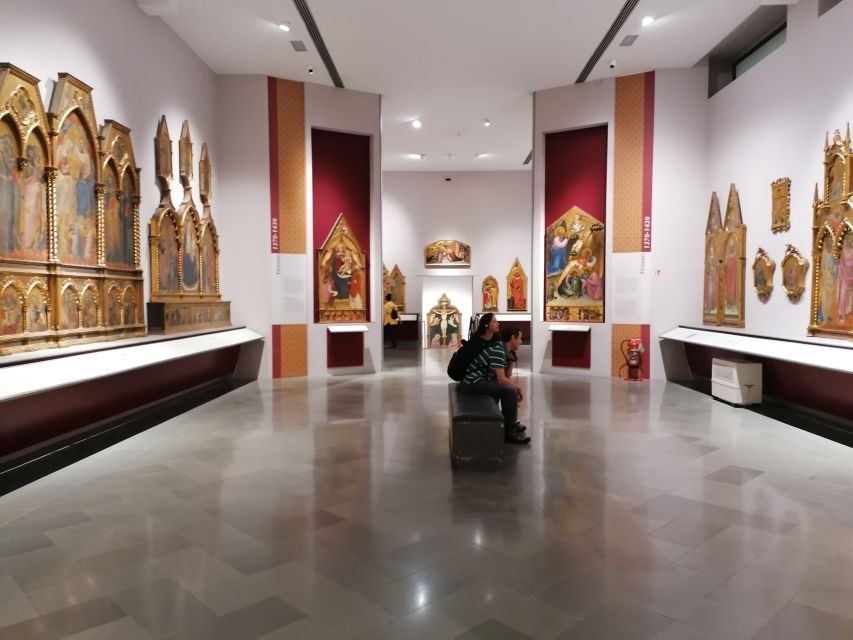
Uffizi Gallery Timed Entry Ticket & Audio Guide
Read our review →
Accademia Gallery Guided Tour with Entry Ticket
Read our review →Browse the lists this tour appears in