
REVIEW · ROME
Rome: Borghese Gallery Guided Small Group Tour
Rome’s Borghese Gallery packs an astonishing amount of art into a former cardinal’s villa. The best moment comes around 17:00, when the day’s crowds have thinned and evening light begins to play across Bernini’s marble figures. In two hours, you’ll see Apollo and Daphne, Caravaggio’s David with Goliath’s Head, Raphael’s The Deposition, and other major works.
I like the six-person limit, which gives your guide room to explain details without shouting across a crowd. I also like the setting: this is not just a white-walled museum, but a richly decorated villa in the Villa Borghese Gardens. The main drawback is the price, $168.79 per person, and the short running time. You’re paying for a focused art visit, not a broad tour of Rome.
Key points at a glance
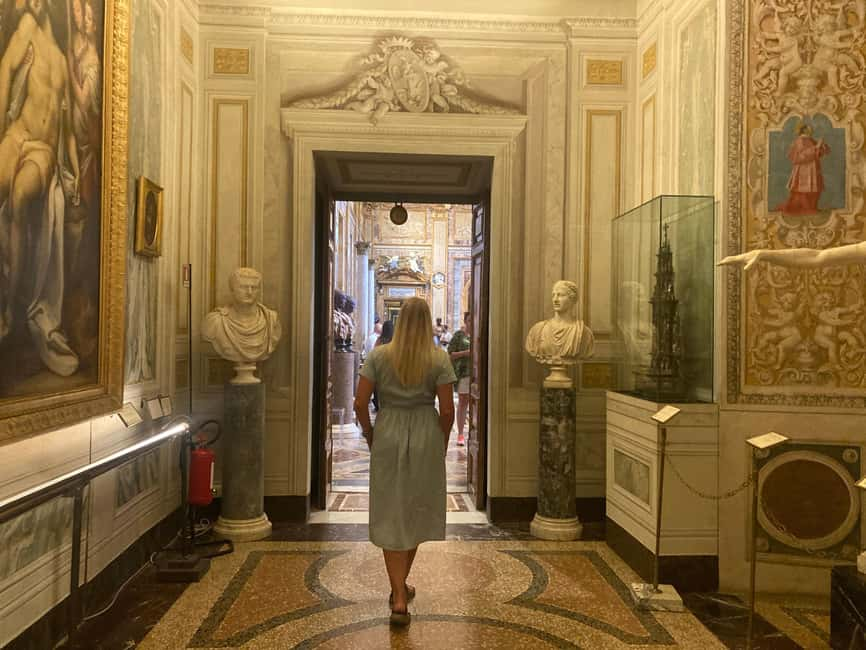
- Sunset entry around 17:00: The later time can bring softer light and fewer daytime crowds inside the gallery.
- Bernini at close range: Apollo and Daphne gives you a chance to study marble that looks astonishingly soft and alive.
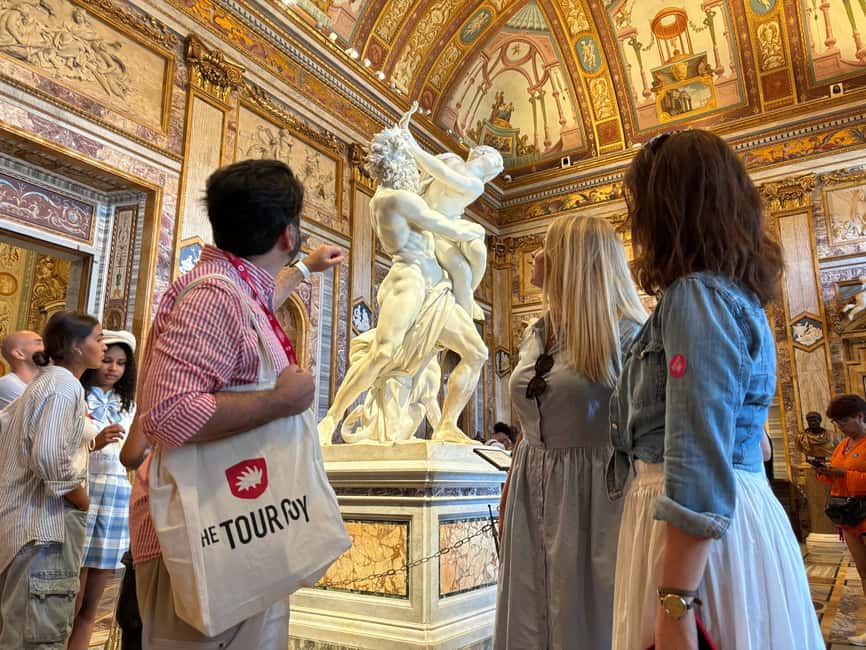
- A compact group of six: Your English-speaking guide can keep the tour personal and easier to follow.
- Major names in two hours: Caravaggio, Raphael, Rubens, and Titian join Bernini in the collection.
- A villa inside a city park: The museum visit can be paired with a quiet walk through Villa Borghese Gardens.
- Jewish Quarter note: The activity information lists Rome’s Jewish Quarter as a highlight, but the described route begins and ends at the Borghese Gallery and does not detail a Jewish Quarter visit.
Why the Borghese Gallery earns two hours
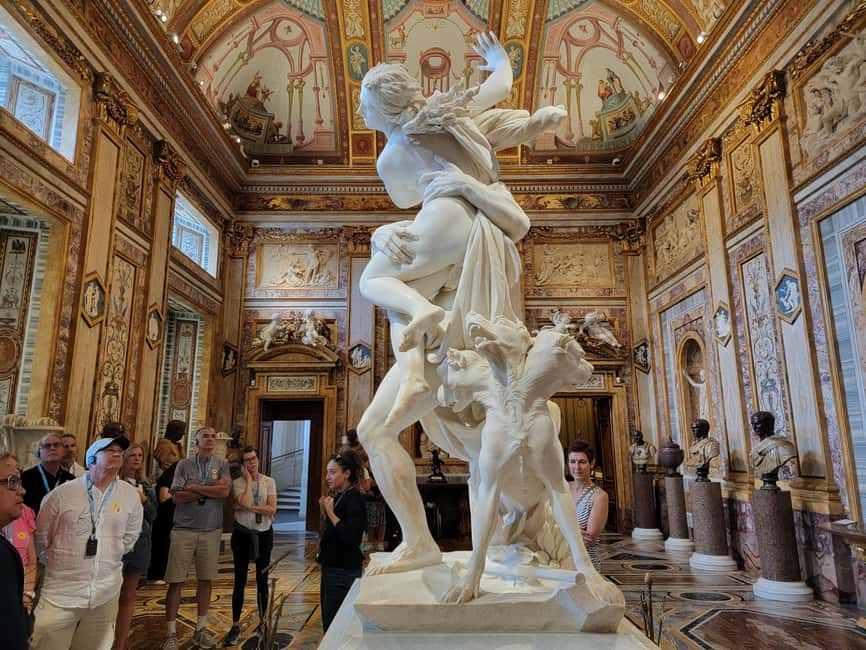
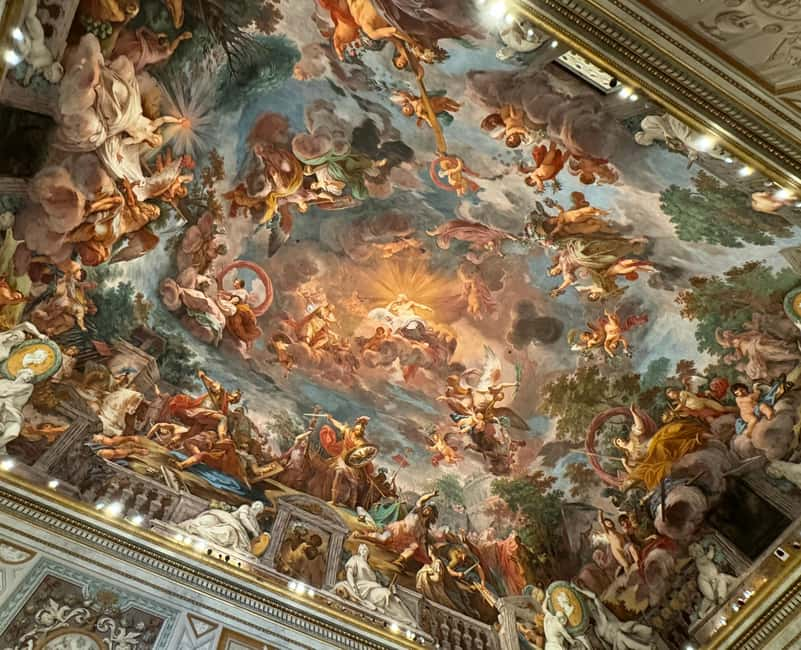
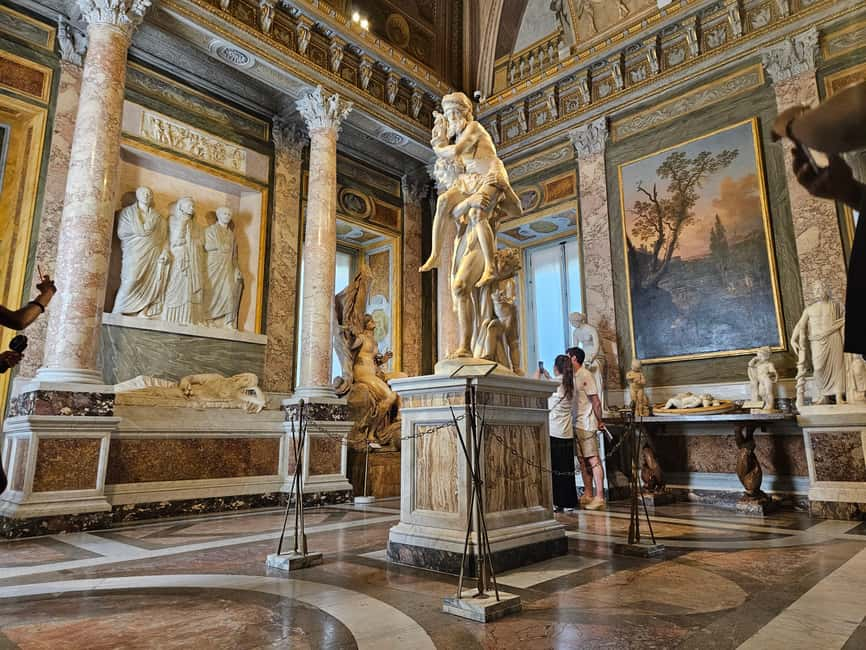
The Borghese Gallery is one of those Roman museums where the building matters almost as much as the collection. Cardinal Scipione Borghese commissioned the villa in the early 1600s, using it to display the art he collected. The building later became a public museum in 1903.
That background helps explain the gallery’s unusual feel. You are not moving through a modern sequence of plain rooms. You are walking through an elegant Roman villa, with decorative interiors designed to frame sculpture and painting.
The collection includes some of the biggest names in European art: Bernini, Caravaggio, Raphael, Rubens, and Titian. You do not need to be an art historian to enjoy it. The guide’s job is to give you a way into the pictures and sculptures, explain what you are looking at, and point out details you could easily miss on your own.
That guidance matters most with Bernini. His sculptures reward slow looking. The twist of a body, the direction of a glance, and the way fabric seems to fold in stone all become more impressive when someone explains how the work creates movement and emotion.
More Art Museum Tours in Rome
- Vatican Museums, Sistine Chapel & St. Peter’s Basilica Tour
★ 4.3 · 73,970 reviews - Vatican Museums, Sistine Chapel & St Peter’s Basilica Guided Tour
★ 4.5 · 39,149 reviews - Rome: Vatican Museums, Sistine Chapel and Basilica Tour
★ 4.3 · 16,039 reviews
Entering at sunset around 17:00
The tour begins outside the main entrance of the Borghese Gallery and Museum. Look for the guide holding a LivItaly Tours sign. The activity ends at the same place, so you will not need to arrange a separate return point after the visit.
The listed entry time is 17:00, though you need to check the available date and starting time when booking. The late timing is a real part of the appeal. Rome’s popular sights can feel packed during the middle of the day, while a later museum visit offers a calmer rhythm.
The evening light is especially attractive in rooms filled with pale marble. It can give the sculptures a warmer, softer appearance than harsh midday light. You should not expect the museum to be empty, but the scheduled timing is designed to avoid the busiest daytime period.
The tour includes a skip-the-ticket-line entry. That saves time, though it does not remove the need to arrive at the right meeting point. Tickets are limited and reservations are mandatory, so this is not a place to leave until the last minute.
Bernini’s Apollo and Daphne
Bernini’s Apollo and Daphne is one of the central reasons to visit. The sculpture captures the moment in the Greek myth when Daphne changes into a laurel tree as Apollo reaches for her.
Look closely at Daphne’s fingers, hair, and toes. The marble changes from human flesh to tree bark and leaves, yet the transformation appears to happen within one flowing movement. A guide can help you read the work from different angles and understand how Bernini directs your eye around the sculpture.
This is where the small-group format earns its keep. With no more than six participants, you should have a better chance of hearing the explanation and asking a quick question without interrupting a large crowd.
The piece also shows why a guided visit can be more useful than simply collecting famous names. You can photograph a sculpture, read its title, and move on. With a good explanation, you begin to understand the story, the technique, and the emotional tension built into the marble.
Caravaggio, Raphael, and the painting rooms
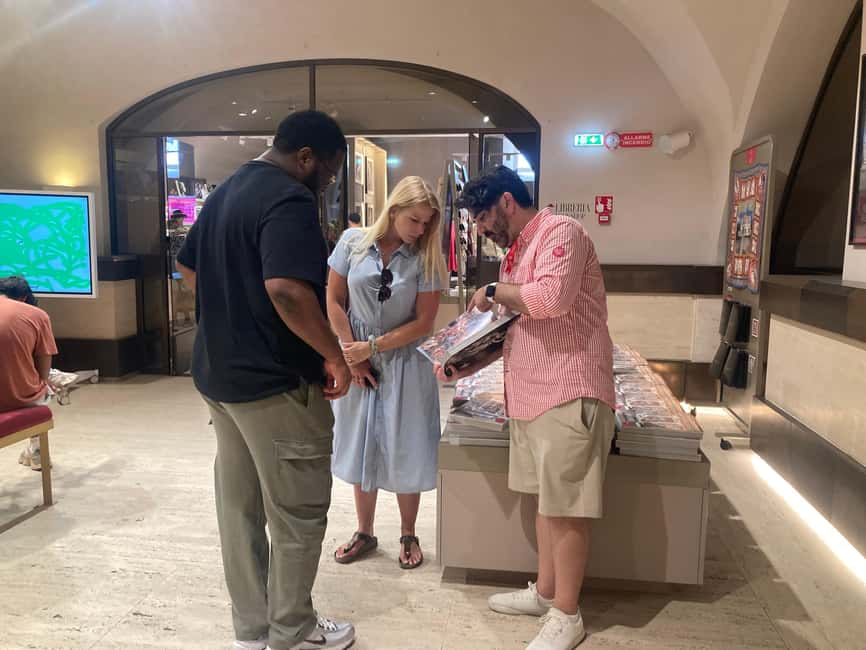
The painting collection gives the tour a welcome change of pace after the sculpture rooms. Caravaggio’s David with Goliath’s Head is one of the key works. The guide explains the story behind the painting and helps you consider its dramatic use of light, shadow, and expression.
Caravaggio’s work often feels direct and forceful. His figures do not seem remote or decorative. They occupy a world of physical bodies, strong contrasts, and difficult emotions. That makes his paintings especially rewarding when you have someone nearby to draw your attention to the human details.
Raphael’s The Deposition offers a different mood and visual language. It shows the removal of Christ from the cross, with several figures arranged in a carefully balanced scene. The painting gives you a chance to compare Raphael’s control and clarity with Caravaggio’s sharper drama.
Rubens and Titian add still more variety. The point is not to rush through a checklist of masters. The value comes from seeing how different artists handled color, movement, religious subjects, and the human form within the same grand setting.
The supplied tour details do not provide a complete room-by-room route, so the exact order of artworks may vary. You should treat the named pieces as the core highlights rather than a guarantee of every stop inside the museum.
More Borghese Gallery slots:
- Rome: Borghese Gallery Skip-the-Line Ticket & Audioguide
★ 4.3 · 4,318 reviews - Rome: Borghese Gallery Ticket + Audioguide or Guided Tour
★ 4.6 · 3,219 reviews - Rome: Borghese Gallery Guided Tour with Skip-the-Line Entry
★ 4.8 · 2,649 reviews - Rome: Borghese Gallery Skip-the-Line Tickets with Audioguide
★ 4.6 · 2,562 reviews
What the guide adds
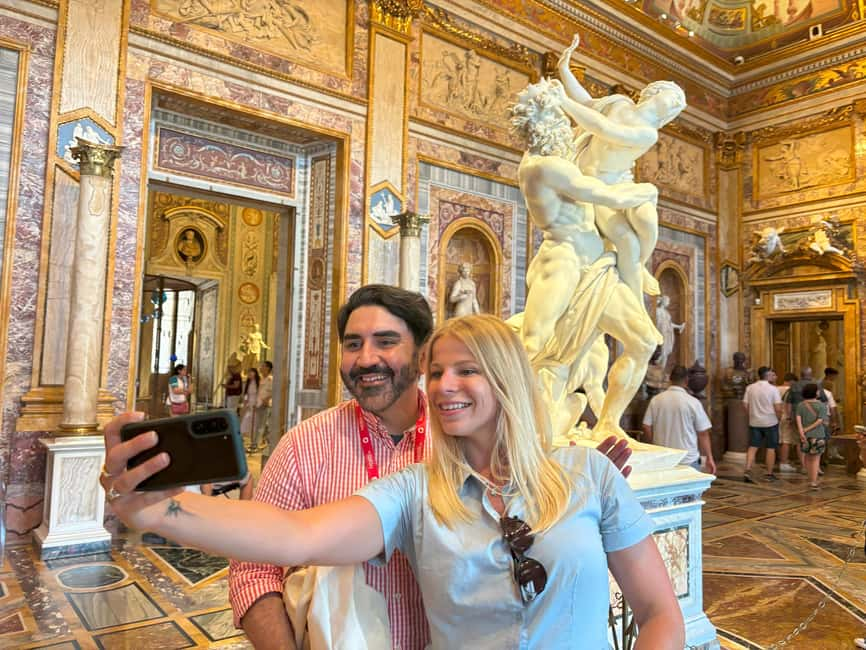
The guide leads the visit in English and is described as passionate, with strong knowledge of art history and a sense of humor. That combination matters in a museum like this. A list of dates and titles can make even great art feel distant, while clear stories give you a reason to keep looking.
The most useful guide commentary will likely focus on the people behind the works, the stories shown in the art, and the small visual choices that shape your response. One particularly strong description of the guide’s style emphasized history, humor, true stories, and a feeling of being introduced to the period by someone genuinely interested in Italian art.
Another praised the guide’s in-depth understanding of art history. That is the main reason to choose this tour instead of entering with an audio guide or walking through alone.
No guide name is provided, so you should not book this expecting a specific person. The quality of a live guide can vary from one departure to another, but the format is designed for close conversation rather than a large lecture.
A small group that stays focused
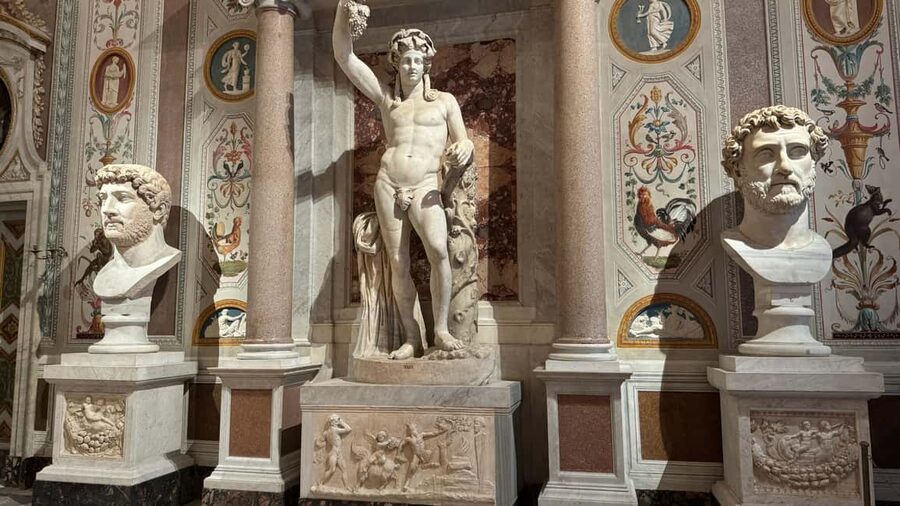
A maximum of six participants is a useful middle ground. You get more interaction than on a standard group tour, but you are not paying for a fully private visit.
A small group also helps inside rooms where quiet matters. The guide can keep the pace moving without having to gather dozens of people after every explanation. You can ask for clarification if a painting’s story is unfamiliar or if you want to look again at a detail.
The limit does not mean you will have every room to yourself. The gallery remains a public museum, and other visitors may be present. It simply makes the tour easier to follow and less anonymous.
For solo visitors, couples, and small families with an interest in art, this format is particularly appealing. It is less useful if you prefer to move at your own pace, skip religious art, or spend a long time with one painting. The two-hour schedule gives you direction, but not unlimited time.
The Villa Borghese Gardens before or after
The museum sits inside the Villa Borghese Gardens, one of Rome’s largest parks and a welcome break from the city’s stone streets and traffic. The tour itself focuses on the gallery, but you can explore the gardens before or after on your own.
This is a good place to add breathing room to your day. You might arrive early, find the meeting point, and then walk the park before entering. Or you can finish the museum visit and take a slower route through the gardens rather than heading straight back into central Rome.
Two named garden sights are the unusual water clock and the Alpini monument, dedicated to Italy’s elite mountain army corps. The information provided does not give a walking route or time estimate for seeing them, so treat them as optional additions rather than fixed tour stops.
The garden setting also makes the Borghese Gallery feel different from a museum visit near a major traffic junction. You are still in central Rome, but the park offers a peaceful pause before or after the concentrated art viewing.
The Jewish Quarter claim, clarified
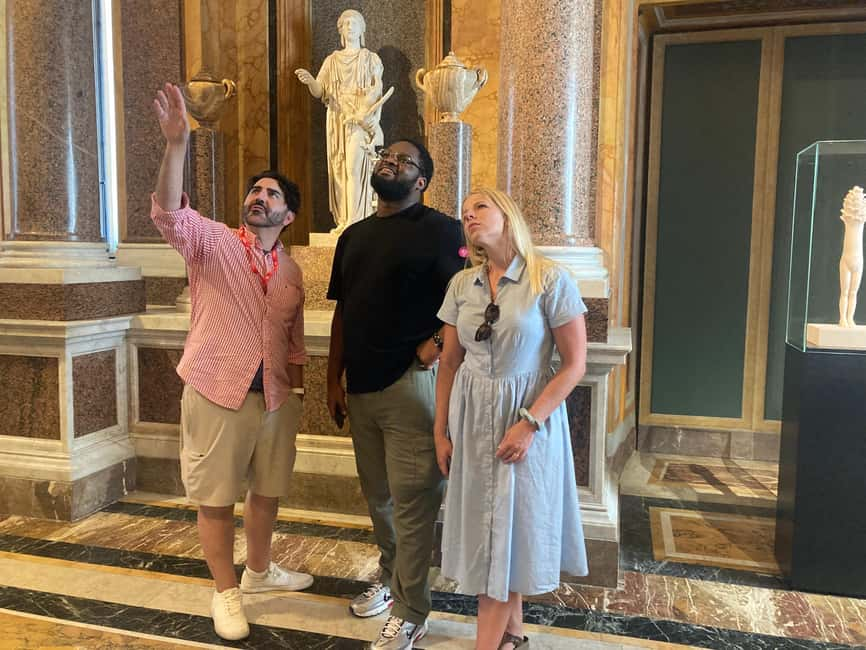
The tour information includes discovering Rome’s Jewish Quarter among its highlights. However, the stated meeting point, route, and return point all concern the Borghese Gallery and Museum. No Jewish Quarter stop or walking segment is described.
That distinction matters when you plan your day. If your main goal is the Borghese collection, this tour gives you the information you need. If you want a dedicated visit to the Jewish Quarter, you should arrange that separately unless the operator confirms otherwise.
Do not assume the two-hour gallery tour includes transport or a guided walk to another neighborhood. The activity begins and ends outside the gallery.
Is $168.79 a fair price?
At $168.79 per person, this is an expensive two-hour museum visit. The price includes the entry ticket and a live English-speaking guide, along with skip-the-ticket-line access. It does not include a meal.
The value depends on how much structure and explanation you want. If you already know the collection well and prefer to read labels at your own pace, the cost may feel high. If you have limited time in Rome and want help making sense of major works by Bernini, Caravaggio, Raphael, Rubens, and Titian, the price buys a concentrated introduction.
The group size is an important part of the calculation. A six-person limit offers a more personal visit than a large group, and the guide’s art-history focus is the main service you are paying for beyond admission.
You should also factor in the setting. The ticket does not simply get you into a plain exhibition hall. It puts you inside a historic villa surrounded by a major city park. That combination makes the outing more substantial than a quick stop to see one famous sculpture.
Still, two hours is not long. You will not examine every work in the museum at length, and the route may feel brisk if you want extended time in front of each painting. The tour suits a first or carefully planned visit, not a full day of study.
Who should book this tour?
I would recommend it to you if you want an art-focused visit with a real person explaining what you see. It is also a good fit if Bernini and Caravaggio are high on your Rome list, or if you would rather have a compact plan than work out the gallery alone.
The tour should suit:
- First-time visitors who want context for major works
- Couples and solo visitors who prefer a small group
- Museum lovers with only two hours available
- People who enjoy stories about artists and the ideas behind paintings
- Anyone who likes pairing an indoor cultural stop with a walk in a city park
I would be more cautious if you want a private tour, need a precise visit to the Jewish Quarter, or dislike fixed schedules. The price also makes it a poor choice for a very tight budget.
Cancellation is flexible up to 24 hours before the tour for a full refund, and you can reserve now and pay later. Those policies help if your Rome schedule is still shifting, but the limited ticket supply means you should still reserve ahead.
Should you book it?
Book this Borghese Gallery tour if you want expert-led art viewing in a group of six or fewer, especially at the quieter 17:00 time. The guide’s art-history focus, the famous Bernini and Caravaggio works, and the villa setting make the visit feel carefully targeted rather than hurried through Rome’s entire museum scene.
Skip it if $168.79 feels too steep for two hours or if you want a broad city tour. You should also plan a separate Jewish Quarter visit, since that part is not explained in the gallery route. For the right visitor, though, this is a strong way to spend an evening with some of Rome’s finest sculpture and painting.
FAQ
How long is the Borghese Gallery guided tour?
The tour lasts two hours.
What time does the tour begin?
The described entry time is 17:00, but starting times can vary. Check availability for your chosen date.
Where do I meet the guide?
Meet outside the main entrance to the Borghese Gallery and Museum. The guide will be holding a LivItaly Tours sign.
Where does the tour end?
The activity ends back at the Borghese Gallery and Museum meeting point.
What language is the tour in?
The live guided tour is in English.
How many people are in the group?
The group is limited to a maximum of six participants.
Is the museum admission included?
Yes. The entry ticket and guide are included, along with skip-the-ticket-line access.
Can I cancel the tour for a refund?
Yes. You can cancel up to 24 hours in advance for a full refund.
Just added around Rome
- Colosseum,Vatican Museum & Sistine Chapel in One Day Guided Tour★ 3.5 · 9 reviews
- Vatican Museums and Sistine Chapel last entry Guided Tour★ 5.0 · 3 reviews
- Private Tour Of Rome Highlights And Vatican Museums Skip-The-Line all included★ 5.0 · 4 reviews
- Borghese Gallery Admission Ticket with Audioguide★ 4.0 · 64 reviews
- Caravaggio Art Walking Tour of Rome with Pantheon Visit★ 4.5 · 35 reviews
- Borghese Gallery Skip the Line Guided Tour★ 4.5 · 23 reviews
- Borghese Gallery Ticket with Audioguide★ 3.5 · 51 reviews
- Borghese Gallery VIP Tour – Skip the Line Tickets★ 5.0 · 2 reviews
Art Museum Tours in Rome, compared.
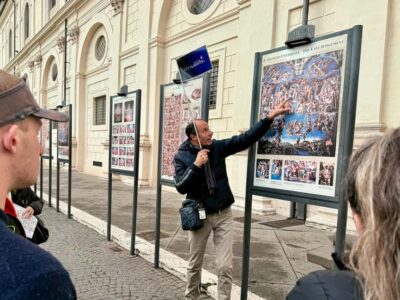
Vatican Museums, Sistine Chapel & St. Peter’s Basilica Tour
Read our review →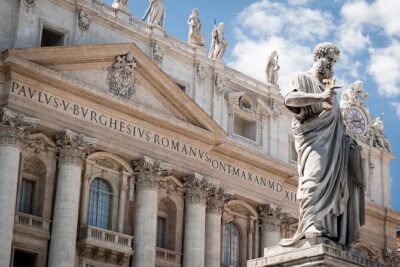
Vatican Museums, Sistine Chapel & St Peter’s Basilica Guided Tour
Read our review →
Vatican Museums, Sistine Chapel and Basilica Tour
Read our review →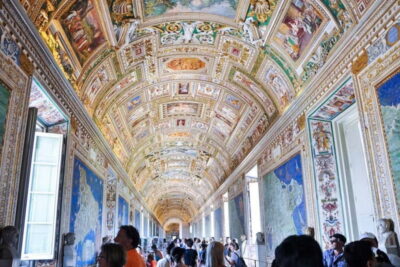
Vatican Museums & Sistine Chapel Skip-the-Line Entry Ticket
Read our review →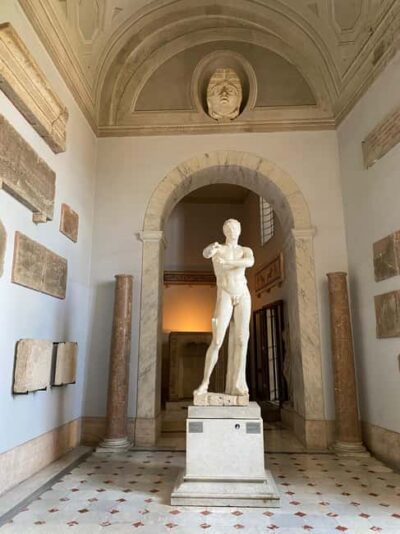
Vatican Museums, Sistine Chapel & Basilica Tour
Read our review →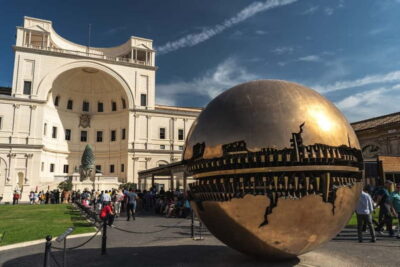
Vatican Museums & Sistine Chapel Guided Tour
Read our review →
Vatican Museums & Sistine Chapel Skip-the-Ticket-Line Tour
Read our review →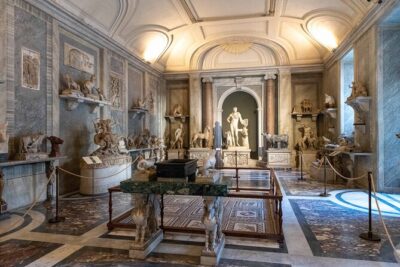
Vatican Museums, Sistine Chapel and St. Peter’s Basilica Tour
Read our review →Browse the lists this tour appears in