
REVIEW · ROME
Rome: Borghese Gallery Fast Track Access or Guided Tour
The real star here is Bernini’s Apollo and Daphne, a marble sculpture so full of motion that you may forget it is stone. Add Caravaggio’s sharp light, the villa’s painted ceilings, and a strict two-hour visit, and you have a focused art outing rather than a wandering museum stop.
I like the way the guide connects the collection to Cardinal Scipione Borghese, the powerful churchman who assembled it. I also like the small-group format and headsets, which let you hear the guide even when other people fill the rooms. The main drawback is time: two hours is enough for a strong introduction, but not enough for a slow look at everything.
Key points
- Bernini takes center stage: See Apollo and Daphne and David, two sculptures that reward close attention to texture, movement, and expression.
- Caravaggio adds drama: Boy with a Basket of Fruit and St. Jerome Writing show how strongly light and shadow can shape a scene.
- The guide makes the difference: Guides including Felicity, also called Fi, Francesca, Federica, and Samuel have been praised for lively explanations and clear storytelling.
- The museum visit is timed: You have two hours inside, so the guided route helps you spend that limited time on the major works.
- Prepare for strict security: No bags of any size, food, drinks, video recording, weapons, sharp objects, or pets are allowed.
- This is not an accessible visit: The experience is not suitable for wheelchair users or people with mobility impairments.
Why the Borghese Gallery deserves two hours
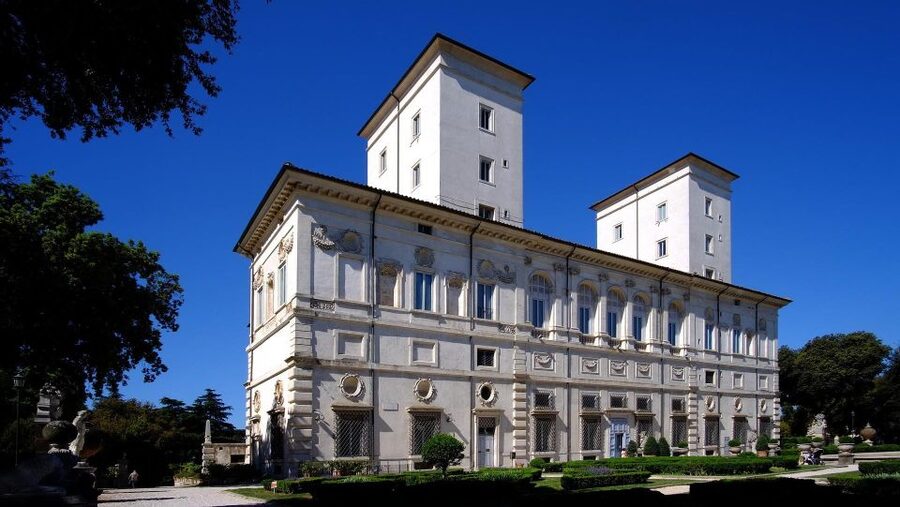
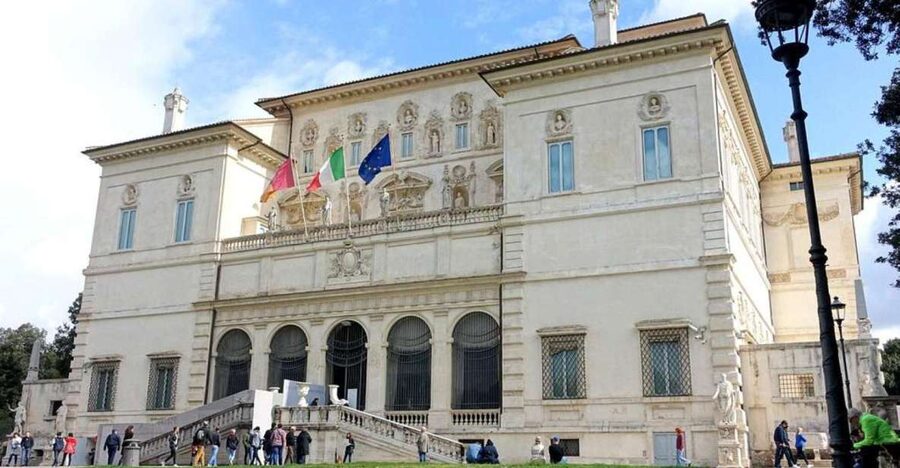
Rome has churches, ruins, fountains, and museums competing for your attention. The Borghese Gallery earns its place because it puts major works by Bernini and Caravaggio in an intimate setting. This is not a vast museum where you need half a day and a map. The collection is concentrated inside a lavish 17th-century villa.
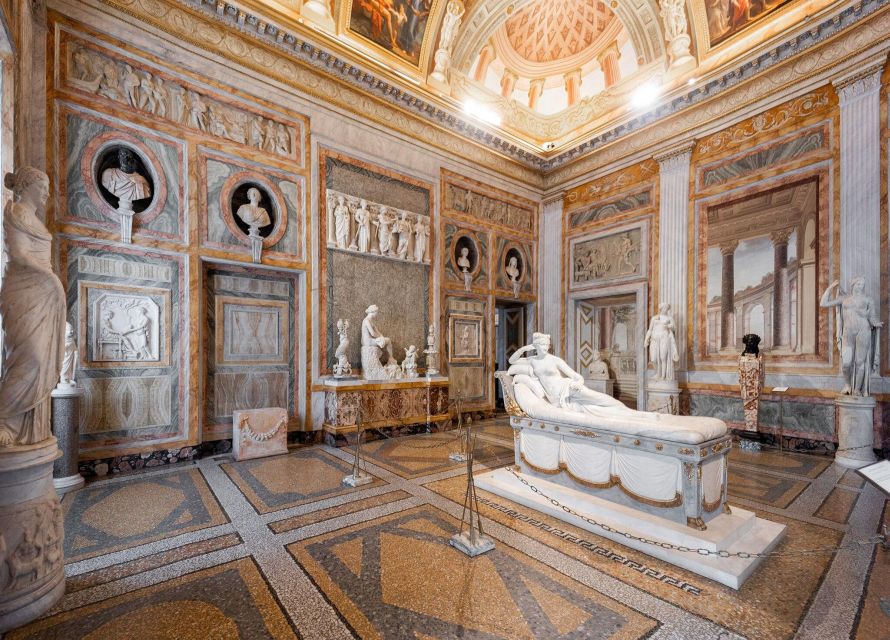
That concentration matters. You can move from sculpture to painting, then look up at frescoes and painted decoration, without losing the thread. The building is part of the experience. Ornate rooms frame the art, and the surroundings help you understand the taste and ambition behind the collection.
The visit lasts two hours, with or without a guide. I see that limit as both a strength and a weakness. It prevents the museum from becoming tiring, but it also means you cannot linger everywhere. If you want to examine every painting, mosaic, and ceiling detail, you may leave wishing for more time.
The guided option is especially useful for a first visit. Instead of spending your limited time deciding what matters, you follow a route built around the gallery’s best-known works. The fast-track entry also removes the ordinary ticket-line wait, although you still need to meet the representative before entering.
More Art Museum Tours in Rome
- Vatican Museums, Sistine Chapel & St. Peter’s Basilica Tour
★ 4.3 · 73,970 reviews - Vatican Museums, Sistine Chapel & St Peter’s Basilica Guided Tour
★ 4.5 · 39,149 reviews - Rome: Vatican Museums, Sistine Chapel and Basilica Tour
★ 4.3 · 16,039 reviews
Meeting at Villa Borghese without a wrong turn
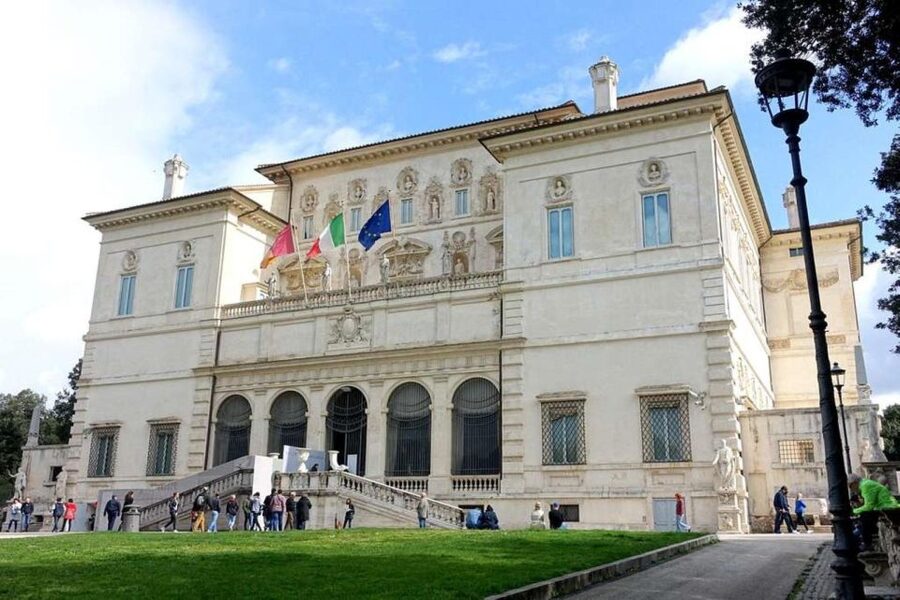
The meeting point is in front of the Borghese Gallery and Museum entrance. Look for the guide holding a City Walkers sign. This sounds simple, but the museum sits within the large Villa Borghese park, and finding the correct entrance can take longer than expected.
I would arrive early, especially if you are coming by taxi or walking from another part of Rome. One older couple reported being dropped far from the entrance and sent in the wrong direction, arriving just before the start. Other guests have also wished for clearer identification, such as a flag or scarf.
Do not count on hotel pickup. None is provided. Have the gallery entrance location ready on your phone, allow extra walking time, and keep your eyes open for the City Walkers sign. If you are late, you may have little room to recover because entry times and the two-hour museum window are tightly managed.
The tour operates in rain or shine. That matters because the walk through the park and the wait outside may be less pleasant in poor weather, even though the main visit takes place indoors.
Bernini’s Apollo and Daphne, the emotional center
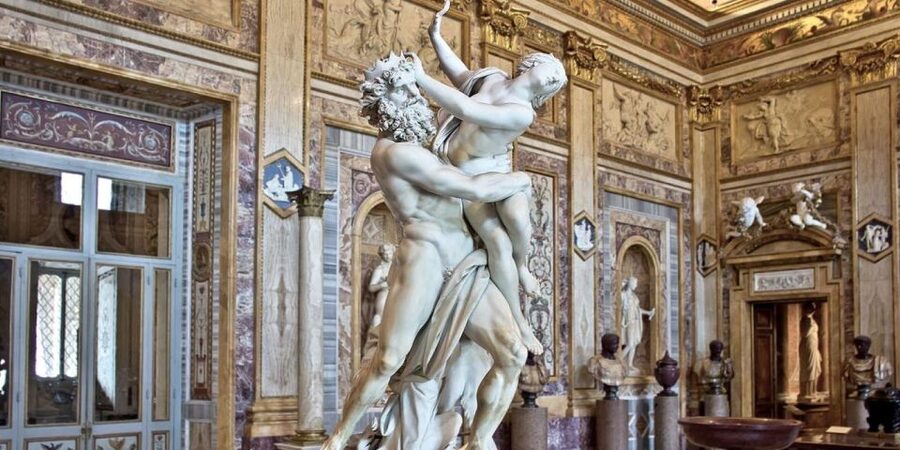
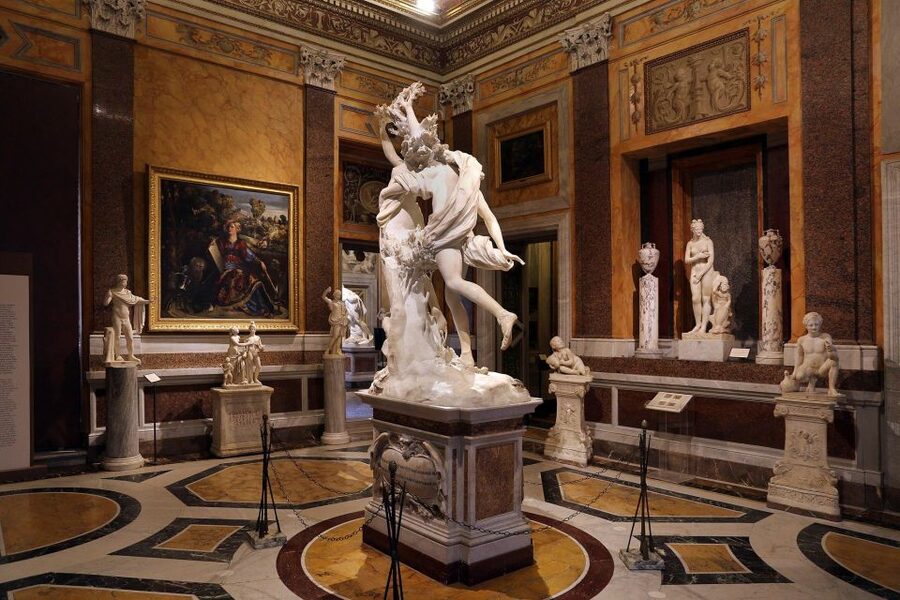
The visit typically focuses on the gallery’s major sculptures, with Gian Lorenzo Bernini receiving special attention. Apollo and Daphne is the work many people remember most clearly.
The subject comes from classical mythology. Apollo pursues Daphne, who calls for help and begins transforming into a laurel tree. Bernini captures the instant of change: fingers become leaves, hair turns into foliage, and Daphne’s body seems to move away from Apollo as the marble changes before your eyes.
A guide can point out details you might otherwise miss. Look at the delicate leaves, the twisting bodies, the expression on Daphne’s face, and the way the sculpture changes as you walk around it. The work is not meant to be seen from one flat angle. Your movement reveals new relationships between the two figures.
The subject also gives the guide a chance to explain how mythology, patronage, and public display worked in Baroque Rome. Cardinal Borghese wanted a collection that impressed visitors, and Bernini’s sculpture does so through technical skill and theatrical action.
David and the art of movement
Bernini’s David offers a different kind of drama. Instead of showing David resting after victory, Bernini presents him in the act of throwing the stone. The figure twists through space, and the tension appears in the face, arms, legs, and tightly gathered body.
A good guide will encourage you to compare this David with the calmer, more stable versions by Michelangelo and other artists. Here, the viewer feels almost caught in the path of the action. You are not simply looking at a hero. You are sharing his point of view as he prepares to strike Goliath.
This is where the English-speaking guide earns the admission price. The sculpture is impressive on its own, but a short explanation about pose, viewpoint, and artistic choices gives you a way to look. Guides such as Fi, Federica, Francesca, and Samuel have been praised for making those details clear without turning the visit into a dry lecture.
The group may pause at several works in each room, so you should not expect to stand alone in front of every sculpture. The headset helps. You can move a little to find a better angle while still hearing the explanation.
More Borghese Gallery slots:
- Rome: Borghese Gallery Skip-the-Line Ticket & Audioguide
★ 4.3 · 4,318 reviews - Rome: Borghese Gallery Ticket + Audioguide or Guided Tour
★ 4.6 · 3,219 reviews - Rome: Borghese Gallery Guided Tour with Skip-the-Line Entry
★ 4.8 · 2,649 reviews - Rome: Borghese Gallery Skip-the-Line Tickets with Audioguide
★ 4.6 · 2,562 reviews
Caravaggio’s light, faces, and uneasy realism
The paintings by Caravaggio give the tour a strong change of mood. Boy with a Basket of Fruit looks simple at first: a young man presents a basket of fruit. But the close view of fruit, skin, leaves, and fabric shows Caravaggio’s interest in ordinary physical reality.
A guide can draw your attention to the freshness and imperfection of the fruit, the boy’s expression, and the way light models his face. The painting feels immediate because the subject is not a distant mythological hero. It is a person placed close to you.
St. Jerome Writing brings a darker mood. The saint is shown absorbed in his work, with the signs of age and concentration plainly visible. Caravaggio’s strong light isolates the figure against darkness and makes the act of writing feel physical and serious.
This contrast is one of the best reasons to choose the guided version. You move from Bernini’s theatrical marble to Caravaggio’s controlled shadows, and the guide can explain how each artist creates drama in a different medium. Several guides have also suggested other Rome locations for seeing Caravaggio, including Santa Maria del Popolo, which can help you shape the rest of your sightseeing.
The villa itself is part of the collection
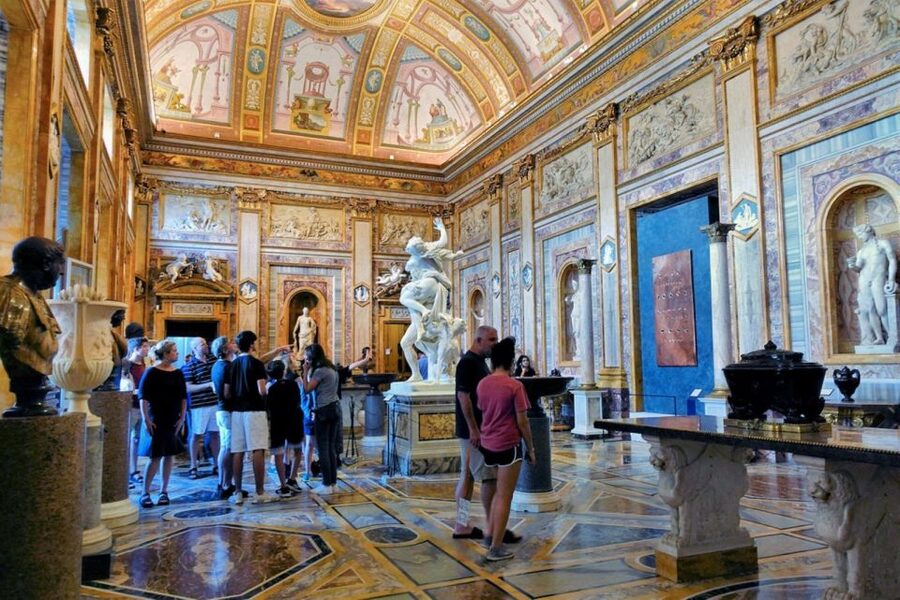
Do not stare only at the famous works. The rooms are decorated with frescoes, painted details, and elaborate architectural finishes. The villa was designed to impress before you even reached the art, and Cardinal Borghese’s collection was displayed within that setting.
The room arrangement helps explain the collection’s original impact. A sculpture does not sit in a plain white box. It appears against a decorative interior that adds color, pattern, and ceremony. At times, the decoration competes with the art, but that is also the point. This was a place built for display and status.
The guide can explain how the rooms and collection relate to Cardinal Borghese’s legacy. You will hear about his role in assembling the works and the artistic methods behind the pieces. The information is most useful when it sends you back to look at the object again, rather than simply adding names and dates.
Maintenance closures are possible, so a particular room or work may not be available on your date. The gallery remains worthwhile, but avoid building your entire Rome plan around one single painting.
What the two-hour guided route feels like
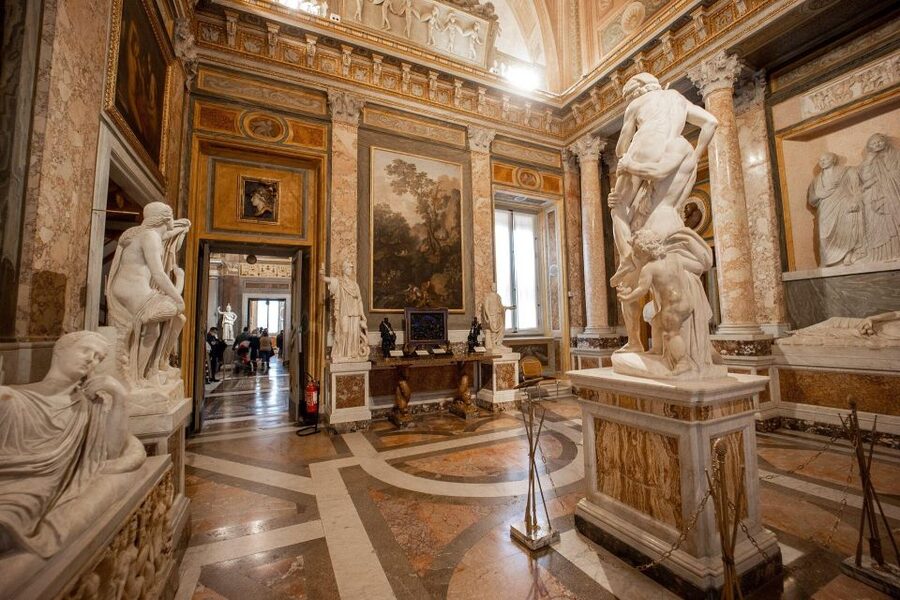
The experience is designed as a compact tour. After meeting outside and entering with skip-the-line tickets, you follow the guide through selected rooms and major works. The exact order can change according to gallery operations, crowd levels, and any maintenance closures.
The group is described as small, and one recent group had about 12 people. That is a useful size for a museum. It is large enough to share the cost of a guide but small enough to stay together. It is not a private tour, so you may still need patience when other groups gather around popular sculptures.
Headsets are included and are important in a busy room. Most reports praise the ability to hear the guide clearly, but one person found the headphones weak and difficult to use. I would test yours as soon as they are handed out and tell the guide if the sound is poor.
The strongest guides bring stories, mythology, history, and technique together. Fi, also known as Felicity, is repeatedly praised for her energy and ability to make each work feel connected to the next. Francesca and Federica also receive strong praise for clear, lively explanations. Your guide is assigned by the operator, so you should not book expecting a particular person.
The pace can feel quick, especially if you prefer to sit with one sculpture for several minutes. Still, the limit applies to all visitors, not just this group. A guide helps you use that fixed period well.
Is $88 a fair price?
At $88 per person, the tour is not a budget museum ticket. The value depends on which option you select and how much you want from the visit.
The price includes skip-the-line gallery admission. It also includes a licensed English-speaking guide if you choose the guided option, plus headsets. If ordinary entry is sold out, this access may be more valuable than the ticket price alone. Same-day availability has also been useful for people who found other entrance options unavailable.
I would choose the guided tour if art history is not already your strength, if you have only two hours, or if Bernini and Caravaggio are high on your Rome list. The guide gives you a way to read the sculptures and paintings instead of simply photographing them.
The fast-track access option may suit you if you prefer to explore alone and already know which works you want to see. You will lose the explanations about Cardinal Borghese, the artists, mythology, and technique, but you gain more control over your attention.
For a family, the guide can help keep younger visitors engaged. One family found that a 10-year-old stayed interested because the explanations were structured and lively. For serious art students, the visit can still work, though the short time and set route may feel restrictive.
Who should book, and who should skip it
I would recommend this experience to a first-time visitor to the Borghese Gallery, anyone who wants context for Bernini and Caravaggio, and people who dislike wasting vacation time in ticket lines. It is also a good pick for visitors who enjoy stories and comparisons more than reading every wall label.
You should think twice if you need a fully accessible museum visit. The activity is not suitable for wheelchair users or people with mobility impairments. The no-bag rule also requires planning: bags of any size are forbidden inside, along with food, drinks, video recording, weapons, sharp objects, and pets.
If you want a slow, independent study session, the guided route may feel too brisk. You can still choose fast-track entry without the guide if that option is available for your date, but the visit remains limited to two hours.
Book as early as you can if the gallery is central to your Rome plans. The collection has limited timed access, and the guided option can be especially useful when independent admission is no longer available. You can cancel up to 24 hours before the activity for a full refund, and the reserve-now, pay-later option keeps your plans flexible.
Should you book this Borghese Gallery tour?
Book it if you want the gallery’s major works explained, not just displayed. Bernini’s Apollo and Daphne and David are powerful on their own, but the guide’s comments about movement, myth, patronage, and technique make you look harder.
The best reason to choose it is the combination of timed entry, a focused route, and strong English storytelling. The main cautions are the fixed two-hour visit, possible headphone trouble, a sometimes confusing meeting point, and the lack of wheelchair access.
For most first-time visitors, I would choose the guided option at $88. For repeat visitors who already know the collection, fast-track entry alone may offer better freedom. Either way, arrive early, carry no bag, and be ready to give Bernini your full attention.
FAQ
How long does the Borghese Gallery experience last?
The experience lasts two hours. This is also the maximum visit period noted for the gallery, so the guided route is designed to make good use of that time.
What is included in the guided tour?
The guided option includes a licensed English-speaking guide, skip-the-line Borghese Gallery admission, and headsets so you can hear the guide.
Where do I meet the guide?
Meet in front of the entrance to the Borghese Gallery and Museum. The guide will hold a City Walkers sign.
Are bags allowed inside the Borghese Gallery?
No. Bags of any size are not permitted inside for security reasons. Food, drinks, video recording, weapons, sharp objects, and pets are also prohibited.
Is the tour suitable for wheelchair users?
No. The activity is listed as unsuitable for wheelchair users and people with mobility impairments.
Can I cancel the booking?
Yes. You can cancel up to 24 hours in advance for a full refund. A reserve-now, pay-later option is also available.
Just added around Rome
- Colosseum,Vatican Museum & Sistine Chapel in One Day Guided Tour★ 3.5 · 9 reviews
- Private Tour Of Rome Highlights And Vatican Museums Skip-The-Line all included★ 5.0 · 4 reviews
- Vatican Museums and Sistine Chapel last entry Guided Tour★ 5.0 · 3 reviews
- Borghese Gallery Admission Ticket with Audioguide★ 4.0 · 64 reviews
- Caravaggio Art Walking Tour of Rome with Pantheon Visit★ 4.5 · 35 reviews
- Borghese Gallery Skip the Line Guided Tour★ 4.5 · 23 reviews
- Borghese Gallery Ticket with Audioguide★ 3.5 · 51 reviews
- Borghese Gallery VIP Tour – Skip the Line Tickets★ 5.0 · 2 reviews
Art Museum Tours in Rome, compared.
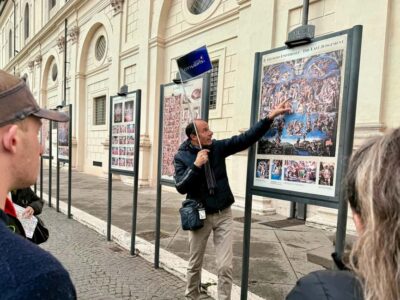
Vatican Museums, Sistine Chapel & St. Peter’s Basilica Tour
Read our review →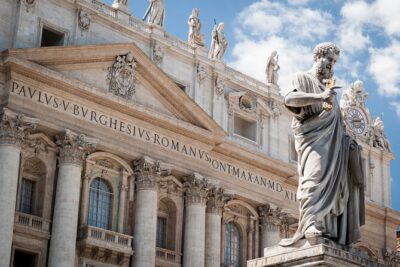
Vatican Museums, Sistine Chapel & St Peter’s Basilica Guided Tour
Read our review →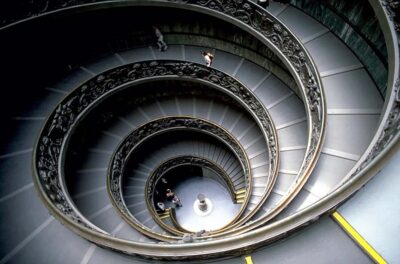
Vatican Museums, Sistine Chapel and Basilica Tour
Read our review →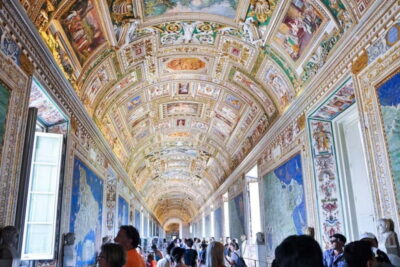
Vatican Museums & Sistine Chapel Skip-the-Line Entry Ticket
Read our review →
Vatican Museums, Sistine Chapel & Basilica Tour
Read our review →
Vatican Museums & Sistine Chapel Guided Tour
Read our review →
Vatican Museums & Sistine Chapel Skip-the-Ticket-Line Tour
Read our review →
Vatican Museums, Sistine Chapel and St. Peter’s Basilica Tour
Read our review →Browse the lists this tour appears in