
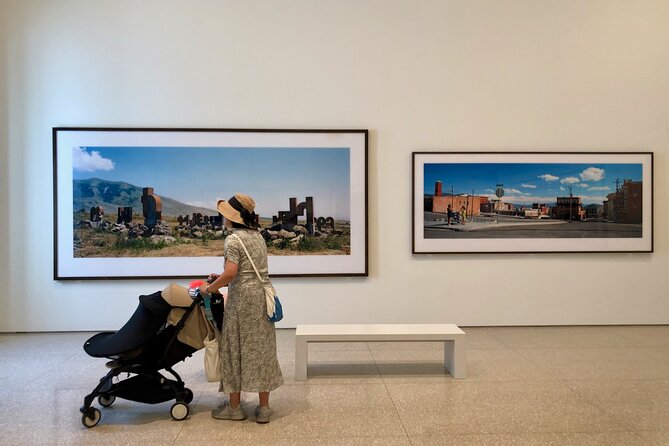
REVIEW · LONDON
Private Art Galleries of London Mayfair with an Art Historian
Mayfair’s best art is not confined to one museum. This 2.5-hour walking tour moves from Sotheby’s and Christie’s to small Cork Street galleries, public sculptures, grand arcades, and art tucked into shops and restaurants. The exhibitions change often, so your route can feel fresh even if you know London well.
I like the chance to see works that do not appear in standard sightseeing plans, and I like the small group size, capped at 10 people. Guide Julia brings strong knowledge of Mayfair’s galleries and artists, while staying open to new exhibitions and unexpected stops. The main drawback is the price, $166.67 per person, which is a serious spend for a walk that does not include food or paid museum entry.
Key points to know before you book
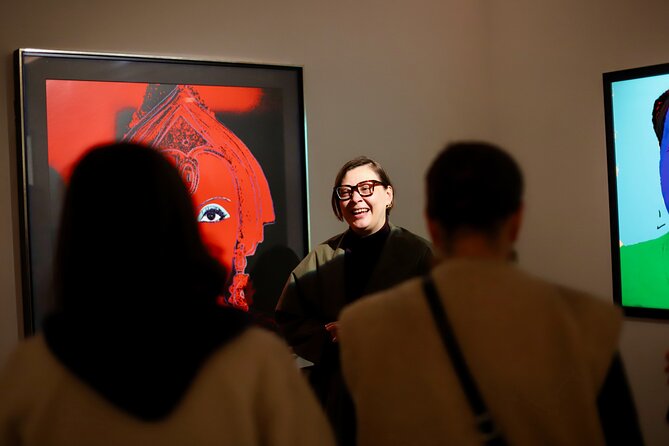
- Sotheby’s and Christie’s give you a look at the art trade, not just finished museum displays.
- Cork Street remains the heart of the route, with galleries linked to artists such as Francis Bacon, Max Ernst, Paul Klee, and Joan Miró.
- The exhibitions change frequently, so the exact art you see cannot be promised.
- Guide Julia adds personal context, and the small group leaves room for questions and conversation.
- Mayfair’s public art is part of the experience, from Henry Moore to Antony Gormley.
- The walk ends near Green Park and Piccadilly Circus stations, making it easy to continue your London day.
Why Mayfair works so well for an art walk
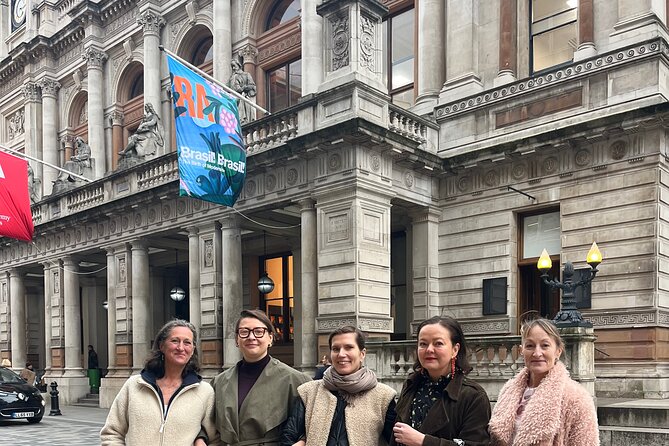
Mayfair can look, at first glance, like a district built for luxury shopping and grand addresses. Look closer and you find a dense art quarter. Auction houses, commercial galleries, public sculpture, historic arcades, and independent exhibition spaces sit within a compact area.
That compact layout is a real advantage. You are not spending half the tour on trains or long transfers. Instead, the walk links different parts of the art world: auction rooms where major works are bought and sold, galleries showing current artists, and public pieces that you can see without entering anywhere.
I especially like the mix of old and new. One moment you are considering an Old Master painting at Sotheby’s. A few minutes later, you may be looking at a modern sculpture on a building or stepping into a gallery with a completely different idea of what art can be.
The route is also useful for people who do not collect art. Your guide explains the setting, artists, and objects in plain terms, so you do not need a background in art history. You can ask why a work matters, how a gallery differs from an auction house, or how Mayfair became such a major art district.
More Art Museum Tours in London
- Official tickets: Moco Modern & Contemporary Art Museum
★ 4.5 · 1,157 reviews - London: National Gallery Guided Tour with Art Expert Guide
★ 4.7 · 440 reviews - London: Tickets for Moco Modern & Contemporary Art Museum
★ 4.7 · 391 reviews
Sotheby’s: begin where art changes hands
The tour starts at 77 Piccadilly and soon reaches Sotheby’s, one of Mayfair’s great names. The auction house handles an unusually broad range of material, including Impressionist and Modern Art, contemporary work, Old Master paintings, Islamic art, porcelain, silver, French furniture, and English furniture.
That range makes Sotheby’s a useful first stop. You are not looking at one narrow school or period. The displays can change with the auction calendar, and the building may be preparing for sales in several categories at once.
You will have about 30 minutes here, with admission included. Your guide can help you understand the difference between viewing art in an auction setting and seeing it in a public museum. At an auction house, the display is tied to a sale, so the work may be on view for a limited period.
Sotheby’s conducts about 250 auctions a year across more than 70 categories. That does not mean every category will be on display during your visit, but it does explain why the stop can vary from one date to another.
The possible drawback is that an auction house is not a traditional gallery tour. The focus may be on works about to be sold, and the viewing rooms can feel more commercial than a museum. I see that as part of the lesson, but you should book this walk because you want to understand the art market, not only admire permanent collections.
Christie’s and the business behind great collections
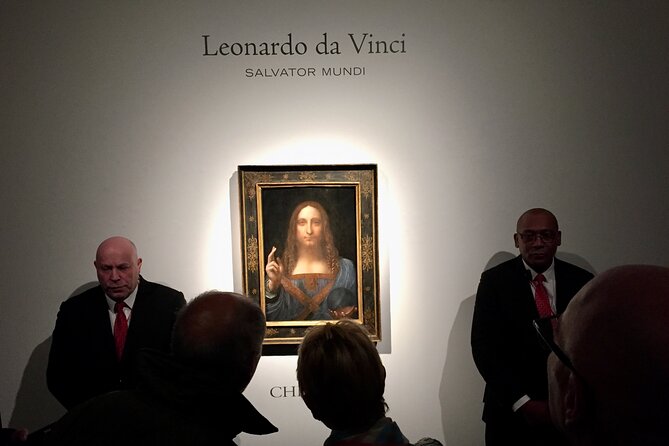
Christie’s follows with another 30-minute stop. Founded in London in 1766, it is the oldest fine art auctioneer in the world. Its sales cover art, furniture, jewelry, and wine, and it has long provided a setting for major collections and individual works before auction.
This stop adds a useful comparison with Sotheby’s. The two houses occupy similar territory, but the works on display can differ greatly depending on the sales taking place. Your guide can point out what makes an auction preview different from a gallery exhibition and help you read the information presented beside each work.
Christie’s also has an art cafe, which may offer a convenient pause. Food and drinks are not included, so any stop there is at your own expense. Still, it is a practical feature if you appreciate a short break during a walking tour.
I would not book this experience expecting guaranteed access to famous masterpieces. The exact displays depend on the auction schedule. The value is in seeing how important art is presented before sale and in learning how Mayfair’s auction houses fit into London’s wider art scene.
Bond Street: art hiding in plain sight
The walk then turns toward Bond Street, a Mayfair thoroughfare known for fine shops and polished facades. Bond Street was developed in the 1720s and became a place for upper-class social life by the late 18th century. It later appeared in works by Jane Austen and Virginia Woolf, and it even occupies a square on the British Monopoly board.
The literary references are pleasant, but the public art is the real reason to pay attention here. Your guide points out pieces that many people walk past, including Henry Moore’s sculpture on top of the former Time Life building and a bust of the Egyptian goddess Sekhmet.
You spend about 20 minutes in this part of the route. It is less about entering exhibition rooms and more about learning to scan the streets around you. Shops and office buildings become part of the art experience, and Mayfair’s polished commercial setting takes on another layer.
This is one of my favorite parts for first-time visitors who want something beyond the usual London checklist. You get a short lesson in public art without paying another admission fee. Keep in mind that street-level viewing depends on what is accessible and visible on the day, so this portion is more observational than a formal gallery visit.
More private gallery tours in London:
- National Gallery of London Museum Tour Semi-Private 8ppl Max
★ 5.0 · 178 reviews - British Museum & National Gallery of London Semi-Private 8ppl Max
★ 5.0 · 168 reviews - Private Guided Tour of the National Gallery – Fast Track Ticket
★ 5.0 · 46 reviews - Tate Modern Museum London Guided Tour Semi-Private 8ppl Max
★ 5.0 · 41 reviews
Cork Street and Mayfair’s gallery tradition
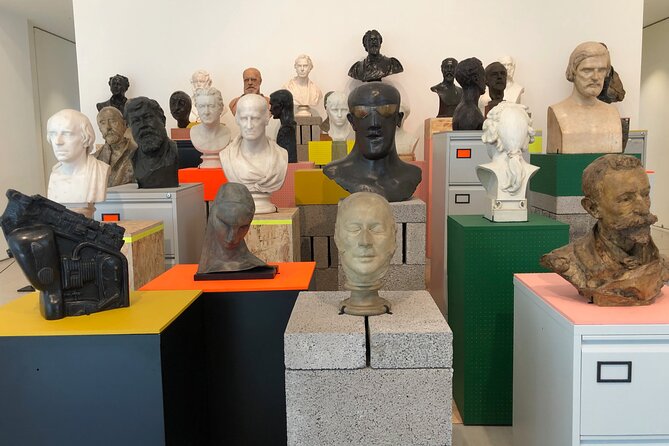
Cork Street is the central art district of the walk. In the early 20th century, it became closely linked with London’s modern art scene, helped by its location near the Royal Academy. In 2023, 16 galleries called Cork Street home, and the tour visits some of them.
This short stretch carries real artistic weight. The Mayor Gallery hosted early London exhibitions by Francis Bacon, Max Ernst, Paul Klee, and Joan Miró. Peggy Guggenheim also opened a gallery at number 30 in 1938. Those facts give the street more meaning than a row of white walls and smart doors.
You spend about 40 minutes visiting galleries here. The works on view can change often, which is both the pleasure and the uncertainty. You may encounter a show that matches your taste, or one that leaves you puzzled. Either way, an art historian can help you ask better questions rather than simply decide whether you like something.
Julia is especially useful here. She has explained the galleries, local art history, and artists during a visit that included more than 10 galleries, public installations, and art displayed in places such as Hermès. She also made time to meet gallery owners and discuss new works. That kind of flexibility matters because the best stop may be a small room that was not the obvious choice at the start of the walk.
Sprueth Magers and a surviving gallery interior
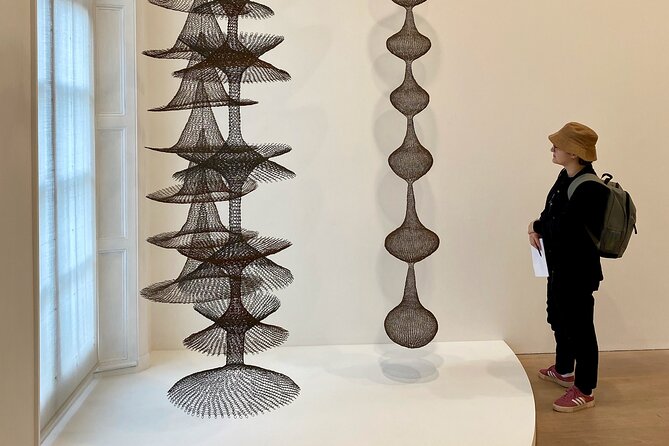
The stop at Sprueth Magers is brief, about five minutes, but it offers a different reward. The building once housed the Grafton Galleries, and in 1905 French dealer Paul Durand-Ruel presented Britain’s first major exhibition of Impressionist paintings there.
You will have a chance to look inside and see interior design elements that have survived for more than a century. This is not a long viewing session, so do not expect a full gallery talk. Its value is architectural and historical, showing how a building can carry traces of London’s art trade across generations.
For me, this is a good example of why a guided route helps. Without context, you might enter, glance around, and leave. With context, the preserved details connect the room to the arrival of Impressionism in Britain.
The Royal Academy and the final stretch
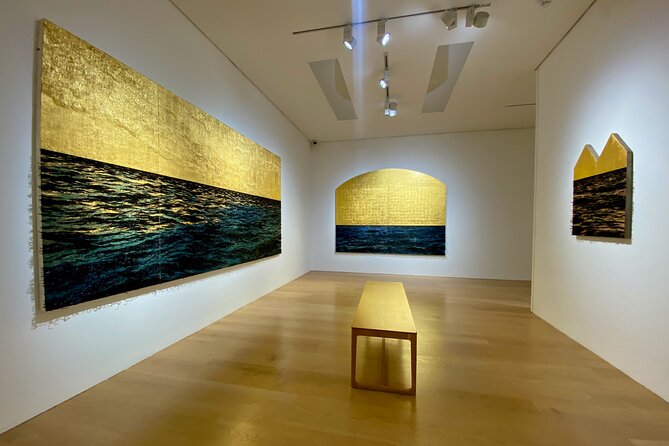
The Royal Academy of Arts provides an important link between Mayfair’s commercial galleries and London’s established art institutions. Founded in 1768, it is based at Burlington House on Piccadilly and operates as an independent, privately funded institution led by artists and architects.
The tour includes about 15 minutes around the Royal Academy. This is a short orientation, not a full visit to its exhibitions. Admission to the walking experience is free, but you should not assume that this includes entry to every paid exhibition inside the academy.
The ending works well because it places the day’s smaller galleries in a larger setting. You have seen auction houses, commercial spaces, outdoor sculpture, and an institution with a long role in British art. The Royal Academy helps tie those parts together.
Burlington Arcade and Mayfair’s art in miniature
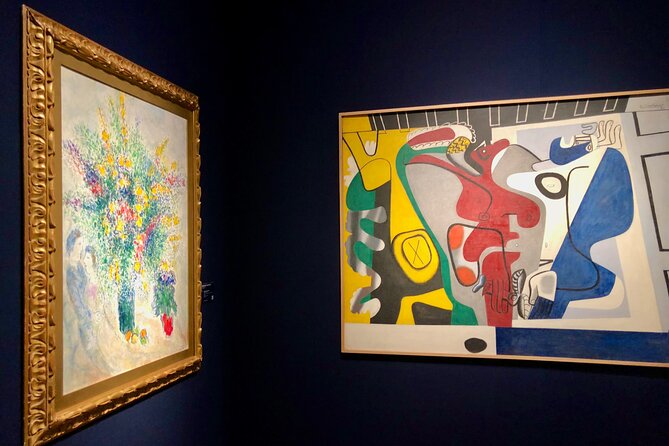
Burlington Arcade is one of the prettiest short stops on the route. Its Regency-style design has earned it the nickname Jewel of Mayfair, and sculptures by Benjamin Clemens decorate the Piccadilly facade.
The arcade now includes three art-related spaces: Opera Gallery, the Gagosian Shop, and the Lalique Art Gallery. It also features Antony Gormley’s Cinch, a permanent sculpture installed on the north facade in 2017. The stainless steel work represents the human figure as a work in progress.
You spend about five minutes here. That is enough to see the setting and hear the key details, but not enough for a long gallery visit. I would treat Burlington Arcade as a final visual flourish rather than a major exhibition stop.
The tour ends at the Royal Academy of Arts, Burlington House, a short walk from both Green Park and Piccadilly underground stations. That location makes it easy to continue toward museums, shops, or another part of central London.
What the $166.67 price really buys
At $166.67 per person, this is not a cheap way to fill a morning. You are paying for a specialist guide, a carefully planned route, access to several private galleries and auction houses, and the ability to ask questions in a group of no more than 10 people.
You are not paying for lunch, drinks, or a major museum admission. The listed stops have free entry as part of the walk, but exhibitions and other activities outside the tour may carry their own charges.
The value depends on how much context you want. If you are happy to wander into galleries alone and read the wall text, you can explore Mayfair for less. If you want someone to explain why Cork Street matters, compare Sotheby’s with Christie’s, identify public art, and adjust the route around changing exhibitions, the price makes more sense.
I would also keep the flexible format in mind. One visit may include 10 or more galleries and a chance to speak with gallery owners, while another may focus more on the scheduled stops. The changing exhibitions are part of the appeal, but they also mean you cannot book this for one exact artist or artwork.
Who will get the most from this walk
I recommend it most strongly to:
- Art lovers who want current exhibitions rather than only major museums.
- First-time Mayfair visitors who want a clear route through the district.
- People who enjoy asking questions instead of listening to a fixed speech.
- Repeat London visitors looking for art connected to shops, buildings, and public streets.
- Anyone curious about how auction houses and commercial galleries operate.
You do not need to be a collector. You also do not need to know the difference between every art movement before you arrive. A basic interest in art, architecture, or London neighborhoods is enough.
I would be more cautious if your main goal is a long museum visit or guaranteed access to a particular masterpiece. The route is a sampler, with some stops lasting only five or 15 minutes. Its strength is range and interpretation, not extended time in one exhibition.
The walk is offered in English, uses a mobile ticket, and is available to most people who can take part in a walking activity. Service animals are allowed, and the route is near public transportation. Confirmation arrives within 48 hours, subject to availability. Free cancellation is available up to 24 hours before the start time, but changes or cancellations inside that window are not accepted.
Should you book the Mayfair art walk?
Book it if you want London art explained in place, with auction houses, private galleries, public sculpture, and Mayfair architecture all connected by one walk. Julia appears to be a strong choice for the experience, especially if you value an informed guide who can stay curious and adjust the visit to what is on view.
Skip it if you want a low-cost stroll, a full museum tour, or a fixed list of famous works. At this price, the experience needs to be more than sightseeing. For the right visitor, its best feature is the access to a side of Mayfair you could easily miss while walking between shops and landmarks.
FAQ
Where does the tour start?
It starts at 77 Piccadilly, London W1J 8HU, UK.
Where does the tour finish?
It finishes at the Royal Academy of Arts at Burlington House, Piccadilly, London W1J 0BD. Green Park and Piccadilly underground stations are both a short walk away.
How long does the experience last?
The walking tour lasts about 2 hours and 30 minutes.
How large is the group?
The tour has a maximum of 10 participants.
Is admission to the galleries and auction houses included?
Yes. Free admission to the galleries and auction houses visited during the tour is included.
Is food or drink included?
No. Food and drinks are not included, though Christie’s has an art cafe where you may be able to stop at your own expense.
Just added around London
- A Guided Tour at the National Gallery in London★ 3.5 · 2 reviews
- The Shard Viewing Gallery & Westminster Walking Tour★ 4.0 · 12 reviews
- Women in Art Walking Tour★ 5.0 · 13 reviews
- Best of Westminster Abbey with Upper Gallery & Buckingham Palace★ 4.5 · 15 reviews
- Tate Modern Museum London Guided Tour Semi-Private 8ppl Max★ 5.0 · 41 reviews
- The Tate Modern London – Exclusive Guided Museum Tour★ 5.0 · 41 reviews
- Private Guided Tour of the National Gallery in London★ 4.0 · 8 reviews
- Tate Modern Private Tour in London with Blue Badge Guide★ 5.0 · 3 reviews
Art Museum Tours in London, compared.
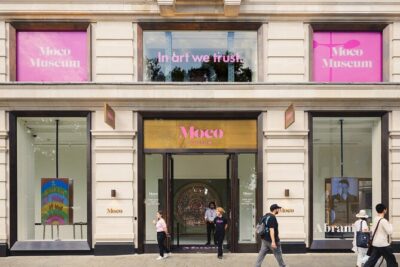
Official tickets: Moco Modern & Contemporary Art Museum
Read our review →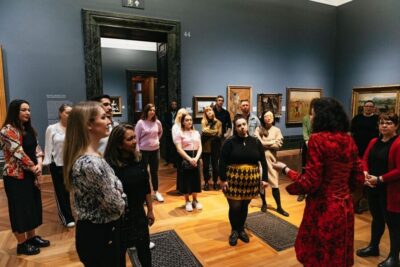
National Gallery Guided Tour with Art Expert Guide
Read our review →
Tickets for Moco Modern & Contemporary Art Museum
Read our review →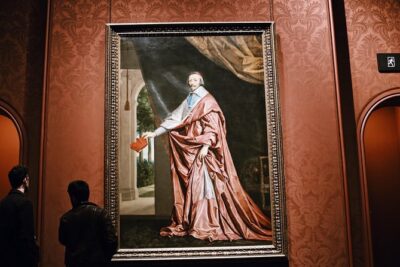
National Gallery of London Museum Tour Semi-Private 8ppl Max
Read our review →
Day Trip to Paris with Eiffel Tower, Notre Dame and Louvre Museum
Read our review →
British Museum & National Gallery of London Semi-Private 8ppl Max
Read our review →
National Gallery + Guided Tour + Priority Entry
Read our review →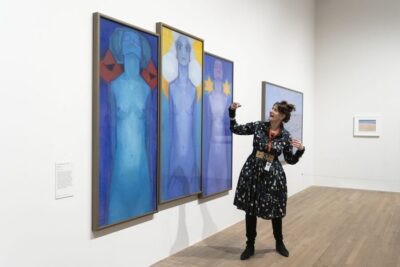
Browse the lists this tour appears in