
REVIEW · ROME
Pamphilj Gallery Skip The Line Tickets and Audio Guide
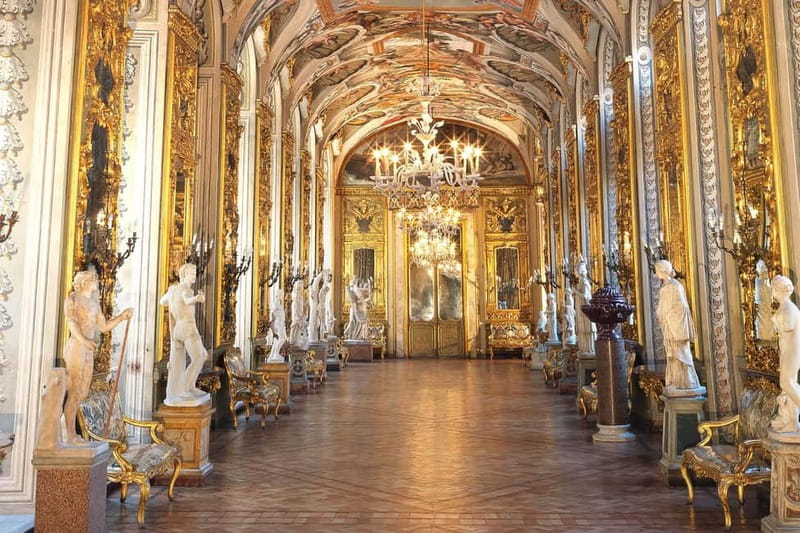
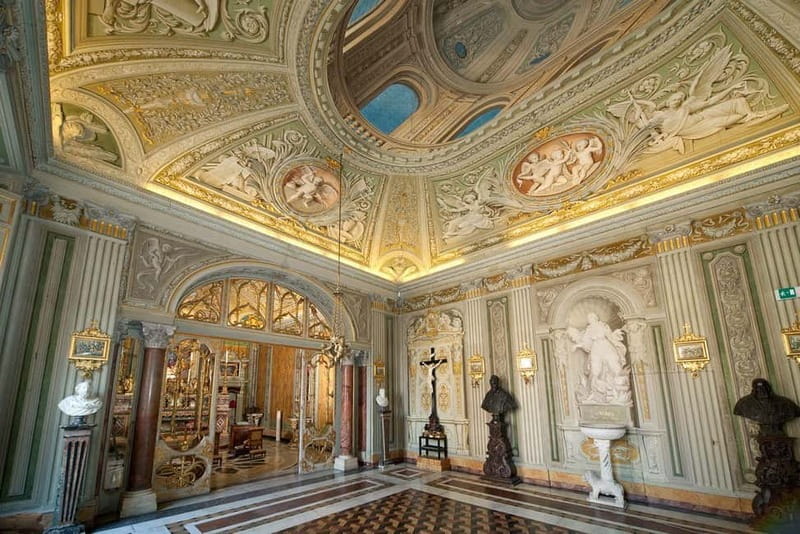
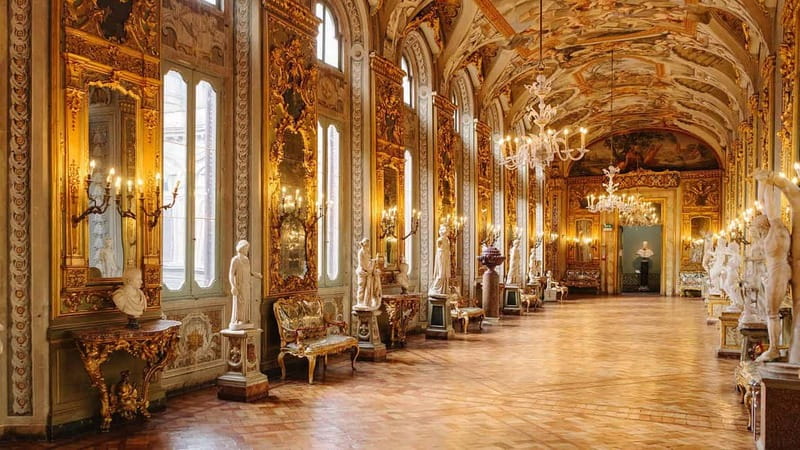
The most striking thing here is the sheer amount of art packed into the Doria Pamphilj family palace. Paintings cover the walls of reception rooms, gallery wings, and private apartments, so this feels less like a single famous museum hall and more like walking through a powerful Roman family’s home.
I like the chance to see Caravaggio, Raphael, and Velázquez in one intimate setting, and I like that the audio guide gives you some context without tying you to a guide’s pace. The main caution is price: at $46 per person, this is convenient, but local booking may cost less. One booking report even described paying 78 euros while finding a 16-euro audio-guide ticket available at the venue.
Key Points Before You Book
- Caravaggio, Raphael, and Titian: The collection brings several major Italian names together under one palace roof.
- A family palace, not just a gallery: You see reception rooms, gallery wings, and private apartments filled with art.
- Flemish and Spanish highlights: Look for Baroque works from Flemish artists, plus paintings by Velázquez and Claude Lorrain.
- English audio guide included: You explore independently, with commentary rather than a live guided tour.
- About two hours: The length suits a focused art visit, though the collection is large enough to reward a slower pace.
- Skip-the-ticket-line entry: You avoid the main ticket queue, but you still need to reach the stated entrance point yourself.
Entering the Doria Pamphilj Palace
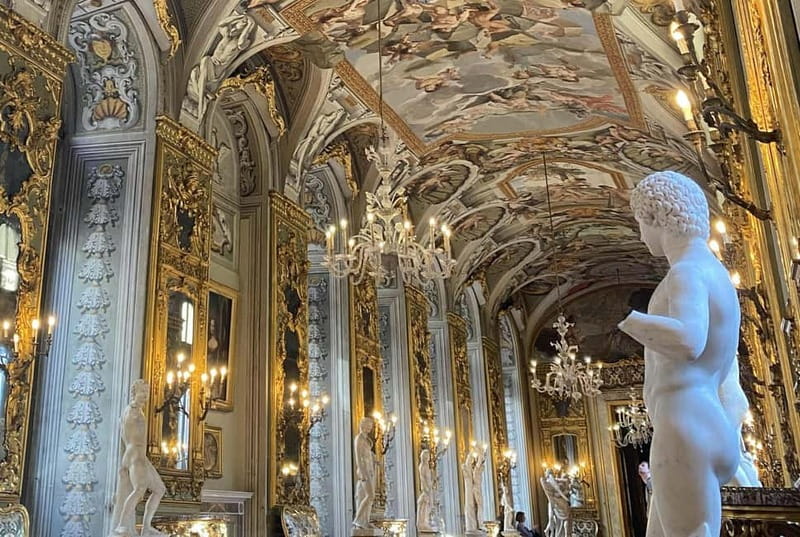
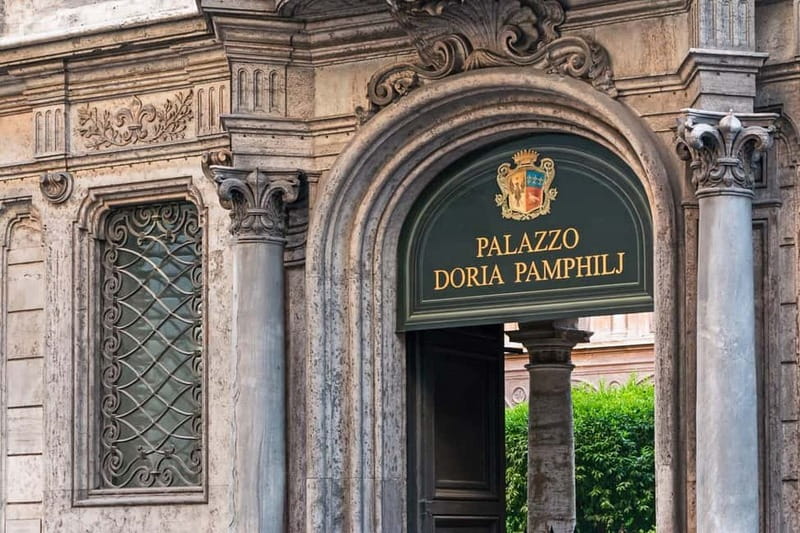
Palazzo Doria Pamphilj gives you a different kind of museum experience in Rome. Instead of entering a purpose-built institution with broad modern galleries, you move through the former setting of a noble family. The art remains tied to rooms designed for living, receiving important people, and displaying family status.
That setting matters. A painting hanging in a reception room has a different effect from the same work isolated against a plain museum wall. You can look at the art, then look around at the room itself: the scale, decoration, and number of works all help you picture how the collection functioned as part of palace life.
The visit begins at the gallery entrance indicated with your booking. The ticket includes access to the private collection and skip-the-ticket-line entry. You do not receive transportation, so you must make your own way to the palace in Rome. The meeting-point information is brief, so check the exact entry instructions carefully before setting out.
More Art Museum Tours in Rome
- Vatican Museums, Sistine Chapel & St. Peter’s Basilica Tour
★ 4.3 · 73,970 reviews - Vatican Museums, Sistine Chapel & St Peter’s Basilica Guided Tour
★ 4.5 · 39,149 reviews - Rome: Vatican Museums, Sistine Chapel and Basilica Tour
★ 4.3 · 16,039 reviews
A Two-Hour Route Through the Collection
You should allow about two hours for this experience. That is enough time to see the main rooms and listen to selected audio commentary, but it is not a generous amount of time for every painting in a collection this large.
Your visit moves through several types of space:
- Reception rooms filled with paintings
- The splendid gallery and its wings
- Private apartments
- Rooms displaying Italian, Flemish, French, and Spanish works
The gallery wings are likely to make the strongest first impression simply because of the volume of art. Paintings cover much of the available wall space, creating a dense visual experience. I suggest resisting the urge to study every canvas at equal length. Pick out the artists and subjects that interest you most, then use the audio guide to add context.
The private apartments offer a useful change of scale. Here, the art is not only part of a grand public display. It also belongs to domestic rooms connected with the family’s daily life and private identity. That contrast gives the palace more character than a visit focused only on famous names.
Caravaggio, Raphael, Titian, and Bernini
The Italian section gives you the names most likely to shape your decision to book. Caravaggio, Titian, Raphael, Annibale Carracci, and Bernini are all represented in the collection.
Caravaggio is the major draw for many people. His paintings are known for forceful light, intense faces, and scenes that feel close enough to touch. In a palace collection, his work becomes part of a larger story about how elite Roman families gathered and displayed prized art.
Raphael and Titian offer a different experience. Raphael’s work rewards attention to arrangement, balance, and expression, while Titian’s paintings are often valued for their color and handling of paint. Seeing them alongside later Baroque artists helps you notice how artistic priorities changed over time.
Carracci and Bernini add another important layer. Their work connects the collection to the artistic world of Baroque Rome, where painting, sculpture, architecture, and theatrical presentation often worked together. The palace rooms themselves help reinforce that connection.
The exact works emphasized by the audio guide are not specified, so you should not expect a fixed lecture on a short list of masterpieces. Think of the audio commentary as a way to make sense of the collection as you choose where to spend your attention.
Flemish Masters and Baroque Painting
The collection is not limited to Italian art. Flemish masters are well represented, giving you a chance to compare northern European painting with the Italian works around it.
Flemish Baroque paintings often reward close looking. You may find strong detail, carefully rendered fabrics, busy scenes, and a sharp interest in surfaces and objects. Set beside Italian paintings, these works show different approaches to light, space, storytelling, and everyday life.
The collection also includes work by French painter Claude Lorrain. His art is associated with carefully arranged outdoor scenes and atmospheric views. Here, the contrast with Caravaggio is especially useful: Caravaggio pulls you toward dramatic human action, while Lorrain encourages you to look across distance, light, and setting.
You do not need to be an art specialist to enjoy this range. The audio guide can help you identify the broad differences, and the palace rooms give you time to make your own comparisons. I find that this kind of side-by-side viewing often makes a museum visit more memorable than seeing one national school in isolation.
More skip-the-line gallery tickets in Rome:
- Vatican Museums & Sistine Chapel Skip-the-Line Entry Ticket
★ 4.4 · 13,838 reviews - Rome: Vatican Museums & Sistine Chapel Skip-the-Line Ticket
★ 4.3 · 8,103 reviews - Skip the Line: Vatican Museum, Sistine Chapel + Optional Basilica
★ 4.5 · 6,181 reviews - Rome: Borghese Gallery Skip-the-Line Ticket & Audioguide
★ 4.3 · 4,318 reviews
Velázquez and the Wider European Collection
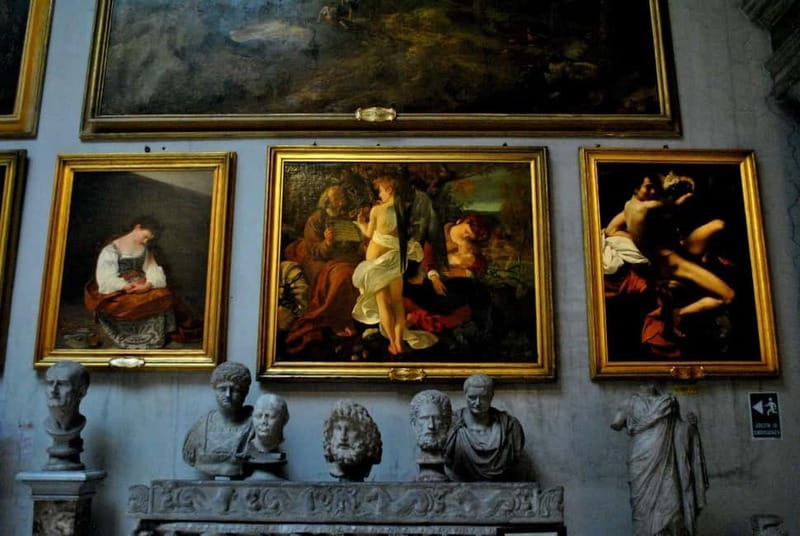
Spanish Baroque artist Diego Velázquez is another major name included in the collection. His presence gives the visit a wider European reach and adds a different kind of visual restraint to the palace displays.
Velázquez is often admired for his ability to suggest texture, personality, and social position with economical brushwork. Whether you know his art well or are seeing it for the first time, it is worth slowing down when you reach his work rather than treating it as one more name on a long list.
That is the central challenge here. The collection includes enough important artists that the famous names can compete for your attention. I recommend using the audio guide selectively. Listen to the sections on the works you care about, then pause to look carefully before moving on.
What the English Audio Guide Adds
The audio guide is included, and the stated language is English. The activity is not a live guided tour, so you will not have a guide walking with you, answering questions, or setting the pace.
That independence will suit you if you like to linger. You can spend extra time with a Caravaggio, move quickly through rooms that interest you less, or pause in the private apartments without holding up a group.
The tradeoff is that the quality of your visit depends partly on how you use the commentary. An audio guide can give you names, dates, and useful background, but it cannot respond to what catches your eye. If you want a conversation about technique or family history, this is not the right format.
The available information identifies English as the audio-guide language. If you need another language, confirm it before booking rather than assuming that the phrase audio guide in your language applies to every departure.
The Value of the $46 Ticket
At $46 per person, this is not a bargain admission. You are paying for a reserved experience, skip-the-ticket-line access, and the audio guide, along with the convenience of arranging the visit before you arrive.
The value depends on what matters most to you. If your Rome schedule is tight, avoiding a ticket queue can be worthwhile. You also gain a planned two-hour visit to a collection that includes several major European artists, rather than spending time deciding how to organize the palace on your own.
Still, the price deserves close attention. A booking report described a much higher payment of 78 euros and said that a ticket with an audio guide could be bought at the venue for 16 euros. Another booking report said buying locally would have been considerably cheaper and would not have caused a time problem.
Those reports do not prove that the local price will always be 16 euros, since prices and availability can change. They do show that you should compare the official palace price with this option before paying. At $46, book this mainly for the convenience of advance purchase and line-skipping, not because it is the cheapest way inside.
The flexible cancellation policy helps reduce the risk. You can cancel up to 24 hours in advance for a full refund, and the reserve-now, pay-later option lets you hold a place without paying immediately. Check the current terms at booking, especially if your Rome plans may change.
Who Will Enjoy This Visit Most
I would recommend this experience to an art-focused visitor who wants a manageable museum stop with famous names and a strong sense of place. It also suits anyone who prefers exploring alone rather than joining a fixed live tour.
You will get the most from it if you enjoy comparing artists and periods. The combination of Italian masters, Flemish Baroque works, French painting, and Spanish Baroque art gives you plenty to notice in a relatively short visit.
It may be less suitable if you want a detailed personal explanation from a specialist guide. It is also less appealing if you are watching your budget closely and have time to buy directly at the palace.
Families and mixed-interest groups should think about the collection’s density. Two hours can work well, but the number of paintings may feel tiring if everyone wants a fast, light visit. Use the audio guide in short sections and let each person choose a few works to focus on.
Practical Tips for Your Two Hours
Plan to arrive with enough time to find the entrance. The meeting-point wording is limited, and transportation is not included, so do not treat the ticket as a door-to-door activity.
Once inside, start by getting a sense of the palace layout. Because paintings cover reception rooms, gallery wings, and private apartments, it is easy to lose track of what you have already seen. A deliberate route will help you avoid rushing at the end.
Give priority to the artists you most want to see. If Caravaggio is your reason for coming, locate those works early. Then move through Raphael, Titian, Carracci, Bernini, Velázquez, Lorrain, and the Flemish painters according to your interests.
Keep the audio volume comfortable and avoid listening to every entry. The building itself is part of the visit, so look up from the guide now and then. The palace rooms are not just containers for the paintings.
Finally, check the starting time and language details before you leave your accommodation. The stated host or greeter language is English, and the audio guide information also identifies English. A little preparation will make the visit feel far less hurried.
Should You Book the Pamphilj Gallery Ticket?
Book it if you want a quiet, self-guided look at a major private collection and you value skipping the ticket line. The chance to see Caravaggio, Raphael, Titian, Velázquez, Bernini, Flemish masters, and Claude Lorrain in palace rooms is a strong reason to include it in an art-heavy Rome itinerary.
Think twice if price is your main concern. The $46 cost may be fair for advance planning, but the available booking information suggests that buying at the palace could be cheaper. Compare prices first, then decide how much the reserved entry and flexible cancellation are worth to you.
For most art lovers, the collection itself is the reason to go. For budget-minded visitors, direct purchase may be the smarter choice. Either way, allow two hours and treat the palace as part of the artwork, not merely a passageway between famous paintings.
FAQ
Where is the Pamphilj Gallery experience located?
It is located in Lazio, Italy, at Palazzo Doria Pamphilj in Rome.
How long does the visit last?
The stated duration is about two hours.
What does the ticket include?
It includes access to the private Doria Pamphilj collection and an audio guide.
Is a live guided tour included?
No. A live guided tour is not included. This is a self-guided visit with audio commentary.
What language is the audio guide?
The additional information identifies English as the available language.
Which artists can I see?
The collection includes works by Caravaggio, Titian, Raphael, Carracci, Bernini, Flemish masters, Claude Lorrain, and Diego Velázquez.
Can I see the palace’s private rooms?
The visit includes access to reception rooms, gallery wings, and private apartments displaying the collection.
Can I cancel the booking?
You can cancel up to 24 hours in advance for a full refund, according to the stated booking terms.
More Audio-Guided Visits in Rome
- Rome: Borghese Gallery Ticket and Optional Audio Guide
★ 3.5 · 61 reviews - Florence: Uffizi Priority Ticket & Masterpieces Audio App
★ 4.2 · 6,402 reviews - Paris: Orsay Museum Entry Ticket and Digital Audio Guide App
★ 4.4 · 3,170 reviews - Florence: Uffizi Gallery Timed Entry Ticket & Audio Guide
★ 4.2 · 2,794 reviews
More Self-Guided Tours in Rome
- Rome: Borghese Gallery Ticket and Optional Audio Guide
★ 4.3 · 902 reviews - Borghese Gallery entry ticket and audioguide App
★ 4.7 · 570 reviews - Rome: Vatican Museums & Sistine Chapel Entry with Audio App
★ 4.3 · 240 reviews - Borghese Gallery Entry Ticket and Audioguide App
★ 4.5 · 144 reviews
Just added around Rome
- Colosseum,Vatican Museum & Sistine Chapel in One Day Guided Tour★ 3.5 · 9 reviews
- Vatican Museums and Sistine Chapel last entry Guided Tour★ 5.0 · 3 reviews
- Private Tour Of Rome Highlights And Vatican Museums Skip-The-Line all included★ 5.0 · 4 reviews
- Borghese Gallery Admission Ticket with Audioguide★ 4.0 · 64 reviews
- Caravaggio Art Walking Tour of Rome with Pantheon Visit★ 4.5 · 35 reviews
- Borghese Gallery Skip the Line Guided Tour★ 4.5 · 23 reviews
- Borghese Gallery Ticket with Audioguide★ 3.5 · 51 reviews
- Borghese Gallery VIP Tour – Skip the Line Tickets★ 5.0 · 2 reviews
Art Museum Tours in Rome, compared.
Vatican Museums, Sistine Chapel & St. Peter’s Basilica Tour
Read our review →
Vatican Museums, Sistine Chapel & St Peter’s Basilica Guided Tour
Read our review →
Vatican Museums, Sistine Chapel and Basilica Tour
Read our review →
Vatican Museums & Sistine Chapel Skip-the-Line Entry Ticket
Read our review →
Vatican Museums, Sistine Chapel & Basilica Tour
Read our review →
Vatican Museums & Sistine Chapel Guided Tour
Read our review →
Vatican Museums & Sistine Chapel Skip-the-Ticket-Line Tour
Read our review →
Vatican Museums, Sistine Chapel and St. Peter’s Basilica Tour
Read our review →Browse the lists this tour appears in