
REVIEW · LONDON
National Gallery with Art Historian Guided Tour in London
The best thing about this two-hour National Gallery tour is its clear story. You move from Old Masters to Impressionists, seeing how artists borrowed, argued, and broke with the rules of earlier painting. The gallery has also rehung its collection for its 200th anniversary, adding 400 paintings to display.
I like the small maximum of 10 people, which gives you room to ask questions. I also like the way the tour connects Monet, Renoir, Degas, Morisot, Pissarro, Sisley, and Cézanne with Turner, Rembrandt, Caravaggio, and other earlier artists. The main caution is reliability: one scheduled tour was canceled only an hour before departure because of train trouble, leaving too little time to arrange another guided visit.
Key points to know before you book
- A two-hour route through major art movements: Expect a focused introduction rather than an attempt to see every room.
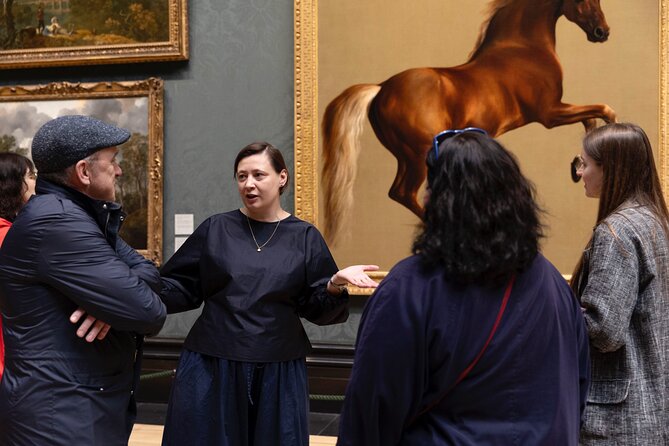
- Art historian Julia leads the experience: Her approach links paintings to their period, values, and emotions.
- Small groups cap at 10 people: That is a useful size for questions and a closer look at individual works.
- The collection has recently been rehung: The gallery’s 200th anniversary display includes 400 additional paintings.
- Permanent collection admission is included: Paid temporary exhibitions, cloakroom charges, and refreshments cost extra.
- Photography is allowed without flash: Bring a phone or camera, but protect the paintings and other visitors.
Why this National Gallery route works
The National Gallery can feel like a giant art textbook with the pages scattered across several rooms. You can walk in for a famous painting, then lose an hour among unfamiliar names. A good guide gives you a thread to follow.
This tour’s thread is change. You look at the ways artists represented light, people, religious stories, landscapes, and daily life. Then you see that many so-called revolutions in art began with artists looking closely at older work.
That approach makes the visit useful for first-time art museum visitors. You do not need to know the difference between a Baroque painting and an Impressionist one before arriving. You can ask basic questions, and the tour is designed for all ages.
It also suits you if you have already visited the National Gallery but felt you only saw a parade of famous names. The guide can help turn separate paintings into a connected story.
The gallery’s 200th anniversary presentation adds extra interest. The collection has been rehung, with 400 paintings added to the display. That does not mean the tour can cover all of them in two hours. It does mean you are entering a museum at a useful moment, with familiar masterpieces shown alongside works that may be new to you.
More Art Museum Tours in London
- Official tickets: Moco Modern & Contemporary Art Museum
★ 4.5 · 1,157 reviews - London: National Gallery Guided Tour with Art Expert Guide
★ 4.7 · 440 reviews - London: Tickets for Moco Modern & Contemporary Art Museum
★ 4.7 · 391 reviews
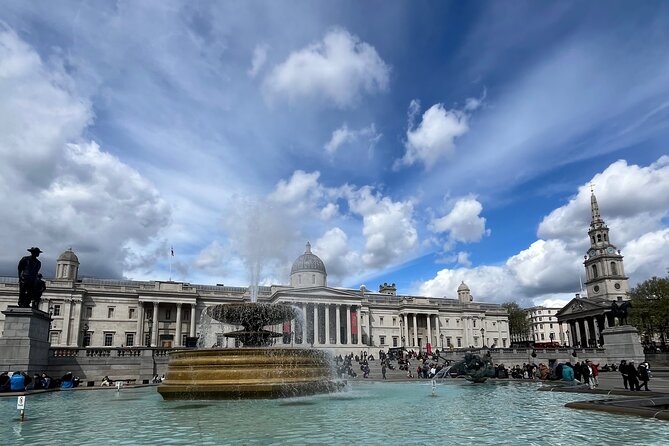
Starting in Trafalgar Square
The meeting point is the National Gallery at Trafalgar Square, London WC2N 5DN. This is a central location near public transportation, so it is practical to reach from many parts of London.
Give yourself enough time to find the entrance and meeting point without rushing. Trafalgar Square can be busy, and a late arrival can be awkward when a small group is already moving through the galleries.
The tour ends back at the National Gallery. That is convenient if you want to continue looking at paintings afterward, visit a paid temporary exhibition, or walk through Trafalgar Square. The experience itself does not include a refreshment stop, so have a drink or snack before you enter if you need one.
Because the activity lasts about two hours, you can fit it into an afternoon without surrendering the rest of your sightseeing day. That is one reason the format works well in London, where you may be balancing museums, churches, markets, and evening plans.
From Michelangelo and Titian to the Old Masters
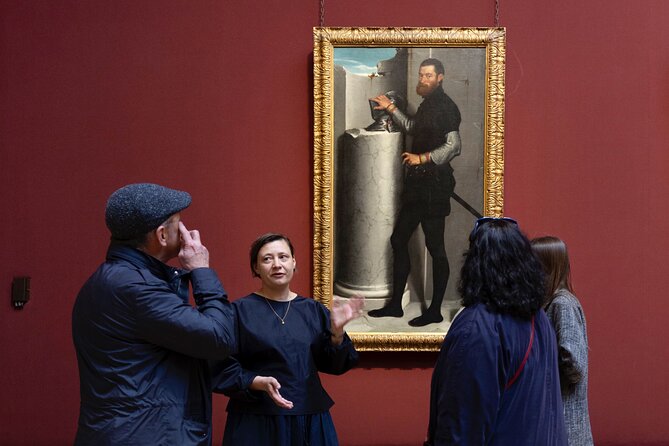
The early part of the experience gives you the museum’s essential foundation. Michelangelo, Titian, Holbein, Canaletto, and Moroni are among the artists included in the route.
These names represent very different ways of making art. Michelangelo brings the force of the human figure and the grand scale associated with Italian Renaissance painting. Titian shows the importance of color and surface. Holbein offers careful observation, while Canaletto is associated with views of Venice.
You will not receive a full lecture on every artist. Two hours calls for choices. The benefit is that the guide can pause at works that help explain a larger idea, rather than simply naming one masterpiece after another.
The Dutch art of the 17th century also receives attention. That matters because this period widened the range of subjects that artists could treat seriously. Domestic interiors, portraits, still lifes, and scenes of ordinary life became important parts of European painting.
You may have seen Dutch works before without thinking about why they mattered. A guide can point out how their attention to light, objects, rooms, and people influenced later painters. That gives you a better way to look, even after you leave the museum.
Turner, Rembrandt, and Caravaggio as links between eras
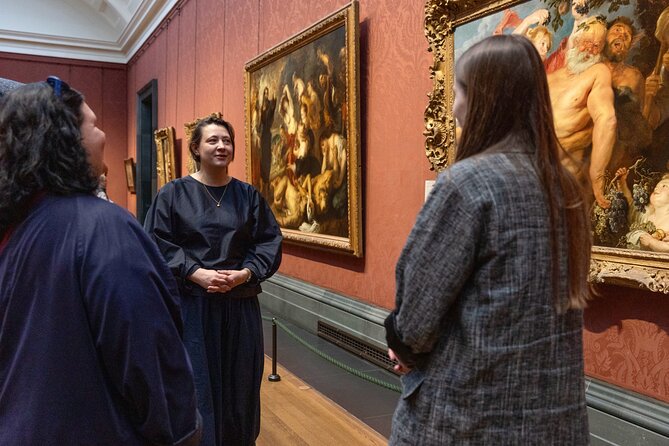
The tour then connects older art with the artists who came later. J.M.W. Turner, Rembrandt, and Caravaggio are especially useful for this purpose.
Turner helps explain how a painter could move away from precise description and toward atmosphere, light, and sensation. His work can feel surprisingly modern when viewed beside conventional academic painting.
Rembrandt brings another kind of lesson. His handling of faces, emotion, and light shows how a painting can feel psychologically alive without relying on theatrical action. Caravaggio adds strong contrast, direct human drama, and an approach to religious scenes that could feel startlingly immediate.
The point is not that Monet or Cézanne simply copied these artists. It is that later painters studied what earlier artists had already attempted. This makes the story more honest and more interesting. Artistic change rarely appears from nowhere.
I like this part of the route because it keeps Impressionism from being treated as an isolated event. You begin to see that the famous shift toward modern painting grew from long arguments about color, light, brushwork, subject matter, and the purpose of art.
More National Gallery tours:
- National Gallery of London Museum Tour Semi-Private 8ppl Max
★ 5.0 · 178 reviews - British Museum & National Gallery of London Semi-Private 8ppl Max
★ 5.0 · 168 reviews - London: National Gallery + Guided Tour + Priority Entry
★ 3.7 · 162 reviews - Official National Gallery Highlights Guided Tour
★ 4.5 · 149 reviews
The Impressionists and their controversial new vision
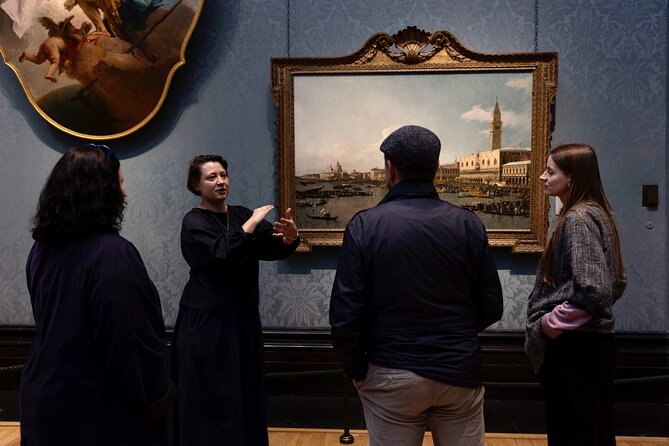
The tour gives special attention to Claude Monet, Auguste Renoir, Edgar Degas, Berthe Morisot, Camille Pissarro, Alfred Sisley, and Paul Cézanne.
These artists are now famous, but their work was deeply controversial in its own time. Their methods moved away from traditional expectations about finished surfaces, historical subjects, and carefully controlled compositions.
You will look at how they handled light, form, and everyday life. A painting that seems familiar in a reproduction can look quite different in person. The scale, brushwork, and surface matter, and an art historian can help you notice those features without burying you in technical language.
The inclusion of Berthe Morisot is important. Women artists are often treated as a footnote in museum tours, even though their work raises major questions about access, training, professional recognition, and the subjects women were permitted to paint.
Only four works by women artists are currently on display, according to the information for this experience. That is a limitation, and the guide addresses the broader history of female painters rather than pretending the collection is balanced. I would see this as a useful discussion, but not as evidence that the National Gallery has a large presentation of women artists.
Cézanne, Pissarro, Sisley, and Degas also help show that Impressionism was not one single style. Their interests and methods differed. A guided visit can help you distinguish those differences instead of leaving you with the vague idea that every bright, loose painting belongs to the same movement.
What a small group changes inside the museum
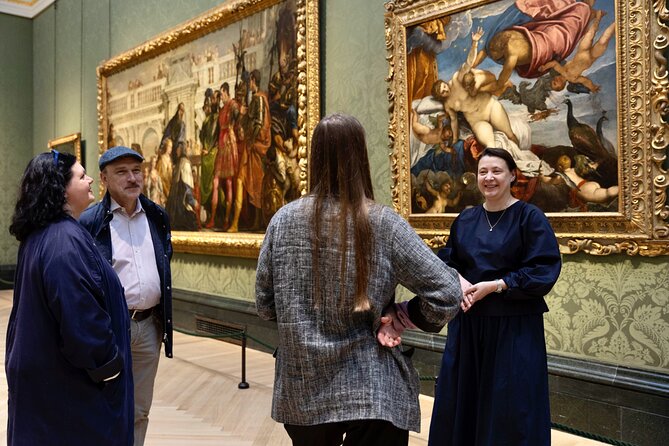
The maximum group size is 10 people. That is small enough to make questions practical and large enough to keep the tour from feeling like a private lesson.
This matters in an art gallery. You need to stand at a reasonable distance from a painting, hear the guide, and move when the room requires it. A smaller group usually makes those transitions easier than a large crowd.
The format also supports conversation. If you are puzzled by a painting, you can ask why it was controversial or what makes it important. You do not need previous art history knowledge, and all ages are welcome.
The tour is not designed for silence and solitary concentration. If you prefer to spend 20 minutes alone with one painting, a self-guided visit may suit you better. If you want a strong framework and the chance to ask questions, the small group is a real advantage.
One highly positive experience came from Julia, an art historian who explained key works in relation to their period, values, and feelings. That description gives you a good sense of the tour’s intended strength: not just identifying artists, but helping you understand why the paintings mattered to people who made and first saw them.
Is $125.01 good value?
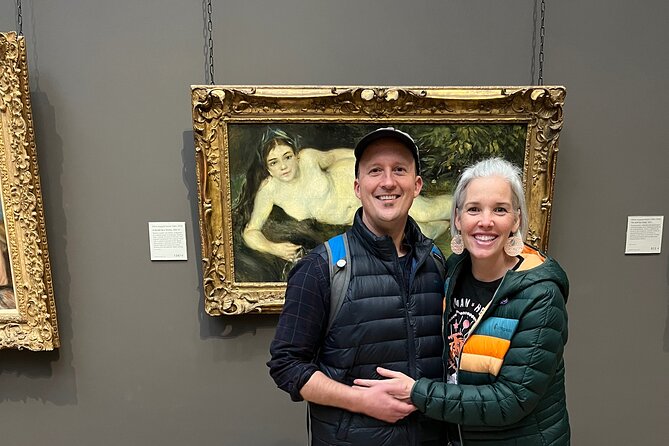
At $125.01 per person, this is not a cheap museum visit. Admission to the National Gallery’s permanent collection is free, so you are paying mainly for the art historian’s time, the small group, and the structure of the visit.
That price can make sense if you are short on time or feel unsure how to approach the collection. A guide can help you use two hours well, and the route covers artists from Michelangelo and Titian through Turner and the Impressionists. You are also paying for interpretation, not simply entry.
It is harder to justify if you already know the gallery well, enjoy reading labels, or have a full day available for your own exploration. You could enter the permanent collection without paying for admission and take your time.
I would compare this price with the cost of your London schedule. If a focused two-hour explanation helps you make better use of the afternoon, the fee may be worthwhile. If your main goal is to see one or two specific paintings at your own pace, keep your money and visit independently.
The tour includes no refreshments, and paid temporary exhibitions are separate. The cloakroom also has its own fee. Those are small points, but they matter when you are working out the total cost.
Practical details that affect your visit
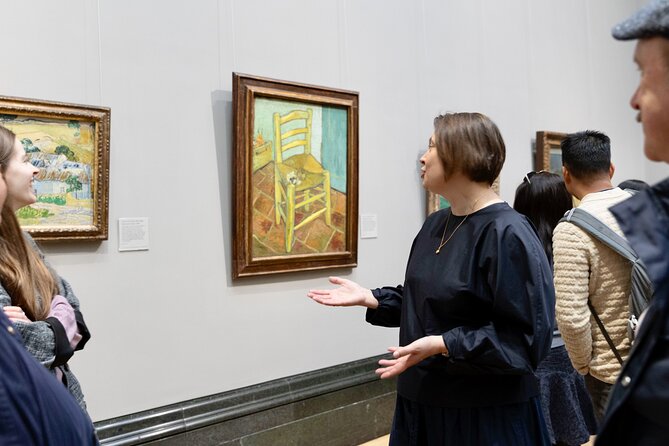
The activity is offered in English and uses a mobile ticket. Confirmation is sent within 48 hours of booking, subject to availability. The tour requires a minimum number of participants, so a cancellation is possible if that minimum is not reached.
The cancellation terms are generous up to a point. You receive a full refund if you cancel at least 24 hours before the start time. Inside that 24-hour window, the payment is not refunded, and changes are not accepted.
The experience requires a moderate level of physical fitness. You will be walking through the gallery and standing for parts of the tour. The information does not specify seating arrangements, so you should not assume that a chair will always be available.
Photography is permitted without flash. That lets you record favorite works for later reference, but keep the flash turned off. The tour does not include tickets to paid temporary exhibitions, so check that separately if one is part of your museum plan.
There is also a practical reliability concern. One guide canceled about an hour before a scheduled start because a train was not running. The person affected rented headphones and completed a self-guided highlights visit instead, but there was not enough time to arrange another tour. This appears to be an isolated transport problem, yet it is worth keeping in mind if your schedule is tight.
Who will get the most from this tour?
I would recommend it most strongly to a first-time National Gallery visitor who wants context without spending an entire day indoors. It is also a good fit if you recognize famous artists but want to understand how their ideas connect.
Families and mixed-age groups can use the tour well because no previous art history is required. The small group and question-friendly format should help younger visitors stay involved, though the content still depends on their interest in painting.
It may also suit you if Impressionism is your main interest. The route does not treat Monet, Renoir, Degas, Morisot, Pissarro, Sisley, and Cézanne as isolated celebrities. Instead, it places their work beside Turner, Rembrandt, Caravaggio, and other earlier painters.
I would be more cautious if women artists are your central reason for booking. The discussion is included, but only four works by women artists are currently on display. That is not enough for a dedicated women artists tour.
Likewise, this is not the right choice if you want a complete survey of every gallery room. Two hours is enough for a strong route, not a full inventory.
Should you book the National Gallery tour?
Book it if you want a clear two-hour story about how European painting changed, especially if you like the idea of linking Michelangelo, Titian, Rembrandt, Turner, and the Impressionists. The small group, English-speaking art historian, and included permanent collection admission make the visit easier to manage than wandering without a plan.
Think twice if the $125.01 price feels high for a museum whose main collection is free. You can get a worthwhile visit on your own, particularly if you have time to read labels and follow your own interests.
For most first-time visitors with limited time, I think the guided format offers real value. Just leave a little flexibility around the start time, and remember that a last-minute transport problem can disrupt even a carefully planned visit.
FAQ
How long does the National Gallery guided tour last?
The tour lasts approximately two hours.
Where does the tour start and finish?
It starts at the National Gallery, Trafalgar Square, London WC2N 5DN, UK, and ends back at the meeting point.
Is admission to the National Gallery included?
Admission to the gallery’s permanent collection is included. Tickets for paid temporary exhibitions are not included.
Who leads the tour?
The tour is led by an expert art historian. Julia is identified as one of the art historians associated with the experience.
How many people can join the tour?
The activity has a maximum of 10 participants.
Is previous art history knowledge required?
No. All ages are welcome, and no previous knowledge of art history is required.
Can I take photographs inside the gallery?
Yes. Photography is permitted, but flash photography is not allowed.
What is the cancellation policy?
You can cancel for a full refund up to 24 hours before the experience starts. Cancellations and changes made less than 24 hours before the start time are not refunded or accepted.
Just added around London
- A Guided Tour at the National Gallery in London★ 3.5 · 2 reviews
- The Shard Viewing Gallery & Westminster Walking Tour★ 4.0 · 12 reviews
- Women in Art Walking Tour★ 5.0 · 13 reviews
- Best of Westminster Abbey with Upper Gallery & Buckingham Palace★ 4.5 · 15 reviews
- Private Guided Tour of the National Gallery in London★ 4.0 · 8 reviews
- Tate Modern Museum London Guided Tour Semi-Private 8ppl Max★ 5.0 · 41 reviews
- The Tate Modern London – Exclusive Guided Museum Tour★ 5.0 · 41 reviews
- Tate Modern Private Tour in London with Blue Badge Guide★ 5.0 · 3 reviews
Art Museum Tours in London, compared.
Official tickets: Moco Modern & Contemporary Art Museum
Read our review →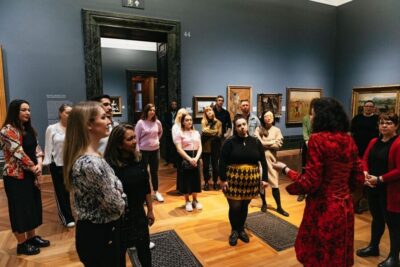
National Gallery Guided Tour with Art Expert Guide
Read our review →
Tickets for Moco Modern & Contemporary Art Museum
Read our review →
National Gallery of London Museum Tour Semi-Private 8ppl Max
Read our review →
Day Trip to Paris with Eiffel Tower, Notre Dame and Louvre Museum
Read our review →
British Museum & National Gallery of London Semi-Private 8ppl Max
Read our review →
National Gallery + Guided Tour + Priority Entry
Read our review →
Browse the lists this tour appears in