
REVIEW · LONDON
London: Westminster Abbey & Jubilee Galleries Guided Tour
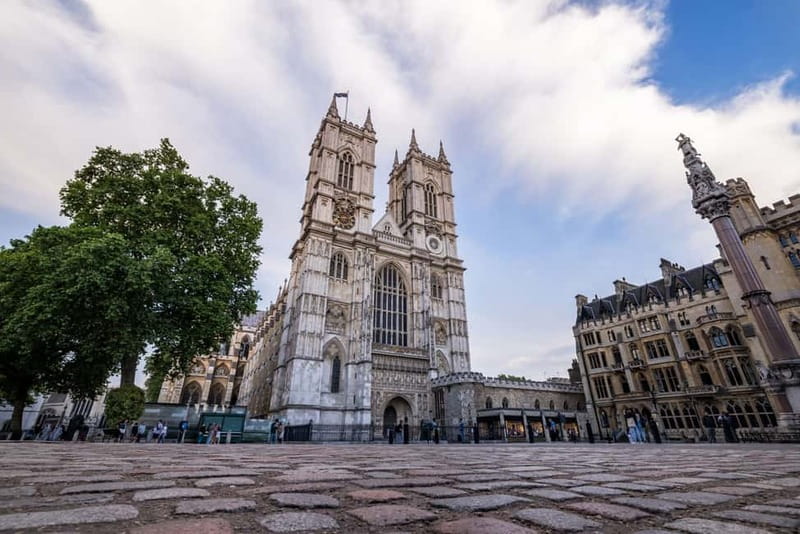
Westminster Abbey is not simply a church you walk through and photograph. It is where monarchs have been crowned, royal weddings have taken place, and figures such as Isaac Newton, Charles Darwin, and Edward V were buried. The Queen’s Diamond Jubilee Galleries add a second layer, with old artifacts and views down into the Abbey that many people miss.
I like the way this tour pairs a strong guide with access to a part of the building that can be hard to book on its own. I also like the thoughtful route through the Coronation Chair, Tomb of the Unknown Soldier, High Altar, and famous tombs. The main drawback is the pace and the building itself: you need to walk at a moderate pace, use stairs, and manage crowds in a historic site that is not suitable for wheelchairs, strollers, or people with mobility impairments.
Key points to know before booking
- The galleries are the special extra: You go upstairs to the Queen’s Diamond Jubilee Galleries, opened to the public only recently and filled with precious objects, including artifacts more than 1,000 years old.
- A Blue Badge guide leads the visit: Guides such as Fia, James, Mary, Rosie, and Julia have been praised for clear storytelling, patient answers, and strong knowledge of English history.
- You skip the ticket line: Your admission covers both Westminster Abbey and the galleries, saving you from arranging separate access.
- The Abbey is the main event: Expect the Coronation Chair, High Altar, Tomb of the Unknown Soldier, royal tombs, and graves of major scientific and political figures.
- Plan for three hours: About 15 minutes is spent around Parliament Square, followed by roughly 2 hours and 45 minutes inside the Abbey.
- The meeting point needs care: Meet at the Viscount Palmerston Statue in Parliament Square, with your guide holding a green Walks sign, and arrive 15 minutes early.
Why Westminster Abbey is better with a guide
You can admire Westminster Abbey on your own, but the building does not explain itself easily. Its chapels, carved stone, tombs, stained glass, royal symbols, and memorials compete for your attention. Without context, you may see a grand room full of old stone. With a good guide, the same room becomes a map of English power, faith, science, and ceremony.
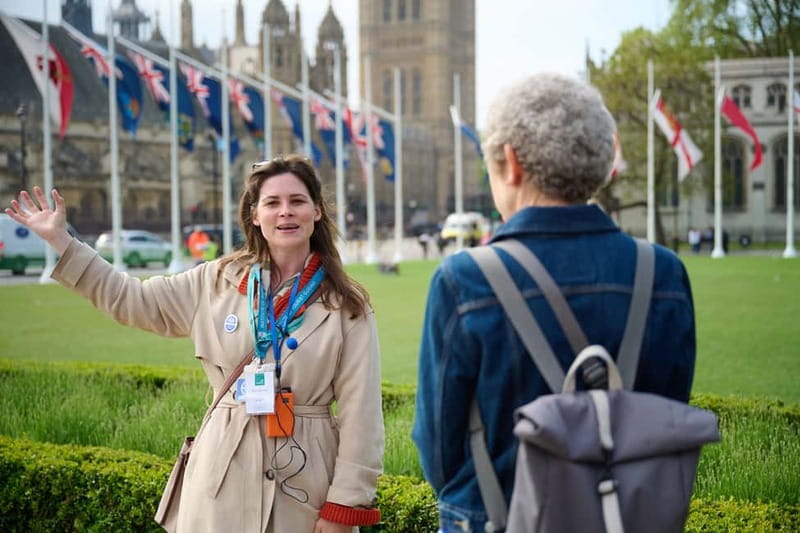
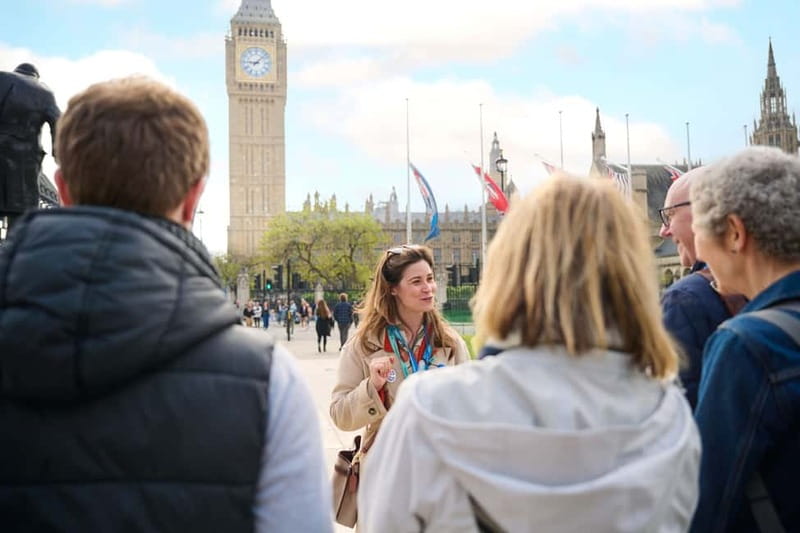
The tour begins with a short introduction in Parliament Square. This gives you a useful sense of place before you enter. The Abbey sits beside the Houses of Parliament, so the opening walk helps connect the church to the political heart of London.
The guide then takes you inside with skip-the-queue access. That matters most at busy times, when a long wait outside can eat into your day. It does not mean the Abbey will be quiet once you enter. The interior can still be crowded, and one guide, Rosie, was praised for negotiating access through busy areas so the group could see important points without constant confusion.
A Blue Badge guide can also help you notice small details that are easy to miss. The decoration is not always obvious, particularly when several chapels and monuments sit close together. Guides including Stephen, Fia, James, Charlotte, Elizabeth, Karen, Salvatore, and Julia have been singled out for making the material clear, lively, and easy to follow.
More Art Museum Tours in London
- Official tickets: Moco Modern & Contemporary Art Museum
★ 4.5 · 1,157 reviews - London: National Gallery Guided Tour with Art Expert Guide
★ 4.7 · 440 reviews - London: Tickets for Moco Modern & Contemporary Art Museum
★ 4.7 · 391 reviews
Parliament Square sets the scene
The official meeting point is the Viscount Palmerston Statue in Parliament Square, London SW1P 3JX. Look for the guide holding a green Walks sign. Arrive 15 minutes before the scheduled start, since the group moves into the Abbey after a brief introduction.
This opening section is short, but it earns its place. Parliament Square is surrounded by buildings and monuments tied to British public life. Your guide may use the area to explain the relationship between Westminster Abbey and the Houses of Parliament before leading you inside.
Pay close attention to your meeting instructions. One group had conflicting directions, with some people given a different location, although the guide eventually found them. That is an avoidable worry in central London. Check your confirmation carefully and arrive early rather than trying to join the group at the Abbey entrance.
The tour ends back at Parliament Square. Hotel pickup and drop-off are not included, so you will need to make your own way to and from the area. The location is central, but allow extra time if you are crossing London at a busy hour.
The Coronation Chair and the High Altar
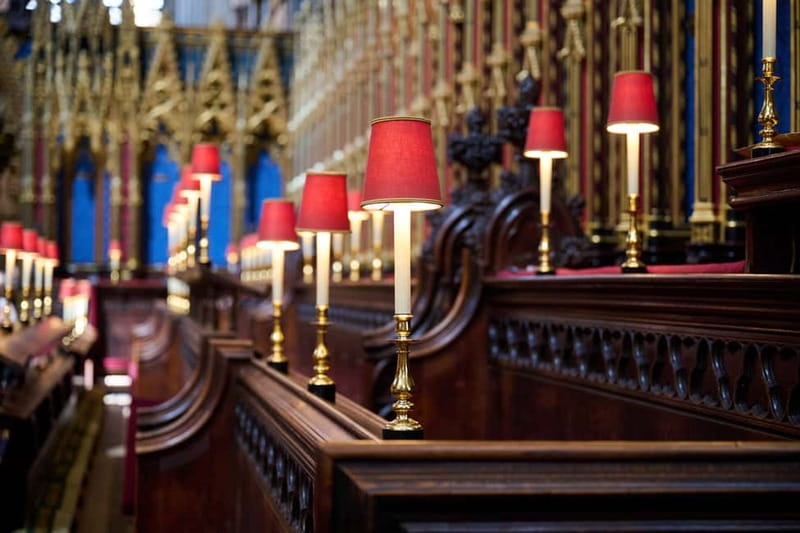
Inside Westminster Abbey, the guide leads you through the principal areas and explains the ceremonies that took place there. The Coronation Chair is one of the essential stops. It connects the building to the long tradition of royal coronations and gives you a physical object around which the guide can explain ceremony, monarchy, and continuity.
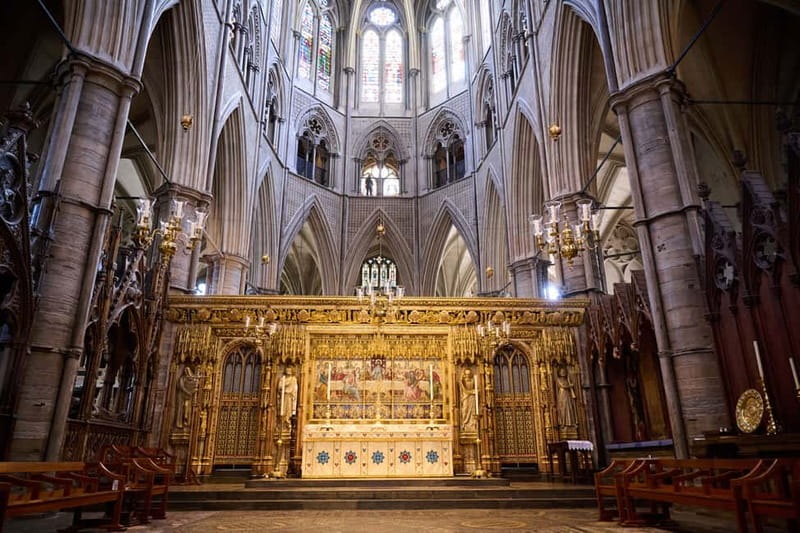
The High Altar is another major point. It is associated with royal weddings and remains one of the most important spaces in the Abbey. The value here is not just visual. A guide can explain why the altar matters, how royal ceremonies use the building, and how the architecture directs attention toward particular spaces.
You should expect the Abbey to feel active rather than museum-silent. People are moving, groups are stopping, and some areas may have limited access. A guide helps you keep track of the route and makes sure you do not walk past the main points without understanding them.
The three-hour format gives enough time for detail, but it is not unlimited. You will not study every monument at length. Instead, you get a guided sweep through the most important spaces, with stories and explanations filling in the gaps.
Tombs that turn names into people
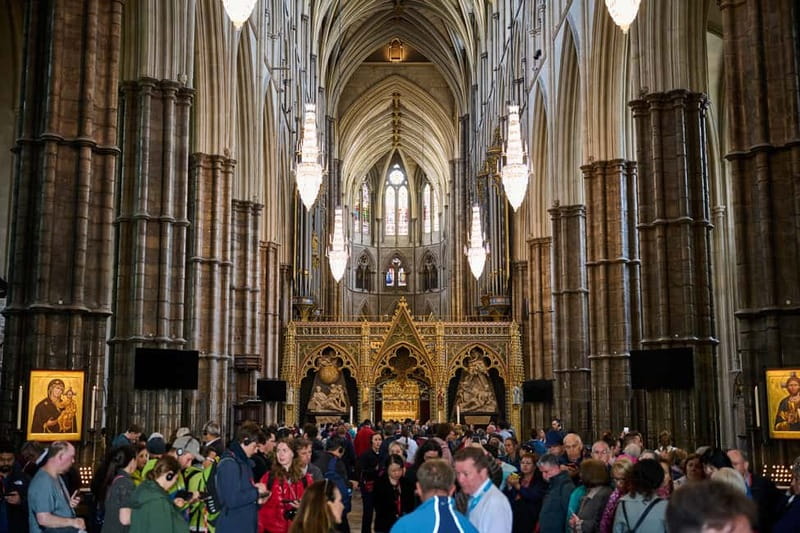
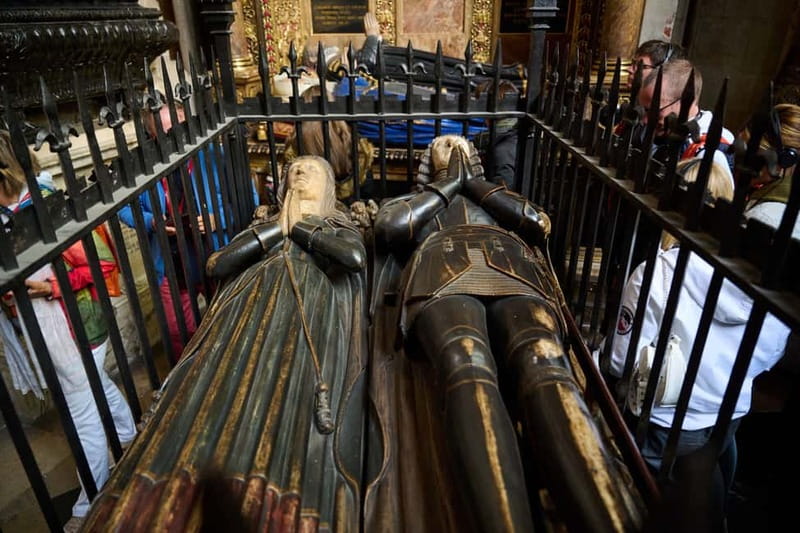
The Abbey’s tombs are among the strongest parts of the tour. You see the resting places of major figures, including Sir Isaac Newton and Charles Darwin. These names are familiar from science books, but the setting changes how you think about them. Their presence inside a royal church shows how national memory expanded beyond monarchs and military leaders.
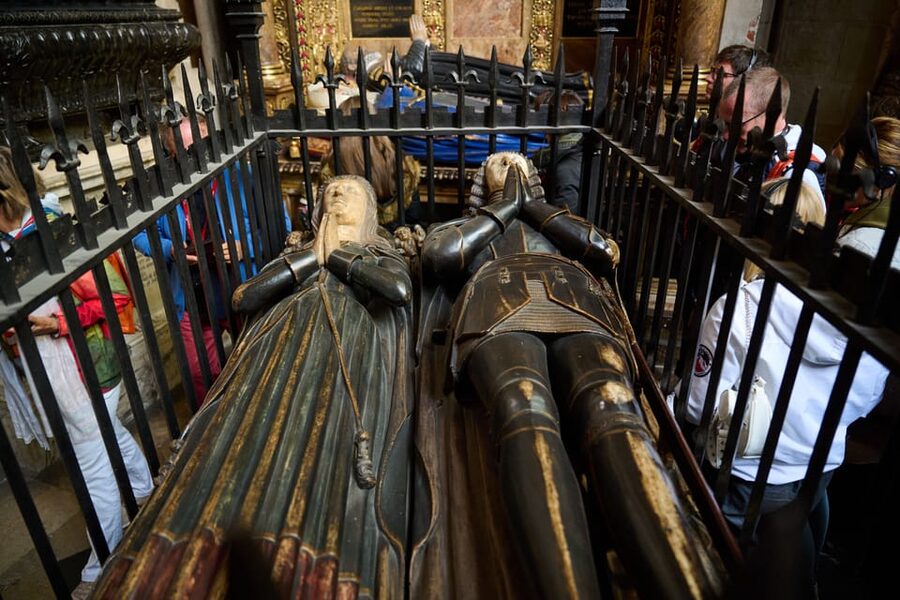
You also see the tomb of Edward V, along with other significant royal and historic figures. The guide’s role is particularly useful here because a name and date on stone rarely tell you why someone matters. The tour connects people, events, succession, science, and public memory.
The Tomb of the Unknown Soldier receives special attention. Mary’s explanation of it was described as particularly moving, and this is one place where a good guide can keep the tone respectful without turning the moment into a lecture. The memorial speaks to loss on a national scale, and it sits within a building otherwise filled with royal ceremony and famous names.
I like this mixture of grand and personal history. You move from coronations and weddings to graves, memorials, and the people behind the names. The Abbey feels less like a single royal monument and more like a record of what England has chosen to remember.
A few more gallery visits around London worth comparing
- London: National Gallery + Guided Tour + Priority Entry
★ 3.7 · 162 reviews - London: Tate Modern Official Guided Tour
★ 4.6 · 154 reviews - Official National Gallery Highlights Guided Tour
★ 4.5 · 149 reviews - The National Gallery of London – Exclusive Guided Museum Tour
★ 5.0 · 100 reviews
The Queen’s Diamond Jubilee Galleries
The galleries are the part of this experience that sets it apart from a standard Westminster Abbey visit. After exploring the main floor, you go upstairs to the Queen’s Diamond Jubilee Galleries, where precious objects and historic artifacts are displayed.
The galleries opened to the public only recently, and access can be difficult to arrange. Having entry included removes one of the main practical hurdles. You should still expect stairs and walking, which is important if you have mobility concerns.
From the galleries, you get views across and into the Abbey. One especially memorable feature is a portrait of Queen Elizabeth II. The elevated position changes your view of the building. Instead of looking only along the floor, you can study the scale, layout, and decoration from above.
The objects on display include artifacts more than 1,000 years old. That age gives the galleries real weight, but the appeal is not limited to age. The displays help explain how the Abbey preserved objects linked to worship, monarchy, and its long institutional life.
This section can be easy to rush if you have already spent a long time on the main floor. Try to keep some energy for it. The galleries are not just an add-on at the end. They offer a different way to understand the Abbey, and the views may be the most distinctive part of the visit.
What the guide adds to the experience
The strongest praise for this tour centers on the guides. That matters because Westminster Abbey can be visually overwhelming. A guide who gives you a clear route and tells stories at the right pace can make the difference between remembering the visit and simply remembering a lot of stone.
Fia is known for thorough explanations, patience, and answering questions. James brings visible enthusiasm to English history and helps make the material interesting rather than dry. Charlotte combines humor and kindness with strong knowledge of the Abbey.
Other guides have different strengths. Rosie handled a crowded Abbey confidently. Mary gave the Tomb of the Unknown Soldier particular care. Elizabeth extended the context outside the building with an explanation of the Houses of Parliament and their connection to the Abbey. Salvatore was praised for making a morning tour both informative and pleasant.
You cannot choose a specific guide in advance from the information provided, so treat these names as examples of the standard you may encounter, not a promise. The important point is that this tour depends heavily on the person leading it. The guide tells you where to look, explains what you are seeing, and keeps the group moving through a complicated building.
Price and practical value at $119.88
At $119.88 per person, this is not a budget way to enter Westminster Abbey. You are paying for more than admission: a certified Blue Badge guide, a guided walking route, skip-the-queue access, and entry to the Jubilee Galleries.
The value is strongest if you care about context and want the galleries included. A self-guided visit may suit you better if you prefer to move slowly, read every display, or focus on photography. But you would lose the guide’s explanations, the organized route, and the help of someone who knows how to handle crowded areas.
Three hours is also useful value in a short London visit. The tour takes up a substantial part of your day, but it gives the Abbey the attention it deserves. You are not simply checking off the building in 45 minutes before moving to the next sight.
The price makes more sense for first-time visitors, history fans, and anyone who wants the building explained. It is less compelling for someone who has already studied the Abbey closely or wants a quiet, independent visit.
Walking, crowds, and access
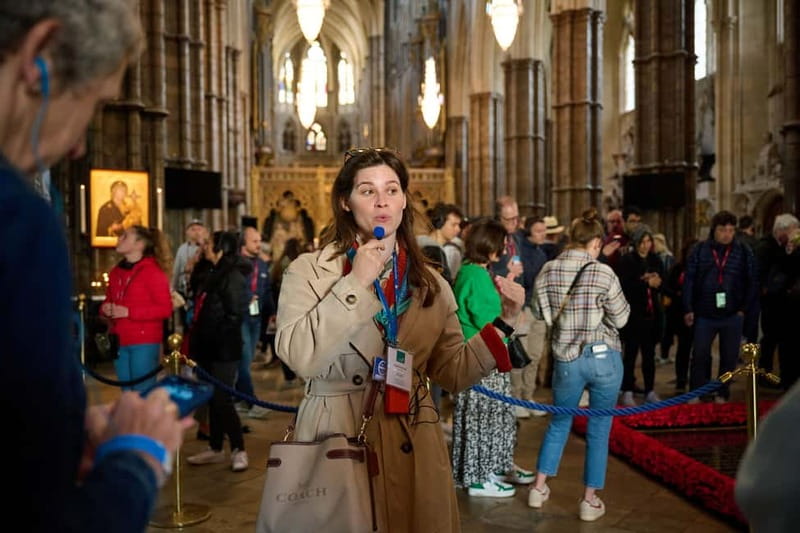
This is a walking tour, and you should be comfortable moving at a moderate pace. The route includes the main Abbey floor and the upstairs galleries, so stairs are part of the practical calculation.
The tour is not suitable for wheelchair users, strollers, or people with mobility impairments. That is not a minor footnote. Westminster Abbey is an old building with access limits, and the gallery section makes this even more important.
Crowds are another consideration. The Abbey can become very busy, particularly later in the day. One guide helped a group reach key points before the crowds grew heavier, so an early start may be worth considering when available. The exact start times vary, and you should check availability for the date of your visit.
The guide can improve movement through the building, but skip-the-line entry does not create a private Abbey. Expect other groups, visitors, and occasional restricted areas. Sites can close from time to time, and changes may be made at the start if a last-minute closure occurs.
Who should book this Westminster Abbey tour?
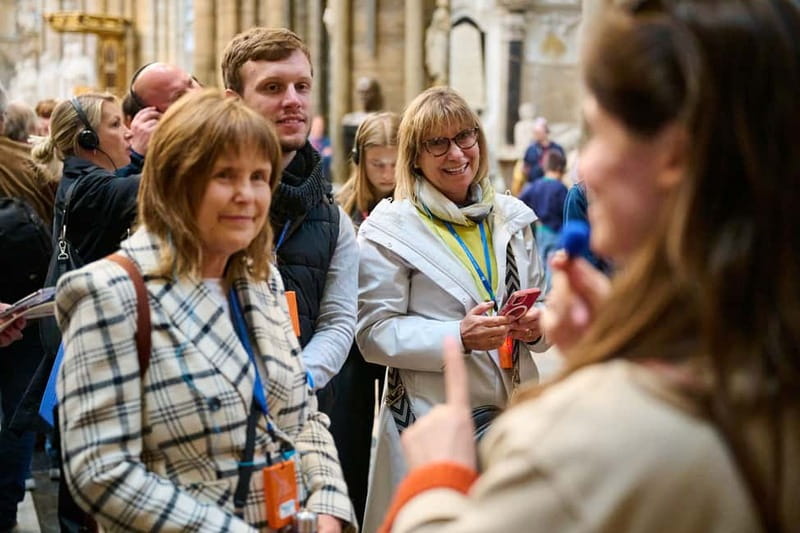
I would choose this tour if you want the main historical points explained rather than simply viewed. It suits first-time London visitors, families with older children who can maintain the pace, architecture fans, and anyone interested in royal ceremonies, science, memorials, and English history.
It is also a good choice if the Jubilee Galleries are high on your list. Their artifacts and views provide something beyond a standard Abbey entrance, and the included access saves you from trying to arrange that section separately.
I would hesitate if you have difficulty walking or using stairs. I would also think twice if you strongly prefer independent sightseeing. The guide-led format is the point of the experience, and the schedule gives you less freedom than a self-guided ticket.
The English-only format is another practical detail. You need to be comfortable following a live guide in English for nearly three hours. If you are, the storytelling can make the building far easier to understand.
Should you book it?
Book this tour if you want Westminster Abbey to make sense, not just look impressive. The best reasons are the Blue Badge guide, skip-the-queue entry, and access to the Jubilee Galleries, especially the overhead views and old artifacts.
Skip it if you need wheelchair or stroller access, cannot walk at a moderate pace, or prefer to set your own route. For everyone else, the price is reasonable for a focused three-hour visit that covers the Abbey’s essential spaces and adds a section many independent visitors miss.
FAQ
How long does the Westminster Abbey and Jubilee Galleries tour last?
The tour lasts three hours. Around 15 minutes is spent in Parliament Square, followed by approximately 2 hours and 45 minutes inside Westminster Abbey.
Where does the tour meet?
Meet at the Viscount Palmerston Statue in Parliament Square, London SW1P 3JX. Your guide will hold a green Walks sign. Arrive 15 minutes before the scheduled start.
Is the tour conducted in English?
Yes. The live tour guide speaks English, and English is the only language listed for this activity.
Does the price include entry to the Jubilee Galleries?
Yes. The tour includes skip-the-queue access to Westminster Abbey and the Queen’s Diamond Jubilee Galleries.
Is the tour suitable for wheelchairs or strollers?
No. The activity is not suitable for wheelchair users, strollers, or people with mobility impairments. You should also be able to walk at a moderate pace without difficulty.
What happens if I need to cancel?
You can cancel up to 24 hours before the tour for a full refund. You can also reserve your place and pay later, which keeps your plans flexible.
Just added around London
- A Guided Tour at the National Gallery in London★ 3.5 · 2 reviews
- The Shard Viewing Gallery & Westminster Walking Tour★ 4.0 · 12 reviews
- Women in Art Walking Tour★ 5.0 · 13 reviews
- Best of Westminster Abbey with Upper Gallery & Buckingham Palace★ 4.5 · 15 reviews
- Private Guided Tour of the National Gallery in London★ 4.0 · 8 reviews
- Tate Modern Museum London Guided Tour Semi-Private 8ppl Max★ 5.0 · 41 reviews
- The Tate Modern London – Exclusive Guided Museum Tour★ 5.0 · 41 reviews
- Tate Modern Private Tour in London with Blue Badge Guide★ 5.0 · 3 reviews
Art Museum Tours in London, compared.

Official tickets: Moco Modern & Contemporary Art Museum
Read our review →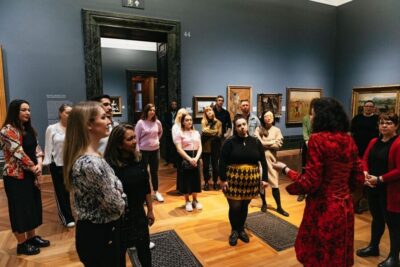
National Gallery Guided Tour with Art Expert Guide
Read our review →
Tickets for Moco Modern & Contemporary Art Museum
Read our review →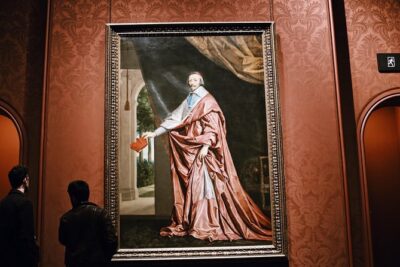
National Gallery of London Museum Tour Semi-Private 8ppl Max
Read our review →
Day Trip to Paris with Eiffel Tower, Notre Dame and Louvre Museum
Read our review →
British Museum & National Gallery of London Semi-Private 8ppl Max
Read our review →
National Gallery + Guided Tour + Priority Entry
Read our review →
Browse the lists this tour appears in