
REVIEW · THE UK
London: National Gallery of London Masterpieces Guided Tour
The best thing about this National Gallery tour is its clear story: you move from devotional paintings of the 1300s to the bold color and brushwork of Van Gogh and Seurat. Instead of wandering a huge museum and wondering what matters, you get a guided route through major works by Botticelli, Leonardo da Vinci, Rembrandt, Vermeer, Raphael, Monet, Velázquez, and others.
I like the small maximum of eight people, which gives you a fair chance to hear the guide and ask questions. I also like the way the tour links paintings across centuries, so Sunflowers becomes part of a larger story rather than a lone famous picture. The main drawback is the price: at $112 per person, it costs far more than entering a museum on your own, and temporary exhibits are not included.
Key points at a glance

- A 2.5-hour route through centuries of art: Follow the collection from the 1300s to neo-impressionism.
- Major works with useful context: See Botticelli, Leonardo da Vinci, Vermeer, Van Gogh, Velázquez, Seurat, Raphael, Rembrandt, and Monet.
- Small groups capped at eight: A better setup for questions and clear conversation than a large museum crowd.
- Strong guide-led experience: Jake, Stephanie, Matilda, Alex, Becky, and others have earned praise for clear explanations, warmth, and enthusiasm.
- English commentary only: Guides explain technique, symbols, artists, and historical setting in live English.
- A focused first visit: Ideal if you want the National Gallery’s essential paintings without trying to see every room.
Why a guided National Gallery visit helps

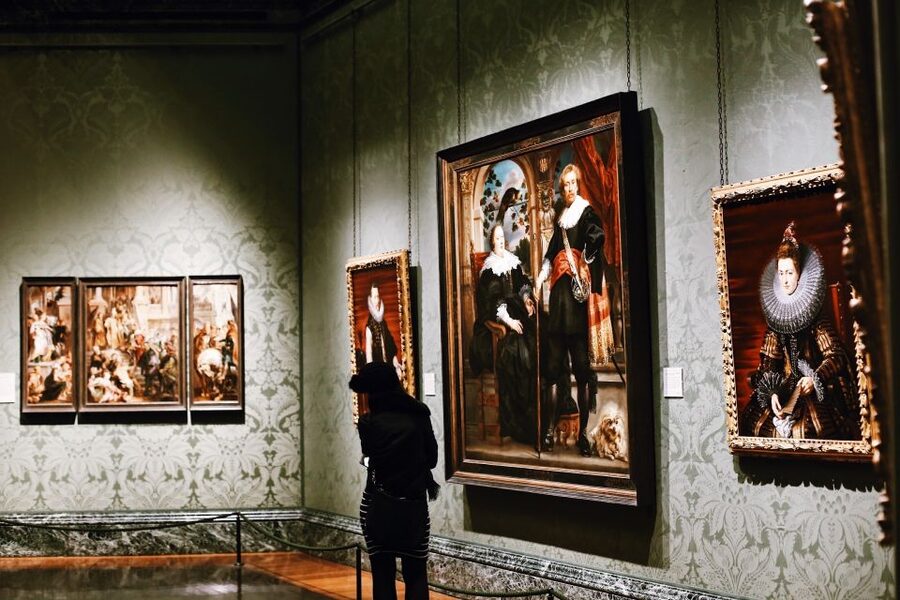
The National Gallery can be tricky to tackle alone. It holds paintings from the 1300s onward, and the collection is large enough to scatter your attention. You may recognize Van Gogh’s Sunflowers, but then pass a lesser-known religious panel without knowing why it matters.
This tour gives you a route and a theme. You are not simply ticking off famous names. You are watching painting change over time, from early devotional images and carefully arranged Renaissance scenes to the freer color and broken brushwork of later artists.
That structure is valuable if you have only one visit. It also helps you notice links between artists. A guide can point out how an artist uses line, light, perspective, symbolism, or the human body, then show how a later painter handles the same problem in a new way.
The experience is offered as a private tour or a shared small group with no more than eight people. That number matters in a museum. You are less likely to lose the guide in a crowd, and you can ask why a detail in a painting matters without holding up a large party.
More National Gallery tours:
- London: National Gallery Guided Tour with Art Expert Guide
★ 4.7 · 440 reviews - National Gallery of London Museum Tour Semi-Private 8ppl Max
★ 5.0 · 178 reviews - British Museum & National Gallery of London Semi-Private 8ppl Max
★ 5.0 · 168 reviews
Beginning with early devotional paintings
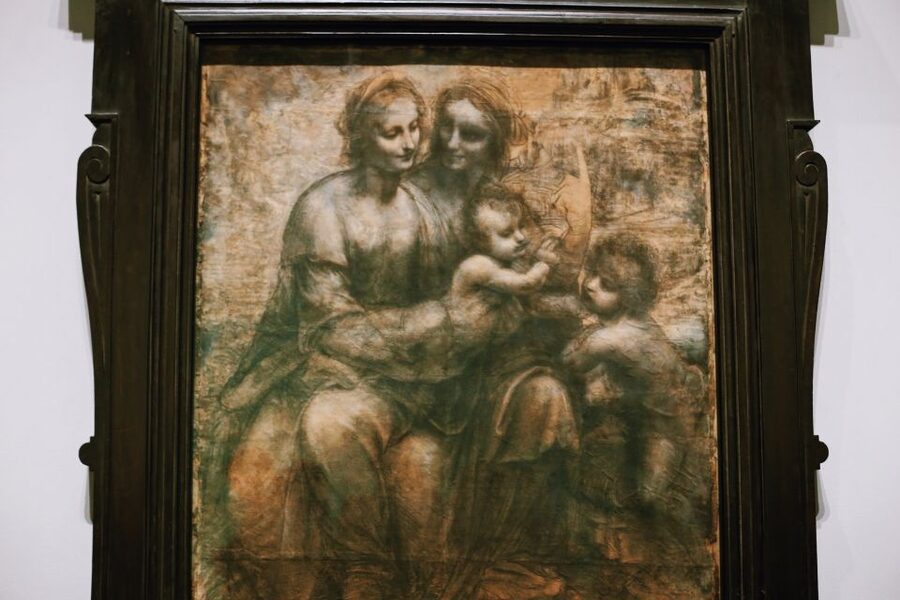
The route reaches back to the 1300s, when many paintings were made for religious devotion. These early works can look formal at first glance, but a good guide helps you read their gestures, expressions, color choices, and symbols.
This is one reason I would choose a guided visit over a fast solo walk. You get more than dates and names. The guide explains how the painting functioned, what its imagery meant, and how artists gradually changed their approach to space and the human figure.
Raphael is part of this early section of the story. His devotional paintings offer a chance to see the balance and calm associated with High Renaissance art. You can focus on composition and the relationships between figures, while the guide supplies the larger setting.
You should not expect every painting in the National Gallery to be covered. Two and a half hours is enough for a well-chosen selection, not the entire collection. That is a strength if you want focus, but a limitation if you prefer an exhaustive museum tour.
Botticelli, Venus, and the language of myth
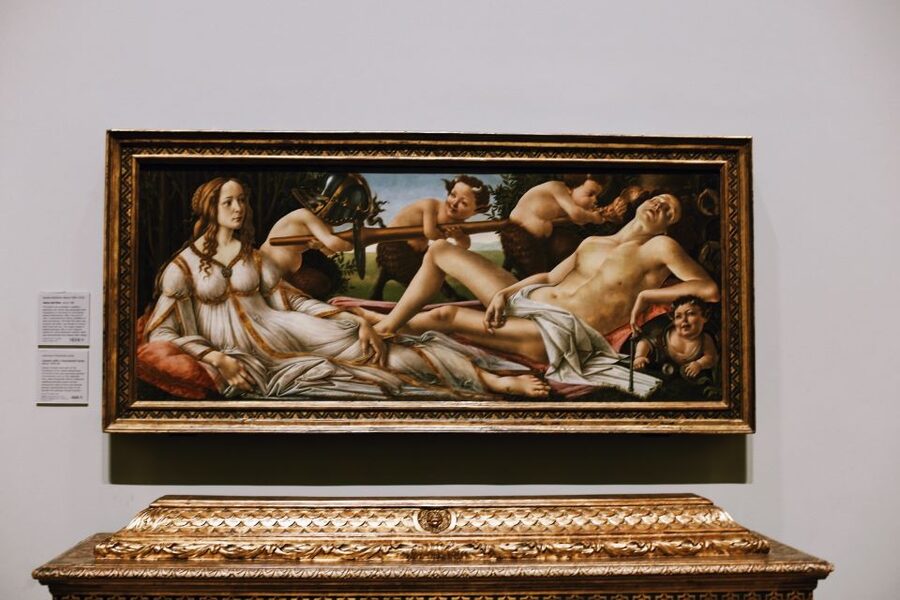
Botticelli’s Venus and Mars gives the tour a change of mood. Instead of a devotional scene, you are looking at a mythological subject filled with playful details and symbolic ideas.
A guide can help you see how the painting works at several levels. There is the central pair, the contrast between Venus and Mars, and the small figures that add movement and humor. You also get a useful comparison between the purpose of a mythological panel and the purpose of an altarpiece or devotional image.
This is the sort of stop that makes the chronological route worthwhile. You can see that art history is not a straight march toward one perfect style. Artists worked for different patrons and purposes, and they used old stories in new ways.
The painting is also a good reminder not to rush through famous works. Botticelli’s pictures are often instantly recognizable, but the details reward time. With a guide beside you, you have a better chance of noticing what your first quick look misses.
Leonardo da Vinci’s Virgin of the Rocks
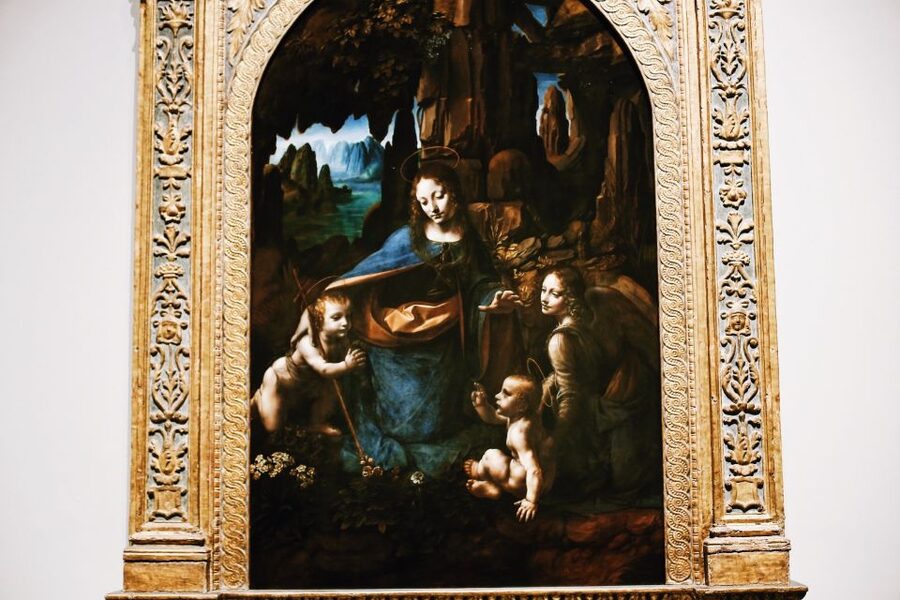
Leonardo’s The Virgin of the Rocks is one of the tour’s major stops. Even if you know the title, seeing the work in person gives you a chance to study Leonardo’s handling of faces, hands, landscape, and soft transitions of light.
This is where live commentary can make a real difference. Rather than simply saying that Leonardo was a great artist, the guide can direct your eye to how the figures relate to one another and how the setting shapes the scene.
The painting also works well in the larger story of changing art. You can compare its atmosphere and human presence with the more formal qualities of earlier devotional works. The shift is not just about better technique. It is about how artists invite you into a scene.
Expect time to be shared between several important pictures, so you will not receive a long lecture on every work. The benefit is variety. You keep moving through the collection instead of spending the whole visit in one room.
More masterpiece highlights tours in the UK:
- Louvre Museum Masterpieces Guided Tour with Access
★ 4.5 · 12,023 reviews - Mona Lisa & Louvre Masterpieces Tour with Reserved Access
★ 4.6 · 6,812 reviews - Florence: Uffizi Priority Ticket & Masterpieces Audio App
★ 4.2 · 6,402 reviews - Uffizi Gallery: Renaissance Masterpieces Guided Tour
★ 4.6 · 6,070 reviews
Velázquez, Rembrandt, and the power of portraiture
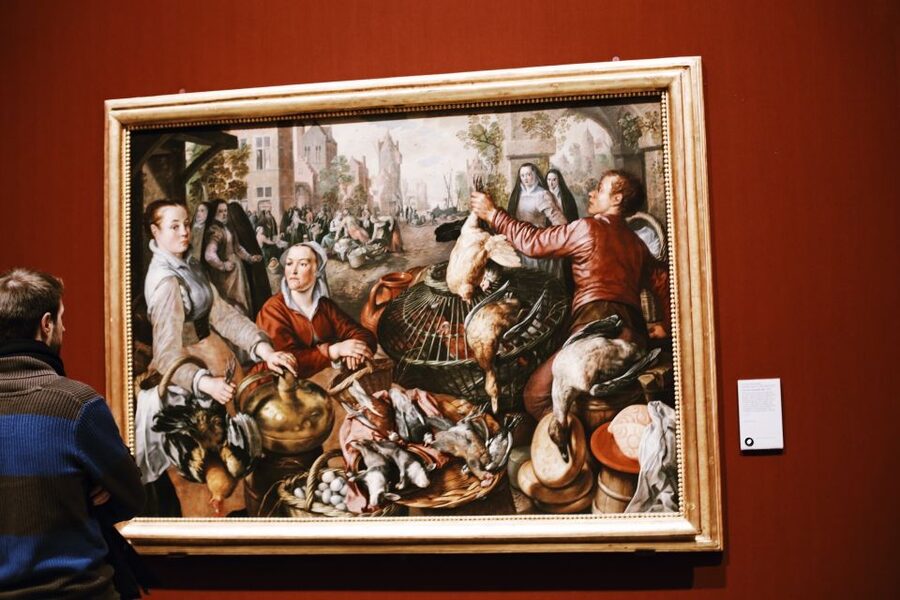
Velázquez and Rembrandt bring a different kind of drama. Their paintings encourage you to look at people, clothing, posture, expression, and the way paint can suggest texture without describing every thread.
Velázquez’s Rokeby Venus is especially useful in a guided route because it raises questions about the nude figure, beauty, viewpoint, and the act of looking. The guide can give you a way into the picture without reducing it to a simple story.
Rembrandt adds another lesson in light and character. His work can feel intimate because the lighting directs your attention and gives faces a strong emotional presence. You may find yourself noticing not just who is depicted, but how the painting makes you feel about that person.
These stops are valuable for visitors who think art history is mostly about memorizing periods. Here, you can watch the focus shift toward personality, mood, and the physical qualities of paint.
Vermeer’s quiet interior world
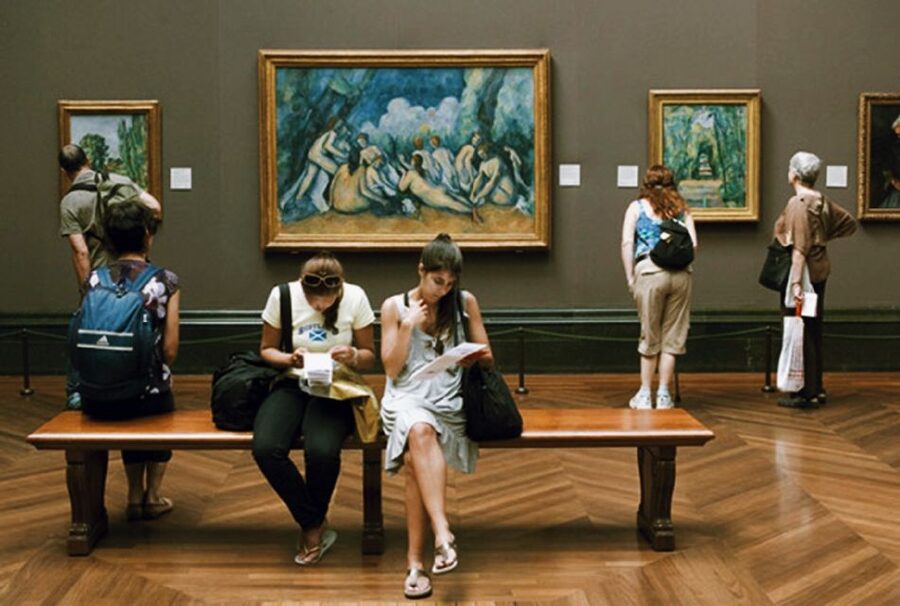
Vermeer’s Lady Standing at a Virginal offers a quieter pause. Compared with the drama of mythological or religious scenes, this painting asks you to slow down and examine an interior, a figure, and the controlled use of light.
Vermeer’s pictures are easy to underestimate because they can appear simple. A guide helps you look at the arrangement of the room, the relationship between the woman and the instrument, and the way the image creates a sense of stillness.
This is also a good stop for comparing artists who worked in very different ways. The painting does not need a crowded scene to hold your attention. Its appeal comes from balance, light, suggestion, and restraint.
If you like art that rewards patient looking, this may be one of your favorite parts. If you prefer big historical events or dramatic action, you may find the pause less exciting. The variety is part of the point.
Monet and the move toward modern painting
Monet helps the route turn toward modern painting. You can see how attention shifts from precise description toward light, color, atmosphere, and the changing experience of a scene.
The guide’s role here is to connect what you see to earlier works without making the comparison too academic. A painting by Monet is not simply less detailed than an older picture. It asks you to look in a different way and to accept that an image can be built from color and sensation.
That makes the progression toward Van Gogh and Seurat easier to follow. You are not jumping from old masters to modern art without a bridge. Instead, you see artists testing how much a painting can suggest and how much the viewer can complete.
Because the collection covers such a long period, this kind of connection is one of the tour’s main benefits. You leave with a better sense of artistic change, not just a list of works you saw.
Van Gogh’s Sunflowers and Seurat’s Bathers
Van Gogh’s Sunflowers is the stop many people will anticipate most. The painting has an immediate pull, but the guide can take you beyond its famous status and toward the way color, brushwork, and repeated forms create its energy.
This is a good moment to look closely rather than rely on a postcard memory. The painting’s surface matters. Its flowers are not only recognizable objects; they are built through visible marks and strong color relationships.
Then the route moves to Seurat’s Bathers at Asnières. Seurat’s approach gives you a sharp contrast. Instead of Van Gogh’s forceful brushwork, you encounter a more systematic handling of small marks and color.
Seeing these works in one guided visit makes the change in painting easy to grasp. You can compare two artists who are both moving away from older methods, but doing so with different aims and tools.
The tour does not try to cover every modern movement. It ends with a focused sense of how painting reached neo-impressionism. For a first visit, that is a satisfying stopping point.
The guides make or break the visit
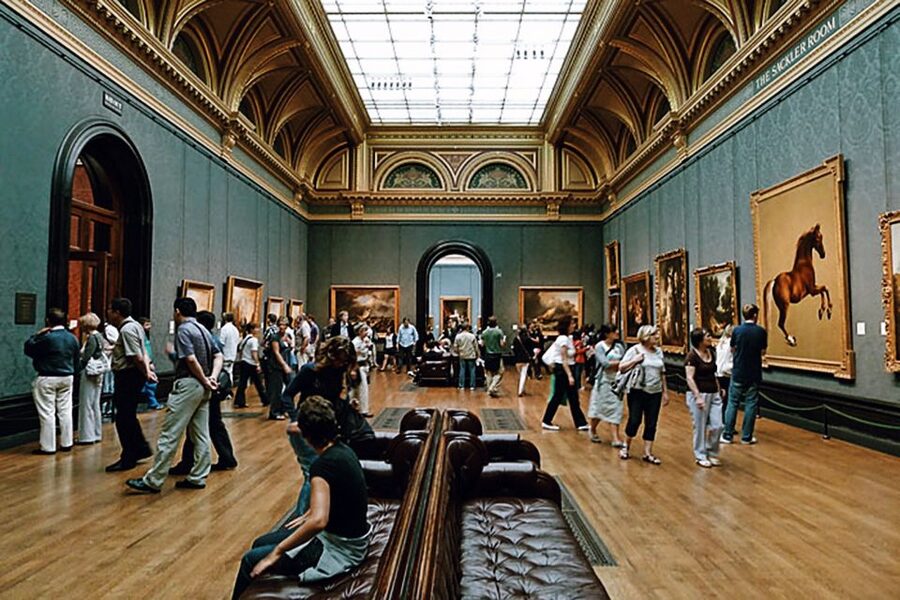
The strongest part of this experience is the guide. Jake is especially good at making complicated art accessible, with a style that works for visitors who are not native English speakers. He has also been praised for choosing paintings that hold attention while still giving useful background.
Stephanie brings a lively, inclusive approach. Her explanations cover style, technique, symbols, historical setting, themes, and the rivalries that shaped art. She also speaks clearly, which matters in a crowded museum, particularly if you use hearing aids.
Matilda is a strong choice for visitors who want the broad development of painting explained in a calm, friendly way. Alex and Becky are also noted for energy and clear presentation. The individual guide can vary, but the available feedback points to a consistently engaging team.
The tour is in English, so you should be comfortable following live commentary in English for two to two and a half hours. The museum can be noisy, and one visitor wished the tour had Bluetooth headsets. If hearing every word is important to you, ask about audio equipment before booking, since it is not included in the details provided.
Is $112 good value?
At $112 per person, this is not a budget museum visit. The National Gallery itself can be explored independently, so the extra cost pays for the guide, the route, the context, and the smaller group format.
I think the price makes the most sense for a first-time visitor with limited time. If you have two and a half hours and want to see the major works without planning a route, the fee can save effort and prevent a scattered visit.
The value is also better if you enjoy asking questions. A private booking gives you more control, while the shared option keeps the price and social setting different from a one-to-one visit. The shared tour requires at least two people to run, and the maximum is eight.
The fee does not include food, drinks, hotel pickup, or temporary exhibits. You also need to arrange your own way to the meeting point, which can vary by booking option. Bring identification, and leave large bags or luggage elsewhere because they are not allowed.
Timing, comfort, and practical limits
The advertised duration is 2.5 hours, while tours can run for two to two and a half hours. That is long enough to make the visit worthwhile but short enough to fit around other London plans.
There is a small amount of walking. Wear comfortable shoes, especially if the National Gallery is one stop in a full day around central London.
The standard information says the tour is not suitable for wheelchair users, while wheelchair-friendly tours may be arranged upon request. Treat that as something to settle before booking, not something to sort out at the door.
Cancellation is flexible up to 24 hours in advance for a full refund, and you can reserve now and pay later. Those terms are useful if your London schedule is still shifting, but they do not change the need to check the exact meeting point and start time for your selected option.
Who should book this tour?
I would choose it for a first visit to the National Gallery, a short London stay, or a family group that needs a clear route. Teenagers may respond well to the stories, symbols, artist rivalries, and visual contrasts, rather than a room-by-room museum lecture.
It also suits couples and honeymooners who want more than a quick look at famous paintings. The tour gives you enough background to keep exploring the artists afterward.
You may want to skip it if you already know the collection well, prefer silent solo viewing, or plan to spend an entire day studying a few paintings at your own pace. The tour is selective, and the guide’s route will not match every personal interest.
Should you book it?
Book this National Gallery tour if you want the museum’s major paintings arranged into a clear story and explained by an energetic English-speaking guide. The small group limit, strong guide record, and range from the 1300s to Seurat make it a useful introduction.
I would hesitate only if $112 feels too high for a museum visit, or if you need a fully accessible format that has not been confirmed in advance. For everyone else, the tour is a practical way to see Leonardo, Botticelli, Vermeer, Van Gogh, and other key works without spending your limited London time wandering in circles.
FAQ
How long does the National Gallery tour last?
The tour lasts about 2.5 hours. Tours are also described as running for two to two and a half hours.
What language is the tour offered in?
The live tour guide speaks English.
How many people are in the small group?
Small group tours have a maximum of eight people. They run with a minimum of two participants.
Is a private tour available?
Yes. You can choose either a private tour or a small group option, depending on the booking choice.
Which artists and paintings are included?
The route can include works by Botticelli, Leonardo da Vinci, Vermeer, Van Gogh, Velázquez, Seurat, Raphael, Rembrandt, and Monet. Named paintings include Venus and Mars, The Virgin of the Rocks, Lady Standing at a Virginal, Sunflowers, Rokeby Venus, and Bathers at Asnières.
Is hotel pickup included?
No. Hotel pickup and drop-off are not included, and the meeting point may vary according to the option you book.
Can I bring luggage or a large bag?
No. Luggage and large bags are not allowed. You should bring a passport or ID card.
Is the tour suitable for wheelchair users?
The standard information says it is not suitable for wheelchair users. Wheelchair-friendly tours may be available upon request, so confirm this before booking.
Just added around the UK
- A Guided Tour at the National Gallery in London★ 3.5 · 2 reviews
- The Shard Viewing Gallery & Westminster Walking Tour★ 4.0 · 12 reviews
- Women in Art Walking Tour★ 5.0 · 13 reviews
- Best of Westminster Abbey with Upper Gallery & Buckingham Palace★ 4.5 · 15 reviews
- Private Guided Tour of the National Gallery in London★ 4.0 · 8 reviews
- Tate Modern Museum London Guided Tour Semi-Private 8ppl Max★ 5.0 · 41 reviews
- The Tate Modern London – Exclusive Guided Museum Tour★ 5.0 · 41 reviews
- Tate Modern Private Tour in London with Blue Badge Guide★ 5.0 · 3 reviews
Art Museum Tours in the UK, compared.
Official tickets: Moco Modern & Contemporary Art Museum
Read our review →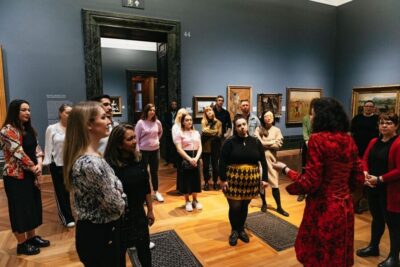
National Gallery Guided Tour with Art Expert Guide
Read our review →
Tickets for Moco Modern & Contemporary Art Museum
Read our review →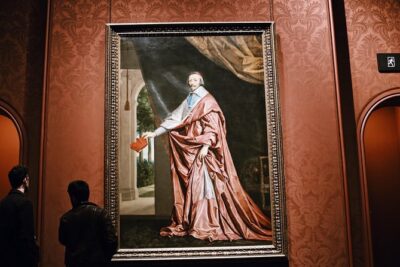
National Gallery of London Museum Tour Semi-Private 8ppl Max
Read our review →
Day Trip to Paris with Eiffel Tower, Notre Dame and Louvre Museum
Read our review →
British Museum & National Gallery of London Semi-Private 8ppl Max
Read our review →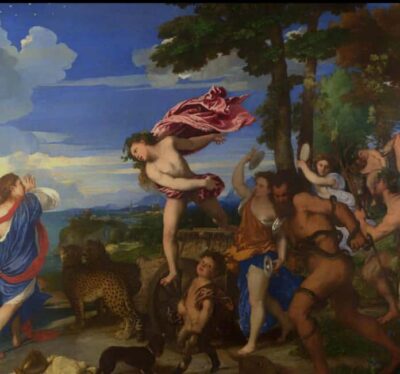
National Gallery + Guided Tour + Priority Entry
Read our review →
Belfast: Best of Belfast History, Culture & Art Walking Tour
Read our review →Browse the lists this tour appears in