
REVIEW · FLORENCE
Florence: Uffizi Official timed Entry Ticket & Audio Guide
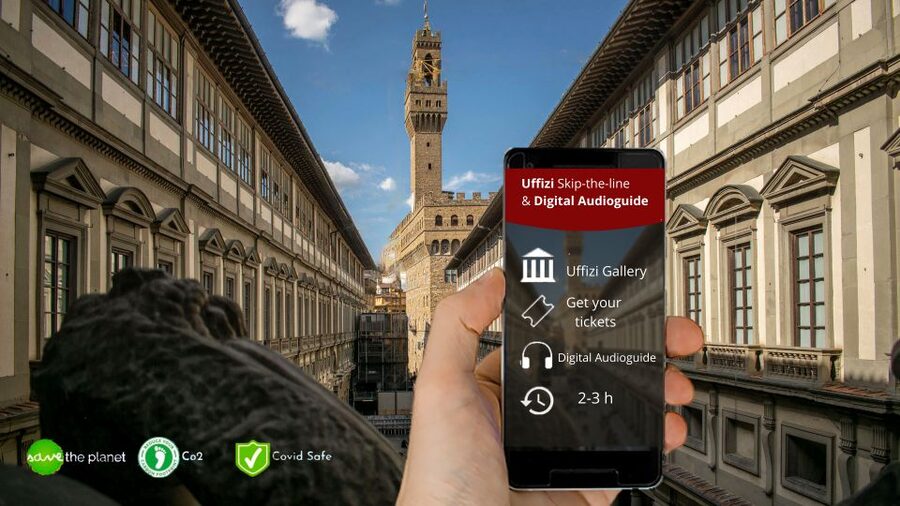
The Uffizi is Florence’s great art house, and its prize rooms hold Botticelli’s Birth of Venus and Primavera, Leonardo’s Annunciation, Michelangelo’s Doni Tondo, and Caravaggio’s Medusa. This timed-entry option lets you head to entrance 1 for pre-booked visitors instead of finding a ticket office or exchanging a voucher.
I like the simple setup: your ticket arrives by email, and the audio guide covers 73 works in six languages. I also like the freedom to pause, replay, skip, or return to a favorite painting. The main caution is the security queue. Even with a timed reservation, you may wait 15 to 30 minutes, and the climb to the second floor includes four long stair sections.
Key points to know before booking
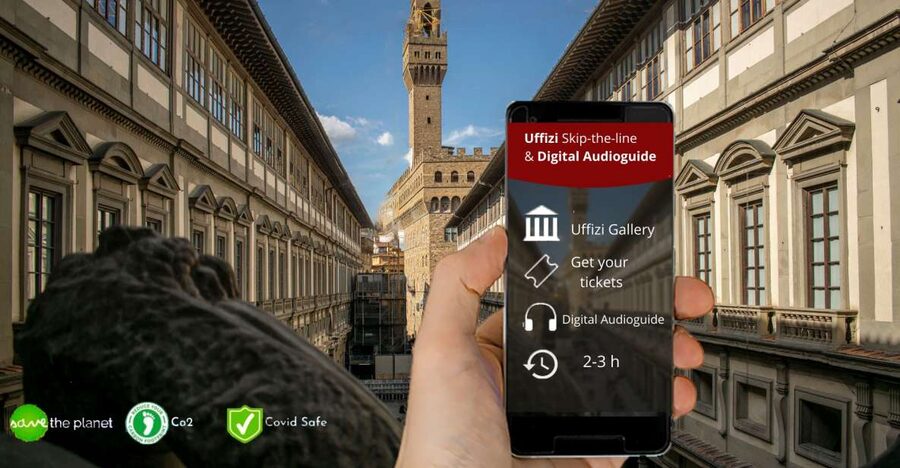
- Go straight to Uffizi entrance 1: Show the emailed ticket plus your passport or ID. There is no voucher exchange.
- Study 73 selected artworks: The audio guide is planned for roughly a two-hour visit and includes many of the museum’s major paintings.
- Bring your own headphones: The audio guide runs on your charged smartphone, and earphones are not supplied.
- Allow extra time for security: Your reserved entry time does not remove the required security check.
- Expect a later slot by up to 15 minutes: The delivered ticket can show a time slightly later than the one you selected.
- Take a coffee break above Piazza della Signoria: The museum terrace offers a view toward Brunelleschi’s dome.
Why this Uffizi ticket is useful
The Uffizi can be confusing on a first visit. Its long corridors, side rooms, sculptures, altarpieces, portraits, and famous Botticelli paintings create a lot to take in. A timed ticket gives your day some structure, while the digital guide gives you a route through the most important pieces.
You are not joining a fixed group, so you can move at your own speed. Stop for five minutes at a painting that catches you, pause the narration when a room gets crowded, or replay a section if you want more context. That freedom matters in an art museum, where your attention rarely follows a strict schedule.
This is not a private tour with a person beside you. The guide is an app downloaded to your phone, with commentary in English, French, German, Italian, Spanish, or Chinese. The experience works best if you enjoy reading a room on your own and want help identifying the major works without being tied to another person’s pace.
The ticket costs $33 per person. The stated breakdown includes €29 paid to the museum, €9.40 in booking costs and taxes, €6 for the audio guide, and €2.60 for ticket delivery and on-site assistance. That makes the price easier to judge: you are paying extra for advance booking, the audio content, and the convenience of receiving a ready-to-use ticket. If you only want basic admission and already know how to arrange it, the added cost may feel high. If your Florence schedule is tight, reserving a specific time can be worth it.
More Art Museum Tours in Florence
- Florence: Skip-The-Line Uffizi Gallery Timed Entry Ticket
★ 4.5 · 27,832 reviews - Florence: Uffizi Priority Ticket & Masterpieces Audio App
★ 4.2 · 6,402 reviews - Florence Accademia Gallery Tour with Entrance Ticket Included
★ 4.5 · 6,148 reviews
Getting inside through entrance 1
On your selected date, go directly to Uffizi entrance 1, marked for individuals with pre-booked tickets. Arrive about 10 minutes early. Have the ticket available on your phone, along with your passport or ID card.
You do not need to stop at an agency to swap a voucher for a museum ticket. That saves a useful bit of time and removes one common point of confusion. If you need help on the ground, the listed assistance point is Slow Tour Tuscany at Via degli Alfani 115R.
Keep your expectations realistic at the door. A timed reservation controls the admission window, but every visitor must pass through security. At busy times, the security wait can run about 15 to 30 minutes. A recent admission took much longer than expected, with entry not coming until 5:15, so avoid scheduling a train, meal, or second attraction immediately after the Uffizi.
The ticket sent to you may show an entry time up to 15 minutes later than the slot you chose. Check the email, WhatsApp message, or iMessage carefully before setting out. The important document is the actual ticket with its QR code, not a booking confirmation alone.
The climb to the second floor
Most of the major painting rooms are on the second floor. Getting there means four long flights of stairs, and this is the one physical detail you should not overlook.
If stairs are difficult for you, ask for elevator directions before starting upward. The lift may not be obvious from the entrance, and one visitor needed two rest stops on the way. The museum is wheelchair accessible, but anyone with limited stamina should plan for a slower arrival and ask staff for the accessible route.
Once upstairs, the long gallery corridors begin to make sense. The building connects rooms in a sequence that moves through centuries of Italian art. You will see how flat, gold-background religious panels gradually give way to more natural figures, stronger perspective, richer color, and the human drama of the Renaissance and Baroque periods.
Giotto and the first great rooms
Start with Giotto’s Maestà. The painting belongs to an earlier stage of Italian art, but it points toward the changes that made Florence such a major center of painting. The figures feel more substantial than in many earlier religious panels, and the arrangement gives you an early look at artists working toward greater depth and presence.
Simone Martini’s Annunciation offers a different mood, with elegant lines and a refined courtly style. Giottino’s Pietà di San Remigio brings a more emotional note. The audio guide is useful here because the differences between these artists can be hard to spot if you are mainly waiting for the famous Botticelli rooms.
Gentile da Fabriano’s Adoration of the Magi is one of the visual treats in this early section. Look closely at the details and decorative surfaces. Piero della Francesca’s Montefeltro Diptych then gives you a more measured, quiet kind of power through its profile portraits and careful arrangement.
These rooms reward patience. If you rush toward Botticelli, you will miss the artistic changes that make Botticelli’s work so exciting when you reach it.
More Uffizi tours and tickets:
- Uffizi Gallery: Renaissance Masterpieces Guided Tour
★ 4.6 · 6,070 reviews - Uffizi Gallery Small Group Tour with Guide
★ 4.5 · 4,923 reviews - Uffizi & Accademia Timed Entry: Small Group Duomo Walking Tour
★ 4.5 · 3,630 reviews - Florence: Uffizi Gallery Timed Entry Ticket & Audio Guide
★ 4.2 · 2,794 reviews
Botticelli’s Primavera and Birth of Venus
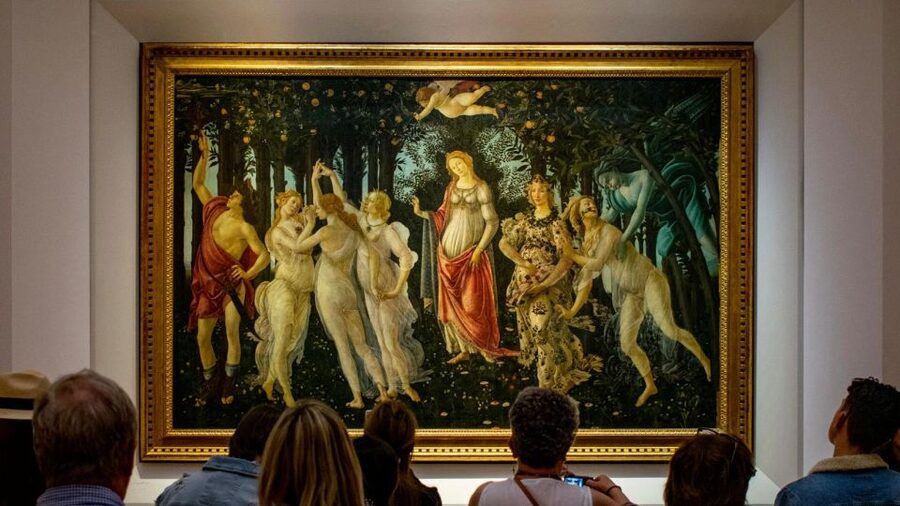
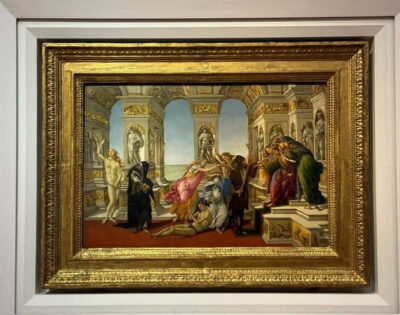
The Uffizi’s Botticelli rooms are the emotional center of the visit for many people. Primavera is large, crowded with figures, and full of symbols that can feel hard to sort out at first. The audio guide helps you slow down and examine the scene rather than simply taking a photograph and moving on.
Look at the flowers, gestures, and individual faces. The painting is not a simple story told in one quick glance. Its figures form a carefully arranged garden scene, and the details give you reasons to spend time in front of it.
Nearby, The Birth of Venus has the instant recognition factor. Venus arrives on a shell, with wind pushing her toward shore and a figure ready to cover her with a cloth. The pale colors and clean outline make the painting look almost delicate, but its presence in the room is strong.
You may find this section crowded, especially during the busiest hours. Keep your phone charged, but do not let photography turn the visit into a checklist. The best reason to use the audio guide is to give you a few minutes of useful attention before you move along.
Filippo Lippi’s Madonna with Child and Angel adds a more intimate contrast. It is a good reminder that the Uffizi is not only about its three or four most famous paintings.
Leonardo, Michelangelo, and Raphael
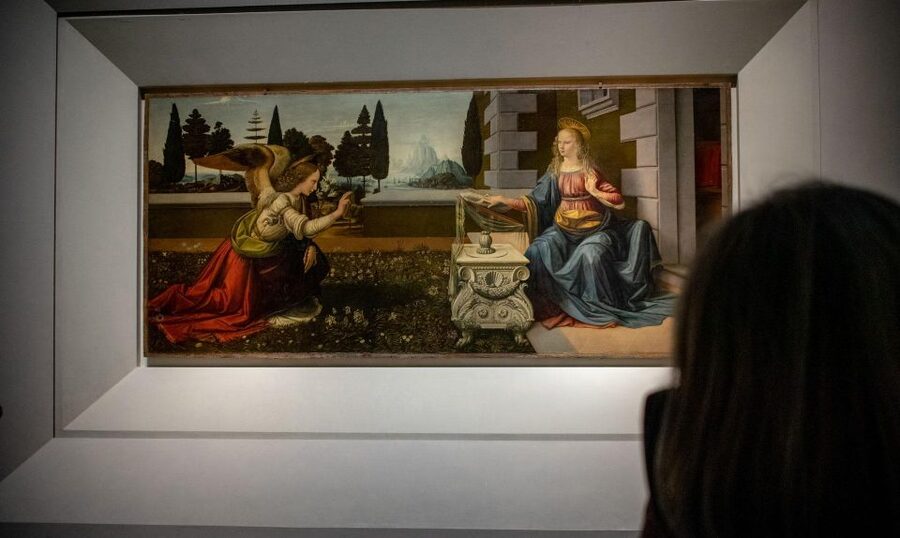
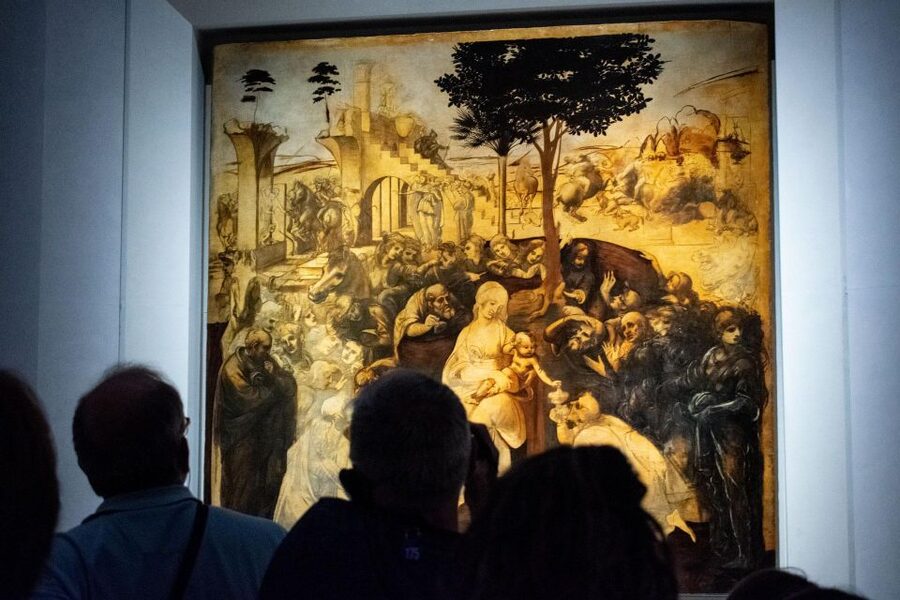
Leonardo’s Annunciation rewards close looking. The setting, gestures, and landscape show an artist thinking carefully about space and natural detail. His Adoration of the Magi is unfinished, which makes it especially interesting. You can see the energy of the composition and the exploratory quality of the work without the polished surface of a completed altarpiece.
The Baptism of Christ, associated with Leonardo and other artists, helps show the workshop culture of the period. The Uffizi is particularly good at giving you these connections, since works by related artists appear in nearby rooms.
Michelangelo’s Doni Tondo is a compact, powerful painting. Its circular format gives the figures a different rhythm from the rectangular altarpieces around it. Look at the muscular bodies and the unusual arrangement of the figures. It is a work to approach slowly, even if you already know its name.
Raphael appears through portraits of Agnolo and Maddalena Doni and the Madonna of the Goldfinch. The portraits have a calm, polished quality, while the Madonna brings together the balanced arrangement and gentle expressions often linked with Raphael.
This is a good point to pause the app and simply look. Audio commentary can give you useful facts, but too much narration can keep you from forming your own response to the paintings.
From Pontormo to Titian
The Uffizi becomes more varied as you move beyond the High Renaissance. Pontormo’s Supper at Emmaus and Rosso Fiorentino’s Spedalingo Altarpiece show the expressive, sometimes unusual direction taken by later artists.
Bronzino’s portrait of Eleonora of Toledo is a fine example of court portraiture. The clothing and jewelry attract the eye first, but the controlled expression and formal pose are just as important. This is where the audio guide can help you notice details you might otherwise treat as decoration.
Titian’s Venus of Urbino brings a more direct and sensual image into the collection. It is one of the works that gives the Uffizi a broader sense of European painting, rather than limiting your visit to Florence alone.
You can also see Bernardo Buontalenti’s Tribune, an ornate room that helps explain how collectors once displayed prized objects and paintings. It is a change of pace from the chronological rooms and worth including in your route.
Caravaggio, Artemisia Gentileschi, and Rembrandt
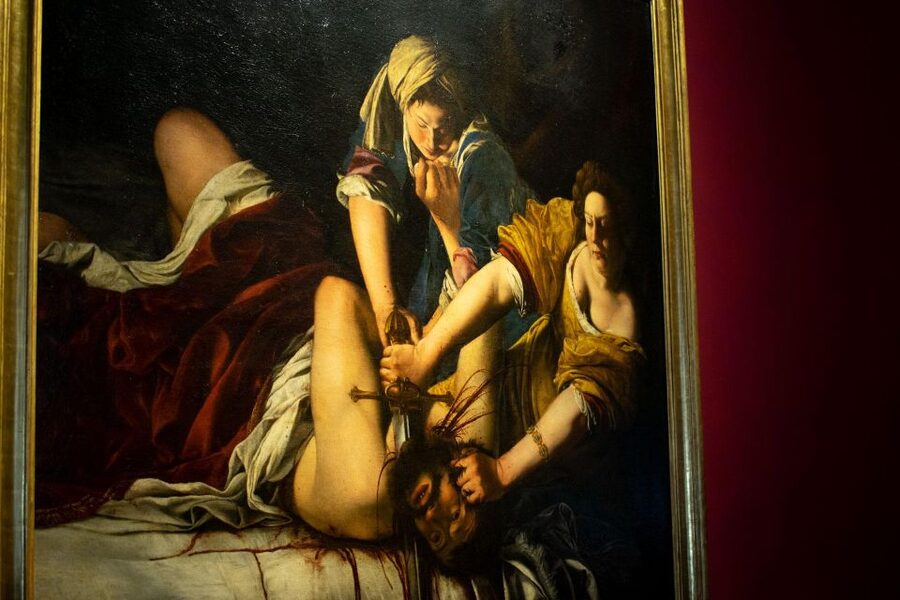
The later galleries bring stronger contrasts in light, shadow, and human drama. Artemisia Gentileschi’s Judith Beheading Holofernes is forceful and direct. The scene does not soften its subject, and the painting’s physical energy can be startling after the calm balance of earlier Renaissance works.
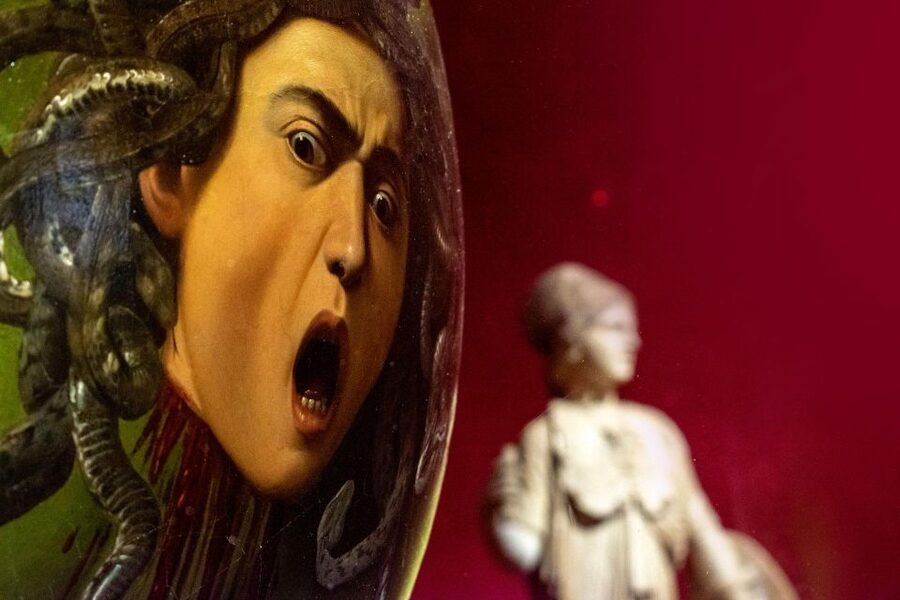
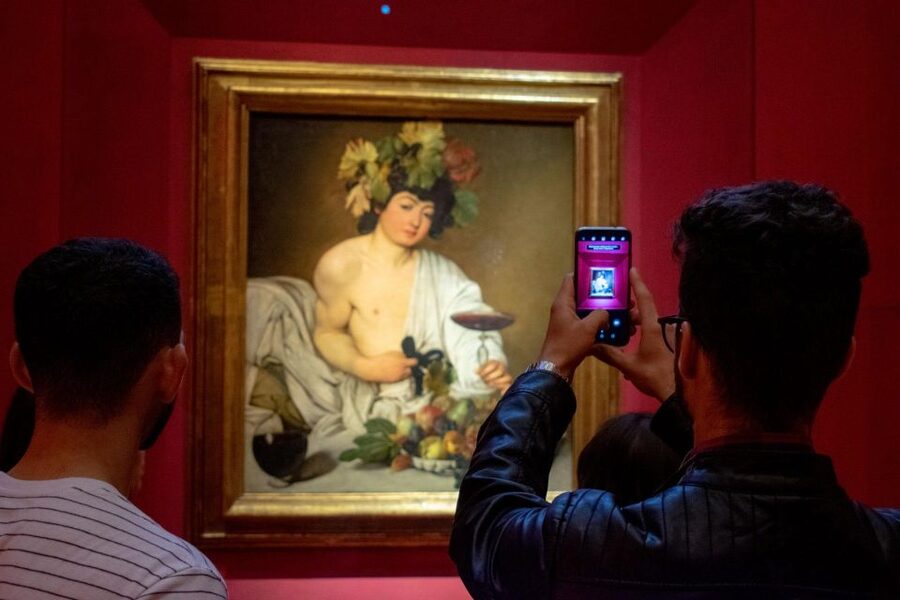
Caravaggio’s Medusa is another memorable stop. The severed head appears to confront you directly, with a grimace that feels almost theatrical. Bacchus offers a different kind of tension, combining a mythological subject with an unusually human presence.
Rembrandt’s Rabbi gives the collection a northern European note. Its handling of light and face is quieter than Caravaggio’s, but just as effective. These later works make a strong finish because they show how artists used earlier Renaissance ideas while pushing toward more dramatic, personal images.
The audio guide includes all these works, along with many others. The full list is designed for about two hours, but the ticket lets you remain in the museum until closing time. That means you can follow the suggested route first, then return to the paintings that stayed with you.
The terrace and Florence views
When your attention starts to fade, take a break at the museum café terrace. You can look over Piazza della Signoria and see Brunelleschi’s dome in the distance. It is a practical place to rest, not just a scenic extra.
The windows along the Uffizi also give you broad views over Florence. These glimpses help connect the art inside with the city outside. You are looking at paintings shaped by Florence, then turning toward the streets, churches, and domes that made the city such a force in Italian art.
A coffee or cappuccino adds a pleasant pause, but keep an eye on the closing time. The reservation is for entry, not a two-hour limit. You can wander, sit, and return to favorite paintings as long as the gallery remains open.
Using the audio guide well
Download the app with the QR code provided by email or message. Bring a charged smartphone and your own headphones, since earphones are not included.
Before entering, check that you can open the ticket and the audio guide. Museum rooms are not the place to solve a weak phone battery or search through several messages. If your email does not appear, check your phone messages as well, since the materials may arrive by email, WhatsApp, or iMessage.
The guide includes English, French, German, Italian, Spanish, and Chinese. Its two-hour selection gives you a sensible first route through the museum, but you do not have to listen to every entry. Pause when you want, replay a section, or skip ahead if a room does not hold your interest.
I would use it selectively. Listen closely for Giotto, Botticelli, Leonardo, Michelangelo, and Caravaggio, then give yourself quiet time with the paintings. The point is to add context without letting the phone become the main event.
Who should book this experience?
This option suits you if you want official timed admission, prefer to explore independently, and like having commentary available without joining a live group. It is also a good fit for a short Florence visit, since the ticket reduces the need to arrange museum admission on the day.
It suits first-time Uffizi visitors who want a clear list of major works. It also works for returning visitors who want to revisit Botticelli, Leonardo, or Caravaggio while spending less time on rooms they already know.
You may want another arrangement if you need a personal art historian, a fully guided route, or help with every part of the museum visit. The app cannot answer follow-up questions or adjust its explanation to your interests. The stair climb and possible security wait also make this less appealing if you have limited mobility or a tightly packed schedule.
Should you book the Uffizi ticket and audio guide?
Book it if you value a guaranteed time, direct entry instructions, and the freedom to set your own pace. The ticket, QR code, and 73-stop audio guide give you a practical way to see the museum’s essential works without committing to a live tour.
The $33 price is reasonable when you need advance planning and want audio commentary, though it is not the cheapest way into the Uffizi. Arrive early, allow 15 to 30 minutes for security, bring ID, headphones, and a charged phone, and leave room in your day for the terrace and a second look at Botticelli.
FAQ
Where do I enter the Uffizi with this ticket?
Go directly to Uffizi Gallery entrance 1, the entrance for individuals with pre-booked tickets. You do not need to exchange a voucher.
What documents do I need to show?
Show the entry ticket sent to you by email or message, along with your passport or ID card.
How early should I arrive?
Arrive about 10 minutes before the selected entry time. Allow extra time because security checks can create a 15 to 30 minute wait.
Can my actual entry time be different from the time I select?
Yes. The delivered ticket may show an entry time up to 15 minutes later than your selected slot.
How long does the audio guide cover?
The audio guide includes 73 artworks and is designed for a visit of about two hours. You can stay in the museum until closing time.
Which languages are available for the audio guide?
The audio guide is available in English, French, German, Italian, Spanish, and Chinese.
Do I need to bring headphones?
Yes. Headphones are not included, so bring your own along with a charged smartphone.
Is the Uffizi accessible by wheelchair?
Yes, the activity information states that the museum is wheelchair accessible. If stairs are difficult for you, ask for elevator directions.
Can I leave and return to the museum later?
The information provided says you can remain inside, wander, and return to favorite works until closing time. It does not state that re-entry is permitted after leaving the museum.
More Audio-Guided Visits in Florence
- Uffizi Gallery: Entry tickets + audio guide
★ 4.0 · 347 reviews - Florence: Uffizi Entry Ticket & Audio Guided Tour with Host
★ 3.9 · 342 reviews - Florence: Accademia entry tickets + optional audio guide
★ 4.0 · 228 reviews - Uffizi Gallery Timed Tickets with Audio guide
★ 4.0 · 174 reviews
More Self-Guided Tours in Florence
- Florence: Uffizi & Accademia Priority Tickets with Audio App
★ 4.4 · 1,253 reviews - Florence: Accademia Gallery Reserved Entry & Audio Guide
★ 4.3 · 600 reviews - Florence: Uffizi Gallery Tickets with Optional Audio Guide
★ 4.1 · 503 reviews - Florence: Accademia Gallery David Entry & Audio Guide App
★ 4.2 · 406 reviews
Just added around Florence
- Skip the line: Uffizi small group and walking tour of Florence★ 4.5 · 17 reviews
- Florence Private Walking Tour Including Uffizi and Accademia★ 3.5 · 4 reviews
- Uffizi Gallery Italian guided Tour semi private★ 4.5 · 9 reviews
- Private Tour: Accademia Gallery and City Tour★ 5.0 · 10 reviews
- Private Tour: The Academy Gallery★ 5.0 · 6 reviews
- Uffizi Express Entrance -private tour★ 5.0 · 9 reviews
- Uffizi and Palazzo Vecchio Combo Private Tour★ 5.0 · 3 reviews
- VIP PRIORITY ACCESS: UFFIZI GALLERY- Guided Tour★ 4.5 · 42 reviews
Art Museum Tours in Florence, compared.
Skip-The-Line Uffizi Gallery Timed Entry Ticket
Read our review →
Florence Accademia Gallery Tour with Entrance Ticket Included
Read our review →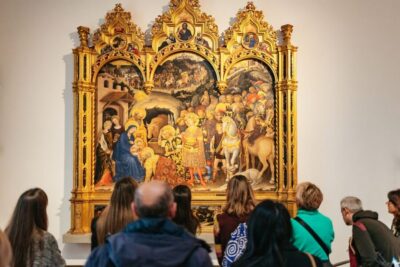
Uffizi Gallery: Renaissance Masterpieces Guided Tour
Read our review →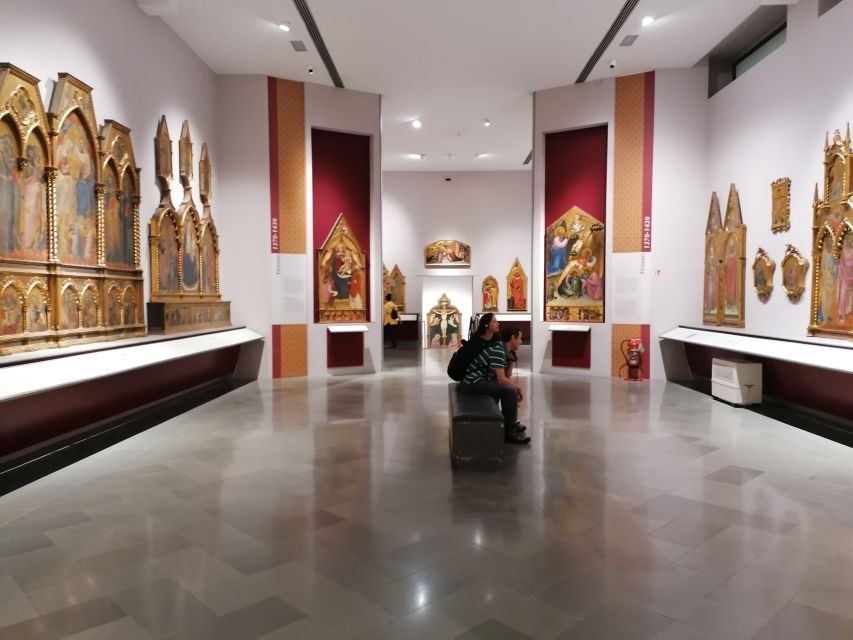
Uffizi Gallery Timed Entry Ticket & Audio Guide
Read our review →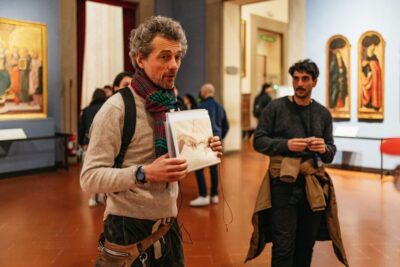
Accademia Gallery Guided Tour with Entry Ticket
Read our review →Browse the lists this tour appears in