
REVIEW · FLORENCE
Florence: Uffizi Gallery Masterpieces Small Group Tour
The Uffizi Gallery is not a place to simply wander in and hope you notice the important paintings. This 2.5-hour guided tour gives you a clear route through the birth and growth of the Renaissance, from Cimabue and Giotto to Botticelli, Michelangelo, and Caravaggio. You’ll see the Birth of Venus, Doni Tondo, and other famous works without spending your first hour trying to decode the floor plan.
I especially like the small group of up to nine and the way the tour connects paintings to the changing ideas behind them. I also like that the guide does not stop at Botticelli’s famous canvas, but carries the story forward to Leonardo, Raphael, Titian, and Caravaggio. The main drawback is that 2.5 hours goes quickly in a museum this full, so this is an introduction, not a complete survey of every room.
Key points to know before you go
- Botticelli’s Birth of Venus is a central stop: You’ll see one of the Uffizi’s most famous paintings within a wider story about Renaissance art.
- The route follows artistic change: Cimabue, Giotto, Masaccio, Botticelli, Leonardo, Raphael, Michelangelo, Titian, and Caravaggio appear in a useful timeline.
- The group is limited to nine people: This makes it easier to hear the English-speaking guide and ask questions.
- Skip-the-line access saves useful time: You use an express security entrance, though you still need to arrive 10 minutes early.
- The Vasari Corridor appears from outside: The tour ends with views near the corridor and the Arno, but does not include entry into the walkway.
- Laura has led this experience: Her approach makes the art accessible while keeping the focus on major works and their details.
Why this Uffizi tour works for a first visit
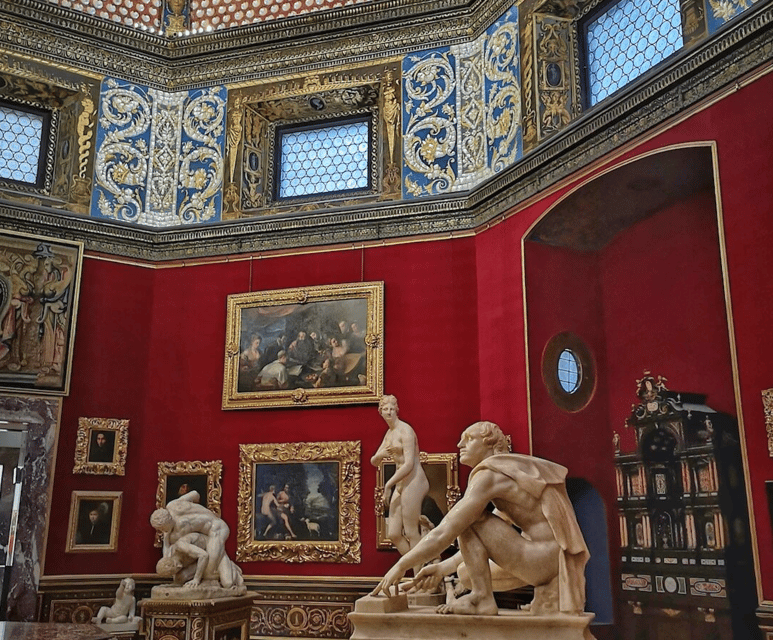
The Uffizi can feel like a greatest-hits album with the songs in the wrong order. One room gives you a solemn medieval Madonna, another presents a graceful pagan goddess, and then a dark Caravaggio seems to belong to another world entirely. Without context, the paintings are beautiful but disconnected.
This tour gives you the connecting thread. You begin with the slow move away from the Middle Ages, when art placed greater weight on the relationship between human beings and the divine. From there, you watch artists test new ways to show bodies, space, emotion, and light.
I like this approach because it helps you see the Uffizi as a record of changing ideas, not just a warehouse of famous names. The guide explains why Cimabue and Giotto still look tied to a medieval outlook, then shows how Masaccio made painted space feel more convincing.
That structure also helps you understand why Botticelli’s paintings seem so different. His work has the elegance most people associate with Florence, yet it follows earlier experiments in composition and human form. The tour gives you enough background to recognize that the Renaissance did not appear all at once. It developed step by step.
More Art Museum Tours in Florence
- Florence: Skip-The-Line Uffizi Gallery Timed Entry Ticket
★ 4.5 · 27,832 reviews - Florence: Uffizi Priority Ticket & Masterpieces Audio App
★ 4.2 · 6,402 reviews - Florence Accademia Gallery Tour with Entrance Ticket Included
★ 4.5 · 6,148 reviews
Meeting at Piazza della Signoria
Your guide meets you at the equestrian statue of Cosimo I in Piazza della Signoria, at number 16R. Look for a Through Eternity sign or flag. This is a busy central square, so do not rely on finding the group at the last second.
Arrive at least 10 minutes early. Late arrivals cannot be accommodated, and a missed start would be a costly mistake for a tour priced at $156.33 per person.
The meeting point also gives you a useful visual introduction to Florence’s Medici story before you enter the gallery. You are starting in the public heart of the city, then moving into a museum shaped by the family’s collecting and political power.
Transportation is not included, so plan your route to Piazza della Signoria separately. The tour also ends back at the meeting point, which makes it easy to continue exploring central Florence afterward.
Cimabue, Giotto, and the first change in direction
The opening section places the Uffizi’s later masterpieces in context. Cimabue and Giotto still reflect the older medieval approach to sacred art, where the divine mattered more than naturalistic space or ordinary human movement.
Giotto is especially useful as a starting point because his work points toward a new interest in believable bodies and emotional presence. You are not looking at Renaissance painting yet in its full form, but you can see the direction beginning to change.
This part may feel less instantly exciting than the Birth of Venus. Still, I would not skip it. If you rush straight to the famous rooms, you miss the reason the later paintings felt so new. The guide’s timeline helps you see the Renaissance as a long process rather than a sudden artistic miracle.
Masaccio and the arrival of convincing space
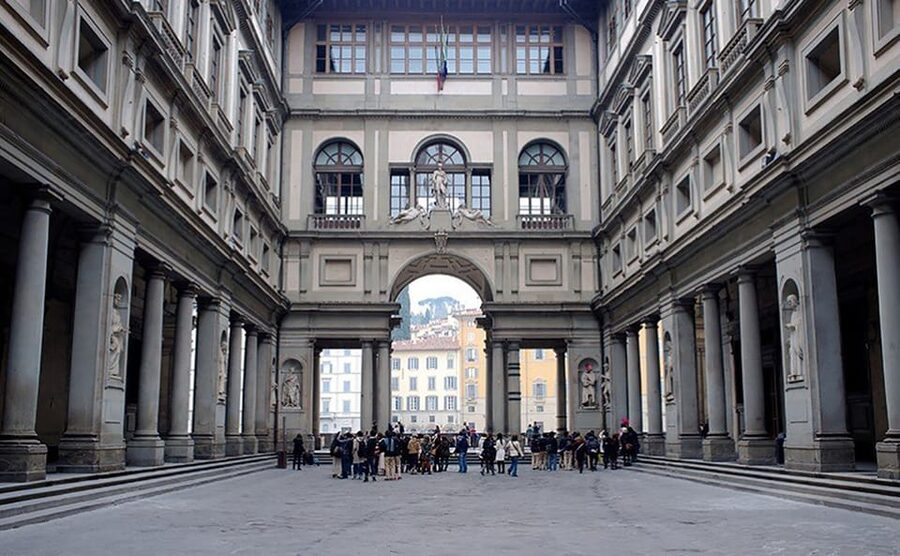
Masaccio brings the story into a more revolutionary phase. His experiments with three-dimensional space made painted scenes feel less like flat icons and more like places where bodies could occupy real space.
The value here is not just the painting itself. You learn to watch for the choices that create depth: the arrangement of figures, the treatment of architecture, and the relationship between foreground and background.
A guide is particularly useful at this point because these changes can be easy to miss when you are looking at a painting from a few feet away. The tour gives you a vocabulary for seeing what the artist changed and why it mattered.
The Uffizi contains more art than any two-hour visit can cover. A focused route keeps the discussion moving, though it also means you may not spend long with every work in the rooms you pass.
More masterpiece highlights tours in Florence:
- Uffizi Gallery: Renaissance Masterpieces Guided Tour
★ 4.6 · 6,070 reviews - Uffizi Gallery Tour- Renaissance Masterpieces & Expert Guide
★ 4.5 · 156 reviews - Florence Accademia Gallery: All Michelangelo’s Masterpieces Guided Tour
★ 5.0 · 40 reviews - Uffizi Gallery Guided Tour: Masterpieces of the Renaissance
★ 4.5 · 8 reviews
Botticelli’s Birth of Venus and the best-known rooms
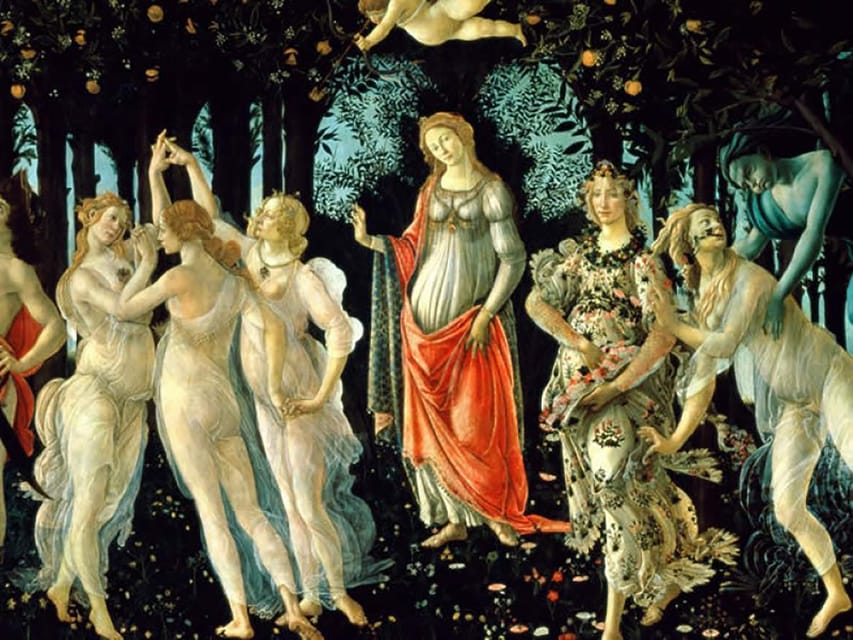
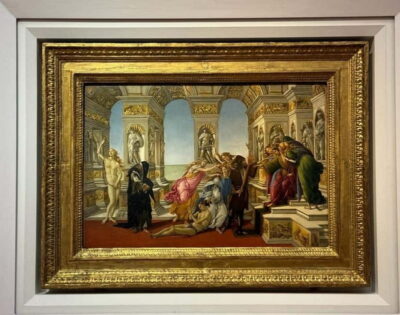
Botticelli’s Birth of Venus is the major draw for many people, and the tour gives it proper attention. You can expect to discuss the painting’s graceful figures, unusual subject, and place within Florence’s Renaissance culture.
Seeing this canvas in person is different from seeing it in a book or on a screen. The scale, surface, and fine details become easier to appreciate, while the surrounding gallery places it among other works from the same artistic world.
The tour also includes Botticelli’s other great canvases, so you get more than a quick photo stop. That matters because one famous painting can create a misleading picture of an artist. Looking at several works helps you notice recurring interests in line, movement, beauty, and mythic subjects.
This is likely the busiest part of the visit. The Uffizi’s most famous rooms attract plenty of attention, and a small group helps you stay close enough to hear the guide. Headsets are provided for groups of six or more, which should make the commentary easier to follow when the gallery is noisy.
Leonardo and Raphael, two different kinds of genius
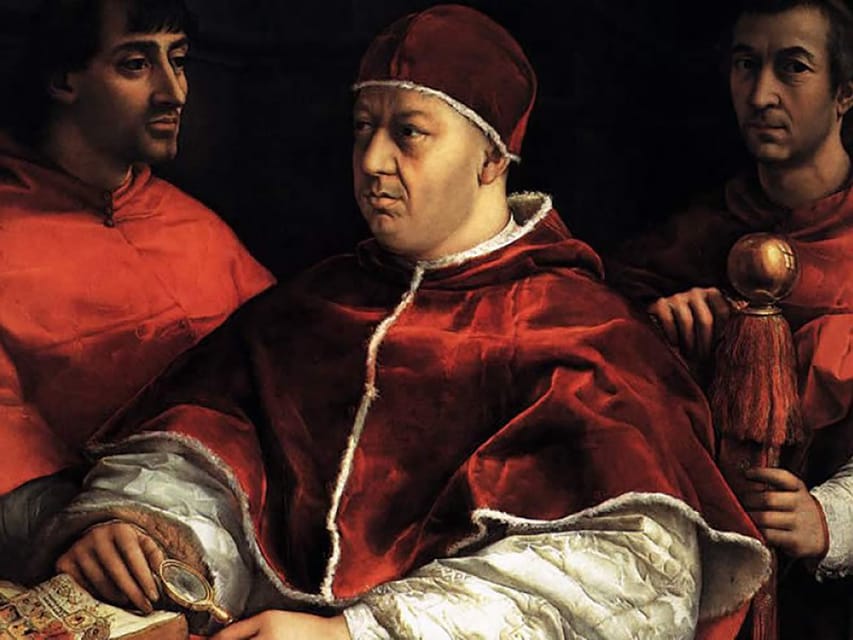
The tour next introduces Leonardo da Vinci and Raphael. The supplied details do not promise a long stop at every work by these artists, so think of this section as a guided introduction rather than a full Leonardo or Raphael tour.
That can still be valuable. Leonardo’s work allows the guide to discuss observation, natural detail, and the rare combination of artistic and scientific curiosity associated with him. Raphael offers another view of Renaissance balance and refinement.
I appreciate that the route places both artists after the earlier experiments. Their achievements make more sense once you have already seen the problems that previous painters were trying to solve.
If Leonardo or Raphael is your main reason for visiting the Uffizi, ask the guide how much time is available for those works at the start. The tour has many major artists to cover, and the emphasis naturally shifts according to the group and the gallery route.
Michelangelo’s Doni Tondo
Michelangelo’s Doni Tondo gives the tour another change of mood. Unlike the large-scale sculpture and ceiling paintings most people associate with Michelangelo, this is a painted work that lets you study his treatment of the human figure and composition.
The painting is a good reminder that the Renaissance was not only about copying nature more accurately. Artists were also pushing bodies, poses, color, and visual energy toward something more idealized and powerful.
The guide can help you separate the artist’s reputation from what is actually in front of you. You do not need to be an art specialist to notice the force of the figures, but a few well-placed observations can show why the work belongs in this story.
Titian’s color and Caravaggio’s dramatic darkness

Titian brings a warmer, more sensual quality to the later part of the route. His paintings are known for their color and feeling, and the guide explains how his approach differs from the Florentine works you have already seen.
This is one of the tour’s strengths. Instead of treating the Renaissance as one uniform style, it shows how artists developed different answers to the same broad questions. Some emphasized drawing and structure. Titian made color and atmosphere carry more of the weight.
Then comes Caravaggio, whose dark, forceful paintings create a sharp contrast. His use of chiaroscuro, the powerful opposition between light and shadow, changed the way scenes could communicate drama.
The tour explains how Caravaggio helped invent a new pictorial language. His figures feel close, physical, and emotionally charged. The shift can be startling after the balanced elegance of Raphael or the idealized beauty of Michelangelo.
This final section gives the visit a strong finish, but it also underlines the limits of the 2.5-hour format. The Uffizi holds far more than the selected route can show. You will need another visit if you want to examine every room at a relaxed pace.
Finishing beside the Vasari Corridor
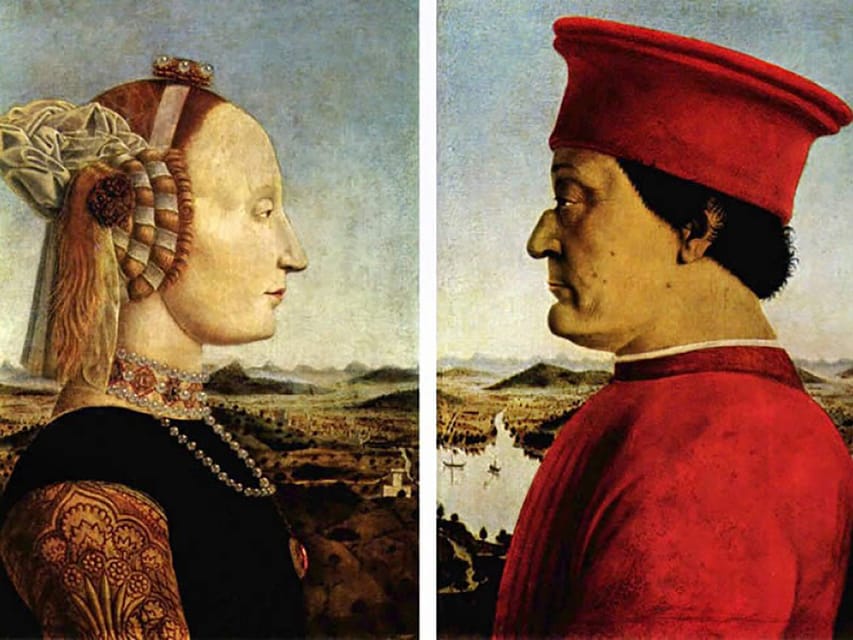
The official visit ends with a walk outside the Vasari Corridor. This historic arcaded walkway once allowed the Medici family to cross Florence privately, away from the general public, on their way toward the Ponte Vecchio.
You do not enter the corridor on this tour. Instead, you see the outside and look toward the Arno below. It is a fitting place to close the visit because it connects the art inside with the people and power that shaped Florence.
I like this ending because it gives you a few quiet minutes after the crowded gallery rooms. You can think back over the artists you have seen while looking at the city that supported their work.
The tour returns to the original meeting point. Food, drinks, and transportation are not included, so plan your next stop independently.
Small group, guide style, and the value of the price
At $156.33 per person, this is not a bargain museum entry. You are paying for the guide, small group size, express security access, and a structured explanation of the collection.
For a first-time visitor who wants the major Renaissance story in one sitting, the cost can make sense. The Uffizi is a demanding museum, and a good guide can save you from spending your limited Florence time on rooms that do not match your interests.
The group limit of nine is important. Large museum groups can become a problem when the guide stops in a narrow room or when other visitors gather around the same painting. A group this size should feel more manageable, and it gives you a better chance to ask a question.
Headsets are included for groups of six or more. That is a practical detail, not a luxury, since museum rooms can be loud and guides cannot always stand beside every participant.
Laura is one of the named guides connected with the experience. Her approach is described as making the art interesting while focusing on details in individual masterpieces. Another guide may lead your departure, but the service is offered in English.
The tour has a perfect five-star rating from four submitted reviews, which is encouraging but a very small sample. I would treat that as a positive sign, not proof that every departure will be identical.
Practical advice for your two and a half hours
Wear comfortable shoes. You will walk through a medium-sized museum with steps and stairways, and the tour moves through several periods rather than lingering in one room.
Bring a bottle of water. Food and drinks are not included, and the tour lasts long enough that a little planning helps.
Tell the provider during booking if anyone in your group has mobility concerns. The activity is not suitable for wheelchair users, and the route includes stairs.
Check the starting time when booking. The available departure times can vary. The free cancellation policy allows you to cancel up to 24 hours ahead for a full refund, and you can reserve now while paying later, useful if your Florence schedule is still shifting.
Most important, get the meeting point right. Piazza della Signoria is large and active, and the guide cannot wait for late arrivals.
Who should book this Uffizi visit?
I would choose this tour if you have never visited the Uffizi, want the major masterpieces, and prefer a clear explanation over wandering alone. It also suits anyone who wants to understand the Renaissance timeline rather than collect a few famous paintings for photographs.
It is a good fit for couples, families with older children, and small groups who appreciate a focused English-language experience. The limited group size is especially useful if you want to ask questions.
I would look elsewhere if you prefer several quiet hours with one painting, need a wheelchair-accessible route, or already know the Uffizi well. You may also find the pace brisk if your main goal is to study every detail of a single artist.
Should you book the Uffizi Masterpieces Tour?
Book it if Botticelli, Michelangelo, Raphael, Titian, Caravaggio, and the story of the Renaissance are high on your Florence list. The strongest reasons are the small group, skip-the-line security access, and a route that explains how the art changed over time.
Just keep your expectations realistic. This is a guided highlights tour, not a private scholarly study and not entry into the Vasari Corridor. At $156.33, the value depends on how much you want context and how much you value saving time inside one of Italy’s busiest museums.
FAQ
How long does the Uffizi Gallery tour last?
The tour lasts 2.5 hours. Starting times vary, so check availability when booking.
Where does the tour meet?
You meet at the equestrian statue of Cosimo I in Piazza della Signoria, 16R, Florence. Look for a Through Eternity sign or flag.
Where does the tour end?
The activity ends back at the original meeting point in Piazza della Signoria.
Is skip-the-line entry included?
Yes. The tour includes access through an express security check.
How large is the group?
The group is limited to nine participants. Headsets are provided for groups of six or more.
Which language is the tour offered in?
The live guided tour is offered in English.
Is the tour suitable for wheelchair users?
No. The route includes steps and stairways, and the activity is not suitable for wheelchair users. You should advise the provider during booking about any other mobility concerns.
More Uffizi Tours in Florence
- Uffizi Gallery Small Group Tour with Guide
★ 4.5 · 4,923 reviews - Uffizi & Accademia Timed Entry: Small Group Duomo Walking Tour
★ 4.5 · 3,630 reviews - Florence: Uffizi Gallery Timed Entry Ticket & Audio Guide
★ 4.2 · 2,794 reviews - Florence: Uffizi Gallery and Accademia Gallery Guided Tour
★ 4.8 · 2,028 reviews
Just added around Florence
- Skip the line: Uffizi small group and walking tour of Florence★ 4.5 · 17 reviews
- Florence Private Walking Tour Including Uffizi and Accademia★ 3.5 · 4 reviews
- Private Tour: The Academy Gallery★ 5.0 · 6 reviews
- Uffizi Gallery Italian guided Tour semi private★ 4.5 · 9 reviews
- Private Tour: Accademia Gallery and City Tour★ 5.0 · 10 reviews
- Uffizi Express Entrance -private tour★ 5.0 · 9 reviews
- Uffizi and Palazzo Vecchio Combo Private Tour★ 5.0 · 3 reviews
- VIP Priority Access: Uffizi Gallery- Guided Experience★ 4.5 · 94 reviews
Art Museum Tours in Florence, compared.
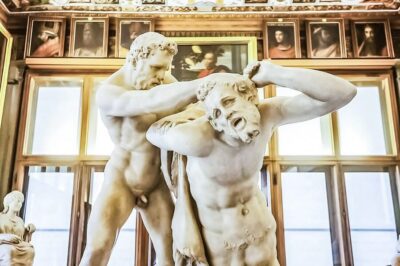
Skip-The-Line Uffizi Gallery Timed Entry Ticket
Read our review →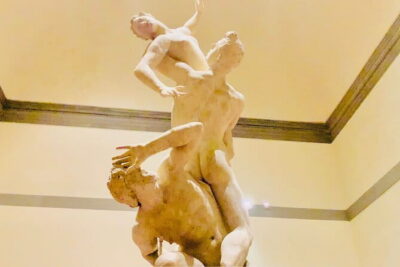
Florence Accademia Gallery Tour with Entrance Ticket Included
Read our review →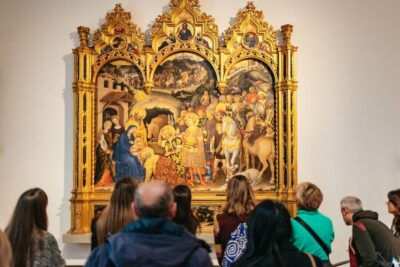
Uffizi Gallery: Renaissance Masterpieces Guided Tour
Read our review →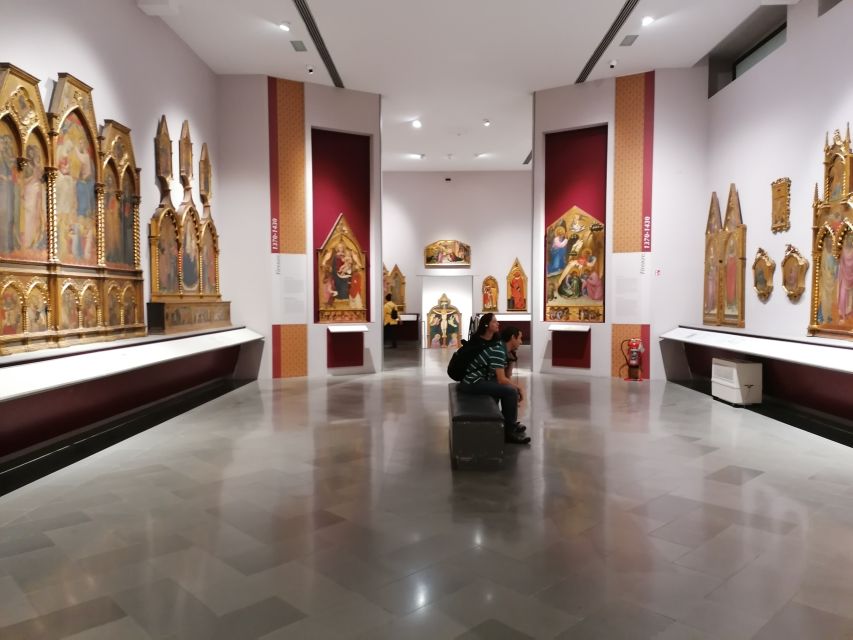
Uffizi Gallery Timed Entry Ticket & Audio Guide
Read our review →
Accademia Gallery Guided Tour with Entry Ticket
Read our review →Browse the lists this tour appears in