

REVIEW · FLORENCE
Florence: Museum Pass–David, Uffizi, Pitti Palace & Gardens
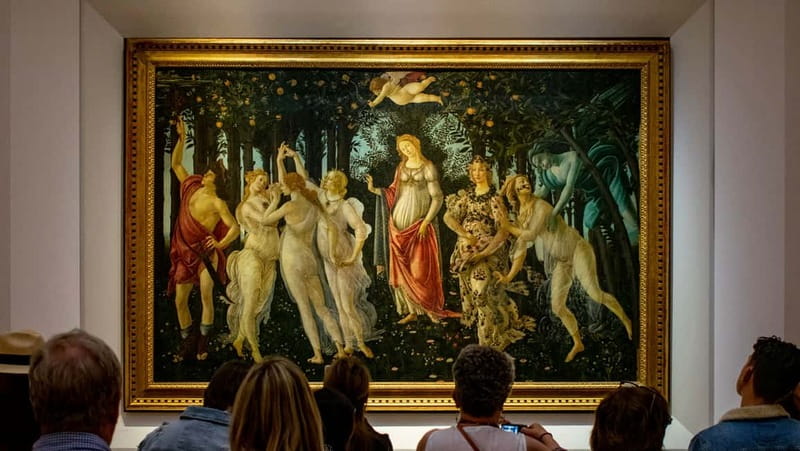
Michelangelo’s David and Botticelli’s Birth of Venus are the big draw here, but the smart part is the schedule: reserved morning entry to the Accademia and afternoon entry to the Uffizi, followed by four days for Pitti Palace and Boboli Gardens. You get the headline sights without spending your Florence visit in ticket lines.
I like the freedom after that first museum day. You can return to Palazzo Pitti and Boboli Gardens on your own schedule, and the audio guides give you numbered directions to the artworks. The main caution is organization: collecting the pass, using the digital tickets, and keeping track of the two timed visits takes attention. One visitor found the process confusing, even while praising the friendly staff.
Key points to know before booking
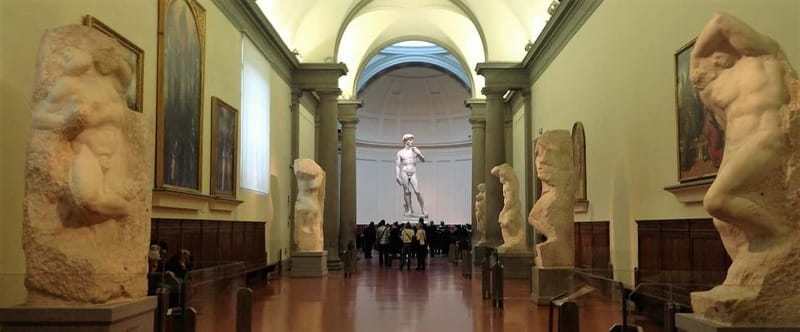
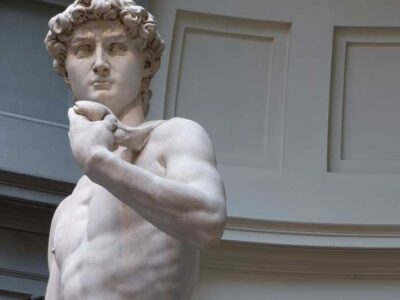
- David comes first: Your Accademia visit is scheduled for the morning, with Michelangelo’s famous sculpture, the Hall of the Prisoners, and the musical instrument collection.
- The Uffizi follows: Your afternoon time slot brings you to Florence’s best-known art museum, with works by Botticelli, Leonardo, Raphael, Michelangelo, and Caravaggio.
- Four extra days offer flexibility: Palazzo Pitti, its museums, and Boboli Gardens are open to you during the remaining validity of the pass.
- The audio guides are practical: Download them to your smartphone and use the numbered artwork references to follow along inside the museums.
- Help is close by: Collect the pass at Slow Tour Tuscany, marked by an orange flag, just steps from the Accademia.
- Plan for phone use: Bring a charged smartphone and headphones, along with your voucher and valid ID.
What this Florence pass actually covers
This is not one guided walking tour with a guide leading you from room to room. It is a five-day admission package built around Florence’s main art museums, with timed entry for the two places where queues matter most.
Your first day is the fixed part. You visit the Accademia in the morning and the Uffizi in the afternoon. The other included sites use an open pass, so you can choose when to visit them during the five consecutive days that begin with your first visit.
That difference matters. The Accademia and Uffizi require planning, while Pitti Palace and Boboli Gardens give you breathing room. You might use the second day for Pitti, the third for Boboli, and another day for a second look at a palace collection. The pass does not force you to cram every sight into one long march through Florence.
The package costs $117 per person. I would judge that price by how much of the pass you use, not by the two famous museum visits alone. If you visit the Accademia, Uffizi, Pitti Palace museums, and Boboli Gardens, the convenience becomes much easier to justify. If you only have time for David and the Uffizi, a smaller booking may suit you better.
More Art Museum Tours in Florence
- Florence: Skip-The-Line Uffizi Gallery Timed Entry Ticket
★ 4.5 · 27,832 reviews - Florence: Uffizi Priority Ticket & Masterpieces Audio App
★ 4.2 · 6,402 reviews - Florence Accademia Gallery Tour with Entrance Ticket Included
★ 4.5 · 6,148 reviews
Collecting the pass near the Accademia
You pick up the pass at the Slow Tour Tuscany agency, a short walk from the Accademia Gallery. Look for the orange flag outside the agency door. Bring your voucher confirmation and a valid ID.
This location is useful because the Accademia is your first stop. You do not need to cross the city to collect the pass, then return for your museum entry. Staff can explain how the pass works and provide assistance in multiple languages during its validity.
The collection step is also where you should get organized. Confirm your Accademia time, your Uffizi time, and how to access the digital audio guides before heading out. Keep your phone charged, and bring headphones. The audio content is accessed on your smartphone, so this is not the sort of pass you should manage with a nearly dead battery.
Service is offered in English, Italian, Spanish, French, German, and Chinese. That is helpful if you need assistance with the digital material or the admission process.
Morning with Michelangelo’s David
The Accademia visit is reserved for the morning. The express security entry helps you avoid the regular ticket queue, though you should still arrive with enough time to collect or confirm your materials.
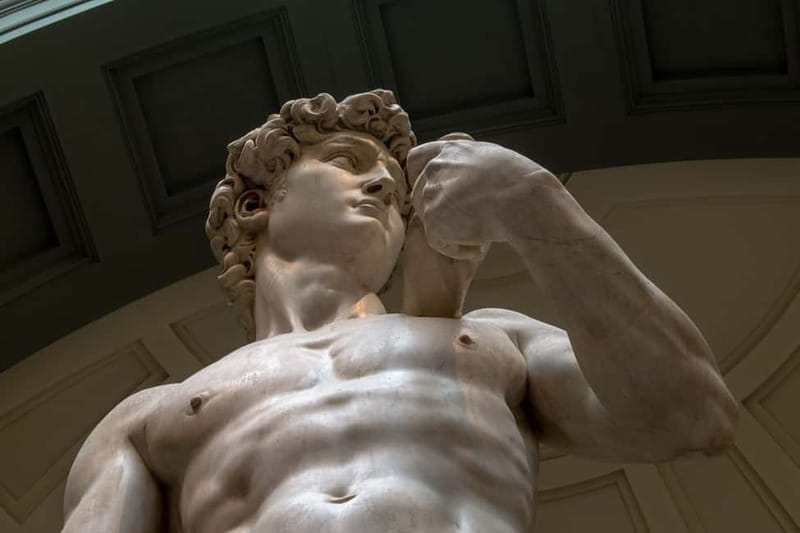
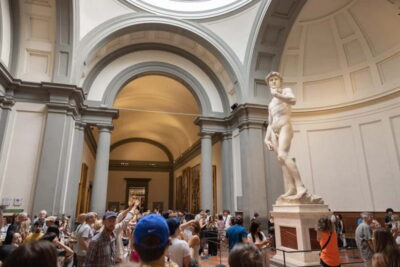
David is the star, and rightly so. Michelangelo’s marble figure is one of Florence’s essential sights. The surrounding rooms make the visit more worthwhile than a quick stop for one sculpture. In the Hall of the Prisoners, unfinished figures appear to struggle out of the marble. They give you a clear sense of Michelangelo’s working process and make the completed David feel even more remarkable.
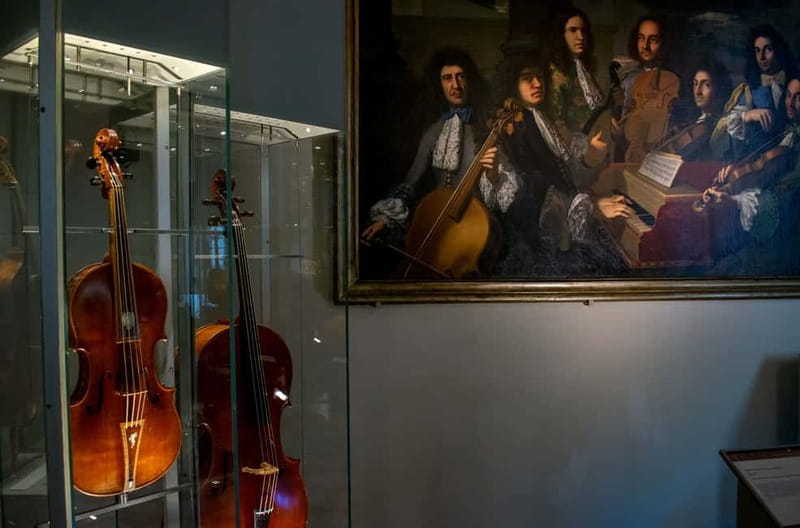
The museum also includes a collection of musical instruments. Among its unusual objects are what is described as the world’s oldest piano and a Stradivari viola considered one of the most valuable in existence. These rooms are easy to skip when you are focused on David, so use the audio guide to make sure you do not walk past them.
The Accademia audio guide is digital and available in six languages. One useful feature is its numbered location system. You can match the commentary to the work in front of you instead of wandering around while trying to guess which explanation belongs to which object.
Allow yourself time to look up from the phone. The audio guide should support the visit, not turn it into a scavenger hunt for numbered labels. You will get more from the museum by hearing a few key explanations, then pausing to study the sculpture and the unfinished figures.
Afternoon at the Uffizi Gallery
The Uffizi visit is scheduled for the afternoon, also with priority entry and a reserved time slot. This timing creates a full art day, so wear comfortable shoes and take a proper break between museums.
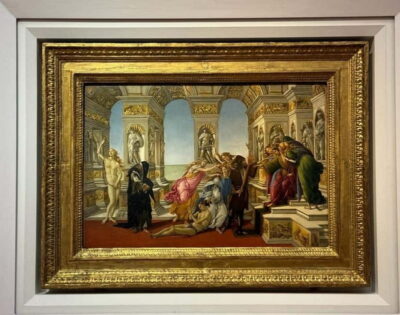
The Uffizi is home to Florence’s strongest concentration of Renaissance painting. You can expect major works by Botticelli, Leonardo da Vinci, Raphael, Michelangelo, and Caravaggio. The point of the visit is not simply to count famous names. It is to see how painting changes across different artists and periods, from Botticelli’s graceful mythological scenes to Caravaggio’s sharp light and dramatic human figures.
The Uffizi can feel dense. There is a lot to see, and a first visit can become tiring if you try to study every room. The included audio guide gives you a route through selected works, which helps you spend your attention where it matters.
The reserved entry is a major practical advantage. Florence’s most popular museums can consume a large part of your day when you rely on regular lines. Here, the time slot protects your schedule, though it also means you need to arrive at the right time. Do not treat the Uffizi booking as an open-ended admission.
After two museums in one day, you may not want to add another major sight. That is fine. The pass is designed so the palace and garden visits can happen on later days. I would keep the first evening light and save your energy for Pitti and Boboli.
More Uffizi tours and tickets:
- Uffizi Gallery: Renaissance Masterpieces Guided Tour
★ 4.6 · 6,070 reviews - Uffizi Gallery Small Group Tour with Guide
★ 4.5 · 4,923 reviews - Uffizi & Accademia Timed Entry: Small Group Duomo Walking Tour
★ 4.5 · 3,630 reviews - Florence: Uffizi Gallery Timed Entry Ticket & Audio Guide
★ 4.2 · 2,794 reviews
Four days for Pitti Palace and its museums
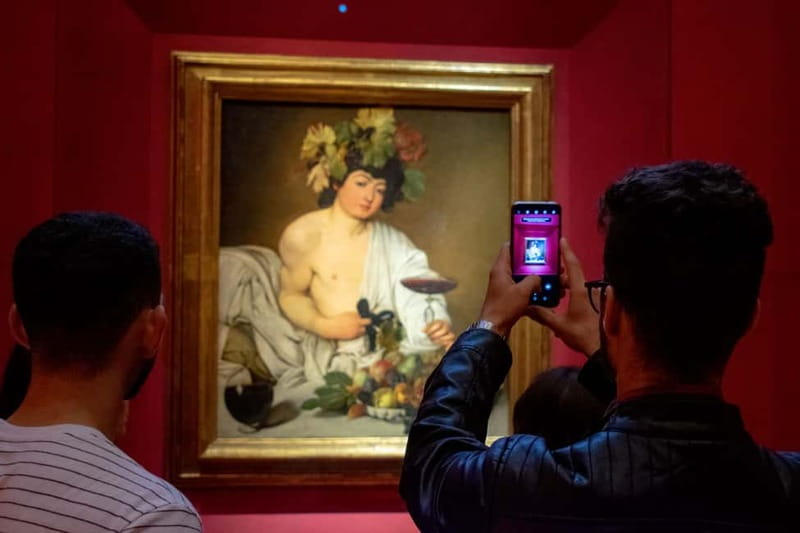
The open portion of the pass begins with Palazzo Pitti, the grand palace across the Arno. During the remaining validity of your five-day pass, you can enter the palace and its included collections without booking a new timed visit.
The Palatine Gallery is the main art collection inside the palace. It provides a different setting from the Uffizi, with paintings displayed in palace rooms rather than in a modern-style museum sequence. That setting changes how you experience the art. You are not only looking at individual works; you are seeing them in the surroundings of a former court residence.
Your pass also covers the Gallery of Modern Art, the Costume Museum, and the Treasury of the Grand Dukes. Each collection offers a different reason to spend time inside Pitti. The modern art rooms broaden the visit beyond Renaissance masterpieces, while the costume collection adds a more practical look at changing styles and court life. The Treasury gives you another set of objects and decorative arts to consider.
Do not assume Pitti is a quick add-on after the Uffizi. It is a large stop with several separate collections. You might prefer to give it a full morning or afternoon, then visit Boboli on another day. Since the pass lasts five consecutive days, you have room to set a sensible pace.
The open admission is especially useful for people who like to adjust plans. Florence weather, tired feet, and changing museum interests can all affect your day. A flexible Pitti visit lets you make the decision later instead of locking every hour into a reservation.
Boboli Gardens and the best city views
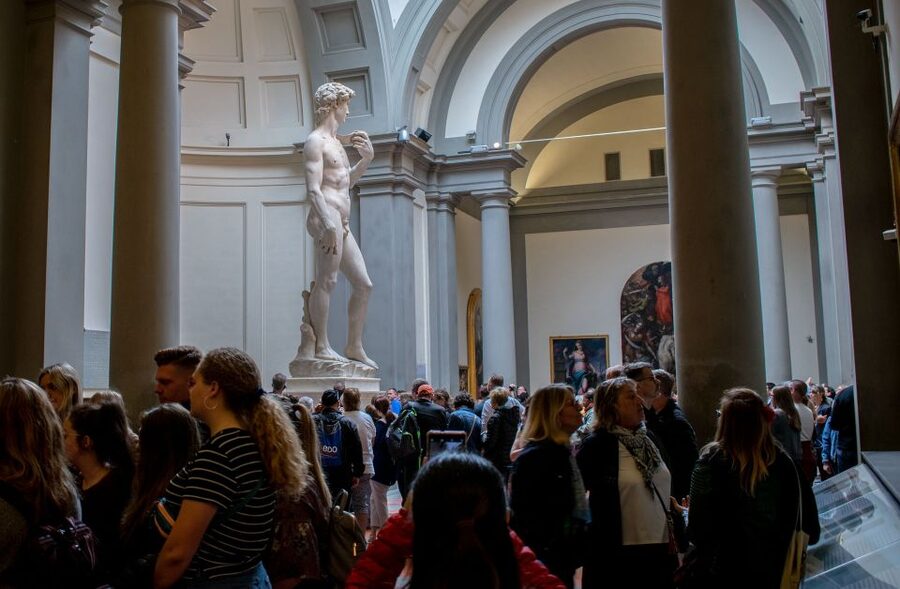
Boboli Gardens are included in the five-day pass and offer a change of pace after the indoor collections. You can walk through the gardens, see their formal design, and look back toward Florence from higher points.
The gardens are not simply a patch of lawn beside the palace. They are one of the city’s major outdoor sights, with paths, sculptures, and views. Wear comfortable shoes because you will be walking on garden paths and moving uphill in places.
Boboli is also a good reason to spread the pass across several days. After the Accademia and Uffizi, you may welcome time outdoors rather than another sequence of painted rooms. The gardens give you a chance to slow down and see Florence from a different angle.
Your audio guide is most useful for the museums and city sights, but the included city guide can help you connect the gardens and palace to the wider center. Download the material before you begin, then use it as a reference rather than listening without pause.
Using the digital audio guides well
Three digital guides are included: one for Florence, one for the Accademia, and one for the Uffizi. The guide languages are English, Italian, Spanish, French, German, and Chinese.
The most practical feature is the numbered artwork information. It makes it easier to locate the piece being discussed, especially in a museum where several rooms may contain similar types of art. You should still bring headphones so you can listen without disturbing other people.
A charged smartphone is essential. This is a phone-based experience, not a package with a separate audio device handed to you at each museum. Download or access the guides as instructed by the agency, and check that your phone can play them before you enter.
The city guide is useful if you want brief context while walking between major sights. It will not replace a full local guide, and the pass does not include a person leading you through the museums. That is an advantage if you prefer independence, but less so if you want a lively conversation or detailed answers at every artwork.
Timing, crowds, and the one organizational weakness
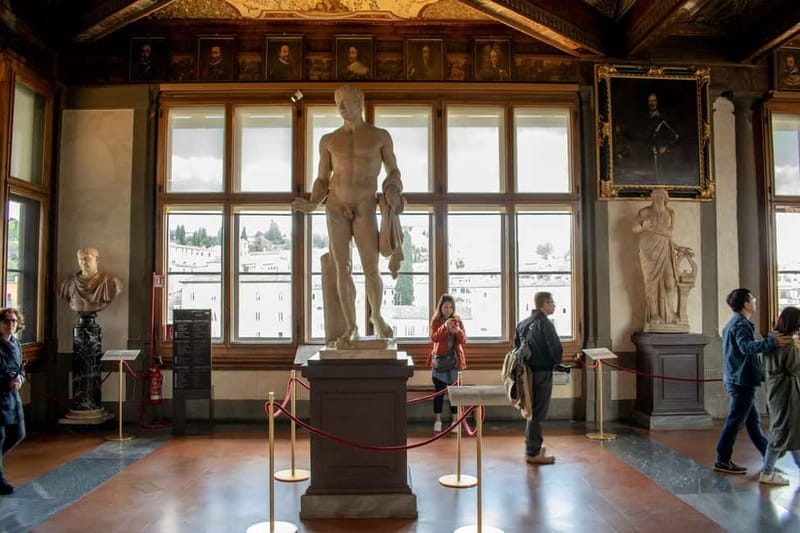
The pass handles the two most important reservations for you, but it does not remove the need to plan. The Accademia is in the morning, the Uffizi in the afternoon, and both have reserved time slots. Arriving late could make the day stressful.
One person found the ticket process during the day confusing, although the staff were kind and helpful. That is useful advice. Keep all confirmation details together, ask questions at the agency, and do not leave the staff desk until you understand which entry applies to which museum.
The open pass for Pitti and Boboli is simpler. Only the Accademia and Uffizi need advance time slots. You can use the remaining four days more freely, which takes pressure off the itinerary.
The pass is wheelchair accessible. Practical comfort still matters for everyone, so wear comfortable shoes and plan breaks. Two major museums in one day can be tiring even when the queues are shorter.
Who gets the most value from $117
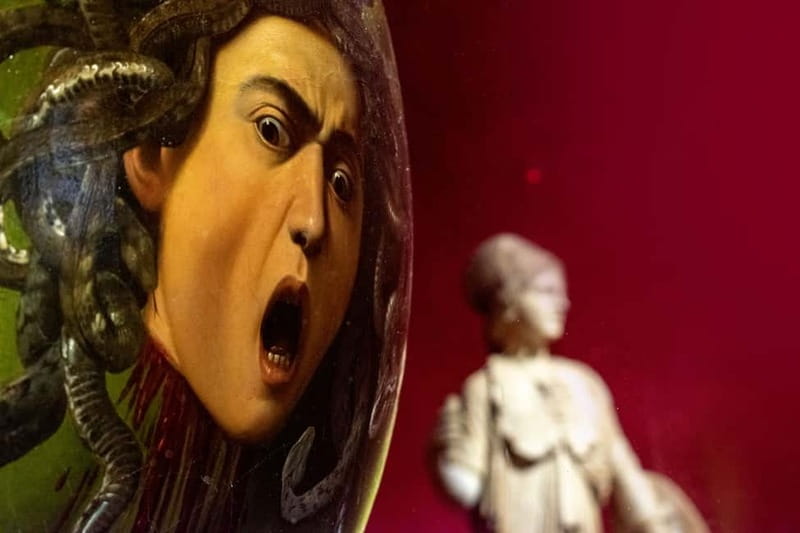
I see the best value for a first-time Florence visitor who wants the major art museums and has at least three or four days in the city. You will have enough time to use the palace, gardens, and related collections rather than paying for a five-day pass and only seeing two museums.
It also suits you if you want structure at the start and freedom afterward. The first day gives you a clear route through David and the Uffizi. The following days let you choose between palace rooms, modern art, costumes, decorative objects, and garden paths.
Art lovers will appreciate the range. The pass moves from Michelangelo’s sculpture to Renaissance painting, court collections, modern works, clothing, musical instruments, and outdoor design. Families and independent visitors may also like the ability to set their own pace, though younger children may not want two major museums in one day.
I would be more cautious if you have only one or two days in Florence. The fixed museum schedule may work, but the palace and garden portion could go unused. The pass is also non-refundable, so you should be confident about your dates and sightseeing plans before buying.
Should you book this Florence Museum Pass?
Book it if you want Florence’s main art stops, you have five consecutive days available, and you value skipping the long entry queues. The strongest combination is the Accademia and Uffizi on day one, followed by Pitti Palace and Boboli Gardens at a slower pace.
Skip it if you want a fully guided experience, have very little time, or prefer to choose every ticket separately. You will need to manage your smartphone audio guides, keep track of your time slots, and organize the collection process.
For the right schedule, this is a useful Florence base: two famous museums handled in one day, then four days of flexible palace and garden access. Just collect the pass early, confirm the timetable, charge your phone, and leave room in your plan for tired feet.
FAQ
How long is the Florence Museum Pass valid?
The pass is valid for five consecutive days, starting on the date of your first visit.
Which attractions require reserved time slots?
The Accademia Gallery and Uffizi Gallery require advance time-slot reservations. The reservations are included with the pass.
What can I visit with the open portion of the pass?
You can visit Palazzo Pitti, the Palatine Gallery, Gallery of Modern Art, Costume Museum, Treasury of the Grand Dukes, and Boboli Gardens.
When do I visit the Accademia Gallery and Uffizi Gallery?
The Accademia visit is scheduled for the morning, and the Uffizi visit is scheduled for the afternoon.
Where do I collect the pass?
You collect it at the Slow Tour Tuscany agency near the Accademia Gallery. Look for the orange flag outside the agency door.
What should I bring when collecting the pass?
Bring your voucher confirmation and a valid ID.
Which languages are available for the audio guides?
The digital audio guides are available in English, Italian, Spanish, French, German, and Chinese.
Do I need a smartphone and headphones?
Yes. The audio guides are accessed digitally, so you should bring a charged smartphone and headphones.
Just added around Florence
- Skip the line: Uffizi small group and walking tour of Florence★ 4.5 · 17 reviews
- Florence Private Walking Tour Including Uffizi and Accademia★ 3.5 · 4 reviews
- Uffizi Gallery Italian guided Tour semi private★ 4.5 · 9 reviews
- Private Tour: Accademia Gallery and City Tour★ 5.0 · 10 reviews
- Private Tour: The Academy Gallery★ 5.0 · 6 reviews
- Uffizi Express Entrance -private tour★ 5.0 · 9 reviews
- Uffizi and Palazzo Vecchio Combo Private Tour★ 5.0 · 3 reviews
- VIP Priority Access: Uffizi Gallery- Guided Experience★ 4.5 · 94 reviews
Art Museum Tours in Florence, compared.
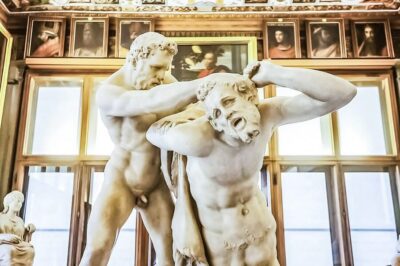
Skip-The-Line Uffizi Gallery Timed Entry Ticket
Read our review →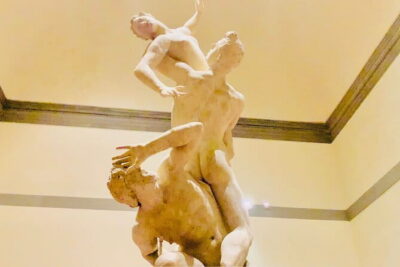
Florence Accademia Gallery Tour with Entrance Ticket Included
Read our review →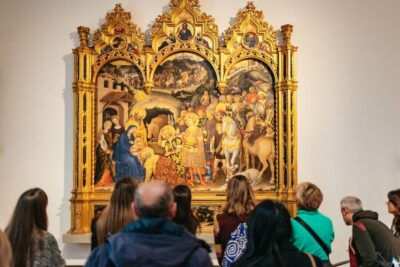
Uffizi Gallery: Renaissance Masterpieces Guided Tour
Read our review →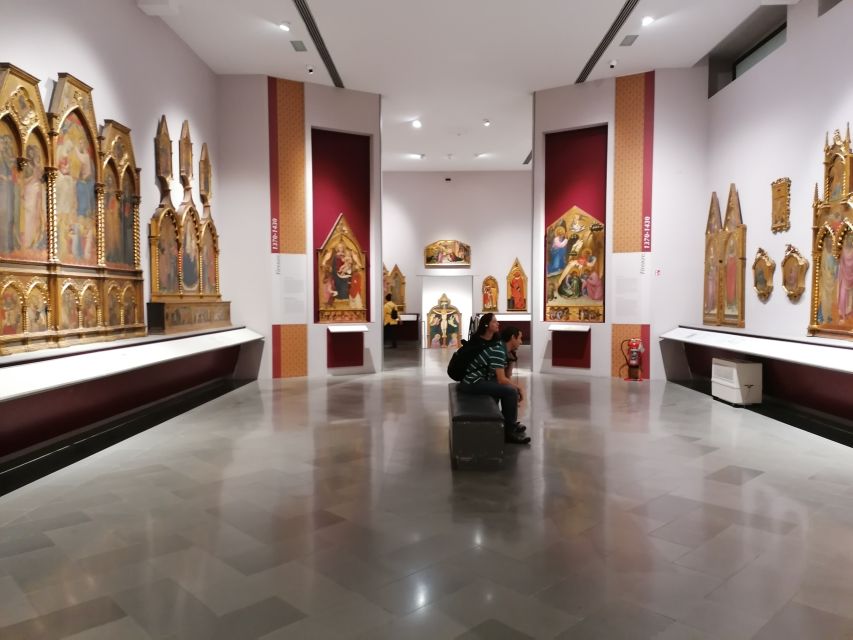
Uffizi Gallery Timed Entry Ticket & Audio Guide
Read our review →
Accademia Gallery Guided Tour with Entry Ticket
Read our review →Browse the lists this tour appears in