
REVIEW · FLORENCE
Florence City Tour, David & Uffizi Gallery Exclusive Guided Tour
Michelangelo’s David is the star, but this tour gives you the larger Florence picture: Renaissance sculpture in the Accademia, the Duomo’s great dome from street level, Medici art in the Uffizi, and a walk through the city’s main squares. I like the two major museum admissions included and the way the walking route links the sights instead of treating them as isolated stops.
I also like the choice between a private guide and a small group capped at eight people. Guides such as Eleonora, Francesco, Giacomo, Annette, and Alessandra have been praised for clear explanations, lively stories, and adjusting the tour for families and teenagers. The catch is the price, $273.43 per person, which is a serious spend, and the tour still involves museum security and some waiting.
Key points at a glance
- David comes first: You see Michelangelo’s famous statue early, when your attention is fresh.
- Two museums are covered: Admission to both the Accademia and Uffizi is included.
- The city walk connects the dots: You move from the Duomo to Piazza della Signoria, the Porcellino, and Ponte Vecchio.
- Private or small-group formats: The private option is for your party alone, while the saver option limits the group to eight.
- The Uffizi gets real time: Plan on about two and a half hours inside, with Botticelli, Raphael, Titian, and Caravaggio in the mix.
- Lunch is a break, not a listed inclusion: The five-and-a-half-hour schedule pauses between the two museums.
Why David makes a strong opening
The tour begins at the Galleria dell’Accademia at 9 a.m. That is a smart order. You meet Florence’s most famous resident before a long day of walking and museum rooms takes its toll.
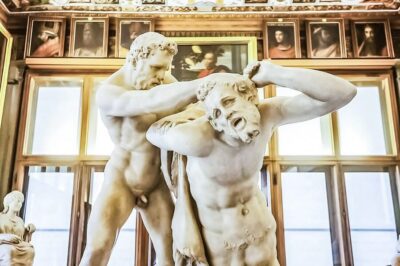
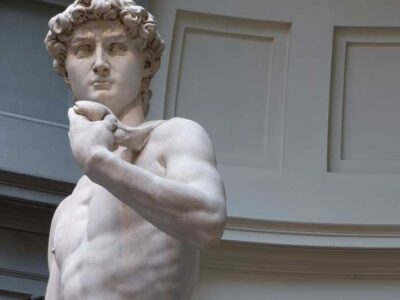
The Accademia stop lasts about an hour. Your guide explains Michelangelo’s David, the figure’s pose, the tension in his body, and the artistic choices behind this enormous nude statue. One useful detail from the guide style praised by several guests is the attention to small things, such as David’s alert stance and the fear in his eyes as he prepares for battle.
You will also see other sixteenth-century works in the museum. The Accademia is not as large as the Uffizi, but that helps here. An hour gives your guide enough time to explain the main works without turning the visit into an art-school lecture.
I especially like this part for families and people who do not call themselves art lovers. Guides such as Annette and Alessandra have been singled out for keeping children and teenagers involved. A good guide makes the sculpture feel like a person with a story, not just a famous statue you photograph and forget.
The practical point is simple: large bags and suitcases are not allowed inside. Bring only a handbag or small, thin backpack. Security can still create a delay, even with reserved admission.
More Art Museum Tours in Florence
- Florence: Skip-The-Line Uffizi Gallery Timed Entry Ticket
★ 4.5 · 27,832 reviews - Florence: Uffizi Priority Ticket & Masterpieces Audio App
★ 4.2 · 6,402 reviews - Florence Accademia Gallery Tour with Entrance Ticket Included
★ 4.5 · 6,148 reviews
The Duomo from the best public angle
From the Accademia, the group walks to Piazza del Duomo. The square is one of Florence’s great visual moments, with the cathedral, Brunelleschi’s dome, and the Baptistery gathered close together.
The tour does not take you inside the cathedral or up into the dome. That needs to be clear before you book. Instead, you spend about 10 minutes learning how Brunelleschi’s fifteenth-century dome changed architecture while looking at it from outside.
For a first visit, this is a useful orientation stop. You get the essential story and a close view without adding another interior queue or climb to an already full morning. If your main goal is to enter the cathedral, climb the dome, or see the Opera del Duomo Museum, you will need separate plans.
The Baptistery is next. It is one of Florence’s oldest buildings and is known for its three sets of bronze doors. The doors are a fine example of Renaissance art, and your guide can place them in the larger story of Florence’s religious and civic life.
The route also points out the Loggia del Bigallo, the Opera del Duomo Museum, and the old palace buildings around Piazza San Giovanni. These are outside views rather than separate admissions. That keeps the walk moving, but it also means you should not expect interior visits at every landmark.
Walking through Florence’s civic center
Via dei Calzaiuoli carries you from the Duomo toward Piazza della Signoria. It is a broad pedestrian street lined with shops, restaurants, and historic facades. This is where the tour shifts from church art to the daily city.
You then reach Piazza della Repubblica, a square rebuilt in the nineteenth century. Your guide explains how Florence changed during that period. The broad space looks much more modern than the medieval streets around it, so it is a good place to see how the city was reshaped rather than simply preserved.
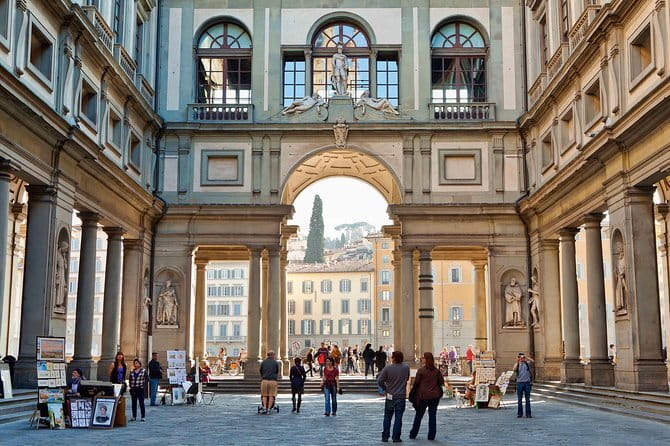
Piazza della Signoria is the political heart of the walk. The square holds a copy of David in the place where the original once stood. You will also see the Neptune fountain by Ammannati and Cellini’s Perseus, among other sculptures.
This is a valuable companion to the Accademia. You first see the original David in a museum, then see the public copy in its old civic setting. That contrast helps explain that Florence’s art was not made only for galleries. Many works were placed in streets and squares where power, religion, and public life met.
The Palazzo Vecchio occupies one side of the square. It began in 1299 and became the city’s town hall and a major symbol of civil power. The tour covers the exterior, not a full visit inside the building. If you want the rooms of Palazzo Vecchio, you will need another ticket and more time.
The Porcellino and Ponte Vecchio
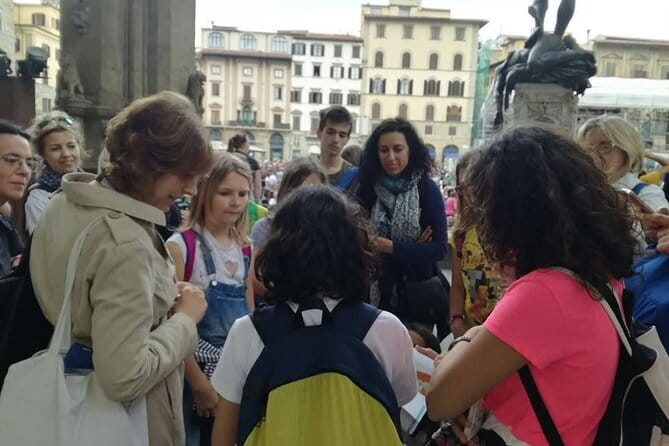
Near the end of the walking section, you stop at the Fontana del Porcellino. The bronze wild boar fountain comes with a simple ritual: touch its nose for good luck. It takes only a moment, but it is a pleasant, hands-on pause after the heavier art and political stories.
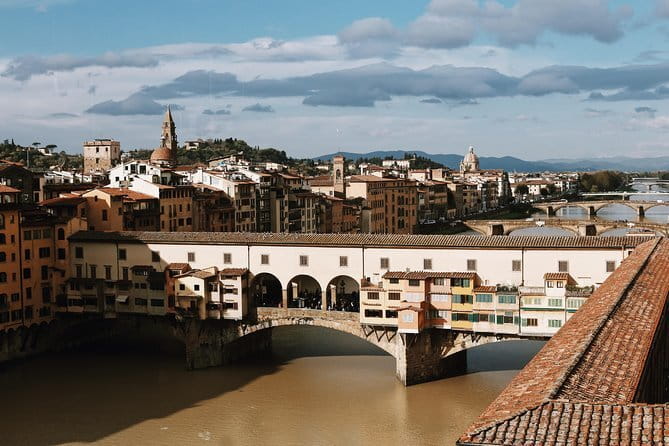
The walk ends at Ponte Vecchio, Florence’s best-known bridge. It crosses the Arno and is famous for its shops and unusual built-up form. The bridge is also known for surviving the Second World War, unlike many other crossings.
The tour information lists the Arno as a final stop as well, but the practical endpoint is Ponte Vecchio. That matters if you are meeting a taxi, heading to a hotel, or planning your next activity. There is no hotel pickup or drop-off, so you must arrange your own ride or walk onward.
The route is central and near public transportation, but it is still a walking tour. You need a moderate level of fitness, comfortable shoes, and the patience to spend much of the day on your feet.
More Uffizi tours and tickets:
- Uffizi Gallery: Renaissance Masterpieces Guided Tour
★ 4.6 · 6,070 reviews - Uffizi Gallery Small Group Tour with Guide
★ 4.5 · 4,923 reviews - Uffizi & Accademia Timed Entry: Small Group Duomo Walking Tour
★ 4.5 · 3,630 reviews - Florence: Uffizi Gallery Timed Entry Ticket & Audio Guide
★ 4.2 · 2,794 reviews
Lunch separates two very different museums
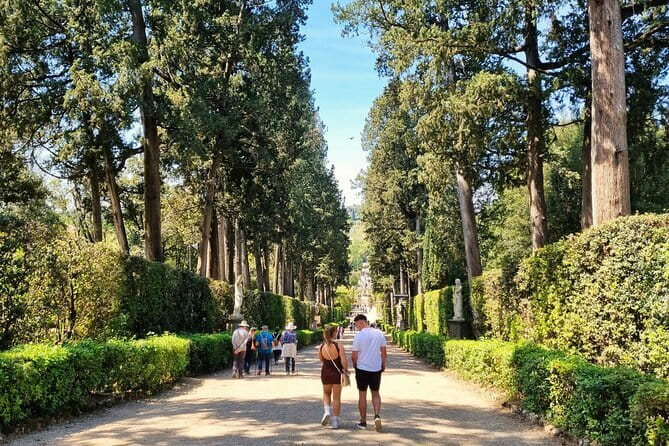
The schedule includes a lunch break between the Accademia and the Uffizi. The meal itself is not listed as included, so plan for your own food budget and timing.
This pause is useful. David and the city walk ask for close attention, while the Uffizi is a much larger museum with more rooms and more names to remember. A break gives you a chance to rest, eat, and reset before the afternoon gallery visit.
The guides have sometimes added practical local help during this interval, such as sandwich suggestions, shopping tips, gelato stops, or directions back toward the train station. That kind of advice is one reason a private guide can be more useful than a recorded audio tour. Still, do not assume a particular cafe or meal is part of the package.
Two and a half hours inside the Uffizi
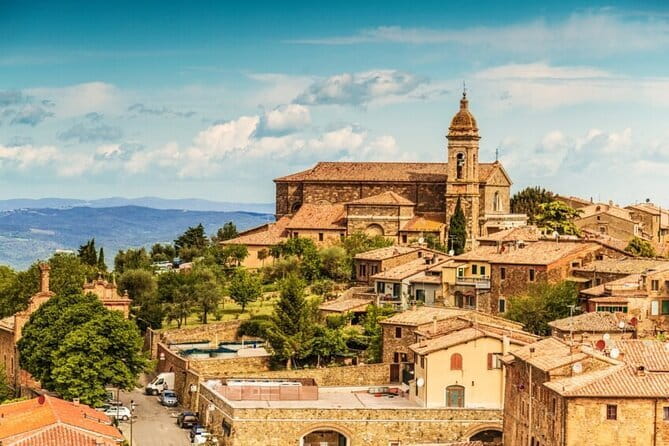
The Uffizi takes about two and a half hours, making it the longest single stop. That is enough time for a strong introduction, but not enough to see every room at a leisurely pace.
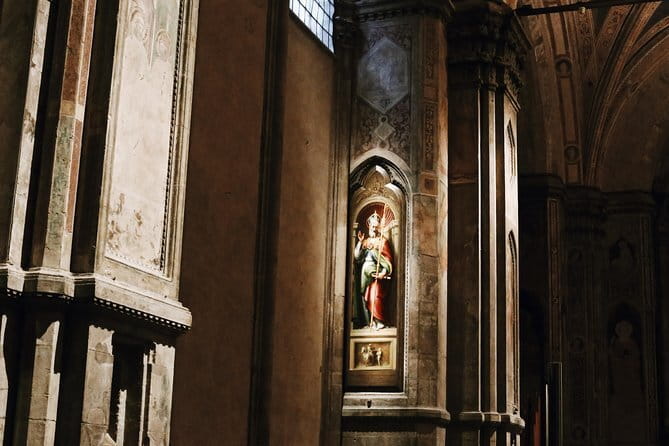
The building began as offices for Florentine magistrates. It later became the home of the Medici family’s art collection. Your guide also covers the gallery’s difficult past, including serious flooding and a mafia car bomb, as well as its modernization in the early twenty-first century.
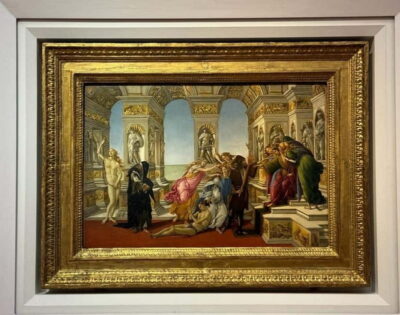
The collection includes more than 100 rooms. You can expect a focused route through major Italian works rather than a room-by-room march. Botticelli’s Birth of Venus and Primavera are central highlights, along with Raphael’s Self Portrait, works by Titian, and paintings by Caravaggio.
The value of a guide becomes clearest here. The Uffizi can feel like a parade of pale faces, religious scenes, and unfamiliar names if you enter alone without a plan. A good guide gives you a few visual clues and stories to carry from one painting to the next.
I would pay attention to how your guide connects the art to Florence. Giacomo has been praised for linking history, architecture, and repeated artistic themes. Eleonora is known for bringing local pride and personal enthusiasm, while Francesco has been praised for his art perspective and his ability to make the medieval and Renaissance periods easier to follow.
Some rooms require quiet or limit speaking. In those areas, your guide may explain the material before you enter. Museum collections can also change during the year, and temporary exhibitions are not included in the tour price.
What the $273.43 price really buys
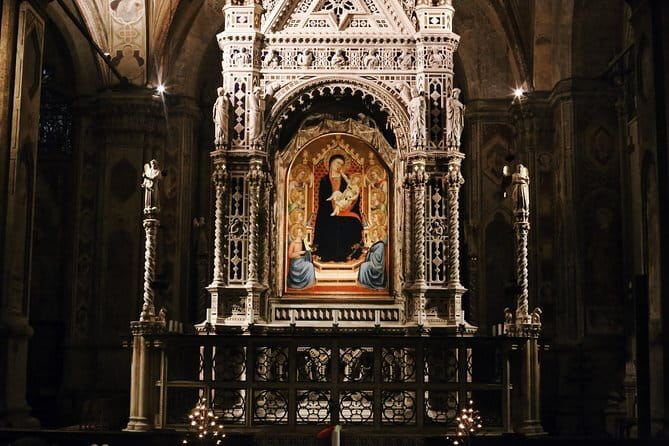
At $273.43 per person, this is not a budget sightseeing walk. The cost makes more sense if you value reserved museum admission, a guide dedicated to your party, and a single route that joins the Accademia, central Florence, and the Uffizi.
Admission fees are included for both museums, along with the guided walking and museum visits. That saves you from arranging two major bookings and deciding which rooms matter most once inside.
The private format is the strongest value for a family or small group that wants to ask questions and adjust the pace. It can also help if some people care more about architecture and city life than painting. One person may want extra time with David, while another may be more interested in the Duomo or Ponte Vecchio.
The small-group saver option is limited to eight people, but the tour details also describe the activity as private, with only your group participating. Check the exact option you select at booking. The pricing and group arrangement may differ.
One criticism is fair: paying a premium does not guarantee that every queue disappears. Security checks and museum controls can still slow the route. The tour gives you organized entry and expert guidance, not a magic pass through every door.
Which guides and tour style suit you

The guide can shape this experience as much as the museums. The strongest pattern is clear: the best guides explain art in plain language, keep the group moving, and adjust their approach to the people in front of them.
Eleonora is a good name to request if available. She has been praised for her warmth, detailed knowledge of Florence, and ability to introduce artisan shops and local customs. She also works well for people who want more than the standard checklist.
Francesco suits visitors who want art and history treated with energy. Giacomo is a strong choice for people who care about architecture, recurring themes, and the larger story behind the objects. Annette has been praised for concise explanations and for engaging children aged 12, 16, and 20.
Alessandra is especially appealing if you think you are not an art person. Her approach focuses on the stories behind paintings and sculptures, which can make the galleries easier to enjoy. Laura and Rubina have also been praised for friendly, clear guiding and useful help with getting around Florence afterward.
Guide assignments can change, so treat these names as examples of the company’s style, not a guarantee. If a particular guide matters to you, ask when booking.
Timing, clothing, and small practical matters
The tour starts at 9 a.m. at the Galleria dell’Accademia on Via Ricasoli. Arrive with your mobile ticket and the phone number supplied at booking, including the country code. The operator says a mobile number is imperative, likely because meeting instructions or changes may need to reach you.
Dress properly for entry into religious sites. Large bags and suitcases are not allowed in the museums, and only small handbags or thin backpacks can pass security.
The tour runs in rain or sunshine, but poor weather can lead to cancellation, with a new date or full refund offered. Museum closures can also happen without advance warning. If the Accademia or Uffizi opening is delayed by more than an hour, an alternative may be offered, but the stated terms do not promise a refund or discount in that situation.
You can cancel for a full refund up to 24 hours before the start time. Changes or cancellations inside that window are not accepted for a refund.
Should you book this Florence tour?
Book it if you have one full day in Florence, want David and the Uffizi handled together, and prefer a guide to make the art readable. It is especially well suited to first-time visitors, families, and couples who want a focused route without spending hours planning museum priorities.
I would also recommend it to repeat visitors who want a more personal look at the city. Several guides add architecture, local shopping, food suggestions, and stories beyond the standard facts.
Skip it if you mainly want to climb the Duomo, enter Palazzo Vecchio, or browse the museums at your own slow pace. Those are not the focus here. And if $273.43 feels too high, you may prefer separate museum tickets and a self-guided walk.
For the right person, the price buys clarity. You see the essential Florence sights, understand why they matter, and finish with enough context to explore on your own.
FAQ
How long does the Florence City Tour last?
The tour lasts about five and a half hours, including a lunch break between the Accademia and Uffizi visits.
Is admission to David and the Uffizi included?
Yes. Admission to the Galleria dell’Accademia and the Uffizi Gallery is included. Temporary exhibitions are not included.
Does the tour enter the Duomo or climb Brunelleschi’s dome?
No. The tour explains the cathedral and dome from outside in Piazza del Duomo. Admission to the Duomo is not included.
Is hotel pickup included?
No. Hotel pickup and drop-off are not included. The tour begins at the Galleria dell’Accademia and ends at Ponte Vecchio.
Is this a private tour?
The private option is for your group alone. A saver small-group option limited to eight people is also available, so check which format you select when booking.
What happens if the tour is canceled because of bad weather?
You can be offered a different date or a full refund if the experience is canceled because of poor weather. For other cancellations, you must cancel at least 24 hours before the start time for a full refund.
Just added around Florence
- Skip the line: Uffizi small group and walking tour of Florence★ 4.5 · 17 reviews
- Florence Private Walking Tour Including Uffizi and Accademia★ 3.5 · 4 reviews
- Uffizi Gallery Italian guided Tour semi private★ 4.5 · 9 reviews
- Private Tour: Accademia Gallery and City Tour★ 5.0 · 10 reviews
- Private Tour: The Academy Gallery★ 5.0 · 6 reviews
- Uffizi Express Entrance -private tour★ 5.0 · 9 reviews
- Uffizi and Palazzo Vecchio Combo Private Tour★ 5.0 · 3 reviews
- VIP Priority Access: Uffizi Gallery- Guided Experience★ 4.5 · 94 reviews
Art Museum Tours in Florence, compared.
Skip-The-Line Uffizi Gallery Timed Entry Ticket
Read our review →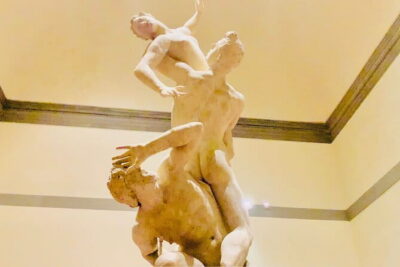
Florence Accademia Gallery Tour with Entrance Ticket Included
Read our review →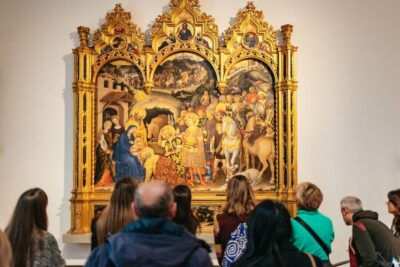
Uffizi Gallery: Renaissance Masterpieces Guided Tour
Read our review →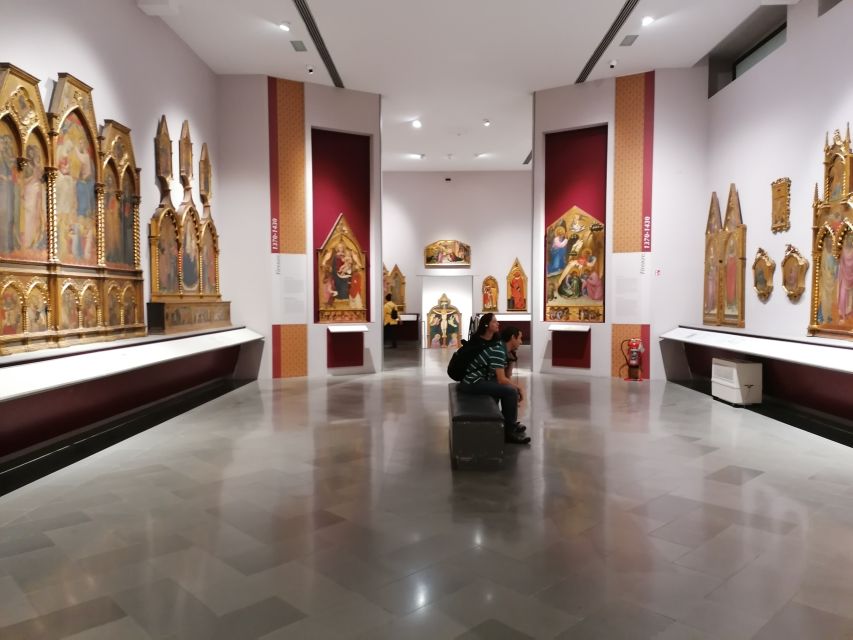
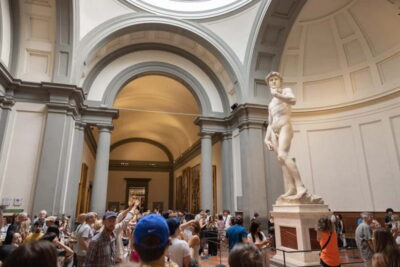
Uffizi Gallery Timed Entry Ticket & Audio Guide
Read our review →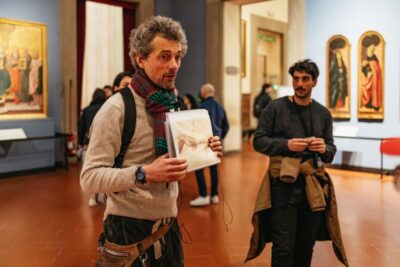
Accademia Gallery Guided Tour with Entry Ticket
Read our review →Browse the lists this tour appears in