
REVIEW · FLORENCE
Florence: Accademia Gallery Timed Entry Ticket
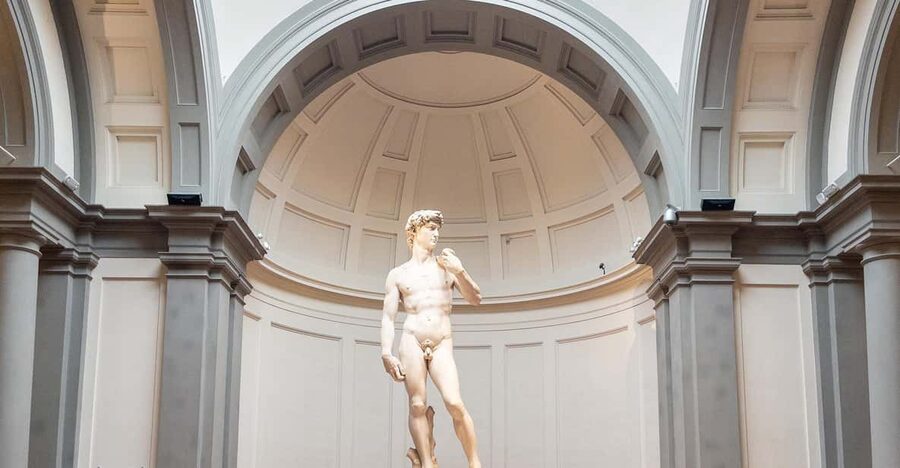
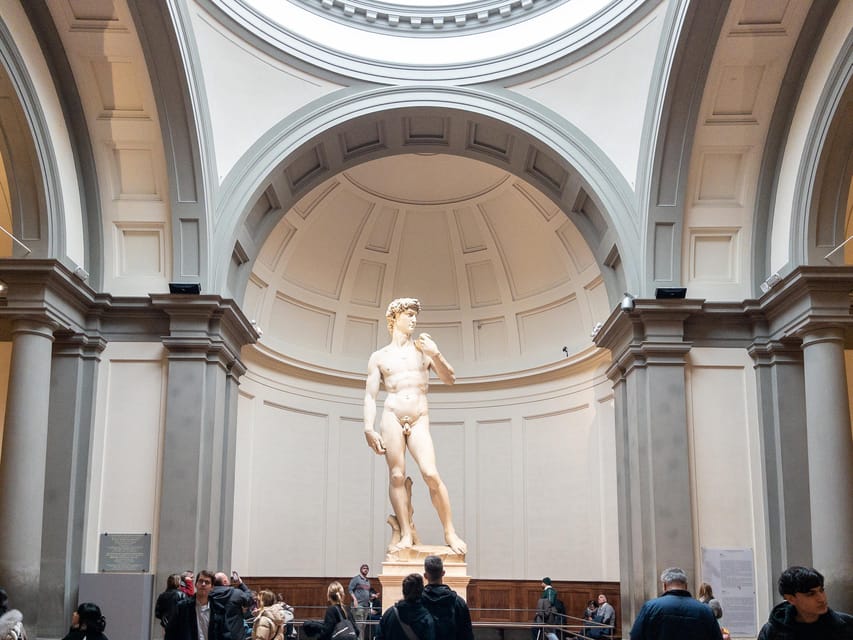
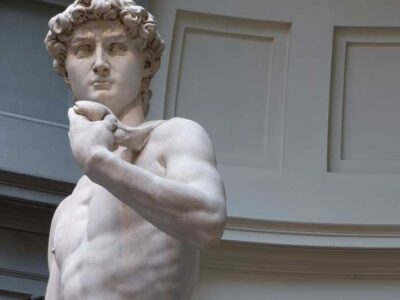
Michelangelo’s David is the reason most people come to Florence’s Accademia Gallery, and the timed ticket gets you past the ticket-office line and into the museum through a separate entrance. Seeing the sculpture up close is a powerful moment: you can study the hands, face, and carved marble surface rather than viewing a distant copy in a city square.
I like the practical one-hour format, especially if you are fitting the Accademia between the Duomo and another Florence sight. I also like that the ticket includes more than David, with Michelangelo’s unfinished sculptures, Medici musical instruments, and a useful mobile audio guide. The main concern is the meeting point. You must exchange your voucher for a physical ticket, and two recent bookings describe long waits or confusion over the appointment date and location.
Key points to know
- David is the centerpiece: The main hall gives you a close look at Michelangelo’s famous marble sculpture.
- The ticket is not fully self-explanatory: Meet the English-speaking assistant on Via Ricasoli 45 and collect the physical ticket before entering.
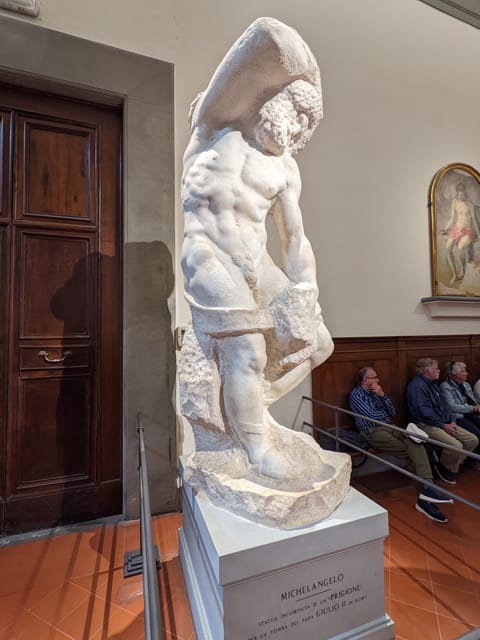
- Michelangelo’s unfinished works add depth: You can see figures still marked by the sculptor’s chisel.
- The museum has more than sculpture: Painting galleries, medieval altarpieces, plaster models, and Medici instruments fill out the visit.
- Three Stradivarius instruments are included: These belonged to the Medici and offer a change of pace from the sculpture rooms.
- Plan for about an hour: The ticket works well for a short museum visit, but it is not a full guided tour.
Why David Makes the Accademia Worth Your Time
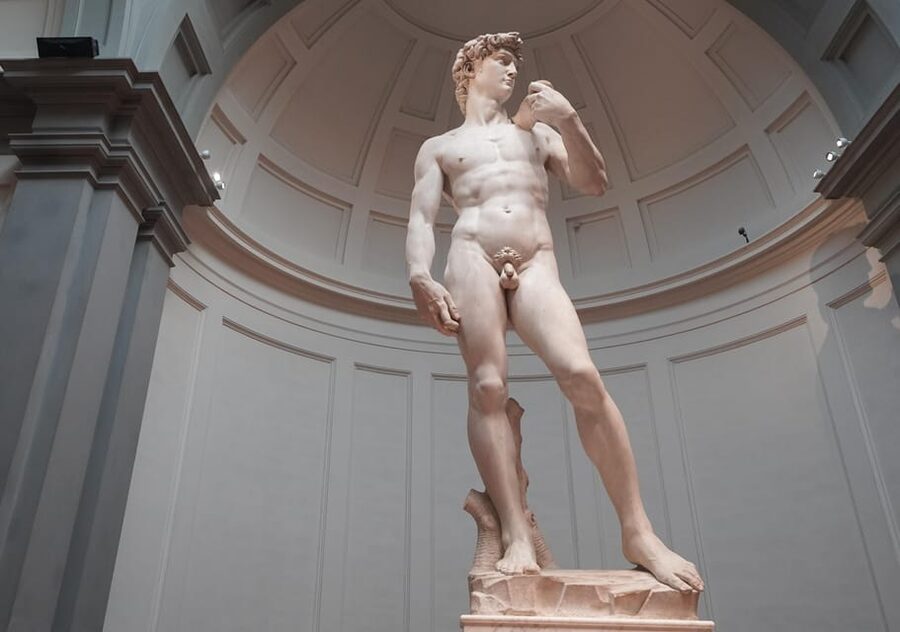
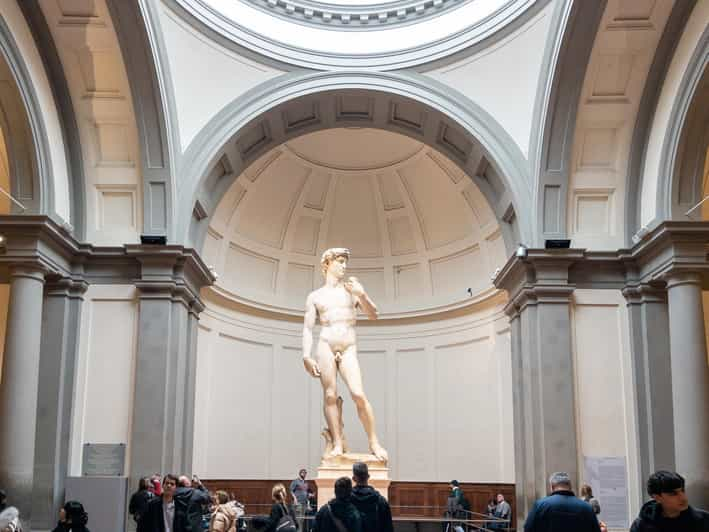
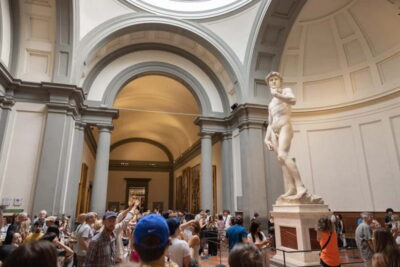
The Accademia’s main attraction is Michelangelo’s David, completed in the early 16th century. You see the statue in a tall gallery where the surrounding space lets you walk around it and study it from different angles.
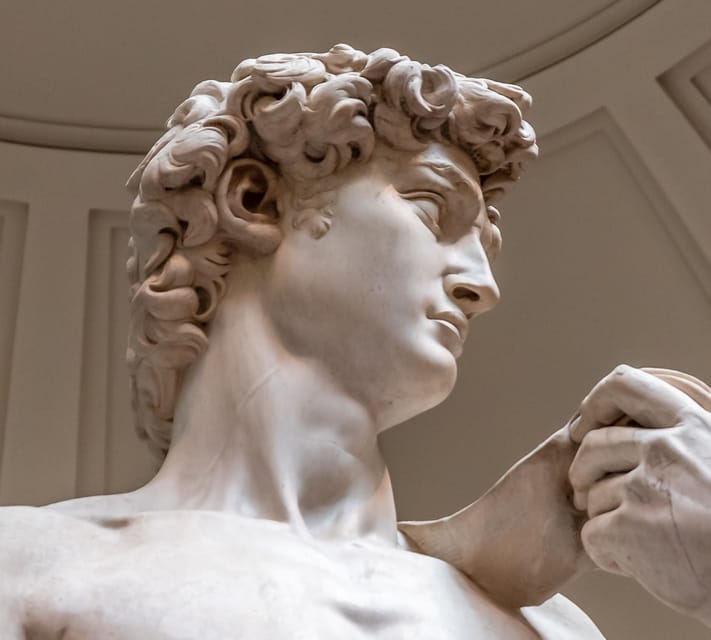
David is often treated as a quick photo stop, but the sculpture rewards slower looking. Notice the tension in the body, the alert expression, and the oversized hands and feet. Michelangelo showed David before his battle with Goliath, not after it. The figure is calm, focused, and ready.
The timed entry matters because the Accademia is one of Florence’s most popular museums. Instead of joining the ticket-office queue, you use your reserved time and a separate entrance after collecting your physical ticket. That can save valuable time in a city where many major sights require advance planning.
Still, skip-the-line does not mean you can simply walk straight from the street into the gallery. The voucher must be exchanged at the meeting point first. Build a little extra time into your plan so you are not rushing from another appointment.
More Art Museum Tours in Florence
- Florence: Skip-The-Line Uffizi Gallery Timed Entry Ticket
★ 4.5 · 27,832 reviews - Florence: Uffizi Priority Ticket & Masterpieces Audio App
★ 4.2 · 6,402 reviews - Florence Accademia Gallery Tour with Entrance Ticket Included
★ 4.5 · 6,148 reviews
Finding the Ricasoli 45 Meeting Point
The meeting point is on Via Ricasoli 45, near the Accademia entrance. Look for the blue meeting point in front of the door, close to the red point. The instructions say to stay outside and wait for the See Florence Italy assistant. Do not ring a bell, and do not assume the meeting point is an office.
This is the part of the booking that needs the most care. The host or greeter speaks English, but no individual guide name is provided. You should have your voucher ready and check the exact date and time before leaving your hotel.
Two problems are worth taking seriously. One booking involved a mix-up over the visit date, while another described a wait of more than 45 minutes because the contact person did not appear. In that second case, the people working at the museum helped the couple enter, but you should not rely on that as your plan.
Arrive early enough to locate the correct door without stress. Keep the confirmation on your phone, and if you have a paper copy, bring it too. The service includes assistance at the meeting point, but the ticket collection process means this is not a completely independent arrival.
What You See in the Main Hall
After you receive the physical ticket, you enter the Accademia and head toward the main hall. David receives the most attention, but several other Michelangelo works help you understand his method.
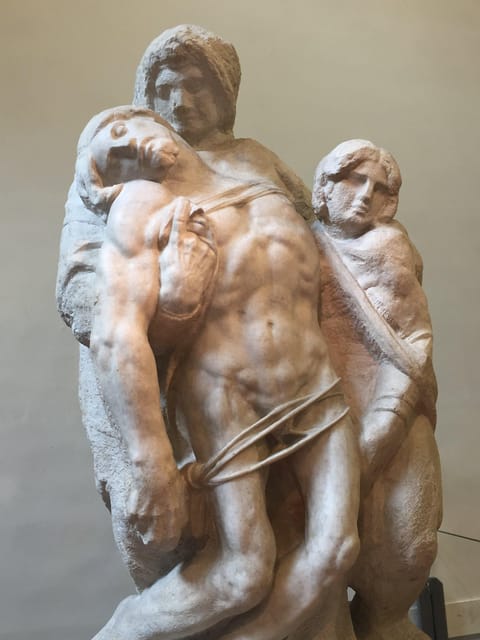
The unfinished sculptures are especially interesting. Parts of the figures remain trapped in the marble, with visible chisel marks across the surface. These works let you see the stone as a working material rather than only admiring a polished final statue.
I find unfinished sculpture useful for one simple reason: it makes the artist’s labor easier to imagine. David can appear almost effortless, but the rougher pieces remind you how much cutting and shaping went into every finished form.
Give yourself time to look beyond the famous statue. The unfinished figures are not just leftovers placed in a corner. They show a different stage of Michelangelo’s work and provide a strong contrast with David’s smooth surface.
The supplied mobile audio guide can help you make sense of what you are seeing. It is an app rather than a live tour, and a headset is not included. Bring your own headphones if you prefer to listen privately, though the provided information does not specify whether a separate device is supplied.
The Gipsoteca and Florence’s Plaster Models
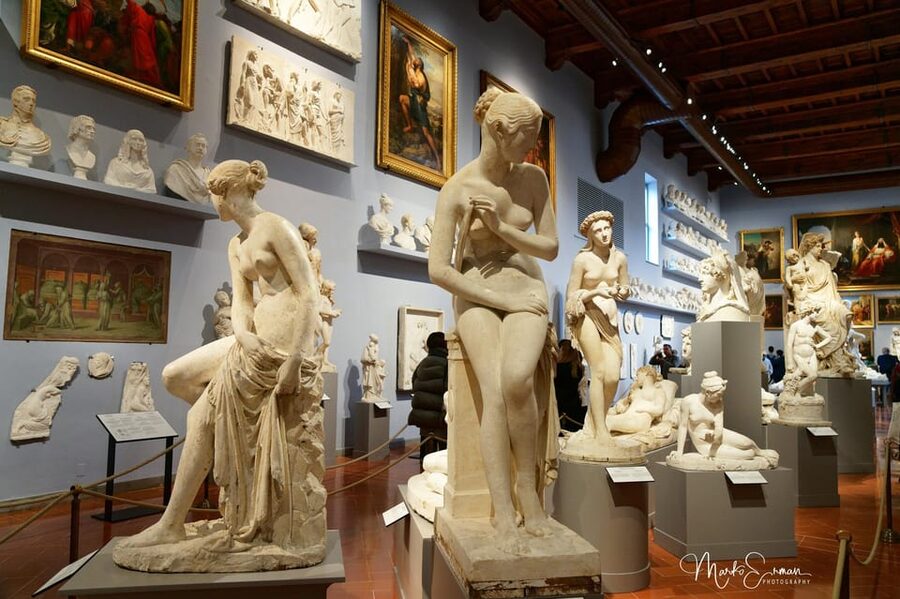
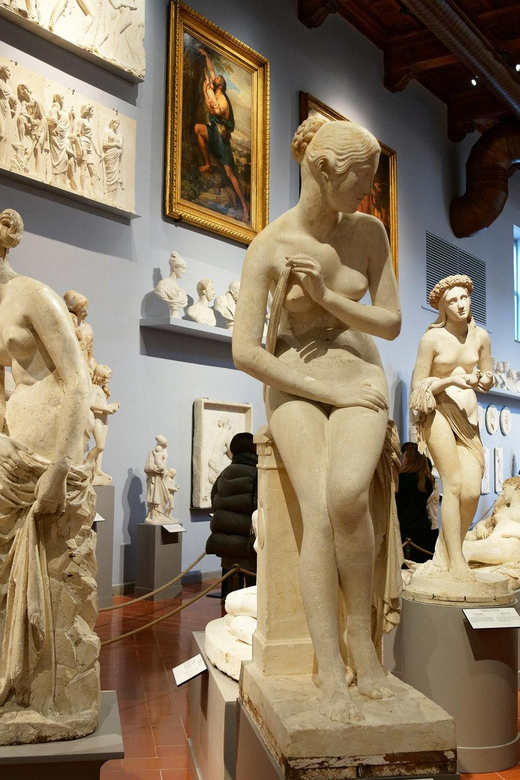
The Gipsoteca contains original plaster models made by 19th-century Florentine sculptors. This room shifts the focus away from Michelangelo and toward the way later sculptors planned and developed their work.
Plaster models are working tools. They can show a sculptor’s idea before it becomes a finished marble or bronze piece. For you, the room adds useful context to the museum’s larger interest in sculpture and artistic training.
The Gipsoteca may not be the first place you think of when planning an Accademia visit, especially with David waiting nearby. Still, it gives the museum a broader identity. You are not seeing only one famous statue. You are also seeing how Florentine artists studied form, prepared designs, and passed on sculptural practice.
With only an hour, you may need to keep moving. Focus first on the works that interest you most, then use the final minutes for rooms you might otherwise miss.
More ways to see the David:
- Florence: Accademia Gallery Guided Tour
★ 4.6 · 4,156 reviews - Uffizi & Accademia Timed Entry: Small Group Duomo Walking Tour
★ 4.5 · 3,630 reviews - Florence: Accademia Gallery Skip-the-Line Guided Tour
★ 4.8 · 3,044 reviews - Florence: Art Tour, Accademia Gallery and David
★ 4.5 · 2,407 reviews
Medici Instruments and Three Stradivarius Pieces
The collection of musical instruments offers one of the museum’s most unusual changes of subject. These original instruments belonged to the Medici, Florence’s powerful ruling family and patrons of the arts.
Three of the instruments were made by Stradivarius. That detail gives the display real appeal even for people who did not come to Florence to study music. You are looking at objects connected to court life, performance, craftsmanship, and the Medici household.
This section also helps break up the sculpture-heavy visit. After staring at marble, the delicate construction of the instruments gives you something different to examine. Their presence shows how art in Florence extended beyond painting and sculpture.
Do not expect a concert or demonstration. The ticket provides access to the museum collection only. The attraction here is seeing the original instruments and understanding their connection to the Medici.
Renaissance Paintings and Medieval Altarpieces
After the sculpture rooms, explore the painting galleries. The collection includes works by medieval and Renaissance painters, giving you a chance to see how Florentine art changed across several generations.
The paintings are an important part of the visit because David can overshadow everything else. If you rush directly to the exit after seeing the statue, you will miss much of the museum’s wider collection.
Head to the top floor for large medieval altarpieces. These works can feel very different from Michelangelo’s sculpture. They are imposing, devotional, and made for religious settings, with a scale that helps explain how paintings once shaped the interior of churches.
The description does not list individual painters or artworks, so I would not visit expecting a precise checklist of names. Instead, use the painting galleries as a short but worthwhile extension of your visit. The mobile audio guide may provide more detail as you go.
Is One Hour Enough?
The stated duration is one hour, which is realistic for the main highlights but tight for a careful museum visit. You can see David, the unfinished Michelangelo sculptures, and several other rooms in that time if you keep a steady pace.
If you want to study every painting, spend extended time with the plaster models, and read all the information panels, you may wish you had longer. This ticket is best for a focused first visit rather than a slow art-history session.
I would plan your hour in this order:
- Go first to David and the unfinished Michelangelo works.
- Visit the Gipsoteca and musical instrument collection.
- Spend the remaining time in the painting galleries and top-floor altarpieces.
- Use the mobile audio guide selectively rather than listening to every entry.
The timed entry gives your day structure, but you still control the pace once inside. There is no live guide leading you from room to room.
What the $50 Price Really Buys
At $50 per person, this is not a cheap museum ticket. The price includes the timed admission, reservation fee, skip-the-line arrangement, meeting-point assistance, and mobile audio guide.
The value depends on your priorities. If you are visiting Florence during a busy period and want to protect a fixed time for David, paying extra for a reserved entry can be sensible. Losing an hour in a ticket queue can cost more than the price difference, especially when your day already includes the Duomo, Uffizi, churches, or a dinner reservation.
The weak point is that you are paying for convenience rather than a personal art expert. There is no guided tour, named guide, or headset. If you already know how to reserve official museum admission and are comfortable managing the visit yourself, another ticket option might offer better value.
For many first-time visitors, the practical benefit is clear: someone helps you exchange the voucher, and you avoid the main ticket line. Just remember that the service only works well if the meeting-point handoff goes smoothly.
Who Should Book This Entry Ticket?
This experience suits you if David is high on your Florence list and you want a short, organized museum visit. It is also useful if your schedule is packed and you do not want to gamble on same-day ticket availability.
Families can use it, but children aged 6 through 17 must show a valid photo ID with their date of birth to receive the reduced ticket. Without identification, they may have to pay the adult price. Children under six do not need a ticket.
The museum is wheelchair accessible, making the arrangement suitable for visitors who need an accessible venue. The activity is conducted in English at the meeting point, while the audio guide is provided through a mobile application.
This is less suitable if you want a detailed lecture on Renaissance art. Since the host only assists with entry and the booking does not include a guided tour, you will be exploring on your own with the app.
Practical Rules and What to Carry
Bring a passport or ID card for each person, including children. A copy is accepted according to the ticket information, but carrying the required identification avoids trouble at the reduced-ticket check.
The museum does not allow pets, weapons, sharp objects, flash photography, alcohol, or drugs. You also should not bring alcoholic drinks in a vehicle, though transportation is not part of this activity.
The ticket includes an audio guide mobile application, but no headset. Bring your own headphones if you want to listen without holding your phone to your ear.
Cancellation is available up to 24 hours before the scheduled visit for a full refund. You can also reserve now and pay later, which helps if your Florence plans are still shifting.
Should You Book the Accademia Ticket?
Book it if you want a timed visit to David, value an English-speaking arrival assistant, and prefer to avoid the ticket-office line. The unfinished sculptures, Medici instruments, Stradivarius pieces, paintings, and medieval altarpieces make the one-hour visit more worthwhile than a David-only stop.
Before paying $50, compare the price with other available admission choices and decide how much convenience matters to you. This is a ticketing service, not a guided museum tour.
The meeting-point instructions deserve your full attention. Go to Via Ricasoli 45, wait outside the correct door, do not ring the bell, and verify your date and time. If you follow those steps and keep your expectations realistic, this can be an efficient way to see one of Florence’s essential works without spending your morning in line.
FAQ
Where is the meeting point?
Meet the See Florence Italy assistant on Via Ricasoli 45, in front of the blue meeting point near the entrance door and red point. Stay outside, do not ring any bell, and wait for the assistant.
Do I enter the Accademia with the voucher?
No. You exchange the voucher for a physical ticket at the meeting point before entering the gallery.
Is this a guided tour?
No. The activity includes an English-speaking host or greeter for meeting-point assistance, but it does not include a guided tour. A mobile audio guide application is included.
How long does the visit last?
The stated duration is one hour. You can use that time to see David, Michelangelo’s unfinished works, the Gipsoteca, Medici instruments, Stradivarius pieces, paintings, and medieval altarpieces.
What identification do children need?
Visitors aged 6 through 17 must show valid photo identification with their date of birth to receive the reduced ticket. A copy is accepted. Children under six do not require a ticket.
Is the Accademia accessible by wheelchair?
Yes. The activity is listed as wheelchair accessible.
Just added around Florence
- Florence Private Walking Tour Including Uffizi and Accademia★ 3.5 · 4 reviews
- Skip the line: Uffizi small group and walking tour of Florence★ 4.5 · 17 reviews
- Uffizi Gallery Italian guided Tour semi private★ 4.5 · 9 reviews
- Private Tour: Accademia Gallery and City Tour★ 5.0 · 10 reviews
- Private Tour: The Academy Gallery★ 5.0 · 6 reviews
- Uffizi Express Entrance -private tour★ 5.0 · 9 reviews
- Uffizi and Palazzo Vecchio Combo Private Tour★ 5.0 · 3 reviews
- VIP Priority Access: Uffizi Gallery- Guided Experience★ 4.5 · 94 reviews
Art Museum Tours in Florence, compared.
Skip-The-Line Uffizi Gallery Timed Entry Ticket
Read our review →
Florence Accademia Gallery Tour with Entrance Ticket Included
Read our review →
Uffizi Gallery: Renaissance Masterpieces Guided Tour
Read our review →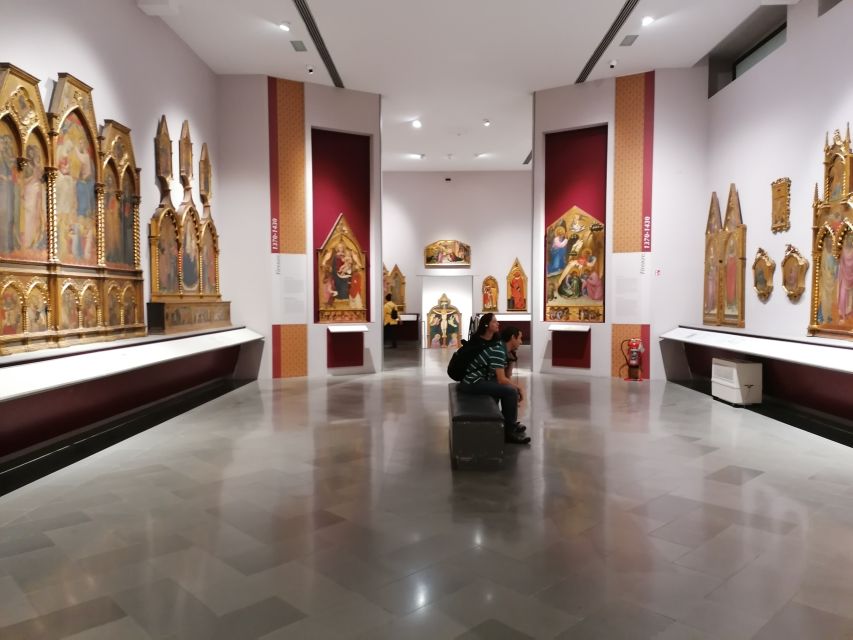
Uffizi Gallery Timed Entry Ticket & Audio Guide
Read our review →
Accademia Gallery Guided Tour with Entry Ticket
Read our review →Browse the lists this tour appears in