
REVIEW · PARIS
Family Friendly Musee d Orsay Private Guided Museum Tour
The best part of this private Musée d’Orsay tour is its clear story. Instead of marching from painting to painting, you follow the artistic changes that led to Impressionism, then see how Monet, Renoir, and Van Gogh pushed those ideas forward. The guide adjusts the pace and examples for your family, which matters when children and adults do not share the same attention span.
I like the reserved entry and the choice of morning, afternoon, or evening start times. I also like that the visit can be shaped around your group, with guides such as Ivana, Daniel, Florent, Hugo, Emilie, Emanuele, and Anastasia praised for strong explanations and an easy rapport with families. The main drawback is the price: $352.60 per person is a serious outlay, especially for a large family, and temporary exhibitions are not included.
Key points to know before booking
- Follow a story, not just a list of paintings: The tour connects Millet, Manet, Monet, Renoir, and Van Gogh in a way that makes the art easier to understand.
- Private guiding keeps children involved: Your guide can answer questions, change the pace, and use humor or historical stories when attention begins to fade.
- Reserved entry saves time, but not every wait: Security checks and museum rules can still create lines.
- The famous works are covered: Expect The Gleaners, Luncheon on the Grass, Dance at Le Moulin de la Galette, Poppies, and Bedroom in Arles.
- Plan around the practical limits: Large bags and suitcases are not permitted, and temporary exhibitions cost extra.
- Best value comes with a full group: The per-person cost is high, but a private guide can be worthwhile when several family members want a focused visit.
Why the Musée d’Orsay works so well for families
The Musée d’Orsay is a good family museum because its collection has an obvious visual turning point. You can begin with familiar subjects and traditional painting, then watch artists change the way they handled light, everyday life, color, and brushwork.
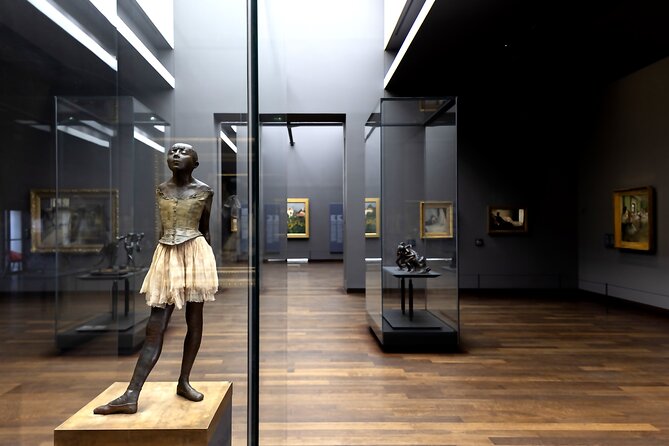
That gives your guide something useful to work with. A child may not care about a formal discussion of 19th-century art, but the child may notice why one painting looks smooth and polished while another appears quick and rough. A teenager may connect with the artists’ arguments with the official art world. Adults get the fuller story without turning the visit into a lecture.
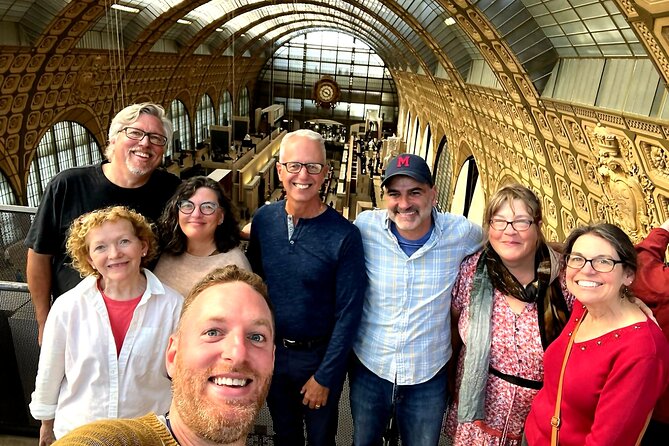
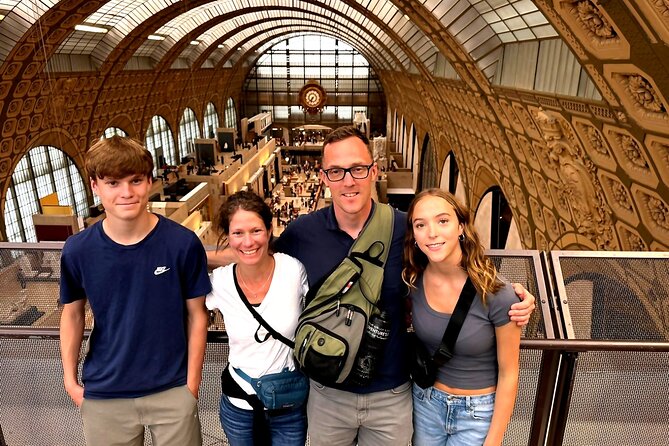
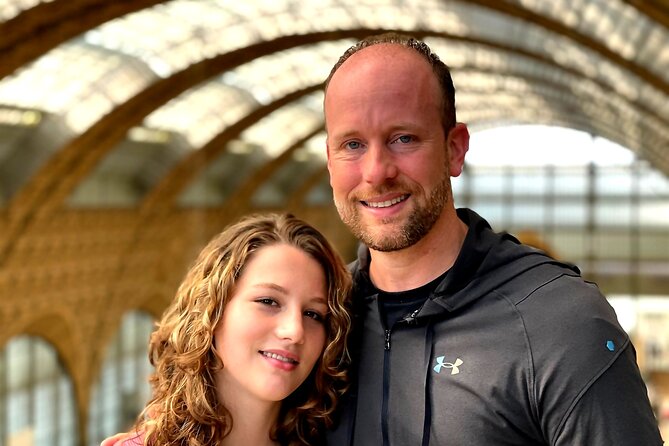
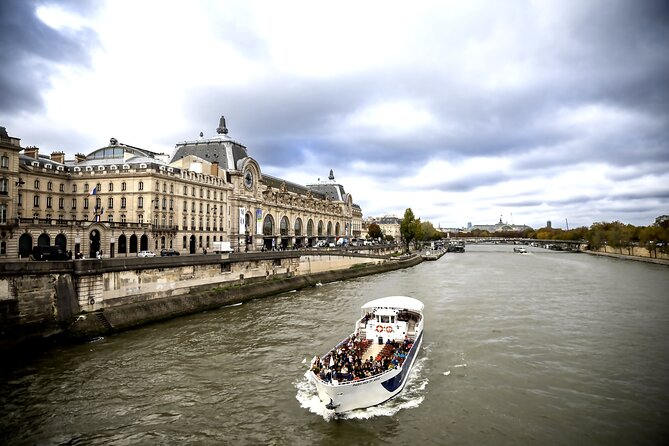
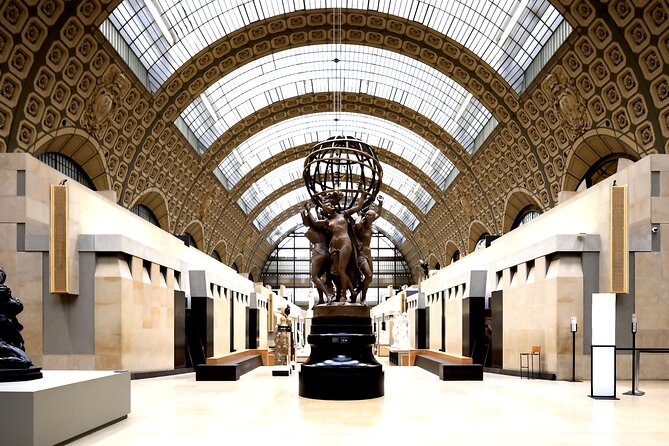
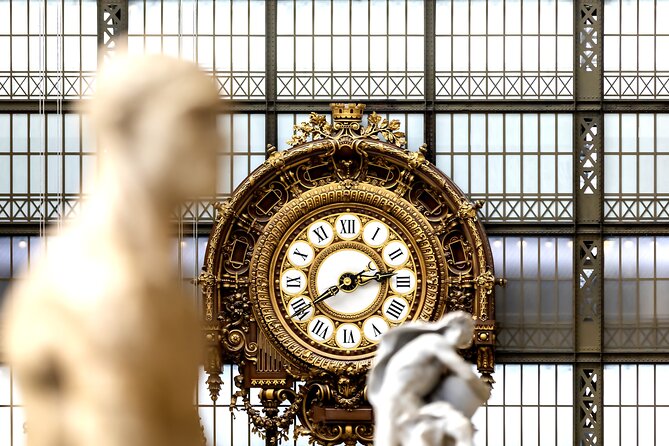
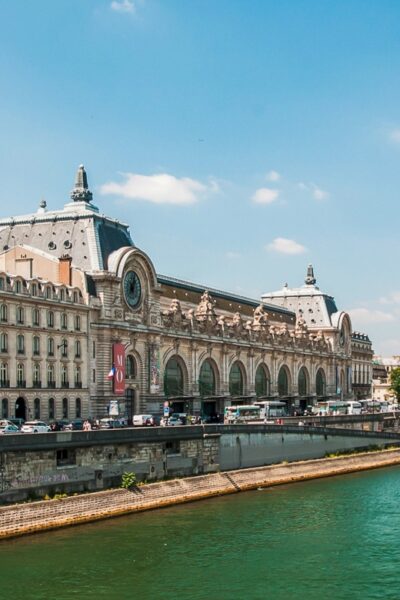
The museum itself helps. The building has striking Beaux-Arts architecture, so your visit is not only about the paintings. The grand setting gives the experience a sense of occasion, while the private format keeps you from having to follow a fixed group route.
You will spend about two and a half hours inside. That is long enough to see the major works and understand the artistic changes, but short enough to avoid the museum fatigue that can hit younger children. You should still expect a moderate amount of walking and standing.
More Art Museum Tours in Paris
- Paris: Louvre Museum Timed-Entrance Ticket
★ 4.6 · 71,977 reviews - Paris: Orsay Museum Entry Ticket
★ 4.7 · 25,647 reviews - Paris: Louvre Guided Tour with Reserved Access & Boat Cruise
★ 4.3 · 16,353 reviews
Entering the former railway station with reserved admission
The tour begins at the Musée d’Orsay in Paris, near public transportation. You meet your guide at the museum rather than arranging hotel pickup, so plan your route in advance. An Uber or taxi is recommended if that works better for your family, but pickup and drop-off are not part of the tour.
Reserved entry is one of the practical advantages. It should make arrival simpler than joining the general admission process, though it does not promise an empty entrance. The museum can still have security checks, and increased security measures may create lines even for visitors with reserved access.
Bring only what you need. Large bags and suitcases cannot enter. Handbags and small, thin backpacks are allowed through security, subject to the museum’s checks. This is especially important if you are coming directly from a hotel or train station with luggage.
The museum can occasionally close or delay opening without advance warning. If opening is delayed by more than an hour, an alternative is provided, but the stated terms do not include a refund or discount in that situation. Keep your phone available on the day of the tour, and provide a mobile number with your country code when booking.
The artistic road to Impressionism
Your guide begins with the changes that led to Impressionism rather than treating the movement as an isolated event. That approach is one of the strongest reasons to choose a private visit.
Millet’s The Gleaners helps establish the earlier tradition. Its subject is ordinary rural workers, and it gives your guide a way to explain how artists were beginning to give serious attention to everyday people and labor. You do not need prior art training to follow this part. The point is to notice how subject matter and artistic priorities were changing.
Then comes Manet’s Luncheon on the Grass, a work that challenged accepted ideas about what belonged in a serious painting and how a modern scene could be shown. It is a useful point for a family conversation because the painting can seem direct and surprising even before you know its art history.
The value of having a guide here is context. You can ask why a painting caused a stir, what made a style seem new, or how the public and art institutions reacted. One guide, Marcel, was especially praised for explaining the difference between what society considered acceptable and what younger artists were attempting. That is the kind of framing that helps you see more than the surface.
The specific order can vary, and some rooms or collections may change during the year. Still, the overall route is designed to take you from the early 19th century toward the modern ideas that shaped Impressionism and the art that followed it.
Monet, Renoir, and the paintings families expect to see
The Impressionist section supplies the visual payoff. Monet’s Poppies is a key stop, and the guide uses works like this to explain light, color, and the quick-looking brushwork associated with the movement.
Monet is often the easiest artist for children to approach. Poppies offers clear colors and an open outdoor scene, giving your guide plenty to point out without relying on technical terms. You can discuss what your eye notices first, how the colors sit beside one another, and why the painting feels different from a carefully polished academic work.
Renoir’s Dance at Le Moulin de la Galette brings a social scene into the story. It shows modern life as a subject worth painting, with movement and people at the center. A private guide can help your family look at the painting in sections, rather than asking children to absorb the whole canvas at once.
The advantage of a private visit is not simply that you see famous works. It is that you can pause at the works that interest your family and move more quickly through others. If one child is fascinated by color while another wants the historical story, the guide can serve both interests.
The tour also aims to include less famous works along the way. You should not expect every room or every major object in the museum during two and a half hours. The strength of the visit is a focused selection, not an attempt to cover the entire collection.
More gallery tours built for kids in Paris:
- Paris Louvre: 2-Hour Private Tour for Groups or Families
★ 4.6 · 639 reviews - Paris: Louvre Private Family Tour for Kids + Reserved Entry
★ 4.6 · 508 reviews - Paris Kids and Families Private Louvre Tour
★ 5.0 · 430 reviews - Family Friendly Louvre Museum Private Guided Tour
★ 5.0 · 190 reviews
Van Gogh and the next step after Impressionism
Van Gogh’s Bedroom in Arles shows what happened after the Impressionist breakthrough. The visit does not stop once your family has seen Monet and Renoir. It follows the influence forward, showing how later artists took ideas about color and brushwork in their own directions.
Van Gogh is another useful artist for young visitors because the work invites direct reactions. The colors, simplified shapes, and energetic marks are easy to spot. Your guide can then connect those visual choices to the larger story, showing that art movements are not sealed boxes. Artists borrow, argue, change, and move on.
The review comments on guides such as Daniel, Florent, and Emanuele point to a consistent strength: they explain the period as a sequence of developments rather than a pile of names and dates. Daniel has been praised for linking artistic changes to historical events, while Florent was noted for a clear pace and route from background to the end of the Impressionist period.
That kind of explanation is particularly useful if you are visiting both the Louvre and the Orsay. The two museums complement one another, but they can blur together if you do not have a plan. This tour gives the Orsay a distinct focus: the movement toward modern art and the artists who made that shift visible.
Guides who can hold a family’s attention
A private tour succeeds or fails largely through the guide. Here, several specific guides have been praised for different strengths.
Ivana is described as engaging enough to hold the attention of a seemingly uninterested 20-year-old. That is a useful test for a family group, since older children and teenagers can be harder to win over than younger ones. Anastasia has been associated with a fun family visit even when the museum was crowded.
Hugo brought humor into the art explanations, and one family booked him again for a separate private visit to Notre Dame Cathedral. Emilie was praised for handling individual needs and bringing personal experience into the discussion. Emanuele brought energy to a two-and-a-half-hour lesson that felt quick because the group was enjoying the pace.
These names are examples, not a guarantee that you will receive a particular guide. The important point is the private arrangement. You are not sharing the guide with strangers, and your guide can respond to your family’s questions rather than following a script for a large group.
You should still tell the operator about your children’s ages and interests if there is a place to do so. The tour is advertised for children of all ages, but a good family visit becomes easier when the guide knows whether your group prefers stories, technique, history, or famous works.
How the timing and group format affect value
The tour lasts approximately two hours and 30 minutes. Morning, afternoon, and evening options make it easier to fit around meals, jet lag, or another Paris appointment.
A morning tour may suit families who want to use their best energy inside the museum. An afternoon start can work after a slower morning, while an evening option may help you protect daytime sightseeing time. The available start times depend on the booking calendar, so check the actual choices before building the rest of your day around one.
The tour is private, but the price is listed at $352.60 per person. That is expensive compared with a standard museum admission or a large group tour. On the other hand, the cost pays for a guide dedicated to your family, reserved entry, a planned route, and the ability to ask questions at every stop.
Group discounts are offered, though the available discount depends on the booking details. The value improves when you have several family members sharing the private experience, especially if you would otherwise book separate audio guides or spend time trying to explain the collection yourselves.
I would not choose this tour simply to get into the building. If you are comfortable reading wall labels and seeing a small selection on your own, you can spend far less. I would choose it when the goal is understanding the collection, keeping children involved, and making limited museum time count.
Practical details that can change your visit
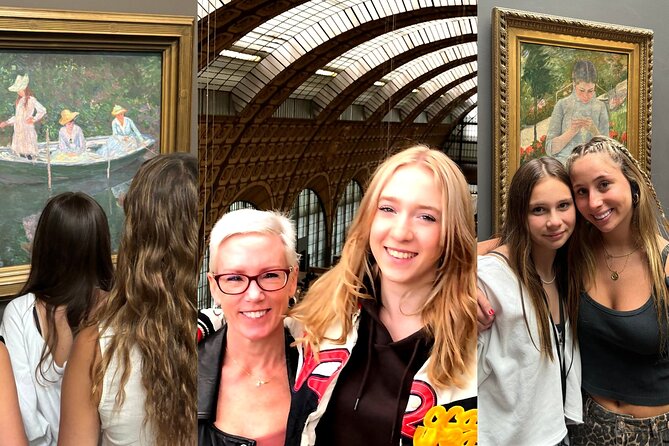
The starting and ending point is the Musée d’Orsay. There is no hotel pickup or drop-off, so leave enough time to reach the museum and find the meeting point.
The activity is wheelchair friendly, but the tour still involves moving through a large museum. A moderate level of physical fitness is advised. If someone in your party has specific mobility needs, share that information when arranging the tour so the guide can plan appropriately.
Appropriate dress is required for entry into some sites on the tour, though the main experience takes place at the museum. The museum may also enforce quiet rules in certain rooms. In those spaces, your guide will explain the rules before you enter, and speaking may be limited.
Temporary exhibitions are not included. If a special show is important to you, you will need to make separate arrangements rather than assuming your tour ticket covers it.
The museum’s collections can vary during the year. A particular painting or room may be unavailable, so treat the advertised works as the intended highlights rather than an absolute guarantee.
Cancellation is free up to 24 hours before the start time. Canceling or changing the booking less than 24 hours ahead does not qualify for a refund, and the cut-off follows Paris local time.
Who should book this Musée d’Orsay visit?
This experience suits families who want art explained in plain language and prefer a private route over a crowded group. It is especially helpful if you have children of different ages, a teenager who needs a reason to care, or adults who want more context than an audio guide usually provides.
It also suits first-time Orsay visitors who want to see the best-known works without wandering through every room. The guide can give you a useful framework, then point out details you might otherwise miss.
I would hesitate if your family dislikes scheduled activities, wants to spend an entire day examining a few paintings, or is mainly interested in a temporary exhibition. The fixed two-and-a-half-hour format and the extra cost may not fit those priorities.
Should you book it?
Book this tour if you want a focused, private introduction to the Musée d’Orsay and need help keeping a family engaged. The strongest reasons are the reserved entry, flexible start times, clear route through the birth of Impressionism, and guides who have shown they can work with children, teenagers, and adults.
At $352.60 per person, it is not a bargain museum ticket. It is a paid teaching experience. For a family that values time, context, and a guide who can adjust the visit on the spot, the cost may be justified. For confident museumgoers on a tight budget, visit independently and spend the savings elsewhere in Paris.
FAQ
Where does the Musée d’Orsay private tour begin?
It begins at the Musée d’Orsay, 75007 Paris, France. The activity also ends back at the meeting point.
How long does the tour last?
The tour lasts approximately two hours and 30 minutes.
Is museum admission included?
Yes. All entrance fees are included, with reserved entry arranged for the visit.
Is the tour private?
Yes. Only your group participates in this private activity.
Is the tour offered in English?
Yes. The experience is offered in English.
Can I choose a morning, afternoon, or evening time?
Yes. Morning, afternoon, and evening tour options are available, subject to the booking schedule.
Are temporary exhibitions included?
No. Temporary exhibitions are not included in the tour price.
Is the tour wheelchair friendly?
Yes. The activity is wheelchair friendly, although a moderate level of physical fitness is advised.
Can I cancel for a full refund?
Yes. You can cancel at least 24 hours before the experience start time for a full refund. Cancellations or changes made less than 24 hours before the start time are not refunded.
More Orsay Tours in Paris
- Paris: Orsay Museum Entry Ticket and Digital Audio Guide App
★ 4.4 · 3,170 reviews - Paris in a Day: Louvre or Orsay, Eiffel Tower, City Walk & Cruise
★ 5.0 · 1,956 reviews - Paris: Musée d’Orsay Skip-the-Line Tour with Expert Guide
★ 4.5 · 1,145 reviews - Musée d’Orsay Skip-the-Line Tour with Expert Guide
★ 4.8 · 1,088 reviews
Just added around Paris
- Paris Day Tour with Eiffel Tower, Louvre and Cruise Max 6 People★ 4.5 · 29 reviews
- PRIVATE Louvre Wonders & Hidden Treasures Visit★ 5.0 · 65 reviews
- d’Orsay Museum Paris entry ticket★ 3.5 · 31 reviews
- visiting the masterpieces of impressionists at Orsay museum★ 5.0 · 7 reviews
- Louvre Museum with private guide★ 5.0 · 3 reviews
- Louvre Wheelchair-Accessible Private Tour – Stress-Free & Easy★ 5.0 · 16 reviews
- LOUVRE, Small Group Guided Tour in French (TOP SALES)★ 4.5 · 9 reviews
- Musée d’Orsay Highlights Tour with Gourmet Lunch★ 4.5 · 11 reviews
Art Museum Tours in Paris, compared.
Louvre Guided Tour with Reserved Access & Boat Cruise
Read our review →
Louvre Overview, Exploration tour and Reserved Entry
Read our review →
Louvre Museum Entry Ticket With Host and River Cruise
Read our review →
Mona Lisa & Louvre Masterpieces Tour with Reserved Access
Read our review →
Louvre Museum – Exclusive Guided Tour (Entry Included)
Read our review →
Louvre Museum Hosted Entry and Mona Lisa Audioguide
Read our review →Browse the lists this tour appears in