
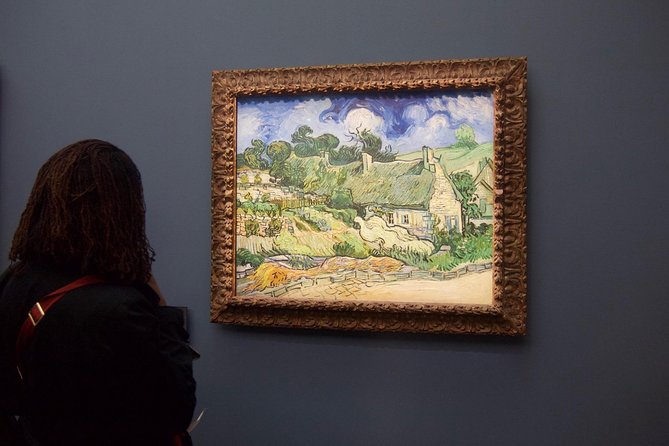
REVIEW · PARIS
Paris: Musée d’Orsay Skip-the-Line Tour with Expert Guide
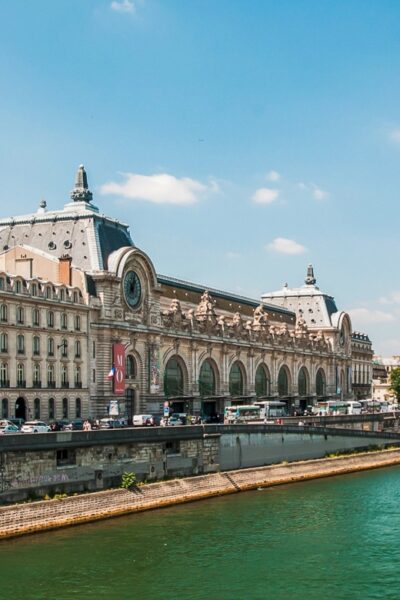
The Musée d’Orsay is more than a room full of famous paintings. It is a former railway station with a giant clock, grand Beaux-Arts details, and a collection that explains how stiff 19th-century painting gave way to Impressionism. This tour helps you see that change as a story, not just a parade of pretty pictures. I especially like the reserved entry and the way the guide connects the artists, their arguments, and their changing ideas. I also like that you keep free time afterward to revisit favorite works.
The main drawback is pace. One hour and 45 minutes is enough for a strong introduction, not a full museum visit, and the tour can move quickly when the galleries are crowded. You should plan to stay afterward if you want time with less famous works or a second look at paintings that caught your eye.
Key points at a glance
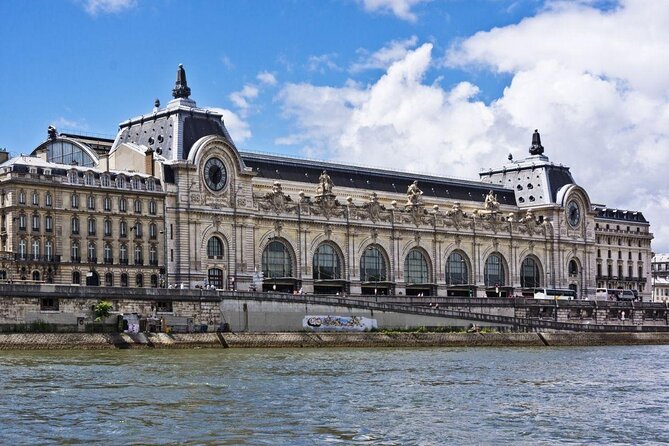
- A former railway station: The building itself is one of the best parts of the visit, with a grand Beaux-Arts interior and an iconic clock.
- A clear art story: The tour explains how artists such as Manet, Monet, Renoir, Degas, and Van Gogh challenged the old rules.
- Reserved museum entry: Your ticket and pre-booked access through a special entrance are included.
- Small-group format: Groups can include up to 20 people, with headsets to help you hear the guide.
- Free time afterward: The guided portion ends inside the museum, so you can continue at your own pace.
- Strong guide feedback: Guides including Cecilia, Claire, Stephanie, Ivan, Julie, Caroline, Anthony, and Sylviane have been praised for humor, clear explanations, and smart painting choices.
Why a guided visit makes sense at the Musée d’Orsay
The Musée d’Orsay can feel manageable at first glance, especially beside the enormous Louvre. Then you see how much is packed into its galleries. Thousands of works are displayed across five levels, and even a short visit can leave you wondering where to go next.
That is where this tour earns its keep. Instead of asking you to read every label, the guide builds a route around the turning points of 19th-century art. You see examples of the older academic style, then works that broke with it, followed by the Impressionist and Post-Impressionist paintings that changed the direction of European art.
I like this approach because it gives you a framework. You are not simply told that a painting is important. You learn what made it surprising at the time, who objected to it, and how it fits into the larger movement.
The strongest part of the experience is usually the interpretation. Guides such as Julie have explained the period’s politics and social changes alongside the paintings, while Ivan and Anthony have been praised for keeping the tone light without turning the visit into a lecture. That balance matters. Art history is easier to remember when it comes with a story and a little humor.
More Art Museum Tours in Paris
- Paris: Louvre Museum Timed-Entrance Ticket
★ 4.6 · 71,977 reviews - Paris: Orsay Museum Entry Ticket
★ 4.7 · 25,647 reviews - Paris: Louvre Guided Tour with Reserved Access & Boat Cruise
★ 4.3 · 16,353 reviews
Meeting at 2 Rue de la Légion d’Honneur
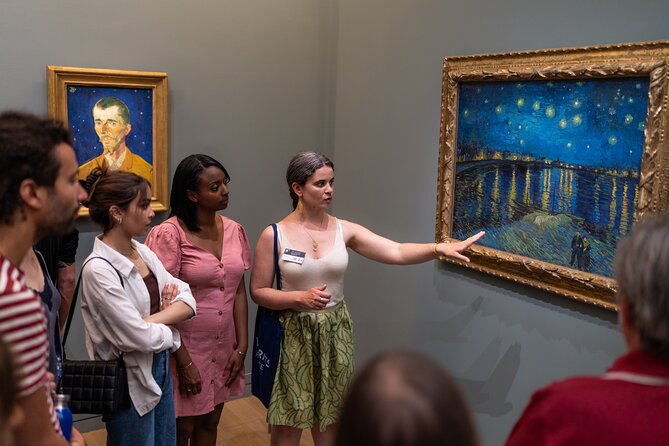
The tour begins outside the museum at 2 Rue de la Légion d’Honneur, 75007 Paris. You should allow extra time to get there, particularly if you are coming by taxi. Finding a taxi in central Paris can take longer than expected, and a late arrival can mean missing the group.
The meeting point is intended to be easy to find, but you still need to arrive with a little breathing room. Have your mobile ticket ready, and check the tour details before leaving your hotel. Confirmation is provided at booking, and the activity is offered in English.
Once the group is together, you enter with the guide through a pre-reserved special entrance. The ticket is included, so you are not sorting out admission at the door. This is most useful during busy periods, when standing outside waiting for entry can eat into the limited time you have in Paris.
The group may include up to 20 people. That is not a private tour, but headsets help you follow the guide while standing in front of a painting or moving through a crowded gallery.
The station building is part of the collection
Before you reach the art, take a moment to look at the building. The Musée d’Orsay occupies a former railway station, and its huge clock, ironwork, stone arches, and long interior spaces give the visit a feeling unlike that of a standard museum.
The architecture is not just a backdrop. It helps explain the era covered by the collection. The station was designed for a modern Paris that was changing quickly, and the art inside records a similar break with the past.
The giant clock is an easy photo stop, but do not let it distract you from the rest of the building. From inside, the museum’s scale and shape make it clear why many people consider the structure itself worth the visit.
A guide can also help you get your bearings early. That is useful because the galleries can become crowded, and the museum’s different levels are not always intuitive on a first visit.
The first hour: from old rules to new ideas
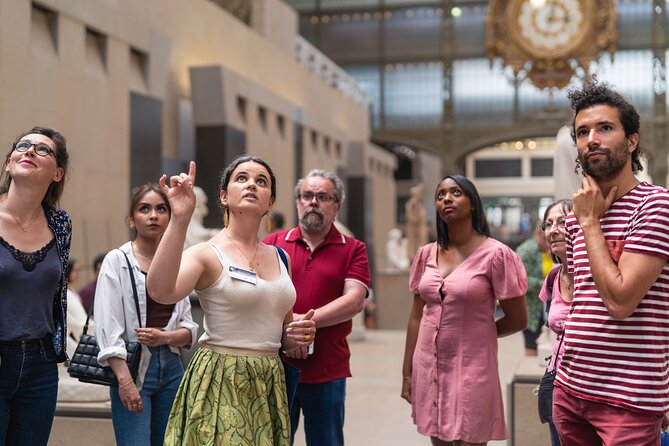
The first main portion lasts about one hour and concentrates on the museum’s key works and the artistic shift that led to Impressionism.
You can expect to see paintings associated with major figures such as Monet, Manet, Renoir, Degas, and Van Gogh. The exact selection may vary with gallery layouts and access, but the purpose remains the same: show how artists moved away from polished historical scenes and toward modern life, direct observation, stronger color, and visible brushwork.
The guide’s job is not simply to point out famous names. It is to show the tension between what official institutions expected and what younger artists wanted to paint. Subjects that now seem familiar, such as city streets, leisure, dancers, cafés, and ordinary people, once seemed too casual or too blunt for serious art.
Manet’s Olympia is a good example of the period’s sharp edge. The painting challenged accepted ideas about the female nude and public morality. The visit may also touch on prostitution, exploitation, and other difficult subjects connected to 19th-century society.
That makes this tour a better fit for adults and older children who can handle mature themes. Families should know in advance that nude figures and references to sexual exploitation of minors may arise as part of the discussion. The guide may adjust the explanation for younger listeners, but the subject matter is part of the art and is not simply avoided.
The discussion of Impressionism also benefits from comparison. A guide such as Mary has been praised for showing selected examples rather than rushing past dozens of works. That is a sensible museum strategy. A few well-chosen paintings can explain a movement more clearly than a long list of names.
More Orsay tours and tickets:
- Paris: Orsay Museum Entry Ticket and Digital Audio Guide App
★ 4.4 · 3,170 reviews - Paris in a Day: Louvre or Orsay, Eiffel Tower, City Walk & Cruise
★ 5.0 · 1,956 reviews - Musée d’Orsay Skip-the-Line Tour with Expert Guide
★ 4.8 · 1,088 reviews - The Musée d’Orsay Guided Tour Orsay Museum Semi-Private 6ppl Max
★ 5.0 · 904 reviews
The second 45 minutes: famous paintings with context
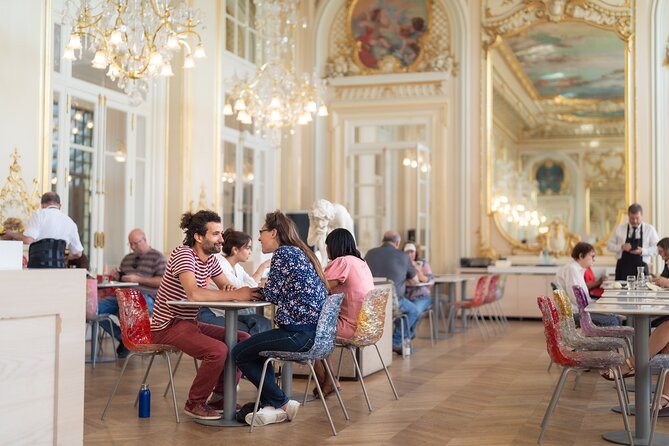
The final guided portion lasts about 45 minutes and continues the story through Impressionist and Post-Impressionist masterpieces.
You may stand before works associated with Monet, Manet, Renoir, Degas, and Van Gogh, including Monet’s Water Lilies, Manet’s Olympia, and Van Gogh’s Starry Night Over the Rhône. These are major attractions, so crowds can make it hard to get a clear view at first. A good guide helps position the group and points out the details worth watching for.
Van Gogh’s Starry Night Over the Rhône rewards close attention to color and reflection. The stars reflected in the water can feel romantic, but the guide can also connect the painting to Van Gogh’s larger search for expressive color and emotional force.
Renoir’s dance scenes offer a different mood, full of movement and social energy. Degas gives you another angle on modern life through dancers and rehearsal spaces, where the compositions can feel almost like snapshots.
The point is not to claim that every painting is equally easy to understand. Some works may appeal to you immediately, while others may seem strange or even irritating. That is part of the value of having an art specialist nearby. You can ask why a work mattered, what critics objected to, or how it influenced later painters.
Guides including Claire and Caroline have been praised for moving beyond basic labels and adding details about the artists’ lives, ambitions, and rivalries. That personal context can make the paintings easier to remember, but the guide should still keep the focus on what is in front of you.
Free time inside the museum after the guided visit
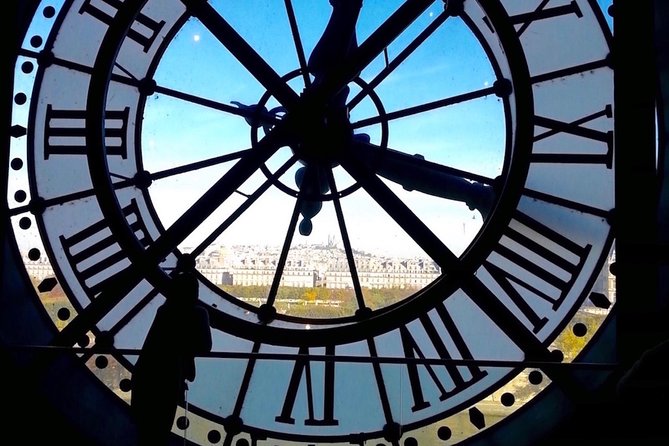
The tour ends inside the Musée d’Orsay, not back outside. This is one of its best practical features. After the formal route, you can return to a painting, visit a room the group passed quickly, or simply sit with the art without trying to keep up.
I would use the free time in one of three ways:
- Return to a famous painting that was partly blocked by a crowd.
- Search for artists or works that match your own interests.
- Visit sections the guide did not have time to cover.
A guided museum visit should give you direction, not replace your own curiosity. The first part tells you what to notice. The second part lets you follow your instincts.
You should not expect to see everything. The museum’s collection is too large for that, and a 45-minute self-guided extension is only enough for a few extra rooms. Still, the free time makes the experience more flexible than a tour that sends you straight back onto the street.
How the guides shape the experience
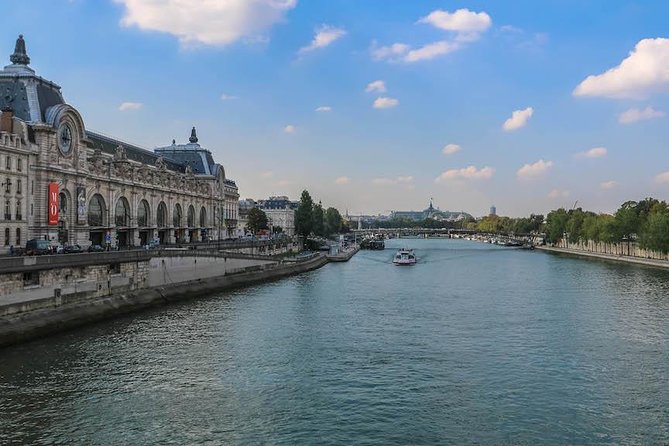
The guide is the most important variable in any museum tour. Here, the feedback points to a consistent strength: clear explanations, strong subject knowledge, and an ability to keep different ages engaged.
Cecilia has been praised for combining education with fun, while Stephanie was noted for enthusiasm. Ivan brought humor to the history of the movement, and Julie used lively explanations to connect paintings with the period that produced them.
Other guides have been singled out for different strengths. Claire helped one participant connect Orsay paintings with a planned painting trip along the Seine and Oise. Sylviane was praised for explaining both the building and its major works. Caroline made the meeting process easy and then added context beyond what was visible in the galleries.
That said, one poor guide experience was reported, with criticism of the organization and level of explanation. No tour company can make every guide’s style suit every person. Most of the available feedback is strongly positive, but you should still understand that the experience depends on the individual assigned to your group.
The overall figures are encouraging: a 4.7 rating from 1,145 reviews, with 92 percent recommending the experience. Those numbers suggest a reliable product, though they do not guarantee that every guide will match your preferred pace or teaching style.
Price and value at $67.60
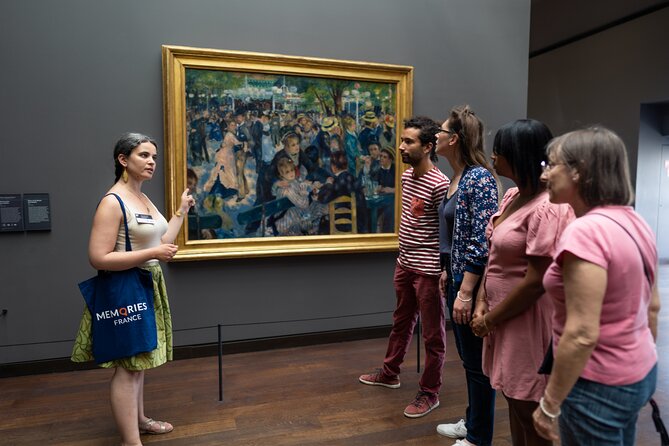
At $67.60 per person, this is not the cheapest way to enter the Musée d’Orsay. You are paying for more than admission, though. The price includes the reserved entry, an English-speaking accredited art guide, the guided interpretation, headsets, and time to continue inside the museum afterward.
The value is strongest if you are visiting for the first time, have limited time in Paris, or feel unsure about how to approach Impressionist art. The guide can save you from wandering through five levels while missing the works you most hoped to see.
It is less appealing if you already know the Orsay well, prefer to read labels alone, or want several hours of unhurried museum time. In that case, a standard museum visit may give you more freedom for less money.
For a family, the price can also make sense if adults want the art explained in a way that keeps teenagers involved. The short length helps prevent museum fatigue, although mature topics mean parents should decide if the content suits their children.
Timing, crowds, and practical limits
The tour lasts about one hour and 45 minutes. The guided portion is split into roughly one hour and 45 minutes, though the overall description presents the visit as a 1-hour-45-minute experience with free time afterward. In practical terms, you should set aside more than two hours if you want to continue exploring.
Crowds are the main factor that can affect the pace. The Orsay can become difficult to navigate later in the day, and even a well-planned route may slow down around famous paintings. Arriving early is sensible, especially if you want a quieter start.
The group size of up to 20 is small enough for a structured visit, but it is not intimate in the private-guide sense. Headsets help, yet you may occasionally wait for the group to gather or adjust your position so everyone can hear.
Most people can take part, and the museum is near public transportation. Hotel pickup and drop-off are not included, so you arrange your own way to the meeting point and away from the museum.
Cancellation is free if you cancel at least 24 hours before the start time. Changes or cancellations inside that window are not refunded, and missed tours do not qualify for a refund. A delayed flight is therefore a real risk, so leave plenty of time between your arrival in Paris and the start of this activity.
Who should book this Musée d’Orsay tour?
I would recommend it to first-time visitors who want a clear introduction to Impressionism without spending half a day studying museum maps. It also suits anyone who enjoys stories about artists, rivalries, social change, and the reasons a once-controversial painting became famous.
It is a good choice for a short Paris visit because the route is focused. You get the building, the major artistic story, selected masterpieces, and free time to continue on your own.
I would hesitate if you want a slow, private experience or plan to study every gallery. The group may reach 20 people, the museum can be crowded, and the guide must keep moving to cover the main points.
Should you book it?
Book this tour if you want the Musée d’Orsay to make sense quickly. The reserved entrance removes a common delay, the guide gives the collection a clear story, and the free time afterward lets you follow up on your own interests.
Skip it if you already know the museum well or would rather spend several quiet hours wandering independently. For most first visits, though, $67.60 is a fair price for a focused introduction to one of Paris’s finest museums, especially when you value context as much as access.
FAQ
How long does the Musée d’Orsay tour last?
The experience lasts approximately 1 hour and 45 minutes, followed by free time to continue exploring the museum on your own.
Is museum admission included?
Yes. The ticket and pre-reserved entry through a special entrance are included in the tour price.
What language is the tour offered in?
The tour is offered in English.
Where does the tour begin?
You meet the guide at 2 Rue de la Légion d’Honneur, 75007 Paris, France.
Where does the tour end?
The tour ends inside the Musée d’Orsay at Esplanade Valéry Giscard d’Estaing.
How many people can join the tour?
The group can include a maximum of 20 people, and headsets are provided.
Can I cancel for a refund?
Yes. You can cancel at least 24 hours before the start time for a full refund. Cancellations, changes, and missed tours inside 24 hours are not refunded.
More Skip-the-Line Tickets in Paris
- Louvre Museum: Skip-the-Line Small Group Guided Tour
★ 4.6 · 4,268 reviews - Paris: Skip-the-Line Louvre Museum & Mona Lisa Guided Tour
★ 4.6 · 1,442 reviews - Paris: Skip-the-Line Louvre Highlights Tour with Mona Lisa
★ 4.6 · 1,132 reviews - Louvre Museum Skip the Line Entry with Introduction to Mona Lisa
★ 3.0 · 576 reviews
Just added around Paris
- Paris Day Tour with Eiffel Tower, Louvre and Cruise Max 6 People★ 4.5 · 29 reviews
- PRIVATE Louvre Wonders & Hidden Treasures Visit★ 5.0 · 65 reviews
- d’Orsay Museum Paris entry ticket★ 3.5 · 31 reviews
- visiting the masterpieces of impressionists at Orsay museum★ 5.0 · 7 reviews
- Louvre Museum with private guide★ 5.0 · 3 reviews
- Louvre Wheelchair-Accessible Private Tour – Stress-Free & Easy★ 5.0 · 16 reviews
- LOUVRE, Small Group Guided Tour in French (TOP SALES)★ 4.5 · 9 reviews
- Louvre Museum Private 2-h Tour on Italian Art and masterpieces★ 5.0 · 51 reviews
Art Museum Tours in Paris, compared.

Louvre Guided Tour with Reserved Access & Boat Cruise
Read our review →
Louvre Overview, Exploration tour and Reserved Entry
Read our review →
Louvre Museum Entry Ticket With Host and River Cruise
Read our review →
Mona Lisa & Louvre Masterpieces Tour with Reserved Access
Read our review →
Louvre Museum – Exclusive Guided Tour (Entry Included)
Read our review →
Louvre Museum Hosted Entry and Mona Lisa Audioguide
Read our review →Browse the lists this tour appears in