
REVIEW · FLORENCE
Accademia & Michelangelo’s David Private Tour
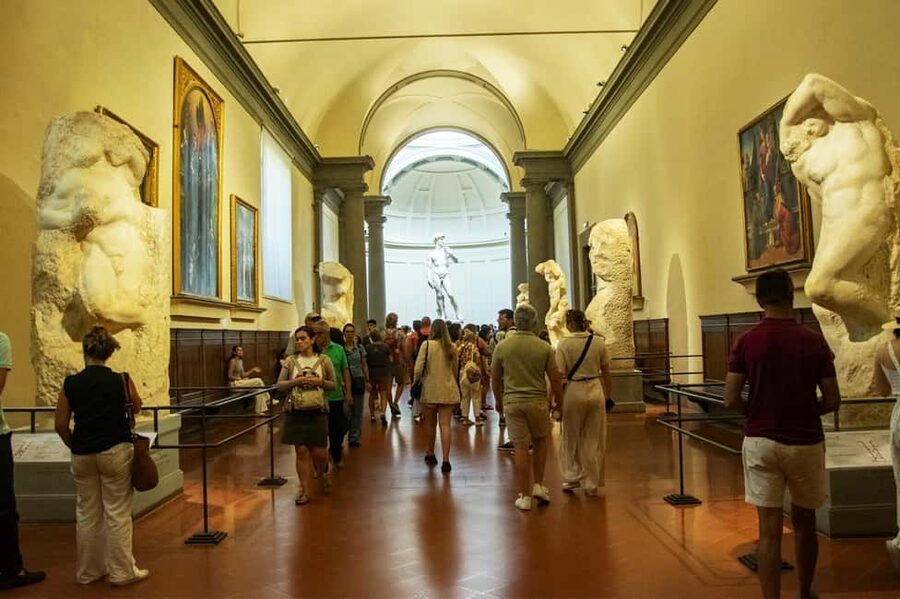
Michelangelo’s David is the star here, and seeing it inside the Accademia gives you time to look beyond the famous pose. Your guide places the statue alongside Michelangelo’s unfinished Prisoners, Florentine painting, and the Medici world that shaped this art.
I like the private format, which lets you ask questions, and the unusual musical collection, especially the three Stradivari violins and the museum’s early piano. I also like the express security entrance, since the Accademia can be a busy stop.
The main caution is timing. The scheduled visit is 1.5 hours, but one recent booking reported spending less than an hour inside. If you want a slow, detailed art lesson, confirm the expected length before you go.
Key points to know
- David is the clear centerpiece: See Michelangelo’s most famous sculpture in the Accademia’s Tribuna.
- The private guide keeps the visit focused: You can ask questions in English, Italian, or Spanish.
- Michelangelo’s unfinished works add context: The Prisoners and St. Matthew show the artist’s carving process.
- The music collection is easy to miss: Look for three Stradivari violins and the world’s first piano.
- Florentine painting gets proper attention: Works by Botticelli, Ghirlandaio, Pontormo, Andrea del Sarto, and Giambologna fill out the visit.
- Allow time for security: Skip-the-line access does not remove the metal detector check.
Meeting the guide on Via Ricasoli
Your meeting point is at Via Ricasoli 115, in front of the Carrefour Supermarket. Arrive 15 minutes early and look for a representative holding a purple Florence With Locals sign.
This is a useful meeting arrangement because the Accademia is right in the same central Florence area, and the address gives you a clear landmark. Still, do not cut it close. A guide can only help once you have found the meeting point, and the museum still requires security checks after you arrive.
The tour is sold as a private group experience. That matters if you want to ask why a figure is unfinished, how Michelangelo worked the marble, or why a painting uses gold leaf. On a large group tour, those questions can get lost. Here, the format is better suited to families, couples, and small groups with different levels of interest in art.
Guiding is available in English, Italian, and Spanish. Elaine received especially strong praise for being friendly and informative, so English-speaking visitors may want to request her if the booking system allows it. Other guide names are not provided, so I would treat the individual guide assignment as subject to availability.
More Art Museum Tours in Florence
- Florence: Skip-The-Line Uffizi Gallery Timed Entry Ticket
★ 4.5 · 27,832 reviews - Florence: Uffizi Priority Ticket & Masterpieces Audio App
★ 4.2 · 6,402 reviews - Florence Accademia Gallery Tour with Entrance Ticket Included
★ 4.5 · 6,148 reviews
Entering the Accademia after the security check
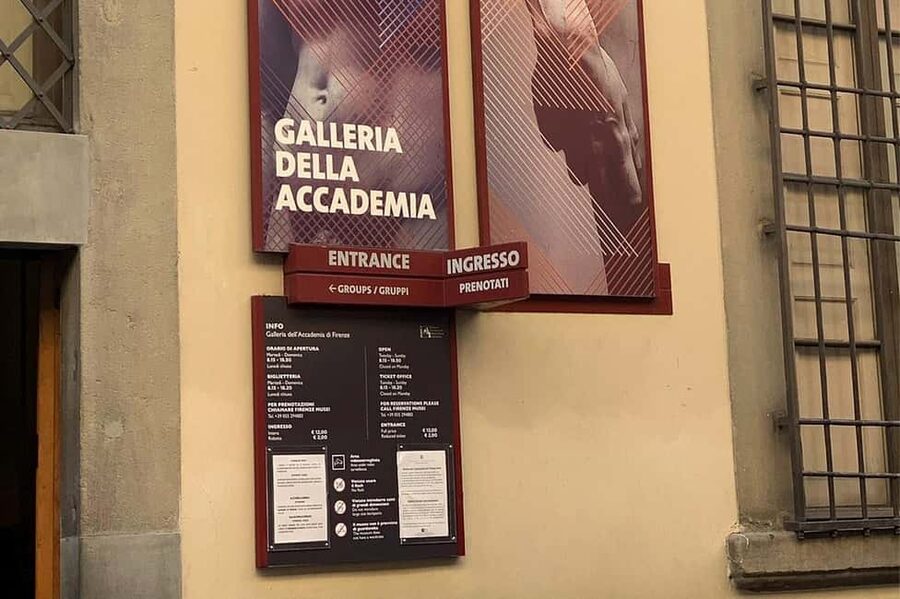
The admission includes the Accademia Gallery and express access through the ticket route, but skip the line does not mean walking straight through the door. Everyone may wait briefly for metal detector controls. That small delay is normal and is worth planning for, especially if you have a dinner reservation or train to catch afterward.
The museum is wheelchair accessible, another practical point for visitors who need step-free access. Pets are not allowed, so arrange care for animals before arriving. Children need a passport or ID card, according to the tour requirements.
Once inside, your guide should help you set a sensible order for the rooms. The David is the obvious draw, but the Accademia works best when you do not rush directly to it and leave everything else behind.
Seeing Michelangelo’s David in the Tribuna
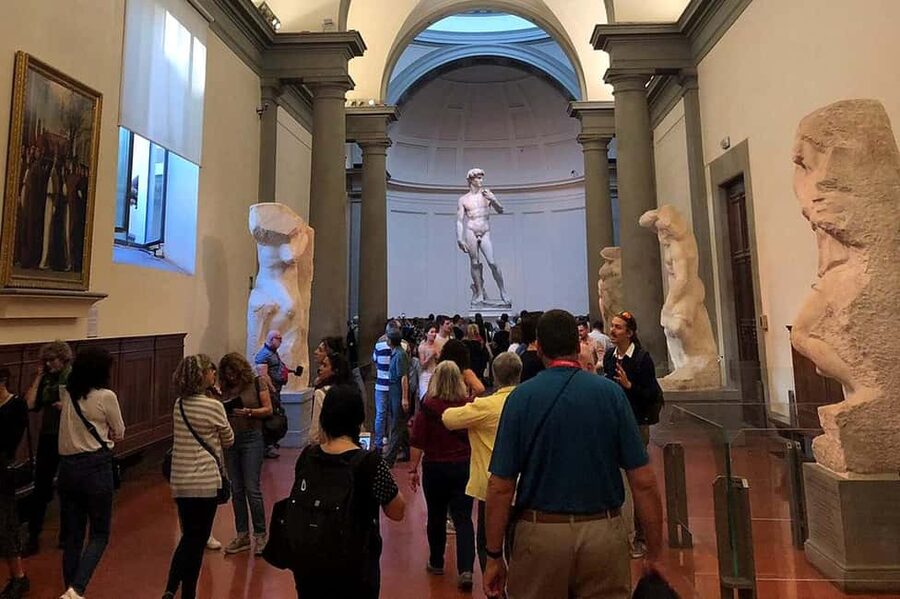
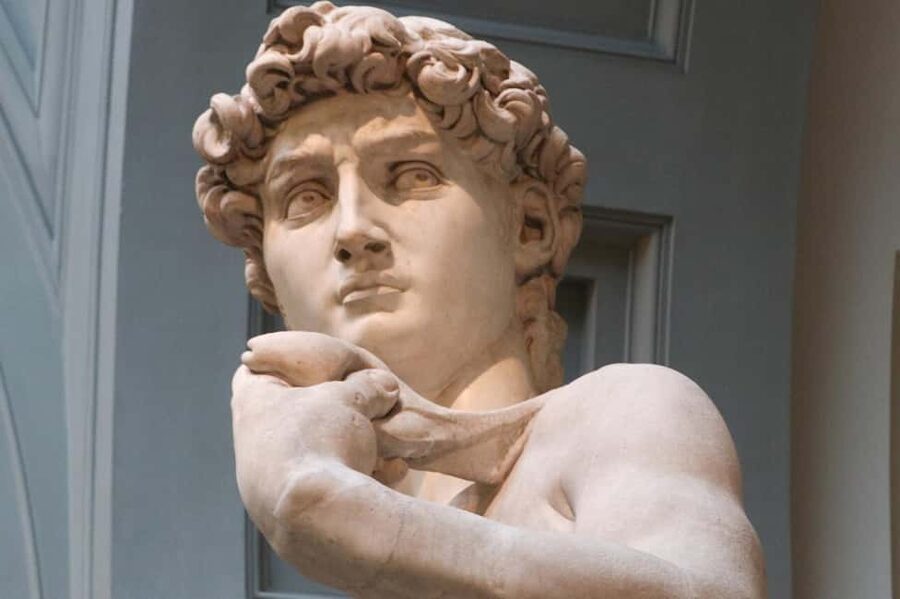
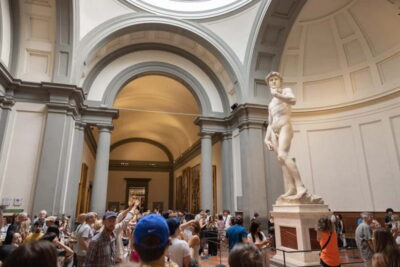
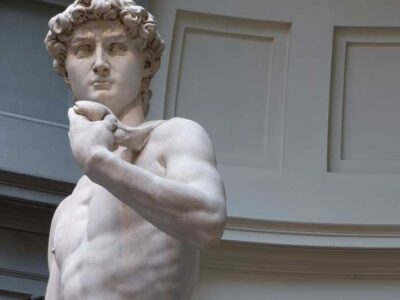
David is a large sculpture with an unusually personal feel. Michelangelo shows the biblical hero before the fight with Goliath, alert and tense rather than triumphant. The turn of the head, the watchful eyes, and the relaxed but ready posture make the figure feel like a decision is about to happen.
Your guide can explain why the statue mattered so much to Florence. David became a symbol of strength and civic independence, while the Medici family supported much of the art and culture that made Florence a Renaissance center.
The Tribuna gives the sculpture a strong visual setting. From different angles, you notice details that disappear in a quick photograph: the scale of the hands, the tension in the back, and the way the body shifts weight. The guide’s role is valuable here because you are not simply looking at a famous object. You are learning how to look at it.
Expect other people to be focused on David, even with a private tour. Your group may have space to move around, but the room is still a public museum setting. Take the time your guide allows, and do not judge the visit only by how long you spend in front of the statue.
Michelangelo’s Prisoners and the power of unfinished stone
The Prisoners, sometimes called the Slaves, are among the most useful works for understanding Michelangelo. Figures appear to struggle out of the marble, with some areas more finished than others. You can see the contrast between rough stone and carefully shaped anatomy.
This is where a guide adds real value. Without explanation, an unfinished sculpture can look incomplete in the ordinary sense. With context, you can consider the marks, the emerging forms, and the idea that the figure is being released from the block.
The collection also includes La Pietà and St. Matthew. The works let you compare Michelangelo’s treatment of the human body, movement, and emotion across different subjects. You do not need a degree in art to appreciate the contrast. A good guide points out a few details, then lets you look.
The focus on Michelangelo is a strong reason to choose this tour rather than a general Florence walking tour. The drawback is that 1.5 hours does not allow a slow study of every sculpture and painting. If your interest is specifically Michelangelo, this short format should work well. If you want every room explained at length, it may feel brisk.
More ways to see the David:
- Florence: Accademia Gallery Guided Tour
★ 4.6 · 4,156 reviews - Uffizi & Accademia Timed Entry: Small Group Duomo Walking Tour
★ 4.5 · 3,630 reviews - Florence: Accademia Gallery Skip-the-Line Guided Tour
★ 4.8 · 3,044 reviews - Florence: Art Tour, Accademia Gallery and David
★ 4.5 · 2,407 reviews
Renaissance paintings beyond the famous statue
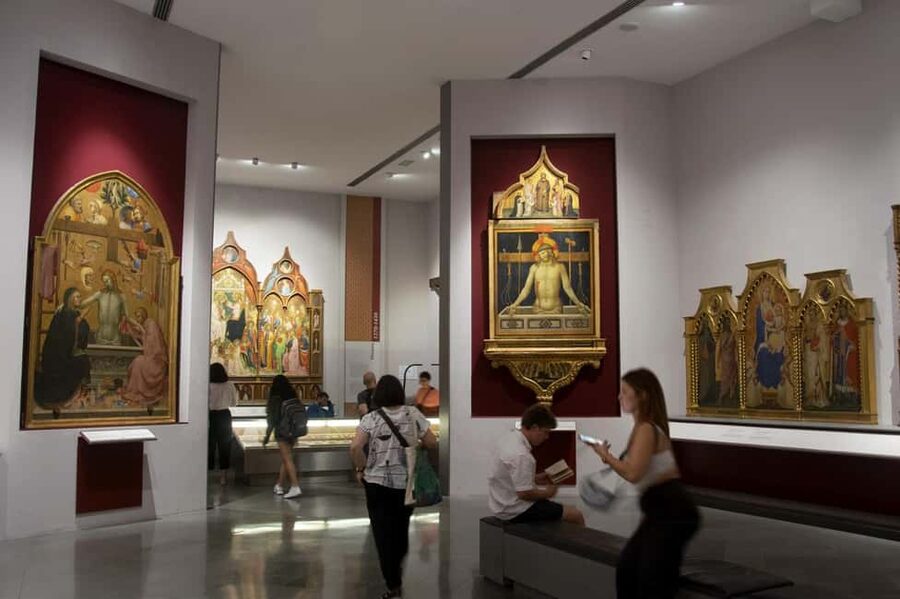
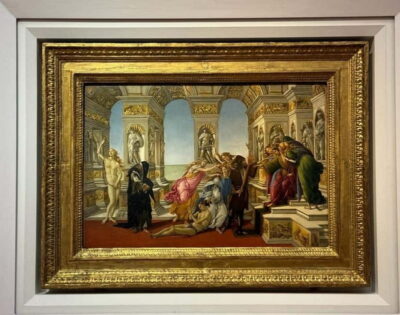
The Accademia is not only a Michelangelo museum. Its paintings and sculptures include work by Sandro Botticelli, Domenico Ghirlandaio, Pontormo, Andrea del Sarto, and Giambologna.
These names help you see Florence as more than a city with one great sculptor. Botticelli brings graceful line and elegant figures. Ghirlandaio connects religious painting with the people and fashions of Florence. Pontormo offers a more unusual, expressive style, while Giambologna is known for energetic sculpture.
Many works were commissioned by the Medici family. That detail gives your guide a useful way to explain how art, wealth, religion, and political power worked together. Florence’s Renaissance was not produced by isolated geniuses working alone. It depended on patrons who paid for chapels, portraits, sculptures, and grand public statements.
You may find the paintings less immediately famous than David, but they make the visit more complete. I like having this wider view because it prevents the museum from feeling like a single-statue stop. You leave with a better sense of the period and the artistic circles around Michelangelo.
Lorenzo Bartolini’s Hall of Plaster Casts
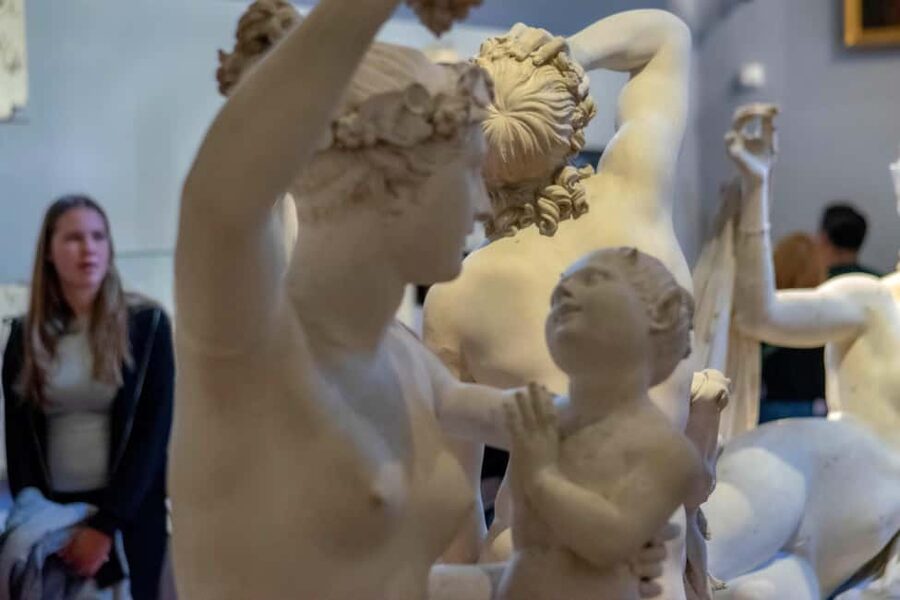
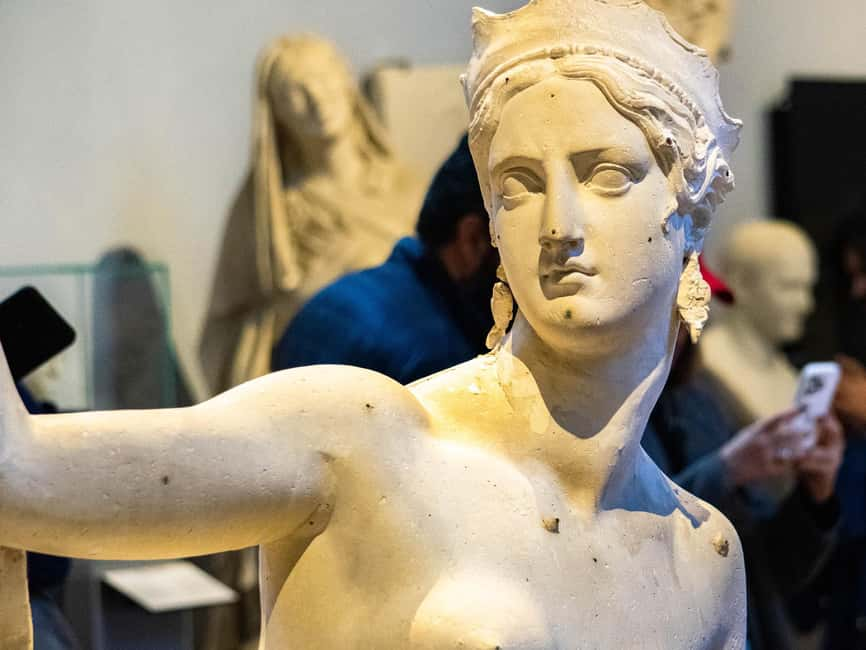
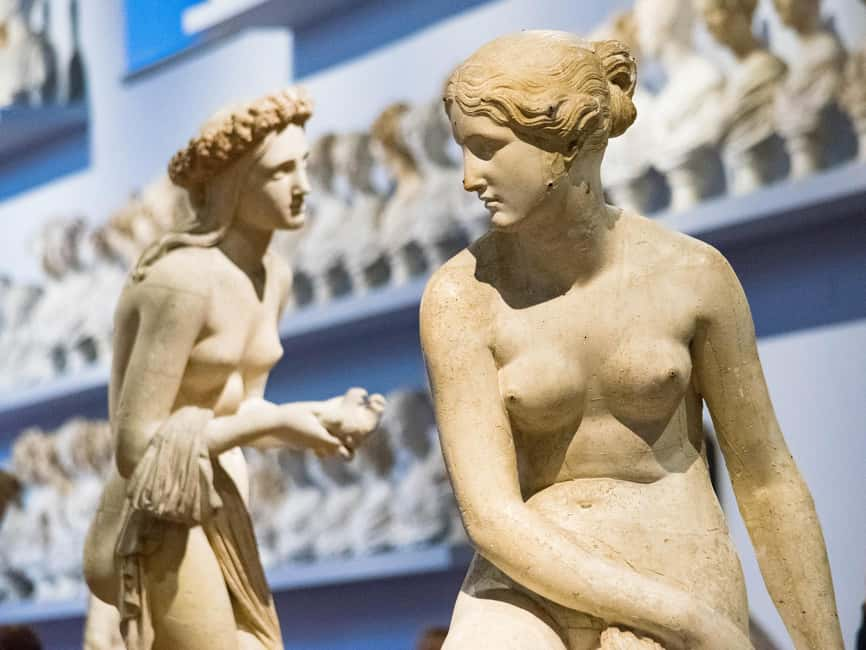
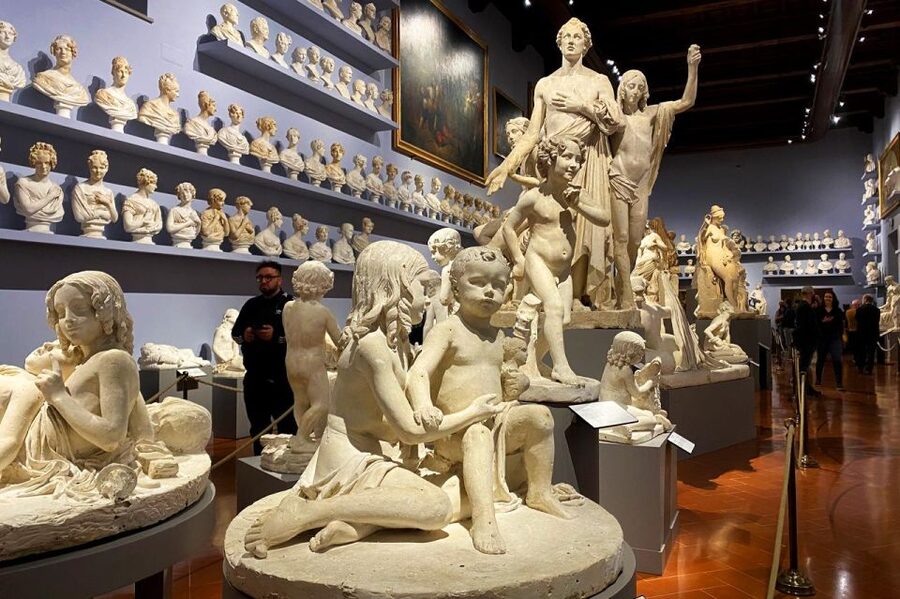
The Hall of Plaster Casts presents 18th-century works by Lorenzo Bartolini. Plaster casts can seem less exciting than marble until you understand their purpose. They preserve a sculptor’s models and show how artists developed poses, bodies, and compositions before producing a finished work.
This room offers a change of pace after the intense focus on Michelangelo. Instead of one iconic object, you get a fuller look at the working side of sculpture. Your guide can help you notice how the casts relate to finished pieces and why such models mattered in an art academy.
That academy connection is important. The Accademia was tied to the teaching of art, not simply the display of old masterpieces. The plaster works remind you that Florence’s artistic life included training, practice, copying, and technical study.
If the tour is running short, ask your guide how much time remains before moving on. The Hall of Plaster Casts is worth seeing, but visitors with limited time may prefer to give priority to David, the Prisoners, and the major paintings.
Three Stradivari violins and the early piano
The Music Instruments Collection is one of the tour’s most distinctive features. It includes three exquisite Stradivari violins and what the museum identifies as the world’s first piano.
This collection changes the story from visual art to sound. Stradivari instruments are famous for their craftsmanship, but the display also shows how court life, music, and luxury fit into Florence’s cultural world. The early piano points to experimentation in musical design and to the close links between technical invention and artistic taste.
Many people come to the Accademia expecting only sculptures. That is why I consider this section a real benefit of a guided visit. You might walk past it if you are hurrying toward David, while a local guide can make sure you know what you are seeing.
The collection will not turn the tour into a music lesson. It is one part of a short museum visit, not a separate concert or demonstration. Still, it gives the experience more range and makes the Accademia feel less predictable.
Lorenzo Monaco, gold leaf, and medieval Florence
The museum holds the largest collection of paintings by the 14th-century artist Lorenzo Monaco. His work reflects the taste of medieval Florence, with gold leaf and lapis lazuli creating a luxurious, jewel-like surface.
These paintings predate the High Renaissance works most people associate with Florence. They help you see that the Renaissance did not appear from nowhere. Artists inherited religious subjects, materials, workshop methods, and visual traditions from earlier generations, then changed them over time.
Gold leaf can look flat or overly decorative if you do not know what you are seeing. Your guide can explain the cost and status attached to materials such as lapis lazuli, and why a glittering background carried religious meaning.
This section is especially useful if you have already visited churches in Florence. You can connect the museum paintings to the city’s chapels and altarpieces. If your main goal is only David, this material may feel like a detour, but it is one of the best ways to add historical depth to a short visit.
Giotto’s frescoes on the upper level
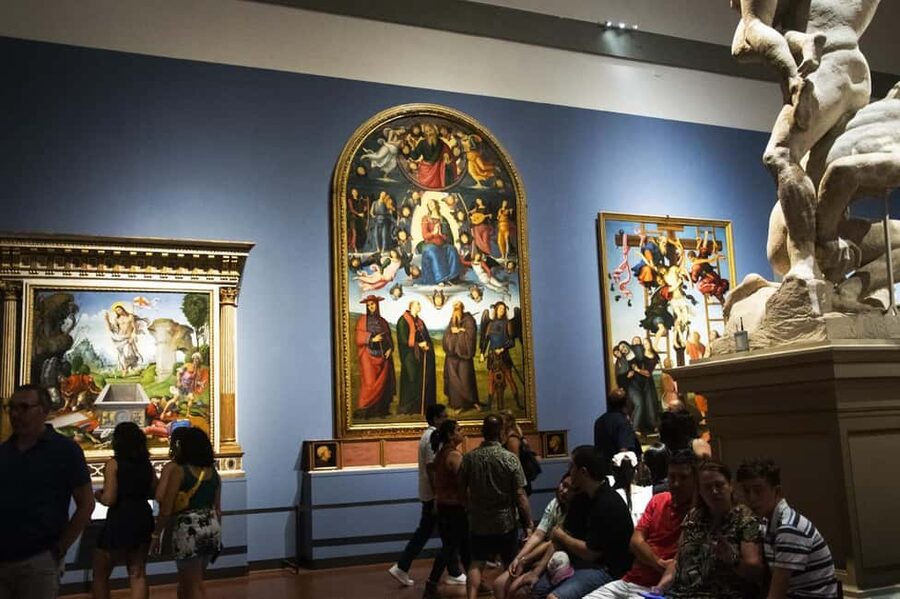
On the upper level, you can see frescoes associated with Giotto, an important early figure in the development of more natural space and human expression in Italian painting.
The tour information describes Giotto as a pioneer of perspective painting. The exact way perspective developed is more complicated than one artist inventing it, but the key point is clear: Giotto helped move painting toward figures and scenes that feel more solid and emotionally direct.
The upper level gives you another shift in period and style. You move from medieval gold-ground painting to later Renaissance sculpture and painting, then back toward the foundations of that artistic change. A guide can make this sequence easier to follow instead of leaving you with a pile of names and dates.
Ask questions if you want to compare Giotto’s figures with the later artists in the museum. The Accademia rewards connections. Look at how bodies occupy space, how faces show emotion, and how much attention artists give to clothing, architecture, and landscape.
Is $110 per person a fair price?
At $110 per person, this is not the cheapest way to see David. You are paying for admission, a private group, a local guide, and the time saved through the express entry route. The value depends on how much you want explanation rather than simple access.
For a first visit to Florence, I find the price easier to justify if you want the museum decoded in a short window. A private guide can give you the main story, answer questions, and keep the visit moving. It is also a practical choice when several people in your group have different art backgrounds.
The value is weaker if you already know Michelangelo well or prefer to read museum labels at your own pace. You could spend less with a basic admission option, though you would give up the private guide and the structured explanation.
The reported rating is 4.6 from five bookings, and the strongest praise focuses on the guides. Elaine was described as phenomenal, while another booking praised an excellent, friendly, informative guide. That pattern matters more than a generic promise of expertise: the human guide is the main reason to book this particular format.
One recent booking also found the tour shorter than expected, lasting under an hour instead of the advertised 1.5 hours. That is the one point I would raise before paying $110. Ask how long the guide plans to remain inside and what happens if the tour finishes early.
Who will get the most from this visit?
This tour suits you if David is high on your Florence list but you want more than a quick photograph. It also works well for first-time museum visitors who want someone to explain why the sculpture matters and how it fits into Florentine culture.
Families may appreciate the short length and private setting. Children who enjoy large statues, instruments, or stories of artists can get something from the visit, though the tour is still centered on art and requires attention.
It is a good match for couples and small groups who want to control the pace. You can ask about Michelangelo, the Medici, the instruments, or the painting styles without waiting for a large group to catch up.
I would be more cautious if you need a very slow, wheelchair-specific route plan, since the available information confirms accessibility but does not describe the exact path through every gallery room. Contact the provider before booking if you need detailed access information.
Practical advice before you book
Bring the required passport or ID card for children. Keep your meeting instructions handy, arrive 15 minutes early, and look for the purple sign outside the Carrefour Supermarket at Via Ricasoli 115.
Wear something comfortable enough for standing and walking through the museum. Food and drinks are not included, and hotel pickup and drop-off are not provided, so plan those parts of your day separately.
The tour offers free cancellation up to 24 hours before the start time, and you can reserve now and pay later. Those options help if your Florence schedule is still shifting, but they do not change the need to arrive on time.
Book in English, Italian, or Spanish. If you want Elaine, ask whether she is available, but do not assume a named guide is guaranteed. Finally, remember that the express entrance still includes a security wait.
Should you book the Accademia private tour?
Book it if you want David explained by a guide, prefer a private group, and value seeing the museum’s less obvious rooms. The Stradivari violins, early piano, Lorenzo Monaco paintings, plaster casts, and Giotto frescoes give the visit more substance than the headline sculpture alone.
Skip it if you only want a quick look at David or if $110 feels too high for a short museum stop. In that case, a basic admission may suit you better.
For most first-time visitors who want a focused introduction to Florentine art, I think the private format is worthwhile. Just confirm the actual tour length before booking, since one recent visit finished in less than an hour. That small check can make the difference between a satisfying introduction and a rushed stop.
FAQ
Where does the Accademia tour meet?
Meet at Via Ricasoli 115, in front of the Carrefour Supermarket. A Florence With Locals representative will hold a purple sign with the company name.
How early should I arrive?
Arrive 15 minutes before the scheduled start time.
How long is the tour?
The scheduled duration is 1.5 hours. One recent booking reported that the visit lasted less than an hour, so you may want to confirm the expected timing before booking.
Is skip-the-line entry included?
Yes. The tour includes express access through security, but you may still wait briefly for the museum’s metal detector controls.
What languages are available?
The live guide is available in English, Italian, and Spanish.
Is the Accademia accessible by wheelchair?
Yes, the activity information identifies the tour as wheelchair accessible.
What does the price include?
The $110 per person price includes the guided Accademia Gallery visit, an expert local guide, museum admission, and access to David and other major works. Food, drinks, and hotel pickup and drop-off are not included.
Just added around Florence
- Skip the line: Uffizi small group and walking tour of Florence★ 4.5 · 17 reviews
- Florence Private Walking Tour Including Uffizi and Accademia★ 3.5 · 4 reviews
- Uffizi Gallery Italian guided Tour semi private★ 4.5 · 9 reviews
- Private Tour: Accademia Gallery and City Tour★ 5.0 · 10 reviews
- Private Tour: The Academy Gallery★ 5.0 · 6 reviews
- Uffizi Express Entrance -private tour★ 5.0 · 9 reviews
- Uffizi and Palazzo Vecchio Combo Private Tour★ 5.0 · 3 reviews
- VIP Priority Access: Uffizi Gallery- Guided Experience★ 4.5 · 94 reviews
Art Museum Tours in Florence, compared.
Skip-The-Line Uffizi Gallery Timed Entry Ticket
Read our review →
Florence Accademia Gallery Tour with Entrance Ticket Included
Read our review →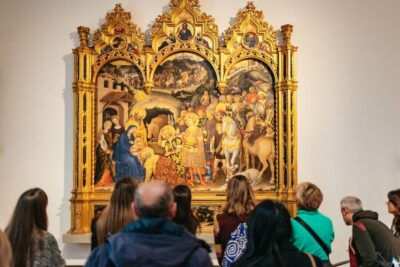
Uffizi Gallery: Renaissance Masterpieces Guided Tour
Read our review →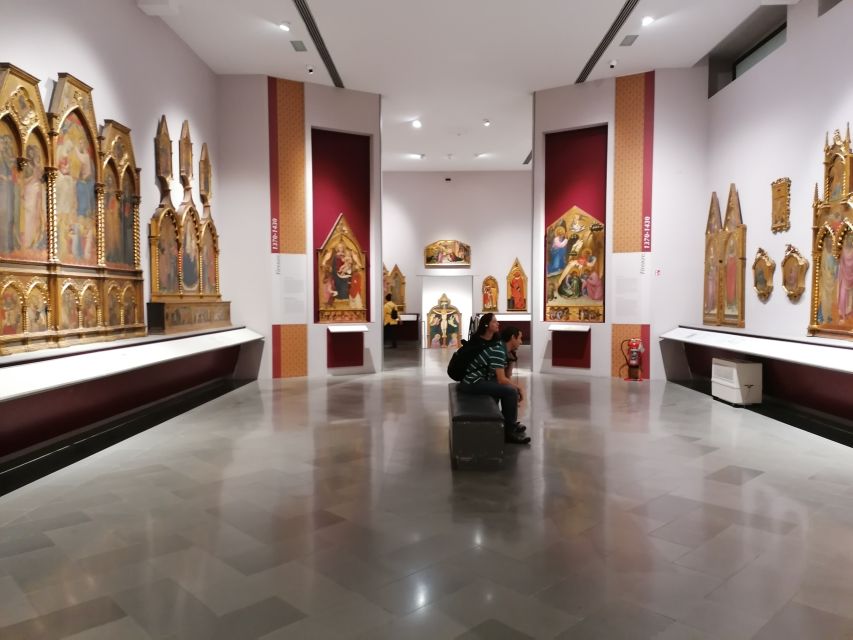
Uffizi Gallery Timed Entry Ticket & Audio Guide
Read our review →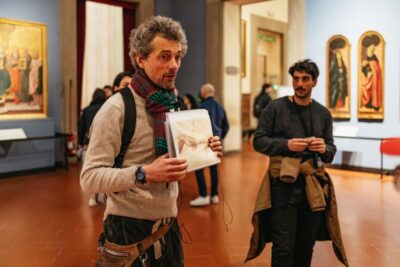
Accademia Gallery Guided Tour with Entry Ticket
Read our review →Browse the lists this tour appears in