REVIEW · ITALY
Milan: 1.5-Hour Leonardo da Vinci Gallery Tour
Leonardo’s genius comes to life through machines you can actually see, from an armored war carriage to a strange flying ship. The Gallerie Leonardo da Vinci also links his science with painting, city planning, canals, war, and Renaissance life.
I like the clear 1.5-hour format and the unusual mix of engineering models, sound-and-image installations, and paintings. I also like that the tour ends with a 16th-century art gallery and a surprising 17th-century copy of The Last Supper. The main caution is practical: the guide speaks Italian or German, not English, and one booking report describes a guide who failed to appear.
Key points to know before booking
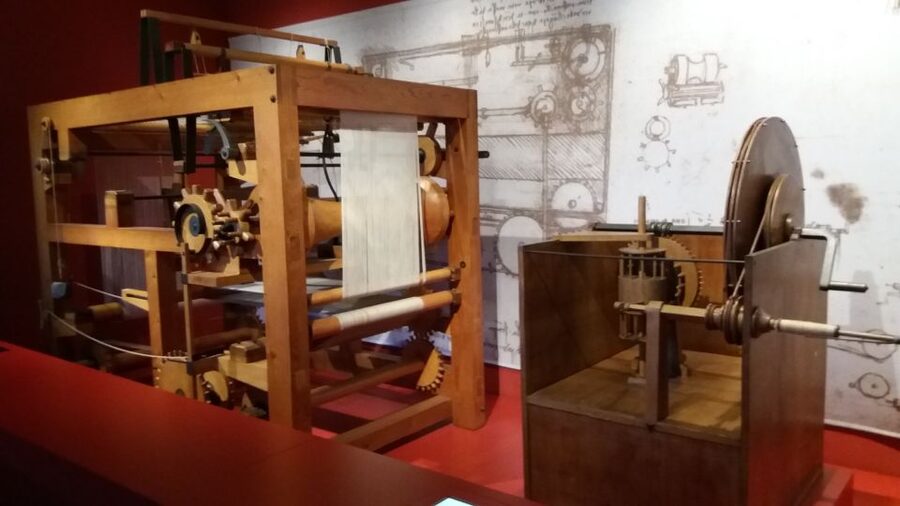
- Leonardo in working form: See scale models of inventions such as an armored war carriage, printing press, and flying ship.
- More than a machine display: The tour also covers canals, flight, architecture, war technology, art, and Leonardo’s private life.
- A Renaissance setting: Multimedia scenes use images, sounds, music, and vocal commentary to recreate aspects of Leonardo’s time.
- Art at the finish: The final gallery includes 16th-century Italian paintings influenced by Leonardo, plus a 17th-century copy of The Last Supper.
- Short and focused: The experience lasts 90 minutes, making it easy to fit into a day in Milan.
- Important language detail: The live guide is listed as speaking Italian or German. Entrance tickets cost extra.
Why Leonardo’s machines make this Milan tour worthwhile
Leonardo is often presented as the painter of the Mona Lisa and The Last Supper. This tour gives you a broader picture. At the Museo Nazionale della Scienza e della Tecnologia, his drawings become physical models, so you can consider him as an engineer, scientist, researcher, naturalist, philosopher, and artist.
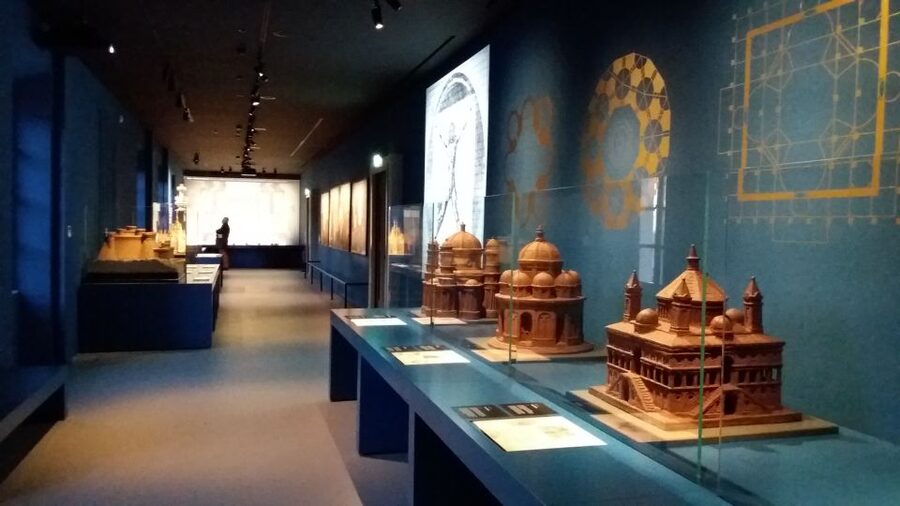
That shift matters. A page of sketches can seem distant. A scale model of an armored war carriage or printing press gives the ideas weight and shape. You can see how Leonardo studied movement, materials, force, defense, transport, and communication. The models do not simply decorate the gallery. They help you understand how his mind moved between art and practical problem-solving.
The 1.5-hour length works well for this subject. Leonardo’s interests spread in many directions, and a much longer visit could become tiring or scattered. Here, a guide can connect the main themes without asking you to spend half a day with one historical figure.
The tradeoff is that the tour cannot give every invention equal attention. You should expect an informed overview rather than a slow examination of every drawing and model. If one subject captures you, such as flying machines or Milan’s canals, you may want extra time in the museum on your own.
A few more gallery visits around Italy worth comparing
- Vatican Museums, Sistine Chapel & St. Peter’s Basilica Tour
★ 4.3 · 73,970 reviews - Vatican Museums, Sistine Chapel & St Peter’s Basilica Guided Tour
★ 4.5 · 39,149 reviews - Florence: Skip-The-Line Uffizi Gallery Timed Entry Ticket
★ 4.5 · 27,832 reviews
Meeting Leonardo outside Milan’s science museum
The tour begins outside the Museo Nazionale della Scienza e della Tecnologia. This is a useful meeting point because you do not need to search through the galleries for your guide. Plan to arrive ready to identify the group before the start time, since the meeting instructions place you at the front of the museum.
Your guide then takes you into the Gallerie Leonardo da Vinci exhibit. The included service is the 1.5-hour guided tour, but the admission ticket is separate. Adult admission is listed at €10, while students pay €7.50.
That split price is worth noting before you book. The advertised rate is $181.26 per group of up to 15 people, and that amount does not include entry. A full group would spread the guiding cost across many people, but a small party pays much more per person. For a couple, the value depends heavily on how much you want a guide to organize and explain the collection.
The tour returns to the same meeting point at the end. That makes the outing simple to combine with the rest of a Milan day, although the supplied information does not give a route or timetable beyond the 90-minute duration.
The first look at Leonardo as scientist and engineer
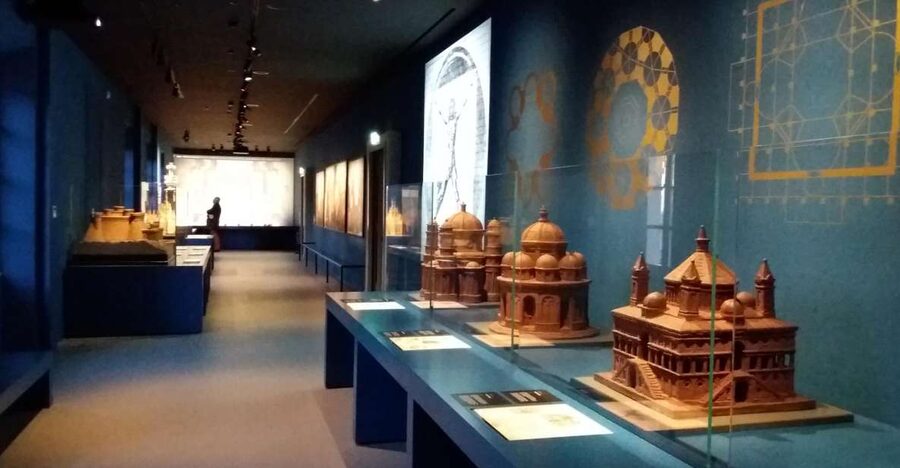
The tour presents Leonardo as more than a painter. You will hear about his work as a scientist, researcher, engineer, naturalist, artist, and philosopher. That range is the central idea of the experience.
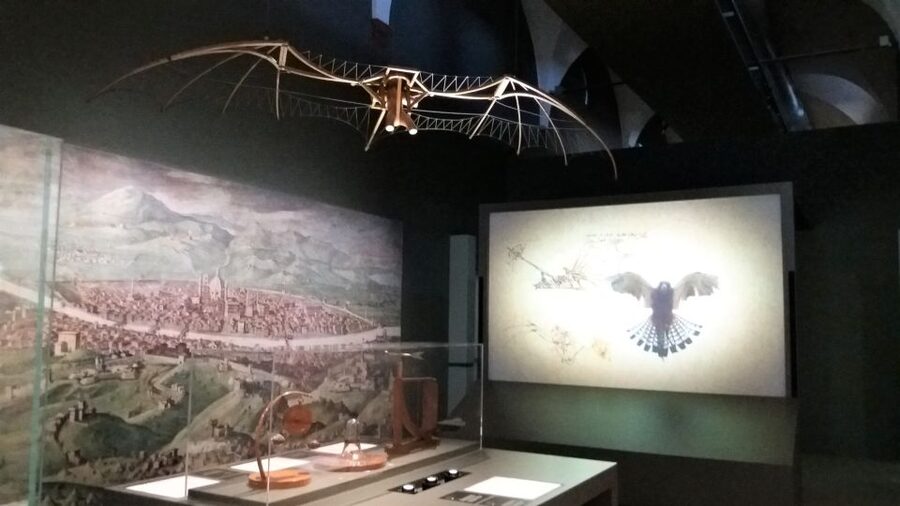
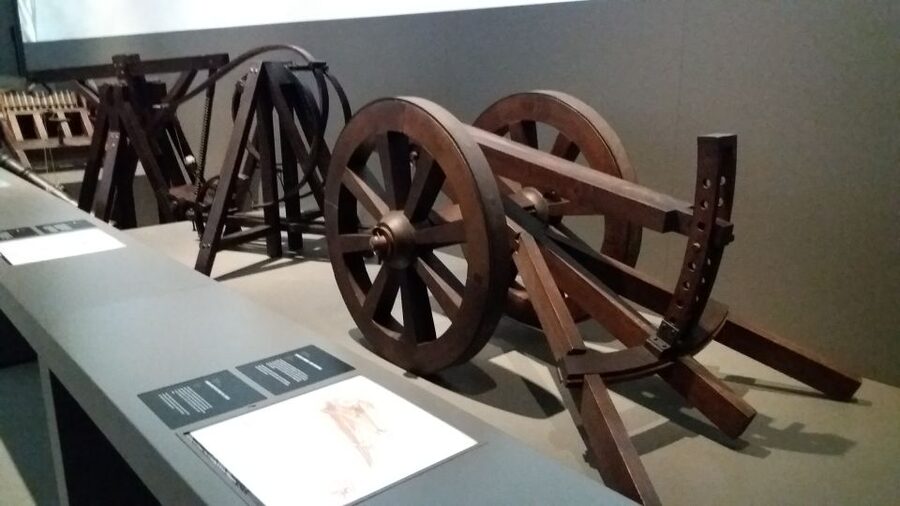
The scale models are built from Leonardo’s many drawings. Among the named examples are an armored war carriage, a printing press, and a flying ship. Each points to a different part of his imagination.
The war carriage brings you into Leonardo’s military studies. It reflects his interest in mechanical power and battlefield design. The printing press connects his work with the spread of written information. The flying ship points to his long-running interest in flight and the problem of leaving the ground.
I like this arrangement because it shows how Leonardo’s ideas crossed modern categories. He did not work in neat academic boxes. A question about a bird, a canal, a weapon, or a machine could lead him toward mechanics, anatomy, architecture, or art.
Still, keep your expectations measured. These are reproductions and scale models, not working inventions from Leonardo’s own workshop. Their value is interpretive: they make his drawings easier to understand and give your guide something concrete to explain.
Renaissance rooms built with sound and images
Another part of the experience uses reconstructions of city environments from the Renaissance. Vocal comments, images, and music help set the scene and explain events from Leonardo’s private life, along with parts of the social world around him.
This section adds a human scale to the machines. Leonardo did not work in an empty laboratory. He lived in a period shaped by courts, artists, engineers, military needs, trade, building projects, and social change. The multimedia approach gives you a sense of that setting without relying only on labels and dates.
The use of sound may appeal to you if you like exhibitions that create a scene rather than present objects in silence. It also helps connect the technical displays with the people and places of the Renaissance.
On the other hand, multimedia presentations can feel more theatrical than the models. If you prefer quiet study, you may find the music and vocal material less useful than the guide’s explanations. The tour works best if you treat these installations as atmosphere and context, not as a substitute for original Leonardo documents.
Same city, a completely different collection:
- Rome: Vatican Museums, Sistine Chapel and Basilica Tour
★ 4.3 · 16,039 reviews - Vatican Museums & Sistine Chapel Skip-the-Line Entry Ticket
★ 4.4 · 13,838 reviews - Rome: Vatican Museums, Sistine Chapel & Basilica Tour
★ 4.7 · 13,217 reviews - Rome: Vatican Museums & Sistine Chapel Guided Tour
★ 4.3 · 12,117 reviews
From the dream of flight to Milan’s canals
The exhibit covers several subjects that reveal Leonardo’s habit of observing systems. One section deals with the dream of flight. His interest was not just fantasy. It involved studying movement and the natural world, then asking how those observations might be turned into a machine.
Another section examines Milan’s canal system. This is especially relevant to your visit because it ties Leonardo to the city around you. Canals are not only attractive urban features. They involve water control, transport, engineering, and the practical needs of a growing city.
The tour also addresses war machines and architecture. These topics show the less familiar side of Leonardo’s career. His work could be artistic, scientific, civic, and military, often within the same broad period.
I find these themes more useful than a simple list of inventions. You begin to see the questions behind the drawings: How does water move? How can a structure hold? How might a machine transfer force? How can observation of nature guide design?
Because the full route lasts only 90 minutes, your guide has to keep moving. You will get a connected survey of these subjects, not a technical course in Renaissance engineering. If you want long explanations of every canal study or war machine, the short format may feel brisk.
Ending with Renaissance paintings and The Last Supper
Near the end, the tour turns from machines to art. You will see a gallery of 16th-century paintings by Italian artists influenced by Leonardo’s innovations. This is an important closing move because it shows that his influence was not limited to his own surviving works.
The paintings let you consider how other artists responded to his ideas. His impact could appear in composition, expression, technique, or the treatment of figures. The gallery helps place Leonardo within the wider artistic world of the Renaissance rather than treating him as an isolated genius.
The final surprise is a 17th-century copy of The Last Supper. It is not Leonardo’s original mural, so you should not mistake it for the famous work in Milan’s convent of Santa Maria delle Grazie. Its interest lies in the fact that it is a later copy, showing how the image continued to circulate and inspire artists after Leonardo.
That distinction is important. If your main goal is to see Leonardo’s original The Last Supper, this tour does not replace a visit to the refectory. Here, the copy belongs to a wider story about influence, memory, and artistic transmission.
What the 90-minute format gives you
A short museum tour can be a good choice in Milan, where you may also want time for churches, neighborhoods, food, and other museums. Ninety minutes gives you a defined introduction without consuming an entire afternoon.
I would choose this format if you want a guide to supply the thread connecting machines, city planning, flight, art, and Renaissance society. It is also useful if you are visiting with someone who might lose interest in a long technical museum visit.
The fixed length has limits. You may not have much time to pause over each model, ask extended questions, or return to a favorite section. The supplied information also does not promise a private tour, even though the booking price is set per group of up to 15. Confirm the exact group arrangement when booking if that affects your decision.
The live guide is listed as Italian- or German-speaking. That is the most important suitability issue. If you understand one of those languages, the guided format may add much more value. If you need English, do not assume it is available. Check before paying.
Price, tickets, and cancellation details
The listed price is $181.26 per group of up to 15, with museum admission extra. Adults pay €10 for entry, and students pay €7.50. Food and drinks are not included, though a 90-minute museum visit does not require a meal break during the tour.
The price makes more sense for a larger party. Fifteen people sharing the guiding fee receive a stronger per-person value than two people paying the same group rate. For a small group, compare the cost with entering independently and using the museum’s own displays at your own pace.
The booking terms are flexible. You can reserve now and pay later, and cancellation is free up to 24 hours before the activity for a full refund. Those terms help if your Milan schedule is still changing.
There is one reliability concern you should take seriously. The overall rating is 4.5 from 10 reviews, but one report describes the guide failing to appear without canceling. That is a serious problem for a guided activity. It does not prove that every departure has trouble, but I would keep the provider’s contact details and confirm the meeting arrangements close to the tour time.
Access and who should book
The activity is listed as wheelchair accessible. That makes it a practical option for visitors who need an accessible museum experience, though the information provided does not describe the exact route, restrooms, or any assistance available. If you use a wheelchair, confirm the details directly before booking.
This tour suits you best if you:
- Want a short introduction to Leonardo’s engineering and art
- Enjoy physical models more than a display made only of text and drawings
- Can follow Italian or German
- Prefer a guide to connect the exhibit’s many subjects
- Are traveling in a larger group that can share the group price
- Want to add a museum visit without giving up most of your day
You may want another plan if you need an English-speaking guide, want to see the original The Last Supper, or prefer to explore slowly on your own. The copy at the end is interesting, but it is not the original mural.
Should you book the Leonardo da Vinci Gallery tour?
Book it if you want a focused, guided introduction to Leonardo’s inventions and the world that shaped them. The strongest parts are the physical models, the sections on flight and Milan’s canals, and the final link between Leonardo’s ideas and later Italian painting.
Think carefully about the language and price. Italian- and German-speaking visitors get the clearest fit, while English speakers should confirm availability before booking. A small group may find the per-person cost high once the separate entrance fee is added.
I would choose this tour for a larger party, a first look at Leonardo’s scientific side, or a compact museum stop between other Milan plans. I would skip it if your priority is the original The Last Supper or if you want a fully independent visit with no concern about guide availability.
FAQ
Where does the tour begin?
The meeting point is outside the Museo Nazionale della Scienza e della Tecnologia in Milan.
Where does the tour end?
The activity ends back at the meeting point.
How long does the tour last?
The guided tour lasts 1.5 hours.
What languages does the guide speak?
The live guide is listed as speaking Italian or German.
Is museum admission included?
No. Entrance fees are separate from the tour price.
How much is admission for adults?
Adult admission is €10.
How much is admission for students?
Student admission is €7.50.
How many people can join under one group booking?
The listed price covers a group of up to 15 people.
Is the activity wheelchair accessible?
Yes. The activity is listed as wheelchair accessible.
Can I cancel for a refund?
Yes. You can cancel up to 24 hours in advance for a full refund.
Just added around Italy
- Colosseum,Vatican Museum & Sistine Chapel in One Day Guided Tour★ 3.5 · 9 reviews
- Vatican Museums and Sistine Chapel last entry Guided Tour★ 5.0 · 3 reviews
- Private Tour Of Rome Highlights And Vatican Museums Skip-The-Line all included★ 5.0 · 4 reviews
- Borghese Gallery Admission Ticket with Audioguide★ 4.0 · 64 reviews
- Caravaggio Art Walking Tour of Rome with Pantheon Visit★ 4.5 · 35 reviews
- Borghese Gallery Skip the Line Guided Tour★ 4.5 · 23 reviews
- Borghese Gallery Ticket with Audioguide★ 3.5 · 51 reviews
- Borghese Gallery VIP Tour – Skip the Line Tickets★ 5.0 · 2 reviews
Art Museum Tours in Italy, compared.
Vatican Museums, Sistine Chapel & St. Peter’s Basilica Tour
Read our review →
Vatican Museums, Sistine Chapel & St Peter’s Basilica Guided Tour
Read our review →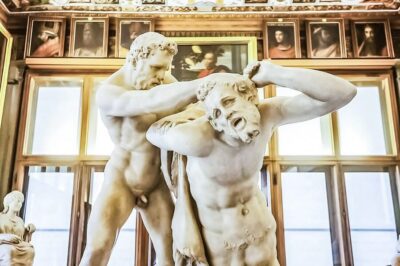
Skip-The-Line Uffizi Gallery Timed Entry Ticket
Read our review →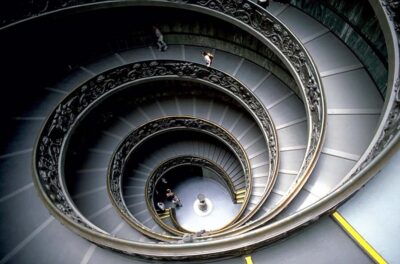
Vatican Museums, Sistine Chapel and Basilica Tour
Read our review →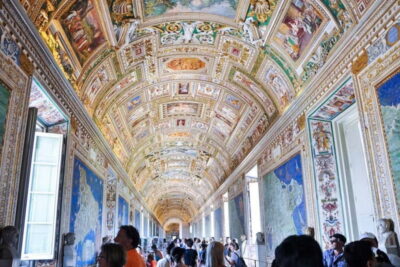
Vatican Museums & Sistine Chapel Skip-the-Line Entry Ticket
Read our review →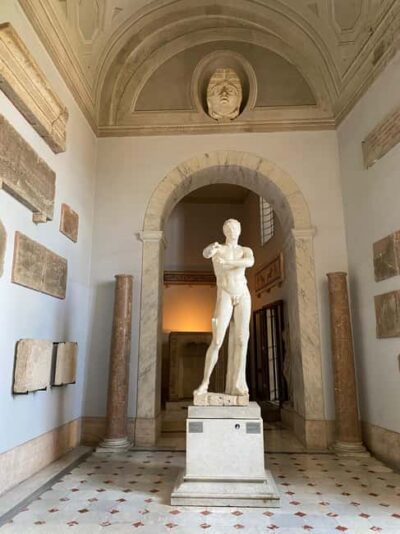
Vatican Museums, Sistine Chapel & Basilica Tour
Read our review →
Vatican Museums & Sistine Chapel Guided Tour
Read our review →