
REVIEW · PARIS
Paris: Louvre Museum Skip-The-Line Tour
The Louvre can swallow an entire day, so a private two-hour route is a sensible way to see its major paintings and sculptures without wandering until your feet give out. The tour links Renaissance art with Neoclassicism and Romanticism, giving you a clear story rather than a random march from room to room.
I like the focus on works such as Botticelli’s fresco, Mantegna’s Saint Sebastian, Veronese’s enormous Marriage at Cana, and Delacroix’s Liberty Leading the People. I also like the flexibility of a private group, especially since guide Boris has tailored tours around guests’ interests and used themes such as the changing role of sunlight in art. The main drawback is simple: two hours is short for the Louvre, and a $294 price per person makes this a serious splurge, particularly for solo visitors or large families.
Key points to know before you book
- A compact Louvre plan: Cover major Renaissance, Neoclassical, and Romantic works in two hours.
- A private group: Your guide can adjust the explanation and pace to suit your interests.
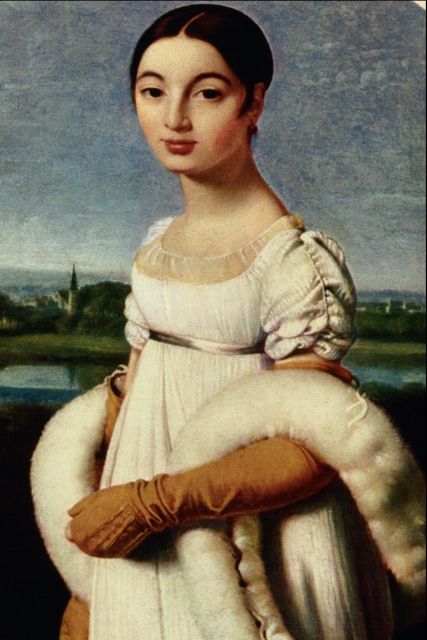
- A strong painting route: Expect Botticelli, Mantegna, Leonardo, Veronese, Ingres, David, Gericault, and Delacroix.
- A memorable sculpture stop: The Nike of Samothrace gives the tour a powerful Ancient Greek centerpiece.
- Three guide languages: Choose English, French, or Serbo-Croatian.
- Important bag rule: Items larger than 55 by 35 by 20 centimeters are not permitted inside the museum.
Meeting your guide at the Arc de Triomphe du Carrousel
Your meeting point is the Arc de Triomphe du Carrousel, the smaller triumphal arch near the Louvre’s courtyard. Look for a guide carrying a red canvas tote bag. This detail matters because the Louvre area has several arches, courtyards, entrances, and groups gathering nearby.
Give yourself enough time to find the meeting point. The tour begins outside the museum, and you do not want to spend the first minutes of your appointment circling the courtyard. Your guide speaks English, French, or Serbo-Croatian, depending on the booking.
The private-group format is useful here. You are not joining a large crowd with a guide holding a flag high over a sea of heads. You can ask questions, request more time for a favorite painting, or tell the guide if your family needs a faster pace.
The operator, Paris in person private tours, was selected among the top 10 small tour operators in Europe from a field of 26,000 companies in the 2025 Arival TourReview Spotlight Awards. That recognition does not guarantee that every guide will suit every person, but it gives some useful context about the company behind the visit.
More Art Museum Tours in Paris
- Paris: Louvre Museum Timed-Entrance Ticket
★ 4.6 · 71,977 reviews - Paris: Orsay Museum Entry Ticket
★ 4.7 · 25,647 reviews - Paris: Louvre Guided Tour with Reserved Access & Boat Cruise
★ 4.3 · 16,353 reviews
Starting with the Louvre’s Ancient Greek masterpiece
The route includes the Nike of Samothrace, a marble statue of the Greek goddess Nike, or Victory, dating from the second century BC. It is one of those Louvre works that needs little introduction. The figure appears to push forward into the wind, and the grand setting makes the sculpture feel like a dramatic arrival rather than a quiet object behind glass.
Although the main teaching focus is Renaissance, Neoclassical, and Romantic art, beginning with an Ancient Greek sculpture helps you see how later artists borrowed from the classical world. Neoclassical painters and sculptors looked back to Greece and Rome for order, clear forms, and heroic subjects.
A two-hour visit cannot give every gallery equal attention. That is not a flaw if you want a guided introduction, but it does mean you should not expect a full survey of Ancient Egypt, Greece, and the Louvre’s other departments. The museum collection reaches from antiquity to the early 19th century, while this tour concentrates on selected works that support its main story.
Botticelli and the early Renaissance shift
One of the more unusual stops is Botticelli’s fresco Venus and the Three Graces Presenting Gifts to a Young Woman. Botticelli is often associated with famous mythological paintings, but this fresco offers a chance to discuss the changing artistic world of the early Renaissance.
Your guide explains the movement from Medieval religious conventions toward Humanism. That shift placed greater attention on the human figure, classical ideas, individual expression, and the natural world. You are not simply looking at a pretty scene. You are seeing an era when artists and patrons began to ask new questions about beauty, learning, and the role of ancient culture.
This is where a good guide adds real value. Museum labels can identify the artist and date, but they rarely connect one work to a wider change in European thought. Boris, one of the named guides, has used the theme of sunlight and its depiction across different periods to give art history a strong visual thread. If that kind of comparison interests you, mention it at the start.
Mantegna, Bellini, and the many faces of Renaissance art
The Renaissance was not one single style, and this route helps show that. Mantegna’s Saint Sebastian represents an early Florentine connection, while Bellini brings the color and atmosphere associated with Venetian painting.
Mantegna’s work can feel firm, precise, and sculptural. Bellini’s paintings invite a different look, with more attention to color and the mood created by light. Seeing these artists within the same visit lets you compare how regional traditions shaped Renaissance art.
The point is not to memorize every date. It is to notice the shift in priorities: the convincing body, the believable setting, the use of perspective, and the growing interest in classical models. Your guide can help you look for those changes without turning the visit into a lecture.
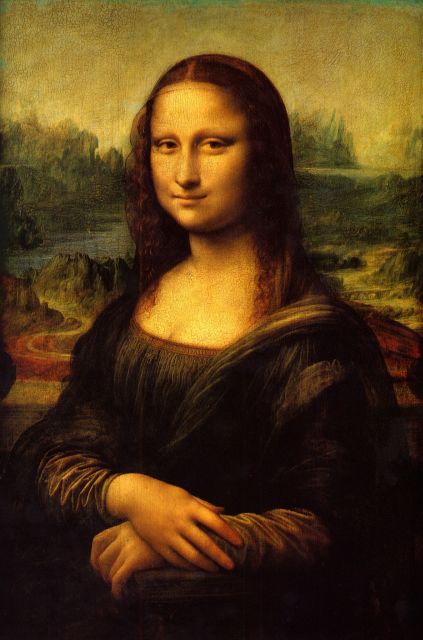
The route also includes Leonardo da Vinci’s Mona Lisa. You will not be surprised to find this room busy. The painting is small compared with the crowds and the amount of attention it receives, so your guide’s role is especially helpful here. You can place Leonardo within the wider Renaissance story instead of treating the visit as a single famous portrait and nothing else.
More Louvre tours and timed tickets:
- Louvre Museum Masterpieces Guided Tour with Access
★ 4.5 · 12,023 reviews - Paris: Louvre Overview, Exploration tour and Reserved Entry
★ 4.1 · 10,145 reviews - Paris: Louvre Museum Entry Ticket With Host and River Cruise
★ 4.6 · 9,926 reviews - Mona Lisa & Louvre Masterpieces Tour with Reserved Access
★ 4.6 · 6,812 reviews
Veronese’s huge Marriage at Cana
Veronese’s Marriage at Cana is the largest painting in the Louvre, and it gives the tour a change of scale. The canvas is vast, filled with figures, architecture, color, and activity. Its size alone can make it hard to know where to begin.
A guide can direct your eye through the composition and explain how the painting works as a staged scene. Look at the arrangement of people, the grand setting, and the small details spread across the surface. This is a good place to slow down for a few minutes, because the painting rewards close looking even after the initial shock of its size.
The contrast with the Mona Lisa is useful. Leonardo’s portrait draws attention through subtle expression and controlled detail. Veronese fills the wall with ceremony and movement. In one short Louvre visit, you get two very different ideas of what a masterpiece can do.
David, Ingres, and the Neoclassical ideal
The tour then moves into Neoclassicism, including Jacques-Louis David’s The Oath of the Horatii and The Crowning of Napoleon. These paintings reflect a taste for clean lines, disciplined poses, classical references, and subjects tied to duty or public power.
The Oath of the Horatii is especially useful for understanding Neoclassical design. The figures appear arranged with purpose, and the gestures carry much of the story. David wanted the scene to feel morally serious, almost like a lesson in loyalty and sacrifice.
The Crowning of Napoleon presents a different form of power. Instead of a compact ancient story, you get a large official ceremony with elaborate clothing, gestures, and political theater. I like this pairing because it shows how the same artistic language can serve both an ancient moral tale and a modern ruler.
Ingres’ Une Odalisque adds another note. The painting’s long, sinuous nude does not fit neatly into the strict public drama of David. It gives your guide a chance to discuss the appeal of the idealized body, sensuality, and the way artists could stretch anatomy for effect.
Romanticism through Gericault and Delacroix
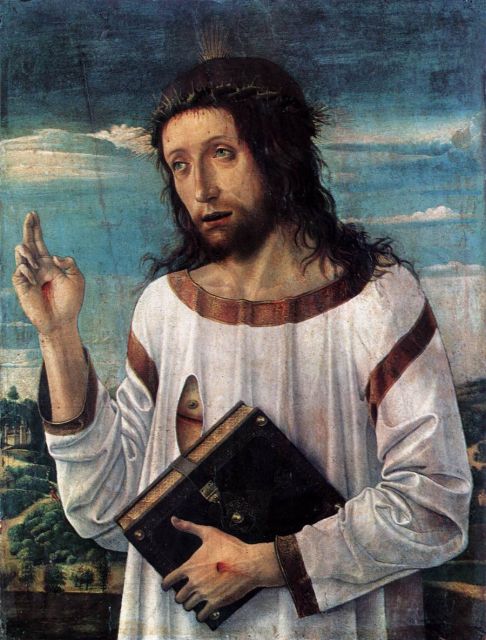
The final period is Romanticism, represented by Gericault’s The Raft of Medusa and Delacroix’s Liberty Leading the People. These paintings bring emotion, danger, political conflict, and movement to the front.
Gericault’s The Raft of Medusa is more than a large sea disaster scene. The raft, the desperate figures, and the distant rescue ship create a rising line of hope and despair. The painting asks you to look at suffering, leadership, and the consequences of human failure.
Delacroix’s Liberty Leading the People commemorates the July Revolution of 1830. Its central figure carries the idea of liberty over a barricade, while the people around her create a scene of struggle and momentum. It is one of the Louvre’s best works for showing how art can become tied to current politics and national memory.
Together, Gericault and Delacroix show why Romanticism feels so different from the measured order of Neoclassicism. The earlier paintings prize control and structure. These later works push toward drama, movement, strong feeling, and the individual caught in a turbulent event.
Why the two-hour length matters
Two hours is enough to build a coherent route through selected highlights. It is not enough to see everything, and the Louvre has far more than the works named here. You should book this tour if you prefer a guided selection over the pressure to make your own plan inside one of the world’s largest museums.
I would treat the visit as an introduction, not a complete Louvre day. If you want Egyptian antiquities, Islamic art, French decorative arts, or a long stretch of sculpture galleries, plan a separate visit. This tour’s strength is its story of changing European art, not its coverage of every department.
The short length can also work well for families. One guide adjusted the visit for a group with two teenage boys, keeping the route manageable while still giving everyone something to learn. That does not mean every child will enjoy two hours of painting, but a private guide can usually respond better than a fixed large-group route.
Is $294 per person good value?
At $294 per person, this is expensive. The price is easier to justify for a private group that wants personal attention, clear explanations, and a planned route through the Louvre. It is harder to justify if you mainly want entry to the museum and are happy to explore at your own pace.
The value comes from time saved and decisions removed. You do not need to choose between hundreds of rooms, search for each major work, or spend half an hour trying to understand the museum map. You pay for the guide as much as for the ticket.
Skip-the-line entry is also useful on a crowded Paris day. It does not turn the Louvre into a quiet museum, and the famous works can still be surrounded by other people. It does give you a better chance of spending your limited time with the art instead of waiting at the ticket line.
The free cancellation policy allows you to cancel up to 24 hours in advance for a full refund, and you can reserve now and pay later. Those terms are helpful when your Paris schedule is still changing.
Practical details that can affect your visit
The tour runs rain or shine. Since the meeting point is at the Arc de Triomphe du Carrousel, bring weather protection if rain is expected, even though most of the visit takes place indoors.
Oversize luggage is not allowed. Any item over 55 by 35 by 20 centimeters cannot enter the museum, so do not arrive with a large suitcase or bulky travel bag. A small day bag is the safer choice.
The activity is wheelchair accessible. Food and drinks are not included, so plan those separately before or after the visit. With only two hours, I would avoid turning the tour into a rushed meal stop.
Who should book this Louvre tour?
I would choose this experience if you want:
- A private visit instead of a large group
- A guide-led explanation of Renaissance, Neoclassical, and Romantic art
- A short itinerary built around major works
- Help keeping children or teenagers engaged
- A first Louvre visit without the stress of planning every gallery
- A chance to ask questions in English, French, or Serbo-Croatian
I would skip it if you want a full day inside the museum, prefer silent independent viewing, or are watching your budget closely. The tour is also less suitable if your main goal is Ancient Egypt, because the route gives more attention to European painting and sculpture.
Should you book it?
Book this Louvre tour if you want the museum’s major works explained through a clear artistic timeline. Botticelli, Mantegna, Bellini, Leonardo, Veronese, David, Ingres, Gericault, and Delacroix make a strong lineup, and the private format lets you ask for more detail where your interest lies.
The key question is value. At $294 per person, you are paying for a focused route, skip-the-line entry, and a guide who can help you make sense of a huge museum in two hours. For a first visit, a family with limited time, or an art-focused private group, that may be money well spent. For an independent museum fan, the price is harder to defend.
FAQ
How long is the Louvre tour?
The tour lasts two hours.
Where does the tour meet?
Meet your guide at the Arc de Triomphe du Carrousel. The guide will carry a red canvas tote bag.
Is the Louvre entry ticket included?
Yes. Skip-the-line entrance to the Louvre is included.
Is the tour private?
Yes. The activity is offered for a private group.
Which languages are available?
The live guide can conduct the tour in English, French, or Serbo-Croatian.
Which artworks are included?
The route includes works by Botticelli, Mantegna, Bellini, Leonardo da Vinci, Veronese, Gericault, Delacroix, Ingres, and Jacques-Louis David. It also includes the Nike of Samothrace.
Can I bring a large suitcase?
No. Items exceeding 55 by 35 by 20 centimeters are not permitted in the museum, and oversize luggage is not allowed.
Is the tour wheelchair accessible?
Yes, the tour is wheelchair accessible.
More Skip-the-Line Tickets in Paris
- Louvre Museum: Skip-the-Line Small Group Guided Tour
★ 4.6 · 4,268 reviews - Paris: Skip-the-Line Louvre Museum & Mona Lisa Guided Tour
★ 4.6 · 1,442 reviews - Paris: Musée d’Orsay Skip-the-Line Tour with Expert Guide
★ 4.5 · 1,145 reviews - Paris: Skip-the-Line Louvre Highlights Tour with Mona Lisa
★ 4.6 · 1,132 reviews
Just added around Paris
- Paris Day Tour with Eiffel Tower, Louvre and Cruise Max 6 People★ 4.5 · 29 reviews
- d’Orsay Museum Paris entry ticket★ 3.5 · 31 reviews
- visiting the masterpieces of impressionists at Orsay museum★ 5.0 · 7 reviews
- PRIVATE Louvre Wonders & Hidden Treasures Visit★ 5.0 · 65 reviews
- Louvre Museum with private guide★ 5.0 · 3 reviews
- Louvre Wheelchair-Accessible Private Tour – Stress-Free & Easy★ 5.0 · 16 reviews
- LOUVRE, Small Group Guided Tour in French (TOP SALES)★ 4.5 · 9 reviews
- Musée d’Orsay Highlights Tour with Gourmet Lunch★ 4.5 · 11 reviews
Art Museum Tours in Paris, compared.
Louvre Guided Tour with Reserved Access & Boat Cruise
Read our review →
Louvre Overview, Exploration tour and Reserved Entry
Read our review →
Louvre Museum Entry Ticket With Host and River Cruise
Read our review →
Mona Lisa & Louvre Masterpieces Tour with Reserved Access
Read our review →
Louvre Museum – Exclusive Guided Tour (Entry Included)
Read our review →
Louvre Museum Hosted Entry and Mona Lisa Audioguide
Read our review →Browse the lists this tour appears in