
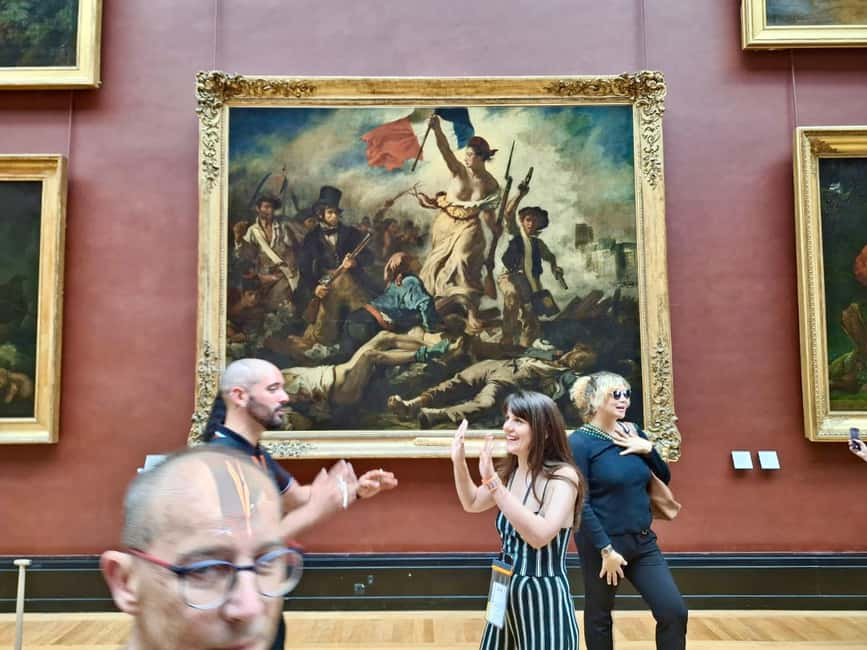
REVIEW · PARIS
Skip-the-Line Louvre Museum Tour with Artist
The best thing about this Louvre tour is its artist-guide perspective. Instead of simply pointing out famous paintings, your guide explains how the work was made and gives you useful ways to read it. Guides such as Blerta have been especially praised for clear explanations, good pacing, and making children feel involved.
I like the reserved entry and the tiny group, which matter a lot in a museum this large. I also like that the tour covers major highlights without treating the Louvre as a checklist. The main drawback is the price: at $246 per person for two hours, this is a serious splurge, and the pace may feel brisk if you want long, quiet stretches in front of individual works.
Key points at a glance
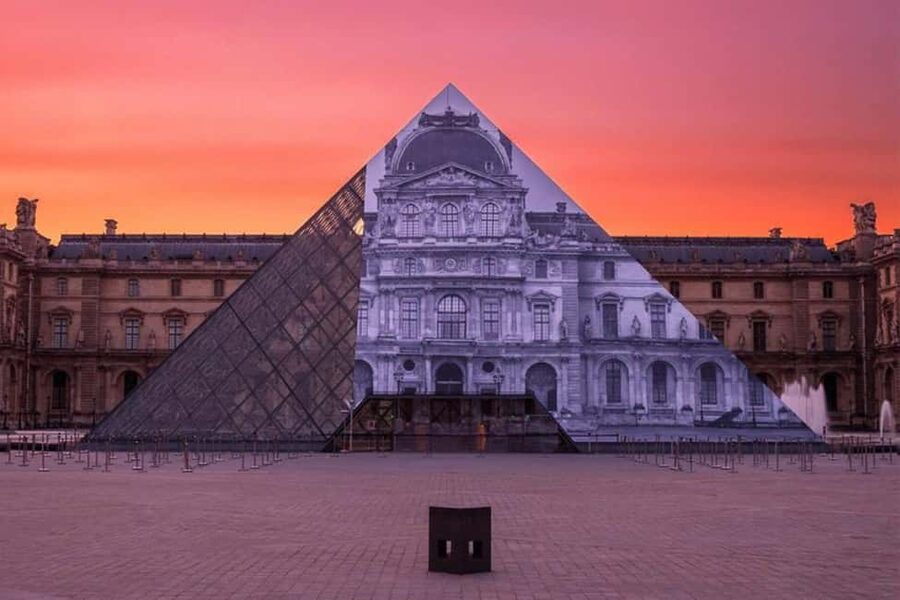
- Meet at the Kiosque des Noctambules: You do not meet inside the Louvre. Find the colorful Murano glass sculpture across from the Comédie Française, near the Palais Royal station.
- A certified painter leads the way: Your guide brings practical insight into technique, composition, light, and the choices behind famous works.
- Groups are limited to six people: This gives you room to ask questions and makes it easier for the guide to adjust the discussion.
- The main icons are included: Expect the Mona Lisa, Venus de Milo, and Nike, along with a route through Greek Antiquity and the Italian Renaissance.
- Reserved entry saves time: You use a separate entrance rather than relying on the regular public line, though security and museum access still take time.
- Best for first-time visitors and families: Children and teenagers have received particular attention from guides, including Blerta and Arianna.
Why an artist makes a difference at the Louvre
The Louvre can overwhelm even a seasoned museum visitor. Its collection includes more than 35,000 works, and the building itself is a maze of galleries, stairways, wings, and grand rooms. Without a plan, you can spend half your visit looking for the famous pieces and the other half wondering what you just missed.
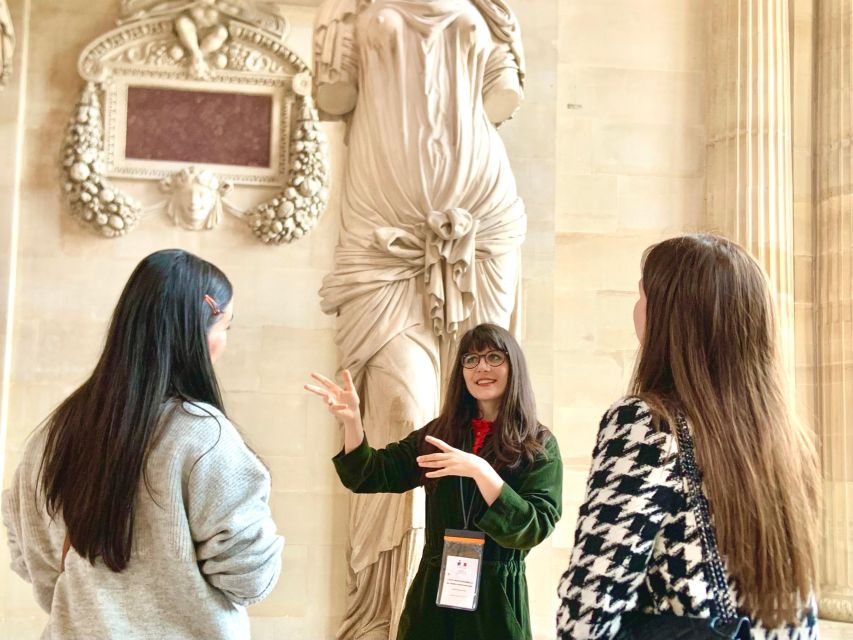
A guide who also paints gives you a different starting point. You are not only told that a work is important. You learn to look at the way a figure is posed, how fabric falls, where the light lands, and how an artist directs your eye across a scene.
That approach is useful if you do not have much art background. You do not need to know the difference between every artistic period before arriving. The explanations are designed for ordinary museum visitors, with enough substance to make the art more interesting without turning the tour into a lecture.
It also helps if you are visiting with children. Blerta has been praised for explaining difficult ideas to young visitors between 11 and 16, while another family said Arianna tailored the visit around their interests. That kind of adjustment can make the difference between a child paying attention and simply waiting for the museum to end.
The guides named in the feedback include Blerta, Arianna, and Assgan. Your guide will depend on the date and availability, so do not book on the assumption that one particular person is guaranteed unless the provider confirms it.
More Art Museum Tours in Paris
- Paris: Louvre Museum Timed-Entrance Ticket
★ 4.6 · 71,977 reviews - Paris: Orsay Museum Entry Ticket
★ 4.7 · 25,647 reviews - Paris: Louvre Guided Tour with Reserved Access & Boat Cruise
★ 4.3 · 16,353 reviews
Meeting at the Kiosque des Noctambules
The meeting point is part of the practical challenge. You do not meet at the Louvre Pyramid. Instead, find the Kiosque des Noctambules, a colorful Murano glass bead sculpture by Jean-Michel Othoniel, across from the Comédie Française.
The easiest public transport reference is Palais Royal, Musée du Louvre station. Use the Place Colette exit. Give yourself enough time to locate the sculpture and your guide before the start, especially if you are coming from another part of Paris.
This arrangement has a sensible advantage. The guide can gather the small group before dealing with the museum entrance, rather than trying to find people amid the crowds under the Pyramid. It also gives you a clear landmark that is easier to identify than a generic meeting point inside a huge museum.
Bring your passport or ID card. A copy is accepted, according to the activity information, but the safest choice is the original document if you have it with you. Wear comfortable shoes because this is a walking tour through a large building, and carry a reusable water bottle for before or after the visit. Food and drinks are not allowed inside, and weapons or sharp objects are prohibited.
The Louvre Pyramid and reserved entry
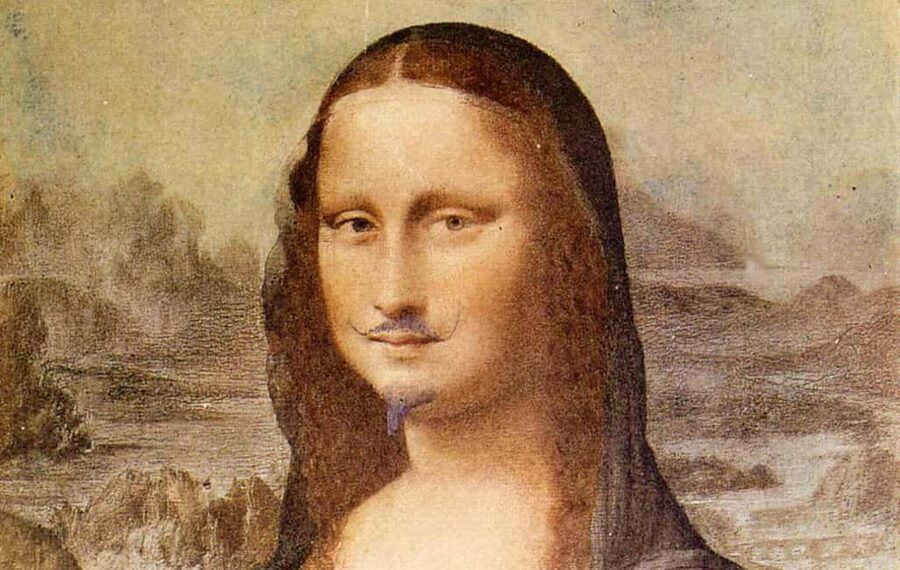
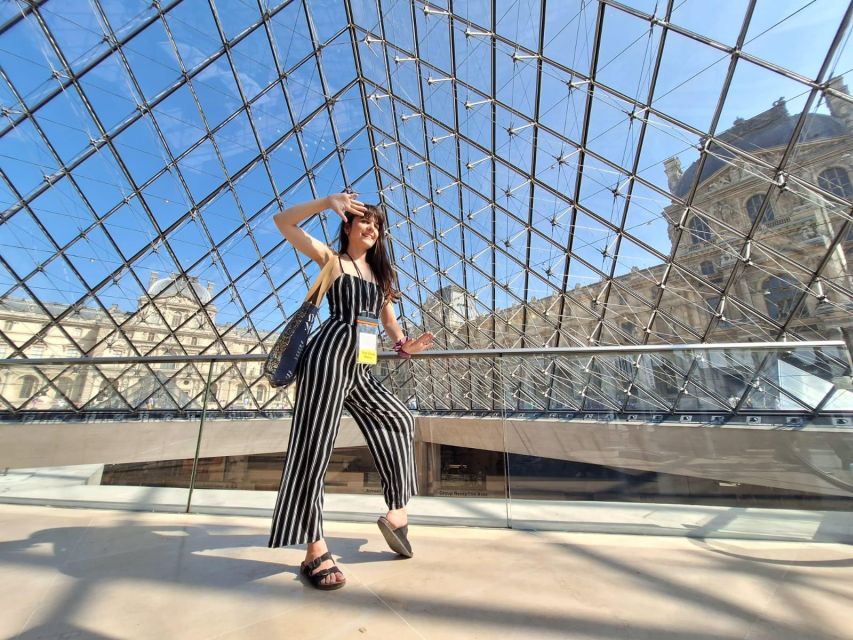
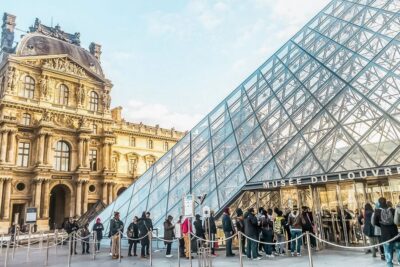
From the meeting point, the tour proceeds toward the Louvre Pyramid and then into the museum. The Pyramid is the familiar modern entrance landmark, but the important practical feature here is the reserved entry through a separate entrance.
Do not read skip-the-line as no waiting at all. You still need to pass through security, and busy museum days can slow every entrance. The benefit is that you avoid relying on the regular public line, which can be a major advantage when your Paris schedule is tight.
One participant specifically valued the time saved when extra security caused the public queue to grow. That is a useful point for anyone visiting during a crowded period. The ticket does not make the Louvre quiet, but it can keep your two-hour appointment from being eaten by the entry line.
The price needs to be judged partly against this convenience. At $246 per person, the tour is much more expensive than simply buying museum admission. You are paying for the guide, the small group, the reserved entry, and the ability to ask questions from someone trained in art. If you only want a quick photograph of the Mona Lisa, it is poor value. If you want someone to organize the museum and help you understand what you are seeing, the calculation is more favorable.
Two hours through the Louvre’s major works
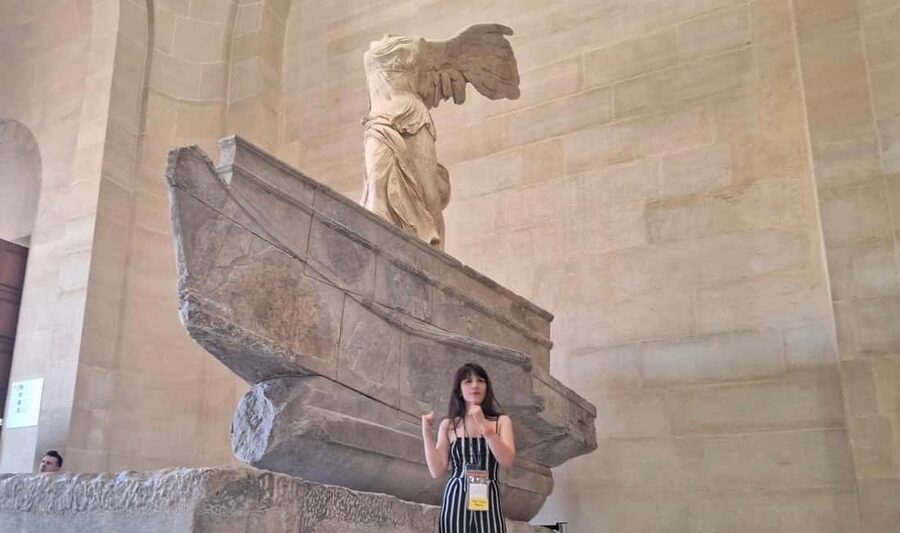
The tour lasts two hours, which is a sensible length for a focused first visit. The Louvre is too large to cover properly in a short outing, so the goal here is not to see everything. You are tracing selected works and major periods, with attention to the pieces most visitors hope to find.
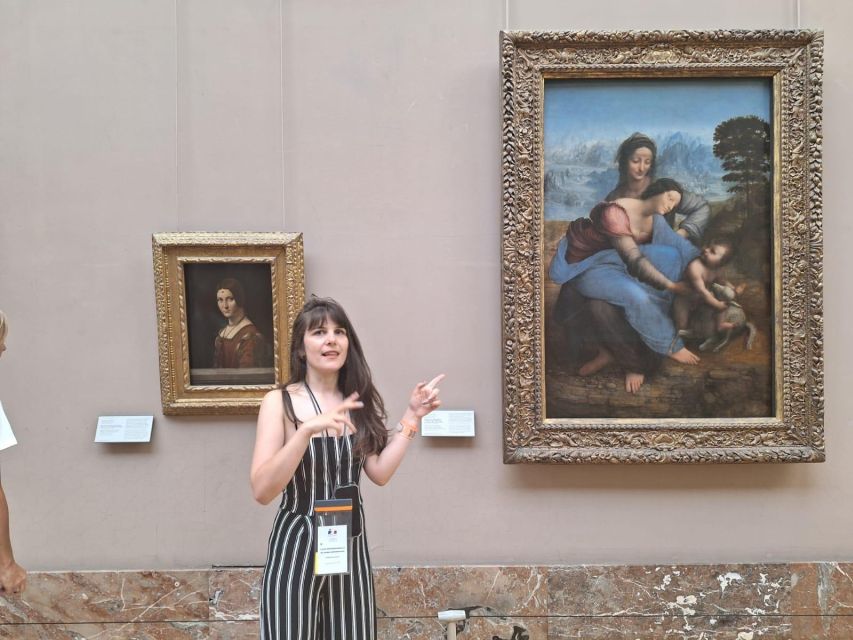
The route moves from Greek Antiquity toward the Italian Renaissance. That broad arc gives the visit structure. You can see how artistic concerns change over time, rather than treating each famous object as an isolated stop.
The exact order may vary, but the stated highlights include the Venus de Milo, Nike, and the Mona Lisa. These are among the Louvre’s most sought-after works, and seeing them with a guide helps you get more from the inevitable crowds.
More Louvre tours and timed tickets:
- Louvre Museum Masterpieces Guided Tour with Access
★ 4.5 · 12,023 reviews - Paris: Louvre Overview, Exploration tour and Reserved Entry
★ 4.1 · 10,145 reviews - Paris: Louvre Museum Entry Ticket With Host and River Cruise
★ 4.6 · 9,926 reviews - Mona Lisa & Louvre Masterpieces Tour with Reserved Access
★ 4.6 · 6,812 reviews
Venus de Milo
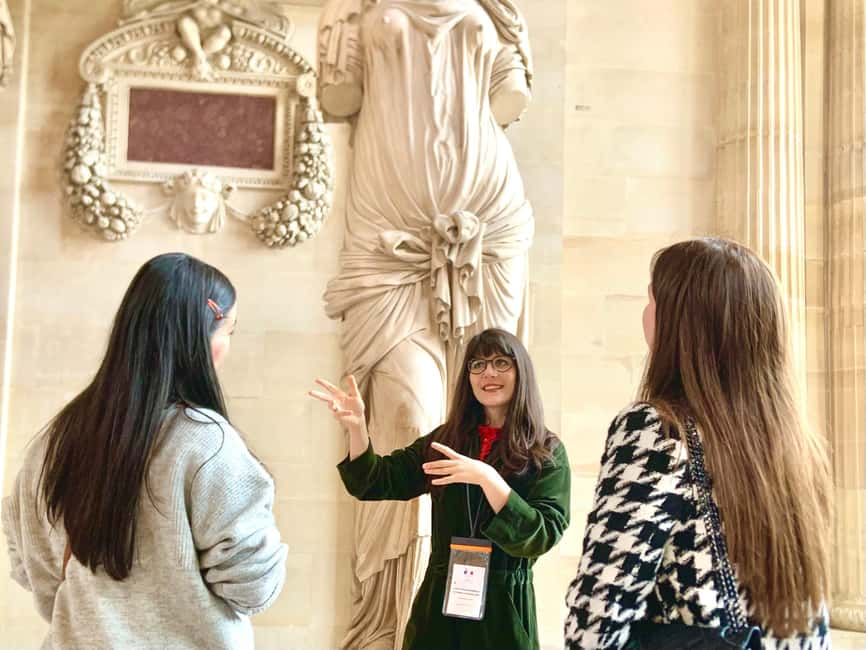
The Venus de Milo gives the guide a chance to discuss classical sculpture and the way the human figure is presented. You may look at the balance, posture, missing arms, and flowing form rather than simply taking a photograph and moving on.
The work is often surrounded by visitors, so do not expect a private viewing. The value of the stop is the explanation. Your guide can direct your attention to details you might otherwise overlook and place the sculpture within the larger movement through Greek Antiquity.
Nike
Nike is especially suited to an artist’s explanation. The folds of the clothing appear to move with the body and the air, even though the sculpture is made from stone. The activity description specifically points to the sheer, flowing folds of Nike, so expect the guide to use this work to explain how sculptors suggest motion, weight, and force.
This is one of the places where a short visit can still feel substantial. You are not expected to memorize technical terms. You are shown how to look at the forms and ask why they produce a feeling of movement.
Mona Lisa
The Mona Lisa is the unavoidable Louvre stop, and it can be crowded. The guide helps turn the encounter into more than a queue, a quick glance, and a photograph.
The tour focuses on the painting’s aesthetic language and on techniques associated with Leonardo da Vinci. You can expect discussion of how expression, light, and subtle transitions affect the way the face appears to change. The point is not to claim that the painting must be admired simply because it is famous. It is to give you a method for deciding what you notice and why.
That distinction matters. The Mona Lisa is small compared with what many first-time visitors expect, and the room can feel hectic. A guide cannot control the crowd, but can help you use the limited viewing time well.
Learning to read technique, not just names
The strongest feature of this experience is the effort to explain artistic choices in plain language. You may discuss light and dark colors, religious imagery, composition, and the methods used by masters such as Leonardo da Vinci.
One family came away still discussing the way light and dark operate in religious paintings. That is a good sign of useful guiding: the lesson continues after you leave the gallery.
I also like the emphasis on personal interpretation. You are encouraged to engage with the art and form your own response, rather than being handed a single approved opinion. A guide can give you context, but you still get to decide what catches your eye.
The small group supports this. With no more than six visitors, you can ask about a particular piece, request more detail, or mention something you want to see. One family was able to stop for works that caught their attention along the way, while another asked to find specific art connected to a child’s interest.
That flexibility has limits. Two hours is short, and the guide must keep the group moving. If you want to study one painting for 20 minutes, this may not be the right format. If you want a clear introduction and a useful route through the museum, the time is well used.
The value of a six-person group

A group of six is small enough to feel personal but not necessarily private. The standard experience is shared, while a private group option is available if you want more control over the pace and conversation.
The small size matters most around the guide. In a large tour, it can be hard to hear, ask a question, or get the guide’s attention. Here, those problems are reduced. Audio headsets are supplied when available, which can also help in noisy rooms.
The guide’s style seems to be a major part of the experience. Blerta has been singled out for her humor, enthusiasm, pacing, and ability to help people with mobility concerns. She also made a point of including family members rather than speaking only to the adults.
That does not mean every guide will have the same personality. Still, the repeated praise for clear explanations and friendly interaction suggests that the human side of this tour is central to its value.
Family visits, mobility, and the walking demands
Families with older children and teenagers are a particularly good match. The content can be adjusted enough to hold a young person’s interest, and the artist-led explanations give children something to do beyond following a crowd from room to room.
The tour also suits adults who feel uncertain about art museums. You can arrive with little background and still follow the discussion. The guide supplies the basic context, then adds visual details that help you look more closely.
Mobility requires more thought. The activity is listed as unsuitable for wheelchair users. One guide worked to reduce stairs for visitors with mobility issues, but you should discuss your needs before booking rather than assume the route will be step-free.
Comfortable shoes are essential. Even with a carefully chosen route, the Louvre covers a large area and the tour involves standing and walking. The two-hour length is manageable for many people, but it is not a seated presentation.
Languages, timing, and cancellation
Live guiding is available in Albanian, English, and French. Check the language when you reserve, especially if your group needs a particular option.
Starting times vary, so you need to check availability for your date. The tour includes two hours inside the Louvre, but allow extra time for reaching the meeting point, gathering with the group, security, and leaving the museum afterward.
The booking terms are helpful if your Paris plans are still shifting. You can reserve now and pay later, and cancellation is free up to 24 hours before the activity for a full refund. Those terms do not remove the need to arrive on time, so keep the meeting point and start time handy.
Who should pay $246 for this Louvre tour?
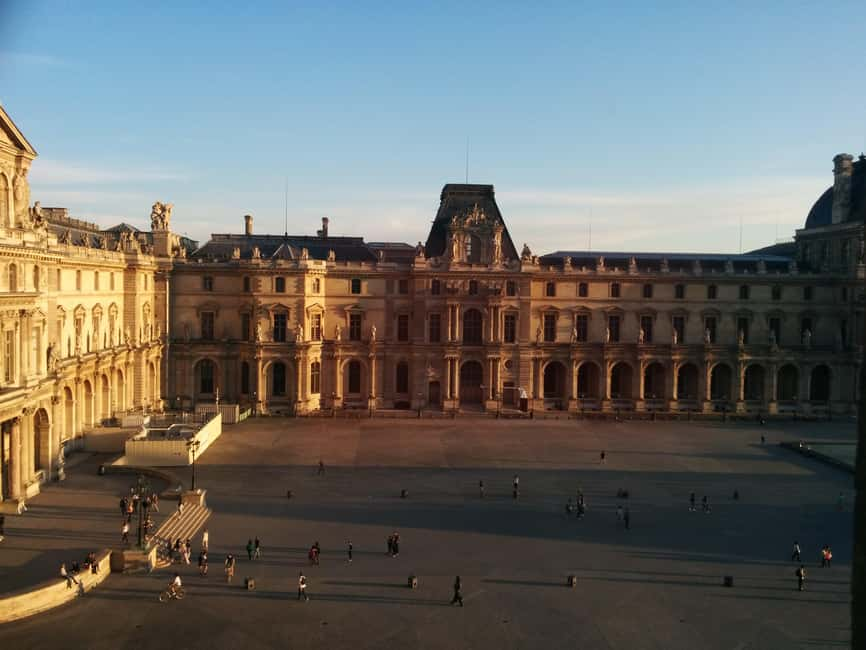
I would consider this tour if I had only one Louvre visit planned and wanted to use it well. The price is high, but the combination of reserved entry, a six-person maximum, and an artist who can explain technique gives you more than basic admission.
It is also a strong choice for a family. The guides have shown they can work with children and teenagers, and the ability to ask questions keeps the visit from becoming a march past famous names.
I would hesitate if you already know the Louvre well, prefer to wander alone, or want to spend a long time with a small number of works. The two-hour route is selective, and the museum will still be crowded.
Should you book the Skip-the-Line Louvre Museum Tour with Artist?
Book it if you want a focused first look at the Louvre, especially if you value explanation more than simple entry. The best reasons are the small group, the artist’s eye, and the chance to understand the Mona Lisa, Venus de Milo, and Nike instead of merely locating them.
Skip it if the $246 price would strain your budget or if you prefer an unstructured museum day. For everyone else, this is a practical splurge that can turn a confusing visit into a clear, memorable introduction to the Louvre.
FAQ
Where does the Louvre tour meet?
Meet at the Kiosque des Noctambules, the Murano glass bead sculpture by Jean-Michel Othoniel across from the Comédie Française. The closest metro reference is Palais Royal, Musée du Louvre station, using the Place Colette exit.
Do I meet the guide at the Louvre Pyramid?
No. The group meets at the Kiosque des Noctambules before going to the Louvre. The itinerary then includes the Louvre Pyramid and the museum galleries.
How long does the tour last?
The tour lasts two hours.
What famous works are included?
The tour includes the Mona Lisa, Venus de Milo, and Nike. It also follows the development of Western art from Greek Antiquity to the Italian Renaissance.
How many people are in the group?
The shared tour is limited to no more than six visitors. A private group option is also available.
What languages are offered?
Live guiding is available in Albanian, English, and French.
Is the tour suitable for wheelchair users?
No. The activity is listed as unsuitable for wheelchair users. Visitors with other mobility concerns should ask about the route before booking.
More Skip-the-Line Tickets in Paris
- Louvre Museum: Skip-the-Line Small Group Guided Tour
★ 4.6 · 4,268 reviews - Paris: Skip-the-Line Louvre Museum & Mona Lisa Guided Tour
★ 4.6 · 1,442 reviews - Paris: Musée d’Orsay Skip-the-Line Tour with Expert Guide
★ 4.5 · 1,145 reviews - Paris: Skip-the-Line Louvre Highlights Tour with Mona Lisa
★ 4.6 · 1,132 reviews
Just added around Paris
- Paris Day Tour with Eiffel Tower, Louvre and Cruise Max 6 People★ 4.5 · 29 reviews
- PRIVATE Louvre Wonders & Hidden Treasures Visit★ 5.0 · 65 reviews
- d’Orsay Museum Paris entry ticket★ 3.5 · 31 reviews
- visiting the masterpieces of impressionists at Orsay museum★ 5.0 · 7 reviews
- Louvre Museum with private guide★ 5.0 · 3 reviews
- Louvre Wheelchair-Accessible Private Tour – Stress-Free & Easy★ 5.0 · 16 reviews
- LOUVRE, Small Group Guided Tour in French (TOP SALES)★ 4.5 · 9 reviews
- Visit to the Louvre Paris museum★ 5.0 · 2 reviews
Art Museum Tours in Paris, compared.
Louvre Guided Tour with Reserved Access & Boat Cruise
Read our review →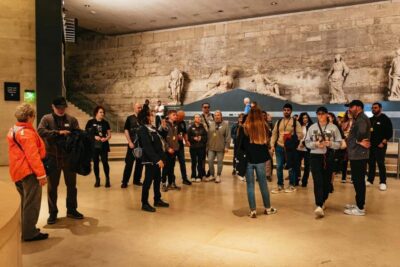
Louvre Overview, Exploration tour and Reserved Entry
Read our review →
Louvre Museum Entry Ticket With Host and River Cruise
Read our review →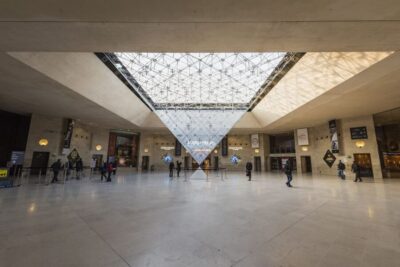
Mona Lisa & Louvre Masterpieces Tour with Reserved Access
Read our review →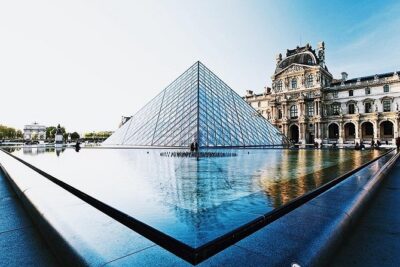
Louvre Museum – Exclusive Guided Tour (Entry Included)
Read our review →
Louvre Museum Hosted Entry and Mona Lisa Audioguide
Read our review →Browse the lists this tour appears in