
REVIEW · LONDON
London: Private Tour of the National Gallery with tickets
The best thing about this private National Gallery tour is the clear thread it draws through centuries of art. Instead of wandering from room to room, you follow the changing ideas of artists, from medieval religious images and Renaissance balance to Caravaggio’s drama and Van Gogh’s bold brushwork. I like the way Anthony connects art to politics, religion, rivalry, and personal stories, making famous paintings easier to understand.
I also like the small private format, which gives you room to ask questions and adjust the conversation to your interests. The main limitation is time: 2.5 hours is enough for a strong introduction, but not enough to see every important work in a museum as large as the National Gallery. At $252 per group of up to eight, it offers good value for a full group, but solo visitors or couples will pay more per person.
Key points to know before booking
- See major works in a clear sequence: The tour traces art from the 1300s through the Renaissance, Baroque, and Impressionist periods.
- Focus on famous names: Leonardo da Vinci, Raphael, Michelangelo, Caravaggio, Rubens, Van Dyck, Constable, and Van Gogh all feature in the story.
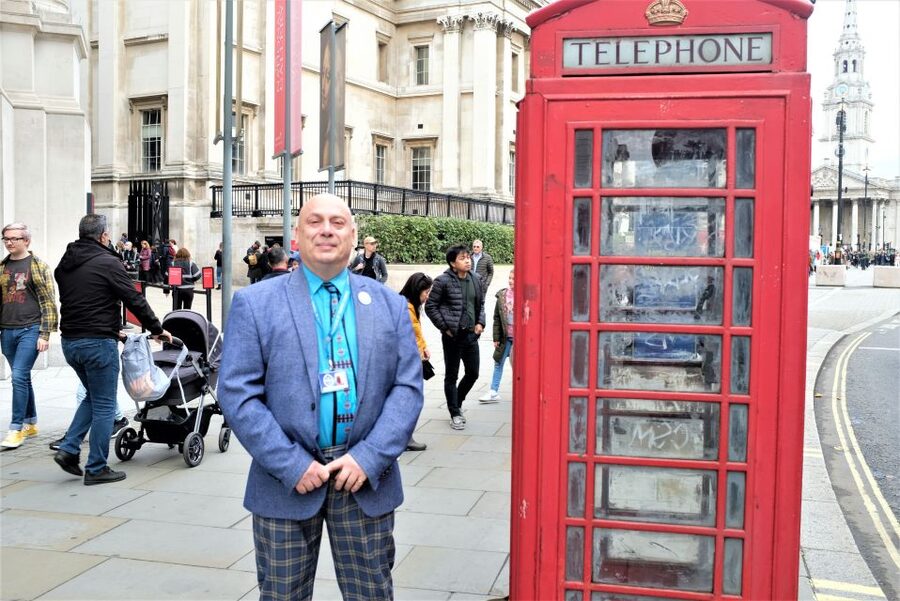
- Meet at a simple landmark: Find the red telephone box outside the Sainsbury Wing entrance.
- Ask questions as you go: This is a private group, so the pace and discussion can respond to your interests.
- Save time at entry: Your admission ticket is included, with access through a separate entrance.
- Plan for a weatherproof start: The tour runs rain or shine, so arrive ready for London weather.
Why a private National Gallery tour can change your visit
The National Gallery is free to enter in general, but free admission does not automatically make it easy to use. The collection covers hundreds of years, and its famous paintings are spread through a large building. You can easily spend an hour looking at works without understanding why one painting matters beside another.
This tour gives you a guide through that problem. Anthony leads the visit as a connected story, moving from early religious art to the changing aims of Renaissance painters, then into Baroque drama and later Impressionist experiments. I like this approach because it treats the museum as a history of ideas, not simply a checklist of celebrated names.
The tour also brings the human side of art into the conversation. You hear about artists’ lives, loves, rivalries, patrons, and arguments. That context can make a painting feel less distant. A picture created for a king, a work tied to an apology to the Pope, or a painting that carries a call to arms gives you something concrete to look for beyond color and composition.
More Art Museum Tours in London
- Official tickets: Moco Modern & Contemporary Art Museum
★ 4.5 · 1,157 reviews - London: National Gallery Guided Tour with Art Expert Guide
★ 4.7 · 440 reviews - London: Tickets for Moco Modern & Contemporary Art Museum
★ 4.7 · 391 reviews
Meeting at the Sainsbury Wing entrance
You meet by the red telephone box at the entrance to the National Gallery’s Sainsbury Wing. This is a useful meeting point because it is distinctive and easy to identify, especially in the busy Trafalgar Square area.
The tour information asks you to check the guide photograph and meeting-place image before arriving. I would do that in advance rather than trying to identify a guide in a crowd. Arrive with enough time to find the Sainsbury Wing without rushing, since the visit is only 2.5 hours and a late start cuts into the museum time.
Your guide handles the included entrance ticket. The activity also provides access through a separate entrance, which can make the arrival simpler than joining the main public flow. The exact access arrangements can vary at the museum, so follow the meeting instructions you receive after booking.
Starting with art from the 1300s
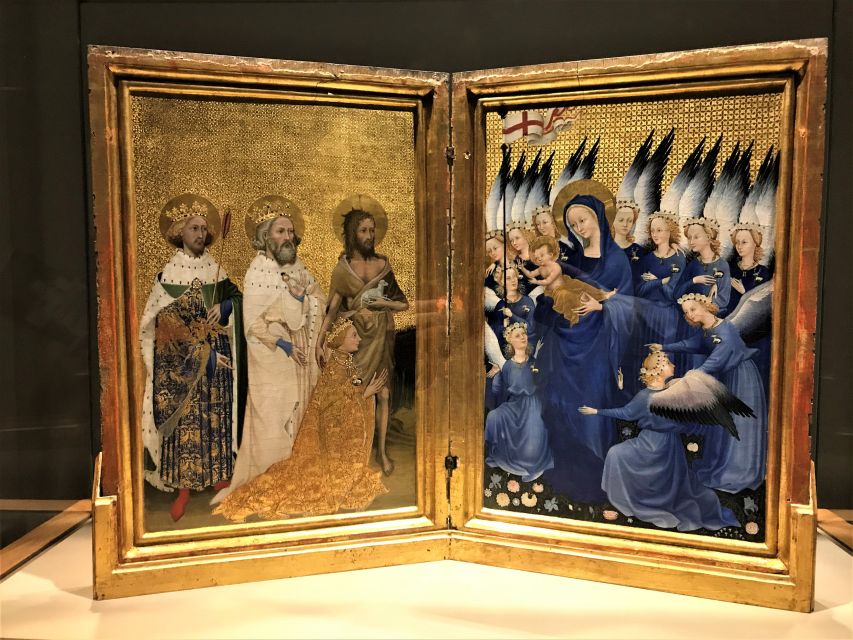
The opening part of the tour introduces medieval religious images and the early development of European painting. This section matters because it gives you a baseline for everything that follows. Early works often place religious meaning ahead of lifelike space, physical realism, or individual personality.
Anthony’s approach, based on the way the tour is described, is to show how artists gradually changed those priorities. You can watch bodies become more convincing, settings gain depth, and figures develop stronger personal presence. The point is not only that later artists painted more realistically. It is that artists began asking different questions about nature, the human body, storytelling, and the role of art.
This is a good part of the tour for visitors who feel unsure about older paintings. Medieval images can seem formal or unfamiliar at first. Once you understand the visual language and purpose behind them, details that might have looked strange begin to make sense.
Leonardo, Raphael, and the Renaissance
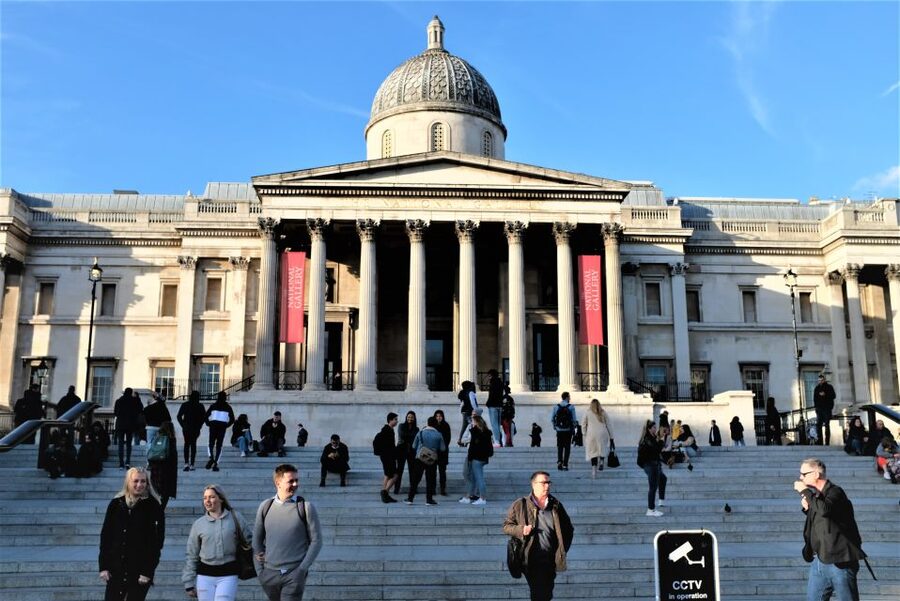
The Renaissance section brings the tour to some of the National Gallery’s most important works. Leonardo da Vinci’s The Virgin of the Rocks is a major stop, and it offers plenty to discuss: the arrangement of the figures, the mysterious setting, the use of light, and Leonardo’s interest in nature and atmosphere.
You do not simply get a famous title and a quick biography. The tour is designed to explain how an artist created the work and why the technique mattered. That is especially helpful with Leonardo, whose paintings reward close attention to soft edges, subtle transitions, and the relationship between figures.
Raphael shows another side of Renaissance achievement. His work helps illustrate changing styles and the period’s interest in order, balance, and ideal beauty. The contrast between Leonardo’s atmospheric effects and Raphael’s controlled clarity makes the development of Renaissance art easier to follow.
The tour also includes Michelangelo and the wider world around these artists. Since the focus is on connections, you get a sense of how artists learned from one another, competed for patrons, and worked within religious and political systems. That is more useful than treating each painter as an isolated genius.
More National Gallery tours:
- National Gallery of London Museum Tour Semi-Private 8ppl Max
★ 5.0 · 178 reviews - British Museum & National Gallery of London Semi-Private 8ppl Max
★ 5.0 · 168 reviews - London: National Gallery + Guided Tour + Priority Entry
★ 3.7 · 162 reviews - Official National Gallery Highlights Guided Tour
★ 4.5 · 149 reviews
Portraiture and the rise of the individual
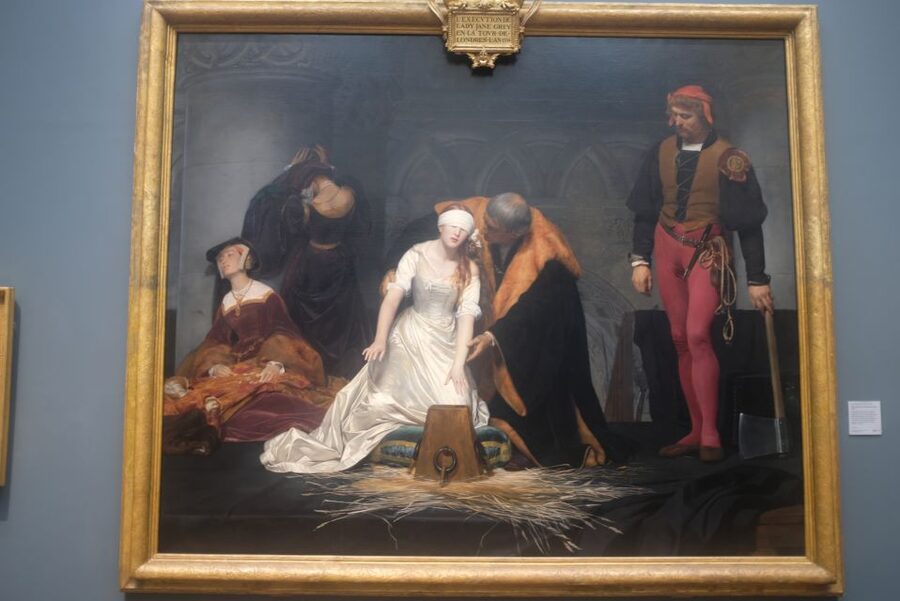
The development of portraiture is another important thread. Portraits are not only records of what someone looked like. They can show status, wealth, family ties, power, mourning, or a carefully managed public image.
Van Eyck’s memorial to a lost wife is a particularly personal example. The work gives the tour a chance to move from broad artistic change to private emotion. You can look at how an image remembers a person and how symbols, clothing, pose, and setting carry meaning.
This part should suit you if you enjoy stories about the people behind the paintings. It also helps explain why portraiture became such an important form. A portrait could serve a family, a court, a church, or an individual who wanted to shape how others saw them.
Caravaggio brings the Baroque to life
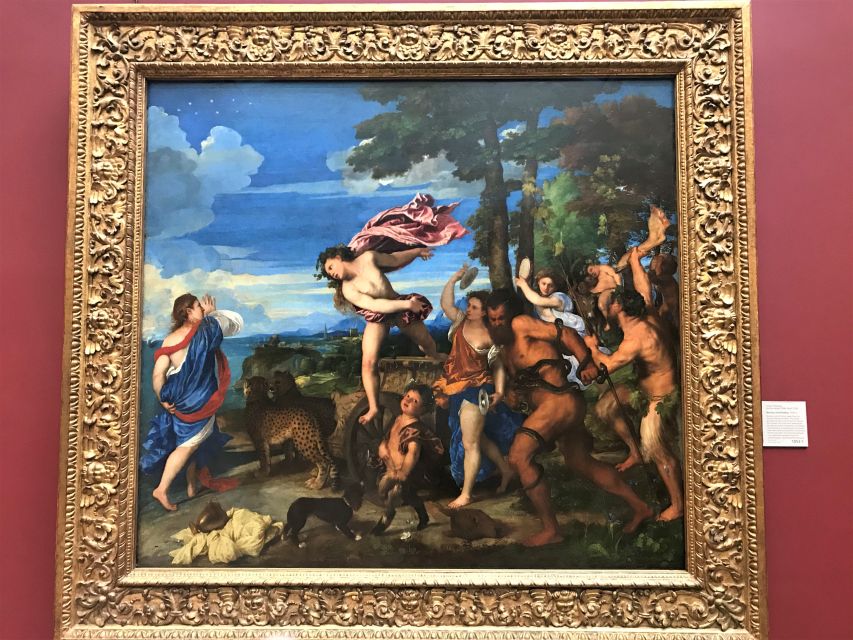
The Baroque section is built around stronger movement, sharper contrasts, and emotional force. Caravaggio is the dramatic center of this part of the visit. The description of him as mad, bad, and dangerous to know is colorful, but the tour also uses his difficult life to open a serious discussion about his art.
Caravaggio’s figures often appear close enough to touch, with intense light directing your attention to faces, hands, and action. His work can feel immediate because it does not keep emotion at a safe distance. The lighting creates a stage-like effect, but the people retain a physical, human presence.
This is one of the places where a guide can add real value. You can see the picture for yourself, but a strong explanation helps you notice how the light controls the story. It also helps place Caravaggio within the wider Baroque interest in drama, movement, faith, and persuasion.
Rubens and Van Dyck extend the discussion in different directions. Their works can show the links between art, court life, wealth, diplomacy, and public identity. The tour’s attention to lives, rivalries, and patrons gives these paintings a social setting rather than presenting them as decoration.
From Constable to Van Gogh
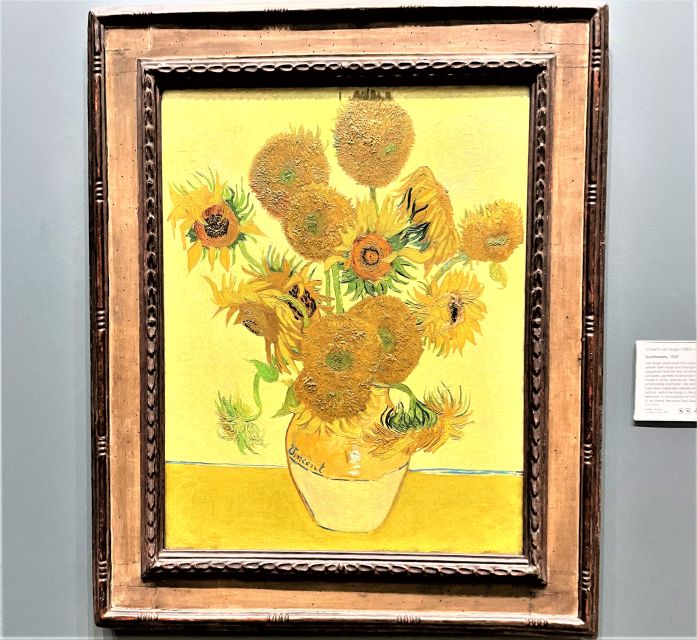
The later part of the route moves toward changing ideas about nature, color, and personal expression. Constable helps show how artists could turn familiar scenery into a subject filled with mood and feeling. His work also gives you a chance to consider how observation and atmosphere affect a painting.
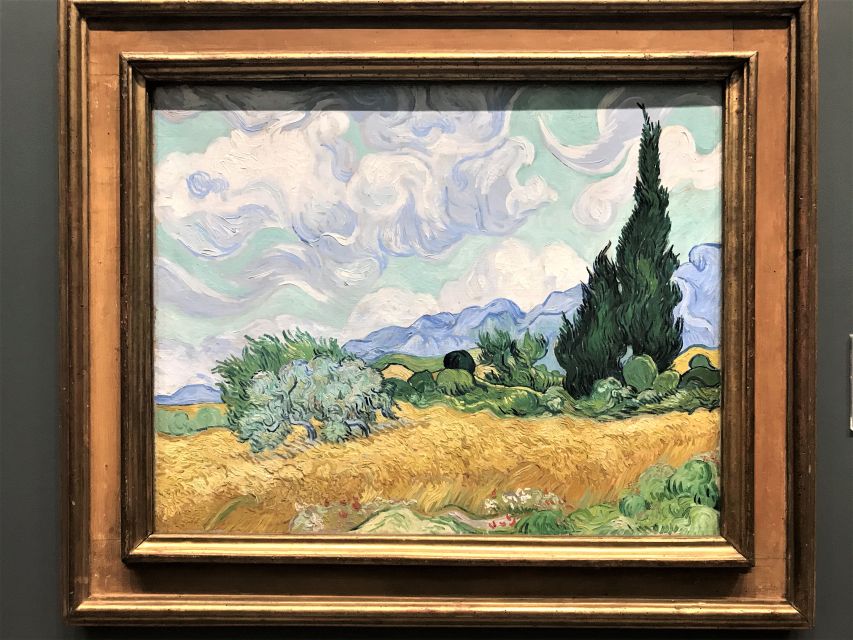
Van Gogh marks a far more forceful use of paint and color. The tour includes his work among the National Gallery highlights, along with an explanation of how artists created their paintings. That technical focus is useful here because Van Gogh’s brushwork is not a minor detail. It is part of the way the image communicates movement and emotion.
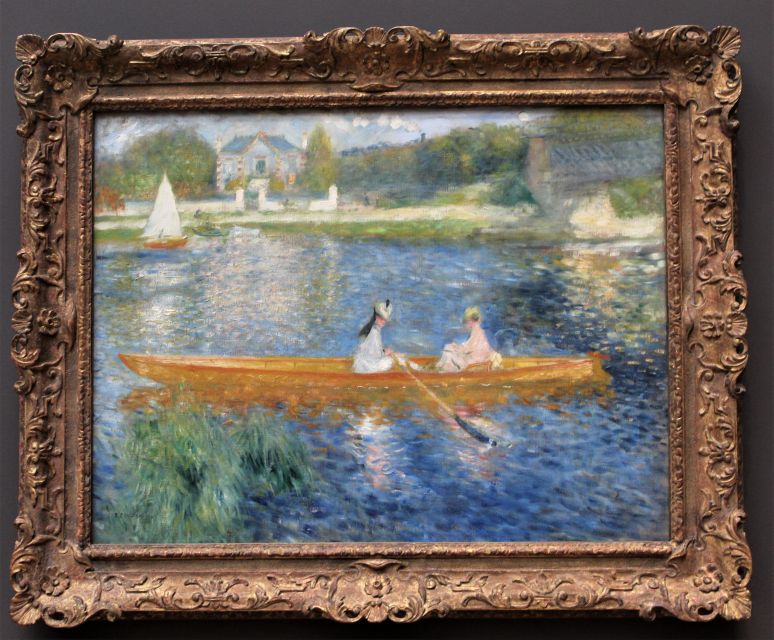
The visit then reaches the masters of Impressionism and the changes taking place in modern painting. You can follow the shift away from strict historical subjects and polished surfaces toward light, changing conditions, and a more direct response to what the artist sees.
Do not expect an exhaustive tour of every Impressionist in the collection. The value is in seeing the transition. After two hours of earlier art, you have a better sense of why these newer approaches looked radical.
Stories behind the paintings
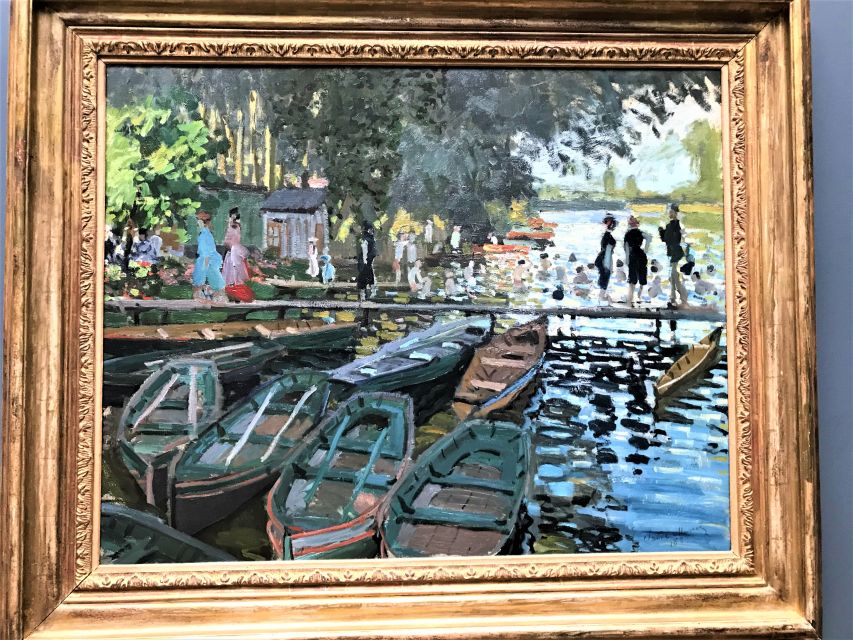
One of the tour’s strongest features is the use of stories that give individual works a reason to hold your attention. The collection includes paintings connected to kings, the Pope, religious purpose, political conflict, family memory, and artistic rivalry.
These stories are not just amusing extras. They explain why a painting was made and who was meant to see it. A work created for a royal patron may use symbols differently from a private portrait. A religious image can carry a message that modern viewers miss. A painting linked to conflict may work as a visual argument as much as an artwork.
I would encourage you to ask questions when a particular story catches your interest. The private format allows discussion without a larger group waiting to move on. That is a major difference from a standard museum talk, where the guide must keep to one fixed script.
Anthony’s guiding style and the private format
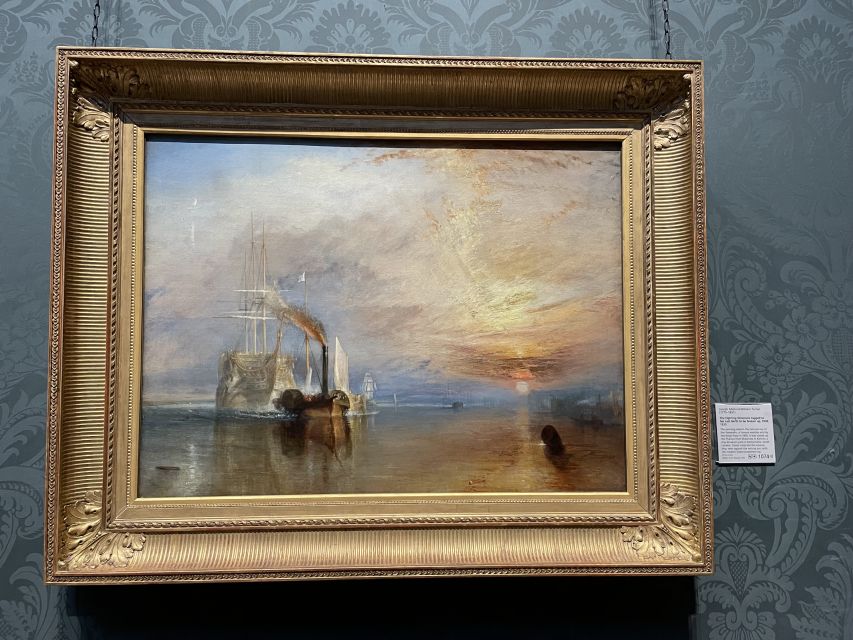
Anthony is the guide named most often in the tour information, and the experience is offered through Anthonys Tours. His method combines art history with the story of each artist, along with attention to style, technique, materials, and historical setting.
The guide is also described as clear, entertaining, and good at keeping a steady pace. That combination matters in a museum. Too much technical detail can make a visit feel like a lecture, while too much storytelling can leave you unsure why the paintings matter. The best moments should give you both a reason to care and a visual detail to inspect.
A private group of up to eight is especially useful for families or friends with mixed interests. One person can ask about technique, another can ask about the artist’s life, and a child can ask a more direct question without interrupting a large group. The experience is also wheelchair accessible, which makes it a practical choice for visitors who need accessible arrangements.
The tour is in English only. If your group is comfortable with English, the live format should make it easier to ask for a slower explanation or more detail on a favorite work.
Is 2.5 hours enough?
Two and a half hours is a sensible length for a focused introduction. It gives you enough time to move across major periods without turning the visit into an all-day museum march.
You should still set your expectations correctly. The National Gallery holds far more than any short tour can cover. This experience is about selected highlights and a connected story, not a room-by-room survey. If you want to study one artist at length, you may need to return on your own after the tour.
The pace appears designed to keep moving without feeling rushed. That balance is important because standing in front of a painting for too long can limit the number of periods you see, while racing past works defeats the purpose of having a guide. The private format gives you the best chance of adjusting that balance to your group.
Price, group size, and overall value
The cost is $252 per group of up to eight, including the licensed private guide and entrance ticket. At the full group size, that works out to $31.50 per person before any separate costs such as food or transport. For eight people, that is strong value for a private museum tour.
For two people, the price becomes $126 each, so the decision depends on how much help you want inside the gallery. If you already know the collection well and prefer to wander alone, the cost may be hard to justify. If you want the major works explained in a logical order, the private attention can make the visit more productive.
There is no transportation or food included. That is not a serious weakness for a central museum visit, but you should plan your route to the meeting point separately. The tour runs rain or shine, so allow for weather when you set out.
Free cancellation up to 24 hours before the start and a reserve-now, pay-later option make the booking less rigid. Those terms are useful in London, where weather, transport, and changing plans can affect a museum day.
Who should book this National Gallery experience?
I would recommend it most strongly for:
- First-time National Gallery visitors who want a clear route through the collection
- Families who prefer a flexible private guide
- Couples or friends who enjoy art but do not want a formal lecture
- Visitors interested in the connection between art, politics, religion, and personal stories
- People who want to understand technique as well as subject matter
- Anyone with only a few hours for the museum
It may be less suitable if you want a long, quiet study of a single painter. It may also be poor value for one person unless private guiding is a high priority. The tour is designed around breadth, selected highlights, and conversation.
Should you book it?
Book this tour if you want the National Gallery to make sense as a story that runs from the 1300s to Impressionism. The combination of major works, a private English-speaking guide, included entry, and a 2.5-hour route gives you a strong first visit.
The best reason to choose it is Anthony’s focus on connections: how artists worked, what their patrons wanted, how styles changed, and why the paintings carried particular messages. Book for the full group if you can, since the $252 price becomes much better value with several people sharing it.
Skip it if you prefer to browse independently or already have a detailed plan for the collection. For everyone else, especially visitors who want more than a quick look at Leonardo and Van Gogh, this is a practical way to get much more from the museum.
FAQ
How long does the National Gallery tour last?
The tour lasts 2.5 hours.
How much does the private tour cost?
The price is $252 per group of up to eight people.
What is included in the price?
A private licensed guide and the entrance ticket are included.
Where do I meet the guide?
Meet by the red telephone box at the entrance to the Sainsbury Wing of the National Gallery.
Is the tour offered in English?
Yes. The live tour guide speaks English.
Is this a private group experience?
Yes. The tour is for a private group, with up to eight people covered by the listed price.
Is the tour wheelchair accessible?
Yes, the activity is listed as wheelchair accessible.
Can I cancel for a refund?
Yes. You can cancel up to 24 hours in advance for a full refund.
Just added around London
- A Guided Tour at the National Gallery in London★ 3.5 · 2 reviews
- The Shard Viewing Gallery & Westminster Walking Tour★ 4.0 · 12 reviews
- Women in Art Walking Tour★ 5.0 · 13 reviews
- Best of Westminster Abbey with Upper Gallery & Buckingham Palace★ 4.5 · 15 reviews
- Tate Modern Museum London Guided Tour Semi-Private 8ppl Max★ 5.0 · 41 reviews
- The Tate Modern London – Exclusive Guided Museum Tour★ 5.0 · 41 reviews
- Private Guided Tour of the National Gallery in London★ 4.0 · 8 reviews
- Tate Modern Private Tour in London with Blue Badge Guide★ 5.0 · 3 reviews
Art Museum Tours in London, compared.
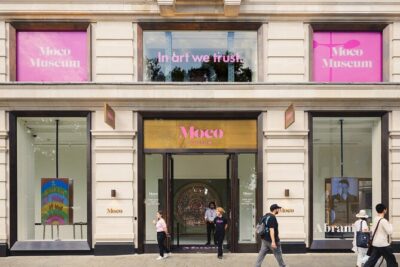
Official tickets: Moco Modern & Contemporary Art Museum
Read our review →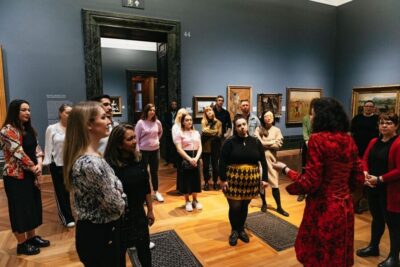
National Gallery Guided Tour with Art Expert Guide
Read our review →
Tickets for Moco Modern & Contemporary Art Museum
Read our review →
National Gallery of London Museum Tour Semi-Private 8ppl Max
Read our review →
Day Trip to Paris with Eiffel Tower, Notre Dame and Louvre Museum
Read our review →
British Museum & National Gallery of London Semi-Private 8ppl Max
Read our review →
National Gallery + Guided Tour + Priority Entry
Read our review →
Browse the lists this tour appears in