
REVIEW · ROME
Guided Tour of Vatican Museum & Sistine Chapel
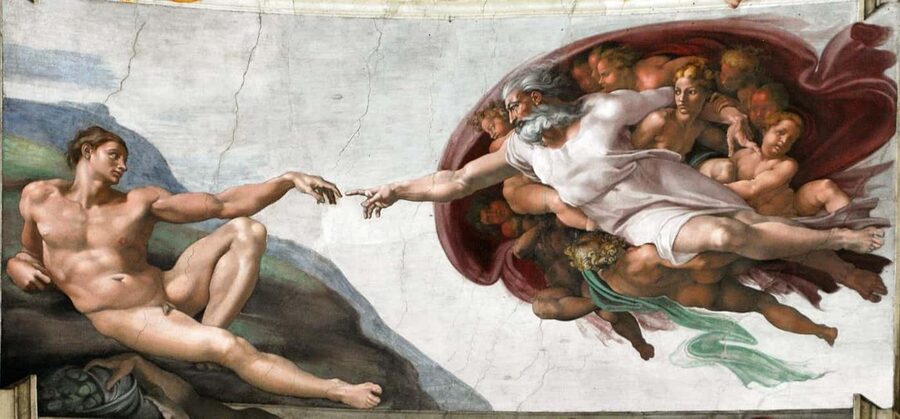
Michelangelo’s Creation of Adam is the great finale here, but the Vatican Museums are far more than one famous ceiling. This 2.5-hour guided walk takes you through ancient sculpture, grand courtyards, painted rooms, maps, tapestries, and the Sistine Chapel, with an English-speaking guide explaining what you are seeing.
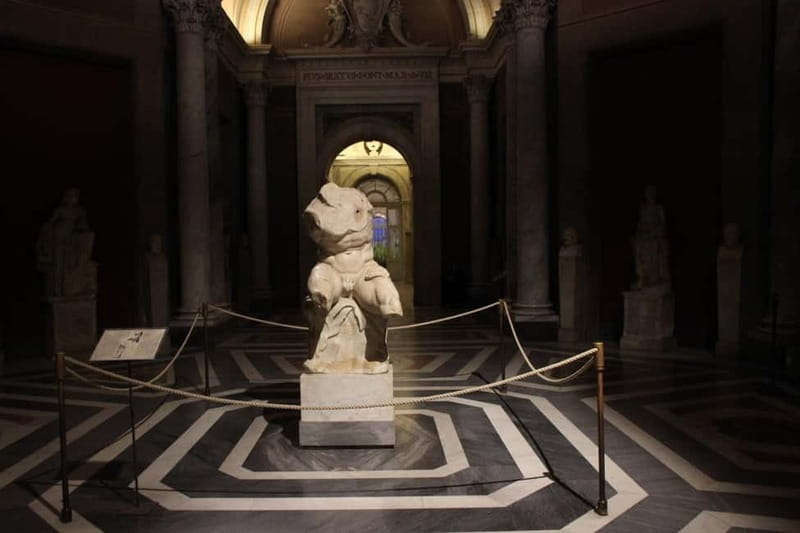
I like the route’s strong mix of art and architecture, especially the Pio-Clementino Museum, Laocoön, Belvedere Torso, Hall of Maps, and Raphael Rooms. I also like the separate tour entrance, which can save time compared with buying a standard admission ticket. The main concern is reliability: one verified booking describes a last-minute language change and a two-language tour that left the Spanish-speaking couple dissatisfied.
Key points at a glance
- Michelangelo’s Sistine Chapel finale: See the Creation of Adam and learn how fresco painting was physically made.
- A broad Vatican route: Visit the Pinecone Courtyard, Pio-Clementino Museum, Belvedere Courtyard, galleries, Raphael Rooms, and Sistine Chapel.
- Ancient art included: The tour covers Laocoön, the Belvedere Torso, the Round Hall, and works connected to Egyptian and Etruscan cultures.
- English-language guiding: The advertised tour is in English, so confirm the language you need before paying.
- Security still takes time: Even with a separate tour entrance, expect an airport-style security check that may take 20 to 25 minutes.
- Arrive early and dress carefully: Late arrivals may be refused, and shorts, short skirts, sleeveless shirts, weapons, and sharp objects are not allowed.
What the $88 price really gets you
At $88 per person, this is not a bargain museum ticket. You are paying for admission, a live licensed guide, and a planned route through one of Rome’s most crowded cultural sights.
That price can make sense if you want someone to explain the art while you walk. The Vatican Museums cover more than seven kilometers of galleries, an amount no sensible person can absorb in a single visit. A guide helps you focus on major rooms and understand why particular statues, ceilings, maps, and paintings matter.
The value depends heavily on the guide and the language match. The experience is advertised in English, and the only detailed verified account supplied describes a Spanish-speaking couple whose tour was changed at short notice and then conducted in both Spanish and English. The guide apparently had to translate while also leading three English-speaking participants, leaving the Spanish-speaking guests feeling shortchanged.
That does not prove every departure will have the same problem, but it is a useful warning. If you need Spanish or another language, confirm it directly before the tour date. If you book the English version, make sure you can follow spoken English for two and a half hours in a busy museum.
More Art Museum Tours in Rome
- Vatican Museums, Sistine Chapel & St. Peter’s Basilica Tour
★ 4.3 · 73,970 reviews - Vatican Museums, Sistine Chapel & St Peter’s Basilica Guided Tour
★ 4.5 · 39,149 reviews - Rome: Vatican Museums, Sistine Chapel and Basilica Tour
★ 4.3 · 16,039 reviews
Meeting at Via Tunisi 43
The meeting point is the operator’s office at Via Tunisi 43, Rome 00192, near the Vatican Museums. You check in at the office and meet the guide there. The office is described as about 270 meters from the tour starting area.
By Metro, take Line A toward Battistini and get off at Cipro. From there, walk about 300 meters to Via Tunisi 43, following a map. By taxi, give the driver the full address rather than simply saying Vatican Museums.
Look for the guide’s logo at the office entrance and an ATM near the door. These small details matter because the Vatican area has several tour offices and crowded streets. Arrive at least 15 minutes early. Late arrivals may not be admitted, and a museum ticket is not much use if you miss the group.
The separate entrance is helpful, but do not read skip the line as no waiting at all. Increased security can create a 20 to 25 minute line, similar to airport screening. Pack light and avoid sharp objects or weapons, which are not permitted.
The Pinecone Courtyard sets the tone
The Pinecone Courtyard is one of the first major outdoor spaces on the route. Its name comes from the large bronze pinecone displayed there, and the courtyard gives you a useful pause before the indoor galleries become dense with art.
This is a good place for the guide to explain how the Vatican collection grew and how different popes, artists, and scholars shaped the museums. You will get more from the later rooms if you understand that this is not one single palace built at one time. It is a long series of collections and galleries connected over centuries.
The courtyard also gives you a little breathing room. Much of the tour takes place indoors, with crowds, polished floors, and long corridors. If you need a quiet moment, use the outdoor stop to get your bearings before moving on.
Pio-Clementino and the ancient statues
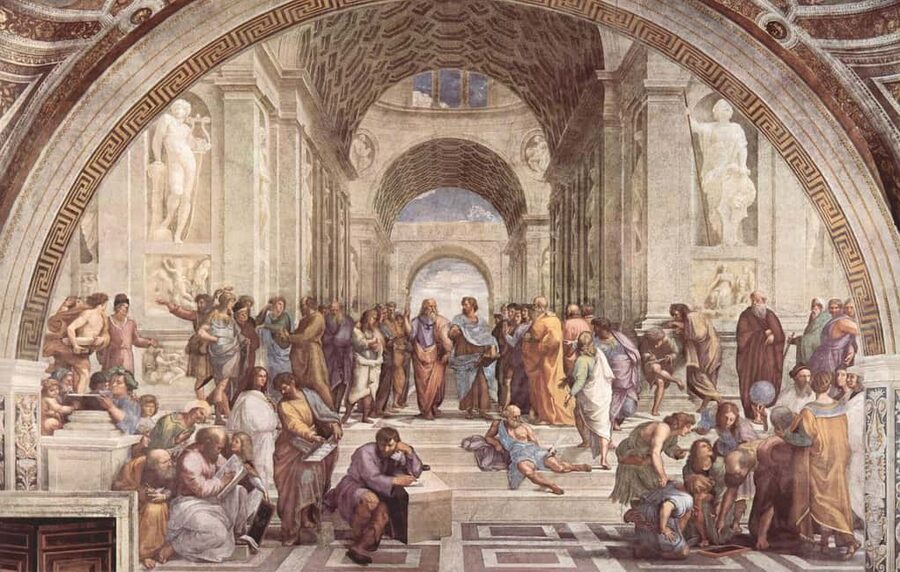
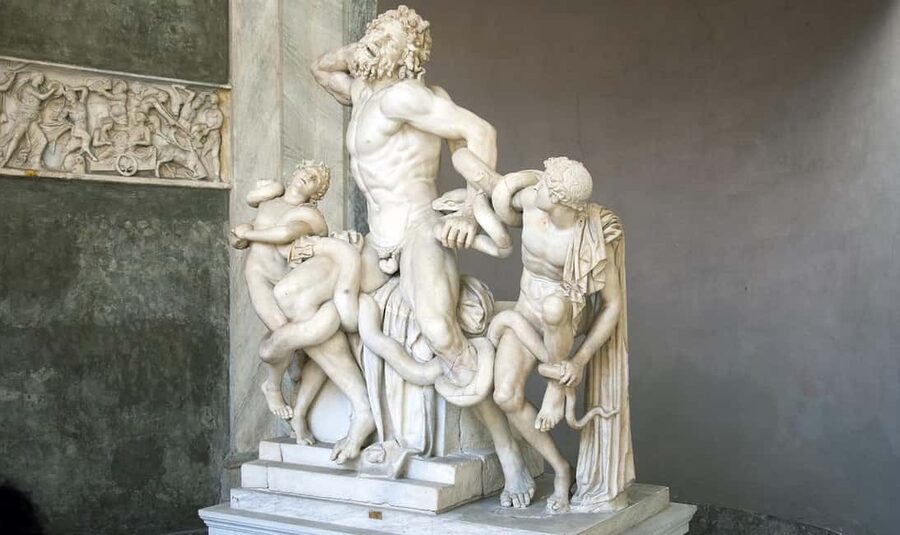
The Pio-Clementino Museum is the classical-art heart of this visit. It contains some of the Vatican’s best-known ancient sculptures, including Laocoön, displayed in the Octagonal Courtyard area, and the Belvedere Torso.
Laocoön shows a father and his sons struggling with sea serpents. You do not need a long lecture to understand its force, but a guide can point out the twisting bodies, strained expressions, and dramatic movement that made this sculpture so important to later artists.
The Belvedere Torso is less complete, yet its damaged state is part of its power. The muscular body became an important model for Michelangelo. This connection helps tie the ancient galleries to the Sistine Chapel later in the route.
The museum also includes the Round Hall, a large circular room with sculpture and architectural detail. Here, scale matters. You are not just checking famous names off a list. You are seeing how Roman spaces used statues, colored stone, and monumental design to create an impressive setting.
More ways into the Vatican Museums:
- Vatican Museums & Sistine Chapel Skip-the-Line Entry Ticket
★ 4.4 · 13,838 reviews - Rome: Vatican Museums, Sistine Chapel & Basilica Tour
★ 4.7 · 13,217 reviews - Rome: Vatican Museums & Sistine Chapel Guided Tour
★ 4.3 · 12,117 reviews - Vatican Museums & Sistine Chapel Skip-the-Ticket-Line Tour
★ 4.3 · 10,486 reviews
Belvedere Courtyard and the Vatican’s grand scale
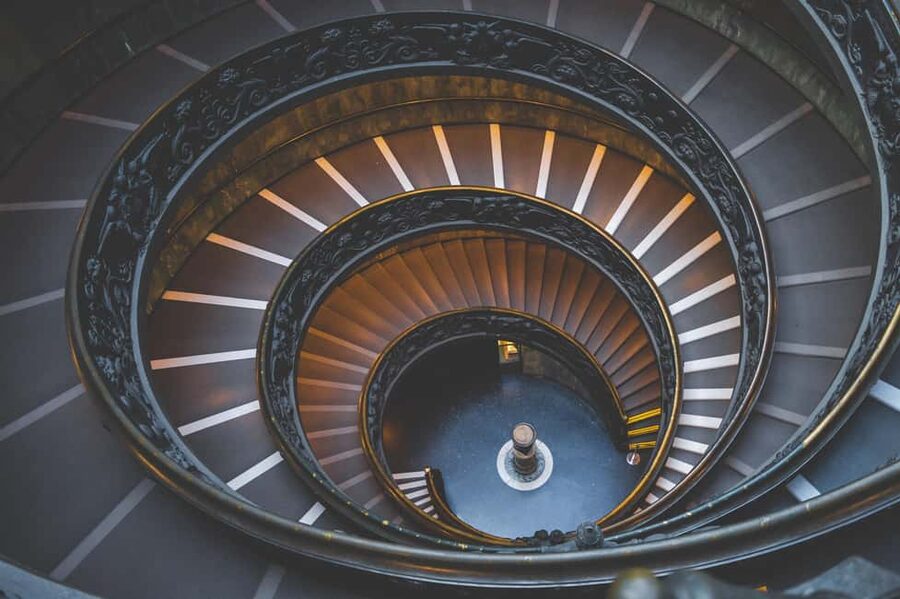
The Cortile del Belvedere, or Belvedere Courtyard, connects several sections of the museum and gives you a sense of the Vatican’s enormous scale. The tour does not attempt to cover every room, because that would be impossible in two and a half hours.
Your guide should help you understand what to notice rather than simply move you from doorway to doorway. Look for the way courtyards frame sculpture and how the museum uses long views to make individual works feel part of a larger collection.
This is also where the pace may feel brisk. The Vatican is busy, and a guided group must stay together. If you prefer to stop for long periods at a single object, a self-guided visit may suit you better. If you want the major works explained without planning the route yourself, the guided format is more practical.
The Candelabra Gallery and painted decoration
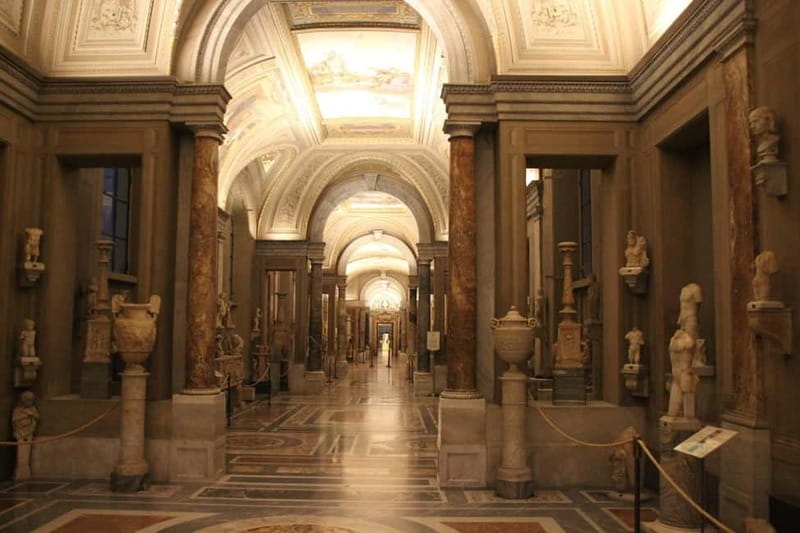
The Gallery of Candelabra is one of the grand decorated corridors on the route. Its name comes from the large candelabra motifs, but the room is also about painted ornament, sculpture, and the theatrical design of the Vatican interiors.
Long museum galleries can blur together. A guide gives you a way to separate one from another by explaining the purpose, period, and decoration of each space. Pay attention to the ceiling as well as the walls. The Vatican often asks you to look in several directions at once.
You may find this part less immediately gripping than Laocoön or the Sistine Chapel. That is normal. The value is in seeing how the Vatican’s display rooms were designed as grand settings, not plain white galleries.
Maps, woven wall hangings, and Raphael Rooms
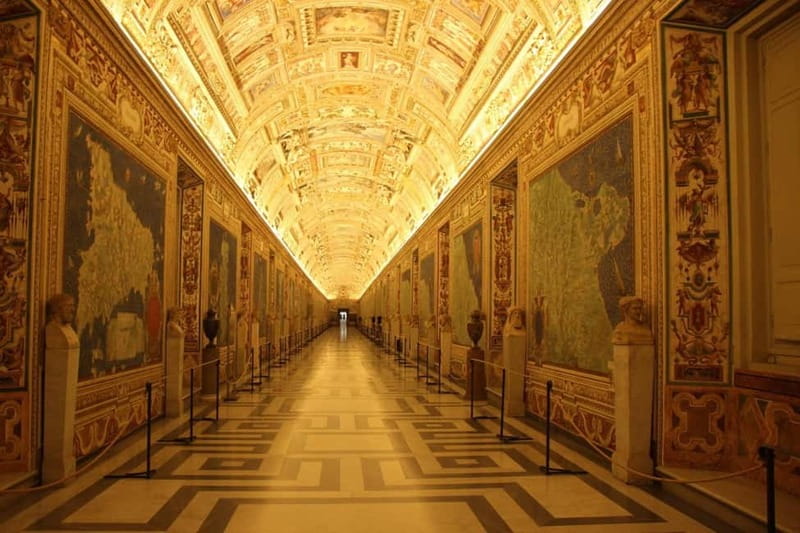
The Gallery of Maps is one of the route’s most memorable stops. Its walls display large painted maps of Italy, while the ceiling and surrounding decoration compete for your attention. It is a place where geography becomes visual art.
The maps are not modern guides, and they should not be judged by today’s exact standards. Their importance lies in the way they show how Italy was understood and represented at the time they were made. A guide can help you read the room rather than simply admire its color.
The Gallery of Tapestries, meaning the section filled with large woven wall hangings, adds another type of art to the visit. These works were costly, portable, and designed to tell stories through fabric. They also show why the Vatican collection cannot be reduced to paintings and statues.
The Raphael Rooms bring you into one of the most important Renaissance sections of the museum. The rooms are known for frescoes connected with Raphael and his workshop. The tour includes them, but the exact amount of time spent there can depend on crowd movement and the guide’s pace.
If you love Renaissance painting, this is a major reason to choose the tour. If your main goal is only Michelangelo, you might feel that the earlier galleries take up time before the final stop. I prefer seeing the wider route because Raphael and Michelangelo make more sense when viewed together.
Egyptian, Etruscan, and non-European collections
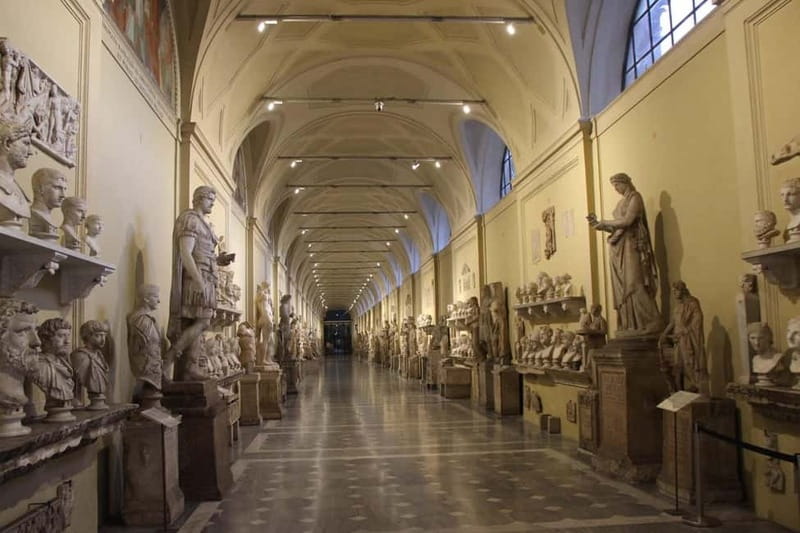
The Vatican Museums are not limited to Christian art or ancient Roman sculpture. The wider museum complex includes Egyptian and Etruscan collections, along with an Ethnological Museum devoted to cultures outside Europe.
The supplied route description says you will travel through these collections and see more than the headline stops. In practice, a 2.5-hour visit cannot give every section equal attention. You may pass through some areas quickly, depending on the group and museum conditions.
Still, this broader scope is useful. It shows that the Vatican Museums hold objects from many places and periods, not just works tied to the papal apartments. Ask the guide which sections are included in your particular departure if these collections are especially important to you.
Entering the Sistine Chapel
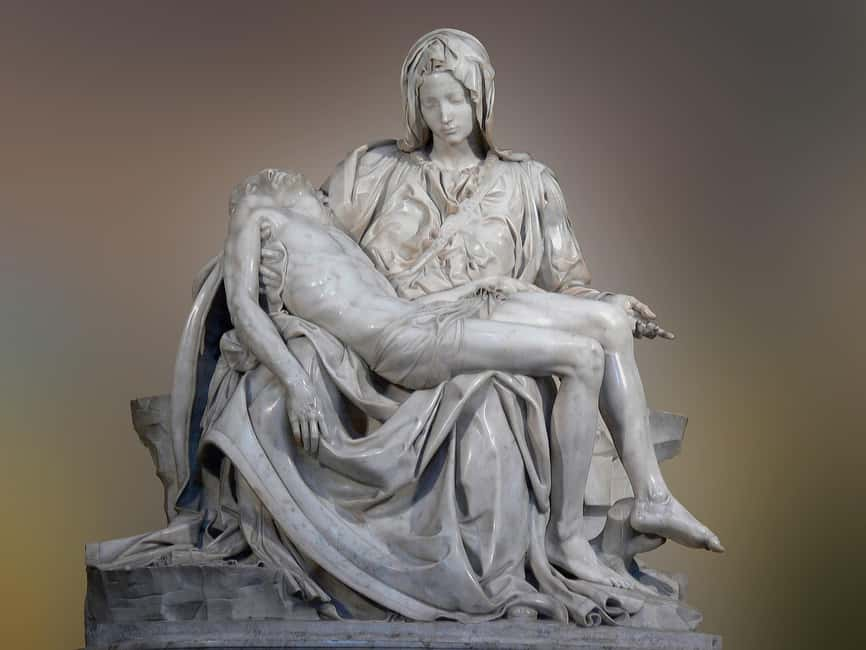
The Sistine Chapel is the emotional high point of the tour. This is where you see Michelangelo’s ceiling, including the Creation of Adam, along with other major frescoes.
The chapel is a place for looking up, but it is also a place where rules matter. You need to follow the instructions given by museum staff and your guide. The experience may feel crowded, and you should not expect the quiet of a small church.
The best preparation is to know what you want to see before you enter. Look for the overall ceiling design first, then focus on the Creation of Adam. Notice how Michelangelo arranged figures, gestures, and architectural sections to make the ceiling feel like a complete visual program rather than a collection of separate pictures.
The tour also promises an explanation of fresco painting. This adds real value. Fresco is made by applying pigment to wet plaster, so the artist has to work while the surface is still usable. Michelangelo’s ceiling becomes more impressive when you understand the physical demands of working overhead, planning sections in advance, and correcting mistakes before the plaster dries.
Do not expect to take photographs in the Sistine Chapel. The supplied information does not state a photography policy, so follow the instructions given inside rather than assuming cameras or phones are allowed.
Timing, comfort, and physical demands
Two and a half hours sounds manageable, but the Vatican route involves extensive walking and standing. You will move through large galleries, courtyards, and display rooms, then wait in the security line before or around the entrance process.
This tour is specifically not suitable for wheelchair users or people with mobility impairments. The information does not promise an accessible route, lifts, seating, or mobility assistance. If you need those services, do not assume this tour can provide them.
Wear sensible shoes and dress for museum rules. Shorts, short skirts, and sleeveless shirts are not allowed. Conservative clothing is the safest choice, and it avoids being turned away at the entrance.
There is no hotel pickup, transport, food, or drink included. You make your own way to Via Tunisi 43 and should bring water for before or after the visit, while following the museum’s rules about what can enter.
Language and guide quality matter most
The advertised language is English, with a live professionally licensed guide. That is a solid setup for a first visit, especially if you want context for the objects rather than a silent walk through crowded rooms.
The language issue deserves special attention. In one verified booking, Karl contacted the guest only three hours before the scheduled tour to suggest an English tour or a date change. The guest could not accept either option, and a Spanish guide was then arranged by text, but the actual tour included three English-speaking participants and was conducted in both languages.
The result was a poor experience for the Spanish-speaking couple because much of the guide’s attention went to the English group. The guide was described as not being at fault, but the arrangement still failed the guests.
If you need a language other than English, confirm the arrangement in writing and ask whether the whole group will use that language. If the operator cannot guarantee it, choose a tour with a clear language policy and a strong cancellation option.
Cancellation and booking flexibility
The stated policy allows free cancellation up to 24 hours before the activity for a full refund, and you can reserve now and pay later. Those terms are useful if your Rome schedule may change.
However, the information also warns that some tickets are non-refundable because they are purchased in advance, with no date changes. Read the conditions attached to your specific booking rather than relying only on the general cancellation wording.
This matters even more here because the tour has a fixed entry time and late arrivals may be refused. Keep your arrival plan simple, leave extra time for traffic or the Metro, and do not schedule a distant attraction immediately afterward.
Should you book the Vatican Museums and Sistine Chapel tour?
I would choose this tour if you want a fast, guided introduction to the Vatican’s major rooms and ancient sculpture, and if the English language suits you. The route includes more than the Sistine Chapel, which gives you a better sense of the Vatican collection than a short chapel-only visit.
At $88, the price is reasonable only if you value the guide and the convenience of a planned route. It is less attractive if you want a slow museum visit, need guaranteed multilingual service, or dislike moving with a group.
Before booking, confirm the tour language, check the cancellation terms for your date, arrive at Via Tunisi 43 at least 15 minutes early, and allow time for 20 to 25 minutes of security screening. With those expectations, this can be a useful first look at the Vatican. Without them, the language and timing risks may outweigh the convenience.
FAQ
How long is the Vatican Museums and Sistine Chapel tour?
The tour lasts 2.5 hours.
What does the tour cost?
The listed price is $88 per person.
What language is the tour conducted in?
The advertised language is English, with a live guide.
Where does the tour meet?
You meet at the operator’s office at Via Tunisi 43, Rome 00192.
How do I reach the meeting point by Metro?
Take Metro Line A toward Battistini, get off at Cipro, and walk about 300 meters to Via Tunisi 43.
Is hotel pickup included?
No. Hotel pickup and drop-off are not included, and you must arrange your own transportation to and from the tour.
Does the tour include the Sistine Chapel?
Yes. The route includes the Sistine Chapel and Michelangelo’s masterpieces, including the Creation of Adam.
Which Vatican areas are included?
The tour includes the Vatican Museums, Pinecone Courtyard, Pio-Clementino Museum, Belvedere Courtyard, Gallery of Candelabra, Gallery of Tapestries, Gallery of Maps, Raphael Rooms, and Sistine Chapel.
Is there skip-the-line access?
The tour uses a separate entrance, but security screening can still create a 20 to 25 minute wait.
What clothing is required?
Shorts, short skirts, and sleeveless shirts are not allowed. Weapons and sharp objects are also prohibited.
Can I cancel for a refund?
The stated policy allows cancellation up to 24 hours in advance for a full refund, but some pre-purchased tickets may be non-refundable. Check the conditions for your specific booking.
Just added around Rome
- Colosseum,Vatican Museum & Sistine Chapel in One Day Guided Tour★ 3.5 · 9 reviews
- Vatican Museums and Sistine Chapel last entry Guided Tour★ 5.0 · 3 reviews
- Private Tour Of Rome Highlights And Vatican Museums Skip-The-Line all included★ 5.0 · 4 reviews
- Borghese Gallery Admission Ticket with Audioguide★ 4.0 · 64 reviews
- Caravaggio Art Walking Tour of Rome with Pantheon Visit★ 4.5 · 35 reviews
- Borghese Gallery Skip the Line Guided Tour★ 4.5 · 23 reviews
- Borghese Gallery Ticket with Audioguide★ 3.5 · 51 reviews
- Borghese Gallery VIP Tour – Skip the Line Tickets★ 5.0 · 2 reviews
Art Museum Tours in Rome, compared.
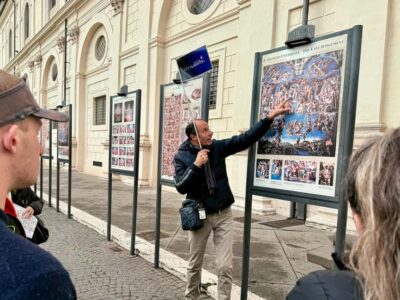
Vatican Museums, Sistine Chapel & St. Peter’s Basilica Tour
Read our review →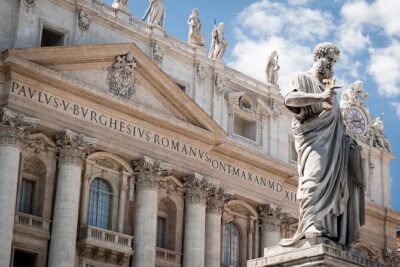
Vatican Museums, Sistine Chapel & St Peter’s Basilica Guided Tour
Read our review →
Vatican Museums, Sistine Chapel and Basilica Tour
Read our review →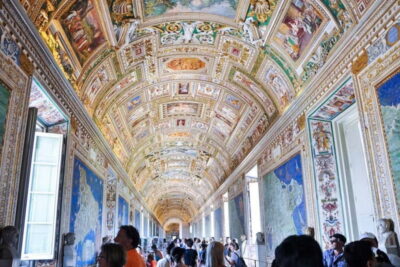
Vatican Museums & Sistine Chapel Skip-the-Line Entry Ticket
Read our review →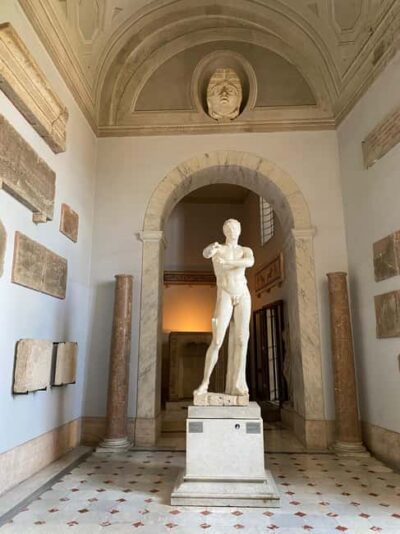
Vatican Museums, Sistine Chapel & Basilica Tour
Read our review →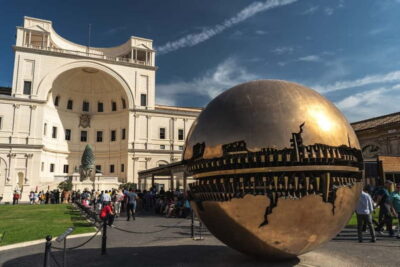
Vatican Museums & Sistine Chapel Guided Tour
Read our review →
Vatican Museums & Sistine Chapel Skip-the-Ticket-Line Tour
Read our review →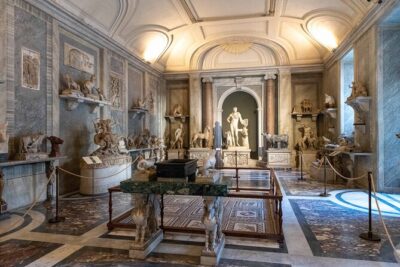
Vatican Museums, Sistine Chapel and St. Peter’s Basilica Tour
Read our review →Browse the lists this tour appears in