
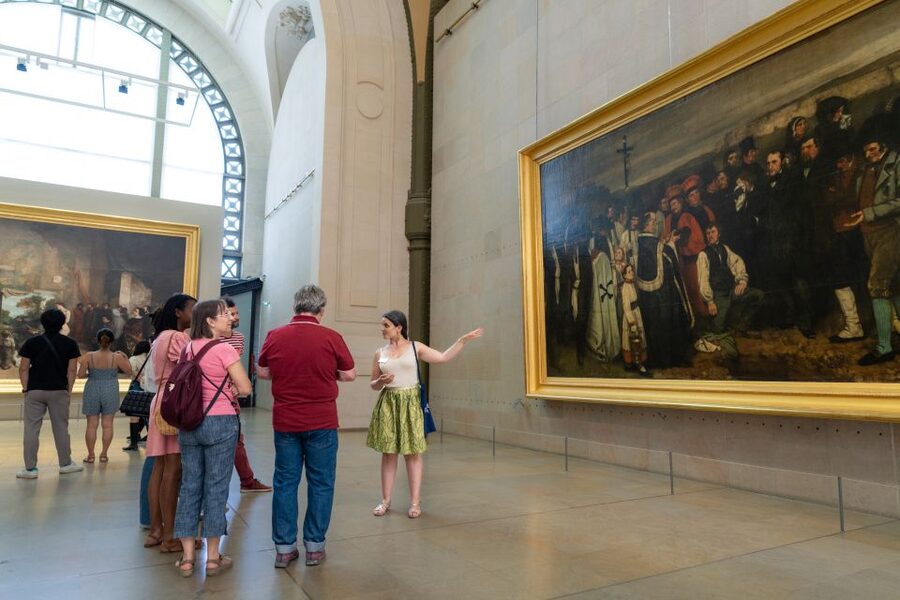
REVIEW · PARIS
Musée d’Orsay Skip-the-Line Tour with Expert Guide
The most interesting thing about this Musée d’Orsay tour is the way it connects paintings to the arguments that first surrounded them. You are not simply led from one famous canvas to another. Your guide explains why loose brushwork, bright colors, and scenes of ordinary life once seemed shocking. The museum’s former railway station setting gives the visit extra character, too.
I like the dedicated entrance, which saves you from joining the general ticket line, and I like the way the tour covers both famous works and less familiar pieces. Guides such as Anthony, Avi, Sarah, and Perrine have been praised for clear storytelling and strong command of art history. The main drawback is time: a 90 to 105 minute visit can feel rushed in a museum this large, especially when crowds gather around the best-known paintings.
Key points to know
- Former railway station setting: You explore a Beaux-Arts building created for the 1900 World’s Fair.
- Strong Impressionist focus: Expect context on Monet, Manet, Renoir, Degas, Van Gogh, and the artists who shaped them.
- Dedicated museum entrance: Your guide meets you outside, and you should not join the regular museum lines.
- Guide-led storytelling: The strongest part of the tour is the explanation of artistic ideas, social scandals, and personal connections.
- Stay after the tour: Once the guided portion ends, you may remain in the museum and continue at your own pace.
- Crowds can affect the pace: Headsets help, but busy galleries may limit how long you can stand before each painting.
Why the Musée d’Orsay makes such a good guided visit
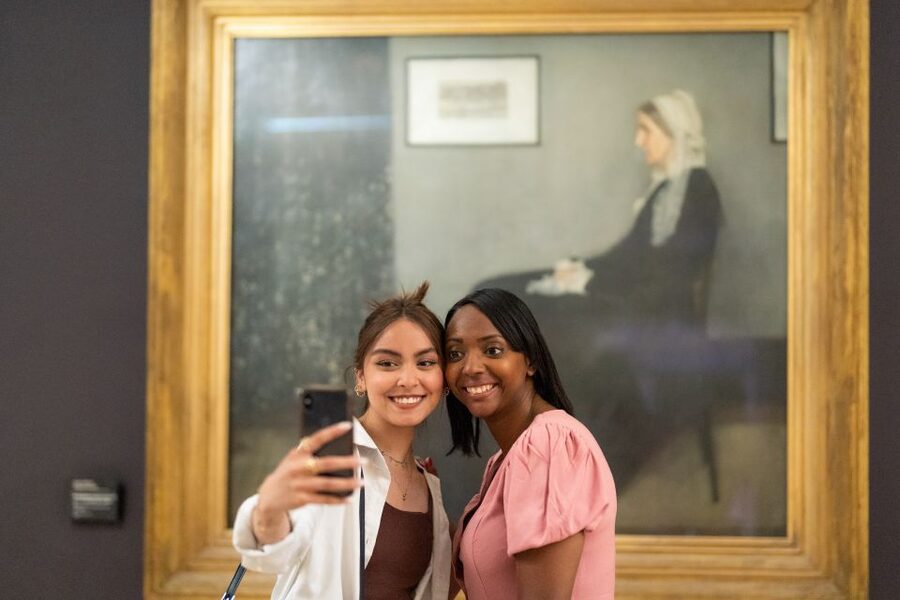
Paris has grander museums, but the Musée d’Orsay is often easier to enjoy. Its collection focuses on a more contained period, mainly the middle and late 19th century into the early 20th century. That gives your visit a clear story: artists move away from old academic rules and begin painting modern life in new ways.
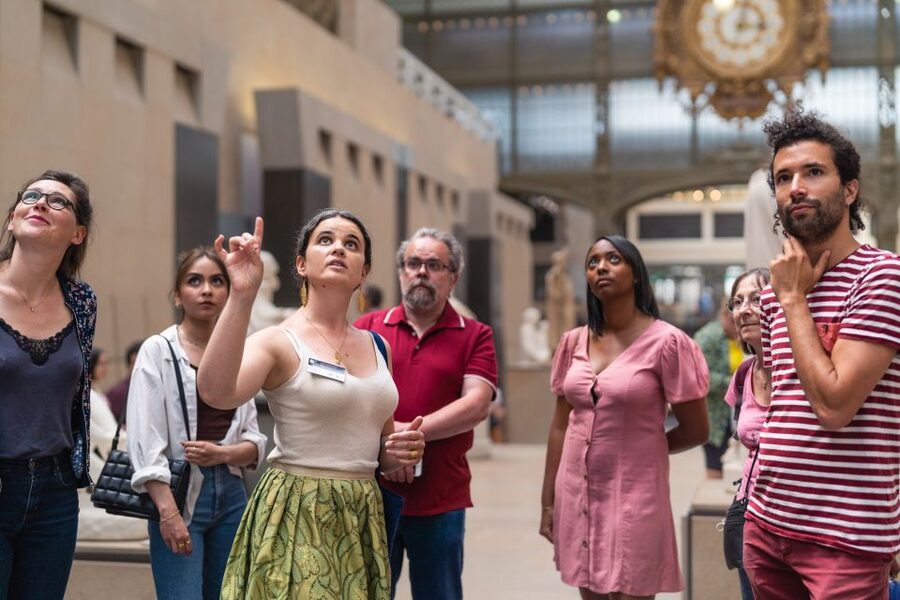
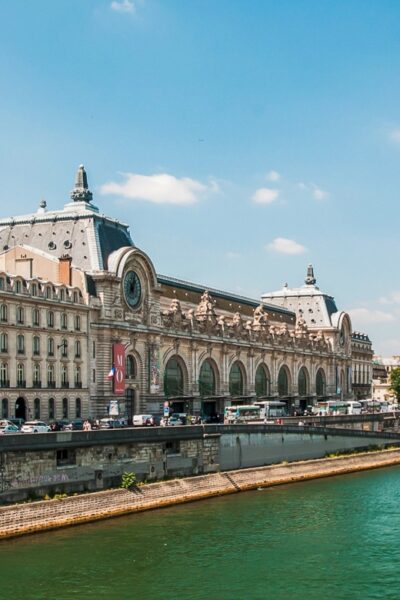
The building helps. The museum occupies a former railway station, with a huge central hall, a great clock, and long views through the old structure. You feel the building’s original purpose as you move through it. This is not just a neutral box for paintings, and the setting makes the visit memorable even before your guide begins explaining the art.
I find the Orsay especially useful for first-time museum visitors. You can see the works of artists whose names you already know, but the guide supplies the missing links. Why did Impressionism cause such anger? Why did artists paint cafés, dancers, city streets, gardens, and ordinary people instead of only noble subjects? How did one artist influence another? Those questions turn a parade of famous images into a connected story.
More Art Museum Tours in Paris
- Paris: Louvre Museum Timed-Entrance Ticket
★ 4.6 · 71,977 reviews - Paris: Orsay Museum Entry Ticket
★ 4.7 · 25,647 reviews - Paris: Louvre Guided Tour with Reserved Access & Boat Cruise
★ 4.3 · 16,353 reviews
Meeting your guide beside the Legion of Honour Museum
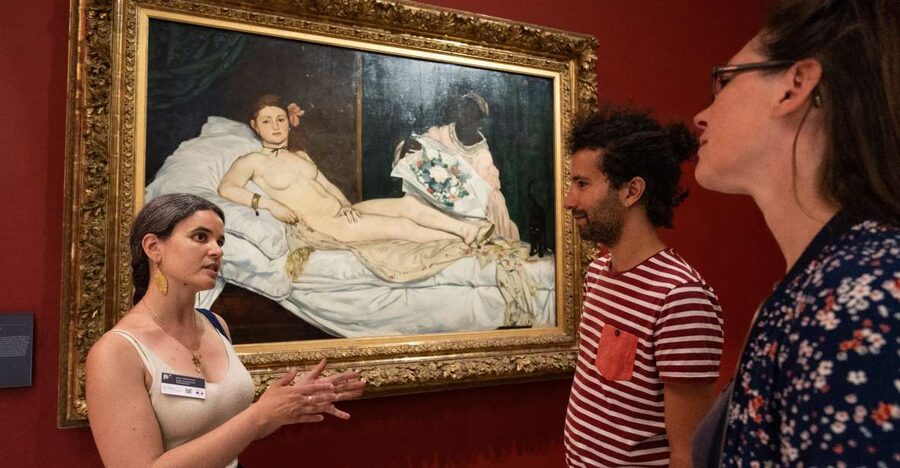
Your meeting point is opposite the main entrance to the Musée d’Orsay, next to the entrance of the Legion of Honour Museum. Look for the guide wearing a guide badge on an orange lanyard. Do not get into the museum lines before you find the guide.
The easiest public transport options listed are the RER Musée d’Orsay on Line C and Solferino Metro on Line 12. Give yourself enough time to find the meeting point. The tour cannot wait for people who miss the departure, and missed tours are not refundable.
The dedicated entrance is useful, but it does not mean you can bring anything you like. Large bags and luggage are not allowed. If you are moving between hotels with full-size luggage, this is a poor time to schedule the tour.
Entering a railway station turned art museum
The first few minutes help you understand why this place feels different from many Paris museums. The old station was built for the World’s Fair, and its Beaux-Arts design was meant to impress people arriving in the capital. Today, the enormous clock and curved roof frame rooms filled with paintings and sculpture.
Your guide will usually begin with the building and the period it represents. That matters because the art inside is tied to a city changing fast. Modern streets, new leisure habits, cafés, theaters, rail travel, and shifting social rules all appear in the art.
The museum’s scale can surprise you. It is smaller than the Louvre, but it still holds far more than you can properly study in one short visit. A guided route helps you avoid spending half your time wondering where to go next.
How the Impressionist story unfolds
The main theme is the break with tradition. Academic art favored polished surfaces, formal subjects, and established rules about what deserved to be painted. The artists associated with Impressionism pushed toward quick effects of light, visible brushstrokes, strong color, and scenes from everyday life.
Your guide explains that these choices were not always admired. Paintings that now seem peaceful or familiar could once look unfinished or improper. The subject itself mattered. A modern boulevard, a dance hall, a laundress, a train station, or a casual moment outdoors did not carry the same prestige as a historical or mythological scene.
This context is where the $82 price earns its keep. You could enter a museum and recognize a Monet or Van Gogh on your own. It is harder to understand why the work mattered, what it challenged, or how it fits into the larger movement without help.
The tour also uses the personal lives of the artists to make the paintings easier to read. Guides have discussed relationships among artists, social behavior, humor, irony, and the private circumstances that shaped the work. This should not replace looking closely at the painting, but it gives you useful clues about mood and intent.
More Orsay tours and tickets:
- Paris: Orsay Museum Entry Ticket and Digital Audio Guide App
★ 4.4 · 3,170 reviews - Paris in a Day: Louvre or Orsay, Eiffel Tower, City Walk & Cruise
★ 5.0 · 1,956 reviews - Paris: Musée d’Orsay Skip-the-Line Tour with Expert Guide
★ 4.5 · 1,145 reviews - The Musée d’Orsay Guided Tour Orsay Museum Semi-Private 6ppl Max
★ 5.0 · 904 reviews
Monet, Manet, Renoir, Degas, and Van Gogh
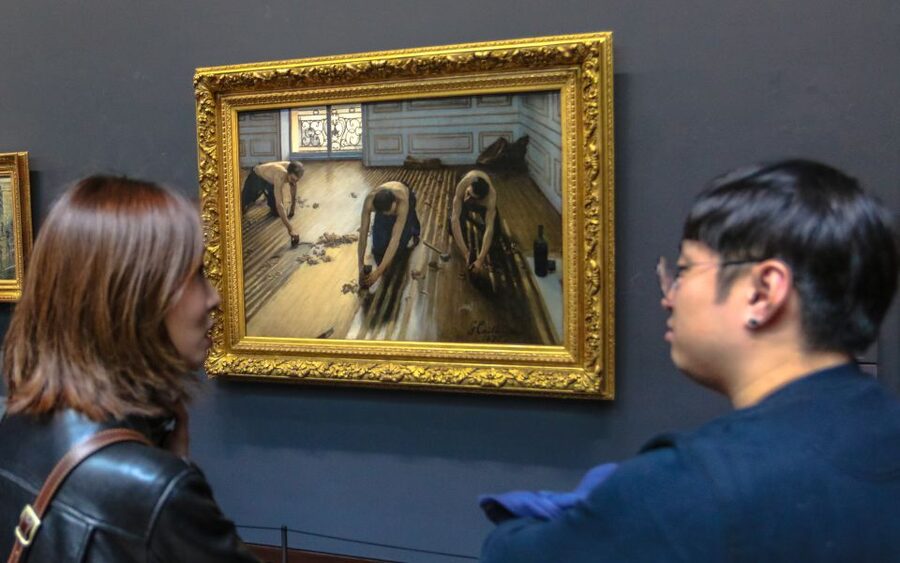
You can expect the route to include major works associated with Monet, Manet, Renoir, Degas, and Van Gogh. The exact order depends on the guide, the crowd, and gallery access at the time of your visit.
Monet helps explain changing light and the idea that a painting can record a fleeting visual impression rather than every detail. Manet is important for the move toward modern subjects and a more direct style. Renoir brings social life, people, and pleasure into the story.
Degas gives the guide a chance to discuss movement, performance, unusual viewpoints, and the working process behind a finished image. Van Gogh often becomes a highlight for visitors, and one guide adjusted the route for a family whose seven-year-old daughter particularly wanted to see his work. That example also shows the value of a live guide: the route can sometimes respond to the group.
You should not expect to study every artist in depth. The tour is designed as an overview of the museum’s key works. If you want a long, quiet session with one painter, you will need to use the free time after the tour.
Crowds, headsets, and the pace inside
The Musée d’Orsay can be extremely crowded, especially around its best-known paintings. A good guide makes a practical difference by steering the group toward better viewing positions and keeping everyone together.
Headsets are provided when appropriate. They are particularly helpful in a busy gallery, and they make the experience easier for older visitors or anyone who struggles to hear in a crowd. You can keep your eyes on the painting instead of standing shoulder to shoulder with the guide.
The pace is the trade-off. Some people find 90 minutes ideal because it gives them a clear overview without turning the museum into an all-day assignment. Others find the tour rushed, with the guide walking quickly between rooms or speaking too fast.
I would choose this tour if you want structure and context. I would not choose it as your only museum time if you plan to read every label, sketch, or spend 20 minutes with each painting. Plan to stay afterward for that slower second look.
What the strongest guides add
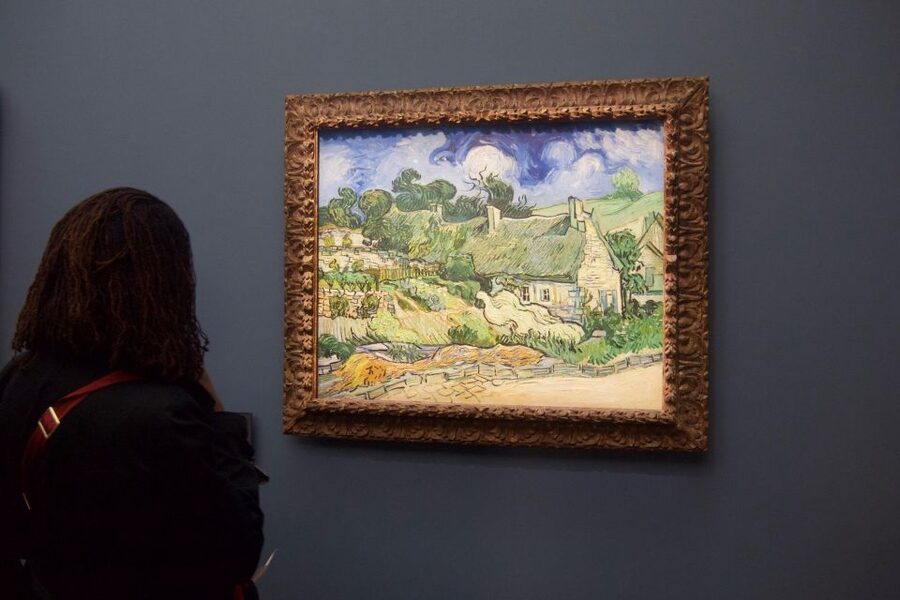
The guide makes or breaks a museum tour. The experience is offered in English, and the most praised guides have included Anthony, Avi, Sarah, Perrine, Simone, Sophia, Matilde, Fanny, Sara, Pauline, and Marjolein.
Anthony has been singled out for enthusiasm, patience, humor, and the ability to remember people’s names. Avi has been praised for making art history personal and entertaining. Sarah has been especially effective with families, adjusting the route for a child interested in Van Gogh and keeping the younger visitor engaged.
Perrine and Marjolein have been noted for detailed explanations, while Sophia has handled groups ranging from teenagers to people in their seventies with clear, easy-to-follow presentations. These examples do not guarantee which guide you will receive, but they show the kind of service the tour aims for.
The best guides do more than recite dates. They explain how a painting works, point out brushwork or composition, and connect the image to its social setting. They also leave room for questions. If your group is small, you may get more time for personal interests, though the route still has to fit the museum schedule.
The value of $82 per person
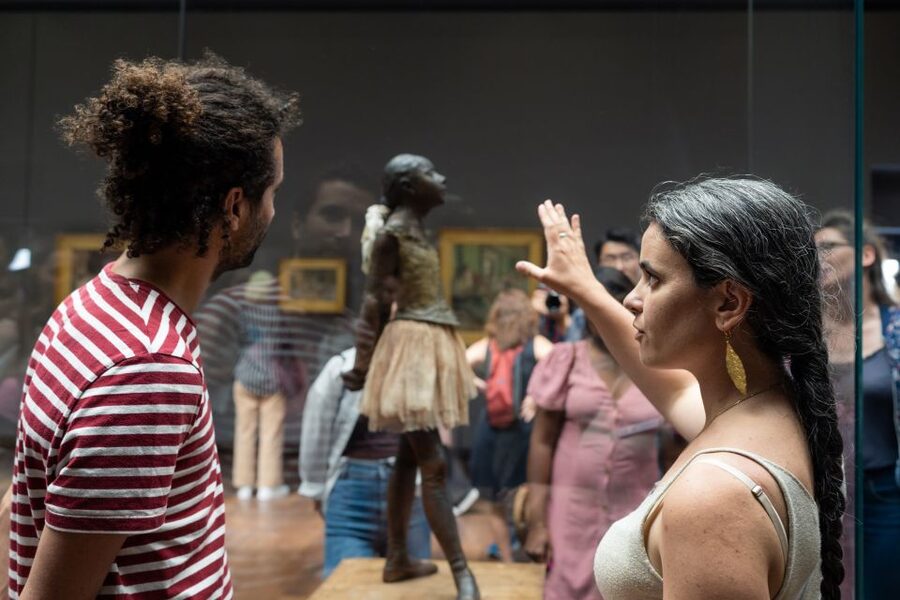
At $82 per person, this is not the cheapest way to enter the Musée d’Orsay. You are paying for more than admission. The price includes entrance fees, a dedicated entry route, an accredited local guide, headsets when needed, and a guided visit listed at about 1 hour 45 minutes.
The price makes the most sense if you are short on time, unfamiliar with Impressionist art, or visiting during a busy period. The guide can get you to the important rooms and explain what you are seeing without requiring hours of preparation.
It is less appealing if you already know the collection well or prefer to set your own route. The museum allows you to stay after the guided portion, which improves the value. You can treat the tour as an introduction, then revisit the rooms that caught your attention.
The booking terms also help with uncertain plans. You can cancel up to 24 hours before departure for a full refund, and the reserve-now, pay-later option lets you hold a place without paying immediately. These policies do not cover a missed tour, so punctuality still matters.
Staying after the guided route
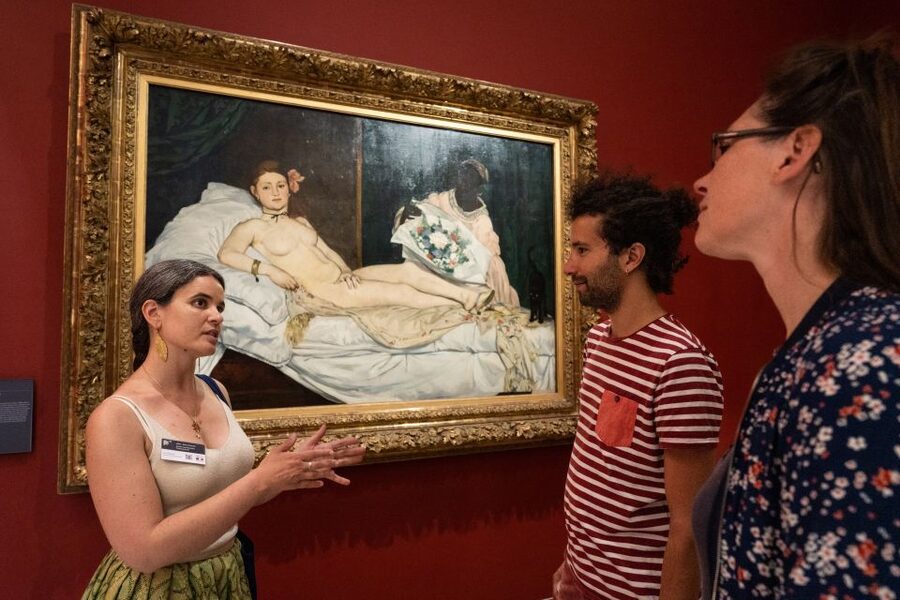
One of the best features is the freedom to remain inside after the tour. You do not have to leave when the guide finishes. Use the rest of your visit to return to a favorite painting, look for artists not covered in detail, or visit a temporary exhibition if one is available.
I recommend setting aside at least some extra time if you can. The guided route gives you the framework, but the quiet reward comes afterward, when you no longer need to keep pace with a group.
You may also discover that the route moves past works you would like to see. Make a mental note of them and return once the guide has completed the main circuit. That is a better plan than trying to stop the group every few minutes.
Who should book this Musée d’Orsay tour
This tour suits first-time visitors who want to see the main collection without feeling lost. It also works well for families, couples, and mixed-age groups because the guide can explain the art in plain language and add stories that keep the visit moving.
You will get the most from it if you are curious about why Impressionism mattered, not just interested in taking photos of famous paintings. The personal stories, artistic arguments, and social context add real value.
Art specialists may find the overview too quick. Visitors using wheelchairs should also note that the activity is not listed as suitable for wheelchair users. Large luggage and bags are not allowed, so plan around that restriction before you arrive.
My practical verdict
I would book this tour if you want a focused introduction to the Musée d’Orsay and do not want to spend your first hour working out the museum’s layout. The dedicated entrance, clear route, headsets, and strong guide performances make the visit easier, especially when the galleries are packed.
I would leave extra time afterward, since the guided portion cannot cover the whole museum in detail. For $82, the tour is best viewed as a guided starting point, not a complete substitute for exploring the Orsay on your own.
If you value stories, context, and a confident route through the Impressionist collection, book it. If you prefer silence and long stretches before one painting, buy entry and explore independently instead.
FAQ
How long does the Musée d’Orsay tour last?
The activity lists a duration of 90 to 150 minutes, with the guided portion described as 1 hour 45 minutes. The exact timing depends on the departure selected.
What language is the tour conducted in?
The live guided tour is conducted in English.
What artists and art movements does the tour cover?
The tour focuses on the rise of Impressionism and includes artists such as Monet, Manet, Renoir, Degas, and Van Gogh. It also explains the artists and ideas that influenced the movement.
Where is the meeting point?
Meet opposite the main entrance to the Musée d’Orsay, next to the entrance of the Legion of Honour Museum. Your guide wears a guide badge on an orange lanyard.
Should I join the museum line before meeting the guide?
No. Go directly to the meeting point and do not get into the regular museum lines.
How do I reach the meeting point by public transport?
The nearest listed stations are Musée d’Orsay RER Station on Line C and Solferino Metro Station on Line 12.
Can I stay inside the museum after the guided tour?
Yes. You may remain in the museum after the tour and continue exploring at your own pace.
Are headsets provided?
Headsets are provided when appropriate, helping you hear the guide in crowded galleries.
Can I cancel the tour?
You can cancel up to 24 hours before departure for a full refund. Missed tours are not refundable.
More Skip-the-Line Tickets in Paris
- Louvre Museum: Skip-the-Line Small Group Guided Tour
★ 4.6 · 4,268 reviews - Paris: Skip-the-Line Louvre Museum & Mona Lisa Guided Tour
★ 4.6 · 1,442 reviews - Paris: Skip-the-Line Louvre Highlights Tour with Mona Lisa
★ 4.6 · 1,132 reviews - Louvre Museum Skip the Line Entry with Introduction to Mona Lisa
★ 3.0 · 576 reviews
Just added around Paris
- Paris Day Tour with Eiffel Tower, Louvre and Cruise Max 6 People★ 4.5 · 29 reviews
- PRIVATE Louvre Wonders & Hidden Treasures Visit★ 5.0 · 65 reviews
- d’Orsay Museum Paris entry ticket★ 3.5 · 31 reviews
- visiting the masterpieces of impressionists at Orsay museum★ 5.0 · 7 reviews
- Louvre Museum with private guide★ 5.0 · 3 reviews
- Louvre Wheelchair-Accessible Private Tour – Stress-Free & Easy★ 5.0 · 16 reviews
- LOUVRE, Small Group Guided Tour in French (TOP SALES)★ 4.5 · 9 reviews
- Musée d’Orsay Highlights Tour with Gourmet Lunch★ 4.5 · 11 reviews
Art Museum Tours in Paris, compared.

Louvre Guided Tour with Reserved Access & Boat Cruise
Read our review →
Louvre Overview, Exploration tour and Reserved Entry
Read our review →
Louvre Museum Entry Ticket With Host and River Cruise
Read our review →
Mona Lisa & Louvre Masterpieces Tour with Reserved Access
Read our review →
Louvre Museum – Exclusive Guided Tour (Entry Included)
Read our review →
Louvre Museum Hosted Entry and Mona Lisa Audioguide
Read our review →Browse the lists this tour appears in