
REVIEW · FLORENCE
Florence:Accademia + David Entrance Ticket +Agudio Guide APP
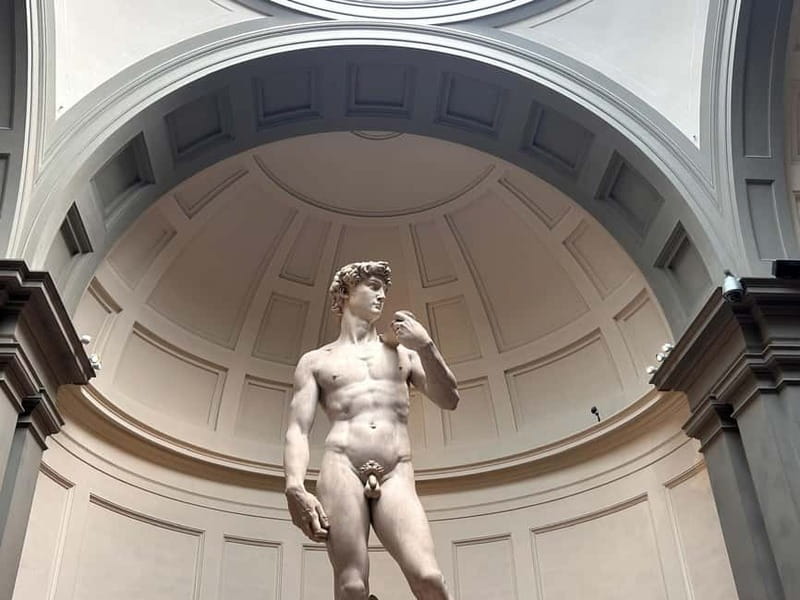
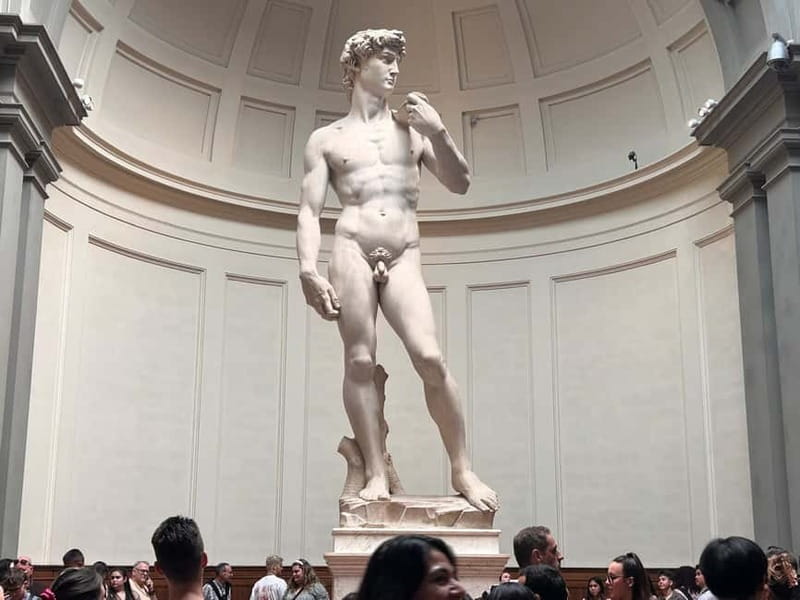
Michelangelo’s David is the reason most people come to Florence’s Accademia, and rightly so. The statue’s scale, detail, and calm intensity are best appreciated in person, not through a postcard or phone screen. This ticket gives you reserved entry and a separate entrance, so you spend less time at the ticket office and more time with the art.
I like the freedom to explore without being tied to a live guide, and I like that the visit includes more than David. The plaster models, medieval altarpieces, and Medici musical instruments, including three Stradivarius pieces, give the museum surprising range. The main drawback is the audio app. It must be downloaded before arrival, and weak internet inside the area can make access frustrating.
Key points to know before you book
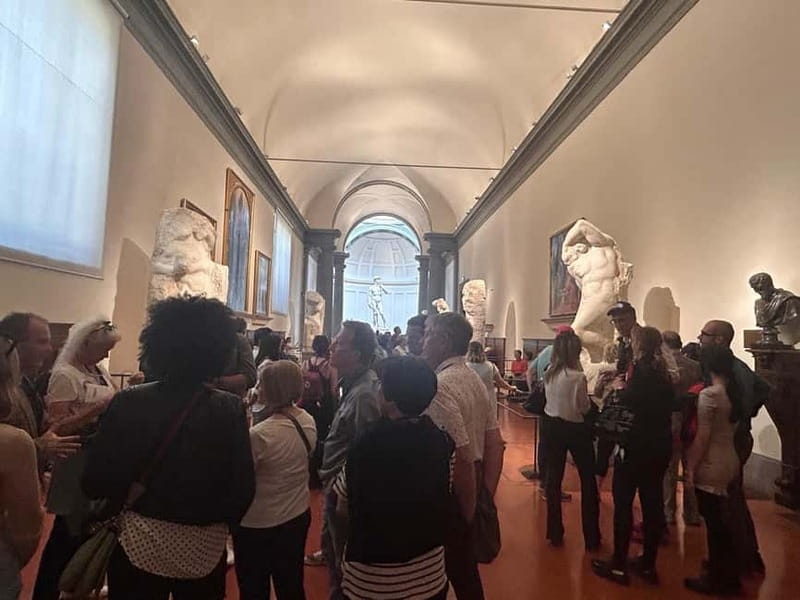
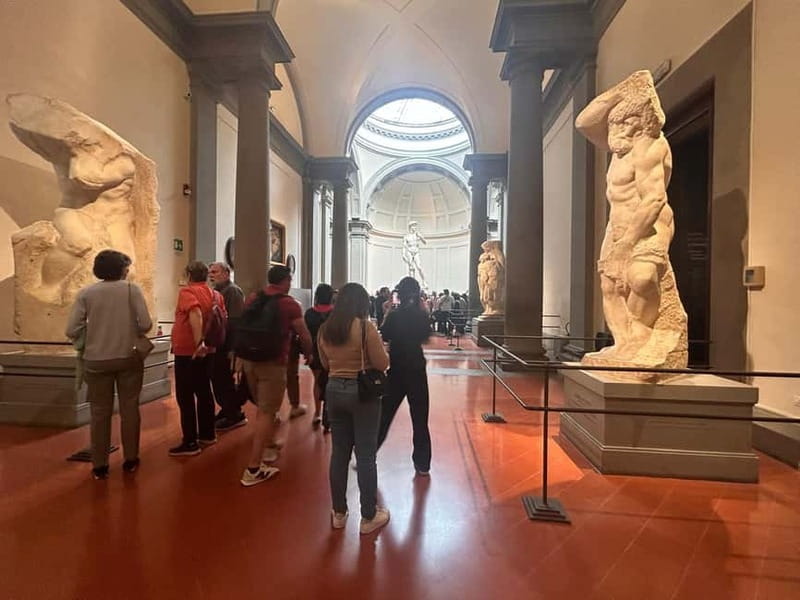
- David is the star: See Michelangelo’s famous sculpture along with several unfinished works in the main hall.
- The entry saves time: Meet an English-speaking host, exchange your voucher for a physical ticket, and use the separate entrance.
- The app replaces a live guide: The POP GUIDE app provides commentary, but no guide accompanies you through the galleries.
- There is more than Renaissance sculpture: Visit the Gipsoteca, medieval painting rooms, and the Medici instrument collection.
- Prepare your phone first: Download the app before meeting the host, bring headphones, and make sure you have internet access.
- Allow for delays: Security controls and crowd limits can postpone entry by 15 or 20 minutes, and late arrival can mean losing admission.
Why David deserves your full attention
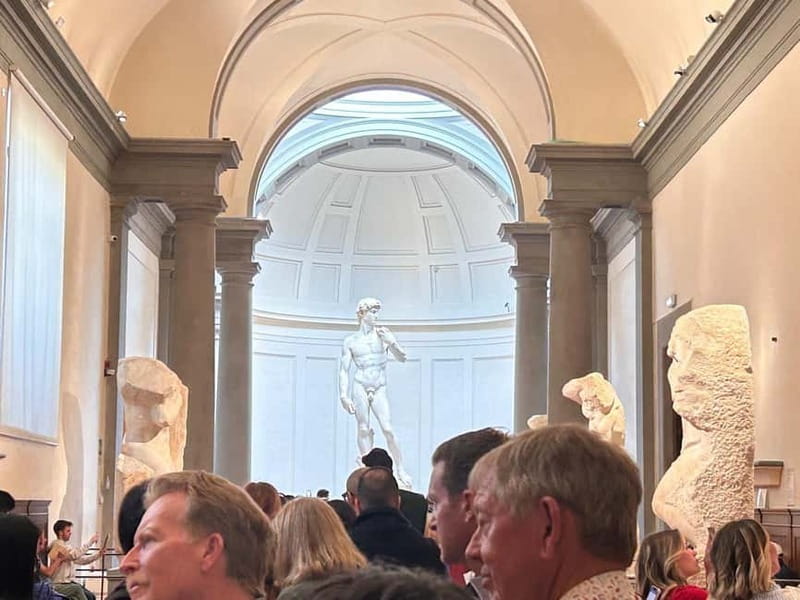
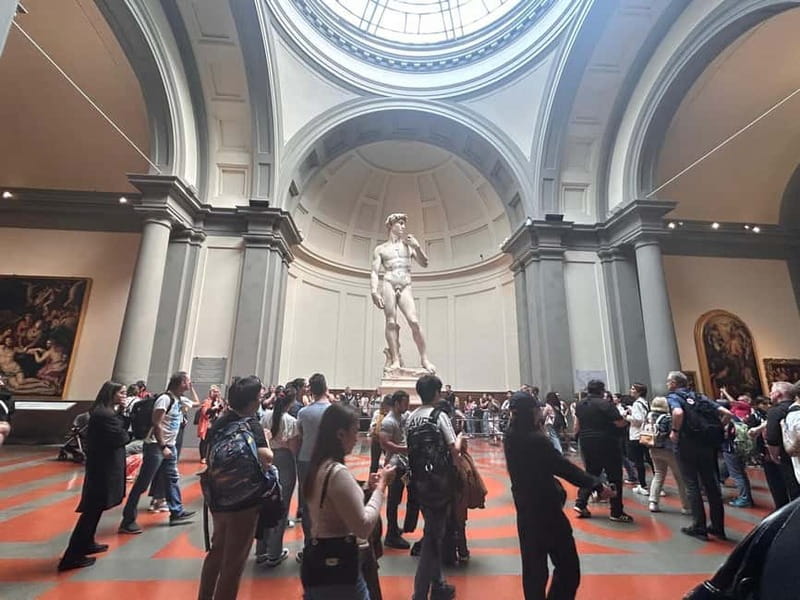
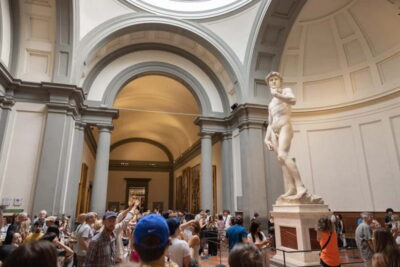
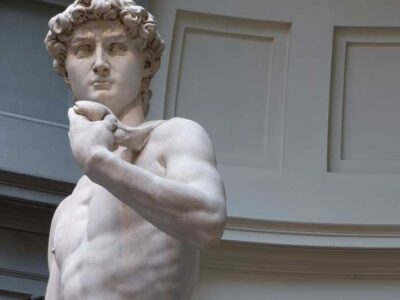
The Accademia’s main hall is built around Michelangelo’s David, one of the most recognizable sculptures in the world. You have likely seen the image many times, but the real work gives you details that photographs flatten: the tension in the hands, the alert expression, and the sense of movement held just before action.
Michelangelo carved David from marble in the early 1500s. The figure represents the biblical hero before his fight with Goliath, but the sculpture also became a symbol of Florence’s independence and confidence. You do not need an art degree to appreciate it. Take a few minutes to look from different angles and notice how the proportions and pose change as you move around the room.
The nearby unfinished works are just as useful for understanding Michelangelo. Their rough, partly carved surfaces show figures appearing to push out of the marble. These works reveal the physical process of carving in a way a polished statue cannot. If you are interested in how sculpture is made, do not rush past them on the way to David.
The museum can become crowded, especially around the famous statue. Your reserved ticket helps with entry, but it does not guarantee an empty gallery. The Accademia controls access according to the number of people already inside, so you may still wait 15 or 20 minutes after arriving.
More Art Museum Tours in Florence
- Florence: Skip-The-Line Uffizi Gallery Timed Entry Ticket
★ 4.5 · 27,832 reviews - Florence: Uffizi Priority Ticket & Masterpieces Audio App
★ 4.2 · 6,402 reviews - Florence Accademia Gallery Tour with Entrance Ticket Included
★ 4.5 · 6,148 reviews
Meeting the host near Carrefour Express
The practical part begins outside the museum. Meet the host in front of the Carrefour Express supermarket and look for a staff member holding a white flag marked Enjoy Rome. You exchange your voucher for a physical entry ticket there.
This meeting point matters because the ticket is not simply a code you scan at the museum door. Plan enough time to find the supermarket, identify the host, and complete the exchange. The English-speaking host helps with this handoff, but the host is not a live art guide.
You need to arrive on time. Late arrivals are not guaranteed entry, and no refund is provided if you miss your admission. This is one of those Florence bookings where a few extra minutes can protect an expensive museum visit.
The separate entrance is the main practical benefit of the arrangement. It helps you avoid the standard ticket office line, though it does not remove security checks or crowd controls. The experience is best understood as a reserved admission service with app commentary, not a guided tour.
Using the POP GUIDE audio app
The audio guide is delivered through the POP GUIDE app. Download it from the App Store or Google Play before you reach the meeting point. The host provides your login details when you exchange the voucher.
Do not wait until you are standing outside the Accademia. You need your phone, internet access, and headphones ready. The app setup is a small task, but it can become a real nuisance if your connection is weak or your phone battery is low.
Bring your own headset. Shared or built-in phone audio is awkward in a museum, and headphones make it easier to hear the commentary without disturbing anyone around you. One useful precaution is to open the app before leaving your hotel and confirm that it loads properly.
The app gives you control over the pace. You can pause, replay, or skip sections while moving between rooms. That suits independent visitors who want to spend extra time with David or move quickly through paintings that do not interest them.
The tradeoff is support. There is no live guide to answer questions, explain an unexpected detail, or help when the app fails. One practical solution is to buy the museum’s own audio guide if the app connection is poor, but that means paying extra and losing some of the value of this package.
The Gipsoteca and its plaster figures
After the main sculpture rooms, make time for the Gipsoteca, also called the Hall of Models. It contains original plaster models by 19th-century Florentine sculptors, including works associated with Bartolini and Pampaloni.
Plaster models often get less attention than marble statues, but they explain how sculptors planned large finished works. You can see the working stage before a final version was transferred into marble or another material. This room adds a practical side to the museum and gives you a break from the single-minded focus on Michelangelo.
The atmosphere and subject matter differ from the David gallery. Instead of one famous masterpiece demanding your attention, you encounter a collection of studies and models. The audio guide can be especially useful here because the significance may not be obvious at first glance.
If your main aim is a quick photograph of David, you might be tempted to skip the Gipsoteca. I would not. It is one of the museum’s better chances to see how Florentine sculpture developed after Michelangelo.
More ways to see the David:
- Florence: Accademia Gallery Guided Tour
★ 4.6 · 4,156 reviews - Uffizi & Accademia Timed Entry: Small Group Duomo Walking Tour
★ 4.5 · 3,630 reviews - Florence: Accademia Gallery Skip-the-Line Guided Tour
★ 4.8 · 3,044 reviews - Florence: Art Tour, Accademia Gallery and David
★ 4.5 · 2,407 reviews
Medici instruments and three Stradivarius pieces
The Accademia also holds musical instruments from the Medici collection, dating from the late 17th century to the early 19th century. The collection includes three instruments by Stradivarius.
This section changes the rhythm of the visit. After sculpture and painting, you see objects connected with music and court life. The instruments remind you that Florence’s artistic world was not limited to churches, palaces, and marble figures.
The Stradivarius connection will interest music lovers, but you do not need to be an expert to appreciate the display. The value lies in seeing original instruments within the same museum as major works of art. If you are visiting with children or someone who is growing tired of paintings, this can offer a welcome change.
The collection is not the main reason to buy the ticket, but it strengthens the visit. The Accademia is more varied than its reputation as the place that houses David suggests.
Medieval paintings and Renaissance galleries
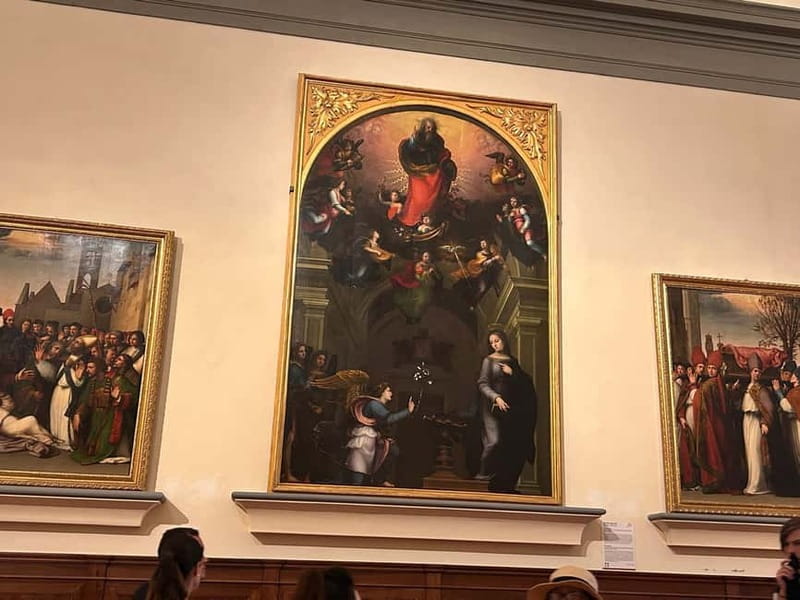
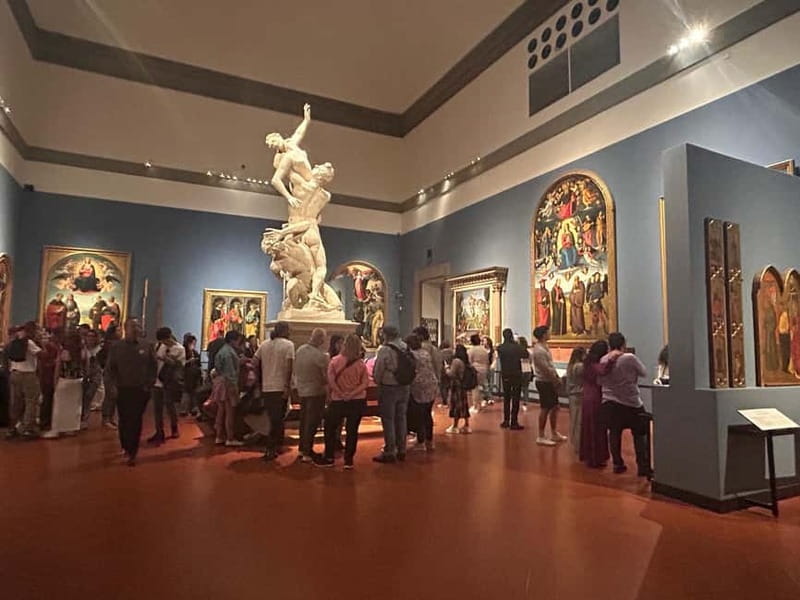
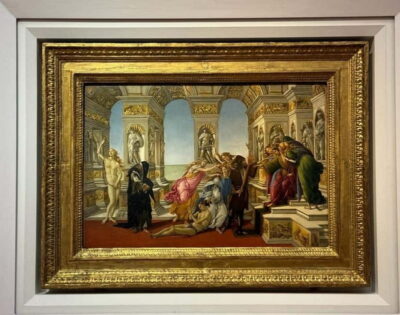
The painting galleries bring you into Florence’s medieval and Renaissance art. You can expect works by artists from the periods that shaped the city’s visual identity, with religious subjects and formal compositions common to the era.
These rooms help place Michelangelo in context. His work did not appear in isolation. It followed generations of Florentine artists who developed techniques in painting, sculpture, and religious art. The contrast between earlier two-dimensional images and Michelangelo’s powerful three-dimensional figures makes the progression easier to understand.
The audio app can help here because names, dates, and religious subjects may blend together when you are moving quickly. Use the freedom of a self-guided visit to choose a few paintings for closer attention instead of trying to absorb every room.
The museum is not enormous, but you should still allow enough time to see the secondary galleries. A rushed visit focused only on David misses much of what the ticket includes. The stated duration is one day, but that refers to the validity or booking period rather than a full-day guided program. Your actual museum visit follows the admission time and the time you choose to spend inside.
The top floor and medieval altarpieces
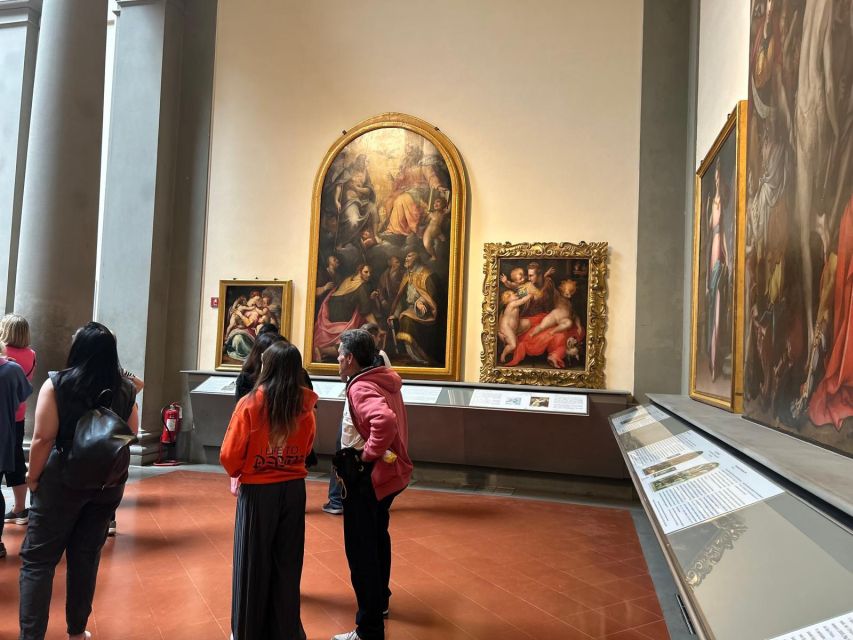
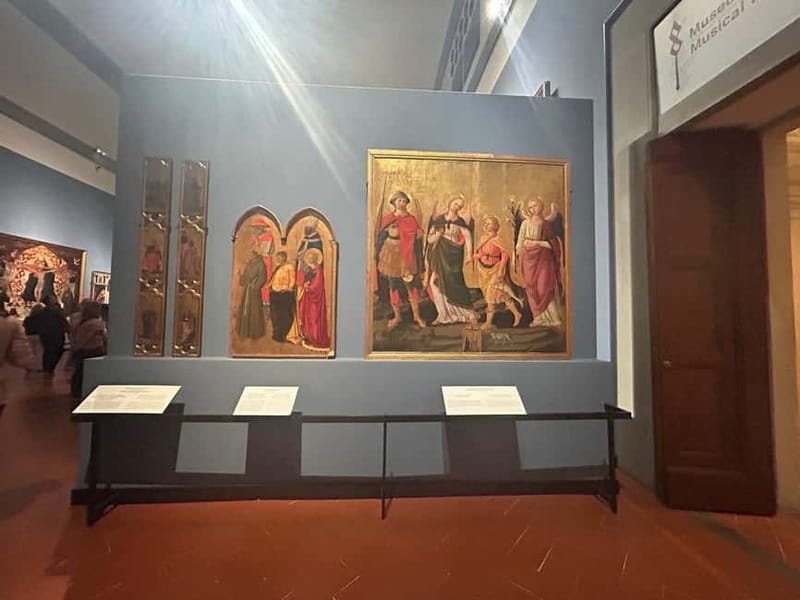
Finish upstairs with the medieval altarpieces. These works can be easy to overlook because David receives so much attention, yet they offer a different view of Florentine religious art.
Look for the details that reward patience: the arrangement of figures, painted panels, decorative framing, and the formal presentation of sacred scenes. The top floor gives the visit a quieter final chapter after the crowds gathered around Michelangelo’s sculpture.
This is a good place to use the app selectively. You may want detailed explanations for a few works, then continue at your own speed. A live guide would provide a clear route, but the app lets you decide how much information you want.
What $38 means in practical value
At $38 per person, this is not the cheapest way to see the Accademia. You are paying for reserved admission, the separate entrance arrangement, a host to exchange the voucher, and app-based commentary.
The value depends on your priorities. If you want a simple way to secure access to David and dislike wasting time at ticket offices, the price can make sense. Florence’s most famous museums often require planning, and the reserved entry removes one major uncertainty.
The value is weaker if you mainly want a low-cost ticket or if you expect a personal guide. There is no live guide, and the app may not work smoothly without a strong connection. You also need to handle the download and login steps yourself.
One benefit is flexibility. You can move slowly through Michelangelo’s sculptures, skip sections that do not hold your attention, and return to a favorite work without following a group. For independent visitors, that freedom may be worth more than a cheaper basic admission ticket.
Timing, bags, identification, and accessibility
Bring a passport or photo ID for children aged 6 to 17. The ID must show the child’s birth date. Adults should also carry identification in case it is requested.
Large bags and luggage are not allowed. The information also says bags are not permitted, so pack lightly and avoid arriving with shopping bags or bulky day luggage. Pets are not allowed.
The details about accessibility need careful attention. The activity information says the entry is wheelchair accessible, but the separate suitability notice says it is not suitable for wheelchair users. Because those statements conflict, contact the provider before booking if you use a wheelchair or need step-free access.
Crowds can also affect the starting time. The museum may delay entry by 15 or 20 minutes while controlling the number of people inside. Extended waits are possible because of gallery organization, even with reserved admission.
Free cancellation is available up to 24 hours before the scheduled experience, and you can reserve now and pay later. Those options are useful if your Florence plans are still changing, but they do not protect you from missing the meeting time.
Who should book this Accademia visit
I would choose this experience if you want to see David without arranging a full private tour. It suits first-time visitors who value a reserved entrance and prefer to explore at their own pace.
It also works well for art lovers who want more than the famous statue. The unfinished Michelangelo works, Gipsoteca, instruments, medieval paintings, and altarpieces create a fuller museum visit than a quick stop in the main hall.
Families may appreciate the freedom to move at different speeds, but adults should manage the app, headphones, and meeting point. If your children are aged 6 to 17, remember the photo ID requirement.
I would think twice if you want a detailed conversation with an expert. The host handles the ticket exchange, while the app provides the commentary. If technology causes you stress, or if your internet access is unreliable, a museum audio guide or live tour may be a better fit.
Should you book it?
Book this ticket if saving time at the entrance matters and you are comfortable using your own phone for the commentary. The separate entrance and flexible pacing are the strongest reasons to choose it, while David and the unfinished sculptures provide the essential Florence experience.
Skip it if you expect a live guide, dislike app-based audio, or cannot arrive early enough for the meeting point. Download POP GUIDE before you leave, bring headphones, pack light, and allow extra time for crowd controls. With those precautions, the $38 price buys a practical and fairly broad introduction to the Accademia, not just a quick look at one statue.
FAQ
Is Michelangelo’s David included in the ticket?
Yes. The ticket includes entry to the Accademia Gallery, where you can see Michelangelo’s David and several unfinished works.
Is there a live guide?
No. An English-speaking host meets you at the Carrefour Express meeting point to exchange your voucher for a physical ticket. The museum visit uses the POP GUIDE audio app rather than a live guide.
Where do I meet the host?
Meet in front of the Carrefour Express supermarket. Look for a staff member holding a white flag marked Enjoy Rome.
What do I need for the audio guide?
Download the POP GUIDE app from the App Store or Google Play before arriving at the meeting point. You need internet access and your own headphones, and the host provides login credentials.
Can I bring luggage or a large bag?
No. Luggage and large bags are not allowed, and pets are also prohibited. Pack lightly for the museum visit.
Can children enter without identification?
Children aged 6 to 17 must present a valid photo ID showing their birth date. Bring the required identification to avoid problems at entry.
More Self-Guided Tours in Florence
- Florence: Uffizi Gallery Timed Entry Ticket & Audio Guide
★ 4.2 · 2,794 reviews - Florence: Uffizi & Accademia Priority Tickets with Audio App
★ 4.4 · 1,253 reviews - Florence: Accademia Gallery Reserved Entry & Audio Guide
★ 4.3 · 600 reviews - Florence: Uffizi Gallery Tickets with Optional Audio Guide
★ 4.1 · 503 reviews
Just added around Florence
- Skip the line: Uffizi small group and walking tour of Florence★ 4.5 · 17 reviews
- Florence Private Walking Tour Including Uffizi and Accademia★ 3.5 · 4 reviews
- Private Tour: Accademia Gallery and City Tour★ 5.0 · 10 reviews
- Private Tour: The Academy Gallery★ 5.0 · 6 reviews
- Uffizi Gallery Italian guided Tour semi private★ 4.5 · 9 reviews
- Uffizi Express Entrance -private tour★ 5.0 · 9 reviews
- Uffizi and Palazzo Vecchio Combo Private Tour★ 5.0 · 3 reviews
- VIP Priority Access: Uffizi Gallery- Guided Experience★ 4.5 · 94 reviews
Art Museum Tours in Florence, compared.
Skip-The-Line Uffizi Gallery Timed Entry Ticket
Read our review →
Florence Accademia Gallery Tour with Entrance Ticket Included
Read our review →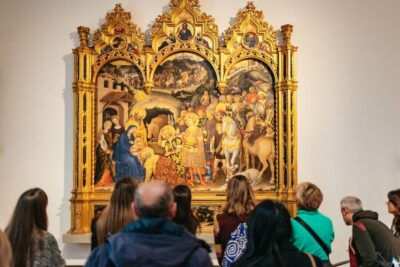
Uffizi Gallery: Renaissance Masterpieces Guided Tour
Read our review →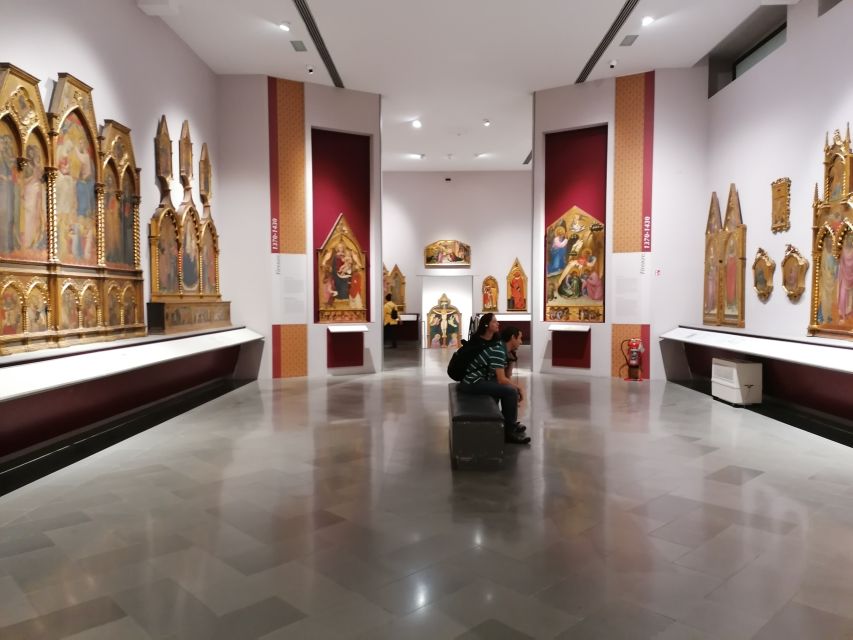
Uffizi Gallery Timed Entry Ticket & Audio Guide
Read our review →
Accademia Gallery Guided Tour with Entry Ticket
Read our review →Browse the lists this tour appears in