
REVIEW · ROME
Vatican: Guided tour of the Vatican Museums and Sistine Chapel
The Sistine Chapel is the headline, but the real treat comes earlier: Laocoön and his sons, the Apollo Belvedere, the Belvedere Torso, and the Gallery of Maps give you a strong introduction to the Vatican’s art before Michelangelo takes over. The separate entrance and small group of up to 10 can save serious time.
I like the way this tour combines a clear route with a live guide, and I like that guides such as Fillipo, Michela, Maria, and Paulo have been praised for making the art easier to understand. The main drawback is comfort: the tour can run close to three hours, headsets may be awkward, and security can still take up to 30 minutes.
Key points to know before booking
- A small group of up to 10: You are not being herded through the Vatican in a crowd of dozens.
- Priority museum admission: The separate entrance can save a long wait, though security is still required.
- A strong collection of famous works: Laocoön, Apollo Belvedere, the Belvedere Torso, and the Gallery of Maps all feature on the route.
- Sistine Chapel finale: You get time to look at Michelangelo’s ceiling and Last Judgment after receiving context from the guide.
- Several guide languages: Live tours are offered in English, Italian, Portuguese, French, and Spanish.
- Dress and timing matter: Cover your shoulders and knees, bring identification, and arrive on time because late arrivals cannot join or receive a refund.
Why the Vatican needs a guided route
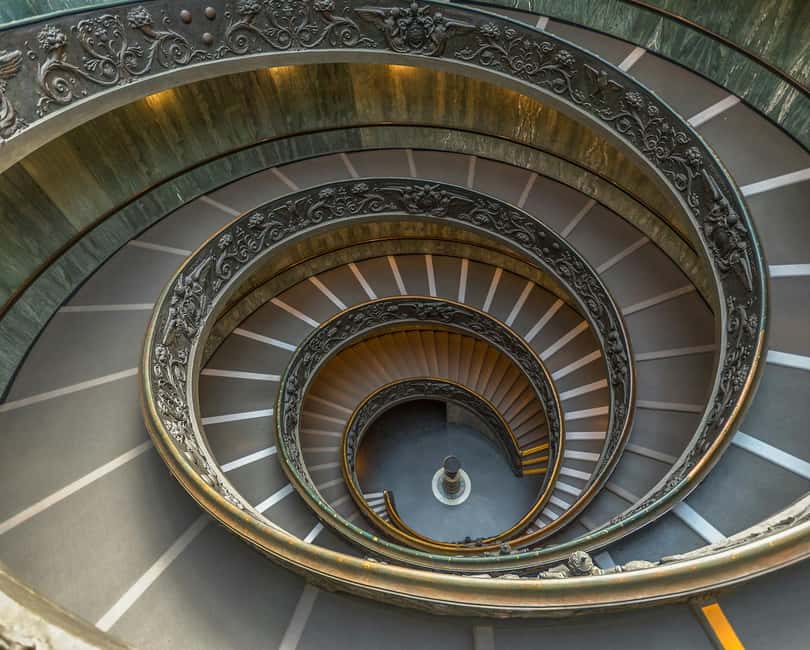
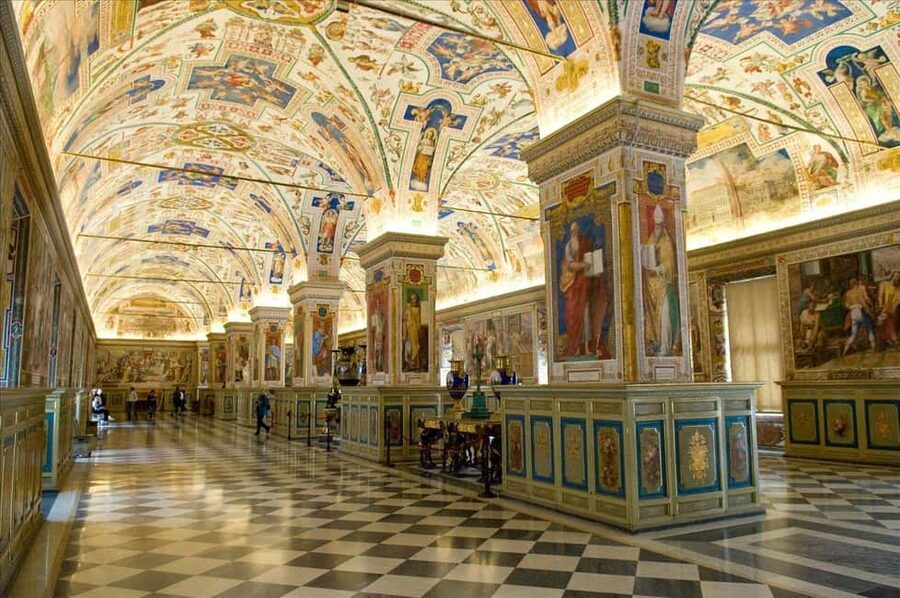
The Vatican Museums are not one quiet gallery. They are a huge chain of rooms, courtyards, corridors, sculptures, painted ceilings, maps, tapestries, and religious objects. You can enter alone and see beautiful things, but it is easy to lose the thread or spend too long on the first few rooms.
This tour gives you a fixed path through some of the museum’s best-known sections. I find that useful at the Vatican because the building itself can be tiring. A guide helps you decide what deserves your attention, explains why a work matters, and keeps the visit moving toward the Sistine Chapel.
The group is limited to 10 people, which is a sensible size for a place where you need to hear instructions and keep together. It is not a private tour, but it should feel more manageable than a large coach group. Headsets are included, allowing you to listen while standing in a crowded gallery.
The quality of the experience depends heavily on your guide. Fillipo has been praised for detailed explanations, while Michela, Maria, Paulo, and other guides have been singled out for energy, humor, and clear storytelling. One guide reportedly acted out scenes and used different voices for historical characters. That kind of delivery can make a long visit easier to follow, especially if this is your first serious look at Renaissance art.
More Art Museum Tours in Rome
- Vatican Museums, Sistine Chapel & St. Peter’s Basilica Tour
★ 4.3 · 73,970 reviews - Vatican Museums, Sistine Chapel & St Peter’s Basilica Guided Tour
★ 4.5 · 39,149 reviews - Rome: Vatican Museums, Sistine Chapel and Basilica Tour
★ 4.3 · 16,039 reviews
Starting near Habemus Tours
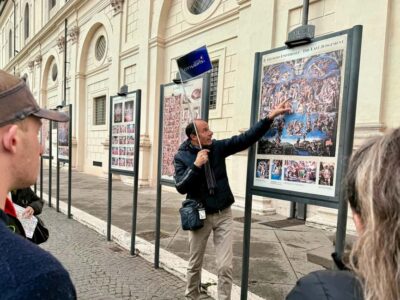
The meeting point is Habemus Tours, where you receive assistance before heading to the museum entrance. Allow time to find the office and complete the check-in process. The meeting point has been described as easy to find, but the practical rule is simple: do not cut it close.
You are asked to arrive on time, and late arrivals cannot join the group, change to another departure, or receive a refund. You may be told to arrive before the scheduled start, but arriving far too early may not be useful because the office has limited seating. One useful approach is to arrive with enough time to locate the office and check in, rather than turning up very early and waiting in the heat.
Bring your passport or identity card. A copy is accepted according to the tour information. If you are using a student rate or carrying student identification, bring your student card as well.
Entering through the Vatican Museums
The priority entrance is the practical reason many people choose this tour. The normal Vatican queue can be punishing, especially in the high season. A separate entrance gets you past the ticket line, but it does not mean you walk straight through every checkpoint.
Security can still take up to 30 minutes during busy periods. That is important when you are planning the rest of your day. Do not book a tight lunch, train, or other timed attraction immediately after the tour.
Once inside, the scale becomes clear. The papal collections include ancient sculpture, religious paintings, decorative arts, maps, and architectural details. A guide gives you a way to sort the important pieces from the many rooms that compete for your attention.
The museum can be crowded even after you have passed the entrance. You may stop often, move slowly through narrow areas, and share sightlines with other groups. The priority ticket saves time at the front door, not all waiting inside.
Cortile del Belvedere and the first ancient sculptures
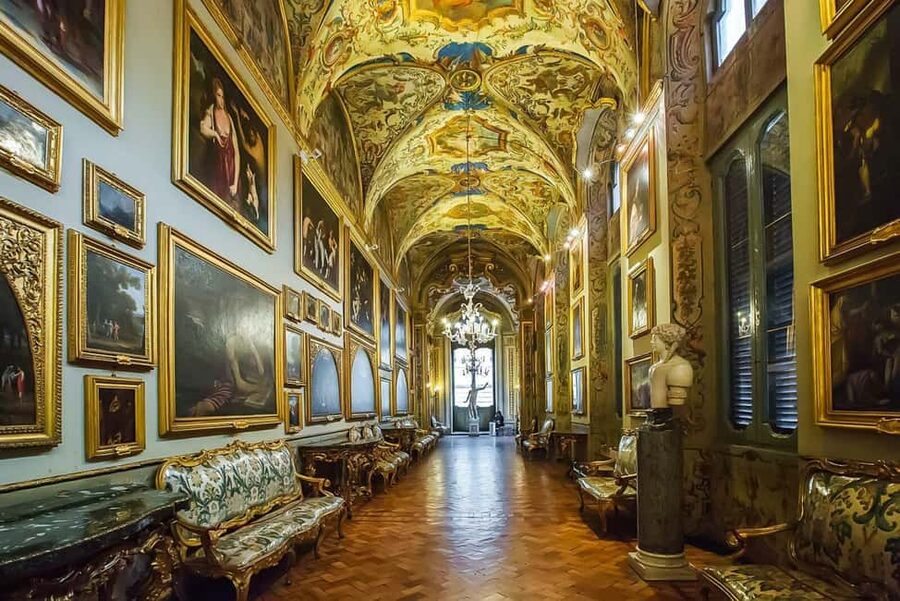
The route includes the Cortile del Belvedere, a handsome courtyard connected with some of the Vatican’s most important ancient sculptures. This is where the tour begins to show how the popes collected and displayed Greek and Roman works.
The Museo Pio Clementino follows, with several famous pieces that are easier to appreciate when someone points out their condition, pose, and later influence. Laocoön and his sons is one of the major stops. The sculpture shows a father and his sons caught in a violent struggle with sea serpents. You do not need a specialist background to understand why this work made such an impression on artists and collectors.
The Apollo Belvedere and the Belvedere Torso are also part of this stretch. Their names are familiar from art books, but seeing them in person gives you a better sense of the forms that Renaissance artists studied. The guide’s job here is not simply to name each object. It is to help you see how ancient sculpture shaped later European art.
This section can be crowded, so expect a look rather than a long private pause. If ancient sculpture is your main interest, you may wish the schedule allowed more time. If you are new to the Vatican, the guided explanations help you avoid walking past major works without realizing what you are seeing.
More ways into the Vatican Museums:
- Vatican Museums & Sistine Chapel Skip-the-Line Entry Ticket
★ 4.4 · 13,838 reviews - Rome: Vatican Museums, Sistine Chapel & Basilica Tour
★ 4.7 · 13,217 reviews - Rome: Vatican Museums & Sistine Chapel Guided Tour
★ 4.3 · 12,117 reviews - Vatican Museums & Sistine Chapel Skip-the-Ticket-Line Tour
★ 4.3 · 10,486 reviews
The Gallery of the Candelabra
The Gallery of the Candelabra is one of the long decorative galleries on the way toward the Sistine Chapel. Its name comes from the large marble candelabra placed along the route, but the wider effect comes from the combination of sculpture, painted decoration, and the long perspective.
This is a good place to notice how the Vatican visit works as a whole. You are not moving from one isolated masterpiece to another. You are walking through a sequence designed to impress, with ceilings, floors, walls, and objects all competing for your eyes.
A guide can keep this part from becoming a blur of ornate rooms. You will likely hear about the objects and the way the galleries were assembled, while also being encouraged to look upward. Keep your pace flexible. The group may need to stop for an explanation, then move again to make room for other parties.
The Gallery of Tapestries
The Gallery of Tapestries brings a different mood. Instead of focusing mainly on stone sculpture, the route draws your attention to large woven scenes and their detail.
The tapestries are easy to underestimate because they hang in a busy corridor. Look closely at the figures, borders, and shifting perspective. This is also a section where a guide can point out details that are difficult to grasp while walking through a crowd.
The gallery is long, and the museum can feel physically demanding by this point. Wear comfortable shoes and expect plenty of standing. There is no food or drink included, and the experience is not built around frequent breaks, though one recent Portuguese-language group had two restroom stops. That may vary by guide and conditions, so use facilities when the opportunity appears.
The Gallery of Maps, one of the tour’s best stops
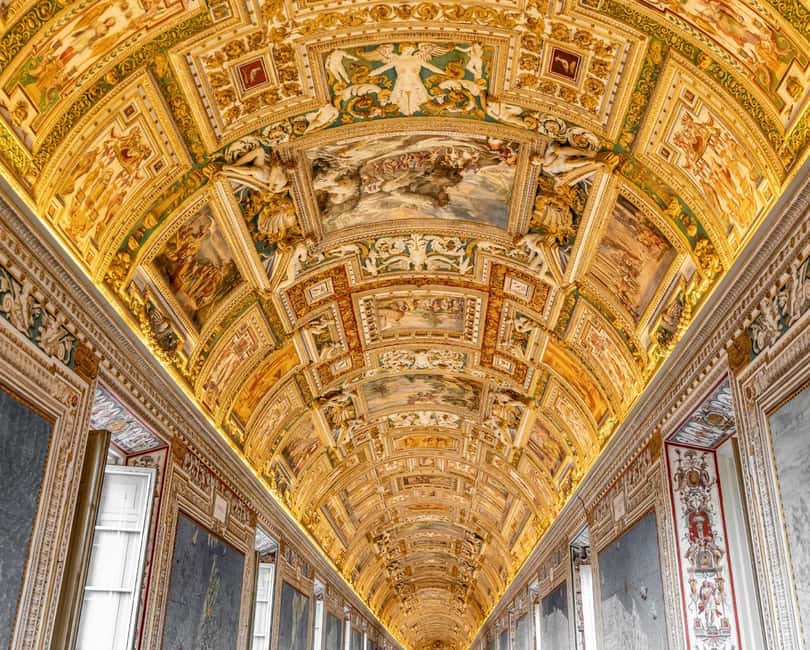
The Gallery of Maps is one of the most memorable rooms on this route. Large painted maps line the walls, while the ceiling adds another layer of decoration overhead. Even if you are not a map enthusiast, the scale and detail make this corridor worth slowing down for.
This is the kind of place where a guide adds real value. You can admire the colors and painted scenes on your own, but an explanation helps you understand what the maps were intended to show and why the gallery mattered to the people who commissioned it.
The room is often a favorite because it offers an immediate visual reward. You do not need to know every political or religious reference to enjoy it. Look up, then step back when possible so you can see the full length of the gallery.
The route can be crowded here. A small group helps, but you will still share the space with other tours and independent visitors. Your guide may need to gather everyone at one end of the gallery before continuing.
Arriving at the Sistine Chapel
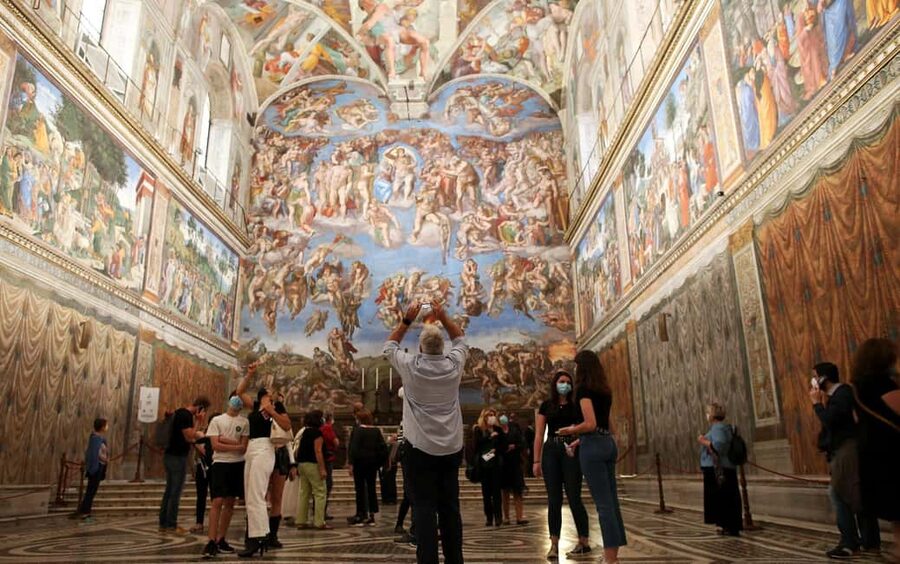
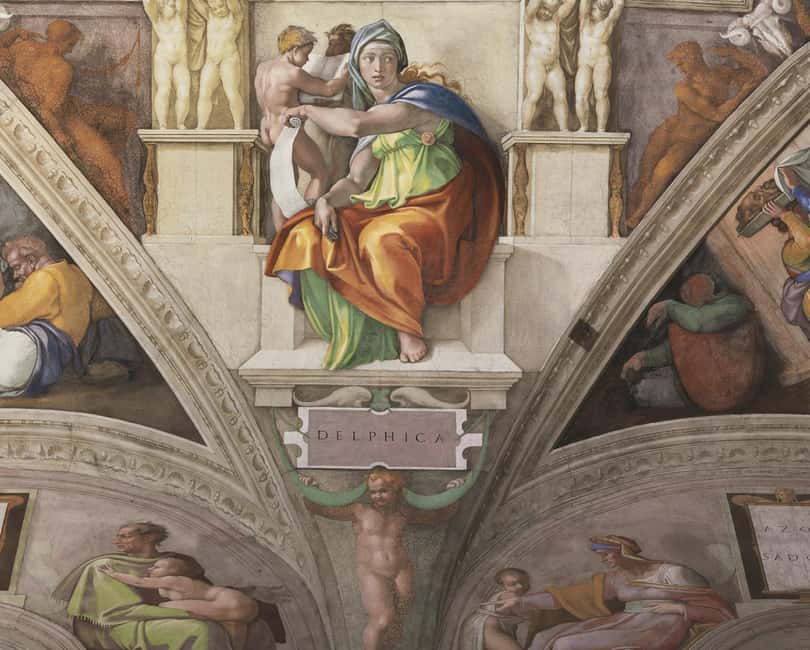
The Sistine Chapel is the emotional high point of the visit. Before entering, your guide provides context about Michelangelo’s work, the biblical scenes, and the Last Judgment. Once inside, the atmosphere changes. Voices are restricted, photography is not permitted, and the room asks you to look rather than talk.
The ceiling can be difficult to read at first. There are many scenes, figures, and architectural details spread above you. Give yourself time to adjust. Look for the central biblical scenes, then move your attention toward the figures around them.
Michelangelo’s Last Judgment covers the altar wall and feels different from the ceiling. The scale, movement, and dense arrangement reward a slow look. The guide’s explanation beforehand helps you recognize what you are seeing once conversation stops.
A guided tour does not give you a private chapel visit. Other groups will be present, and the room may feel crowded. Still, entering with a basic sense of the artwork is much better than arriving with only the name Michelangelo in mind.
The listed itinerary describes the chapel as a guided stop, but speaking inside is restricted. In practical terms, you receive the explanation before entering and then have quiet time to look. That is a useful distinction when setting expectations.
How long the visit really takes
The advertised duration is listed as 2.5 hours to one day, with starting times varying by availability. In practice, one reported visit lasted about three hours. Plan around a half day rather than assuming you will be out in exactly 150 minutes.
The route involves extensive walking and standing. It is not suitable for wheelchair users, and the information does not describe a fully accessible alternative. If mobility is a concern, ask the provider before booking rather than relying on the standard route.
The tour does not include transportation, food, or drinks. You make your own way to the meeting point and should eat or carry water before entering, since the museum visit itself is not organized around a meal stop.
Some tours finish near St. Peter’s Square. One Portuguese-language group continued down Bernini’s staircase and ended there in the late afternoon. St. Peter’s Basilica is not listed as an included part of the tour, so do not assume basilica admission or a visit inside is guaranteed. You may find souvenir shops around the square, but that is separate from the booked experience.
Guide languages and headset comfort
Live guides are available in English, Italian, Portuguese, French, and Spanish. An audio guide option is also listed in English, Italian, French, Spanish, Portuguese, Japanese, Chinese, German, Korean, Russian, Polish, and Ukrainian.
Check the exact option you select. The experience can be booked with a guide, but ticket-only priority entry has also been offered in some situations. If you want explanations from a person, make sure the booking specifically includes the live guide.
The headsets help in crowded rooms, but they are not perfect. Two people specifically found the earpieces unstable or uncomfortable, and one reported that an earphone did not work well. Tell the guide or tour staff promptly if you cannot hear. Missing several explanations can reduce the value of the guided option.
Is $70 a fair price?
At $70 per person, this is not the cheapest way into the Vatican. You are paying for the admission ticket, priority access, assistance at the office, and, when selected, a live guide. The price makes the most sense when the regular entrance queue is long and you value a planned route through the museum.
I consider the small group the main value beyond the ticket itself. A group limited to 10 is easier to hear, easier to gather, and less tiring than a large tour. The guide can also give you context for famous works that would otherwise become a long parade of names.
The price is less compelling if you prefer to move at your own pace, spend an hour with one sculpture, or skip rooms that do not interest you. In that case, priority admission without a guide may suit you better, provided that option is clearly selected and available.
The cancellation terms reduce some booking risk. You can cancel up to 24 hours before the activity for a full refund, and you can reserve now and pay later. The no-show rule is strict, so flexibility helps only if you cancel in time.
Dress rules, security, and chapel closures
This is a religious site, so your shoulders and knees must be covered. Do not rely on casual enforcement at the entrance. Bring a light layer or scarf if your clothing may not meet the rule.
Weapons and sharp objects are not allowed. Security screening applies even with priority admission.
The Sistine Chapel can close for religious, institutional, or security reasons without notice. Specific closures listed for September 1 and October 1, 2026 affect chapel admission times while the wider Vatican Museums remain open. Check the current schedule close to your date, especially if the chapel is the main reason you are booking.
Who should book this Vatican tour?
I would choose this tour if you are visiting the Vatican for the first time, want the major works explained, or have limited time in Rome. It suits people who enjoy stories, art context, and a clear route more than those who want complete independence.
It is also a good fit for families and mixed-interest groups. A lively guide can hold attention better than a long audio track, and the Gallery of Maps, ancient sculptures, and Sistine Chapel offer variety.
I would think twice if you dislike crowds, have trouble standing for several hours, or want a slow museum visit. The headset issue is minor for some people but frustrating if the equipment does not sit well. You should also avoid booking it immediately before another timed activity because security and crowds can add delays.
FAQ
How long does the Vatican tour last?
The listed duration ranges from 2.5 hours to one day, depending on the available departure and selected option. A visit may run closer to three hours, so allow extra time.
What languages are available for the live guide?
Live guides are available in Italian, English, Portuguese, French, and Spanish.
Does the tour include the Sistine Chapel?
Yes. Priority admission to the Vatican Museums and Sistine Chapel is included when you select the relevant tour option.
Do I still need to wait at security with priority admission?
Yes. Priority entry uses a separate entrance, but security can take up to 30 minutes during high season.
What should I wear to the Vatican?
Your shoulders and knees must be covered because the route includes religious sites. Weapons and sharp objects are not allowed.
Can wheelchair users join this tour?
The activity is not suitable for wheelchair users.
Should you book it?
Book this Vatican tour if you want the major sights without wrestling with the museum’s scale on your own. The small group, separate entrance, and guide-led explanations give you a practical way to reach the Sistine Chapel while still seeing important works such as Laocoön, Apollo Belvedere, and the Gallery of Maps.
Choose another option if you want a self-guided visit, need wheelchair access, or cannot commit to a strict arrival time. For most first-time visitors who value structure and context, $70 is a reasonable price for saving time and making sense of one of Rome’s most demanding museums.
Just added around Rome
- Colosseum,Vatican Museum & Sistine Chapel in One Day Guided Tour★ 3.5 · 9 reviews
- Vatican Museums and Sistine Chapel last entry Guided Tour★ 5.0 · 3 reviews
- Private Tour Of Rome Highlights And Vatican Museums Skip-The-Line all included★ 5.0 · 4 reviews
- Borghese Gallery Admission Ticket with Audioguide★ 4.0 · 64 reviews
- Caravaggio Art Walking Tour of Rome with Pantheon Visit★ 4.5 · 35 reviews
- Borghese Gallery Ticket with Audioguide★ 3.5 · 51 reviews
- Borghese Gallery Skip the Line Guided Tour★ 4.5 · 23 reviews
- Borghese Gallery VIP Tour – Skip the Line Tickets★ 5.0 · 2 reviews
Art Museum Tours in Rome, compared.
Vatican Museums, Sistine Chapel & St. Peter’s Basilica Tour
Read our review →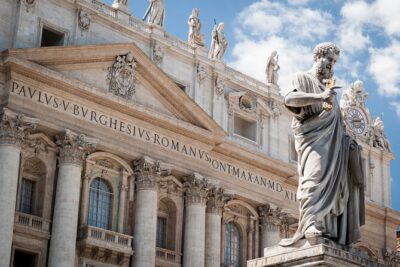
Vatican Museums, Sistine Chapel & St Peter’s Basilica Guided Tour
Read our review →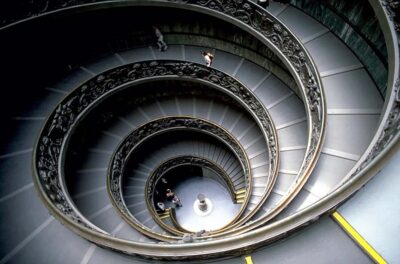
Vatican Museums, Sistine Chapel and Basilica Tour
Read our review →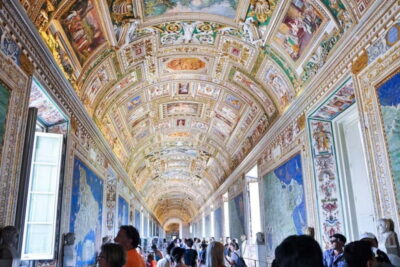
Vatican Museums & Sistine Chapel Skip-the-Line Entry Ticket
Read our review →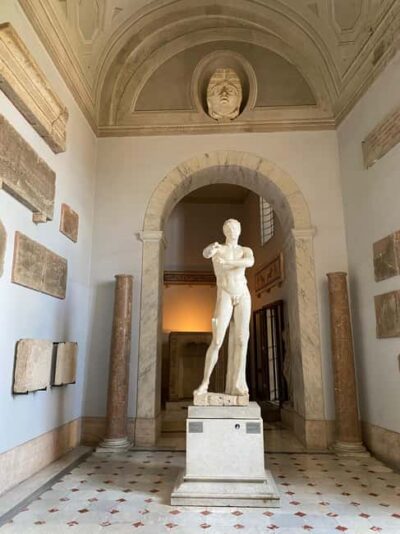
Vatican Museums, Sistine Chapel & Basilica Tour
Read our review →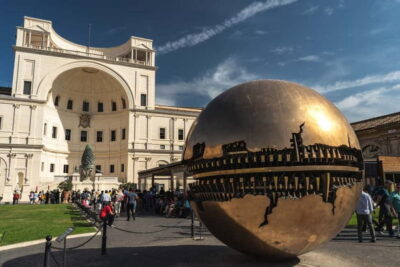
Vatican Museums & Sistine Chapel Guided Tour
Read our review →
Vatican Museums & Sistine Chapel Skip-the-Ticket-Line Tour
Read our review →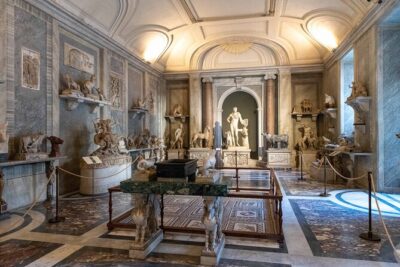
Vatican Museums, Sistine Chapel and St. Peter’s Basilica Tour
Read our review →Browse the lists this tour appears in