
REVIEW · FLORENCE
Florence: Uffizi Gallery Small-Group Guided Tour with Ticket
The Uffizi Gallery’s major paintings are far easier to appreciate when someone explains what you are looking at. Botticelli’s Birth of Venus is famous, but the real reward comes from seeing how it fits into Medici Florence, Renaissance ideas, and the changing style of Italian painting.
I like the small-group format, which gives you room to ask questions, and I like the guide’s clear plan through a very large museum. The 90-minute visit is also a good first taste of the Uffizi. The trade-off is simple: you will see selected highlights, not every room, so you should stay afterward if you want a fuller visit.
- Botticelli’s Birth of Venus and Primavera receive the attention they deserve, along with major works by Leonardo and Michelangelo.
- A 90-minute route helps you avoid getting lost or worn out in one of Florence’s largest museums.
- Guides including Pam, Vicky, Anna, Bruce, Vittoria, and Olga are praised for making art and Florentine history easy to follow.
- Priority entry and headsets reduce two common museum hassles, though you still need to arrive 15 minutes early and pass a metal detector.
- Multiple languages are available, including English, Italian, Spanish, French, German, Portuguese, and Russian.
- The tour ends inside the Uffizi, allowing you to continue looking around on your own.
Why the Uffizi Works Better With a Guide
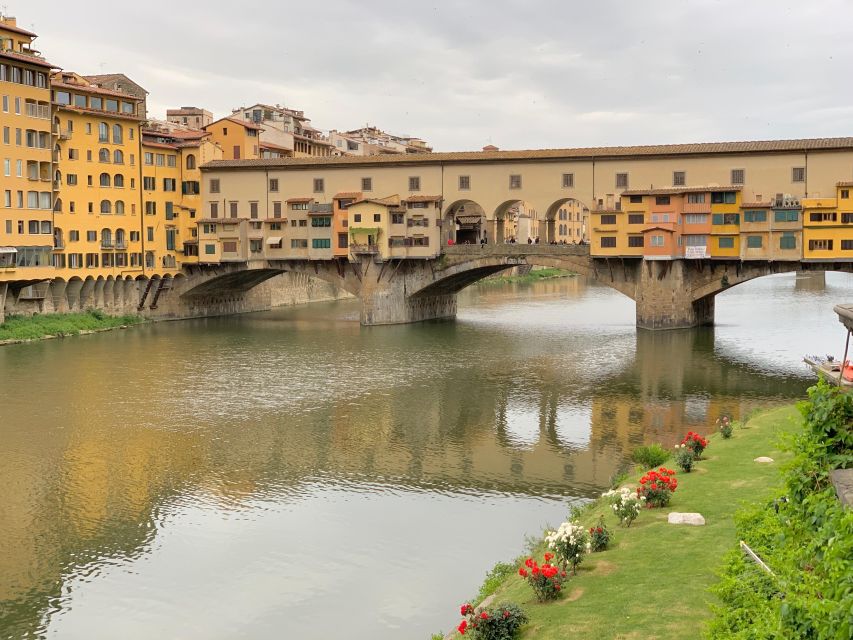
The Uffizi is not a small, tidy collection that you can absorb in half an hour. Its rooms cover centuries of European art, with famous names competing for your attention at every turn. Without a plan, you can spend a lot of energy simply finding the paintings you came to see.
A good guide gives you a route and a story. Instead of treating each painting as an isolated object, the tour connects artists, patrons, politics, religion, and changing artistic methods. You begin to see why one painting looks flat and symbolic while another aims for movement, volume, and human emotion.
That context is where this tour earns its price. The guide does not just point at Birth of Venus and announce its title. You can expect an explanation of the work’s place in Florentine culture, along with details that help you look more closely at the figures, symbols, and technique.
The best guides also know when to move on. Several guides, including Pam, Anna, Vicky, and Bruce, are praised for selecting key works without drowning the group in facts. That matters in the Uffizi, where too much information can make even beautiful art feel like homework.
Meeting at the Nicola Pisano Statue
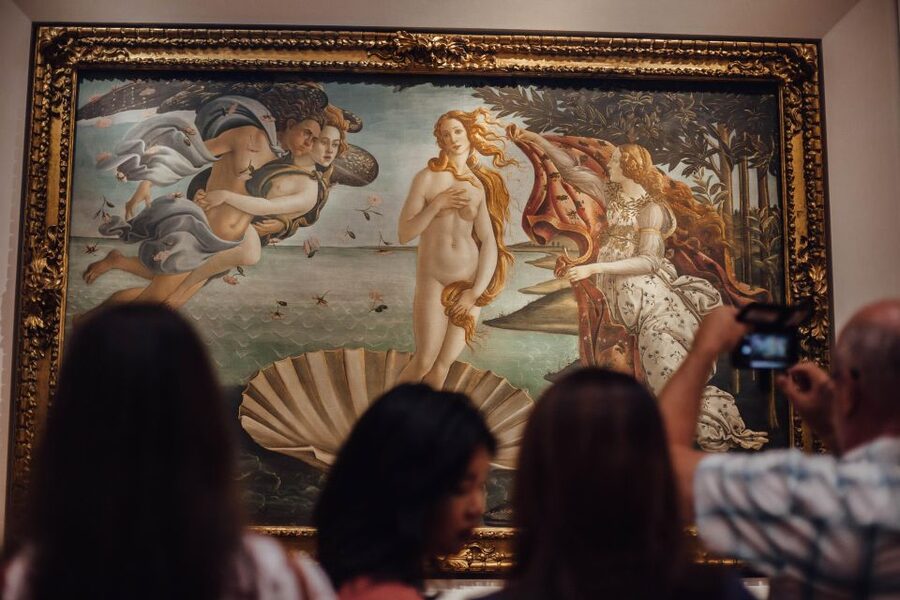
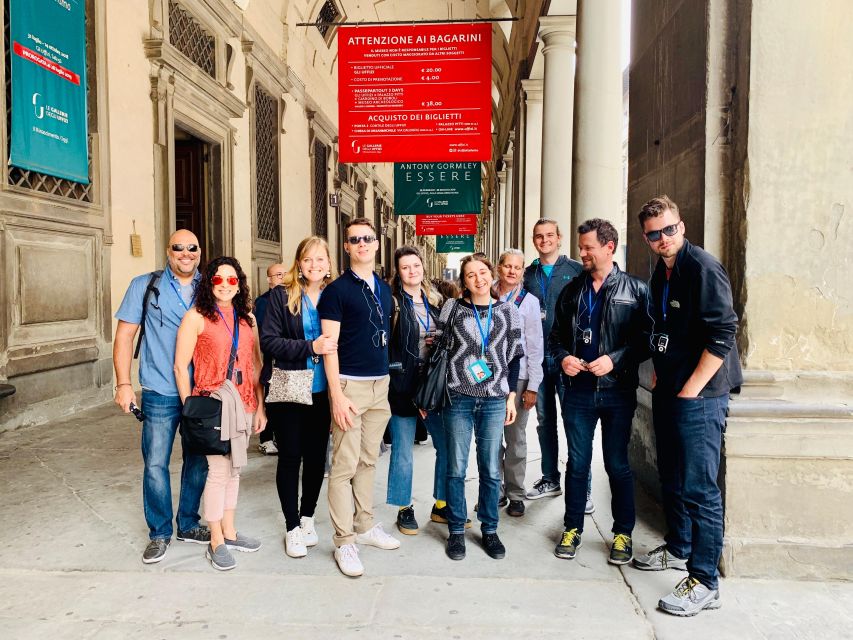
The tour begins in front of the Nicola Pisano Statue at Piazzale degli Uffizi, 6, close to the Uffizi information point. This is a central location, but the square can be busy, so give yourself extra time to identify the statue and your guide.
Arrive at least 15 minutes before the scheduled start. That early arrival is not wasted time. The group needs to gather, check in, and prepare for museum security before entering.
You do not receive hotel pickup, so plan to reach the meeting point on your own. Food and drinks are not included, and food and drinks are not permitted in the vehicle, although this tour is primarily a walking visit inside the gallery rather than a transport experience.
Once the group is assembled, you receive a headset. That small piece of equipment is more useful than it sounds. Museum rooms can be crowded and noisy, and you can listen without standing shoulder to shoulder with the guide.
More Art Museum Tours in Florence
- Florence: Skip-The-Line Uffizi Gallery Timed Entry Ticket
★ 4.5 · 27,832 reviews - Florence: Uffizi Priority Ticket & Masterpieces Audio App
★ 4.2 · 6,402 reviews - Florence Accademia Gallery Tour with Entrance Ticket Included
★ 4.5 · 6,148 reviews
Priority Entry and the First Steps Inside
The tour includes entry tickets and priority access to the ticket line. This does not mean you walk through the door without any waiting at all. Every visitor must pass through a metal detector, and the security process can still slow things down on a busy day.
That distinction is worth keeping in mind when you compare this experience with a self-guided visit. The line-saving benefit is most valuable when the Uffizi is crowded. One visitor described seeing a long line wrapped around the building, while the guided group used its reserved access.
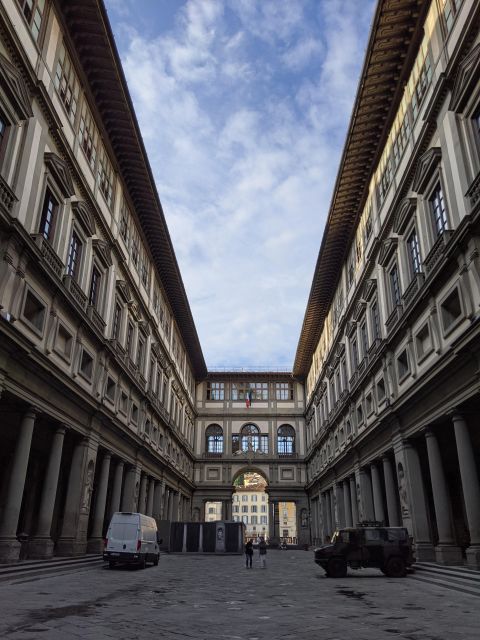
After security, the guide sets the pace and begins orienting you to the building. The Uffizi itself is part of the experience, with long corridors, ornate ceilings, and rooms that reflect the power of the Medici family. The building is not just a container for art. Its design helps explain why the collection is here and how Florence’s ruling family shaped the city’s cultural life.
Botticelli’s Birth of Venus and Primavera
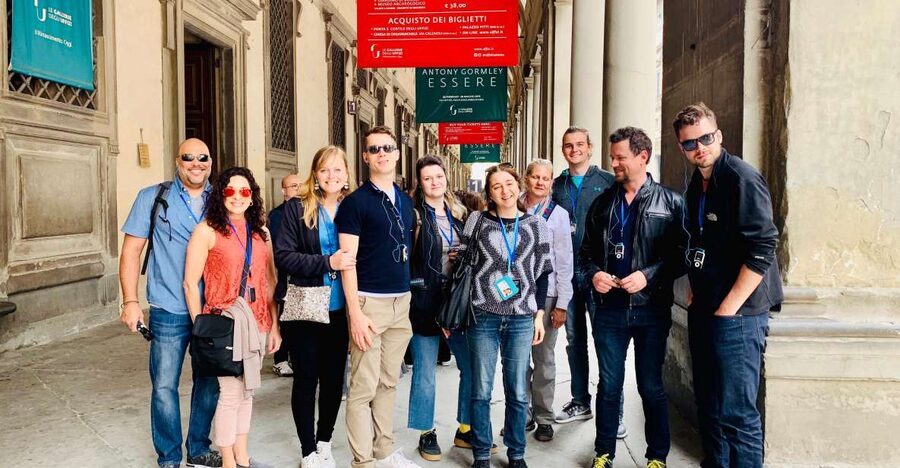
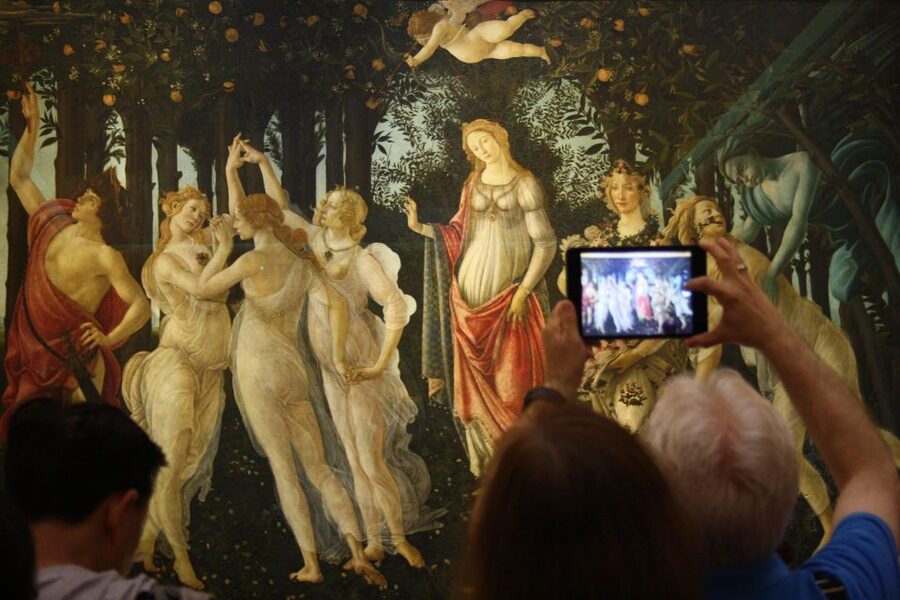
For many people, the main reason to book is Botticelli. The Birth of Venus is the headline work, and the guide gives you more than a quick photo stop.
You can expect the explanation to cover the painting’s imagery, its mythological subject, and the setting in which it was made. The point is not to memorize every detail. It is to learn how to read the picture, from the poses of the figures to the use of line, color, and gesture.
Primavera usually receives attention as well. Seeing it near other Florentine works helps you compare Botticelli’s delicate, flowing style with the more solid forms and sharper structure of other Renaissance painters.
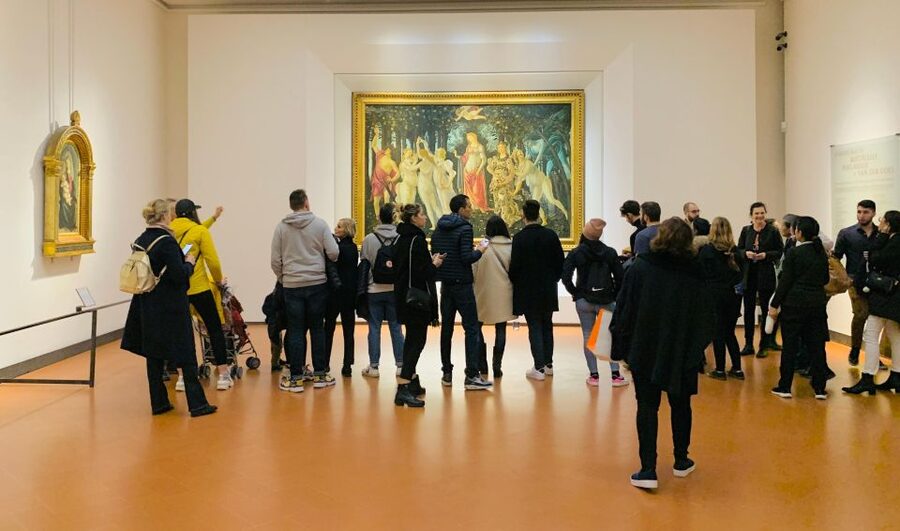
These are popular rooms, so crowds may gather around the best-known paintings. A skilled guide can position the group, point out details through the headset, and move you along when the room becomes too congested. You should not expect a private viewing. The benefit is a clearer way to use your time in a public museum.
Leonardo’s Annunciation and Michelangelo’s Tondo Doni
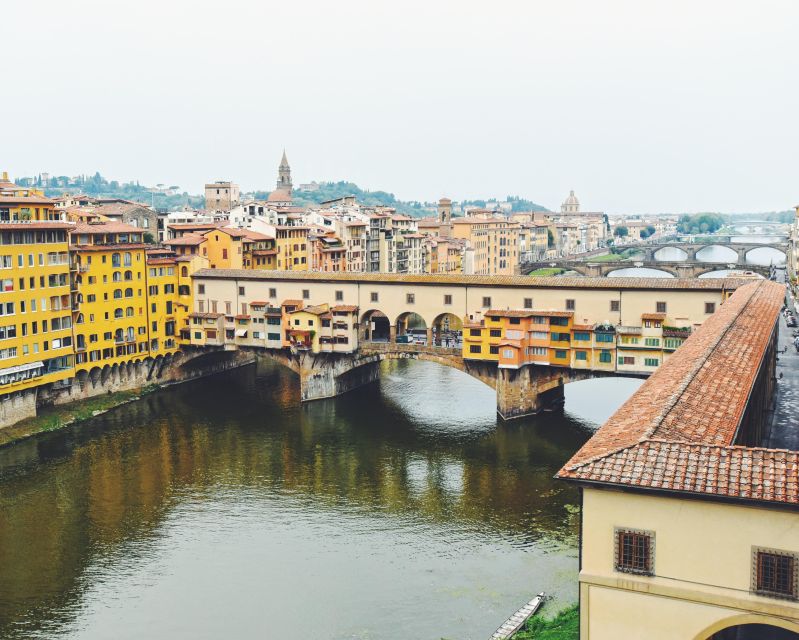
Leonardo da Vinci’s Annunciation gives the tour a different kind of focus. Here, your guide can draw attention to Leonardo’s handling of space, landscape, figures, and fine detail. The painting is especially useful for understanding how artists were pushing beyond earlier conventions.
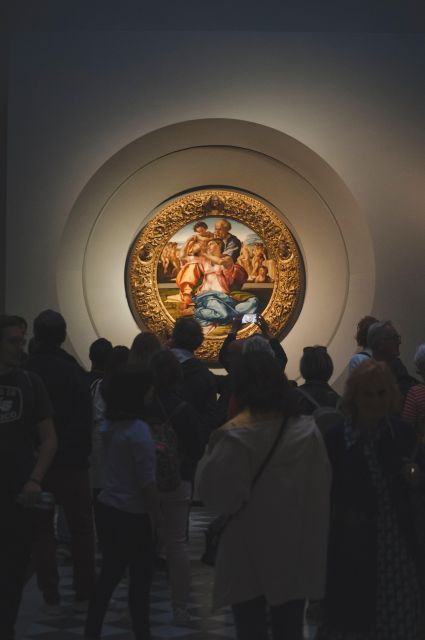
Michelangelo’s Tondo Doni offers another change of mood. It is a rare panel painting by the artist, and the guide can explain why its bold colors, muscular figures, and unusual arrangement matter. One guide highlighted how Michelangelo’s color choices influenced the way other painters approached their own work.
This is where the tour’s art-history teaching becomes practical. You are not simply collecting famous names. You are learning to notice how an artist builds a scene and how one generation responds to the last.
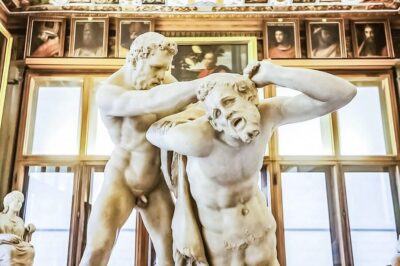
The tour may also include sculptures, tapestries, and other important works. Still, 90 minutes requires choices. The guide will focus on principal pieces and the story of the collection rather than lead you through every gallery.
More Uffizi tours and tickets:
- Uffizi Gallery: Renaissance Masterpieces Guided Tour
★ 4.6 · 6,070 reviews - Uffizi Gallery Small Group Tour with Guide
★ 4.5 · 4,923 reviews - Uffizi & Accademia Timed Entry: Small Group Duomo Walking Tour
★ 4.5 · 3,630 reviews - Florence: Uffizi Gallery Timed Entry Ticket & Audio Guide
★ 4.2 · 2,794 reviews
From Medieval Painting to the Renaissance
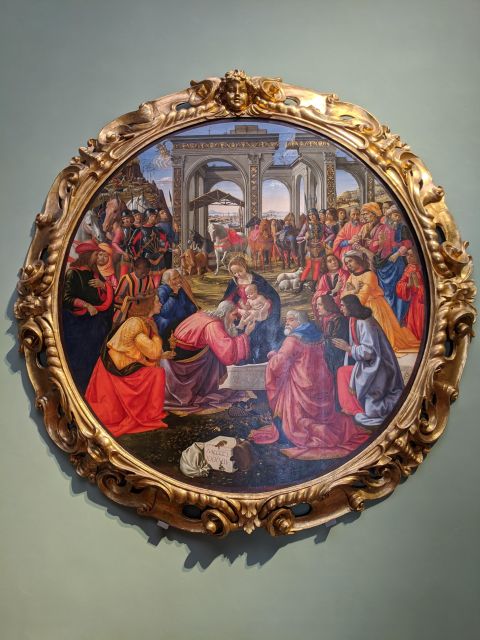
One of the strongest features of the experience is the explanation of artistic change. Guides such as Vicky, Alfonso, and Anna have been praised for showing how Italian painting developed from the medieval period through the Renaissance.
That approach gives you a useful framework. Instead of seeing Giotto, Botticelli, Leonardo, and Michelangelo as unrelated masters, you begin to recognize a sequence of experiments. Artists gradually changed how they treated space, bodies, light, movement, and emotion.
The tour also connects those shifts to Florence and the Medici family. This keeps the art from feeling detached from daily life and political power. Patronage mattered. Wealthy families paid for paintings, chapels, public projects, and private collections, helping Florence become a center for artistic work.
A good guide can make this material lively rather than academic. Bruce, for example, is praised for combining humor with a clear account of the Medici, the building, and the collection. That balance is useful when you are standing for a long period and trying to absorb a great deal of information.
The Guide Makes the Biggest Difference
The tour company assigns different guides, so your experience will depend partly on who leads your group. Names praised for strong delivery include Pam, Vicky, Anna, Bruce, Vittoria, Olga, Alfonso, Sara, Valentina, and Ana Maria.
The common strength is not just factual knowledge. It is the ability to decide what deserves your attention. Pam is described as patient and able to adjust to a group’s interests. Vicky is praised for giving enough detail while still leaving time for independent exploring. Sara is noted for making Renaissance art accessible without making the tour feel heavy.
A guide also helps with practical problems. One guide assisted people with limited mobility by finding an elevator and slowing the pace. Another solved a headset problem during the visit. These details matter because a museum tour can become frustrating when equipment fails or a group member cannot keep up.
You should feel free to ask questions. The small-group setup makes conversation easier than on a large coach-style visit. It also lets the guide spend a little more time on a painting that catches your attention, although the exact level of flexibility depends on the group and the schedule.
What 90 Minutes Can and Cannot Do
Ninety minutes is enough for a strong introduction to the Uffizi. It is not enough for a full survey of the collection.
The advantage is focus. You can see the major highlights without wandering through room after room until your attention fades. Several guides are praised for helping groups avoid feeling overwhelmed, especially on a first visit.
The limitation is selection. You may pass many works without stopping, and you will not receive a detailed explanation of every sculpture, painting, and decorative object. If you want an art-history lesson on the entire museum, choose a longer tour if one is available.
I see the short length as a good fit for most first-time visitors. It gives you a clear foundation, then lets you continue alone with better eyes. The tour ends at the Uffizi, so you can stay inside and explore the rooms that were not part of the guided route.
If you already know the museum well, this experience may feel too selective. It can still be useful if you want a fresh explanation of the main works or if you are accompanying family members who need an introduction.
Price and Value at $76
At $76 per person, this is not the cheapest way to enter the Uffizi. You are paying for the museum ticket, priority access, a live guide, headsets, and the time saved by following a planned route.
The value is strongest when your Florence schedule is tight. Losing an hour to a ticket line, then spending another hour trying to locate the famous works, can make a self-guided visit less attractive. A guide also gives you the background that labels alone rarely provide.
The cost is harder to justify if you are a confident art-history reader who prefers a slow, independent visit. In that case, you may want to spend longer inside and set your own pace. Remember, this tour is an introduction, not a private scholar-led examination of the entire collection.
For families and mixed-interest groups, the price can make sense. A lively guide gives non-specialists a reason to pay attention, while art lovers can ask questions and use the remaining time for their own discoveries.
Languages, Access, and Practical Rules
Live guiding is offered in English, Italian, Spanish, French, German, Portuguese, and Russian. When booking, check that your preferred language and start time are available.
The activity is listed as wheelchair accessible. The guide can also help adjust the pace for people with limited mobility, although you should still raise any needs before the tour begins so the group can plan sensibly.
Bring a passport or identity card for children. Flash photography is not allowed, and oversize luggage, weapons, and sharp objects cannot enter. Everyone passes through a metal detector, so avoid arriving with anything that could delay the security check.
The tour offers free cancellation up to 24 hours before the start, and you can reserve now and pay later. Those terms are useful when your Florence schedule is still changing, but you should still confirm the available time before booking.
Who Should Book This Uffizi Tour
I would choose this tour if you are visiting the Uffizi for the first time, want to see the major works, or find large museums difficult to tackle alone. It is particularly helpful if you want the Medici and Florentine setting explained alongside the paintings.
It also suits families, couples with limited time, and groups with mixed interest in art. The guide gives you a story to follow, and the headset helps you hear without standing directly beside the guide.
I would hesitate if your main goal is quiet, independent study. The 90-minute schedule favors highlights, and the museum can be crowded. You may also prefer a longer experience if you want detailed attention to lesser-known rooms, sculptures, and tapestries.
Should You Book It?
Book this tour if saving time and gaining context matter more to you than seeing every object. The priority entry, focused route, and live explanations make the Uffizi easier to understand, especially on a first visit.
After the guided portion, stay inside and continue on your own. That combination gives you the best value: a clear introduction from the guide, followed by the freedom to return to the paintings that caught your eye.
FAQ
How long does the Uffizi guided tour last?
The guided tour lasts 1 hour and 30 minutes.
Where does the tour meet?
Meet in front of the Nicola Pisano Statue at Piazzale degli Uffizi, 6, near the Uffizi information point in Florence.
Where does the tour finish?
The tour finishes at the Uffizi Gallery.
Is the Uffizi admission ticket included?
Yes. The experience includes entry tickets to the Uffizi Gallery.
Does the tour include priority entry?
Yes. The tour includes access that lets you skip the regular ticket line, although all visitors must still pass through a metal detector.
Which languages are available?
Live guiding is available in Portuguese, Spanish, English, French, Italian, German, and Russian.
What should I bring and what is not allowed?
Bring a passport or identity card for children. Flash photography, oversize luggage, weapons, sharp objects, and food and drinks in the vehicle are not allowed.
Just added around Florence
- Skip the line: Uffizi small group and walking tour of Florence★ 4.5 · 17 reviews
- Florence Private Walking Tour Including Uffizi and Accademia★ 3.5 · 4 reviews
- Uffizi Gallery Italian guided Tour semi private★ 4.5 · 9 reviews
- Private Tour: Accademia Gallery and City Tour★ 5.0 · 10 reviews
- Private Tour: The Academy Gallery★ 5.0 · 6 reviews
- Uffizi and Palazzo Vecchio Combo Private Tour★ 5.0 · 3 reviews
- Uffizi Express Entrance -private tour★ 5.0 · 9 reviews
- VIP Priority Access: Uffizi Gallery- Guided Experience★ 4.5 · 94 reviews
Art Museum Tours in Florence, compared.
Skip-The-Line Uffizi Gallery Timed Entry Ticket
Read our review →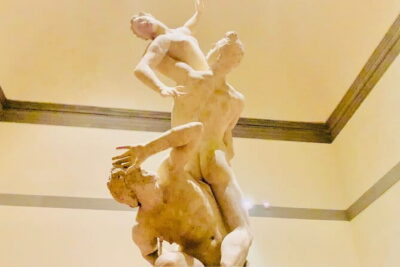
Florence Accademia Gallery Tour with Entrance Ticket Included
Read our review →
Uffizi Gallery: Renaissance Masterpieces Guided Tour
Read our review →
Uffizi Gallery Timed Entry Ticket & Audio Guide
Read our review →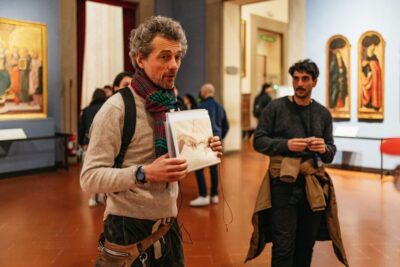
Accademia Gallery Guided Tour with Entry Ticket
Read our review →Browse the lists this tour appears in