

REVIEW · FLORENCE
Florence: Uffizi Gallery Discovery Private Guided Tour
The Uffizi is not a museum to attack at random. Its long corridors hold too many famous paintings, too many layers of Medici history, and too many crowds. This three-hour private tour gets you through the ticket lines and gives the collection a clear shape, from early Gothic works to the Renaissance stars.
I like the reserved entry, especially during Florence’s busy months. I also like the guides’ focus on stories and visual details, not just dates: Remo, Glenda, Deborah, and Natalia have all been praised for making difficult art easy to follow. The main drawback is crowd pressure. Even with a private guide, busy galleries can make the pace feel rushed, and faulty listening devices have caused problems for some families.
Key points to know before booking
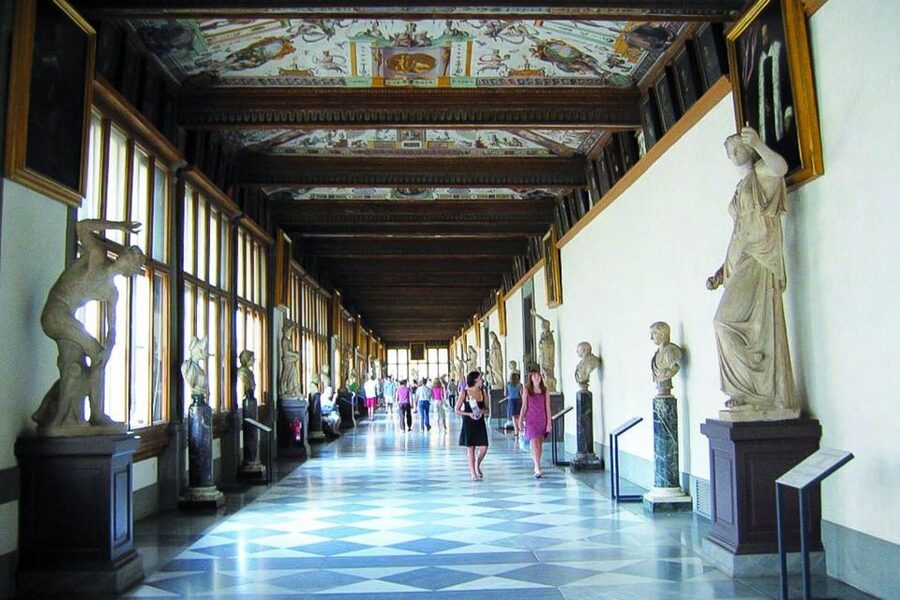
- Reserved entry saves valuable time: You skip the ticket-buyers line and ticket-pickup line, then enter through the assigned museum route.
- The main Renaissance stars are covered: Expect Botticelli’s Birth of Venus, Michelangelo’s wooden masterpiece, Raphael, and Leonardo’s Adoration of the Magi.
- Your guide shapes the visit: This is a private group with a live guide in English, Italian, French, or Spanish.
- Crowds affect the pace: The guide can navigate busy rooms, but you may not get long, quiet pauses at every painting.
- The Vasari Corridor is viewed from outside: The tour includes a 10-minute pass-by, not interior access to the corridor.
- The ticket has real value at busy times: The official adult museum ticket is €29, so much of the $206 price pays for the guide, reservation, and time saved.
Why a guide helps inside the Uffizi
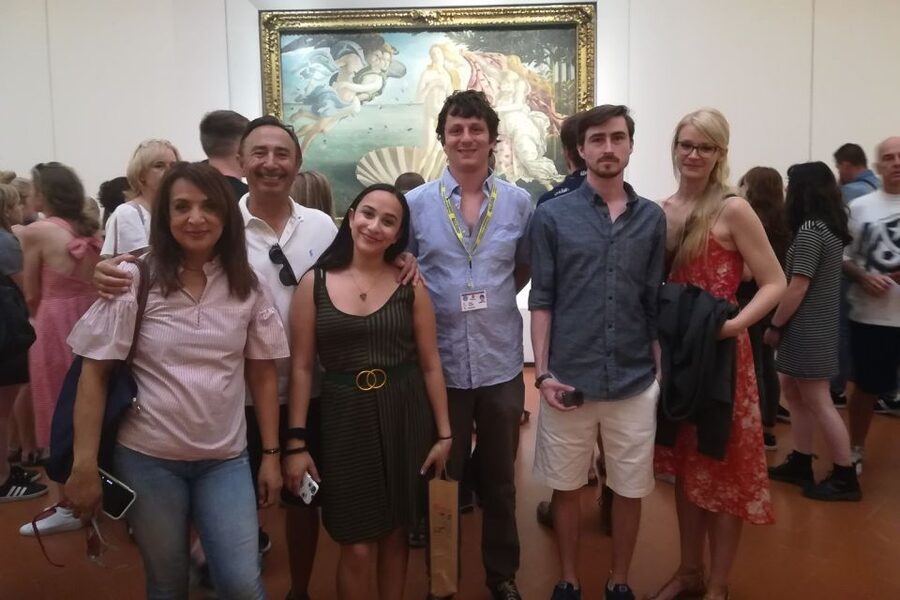
The Uffizi can look manageable on a map. Then you enter and face room after room of altarpieces, portraits, devotional panels, mythological scenes, and Renaissance experiments. Without a plan, you can spend your energy finding famous names and miss the story that connects them.
A good guide gives you that plan. The tour follows major works and uses them to explain how painting changed in Florence. You may see the move from flatter Gothic compositions toward more lifelike figures, stronger perspective, and a new interest in the ancient world.
That change is easier to understand when someone points it out in front of you. A guide can show how artists arranged figures, used gesture, treated light, and responded to wealthy patrons. You are not simply told that the Renaissance mattered. You see the change in the paintings themselves.
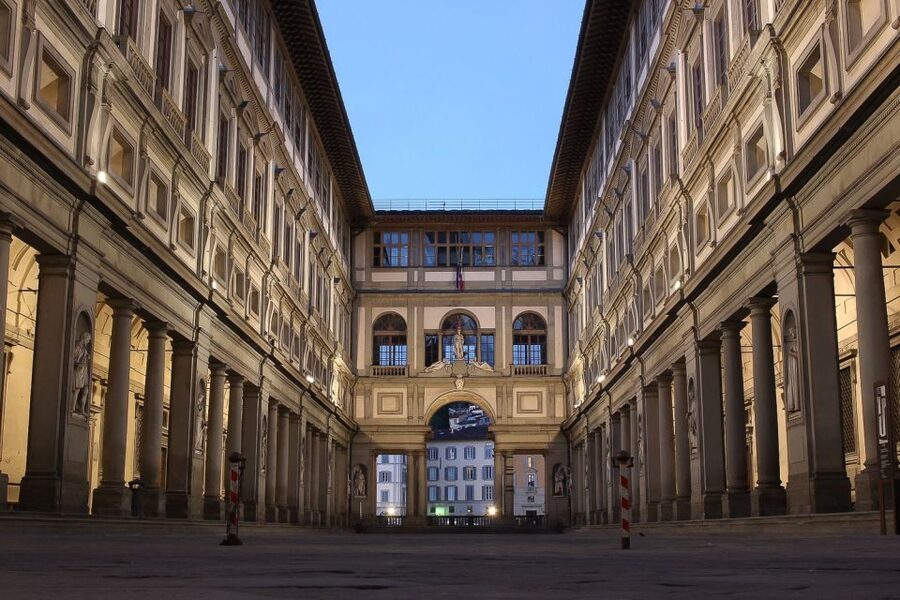
I especially value the way this tour connects the art to the Medici family. The Uffizi was begun under Cosimo I de Medici and grew from the family’s political power, collecting habits, and support for artists. The building is part of the lesson, not just a container for paintings.
The strongest guide reports describe people who were friendly, clear, and able to explain difficult subjects without turning the visit into a lecture. One guide, praised as Remo, reportedly explained details in nearly every painting. Glenda was singled out for answering questions from a family with two young children. Deborah used humor and made sure the material stayed interesting for everyone.
Guide assignments can change, so do not book solely for one named person. Still, these examples tell you what to hope for: a guide who selects the important works, explains why they matter, and adjusts to your group.
More Art Museum Tours in Florence
- Florence: Skip-The-Line Uffizi Gallery Timed Entry Ticket
★ 4.5 · 27,832 reviews - Florence: Uffizi Priority Ticket & Masterpieces Audio App
★ 4.2 · 6,402 reviews - Florence Accademia Gallery Tour with Entrance Ticket Included
★ 4.5 · 6,148 reviews
Meeting at Piazzale degli Uffizi
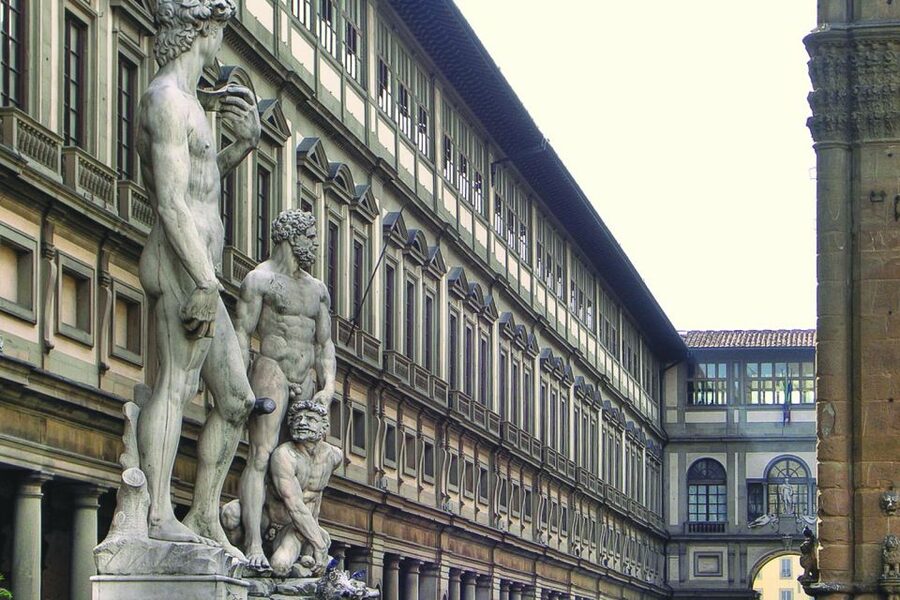
Your meeting point is at the Uffizi, at Piazzale degli Uffizi. Arrive 15 minutes early. Look for staff in a bright yellow vest marked ACCORD, near the corner between the museum ticket office and Via Lambertesca, close to the Benvenuto Cellini statue.
This detail matters. The Uffizi sits in a busy part of central Florence, and finding the correct person while watching the clock can be stressful. The on-site staff provide your tickets before you enter through Door No. 1.
You need a photo ID, and a copy is accepted. Wear comfortable shoes. Large bags and luggage are not allowed inside, and smoking is forbidden. You may bring one water bottle per person, with a maximum size of 500 milliliters. Only service animals are allowed in the museum.
Hotel pickup is included only if your hotel is near the attraction. There is no hotel drop-off, so plan to continue on foot or arrange your own transport after the visit.
Reserved entry and the first minutes inside
The clearest practical benefit is the reserved date and time. You skip the ticket-buyers line and the ticket-pickup line through a separate entrance. This does not mean you ignore every museum procedure. Security and entry checks can still take time, especially when the building is crowded.
The guide may use headphones when needed. That is helpful in packed rooms, but the equipment deserves a quick check before you begin. One family found that nonworking devices made it hard to hear, particularly for the children. If the audio is unclear, tell the guide at once rather than trying to follow for three hours.
The ticket reservation is most useful when regular entry is difficult to secure or when your Florence schedule is tight. It also removes the need to arrive early just to stand in a ticket queue. At $206 per person, though, you are paying far more than the museum admission itself. The official adult ticket is €29, with a €2 reduced ticket for EU visitors aged 18 to 25 and free entry for ages 0 to 17.
That difference is the key value question. If you want only entry, this is expensive. If you want a private guide, a fixed admission time, and help choosing what to see in a huge museum, the price may make sense, especially for a small group that values time and direction.
Botticelli, Michelangelo, Raphael, and Leonardo
The tour focuses on the works most people hope to see, but it does not pretend that three hours can cover every room in equal detail. That is a good approach. A complete look at every object would be exhausting and would leave you remembering little.
Botticelli’s Birth of Venus is one of the major stops. It is easy to admire the familiar image and move on. A guide can give you a better way to look, pointing out the figures, the mythological subject, the painting’s setting, and the choices that make it feel so different from a straightforward portrait or religious scene.
You will also see Michelangelo’s only masterpiece on wood, according to the tour description. This is a useful reminder that even the most famous artists worked across different materials and subjects. The guide can help place the work in the wider path from religious painting to the heightened style associated with the High Renaissance.
Raphael receives attention as one of the gallery’s major names. His work helps show the balance, grace, and control that made him so influential. The exact works discussed can depend on the guide’s route and the museum display, but Raphael belongs among the essential stops.
Leonardo’s Adoration of the Magi adds a different kind of interest. The unfinished and enigmatic nature of the work gives the guide room to discuss Leonardo’s methods, the painting’s composition, and the questions it leaves open. You do not need to be an art specialist to appreciate the value of having someone explain why the picture looks the way it does.
The best part of this section is not simply ticking off famous names. It is learning how to compare them. A guide can help you notice changes in line, depth, emotion, movement, and the treatment of the human body. That comparison is difficult to build alone during a first visit.
More Uffizi tours and tickets:
- Uffizi Gallery: Renaissance Masterpieces Guided Tour
★ 4.6 · 6,070 reviews - Uffizi Gallery Small Group Tour with Guide
★ 4.5 · 4,923 reviews - Uffizi & Accademia Timed Entry: Small Group Duomo Walking Tour
★ 4.5 · 3,630 reviews - Florence: Uffizi Gallery Timed Entry Ticket & Audio Guide
★ 4.2 · 2,794 reviews
How the three-hour pace feels
Three hours is long enough for a serious introduction and short enough to keep the visit manageable. Several guides have been praised for covering the key works in a focused way, while one visitor wished the tour lasted longer. Both reactions make sense.
The Uffizi contains far more than any three-hour route can show. The guide will lead you to the main masterpieces and selected supporting works, not every gallery. If you want to study minor artists or spend twenty minutes with one painting, a private tour can sometimes adjust, but the group still has a planned route and museum crowds to handle.
Crowds are the main factor. One visit was described as very crowded, with the guide moving quickly between rooms. Another guide continued until the planned highlights were completed even after the group fell behind schedule. That kind of flexibility is valuable, but you should still expect a lively museum rather than a quiet art classroom.
Ask questions as you go. Guides praised for this tour have answered questions, added small facts, and used humor to keep the material moving. A private group gives you a better chance to shape the conversation than a large public group.
Families can make good use of this format. A guide named Glenda was especially patient with two small children and made sure they saw the famous paintings while answering questions. Still, younger children may lose interest if the audio equipment fails or if the afternoon crowds make it hard to see.
The Vasari Corridor from the outside
After the main museum visit, the route passes by the outside of the Vasari Corridor for about 10 minutes. This historic passage connects the Uffizi with Pitti Palace and offers views across the city.
Keep your expectations in check. This is not an interior visit to the corridor. It is a short exterior look that adds architectural and Medici context after the paintings. For many people, that is enough. You get a sense of the route and its purpose without adding another major museum segment to an already full afternoon.
The stop also helps you place the Uffizi within Florence. The gallery is not an isolated box of art. Its connection to the palaces and the city’s ruling family is part of what makes the visit make sense.
Crowds, timing, and the first Sunday issue
The time of day matters. A morning booking is appealing because you may be fresher and the rooms can feel easier to manage. One person had a morning booking moved to 3 p.m. at short notice and found the afternoon very crowded. The change also created confusion because separate confirmations still showed the original time.
That is a practical warning: check your final meeting time carefully before setting your day around it. If the operator changes the start time, confirm it with the on-site contact or your hotel.
The first Sunday of each month needs special attention. Museum entry is free on that day, so skip-the-line service cannot be guaranteed. The tour price is lowered accordingly, but the usual time-saving benefit may not apply. If avoiding queues is your main reason for booking, choose another date when possible.
The tour is wheelchair accessible. You should still arrive early and tell the staff about any needs at the meeting point, since crowd movement and museum procedures can affect the pace.
Who gets the most from this tour
I would choose this tour for a first visit to the Uffizi, especially if you have only one Florence stay and want the major works to make sense. It suits couples, families, and small private groups who would rather ask questions than follow a large crowd.
It is also a good fit if you dislike museum research. You do not need to prepare a reading list or build a route through the rooms. The guide handles the structure while you focus on looking.
Art students and repeat visitors may still enjoy it if they want a focused route, but they should ask about spending extra time on specific works. The standard visit is built around highlights, not exhaustive study.
I would think twice if you mainly want a cheap museum ticket or several quiet hours alone with the collection. The €29 adult admission makes the $206 price hard to justify for entry alone. And if your ideal museum visit means stopping wherever you like, the guide’s schedule may feel restrictive.
Is the $206 price worth it?
The price buys three things: reserved entry, a private guide, and a planned introduction to one of Europe’s oldest art museums. The ticket itself accounts for only part of that cost. The rest is the service and the time saved.
For two or four people sharing the experience, the private format can feel more useful than a large group. You can ask about a favorite painting, request clearer explanations, and keep the conversation at a level that suits your group.
The value is strongest during busy periods, when ticket lines and crowded rooms can eat into your day. It is weaker on a quiet date when you could enter easily and are happy to read labels at your own speed.
The non-refundable policy also deserves attention. Be certain about your date and schedule before paying. Since hotel drop-off is not included, leave time for your next activity after the Vasari Corridor stop.
Should you book it?
Book this Uffizi tour if you want the famous paintings explained by a lively art guide and you value getting inside at a reserved time. It is particularly useful for a first visit, a short stay, or a family that wants someone else to organize the route.
Skip it if your main goal is the lowest-cost admission or a slow solo visit. Also avoid the first Sunday if skipping the line matters most. For everyone else, the strongest reason to book is simple: the Uffizi is easier to appreciate when someone helps you see the links between Botticelli, Leonardo, Michelangelo, Raphael, and the Medici world that brought them together.
FAQ
How long does the Uffizi private tour last?
The guided visit lasts three hours.
Where does the tour meet?
Meet at Piazzale degli Uffizi, near the corner between the Uffizi ticket office and Via Lambertesca, by the Benvenuto Cellini statue.
How early should I arrive?
Arrive 15 minutes before the scheduled start time.
How do I find the tour staff?
Look for staff wearing a bright yellow vest marked ACCORD. They provide your tickets before you enter through Door No. 1.
Which languages are available?
The live guide is available in Spanish, English, Italian, and French.
Is the tour private?
Yes. The activity is offered as a private group tour.
Is the Vasari Corridor included?
The tour passes by the outside of the Vasari Corridor for about 10 minutes. Interior access is not included.
Can I bring luggage or a large bag?
No. Luggage and large bags are not allowed in the museum. You may bring one water bottle of up to 500 milliliters per person.
Just added around Florence
- Skip the line: Uffizi small group and walking tour of Florence★ 4.5 · 17 reviews
- Florence Private Walking Tour Including Uffizi and Accademia★ 3.5 · 4 reviews
- Uffizi Gallery Italian guided Tour semi private★ 4.5 · 9 reviews
- Private Tour: Accademia Gallery and City Tour★ 5.0 · 10 reviews
- Private Tour: The Academy Gallery★ 5.0 · 6 reviews
- Uffizi Express Entrance -private tour★ 5.0 · 9 reviews
- Uffizi and Palazzo Vecchio Combo Private Tour★ 5.0 · 3 reviews
- VIP Priority Access: Uffizi Gallery- Guided Experience★ 4.5 · 94 reviews
Art Museum Tours in Florence, compared.
Skip-The-Line Uffizi Gallery Timed Entry Ticket
Read our review →
Florence Accademia Gallery Tour with Entrance Ticket Included
Read our review →
Uffizi Gallery: Renaissance Masterpieces Guided Tour
Read our review →
Uffizi Gallery Timed Entry Ticket & Audio Guide
Read our review →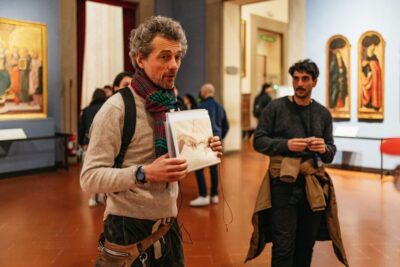
Accademia Gallery Guided Tour with Entry Ticket
Read our review →Browse the lists this tour appears in