
REVIEW · FLORENCE
Florence: Small Group Uffizi Tour – Untold Stories
The best part of this Uffizi tour is its effort to make famous paintings feel less familiar. Instead of stopping at pretty colors and famous names, you examine Botticelli’s philosophy, Leonardo’s optical tricks, and Michelangelo’s powerful anatomy. You also get a view of Brunelleschi’s Dome from the Uffizi Terrace.
I like the small-group format, which gives the guide room to explain rather than rush from label to label. I also like the priority entry, especially in Florence, where a long wait outside the museum can eat up a large part of your day. The main drawback is the tour’s intellectual weight. This is not a light overview, and visitors who prefer a quick photo stop may find the discussion demanding.
Key points to know before booking
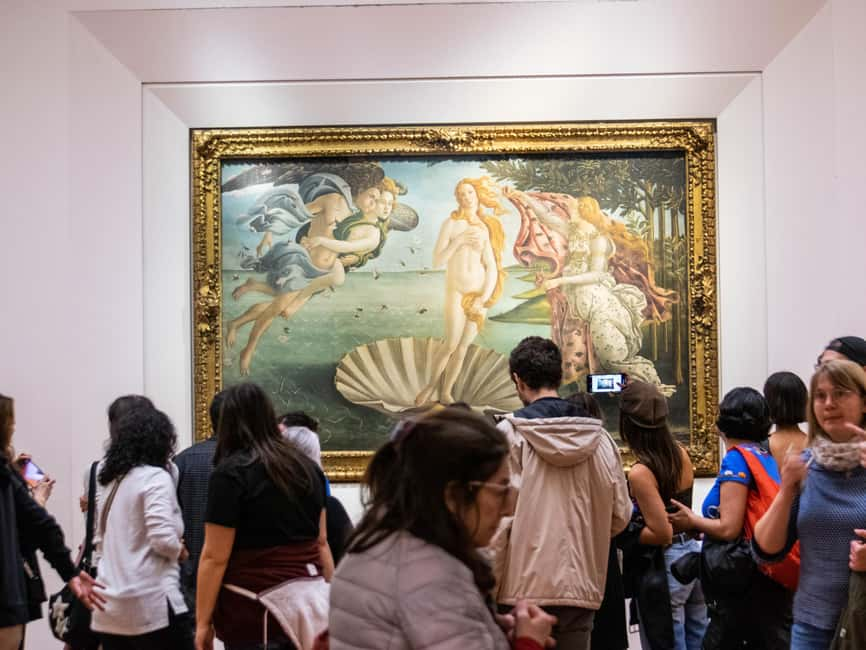
- Botticelli gets serious attention: The Birth of Venus and Primavera are treated as philosophical works, not just familiar Renaissance decorations.
- Leonardo is examined like a scientist: You look at perspective, anatomy, optics, and his hazy way of painting air.
- Michelangelo’s Tondo Doni is a major stop: The tour explains its twisting bodies and unusual colors.
- Raphael provides a calmer finish: His Madonna of the Goldfinch shows how he balanced ideas from Leonardo and Michelangelo.
- The guide makes the difference: Anna and Silvia are both praised for energy, humor, and clear explanations.
- Plan extra museum time: The guided visit lasts about 1.5 hours, but you can remain inside and continue exploring afterward.
Meeting beneath Leonardo’s statue
Your tour begins at Piazzale degli Uffizi, 1, in the courtyard on the right side of the gallery entrance. Look for the representative holding a Florence with Locals Tours flag beneath the statue of Leonardo da Vinci, opposite Door 3.
This is a useful meeting point, but give yourself enough time to find it. The Uffizi courtyard can feel confusing when people are lining up at different doors. The statue is the key landmark, and the opposite Door 3 detail helps you avoid joining the wrong queue.
The guide leads you through a separate entrance with priority access. That matters most during Florence’s busy periods, when a standard wait can take energy away before you even reach the paintings. Priority entry does not make the museum small or quiet, but it does get your visit moving faster.
The tour is offered in English. Private and small-group options are available, so the feel may vary depending on the option you choose. The format is wheelchair accessible, and pets are not allowed.
More Art Museum Tours in Florence
- Florence: Skip-The-Line Uffizi Gallery Timed Entry Ticket
★ 4.5 · 27,832 reviews - Florence: Uffizi Priority Ticket & Masterpieces Audio App
★ 4.2 · 6,402 reviews - Florence Accademia Gallery Tour with Entrance Ticket Included
★ 4.5 · 6,148 reviews
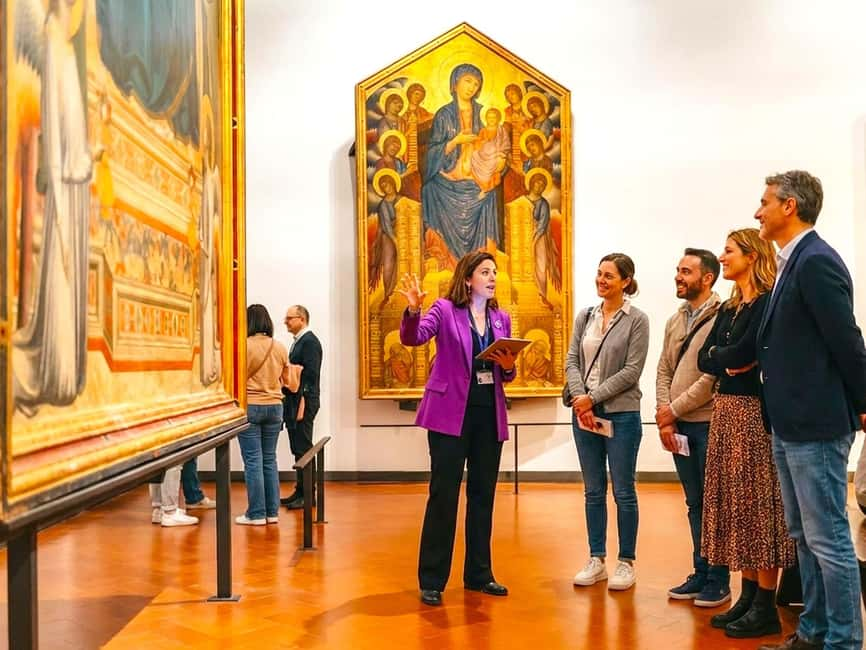
Giotto’s Ognissanti Madonna and the arrival of human weight
The first artistic idea is not a minor detail. Before the tour reaches Botticelli, Leonardo, and Michelangelo, it begins with Giotto’s Ognissanti Madonna and the changing way holy figures were shown.
The guide explains Giotto’s invention of visual gravity. The Madonna is not treated as a flat religious sign floating against a surface. She has physical weight, a body, and a human presence. That shift helps you understand why the Renaissance became so interested in observation and believable form.
I find this opening useful because it gives the rest of the tour a clear direction. The artists are not simply producing beautiful pictures. They are testing how bodies occupy space, how emotions appear on faces, and how the natural world can be represented.
The stop also sets up one of the tour’s larger themes: the tension between Christian belief and renewed interest in ancient Greece and Rome. Renaissance artists borrowed pagan stories, classical bodies, and old myths while working within a Christian culture. The result was often more complicated than the polite museum label suggests.
Botticelli’s galleries and the darker side of beauty
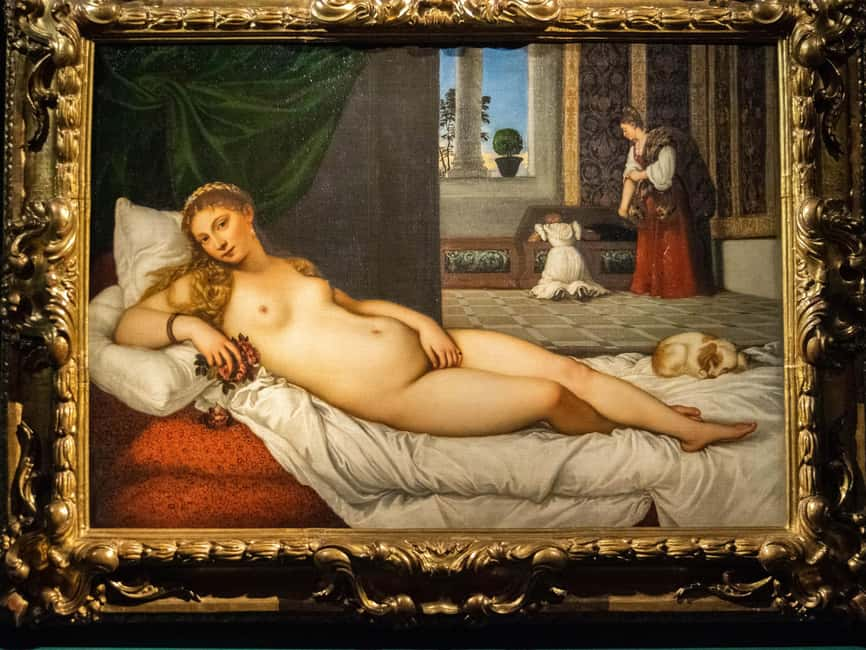
The tour spends significant time with Sandro Botticelli. That is good news if you know The Birth of Venus and Primavera mainly as popular images. Here, the guide moves past their fame and asks what the paintings were trying to say.
Primavera is read through Neoplatonism, an attempt to bring ancient Greek mythology into conversation with Christian theology. The figures are not just dancing through a spring garden. Their arrangement, gestures, and relationships can be read as part of a larger argument about love, beauty, moral change, and the human soul.
You do not need to arrive with a background in philosophy. Still, you should expect more than a simple story about Venus or flowers. The tour asks you to look for symbols and patterns, and it treats the painting as a carefully built intellectual work.
Botticelli’s linear style also receives attention. His figures can feel light and almost weightless, with flowing outlines that give the paintings a dreamlike quality. After Giotto’s physical presence, this is a useful contrast. Renaissance art did not develop in one straight line. Artists made different choices about bodies, movement, beauty, and spiritual meaning.
Simonetta Vespucci and Botticelli’s melancholy faces
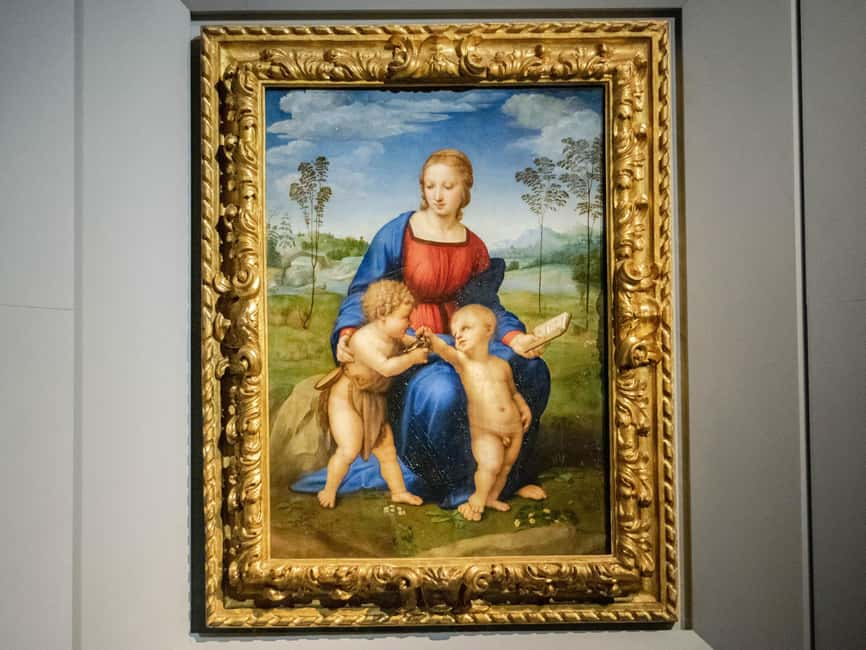
One of the more personal parts of the tour is the story of Simonetta Vespucci, known as the Queen of Beauty. Her early death is tied to Botticelli’s repeated use of a similar idealized face.
The point is not simply that Simonetta modeled for Venus. The tour traces her likeness from the goddess Venus to the Virgin Mary, showing how one image could move between pagan and Christian subjects. That connection gives Botticelli’s women a more melancholy quality.
This is especially helpful when you look again at faces that may first seem calm or decorative. The guide encourages you to notice the quiet sadness beneath the beauty. Botticelli’s art can feel graceful at first glance, but the emotional tone is not always cheerful.
The story also shows how Renaissance paintings were shaped by personal memory, religious thought, and public ideals of beauty. You are not asked to treat every face as a literal portrait. Instead, you consider how an artist could turn one admired appearance into a repeated visual language.
More Uffizi tours and tickets:
- Uffizi Gallery: Renaissance Masterpieces Guided Tour
★ 4.6 · 6,070 reviews - Uffizi Gallery Small Group Tour with Guide
★ 4.5 · 4,923 reviews - Uffizi & Accademia Timed Entry: Small Group Duomo Walking Tour
★ 4.5 · 3,630 reviews - Florence: Uffizi Gallery Timed Entry Ticket & Audio Guide
★ 4.2 · 2,794 reviews
Leonardo’s Annunciation and the mathematics of seeing
The tour then shifts from Botticelli’s poetry to Leonardo da Vinci’s scientific way of looking. Before The Annunciation, you examine how Leonardo studied optics and perspective.
A famous detail is the Virgin Mary’s arm. It appears distorted when viewed straight on, but the distortion makes sense from a particular viewing angle. The point is not that Leonardo made a mistake. The guide explains it as a deliberate perspective trick, designed for the way the painting was meant to be seen.
This kind of discussion gives you a more practical way to look at art. You stop asking only what a figure represents and start asking how the image was constructed. Where would the viewer stand? How does the body change when the angle changes? What does the painter expect your eye to do?
Leonardo’s background is just as important. His hazy atmosphere helps separate distant forms from the foreground. Instead of drawing every edge with equal force, he suggests that air sits between you and the scene. The result is softer, less fixed, and more connected to the way human vision works.
The guide describes this as Leonardo painting the air. It is a memorable idea because it turns a technical method into something you can see immediately. Look at the distant setting, then at the sharper foreground details, and the difference becomes easier to understand.
Michelangelo’s Tondo Doni and bodies in motion
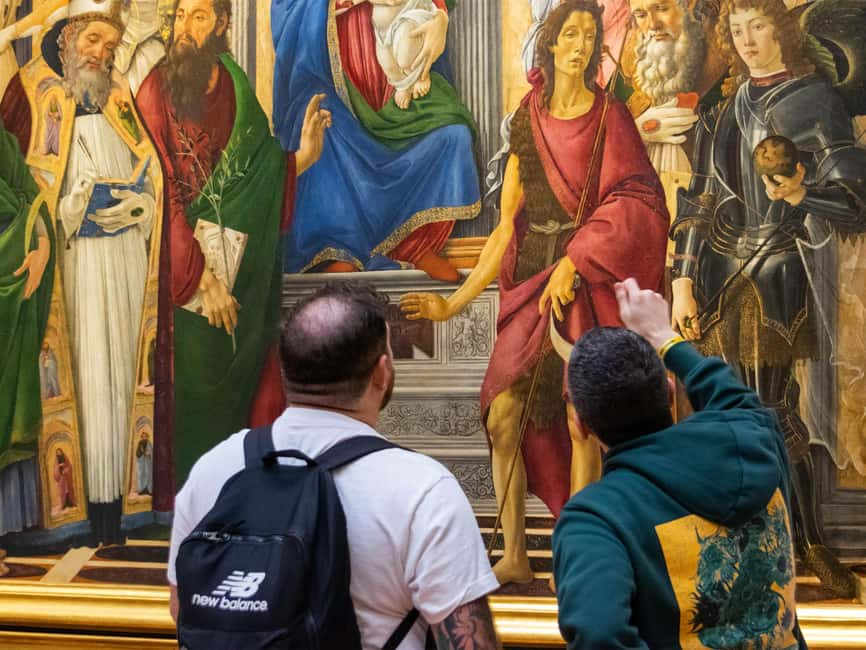
Michelangelo’s Tondo Doni provides a sharp change of mood. It is the only finished panel painting by Michelangelo in the world, which gives this stop special weight even before you discuss its style.
The guide focuses on figura serpentinata, the twisting, snake-like arrangement of the human body. Figures do not simply stand upright. They turn, coil, and shift through space, creating energy that seems to continue beyond the frame.
This is where the tour’s attention to anatomy becomes especially clear. Michelangelo’s bodies are built to show strength and movement. Their muscles can appear almost too powerful for ordinary life, but that is part of the painting’s force. Human anatomy becomes a source of drama and spiritual intensity.
Color is another important point. Michelangelo used cangiante, or changing colors, including bright oranges and metallic-looking tones. These choices do not aim for quiet naturalism. They push the scene toward a heightened, almost electric effect and help point toward the later Mannerist movement.
If you have seen Michelangelo mainly through the Sistine Chapel, this painting offers a different view. It is not a ceiling fresco, but it carries the same interest in grand bodies, difficult poses, and physical power. The explanation helps you see color and anatomy as connected choices rather than separate features.
Raphael’s Madonna of the Goldfinch and the balanced finish
The tour closes with Raphael’s Madonna of the Goldfinch. After the complexity of Botticelli, the measured science of Leonardo, and Michelangelo’s physical force, Raphael feels more settled.
The guide presents Raphael as an artist who brought competing ideas into balance. You can look for Leonardo’s softness and careful organization, along with Michelangelo’s interest in the human body and strong form. Raphael turns these elements into a calm, harmonious style.
That does not mean the painting is simple. Its balance is the achievement. Figures relate to one another naturally, the composition feels stable, and the emotional tone is warm without becoming overly dramatic.
Ending here makes sense. The tour begins with the growth of human presence in religious art and finishes with a High Renaissance style that brings observation, anatomy, composition, and feeling into a controlled whole.
The Uffizi Terrace view
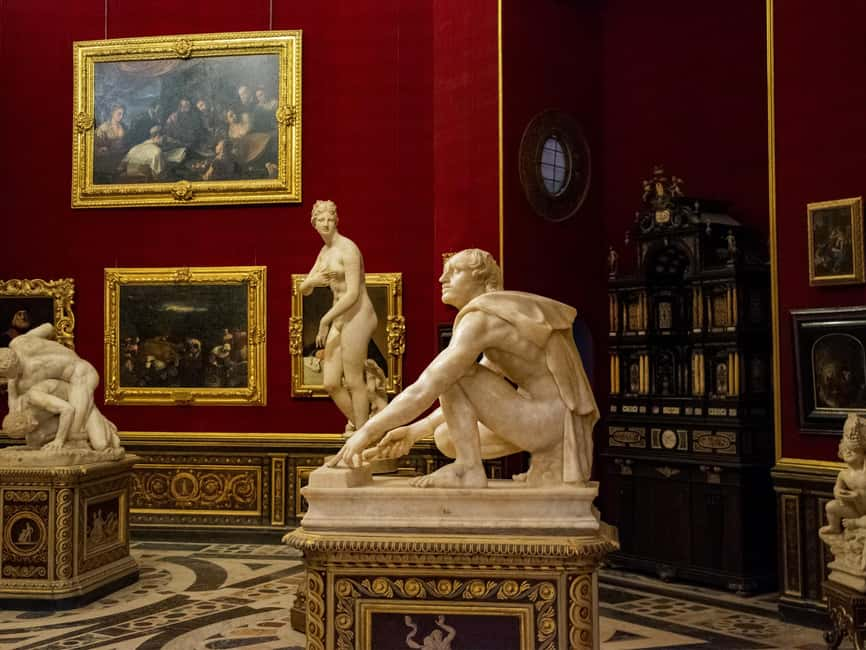
The Uffizi Terrace gives you a change of pace after the concentrated gallery discussions. From here, you get a view of Brunelleschi’s Dome.
The view is not the central reason to book the tour, but it adds welcome orientation. You have been looking closely at paintings and their theories. Stepping outside helps reconnect those works to Florence itself, the city where the Renaissance buildings and art developed together.
I would not treat the terrace as a long scenic stop. Its value is that it breaks up the indoor concentration and gives you a recognizable city view before the tour ends.
How much art can you see in 1.5 to 2 hours?
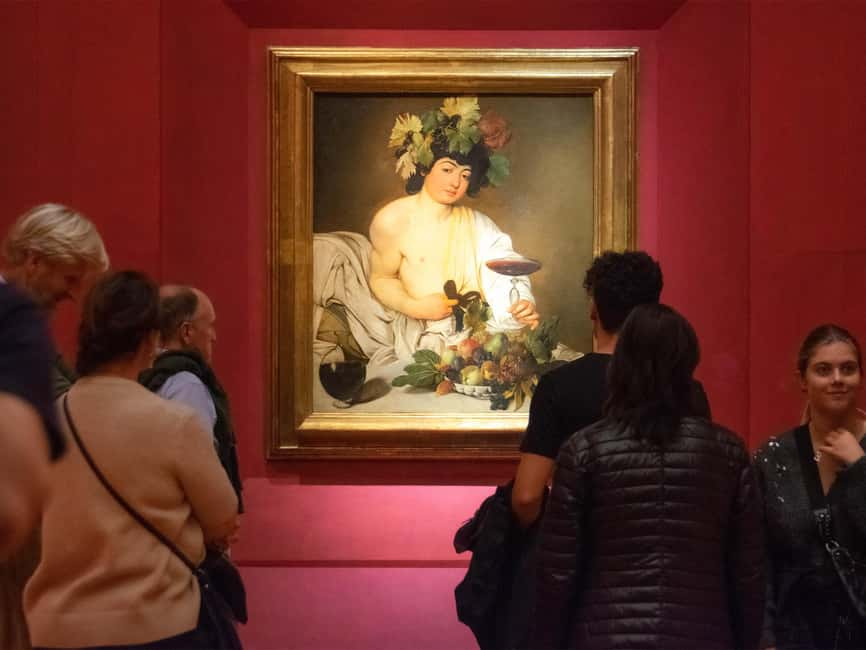
The guided portion lasts about 1.5 hours, with the overall duration listed as 1.5 to 2 hours. That is enough time for a focused route through major works, but not enough to cover everything in the Uffizi.
This is an important distinction. You are paying for interpretation and structure, not a complete museum survey. The guide spends time on selected works, so you should expect fewer paintings than you would see while wandering alone.
The best plan is to remain inside after the guided portion. You can use the tour to understand the museum’s major Renaissance ideas, then explore at your own speed. Two hours of extra time, as recommended by the experience itself, would let you look more closely at rooms that the tour does not cover.
If your schedule allows only one short Uffizi visit, this format gives you a useful route. If you want to see every gallery, book enough time for independent exploration after the tour.
Is $35 a fair price?
At $35 per person, the tour is reasonably priced for priority gallery entry plus an expert-led visit. The value depends on how much help you want with interpretation.
The Uffizi is full of famous works, but the importance of many paintings is not obvious from a quick glance. A guide who can explain Neoplatonism, perspective, anatomy, and changing color gives you a way to connect the rooms instead of collecting isolated names.
The price is easier to justify if you are visiting the Uffizi for the first time, feel unsure about Renaissance symbolism, or want a compact route through the major artists. It is less useful if you already know the collection well and prefer to read labels and set your own pace.
The strongest value comes from the combination of skip-the-line entry and focused explanation. You save time at the door, then use your museum time efficiently. Afterward, staying inside for independent viewing makes the admission work harder.
The guide can shape the whole experience
The guide’s personality matters here because the material is demanding. Anna is praised for focusing on masterpieces and explaining their history with infectious passion. Silvia is described as engaging, funny, and expert in Renaissance art.
Those qualities are especially useful in a tour built around philosophy and technique. A dry explanation of Neoplatonism could lose you quickly. Humor and clear storytelling help keep the discussion connected to the paintings.
A small group also makes it easier to follow the guide through busy rooms without feeling pushed from one stop to the next. The exact group size is not specified, so the atmosphere may differ between a private booking and a small shared group.
Who should book this Uffizi experience?
I would choose this tour if you want to understand why the paintings matter, not just identify them. It suits adults and older students who enjoy questions about religion, mythology, science, anatomy, and artistic technique.
It is also a strong choice for a first Uffizi visit. The route brings order to a large museum and gives you a set of ideas to carry into the rest of the collection.
You might choose a different approach if you want a relaxed, mostly visual visit with little explanation. The tour requires attention, and its discussion of iconography, philosophy, and technique is more serious than a basic highlights walk.
The tour is conducted in English, and wheelchair access is available. Hotel pickup is not included, so you need to reach the Uffizi meeting point yourself.
Should you book it?
Book this tour if you want Botticelli, Leonardo, Michelangelo, and Raphael explained as connected stages in Renaissance art. Anna and Silvia bring the kind of energy this subject needs, while the priority entrance protects your limited Florence time.
Skip it if you want to wander alone from the start or if philosophical discussion sounds tiring. For most first-time Uffizi visitors, the best plan is to take the guided route, enjoy the Dome view, then stay inside for at least another couple of hours on your own.
FAQ
Where does the Uffizi tour meet?
Meet at Piazzale degli Uffizi, 1, in the courtyard on the right side of the Uffizi entrance. The representative will hold a Florence with Locals Tours flag beneath the Leonardo da Vinci statue, opposite Door 3.
How long does the tour last?
The duration is about 1.5 to 2 hours, including a guided Uffizi visit of around 1.5 hours.
What language is the tour conducted in?
The live guided tour is conducted in English.
Is priority entry included?
Yes. Priority entry tickets for the Uffizi Gallery are included, with access through a separate entrance.
Is hotel pickup included?
No. Pickup from and return to your hotel are not included.
Is the tour wheelchair accessible?
Yes. The activity is listed as wheelchair accessible.
Can I cancel for a full refund?
Yes. You can cancel up to 24 hours in advance for a full refund.
Are private tours available?
Yes. Private or small-group options are available.
Just added around Florence
- Skip the line: Uffizi small group and walking tour of Florence★ 4.5 · 17 reviews
- Florence Private Walking Tour Including Uffizi and Accademia★ 3.5 · 4 reviews
- Uffizi Gallery Italian guided Tour semi private★ 4.5 · 9 reviews
- Private Tour: Accademia Gallery and City Tour★ 5.0 · 10 reviews
- Private Tour: The Academy Gallery★ 5.0 · 6 reviews
- Uffizi and Palazzo Vecchio Combo Private Tour★ 5.0 · 3 reviews
- Uffizi Express Entrance -private tour★ 5.0 · 9 reviews
- VIP Priority Access: Uffizi Gallery- Guided Experience★ 4.5 · 94 reviews
Art Museum Tours in Florence, compared.
Skip-The-Line Uffizi Gallery Timed Entry Ticket
Read our review →
Florence Accademia Gallery Tour with Entrance Ticket Included
Read our review →
Uffizi Gallery: Renaissance Masterpieces Guided Tour
Read our review →
Uffizi Gallery Timed Entry Ticket & Audio Guide
Read our review →
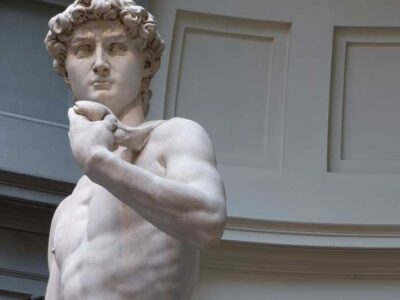
Accademia Gallery Guided Tour with Entry Ticket
Read our review →Browse the lists this tour appears in