
REVIEW · ROME
Rome: Early Bird Vatican Museums Small Group Tour (MAX 6 People)
The best reason to book this Vatican tour is simple: you enter at first access, before the Museums become a slow-moving river of people. Starting at 7:30 a.m. near Giuly’s Café, you meet your guide, join a group capped at six, and enter around 8 for a focused route through the Vatican Museums, Sistine Chapel, and St. Peter’s Basilica.
I like the tiny group size, which makes it easier to hear guides such as Ala, Alessia, Doriana, Francesca, and Rafaela, and to ask questions without shouting. I also like the route from the galleries to St. Peter’s, with time for Michelangelo’s Pietà, Bernini’s Baldachin, and the great sweep of St. Peter’s Square.
The catch is that early entry does not mean an empty Vatican. The Museums can still feel crowded, and the Sistine Chapel may be noisy. The buildings can also become hot, with limited air conditioning, so bring water, wear good shoes, and cover your knees and shoulders.
Key points to know before booking
- First entry at 8 a.m. helps you get ahead of the heaviest crowds and long public lines.
- Maximum six people means better access to your guide and a quicker-moving group.
- Three major sights in about three and a half hours: Vatican Museums, Sistine Chapel, and St. Peter’s Basilica.
- The route includes major art highlights: the Gallery of Maps, Gallery of Tapestries, Michelangelo’s Pietà, and Bernini’s Baldachin.
- St. Peter’s can close without much warning for papal events, Jubilee activity, or other church business.
- The $179.81 price is high, but it pays for early timing, reserved entry, and a personal guide rather than a general admission ticket alone.
Why the 7:30 a.m. start matters
The meeting point is Giuly’s Café at Via Santamaura 3, a short walk from the Vatican area. You meet at 7:30 a.m., giving the group time to organize before the Museums open for first access at about 8.
That early hour is the main selling point. The Vatican Museums are enormous, and the regular crowds build quickly. By the time this tour finishes, the entrance areas and routes toward St. Peter’s may be much more crowded than they were at the start.
I would not mistake early access for solitude. Even the first morning entry can include a large number of people, especially during busy summer periods or Jubilee celebrations. Still, getting in before the largest later groups is a practical advantage. It can save time, reduce standing in line, and make it easier to follow the guide through the galleries.
The early start also makes this a better choice in hot weather. Much of the route is indoors, but many rooms have limited air conditioning, and the stone corridors can feel warm when packed with people. Starting early gives you the best chance of completing the most demanding part of the visit before the day becomes hotter and more crowded.
More Art Museum Tours in Rome
- Vatican Museums, Sistine Chapel & St. Peter’s Basilica Tour
★ 4.3 · 73,970 reviews - Vatican Museums, Sistine Chapel & St Peter’s Basilica Guided Tour
★ 4.5 · 39,149 reviews - Rome: Vatican Museums, Sistine Chapel and Basilica Tour
★ 4.3 · 16,039 reviews
A six-person group changes the visit
The maximum group size is six, which is unusually small for a major Rome sight. That matters more inside the Vatican than it would on an open-air walking tour.
The Museums have long corridors, narrow points, stairways, and rooms where it is easy to lose sight of your group. With six people, your guide can usually keep everyone together without stopping every few minutes for stragglers. You can also ask a question, hear the answer, and move on without competing with a crowd.
Several guides have been singled out for their clear explanations and personal attention. Ala was praised for working patiently with an 11-year-old, while Doriana’s background in archaeology helped connect the art with Roman history. Alessia was noted for adjusting the pace to the group, and Rafaela helped a participant who needed assistance with stairs.
That does not mean the tour is private. Other groups and ordinary Museum visitors will still be around you. The small format simply gives your own guide more room to respond to you, keep the pace comfortable, and change direction when conditions require it.
The Vatican Museums, from the Pinecone Courtyard onward
The first major section is the Vatican Museums, with about 1 hour and 10 minutes allocated to the Museum route. That is enough for a strong introduction, not enough to see everything.
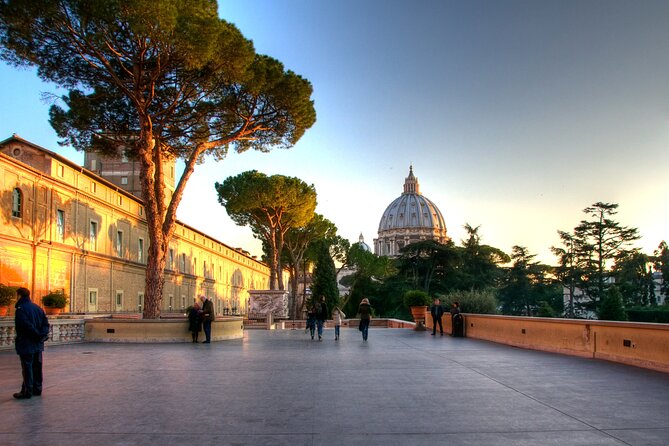
A natural early stop is the Cortile della Pigna, or Pinecone Courtyard. This open area was created from the 16th-century Belvedere complex and provides a welcome pause after the entrance process. Look for Arnaldo Pomodoro’s Sphere within a Sphere, a large bronze ball with a cracked outer shell and a smaller sphere inside.
The sculpture is modern, but it fits the Vatican setting because it invites questions about order, complexity, and the layers beneath a polished surface. Your guide can give it meaning within the wider collection rather than leaving you to pass it as just another unusual object.
From there, the route moves through several famous galleries. The stops are short, so listen closely and do not expect long stretches for independent wandering.
The Gallery of Maps and Italy on the walls
The Gallery of Maps is one of the most memorable corridors in the Vatican Museums. Its walls carry painted maps of Italy created in the 16th century under Pope Gregory XIII.
The gallery extends about 120 meters and offers a picture of Italy before modern borders, roads, and satellite images. You are not only looking at decoration. You are seeing how geography, political power, local identity, and religious authority were presented in the late Renaissance.
The scheduled stop is about five minutes, which sounds brief, but the corridor itself is long and visually packed. Your guide’s job here is to direct your attention. Look up at the ceiling as well as across the walls, and listen for details about how the maps portray cities, coastlines, and regions.
This is also a place where a small group helps. A guide can point out a specific section without needing to gather dozens of people around one spot.
More ways into the Vatican Museums:
- Vatican Museums & Sistine Chapel Skip-the-Line Entry Ticket
★ 4.4 · 13,838 reviews - Rome: Vatican Museums, Sistine Chapel & Basilica Tour
★ 4.7 · 13,217 reviews - Rome: Vatican Museums & Sistine Chapel Guided Tour
★ 4.3 · 12,117 reviews - Vatican Museums & Sistine Chapel Skip-the-Ticket-Line Tour
★ 4.3 · 10,486 reviews
Tapestries, ancient sculpture, and the pace of the route
The Gallery of Tapestries follows with woven scenes from biblical and historical stories. Many designs are linked to Raphael’s school, and the works show how Renaissance artists used fabric for narrative, status, and visual drama.
The stop is short, around five minutes, so you will get an introduction rather than a full study of each piece. If you love textile art, you may wish the schedule allowed more time. Still, the gallery adds a different medium to the paintings, maps, and sculpture seen elsewhere.
Next comes the Gallery of the Candelabra, named for the large marble candelabra dividing the space into sections. It contains Greek and Roman statues, sarcophagi, and reliefs, arranged in a late 18th-century gallery setting.
This part of the tour is useful because it shows the Vatican as more than a home for Michelangelo. Ancient sculpture forms much of the visual language of the Museums, and your guide can help you see how later rooms and religious art were shaped by the classical world.
The route moves briskly. That is good for crowd control, but it means you should decide in advance what deserves your full attention. You are getting a guided overview of major areas, not a complete study of the Vatican collection.
The Sistine Chapel requires the right expectations
The Sistine Chapel receives about 30 minutes, including the time needed to enter, settle into the room, and take in the ceiling and walls.
The chapel is famous for Michelangelo’s ceiling and The Last Judgment, but it is also an active religious space. It is used for papal ceremonies and the conclave that elects a new pope. That combination of art and living faith is part of what makes the room important.
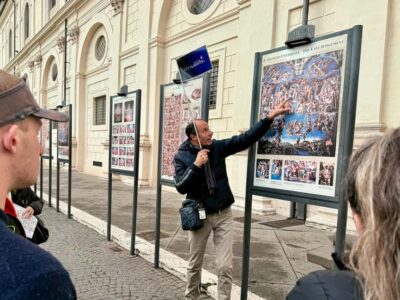
Your guide will explain the chapel before you enter, since guiding and conversation inside are restricted. That briefing is valuable. You can learn what to look for before the room becomes crowded and before you need to rely on a quick glance upward.
Do not count on silence. Even early in the day, the chapel may be packed, and some people may speak when they should not. Photography is not permitted, yet enforcement can vary. If you want to appreciate Michelangelo’s work, focus on a few scenes instead of trying to take in every figure at once.
The chapel can also feel physically tiring. There may be limited seating or room to pause, and the large number of people affects the sense of calm. I would treat the 30-minute portion as a guided introduction, then plan another visit only if the art becomes your main reason for returning.
Moving from the chapel to St. Peter’s Basilica
One of the strongest parts of the route is the transition toward St. Peter’s Basilica. The tour continues to the basilica, where the scheduled visit lasts about 45 minutes.
The movement between these spaces is not just a change of buildings. It connects the Vatican’s painting collections with the grand church at the center of Vatican City. The steps and views leading down toward St. Peter’s can be especially striking, so keep your eyes open rather than rushing after the group.
This section may also be affected by church activity. St. Peter’s Basilica can close for papal appearances, special services, Jubilee events, or other official business. These closures can happen with little warning. If the basilica is unavailable, the operator may adjust the route or provide a partial refund, but you should not book this tour with an absolute guarantee that every stop will operate exactly as planned.
That point matters because one of the strongest reasons to pay for this tour is the basilica access. Check any messages sent before the tour, and keep your schedule flexible.
Michelangelo’s Pietà and Bernini’s Baldachin
Inside St. Peter’s Basilica, the first major highlight is Michelangelo’s Pietà. Carved from Carrara marble between 1498 and 1499, it shows Mary holding the body of Christ.
It is the only work Michelangelo signed, and it was originally commissioned for a French cardinal’s funeral monument. The sculpture now sits in the first chapel on the right as you enter the basilica.
The Pietà is protected behind glass, so you will view it from a set position rather than walk around it freely. Your guide can help you notice the contrast between the smooth finish of the marble and the emotional restraint of the figures.
The tour also pauses at Bernini’s Baldachin, the huge bronze canopy over the basilica’s high altar. At more than 90 feet tall, it gives you a sense of scale before you even study its decoration.
This is a good moment to look upward and outward. St. Peter’s works best as a total space, with sculpture, architecture, light, and ceremony all competing for your attention. Forty-five minutes goes quickly, but the guide can help you choose where to focus.
The tour also includes the tomb of St. John Paul II, identified here by his birth name, Karol Wojtyla. If this is important to you, tell the guide early so you can understand where it fits into the route.
Ending in St. Peter’s Square
The tour ends in St. Peter’s Square, with about 15 minutes devoted to the space. This is a useful finish because you see the basilica from outside after experiencing its interior.
Bernini designed the elliptical square with 284 Doric columns arranged in four rows. The colonnade frames the open space and creates the sense of a great public embrace around the church.
You can use the final few minutes to orient yourself, take photographs, and decide what to do next. The tour does not provide hotel transfers, so you are on your own once the group finishes.
Ending here also gives you a clear place to continue exploring Rome. The square is the final point, not a return to the café or your hotel.
Is $179.81 a fair price?
At $179.81 per person, this is not a budget Vatican visit. You are paying for first access, reserved entry, a guide, a maximum group of six, and the time saved by moving directly through a planned route.
The value is strongest if you dislike standing in line, have limited time in Rome, or want a guide to explain what you are seeing. It is also a sensible choice for families, since a small group can move at a more useful pace and a guide can answer children’s questions without losing the rest of the group.
The price is harder to justify if you are happy to visit independently, have plenty of time, or mainly want to wander at your own speed. The route gives you a broad introduction, but the short stops limit long periods for private viewing.
I would also compare the cost with your priorities. If St. Peter’s Basilica is the main reason you are booking, ask about current access and possible closures before committing. The early Museum entry remains valuable, but the basilica portion can be interrupted by events beyond the operator’s control.
Practical advice for a smoother morning
Wear shoes that can handle several hours of walking on hard floors, stairs, and large indoor corridors. The tour involves a moderate amount of walking, and the Vatican is not a place where flimsy footwear pays off.
Bring water. Several sections can become hot, particularly in summer, and air conditioning is limited or uneven. A small bottle is more useful than expecting the building to stay cool.
Dress for both the Museums and the church. Your knees and shoulders must be covered for men and women. Shorts and sleeveless tops can lead to refused entry, so dress conservatively from the start.
If you have mobility concerns, tell the operator in advance and mention them to your guide. Rafaela, for example, assisted a participant with the stairs, but the route still includes movement through a large complex.
The tour is offered in English and uses a mobile ticket. Confirmation arrives when you book, and free cancellation is available up to 24 hours before the start time. Changes or cancellations inside that 24-hour window are not accepted for a refund.
Who should book this Vatican tour?
I would choose this tour if you have one morning for the Vatican and want the major sights explained in a logical order. It suits first-time visitors, families, art lovers who want context, and anyone who values skipping long lines more than saving money.
The small group is the real advantage. Guides such as Francesca, Elisa, Ella, Lucca, Mirta, and Valentina have been praised for clear explanations, patience, and a comfortable pace. The quality of your morning will still depend on the individual guide and the crowd level, but the format gives the guide a good chance to work with you.
I would hesitate if you need a quiet, uncrowded Sistine Chapel. No early tour can guarantee that. I would also hesitate if you want to explore every gallery in detail, since this is a highlights route designed to cover a lot in roughly three and a half hours.
For most first-time visitors, I think the tour earns its price through timing, group size, and guidance. Book it if you want to see the Vatican’s essential sights before the worst crowds arrive, and accept that Rome’s most famous rooms will still have plenty of people inside.
FAQ
What time does the tour begin?
The meeting time is 7:30 a.m. at Giuly’s Café, Via Santamaura 3, in Rome. First access to the Vatican Museums is scheduled for 8 a.m.
How long does the tour last?
The tour lasts approximately three hours and 30 minutes.
What sights are included?
The route includes the Vatican Museums, the Gallery of Maps, Gallery of Tapestries, Gallery of the Candelabra, Sistine Chapel, St. Peter’s Basilica, Michelangelo’s Pietà, Bernini’s Baldachin, and St. Peter’s Square.
How many people can join the group?
The group is limited to a maximum of six people.
Does the tour include skip-the-line entry?
Yes. The experience includes skip-the-line entry tickets and first access to the Vatican Museums.
Is St. Peter’s Basilica always included?
The tour includes a visit to St. Peter’s Basilica, but the basilica can close because of papal events, Jubilee activities, or other extraordinary celebrations.
What should I wear?
You must cover your knees and shoulders. Shorts and sleeveless tops are not allowed in places of worship and selected museums.
Can I cancel for a full refund?
You can cancel up to 24 hours before the experience starts for a full refund. Cancellations or changes made less than 24 hours before the start time are not accepted.
Just added around Rome
- Colosseum,Vatican Museum & Sistine Chapel in One Day Guided Tour★ 3.5 · 9 reviews
- Vatican Museums and Sistine Chapel last entry Guided Tour★ 5.0 · 3 reviews
- Private Tour Of Rome Highlights And Vatican Museums Skip-The-Line all included★ 5.0 · 4 reviews
- Borghese Gallery Admission Ticket with Audioguide★ 4.0 · 64 reviews
- Caravaggio Art Walking Tour of Rome with Pantheon Visit★ 4.5 · 35 reviews
- Borghese Gallery Skip the Line Guided Tour★ 4.5 · 23 reviews
- Borghese Gallery Ticket with Audioguide★ 3.5 · 51 reviews
- Borghese Gallery VIP Tour – Skip the Line Tickets★ 5.0 · 2 reviews
Art Museum Tours in Rome, compared.
Vatican Museums, Sistine Chapel & St. Peter’s Basilica Tour
Read our review →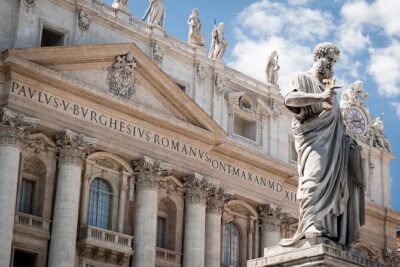
Vatican Museums, Sistine Chapel & St Peter’s Basilica Guided Tour
Read our review →
Vatican Museums, Sistine Chapel and Basilica Tour
Read our review →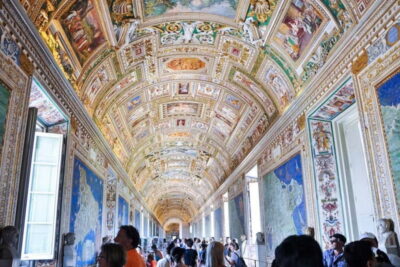
Vatican Museums & Sistine Chapel Skip-the-Line Entry Ticket
Read our review →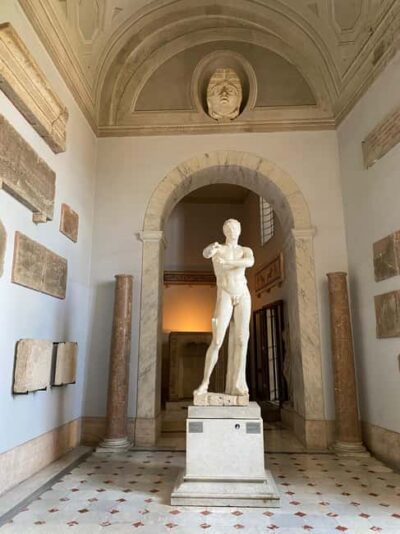
Vatican Museums, Sistine Chapel & Basilica Tour
Read our review →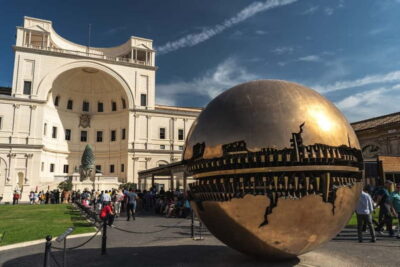
Vatican Museums & Sistine Chapel Guided Tour
Read our review →
Vatican Museums & Sistine Chapel Skip-the-Ticket-Line Tour
Read our review →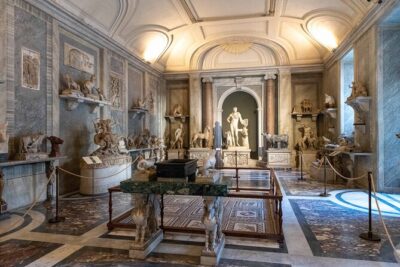
Vatican Museums, Sistine Chapel and St. Peter’s Basilica Tour
Read our review →Browse the lists this tour appears in