REVIEW · ITALY
Art tour of Ravenna and its mosaics (private tour)
Ravenna’s mosaics are not just pretty walls. They are a visual record of Roman, Byzantine, Persian, Greek, and early Christian ideas, preserved in churches that can feel plain from the outside. This private tour makes those details easier to read, especially at San Vitale and the Mausoleum of Galla Placidia.
I like the easy start at Ravenna train station and the chance to ask questions without a group of strangers listening in. I also like the broad art focus, which moves beyond famous mosaics to include ivory carving, sculpture, marbles, and a crypt that can flood beneath San Francesco.
The main drawback is the price: $325.11 per person is a serious outlay, even with admission included. The day also runs five to six hours, so you should enjoy close attention to art and history rather than expect a quick sightseeing loop.
Key points to know before booking
- Private attention with Riccardo Bacchi: The guide’s name is Riccardo Bacchi, and the format lets you stop for questions and explanations tailored to your group.
- Six major Ravenna sights: The route covers San Vitale, the Neonian Baptistery, San Francesco, Sant’Apollinare Nuovo, the Archiepiscopal Museum, and Galla Placidia.
- One UNESCO ticket included: Admission is covered for the principal paid sights through a single UNESCO Heritage Ticket.
- A useful mix of art: You’ll see mosaics, marble, sculpture, ivory work, Roman objects, and early medieval pieces.
- Station meeting point: Start at Ravenna FS at 9:30 am, then return to the same meeting point at the end.
- Best for art-focused visitors: The tour suits you if you want context and conversation, not simply a checklist of churches.
Why Ravenna’s mosaics reward a private guide
Ravenna can seem easy at first glance. The historic sights are in the same general city area, and several are known around the world. Yet the art is packed with symbols, rulers, religious ideas, and changing styles. Without some explanation, you may admire the gold and blue tiles while missing why a particular figure, gesture, or procession matters.
That is where a private guide earns his keep. Riccardo Bacchi can respond to your questions as they arise, spend more time on a detail that catches your eye, or move along when your attention fades. This matters in churches such as San Vitale, where a few minutes of looking can quickly become half an hour of trying to sort out emperors, saints, biblical scenes, and decorative patterns.
I also value the range of the route. It is not six versions of the same mosaic interior. You’ll see a sixth-century church, a baptistery, a flooded crypt, a museum collection, a basilica lined with processions, and a small tomb glowing beneath alabaster windows.
The tour is offered in English and is private, so only your group takes part. That makes the experience a better fit for couples, families, or friends who prefer a focused conversation over a fixed script.
More private gallery tours in Italy:
- Private Vatican Museums and St. Peter’s Basilica Early Bird Tour
★ 5.0 · 980 reviews - Florence: Uffizi Gallery Discovery Private Guided Tour
★ 4.5 · 658 reviews - Florence: Uffizi Highlights, In-Depth Masterclass or Private Tour
★ 4.5 · 641 reviews
San Vitale, where Ravenna’s art begins at full strength
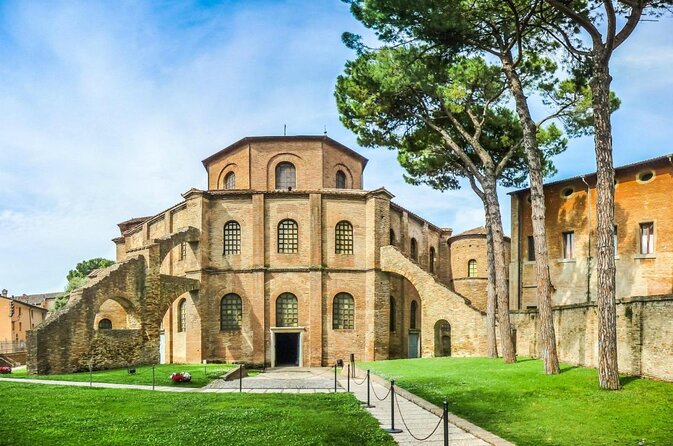
The first major stop is Basilica di San Vitale, with about 35 minutes set aside and admission included through the UNESCO ticket. This is an effective opening because the church gives you Ravenna’s Byzantine art at its most dramatic.
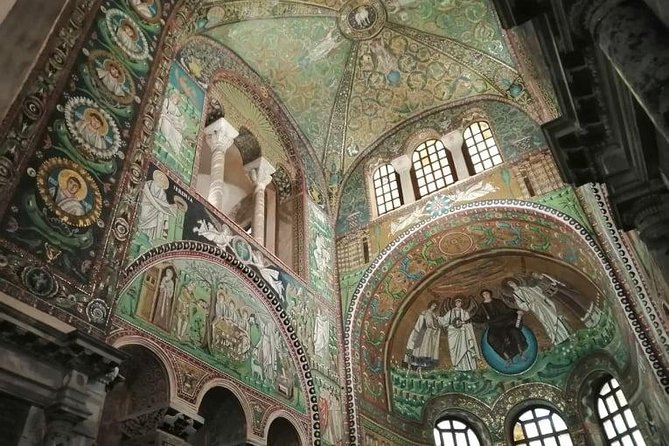
The interior is known for its mosaic program, precious-looking glass surfaces, and early medieval atmosphere. The decoration is not limited to one panel or one wall. You’ll be surrounded by scenes and small details that work together as a large religious and political statement.
A guide can help you read the famous imperial images rather than treating them as beautiful decoration alone. The church connects Ravenna with the Byzantine world and with the power of the emperor. That context gives meaning to the formal faces, rich clothing, repeated patterns, and shimmering surfaces.
Thirty-five minutes is enough for a strong introduction, though you may wish you had longer if you like to photograph or inspect every section. The schedule is designed to show you the main works and keep the full route moving.
The Neonian Baptistery and its layered artistic influences
The Battistero Neoniano, also called the Baptistery of the Orthodox, receives about 30 minutes. This UNESCO site is smaller than San Vitale, but the compact setting makes its decoration easier to take in as a whole.
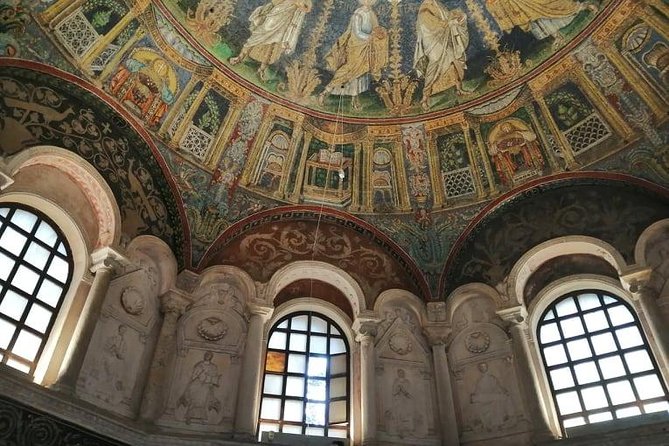
The building brings together marble, mosaics, and sculpture. Its artistic language reflects late Roman, Roman, Persian, Greek, and barbarian influences, a useful reminder that Ravenna sat at a meeting point of cultures rather than inside a sealed-off artistic world.
The central mosaic is especially important to the building’s purpose as a baptistery. You can look upward and see how the decoration relates to Christian ritual and water. A guide’s explanation helps connect the image, the architecture, and the ceremony that once took place below it.
This stop is also a good place to ask basic questions. If you are unsure how mosaic pieces were arranged or why certain styles appear together, a private setting lets you ask directly. You do not need to pretend you already understand the symbolism.
San Francesco and the flooded crypt
Basilica di San Francesco provides a sharp change of mood. The church itself leads to an underground crypt that can flood because the ground has subsided. The result is a striking space with water below, compared in the tour description to Istanbul’s Basilica Cistern.
Admission here is free, and the visit takes about 25 minutes. After the intense colors and glittering surfaces of the earlier churches, this lower level offers a quieter, more unusual sight. The crypt shows how Ravenna’s buildings have changed over time, not only through artistic fashion but also through shifts in the soil beneath them.
I like this stop because it breaks up the steady run of mosaic viewing. You are not simply moving from one decorated wall to another. You are seeing a practical problem created by subsidence, and that gives the city’s old buildings a sense of physical change.
The exact appearance of a flooded crypt can vary, so you should think of it as an atmospheric part of the route rather than a guaranteed grand spectacle. Its value comes from the contrast with the polished mosaics and from the story of the building itself.
A few more gallery visits around Italy worth comparing
- Vatican Museums, Sistine Chapel & St. Peter’s Basilica Tour
★ 4.3 · 73,970 reviews - Vatican Museums, Sistine Chapel & St Peter’s Basilica Guided Tour
★ 4.5 · 39,149 reviews - Florence: Skip-The-Line Uffizi Gallery Timed Entry Ticket
★ 4.5 · 27,832 reviews - Rome: Vatican Museums, Sistine Chapel and Basilica Tour
★ 4.3 · 16,039 reviews
Sant’Apollinare Nuovo and its long processions
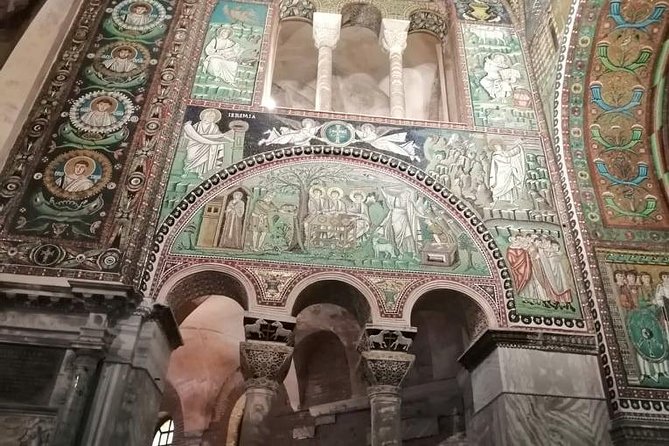
Basilica di Sant’Apollinare Nuovo is another UNESCO site, with around 35 minutes planned. It is a major early Christian church filled with mosaics and works of art.
The long decorative bands are one of the reasons this church deserves a guide’s attention. Processions of figures create a sense of movement across the walls, while the repeated forms and bright surfaces show how early Christian art communicated ideas to people who might not have read religious texts.
The church also helps you see that Ravenna’s mosaics are not all trying to do the same job. Some images focus on imperial authority, some on biblical events, and some on saints or ceremonial movement. Comparing Sant’Apollinare Nuovo with San Vitale makes those differences clearer.
The 35-minute visit should give you time to understand the main design and hear its place in Ravenna’s art story. As with San Vitale, you may want to linger if you are an art student or a keen photographer. The full schedule favors coverage of the city’s main works over long, unstructured pauses.
The Archiepiscopal Museum and its ivory masterpiece
The Archiepiscopal Museum adds objects that you cannot experience by looking at church walls alone. You’ll have about 30 minutes to see Roman, Byzantine, barbarian, and early medieval artifacts.
The museum’s most unusual highlight is an ark made with a wooden frame covered in finely carved ivory. It is described as one of the precious artistic survivals of the ancient world. The object gives you a close view of craftsmanship that can be hard to appreciate in a large basilica, where the overall effect often takes over.
This stop is valuable because it widens your idea of Ravenna’s art. Mosaics get most of the attention, but the city’s cultural record also includes carved materials, portable objects, sculpture, and artifacts linked to several periods.
Thirty minutes is a fairly brisk museum visit. I would treat the stop as a focused introduction rather than a chance to study every item in detail. The private format helps here because you can ask the guide to explain why a particular object matters instead of reading every label on your own.
Galla Placidia and the final golden interior
The final UNESCO site is the Mausoleum of Galla Placidia, scheduled for about 30 minutes. This small building is a fitting end because its interior creates a very different effect from the large basilicas.
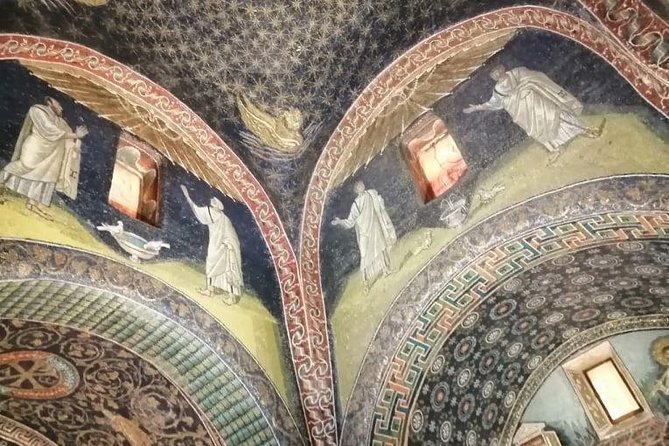
Light passes through alabaster panels, giving the space a soft golden atmosphere. The mosaics cover the walls and dome with a dense pattern of stars, symbols, and figures. The result can feel intimate after the wider scenes at San Vitale and Sant’Apollinare Nuovo.
The mausoleum is connected with Galla Placidia, described here as the sister of the Byzantine Emperor Onorio. Its imagery also reflects Greek, Hellenistic, and Persian influences, showing how ideas moved around the Mediterranean in the ancient world.
This is the place where a guide’s explanation is particularly useful. The room is compact, and the images are easy to admire without understanding how they fit together. You can ask about the light, the materials, the symbolism, and the relationship between the building’s purpose and its decoration.
Because this is the last stop, the half-hour visit may leave you wanting more. That is not necessarily a flaw. The short visit allows the tour to include the full set of major sights, while the focused explanation helps you leave with a clear sense of why Galla Placidia is so important.
What the five to six hours feel like
The published visit times add up to just over three hours, but the experience lasts approximately five to six hours. The remaining time covers walking between sites, entering each building, listening to explanations, and allowing the route to function as a complete city visit.
That length is sensible for Ravenna’s main art sights. A shorter tour could show you the famous interiors but leave little room for comparisons or questions. A longer day might suit a specialist, but it could also become tiring when so much of the art demands close attention.
The 9:30 am start gives you a full morning and afternoon block. You meet at Ravenna’s train station, an easy reference point, and the activity ends back there. Public transportation is nearby, and private transportation is not included, so you should plan to reach the meeting point on your own.
Most people can take part, according to the practical tour information. Still, this is a walking and standing day built around churches and museums. If you need specific assistance, ask before booking rather than assuming the private format solves every mobility concern.
The price and what you receive for it
At $325.11 per person, this is not a budget sightseeing tour. The price makes the most sense when you place a high value on a private guide, detailed art explanation, and a route through Ravenna’s major UNESCO sights.
A single UNESCO Heritage Ticket is included, which covers admission to the main paid stops. San Francesco does not charge admission. Private transportation is not included, so the price is paying mainly for the guide’s time, planning, and interpretation rather than a vehicle.
The value improves if your group has several people and can use a group discount. It also improves if you would otherwise pay for several separate admissions and hire a guide for only one or two churches. If you are content to read brief signs and look independently, the cost will feel harder to justify.
The private structure is the key difference. You get a conversation rather than a lecture delivered to a large crowd. The available comments about the experience place strong emphasis on Riccardo Bacchi’s preparation, interesting explanations, empathy, and steady attention. Those qualities matter most when you want to understand the art instead of simply collecting photographs.
Who should book this Ravenna tour
I would recommend this experience to you if you have a serious interest in art, architecture, religion, or the transition from the Roman world to the early Middle Ages. It is also a strong choice if Ravenna is a short stop and you want the main sights organized into one efficient route.
Families may appreciate the private format because children can ask simple questions without slowing a large group. Couples and friends can set the tone of the day, though the itinerary remains focused on art rather than shopping, food, or general city wandering.
You should think twice if you dislike long church visits or prefer to explore at your own pace. The five to six-hour schedule gives you a full dose of Ravenna’s major art, and the guide’s explanations are central to the experience.
Book well ahead if your dates are fixed. This tour is booked on average 128 days in advance, which suggests that popular dates can fill early. Confirmation is normally sent at booking. If you book within nine days of the date, confirmation can take up to 48 hours and remains subject to availability.
Free cancellation is available if you cancel at least 24 hours before the local start time. Cancellations or changes made less than 24 hours before the start are not refunded or accepted.
Should you book it?
Book this private Ravenna tour if you want the city’s mosaics explained in context and you are willing to pay for personal attention. The combination of San Vitale, Galla Placidia, Sant’Apollinare Nuovo, the Neonian Baptistery, San Francesco, and the Archiepiscopal Museum gives you a strong view of Ravenna’s art across several periods.
Skip it if you mainly want a quick look at the famous churches or if $325.11 per person feels too high for a guided day. For an art-minded visitor, though, the route is well chosen, the station meeting point is practical, and Riccardo Bacchi’s private guidance can turn a row of beautiful interiors into a story you can actually follow.
FAQ
Where does the tour begin?
The tour begins at Ravenna FS, Ravenna, Province of Ravenna, Italy. The meeting point is at the Ravenna train station.
What time does the tour start?
The scheduled start time is 9:30 am.
Where does the tour end?
The activity ends back at the meeting point at Ravenna train station.
How long does the tour last?
The tour lasts approximately five to six hours.
Is this a private tour?
Yes. Only your group participates in the activity.
Is transportation included?
No. Private transportation is not included. The meeting point is near public transportation.
What admission is included?
A single UNESCO Heritage Ticket is included. Admission to Basilica di San Francesco is free.
Is the tour offered in English?
Yes. The tour is offered in English.
What is the cancellation policy?
You can cancel for a full refund up to 24 hours before the local start time. Cancellations or changes made less than 24 hours before the start are not accepted, and the amount paid is not refunded.
Just added around Italy
- Colosseum,Vatican Museum & Sistine Chapel in One Day Guided Tour★ 3.5 · 9 reviews
- Vatican Museums and Sistine Chapel last entry Guided Tour★ 5.0 · 3 reviews
- Private Tour Of Rome Highlights And Vatican Museums Skip-The-Line all included★ 5.0 · 4 reviews
- Borghese Gallery Admission Ticket with Audioguide★ 4.0 · 64 reviews
- Caravaggio Art Walking Tour of Rome with Pantheon Visit★ 4.5 · 35 reviews
- Borghese Gallery Skip the Line Guided Tour★ 4.5 · 23 reviews
- Borghese Gallery Ticket with Audioguide★ 3.5 · 51 reviews
- Borghese Gallery VIP Tour – Skip the Line Tickets★ 5.0 · 2 reviews
Art Museum Tours in Italy, compared.
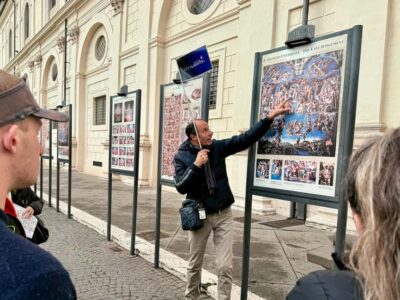
Vatican Museums, Sistine Chapel & St. Peter’s Basilica Tour
Read our review →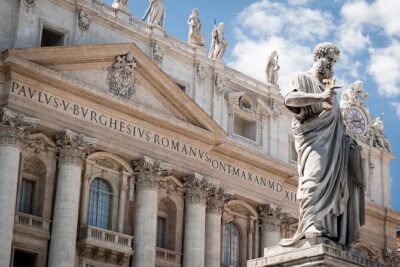
Vatican Museums, Sistine Chapel & St Peter’s Basilica Guided Tour
Read our review →
Skip-The-Line Uffizi Gallery Timed Entry Ticket
Read our review →
Vatican Museums, Sistine Chapel and Basilica Tour
Read our review →
Vatican Museums & Sistine Chapel Skip-the-Line Entry Ticket
Read our review →
Vatican Museums, Sistine Chapel & Basilica Tour
Read our review →
Vatican Museums & Sistine Chapel Guided Tour
Read our review →