
REVIEW · PARIS
The History of Impressionism: Paris Musée d’Orsay Private Tour
The best thing about this private Musée d’Orsay tour is its focus. In two hours, you get a guided path through the art that changed Paris, from Manet and Monet to Renoir, Cézanne, and Van Gogh, without trying to conquer every gallery.
I like the priority access and the choice of a morning or afternoon start. I also like having one guide for your group, since Adam, Gio, Giovanna, Vivianne, and Nazli are known for clear explanations, easy conversation, and adjusting the pace to the people in front of them. The tradeoff is simple: two hours gives you a sharp introduction, not time for every room or every artist.
Key points at a glance
- A private two-hour route: Your group receives the guide’s full attention rather than joining a large public group.
- Art from 1848 to 1914: The tour links Realism, Impressionism, Pointillism, Cubism, and post-Impressionism.
- Priority museum entry included: You do not need to arrange a separate admission ticket.
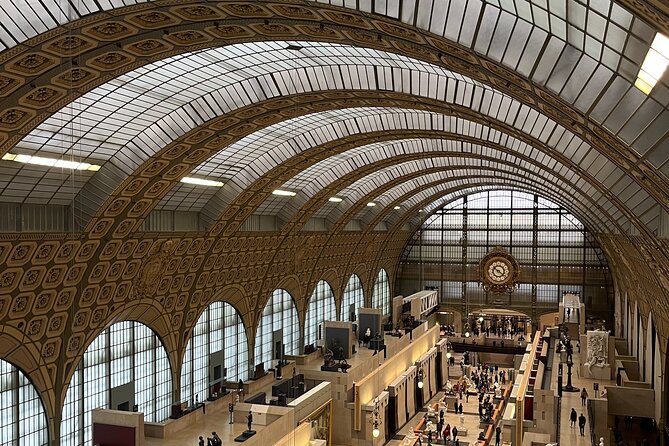
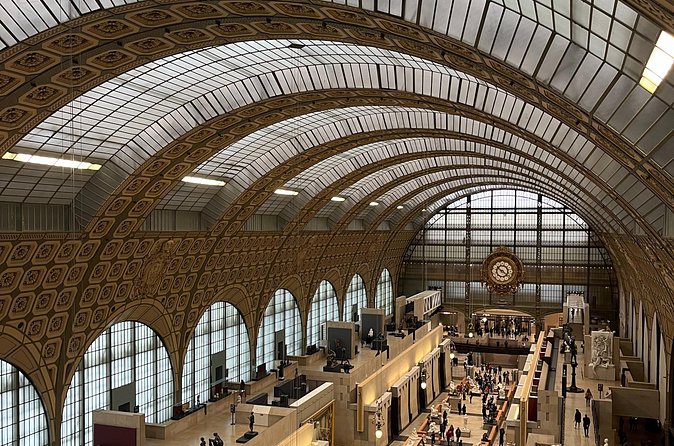
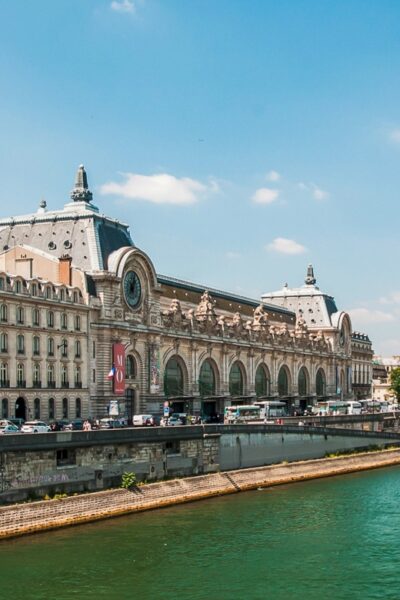
- A former railway station: The building itself is part of the experience, with its grand clock, metal structure, and limestone exterior.
- Flexible morning or afternoon timing: This helps you fit the museum around other Paris plans.
- Strong guide-led teaching: Adam has a special focus on art, money, social pressure, and the personal struggles behind the paintings.
Why the Musée d’Orsay works so well for a short private tour
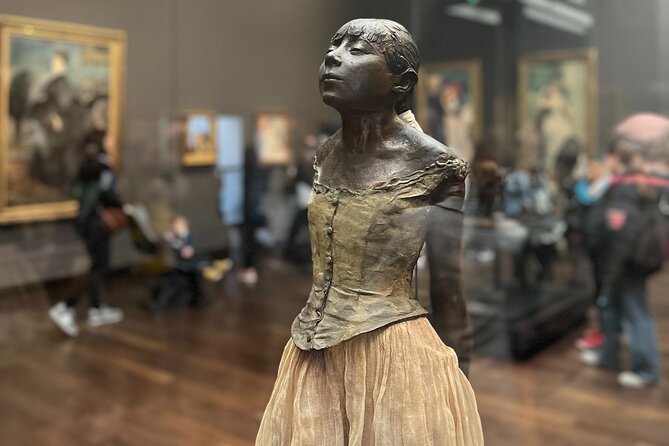
The Musée d’Orsay is unusually friendly to a two-hour visit. Its collection covers roughly the period from 1848 to the start of World War I in 1914, so you are not crossing thousands of years of art history. You are following a concentrated period of change.
That change is the real story. Academic painting gave way to scenes of modern life. Artists began testing brighter color, broken brushwork, new viewpoints, and ordinary subjects. The museum brings these shifts together in a way that makes a guided visit useful, especially if you want to understand why Impressionism caused such a stir.
I like the private format here because the museum can feel broad and busy even when you know what you want to see. A guide can choose the main works, explain how they connect, and leave room for your questions. You are not simply being marched from one famous canvas to another.
Your meeting point is at 2 Rue de la Légion d’Honneur, near the museum. The tour ends at the Musée d’Orsay on Esplanade Valéry Giscard d’Estaing. Since the museum is near public transportation, it is easy to fit this visit into a day around the Seine and central Paris.
More Art Museum Tours in Paris
- Paris: Louvre Museum Timed-Entrance Ticket
★ 4.6 · 71,977 reviews - Paris: Orsay Museum Entry Ticket
★ 4.7 · 25,647 reviews - Paris: Louvre Guided Tour with Reserved Access & Boat Cruise
★ 4.3 · 16,353 reviews
Entering a railway station turned art museum
Before you look closely at a painting, look up and around. The Musée d’Orsay began as an electric railway station built for the 1899 Universal Exhibition in Paris. Its original purpose explains the long central hall, iron structure, broad roof, and huge clock.
The building had a short life as a practical railway station. Trains changed quickly, and the platforms no longer suited newer, longer trains. The structure then served other purposes, including wartime mail sorting and film locations, before Paris began turning it into a museum in the early 1970s.
That story gives the museum a useful sense of place. The Orsay was not designed as a quiet palace for old paintings. It was built for movement, machines, and modern Paris. The art inside also records a city changing at speed.
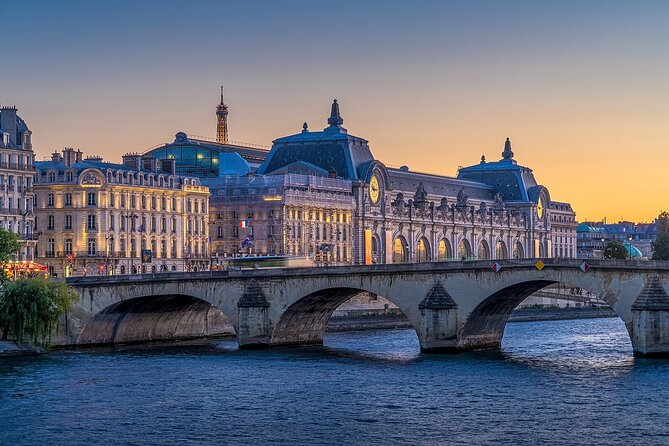
The stone exterior echoes nearby buildings such as the Louvre and Musée de l’Orangerie. From the museum, you can also enjoy views toward the Seine and Sacré-Coeur. Those views help connect the paintings to the city that inspired so much of the work.
A private guide can point out the building’s structure as part of the tour rather than treating it as a doorway you hurry through. That is a small but valuable difference. You begin to see the museum as part of the story, not just a container for art.
Following the road from Manet to Monet
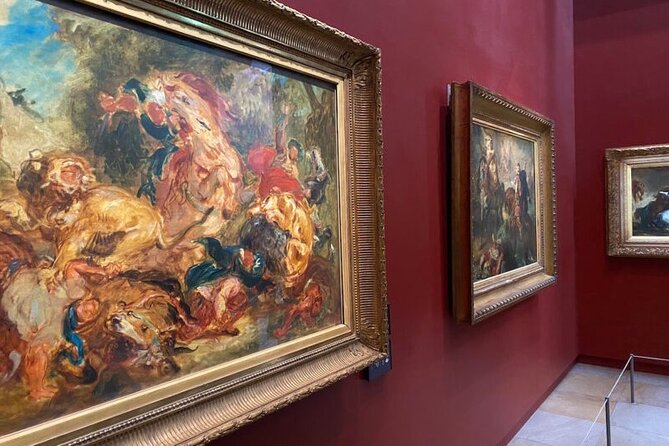
The art route begins in a period when French painters were challenging official taste. Manet is especially important because his work sits between older traditions and the more radical ideas of the Impressionists. His paintings can look direct and modern, but a guide can show you the older artistic rules he was testing.
From there, the tour turns toward Monet and the Impressionist interest in light, atmosphere, and changing moments. You may hear how these artists treated a scene less like a fixed object and more like something altered by time, weather, and the viewer’s position.
I find this kind of explanation more useful than memorizing dates. If you understand the problem an artist was trying to solve, the brushwork and color begin to make sense. You can then look at a Monet with sharper eyes instead of simply labeling it Impressionist and moving on.
The route also includes Renoir, Cézanne, and artists connected with the School of Barbizon. Barbizon painters helped shift attention toward nature and outdoor subjects, while Cézanne pushed structure and form in directions that later mattered to Cubism.
The museum’s collection rotates its displays. That means the exact works on view can change, even though the main period and artists remain central. If you have one particular painting in mind, you should treat its availability as subject to the museum’s current presentation.
Van Gogh, emotional force, and the final galleries
Van Gogh gives the tour a different emotional register. The listed experience includes Van Gogh’s Starry Night, along with work by major Impressionist and post-Impressionist artists. Your guide can place Van Gogh’s color and brushwork within the wider changes taking place at the end of the 19th century.
Adam, one of the guides associated with this experience, is especially strong at connecting art to the pressures around it. His approach includes the cost of materials, the role of money in an artist’s career, social prejudice, and the physical or mental troubles that shaped some artists’ lives.
That kind of context can change the way you look at a familiar painting. A Van Gogh canvas is not only a display of bold color. It can also reflect personal anguish, isolation, and a search for a visual language that felt true to the artist.
You do not need an art degree to benefit from this. The better guides explain difficult ideas in ordinary language and stop before the information becomes a lecture. Vivianne, for example, is noted for presenting the important facts without rushing or overloading the group, while keeping the tone conversational.
That balance matters in a museum. Too little explanation leaves you wandering among famous names. Too much turns the visit into school. The strongest part of this tour is the chance to ask a question and receive an answer shaped to your interests.
More Orsay tours and tickets:
- Paris: Orsay Museum Entry Ticket and Digital Audio Guide App
★ 4.4 · 3,170 reviews - Paris in a Day: Louvre or Orsay, Eiffel Tower, City Walk & Cruise
★ 5.0 · 1,956 reviews - Paris: Musée d’Orsay Skip-the-Line Tour with Expert Guide
★ 4.5 · 1,145 reviews - Musée d’Orsay Skip-the-Line Tour with Expert Guide
★ 4.8 · 1,088 reviews
A private pace instead of a fixed group march
A private activity means only your group participates. That makes the experience a good fit for families, couples, and small groups with different levels of interest in art.
You can ask for more background, stay longer with a favorite work, or move along when a style does not speak to you. A guide such as Gio or Giovanna can connect the works to the social setting and the artists who made them, while keeping the pace comfortable.
Families may find this especially helpful. One of the guide comments about a related LivTours experience praised the ability to keep children engaged, and the Orsay guides are described as friendly and responsive. Still, two hours is a sensible limit for younger children. The museum visit has a clear beginning and end, rather than asking a family to remain focused for half a day.
The private format also helps if your group has a clear goal. You might want Impressionism, Van Gogh, the building, or a broad introduction to 19th-century art. Tell the guide what matters to you at the start. Since the collection changes, a specific request may need to be adjusted to what is on display.
What two hours can and cannot cover
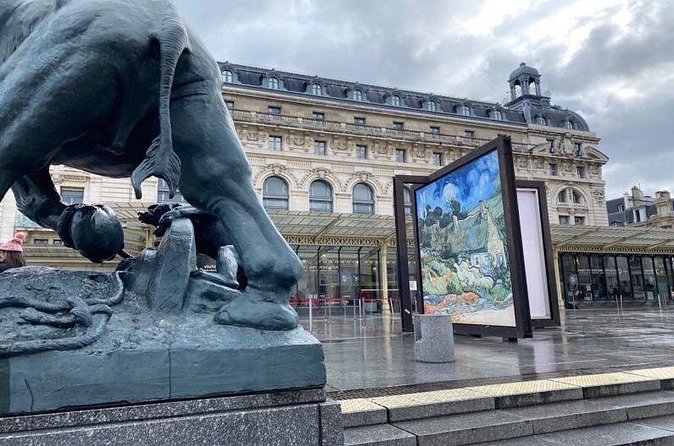
Two hours is enough to see the museum’s main artistic arc. You can get a strong introduction to Manet, Monet, Renoir, Cézanne, Van Gogh, Pointillism, and the School of Barbizon, along with the building itself.
It is not enough for a slow look at every gallery. You will probably leave with several works explained well rather than dozens seen briefly. I consider that a strength for a first visit, but it may feel short if you already know the collection and want extended time with many individual paintings.
The museum has one of the world’s largest collections of Impressionist and post-Impressionist art, and changing displays help show more of its holdings over time. That size is precisely why a guide can save effort. Without a plan, you may spend too much time finding the famous rooms and too little time understanding them.
The tour includes admission, so you do not need to buy a separate museum ticket. Priority access is also included. This should save time at the entrance, though it does not mean every part of the museum will be empty or that you will never wait.
Is the $258.34 price good value?
At $258.34 per person, this is a premium museum visit. You are paying for a private guide, a roughly two-hour experience, museum admission, and priority access. The value depends heavily on the size of your group and how much help you want inside a major museum.
For one person or a couple, the price may feel steep compared with entering on your own. You can see more of the building and stay longer if you visit independently. The private tour earns its keep through structure, interpretation, and the chance to ask questions throughout.
For a family or small group, group discounts may make the calculation more favorable. You also avoid paying for a broad, unfocused lecture. A good guide can help you spend your limited Paris time on the works and ideas most likely to stay with you.
I would choose this tour if you have only a short window, feel unsure where to start, or want art explained in a personal way. I would skip it if you prefer to wander alone, already know the Orsay well, or want several hours of quiet viewing.
The fact that this experience is often booked about 38 days ahead suggests that advance planning matters. That is especially useful if your Paris dates are fixed or you need a particular morning or afternoon slot.
Guide style and the names to know
The quality of a private museum tour rests on the person leading it. The strongest guide descriptions connected with this experience point to a friendly teaching style rather than a flood of dates.
Adam is praised for his grasp of art history and for linking paintings to money, cultural pressure, prejudice, and the artists’ personal struggles. If you want the ideas behind the brushwork, his approach sounds like a strong fit.
Vivianne is described as calm, clear, and good at judging how much information a group can absorb. She also welcomes casual conversation, which can make the visit feel less formal.
Gio and Giovanna are associated with tours that connect art to the period and to the people who made it. Nazli is also named as an Orsay guide with a friendly, informative manner. Guide assignment is not guaranteed, so consider these names examples of the range of teaching styles rather than a promise that one particular person will lead your visit.
I would tell your guide at the beginning if you want more detail, fewer facts, more time with Van Gogh, or a stronger focus on the building. That one conversation can make a private tour feel truly private.
Practical details before you book
The experience is offered in English and includes a mobile ticket. You meet at 2 Rue de la Légion d’Honneur and finish at the museum, Esplanade Valéry Giscard d’Estaing, both in the 7th arrondissement.
Morning and afternoon departures give you useful flexibility. You might place the tour before a Seine walk, lunch, or another museum, or use it as a focused afternoon stop after exploring the surrounding area.
The activity is near public transportation, and most people can participate. The information provided does not describe special accessibility arrangements, so you should ask LivTours directly if your group needs specific assistance.
Confirmation arrives when you book. Free cancellation is available up to 24 hours before the start time for a full refund. Changes or cancellations made less than 24 hours before the start are not accepted for a refund, and the cut-off follows local Paris time.
Who should book this Orsay experience?
I would recommend it to first-time Paris visitors who want a clear introduction to Impressionism without spending half a day in a museum. It also suits families and small groups who prefer a personal pace and the freedom to ask questions.
Art lovers who want social and personal context will get the most from a guide such as Adam. If your interest is mainly photography, architecture, or the museum’s former railway station, tell the guide so the building receives proper attention too.
I would not book it simply because you want to enter quickly and wander alone afterward. The value comes from the teaching. If that part does not matter to you, independent admission may be the better use of your money.
Book this private tour if you want the Orsay’s major movements explained in a focused two-hour visit, with priority entry and a guide who can respond to your group. Skip it if you want a long, unhurried museum day or already have a firm plan for the collection. For a first look at the art of modern Paris, it offers a practical way to see the right works and understand why they changed painting.
FAQ
Where does the tour begin?
The tour begins at 2 Rue de la Légion d’Honneur, 75007 Paris, France.
Where does the tour end?
The tour ends at the Musée d’Orsay, Esplanade Valéry Giscard d’Estaing, 75007 Paris, France.
How long does the experience last?
The tour lasts approximately two hours.
Is museum admission included?
Yes. The experience includes an admission ticket to the Musée d’Orsay.
Is priority entry included?
Yes. Priority access into the Musée d’Orsay is included.
Is this a private activity?
Yes. Only your group participates in the activity.
Is the tour offered in English?
Yes. The tour is offered in English.
Can I choose a morning or afternoon tour?
Yes. The experience offers a choice of morning or afternoon departures.
Is the tour near public transportation?
Yes. The meeting area is near public transportation.
What is the cancellation policy?
You can cancel up to 24 hours before the start time for a full refund. Cancellations or changes made less than 24 hours before the start time are not accepted for a refund.
More Historical Tours in Paris
- Paris: Louvre Museum Entry with History of Mona Lisa
★ 3.9 · 2,823 reviews - Paris History Walk: Medieval Marais, Notre Dame Islands & Stories
★ 5.0 · 15 reviews - Paris Experience the history of the Louvre with virtual reality
★ 5.0 · 8 reviews - Venice: St. Mark Basilica Ticket, Audioguide+History Gallery
★ 3.9 · 4,780 reviews
Just added around Paris
- Paris Day Tour with Eiffel Tower, Louvre and Cruise Max 6 People★ 4.5 · 29 reviews
- PRIVATE Louvre Wonders & Hidden Treasures Visit★ 5.0 · 65 reviews
- d’Orsay Museum Paris entry ticket★ 3.5 · 31 reviews
- visiting the masterpieces of impressionists at Orsay museum★ 5.0 · 7 reviews
- Louvre Museum with private guide★ 5.0 · 3 reviews
- Louvre Wheelchair-Accessible Private Tour – Stress-Free & Easy★ 5.0 · 16 reviews
- LOUVRE, Small Group Guided Tour in French (TOP SALES)★ 4.5 · 9 reviews
- Musée d’Orsay Highlights Tour with Gourmet Lunch★ 4.5 · 11 reviews
Art Museum Tours in Paris, compared.
Louvre Guided Tour with Reserved Access & Boat Cruise
Read our review →
Louvre Overview, Exploration tour and Reserved Entry
Read our review →
Louvre Museum Entry Ticket With Host and River Cruise
Read our review →
Mona Lisa & Louvre Masterpieces Tour with Reserved Access
Read our review →
Louvre Museum – Exclusive Guided Tour (Entry Included)
Read our review →
Louvre Museum Hosted Entry and Mona Lisa Audioguide
Read our review →Browse the lists this tour appears in